
Correction, October 12, 2026: This article has been corrected. An earlier version said Saudi Arabia grounded all 43 US warplanes at Prince Sultan Air Base for four days in May to halt Operation Project Freedom; Project Freedom was a US escort operation in the Strait of Hormuz, and Saudi Arabia reportedly warned that it could deny US aircraft the base. The earlier version also said Iraq-based militias struck the East-West Pipeline with drones on September 11 and that the line remained shut; Saudi authorities named no attacker, suspended flows as a precaution on September 12 and restarted the line on September 22. It said Prince Sultan Air Base had been hit twice; it was struck on March 27 and targeted on July 18. It said King Salman made his September 22 condemnation before 57 OIC states; he spoke while chairing a cabinet session in Riyadh. We have also removed Saudi PAC-3 interceptor figures, a Telegraph calculation, NATO “flagship projects”, think-tank quotes and other details we could not verify, corrected Burnham’s quote and the RAF Akrotiri drone attribution, and noted that sources differ on whether G7 leaders or foreign ministers issued the Houthi statement.
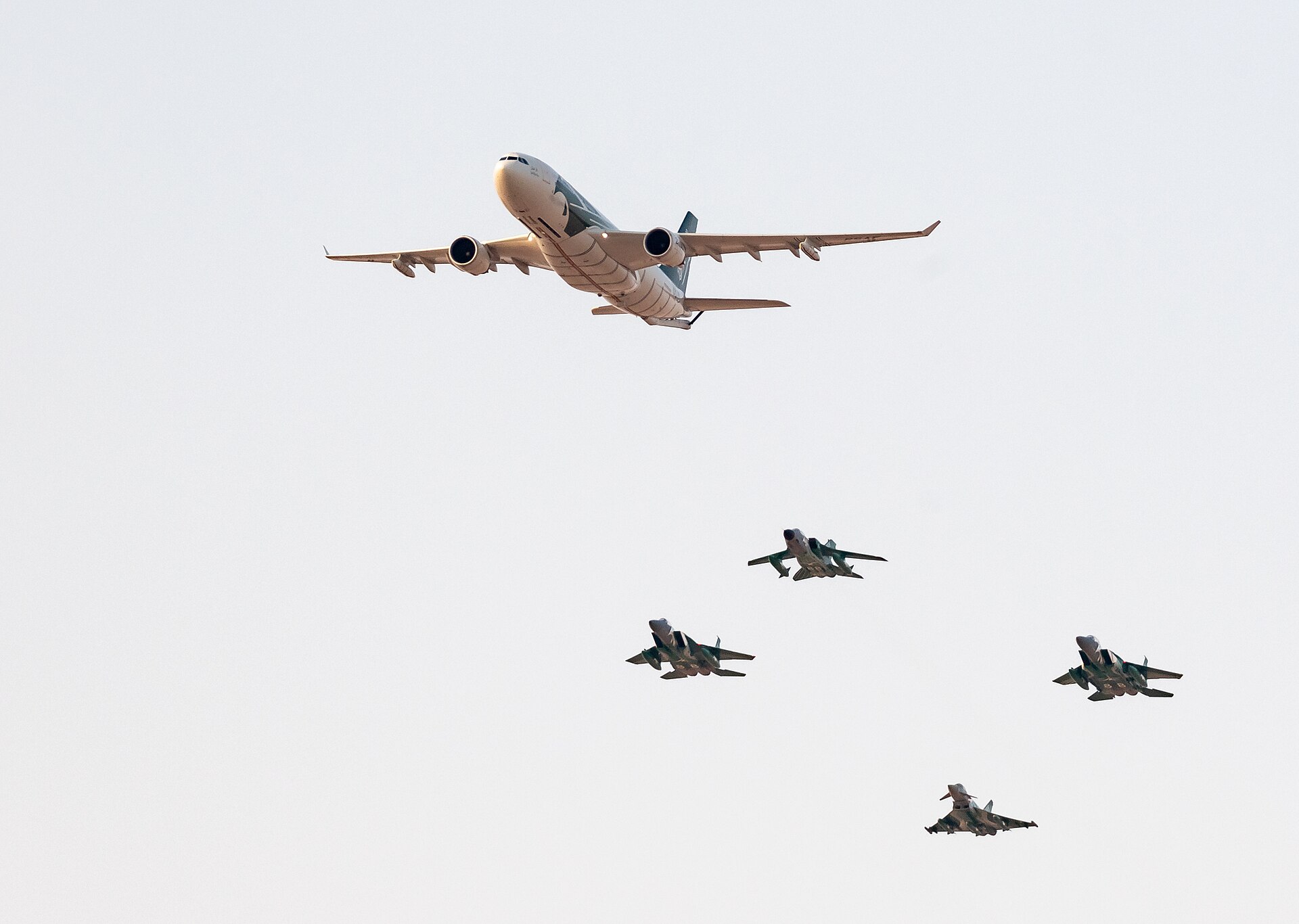
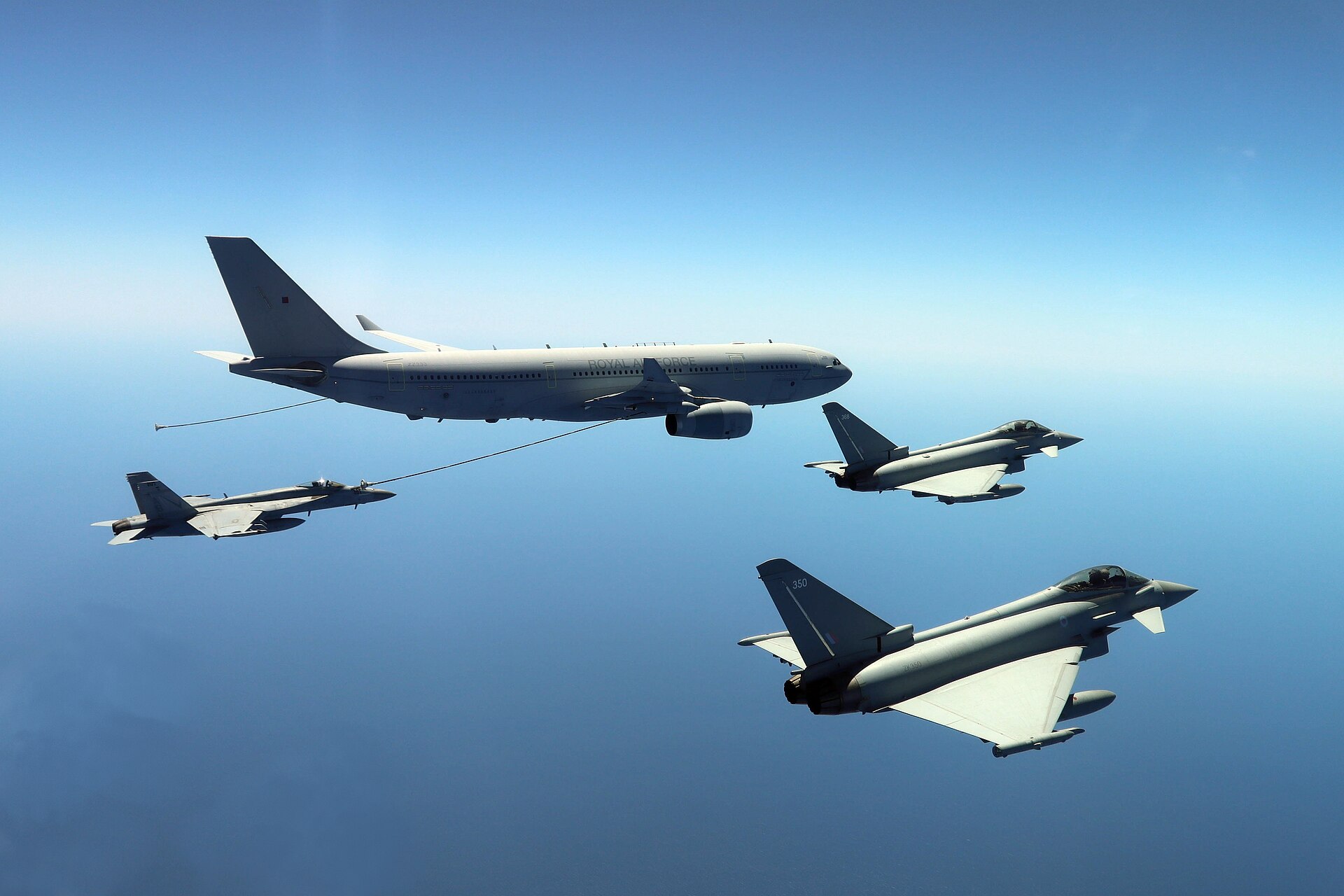
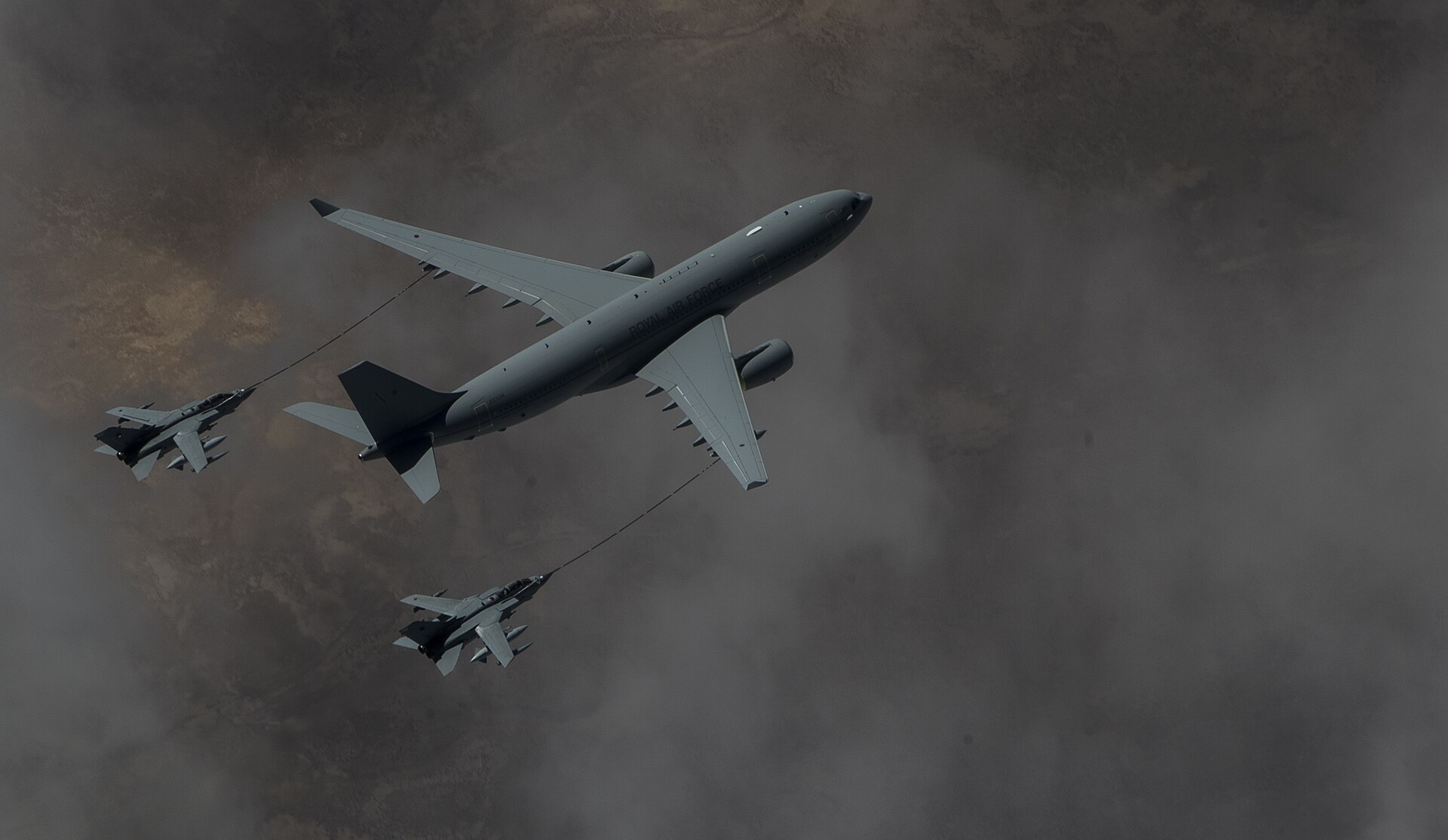
LONDON — Prime Minister Andy Burnham confirmed on September 21, en route to the United Nations General Assembly, that Britain will provide Saudi Arabia with one RAF Voyager aerial refuelling tanker. The tanker will support Saudi fighter jets intercepting drones and missiles — “defensive” sorties only — and the commitment is “time-limited,” kept “under review.” One tanker. An Airbus A330 MRTT carrying up to 109 tonnes of fuel, flying from RAF Akrotiri in Cyprus, refuelling Saudi Typhoons through hose-and-drogue. It is the second British military commitment to Saudi Arabia’s air defence since March, when a Sky Sabre battery arrived at King Fahd Air Base.
The deployment’s scale is instructive. Britain did not send a squadron. It sent the minimum unit of aerial support that qualifies as a military commitment — and in doing so named a gap that no one in Washington has been willing to acknowledge publicly. The $24.3 billion F-35 sale President Trump advanced will not put aircraft on Saudi ramps for years. Prince Sultan Air Base has lost its deterrent function, struck by Iranian missiles in March and targeted again in July. One British tanker is not a substitute for that deficit. But it identifies who is willing to act, and who is not.
Table of Contents
- What Did London Actually Commit?
- Two British Layers, One Inside the Kingdom
- Why Is Washington Absent from Saudi Skies?
- The Bilateral Patchwork
- Does the Makkah Pact Replace What Washington Withdrew?
- The Threat Riyadh Cannot Outsource
- Can Ad-Hoc Western Support Sustain Saudi Defence?
- What the G7 Statement Did Not Contain
- Frequently Asked Questions
What Did London Actually Commit?
The Voyager commitment is narrowly drawn. Burnham described it as acting “to secure the interests of Britain and the wider region because, of course, Saudi Arabia has been experiencing attacks, is looking at potential further disruption, and we need to keep those pathways open.” He said the decision was made “on the advice of the defence secretary and the foreign secretary.” The mandate is exclusively defensive: Saudi aircraft will be refuelled during intercept missions against incoming drones and missiles. Offensive strikes against Houthi positions in Yemen are explicitly excluded. The aircraft will operate from RAF Akrotiri in Cyprus, not from Saudi soil.
The time limitation matters as much as the operational restriction. A “time-limited” commitment is not an open-ended deployment. It is a commitment designed to be withdrawn before it becomes a precedent — or extended quietly if the threat persists. The language mirrors what governments use when they want to act without committing to the consequences of acting: help now, review later, define nothing permanently.
The Voyager is the RAF’s sole tanker platform. The KC2 and KC3 variants use hose-and-drogue refuelling exclusively — compatible with the Royal Saudi Air Force’s probe-equipped Typhoons and Tornados, but not with its F-15s, which take fuel through a boom receptacle the Voyager does not carry. For those it can reach, a Voyager keeps fighters on defensive combat air patrol well beyond what their internal fuel allows — extending the intercept window over a kingdom facing repeated drone and missile attacks.
The Middle East briefing 3,000+ readers start their day with.
One email. Every weekday morning. Free.
But one tanker does not reshape a theatre. It extends sorties. What it reshapes is the political map of who is prepared to share the operational burden of defending Saudi Arabia — and who is not.
Two British Layers, One Inside the Kingdom
The Voyager joins a British presence that began six months earlier. On March 31, Defence Secretary John Healey informed Prince Khalid bin Salman that Britain would deploy a Sky Sabre air defence battery to Saudi Arabia; Janes placed it at King Fahd Air Base. Sky Sabre uses MBDA’s Common Anti-Air Modular Missile — CAMM.
Sky Sabre covers a base from the ground. The Voyager, flying in from Cyprus, extends the reach of the fighters above it. Together they form a two-layer British defensive package — interceptor missiles on the ground and refuelling in the air — provided by a country that is not Saudi Arabia’s primary security guarantor.
Why Is Washington Absent from Saudi Skies?
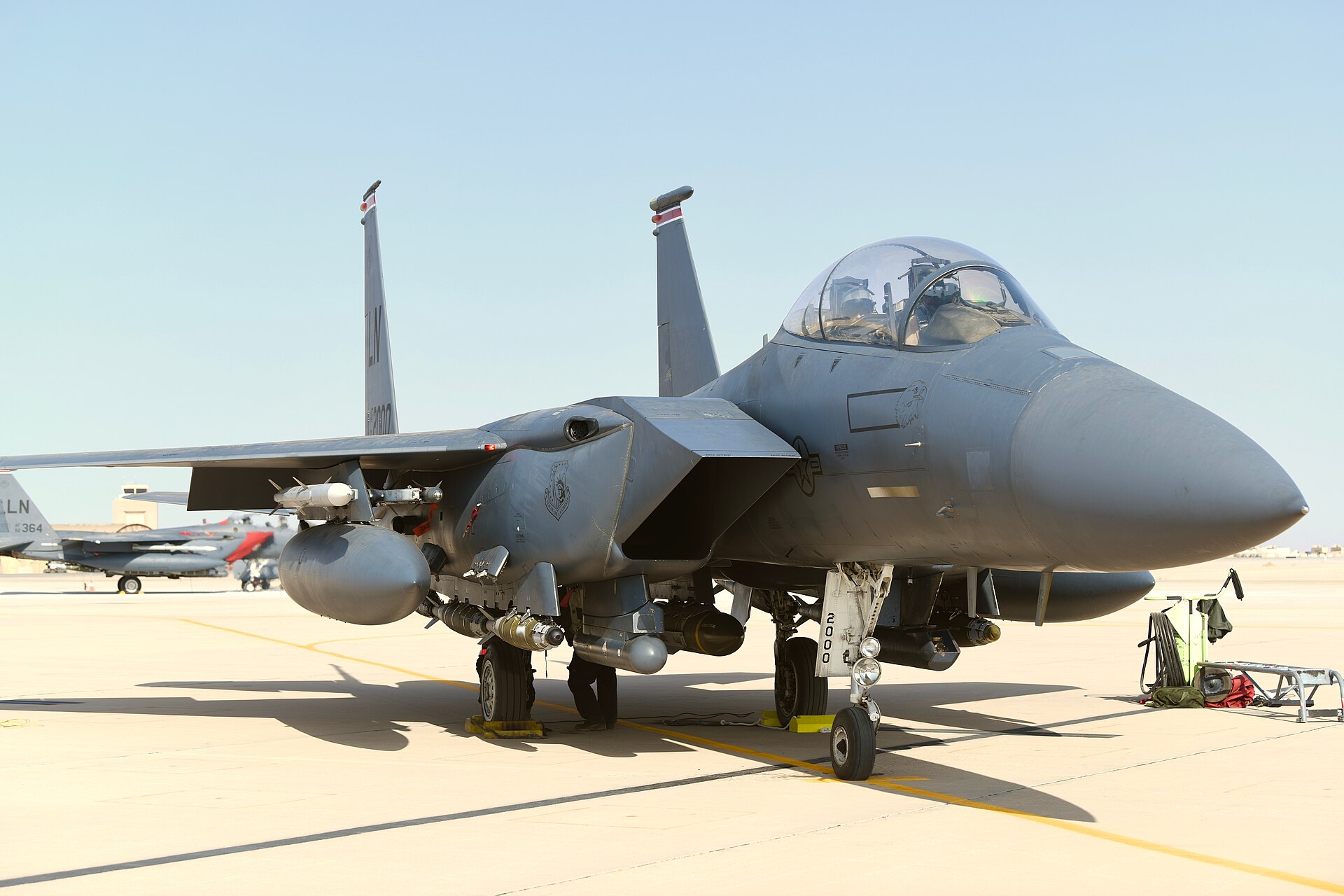
The British tanker fills a space defined by American absence. Washington has advanced an arms sale, placed a phone call and issued no operational commitment, while Patriot interceptor stocks run down and the US base at Prince Sultan has itself come under Iranian fire. The contours of that absence are specific and measurable.
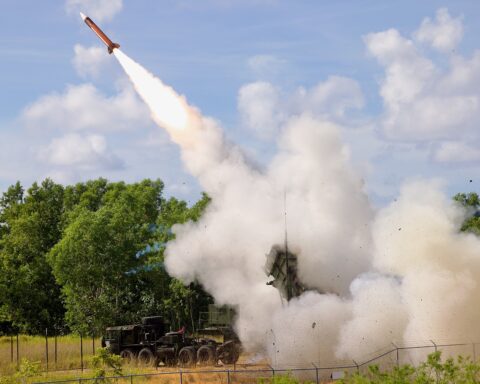
Patriot interceptor stocks are under strain: the Wall Street Journal estimated in July that US forces alone had used at least 1,500 since the war began, with fewer than 1,000 remaining, figures the Pentagon has not confirmed.
The F-35 sale addresses a different decade. The delivery timeline for a programme already stretched across global order books means Riyadh is purchasing capability it will not hold until well after the current conflict’s trajectory is determined. Trump spoke by phone to Yemen’s Saudi-backed president on September 20 and, according to sources cited by Reuters, made no direct pledge of military support.
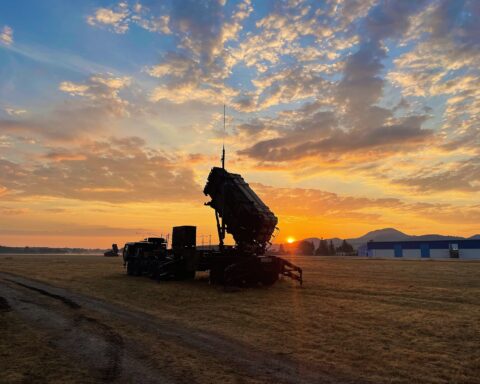
Prince Sultan Air Base was hit by Iranian missiles on March 27, when a strike destroyed an E-3 Sentry and damaged KC-135 tankers on the ground, and was targeted again on July 18. In May, Saudi Arabia reportedly warned it could deny US aircraft the base during Operation Project Freedom, a US escort operation in the Strait of Hormuz. The deterrent function has not recovered.
The structural picture: the United States is selling Saudi Arabia tomorrow’s defence while today’s runs out. Burnham’s single tanker does not fix that equation. It annotates it.
The Bilateral Patchwork
Britain is not alone in offering targeted, conditional, bilaterally defined military support. France later confirmed, on September 25, that it was sending soldiers, radars and defence systems to protect the Yanbu terminal — “not to involve ourselves in any conflict, but to protect the site,” in President Emmanuel Macron’s words.
Each Western commitment to Saudi Arabia now follows the same structural logic that fragmented the Red Sea response in late 2023. When the United States launched Operation Prosperity Guardian in December 2023, France, Spain, and Italy declined to participate. The European Union separately launched EUNAVFOR Aspides on its own defensive terms. Two missions, one waterway, no unified command. The pattern has migrated from sea to land. Every partner acts bilaterally, outside any collective framework, under a defensive mandate it can exit at its discretion.
| Partner | Asset | Type | Mandate | Duration | Framework |
|---|---|---|---|---|---|
| United Kingdom | Sky Sabre battery | Ground-based air defence | Defensive | Unspecified | Bilateral |
| United Kingdom | Voyager KC2/KC3 (from Cyprus) | Aerial refuelling | Defensive only | “Time-limited” | Bilateral |
| France | Soldiers, radars, defence systems at Yanbu | Site protection | “To protect the site” | Unspecified | Bilateral |
| United States | F-35A sale ($24.3B) | Arms sale | N/A | Delivery years away | Bilateral |
| United States | Prince Sultan Air Base | Forward base (struck in March) | Host-nation access | Unspecified | Bilateral |
| Makkah Pact | Collective defence clause | Treaty obligation | Mutual defence | Indefinite | Trilateral |
No state is defending Saudi Arabia. Several states are defending specific interests — energy transit, bilateral relationships, regional stability as each defines it — that happen to coincide with Saudi territory. The distinction matters because interests shift. Territory does not.
Does the Makkah Pact Replace What Washington Withdrew?
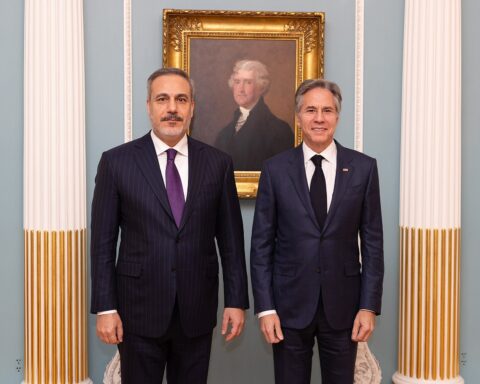
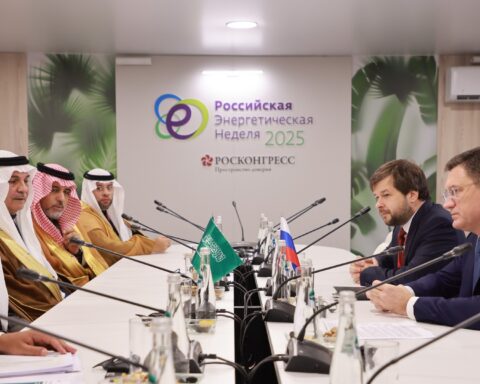
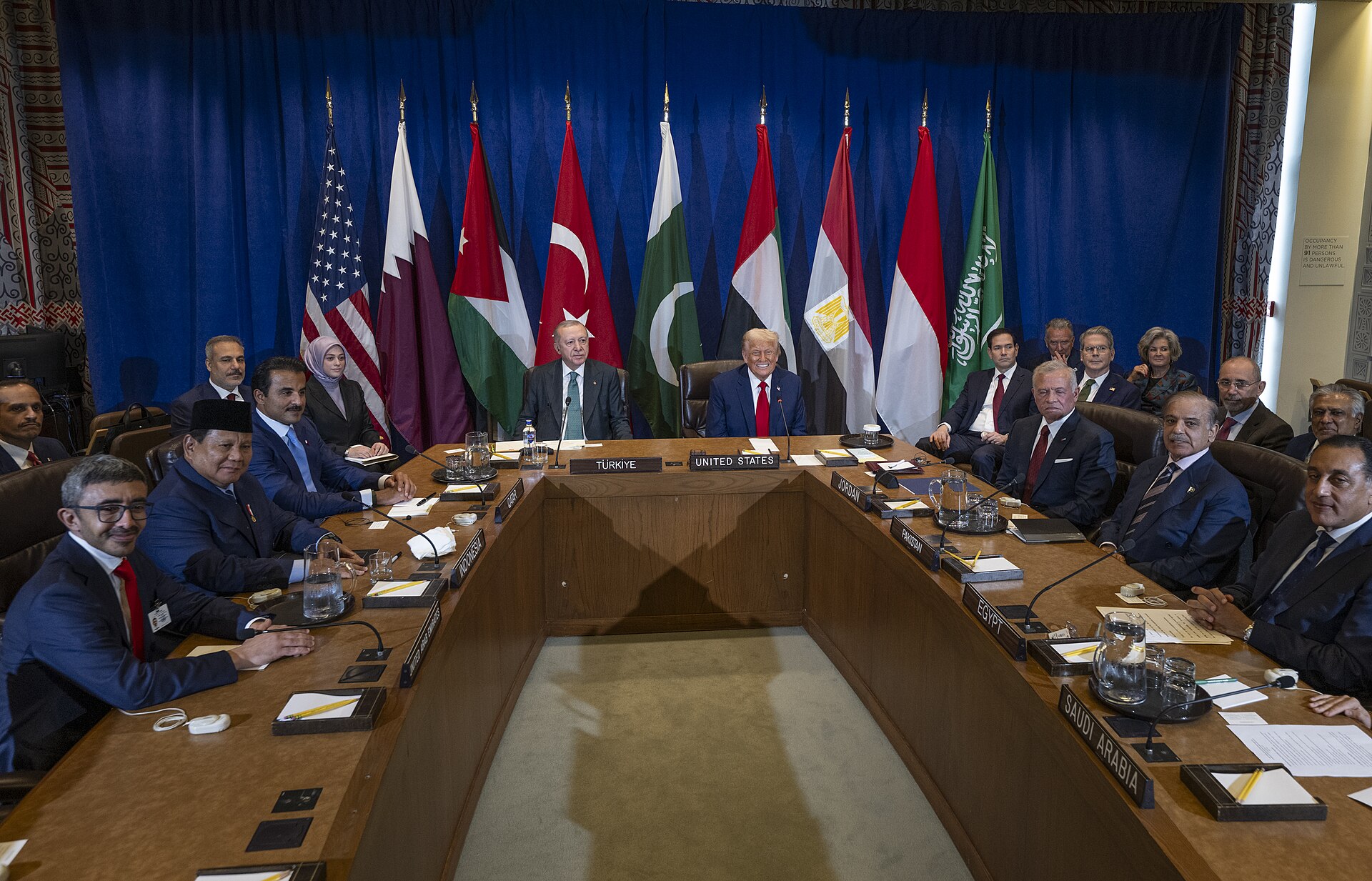
The Makkah Joint Defence Agreement, signed on August 7 by Pakistan, Saudi Arabia, and Türkiye, was designed to provide exactly the collective security framework the bilateral Western commitments lack. Its permanent secretariat is being established in Riyadh, led by a Pakistani secretary-general. Turkish Foreign Minister Hakan Fidan described the pact as technically the same as NATO’s Article 5 — while adding, Reuters reported, that allies would decide through consultation what degree, form and format of support to ask for.
The caveat in Fidan’s sentence does more work than the claim. NATO’s Article 5, invoked once in its history — after September 11 — operates atop an integrated military command built up since 1951 and a nuclear sharing arrangement. The Makkah pact has a secretariat.
The difficulty with treating the pact as diversification is that the US-Saudi defence relationship is itself being redefined by absence — depleted interceptors, a struck airbase, promised fighters that have not arrived. Diversification from a relationship that is already contracting is not diversification. It is improvisation.
The Threat Riyadh Cannot Outsource
The threat environment has not paused while Saudi Arabia assembles its new security geometry. On September 19, smoke rose near Riyadh’s main airport as the Houthis claimed what appeared to be their first strike on the Saudi capital in the current escalation.
A week earlier, on September 12, Saudi Arabia suspended flows on the East-West Pipeline as a precaution after it was targeted in the Riyadh and Madinah regions, shutting down the bypass route Saudi Arabia had built to reduce its dependence on the Strait of Hormuz. The pipeline — expanded to carry seven million barrels per day from Abqaiq to the Red Sea terminal at Yanbu — was supposed to be the insurance policy against Hormuz disruption. The insurance policy came under attack, and neither the Makkah pact nor the British Sky Sabre battery at King Fahd Air Base was configured to protect it.
Iran’s Revolutionary Guards warned on September 22, according to the Fars news agency, that Iran would answer any new US attack by changing both its weapons and “the geography of the war.” RAF Akrotiri — the Cyprus base the Voyager will fly from — was itself struck in the war’s opening days by a Shahed-type drone that hit a hangar, though Britain said the drone was not launched from Iran.
Riyadh faces three simultaneous threat vectors: Houthi strikes from Yemen to the south, Iranian-proxy attacks from Iraq to the north, and Iranian ballistic missile capability from the east. No single partner covers all three. Britain’s Sky Sabre defends from the ground at King Fahd Air Base. Its Voyager can refuel only the probe-equipped part of the fighter fleet. France’s deployment covers the terminal at Yanbu. The Makkah pact covers whatever its signatories decide it covers, whenever they decide to decide. Each piece addresses a fragment. The architecture that would connect them does not exist.
Can Ad-Hoc Western Support Sustain Saudi Defence?
Every external commitment to Saudi Arabia’s defence in 2026 carries an expiration clause, an operational restriction, or both. Burnham’s tanker is “time-limited.” France’s Yanbu deployment is meant only “to protect the site.” The Makkah pact leaves the form of any assistance to consultation. Each partner defined the boundaries of its involvement before it arrived — and each boundary was drawn to protect the partner’s exit, not Riyadh’s position.
If not America, then who? Not one ally. A collection of them, each with conditions, each revocable, none integrated with the others.
Nothing announced links Britain’s Voyager to France’s Yanbu detachment, or either of them to the Makkah pact’s Pakistani-led secretariat. The G7’s call for the Houthis to halt strikes on Saudi Arabia was a diplomatic statement — the distance between that and a military commitment is the distance Saudi Arabia is trying to bridge with bilateral deals and treaty language.
The al-Yamamah arms contracts, first signed in 1985, anchored a UK-Saudi defence relationship that has lasted four decades through changes of leadership in both London and Riyadh. Burnham’s tanker deployment is not al-Yamamah. It is a tactical response to a specific operational need, justified in the language of energy security rather than alliance, and designed to be temporary.
Saudi Arabia is not being abandoned. It is being supported — partially, conditionally, by partners who have each decided independently how much risk they will absorb and for how long. Whether a defence posture assembled from independent decisions, made by governments answering to separate parliaments and separate threat calculations, can hold against an adversary that does not segment its campaign by the same boundaries — that is the question Burnham’s tanker raised and did not answer.
What the G7 Statement Did Not Contain
G7 foreign ministers meeting on the sidelines of the General Assembly called on the Houthis to halt strikes on Saudi Arabia, according to Al Jazeera; other outlets described it as a statement by G7 leaders. The statement named the threat. It did not name a response. No military commitment. No reference to collective action. No deadline.
Burnham flew to New York having already committed the tanker. The G7 communiqué did not mention it. The bilateral military deployment and the multilateral diplomatic statement occupied the same week but not the same framework. Britain acted. The G7 spoke. For Riyadh, the distinction is the one that has defined the past seven months: hardware arrives through bilateral deals, words arrive through institutions, and no mechanism connects the two.
Mohammed bin Salman’s government has spent a decade diversifying its security partnerships to avoid dependence on any single guarantor. It now has multiple partners, none of whom guaranteed the same thing, on the same timeline, under the same conditions. The tanker will fly from Cyprus. The Sky Sabre battery will engage whatever enters its envelope. France will guard the terminal at Yanbu. The Makkah pact secretariat will convene in Riyadh. Each will do exactly what it was authorised to do, and nothing more, until the government that sent it decides otherwise.
Frequently Asked Questions
Why can the RAF Voyager not refuel Saudi F-15s?
The Royal Saudi Air Force’s F-15s take fuel through a boom receptacle on the aircraft’s spine. The Voyager refuels only by hose and drogue: the KC2 carries two underwing pods and the KC3 adds a third hose under the fuselage. It has no flying boom. The Italian Typhoons that have been in the Kingdom since before this round of fighting began can use it.
Has the UK previously restricted military support to Saudi Arabia during conflict?
In a June 2019 judgment, the UK Court of Appeal ruled in favour of campaigners challenging the government’s arms sales to Saudi Arabia, and London paused new licences for Saudi Arabia and its coalition partners. The current deployment is a military deployment rather than an arms export.
How does the Makkah pact’s military structure compare to NATO’s?
NATO’s Article 5 operates within an integrated military command headed by SHAPE, a membership of thirty-two states and a nuclear sharing arrangement, built up since the North Atlantic Treaty was signed in 1949. The Makkah pact has a collective defence clause and three signatories, and its permanent secretariat is being established in Riyadh. Turkish Foreign Minister Hakan Fidan said members would decide through consultation what support to request in the event of an attack.
What is the current status of Saudi Arabia’s East-West Pipeline?
Saudi Arabia suspended Petroline flows as a precaution on September 12, 2026, after the line was targeted in the Riyadh and Madinah regions. It restarted operations on September 22, though Reuters sources said full capacity could take six weeks or more. France’s deployment to protect Yanbu was confirmed after the pipeline had already been targeted.
What did the UK’s Sky Sabre deployment to Saudi Arabia consist of?
The package that arrived in the week of March 30, 2026 comprised radars, a command-and-control node and missile launchers, operated by a Royal Artillery battery with attached battlespace managers, according to Janes. The Ministry of Defence said the system was integrated into wider Saudi and regional air defences rather than run as a standalone British enclave.