
RIYADH — Saudi Defence Minister Khalid bin Salman and UAE Vice President Sheikh Mansour bin Zayed posted an arm-in-arm photograph on X on July 21, captioned “a story of brotherly relations and a deeply rooted partnership.” The partnership fractured over a Yemen bombing in December, an OPEC exit in May, and a separate Iranian asset-unfreeze negotiation in June — none of which the photograph resolved.
The image was the opening move of a coordinated media operation involving at least four officials across two governments. At 7 p.m. Riyadh time, Saudi Media Minister Salman Al-Dosary and UAE National Media Authority Chairman Abdulla bin Mohammed Alhamed released parallel statements calling on outlets to “avoid undermining” the relationship, while UAE diplomatic adviser Anwar Gargash added a proverb — “Spears, when together, refuse to be broken… and break if they part.” Neither government announced a joint military command, a shared procurement agreement, an intelligence-sharing upgrade, or a coordinated position on the Houthi naval blockade declared twenty-four hours earlier. What the two capitals produced was a photograph, a proverb, and a request that reporters stop describing the fracture.
Table of Contents
- The Photograph and Its Choreography
- What Broke Before the Photo Was Taken?
- 2,819 Strikes and Zero Saudi Casualties
- What Can the UAE Actually Offer Saudi Arabia?
- What Can Saudi Arabia Actually Offer the UAE?
- The 2017 Precedent
- Why Does Tehran Treat Them as Separate Targets?
- What the Photograph Can and Cannot Deliver
- Frequently Asked Questions
The Photograph and Its Choreography
Al-Dosary’s statement described “a relationship between two peoples united by a shared history and heritage, and wise leadership in both countries.” Alhamed’s followed within minutes, calling the ties “an extension of a shared history and deep-rooted fraternal ties between two brotherly peoples, united by a single destiny.” The language was interchangeable by design — two capitals producing the same sentiment in different configurations, timed for simultaneous release, each reinforcing the other’s framing without introducing a single new policy commitment.
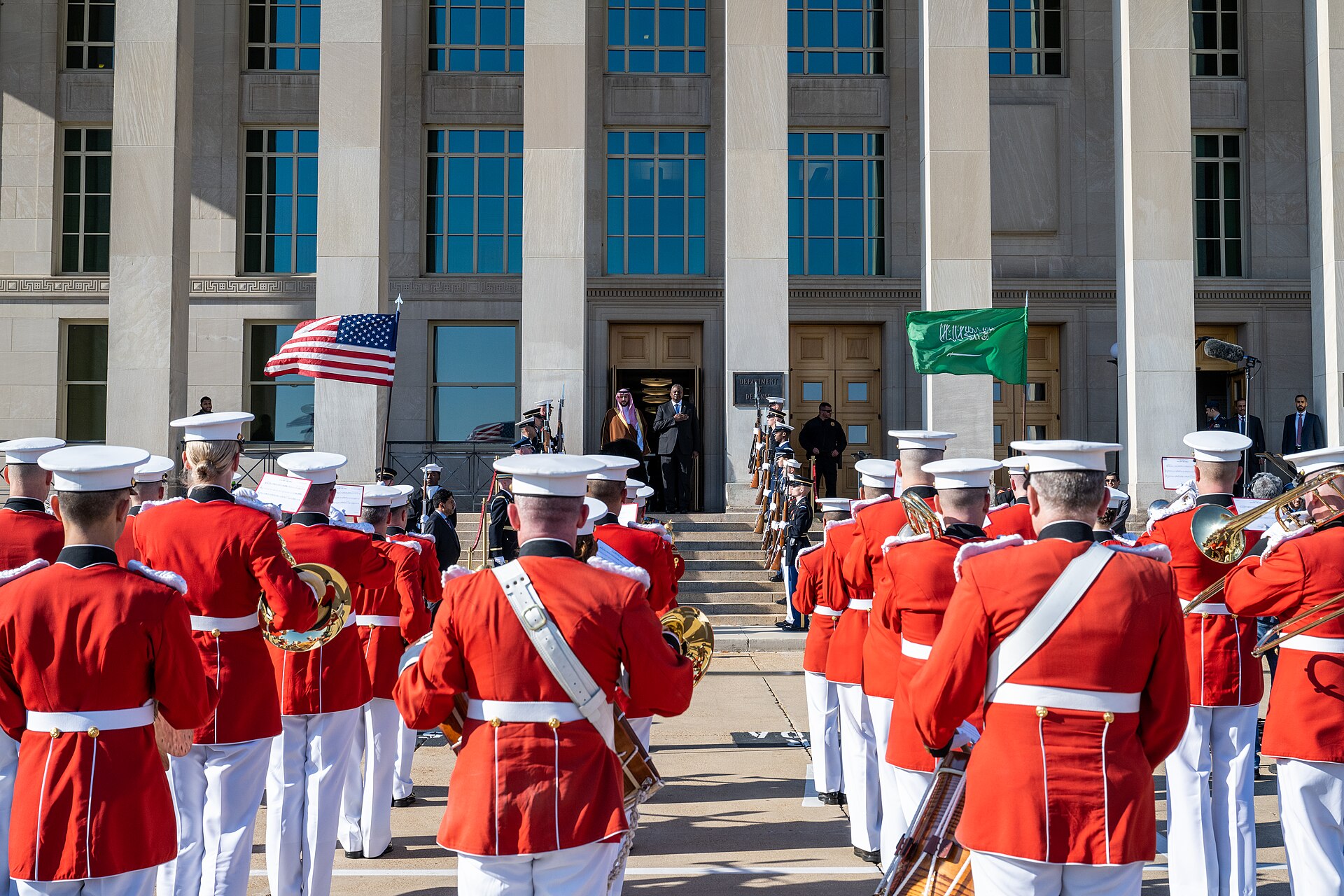
The explicit instruction to media outlets was the most revealing element of the exercise. Governments that are genuinely aligned do not tell their press establishments to stop reporting otherwise, and the call to “avoid undermining” was an acknowledgment that the relationship had been undermined — by months of partisan feuding between pro-Saudi and pro-UAE social media accounts, and by the UAE’s decision in March 2026 to ban Saudi broadcaster Al-Arabiya’s X accounts. The July 21 coordination was engineered to walk that ban back without either side admitting it had happened or announcing it had been reversed.
The Al-Arabiya ban was not a marginal spat between media regulators. Al-Arabiya is owned by the Saudi-controlled MBC Group and serves as Riyadh’s primary Arabic-language international broadcaster, reaching audiences across the Gulf and North Africa. For Abu Dhabi to suppress its accounts was to make an information-environment statement without precedent in the half-century Saudi-Emirati relationship, and the July 21 operation was a media remedy applied to a media wound — not a policy response to the military and economic fractures that had opened underneath it.
Every element of the coordination operated within the media domain — the photograph produced for publication, the statements composed for distribution, the proverb shaped for quotation, and the instruction directed at journalists rather than military planners or trade negotiators. The coordination addressed the narrative about the relationship without touching the military, economic, or diplomatic substance of the relationship itself.
The Middle East briefing 3,000+ readers start their day with.
One email. Every weekday morning. Free.
What Broke Before the Photo Was Taken?
The Saudi-UAE relationship experienced five distinct ruptures between December 2025 and July 2026. These included a kinetic clash over Yemen, the UAE’s ban of Al-Arabiya, the UAE’s exit from OPEC, a separate UAE-Iran financial negotiation conducted without Saudi involvement, and the disintegration of the UAE-Pakistan relationship after Islamabad repaid a $3.5 billion loan.
The first rupture was physical. In December 2025, UAE-backed Southern Transitional Council forces seized Saudi-allied territory in Yemen’s Hadramout and Mahra provinces, and Saudi Arabia responded by bombing a UAE-linked arms shipment at Mukalla port. By January 2026, Saudi-backed forces had recovered the territory in a counter-offensive that made the two countries’ Yemen positions openly adversarial for the first time since the coalition launched in 2015, converting a decade of quiet policy divergence into a kinetic confrontation that neither government has publicly acknowledged or resolved.
The information rupture followed in March, when Abu Dhabi banned Al-Arabiya’s X accounts — an act directed at the Saudi crown’s primary Arabic-language broadcast arm. The same month, an Iranian Shahed loitering munition destroyed a Saab GlobalEye airborne early warning aircraft at Al Dhafra Air Base, eliminating an asset with a replacement cost between $460 million and $1 billion and depriving the UAE of its primary wide-area surveillance capability. The UAE was absorbing catastrophic military damage at the same moment it was severing its media relationship with Riyadh.
In May, the UAE exited OPEC — effective May 1, the first departure in nearly sixty years. The exit had been building since 2016, when Saudi Arabia’s integration with Russia through OPEC+ disadvantaged the UAE’s unused production capacity, but the timing — mid-war, with both economies under pressure from closed shipping lanes — converted a longstanding economic grievance into a statement that Abu Dhabi no longer accepted the institutional framework Riyadh had used to coordinate Gulf oil policy for six decades. Eighty-one days separated the OPEC exit from the arm-in-arm photograph.
In June, Al Jazeera reported that the UAE was preparing to unfreeze between $10 billion and $20 billion in Iranian assets as part of a bilateral de-escalation track conducted without Saudi participation, and Iran International confirmed that Tehran had approached “two Persian Gulf states” for similar arrangements. Saudi Arabia — already unable to afford the war or influence the peace — watched its closest partner negotiate a separate financial pathway with the shared adversary. The Pakistan dimension compounded the isolation: after Islamabad repaid a $3.5 billion UAE loan, the Stimson Center assessed that trust damage was “now more permanent, with the trust that once existed in this relationship no longer appearing to be there,” and Saudi Arabia’s working diplomatic quintet — Riyadh, Doha, Ankara, Islamabad, Cairo — continued to operate without Abu Dhabi at the table.
| Date | Event | Consequence |
|---|---|---|
| December 2025 | Saudi bombs UAE-linked Mukalla arms shipment | Yemen positions go kinetic |
| March 2026 | UAE bans Al-Arabiya X accounts | Information-environment rupture |
| March 2026 | GlobalEye destroyed at Al Dhafra | UAE loses primary AEW&C ($460M–$1B) |
| May 1, 2026 | UAE exits OPEC | First departure in nearly 60 years |
| June 2026 | UAE–Iran $10B–$20B asset-unfreeze track | Bilateral deal without Saudi |
| June–July 2026 | Pakistan repays $3.5B UAE loan | Stimson: trust damage “more permanent” |
| July 21, 2026 | Khalid–Mansour arm-in-arm photograph | Media coordination; no policy content |
2,819 Strikes and Zero Saudi Casualties
The asymmetry in kinetic burden is the fact the photograph cannot paper over. UAE air-defence systems have intercepted 537 ballistic missiles, 26 cruise missiles, and 2,256 drones since the start of Iranian operations — approximately 2,819 discrete strikes against Emirati territory, according to figures Gargash cited in a statement to The National on April 27. Saudi Arabia recorded zero confirmed direct Iranian strikes as of early July 2026, though Houthi attacks have struck Saudi targets separately and Saudi Arabia’s own air-defence shield faces independent depletion from those engagements.
Gargash framed the Iranian campaign as “a premeditated plan, not a decision made in 24 or 48 hours” — a “confrontation scenario devised by Iranian planners” that treated the UAE as a distinct target rather than as half of a unified Gulf bloc. The framing matters because it contradicts the premise of the July 21 photograph: if Tehran viewed the Saudi-UAE partnership as a single adversary, it would not have been operationally possible for one partner to absorb 2,819 strikes while the other absorbed none. Iran’s targeting decisions functioned as an operational assessment of the relationship’s actual cohesion, and the assessment was that there was none worth treating as a constraint.
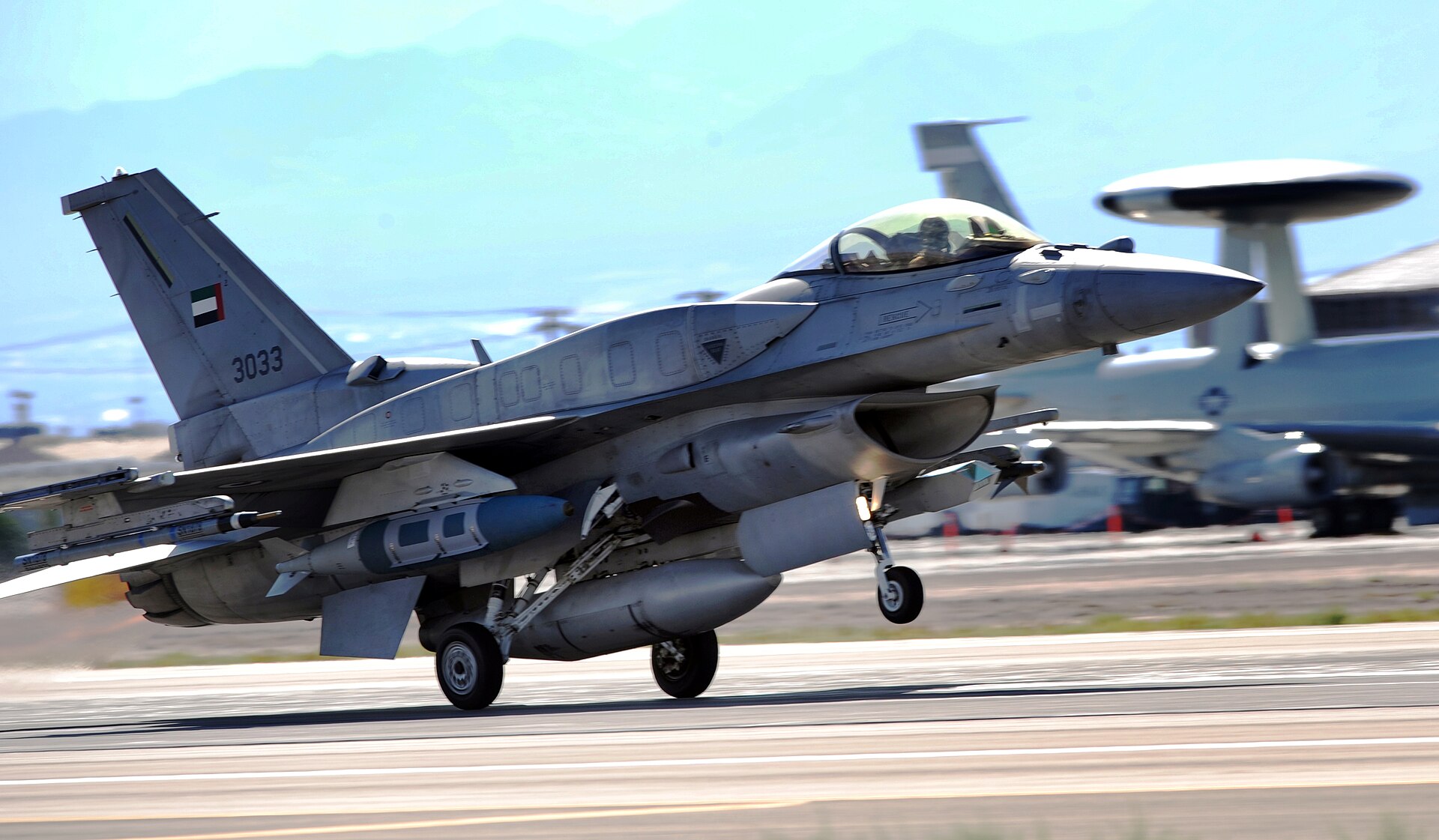
The most consequential single loss was the GlobalEye airborne early warning and control aircraft destroyed at Al Dhafra in March. The aircraft provided wide-area maritime and air surveillance that underpinned the UAE’s integrated air-defence picture, and a loitering munition costing roughly $20,000 destroyed a platform that will take years and hundreds of millions to replace. When Saudi Arabia asks what watches the Gulf for threats approaching from the east, the answer since March has been: not the GlobalEye.
French Air Force units operating from Al Dhafra raised what defence analysts described as “serious questions” about air-to-air missile stockpile depletion after just two weeks of sustained operations, and the UAE’s layered defence — Cheongung-II, THAAD, and Patriot batteries — has been under continuous stress with no public restocking announcement accompanying the solidarity photograph. Saudi Arabia, whose PAC-3 inventory has fallen to approximately 400 of an original 2,800 interceptors, is in no position to offer the UAE replenishment from stocks it needs for its own survival. The two countries are running down separate reserves at parallel rates, and the arm-in-arm image addresses neither depletion timeline nor the absence of any joint procurement mechanism to manage them.
What Can the UAE Actually Offer Saudi Arabia?
In material terms, very little. The UAE cannot supply interceptors — its own THAAD, Patriot, and Cheongung-II stockpiles are under continuous depletion from 2,819 confirmed Iranian strikes. It cannot share airborne surveillance because its primary ISR platform was destroyed at Al Dhafra, and it cannot offer Pakistan diplomatic access after the $3.5 billion loan repayment severed the relationship. It cannot provide basing alternatives while Al Dhafra itself absorbs the strikes Saudi Arabia’s own bases have not faced.
The interceptor shortage is the most pressing material gap. Saudi Arabia’s PAC-3 inventory sits at roughly 400 of 2,800 — already a national-security crisis before the Houthi blockade added a maritime dimension on July 20. The UAE, having absorbed the overwhelming majority of Iranian kinetic operations, has no interceptors to spare from stocks it needs for the defence of Abu Dhabi, Dubai, and Al Ain. Both countries have separately sought emergency resupply from Washington, and neither has received a public commitment.
The intelligence dimension is equally hollow. The GlobalEye’s destruction removed the UAE’s primary contribution to Gulf-wide airborne surveillance, and Saudi Arabia’s own E-3G Sentry was destroyed in a separate incident earlier in the conflict, leaving neither state with a functioning airborne early warning platform. A solidarity photograph cannot substitute for a radar picture, and no joint ISR-sharing arrangement with the United States or a third party was announced alongside the July 21 posts.
The diplomatic channel closure is the third gap. After the $3.5 billion loan repayment, the UAE-Pakistan relationship has broken past the point of routine repair. Saudi Arabia’s working diplomatic framework — the quintet of Riyadh, Doha, Ankara, Islamabad, and Cairo — operates without Abu Dhabi. When India’s national security adviser Doval arrived in Riyadh as both shipping corridors closed, the UAE was not part of the meeting. Pakistan is hosting the Islamabad negotiating track, and the UAE has no seat; Qatar is managing the Doha channel, and the UAE’s most recent security-framework interaction with Doha was the 2017 blockade.
The only domain where the UAE holds something Saudi Arabia lacks is the Iranian bilateral channel — the $10 billion to $20 billion frozen-asset track Abu Dhabi was developing in June. But sharing that channel with Riyadh would destroy the bilateral character that gives it value: Tehran offered the arrangement precisely because it separated the UAE from Saudi Arabia, and folding Riyadh into the deal would eliminate the reason Iran extended it. What the UAE possesses, it cannot share without nullifying the advantage; what it lacks, Saudi Arabia needs most urgently.
What Can Saudi Arabia Actually Offer the UAE?
Saudi Arabia faces a symmetrical deficit. It cannot offer OPEC coordination since the UAE abandoned the framework on May 1. It cannot deliver a joint Yemen settlement since the two backed opposing factions through December 2025. It cannot serve as an economic anchor given a $33.5 billion first-quarter deficit and a $16 billion NEOM cancellation liability that exceeds what the project will spend through 2030.
The OPEC gap is the starkest economic constraint. Saudi Arabia’s primary instrument of Gulf coordination for six decades was the cartel, and the UAE’s exit removed the framework through which Riyadh could calibrate production, manage prices, and distribute market share with its largest regional partner. The UAE accounted for roughly 12 percent of OPEC output, and a House of Commons Library analysis assessed the exit as “probably accelerated by recent dynamics with Gulf partners.” The photograph came with no mention of a return or a successor arrangement.
In Yemen, the December 2025 Mukalla bombing was the kinetic culmination of years of quiet divergence. Saudi Arabia supports the internationally recognised government; the UAE backs the Southern Transitional Council, which seized Hadramout and Mahra before the Saudi counter-offensive recovered the territory. No political resolution has followed, and the July 21 coordination did not include a Yemen communiqué, a ceasefire proposal, or an acknowledgment that the two countries arm opposing factions in the same conflict.
The economic competition adds a dimension that solidarity language cannot address. In 2025, UAE construction project awards reached $31 billion versus Saudi Arabia’s $20.6 billion — the first time the UAE overtook Saudi Arabia in this metric since 2018, according to Gulf News. The CSIS noted that “much of that antagonism is rooted in longstanding economic competition, as both countries seek to attract investment and headquarters of multinational companies, build global airlines, draw tourists, and maximize revenues from oil exports.” The competition did not pause for the photograph, and neither country has proposed a framework to manage it.
| Capability | UAE to Saudi Arabia | Saudi Arabia to UAE |
|---|---|---|
| Interceptor resupply | Cannot — own stockpiles depleted | Cannot — PAC-3 at 400 of 2,800 |
| Airborne surveillance | Cannot — GlobalEye destroyed | Cannot — E-3G destroyed |
| Pakistan diplomatic access | Cannot — $3.5B loan repaid, trust broken | Cannot — excluded from Islamabad track |
| Iran negotiating channel | Has bilateral track; sharing nullifies it | No direct channel |
| OPEC coordination | Exited May 1 — no framework | Cannot restore what UAE left |
| Yemen resolution | Backs STC | Backs recognised government |
| Economic anchor | $31B construction awards (overtook Saudi) | $33.5B deficit; $16B NEOM liability |
The 2017 Precedent
This is not the first time Saudi Arabia and the UAE have formalised solidarity under external pressure, and the previous cycle is instructive about what comes next. In June 2017, the two countries led a blockade of Qatar alongside Bahrain and Egypt, severing diplomatic ties, closing borders, and restricting airspace in what Chatham House described as having the UAE in a “catalytic role.” In December 2017, Riyadh and Abu Dhabi signed a bilateral strategic partnership intended to formalise the alliance into a framework that would outlast the crisis that produced it.
What followed was divergence on every front the partnership was designed to coordinate. In Yemen, the UAE quietly withdrew most of its combat forces while Saudi Arabia continued operations, and the two countries’ proxies — the UAE-backed STC and the Saudi-aligned government — fought each other in Aden in 2019, a direct intra-coalition military clash. In Sudan, Saudi Arabia backed the Armed Forces under General Burhan while the UAE was accused of supporting the Rapid Support Forces under Hemedti, placing the two Gulf states on opposing sides of a second civil war on a second continent. On OPEC, tensions that had simmered since the 2016 Russia integration eventually produced the May 2026 exit — the definitive institutional break.
“Relations between Saudi Arabia and the UAE have shifted in recent years from a close partnership to open competition over leadership, prestige, and regional influence. Behind the façade of ‘Gulf unity’ lies a deep rift stemming from differing threat perceptions and a struggle for economic and regional primacy.”
— Institute for National Security Studies (INSS), Publication No. 2099, February 2026
Chatham House’s January 2026 assessment reinforced the pattern: “The recent dispute between Saudi Arabia and the United Arab Emirates over Yemen is a stark reminder that the six member states of the GCC each have their own foreign policy approaches and interests, despite often being lumped together.” The 2017 Qatar blockade produced the strongest Saudi-UAE solidarity display in the GCC’s history, backed by a formal bilateral strategic partnership, and it did not prevent the Aden proxy clash, the Sudan divergence, the OPEC departure, or the Pakistan rupture. The pattern — shared external pressure produces a unity display, which is followed by a quiet return to competitive dynamics — has repeated with sufficient consistency that the burden of proof falls on anyone claiming this iteration will end differently, not on those questioning whether the partnership can sustain the weight of a war neither capital planned for.
Why Does Tehran Treat Them as Separate Targets?
Iran’s separation of the two states is not incidental — it is architectural. The 2,819 strikes against the UAE and zero against Saudi territory did not result from geography alone; Tehran could reach Saudi targets and has chosen not to, while simultaneously offering Abu Dhabi a bilateral financial track. Gargash’s own framing acknowledged the design: a “confrontation scenario devised by Iranian planners,” calibrated against Al Dhafra, Abu Dhabi’s ports, and Emirati defence infrastructure rather than any shared Saudi-Emirati posture. The arm-in-arm photograph does not alter this because no joint military architecture exists to alter it against.
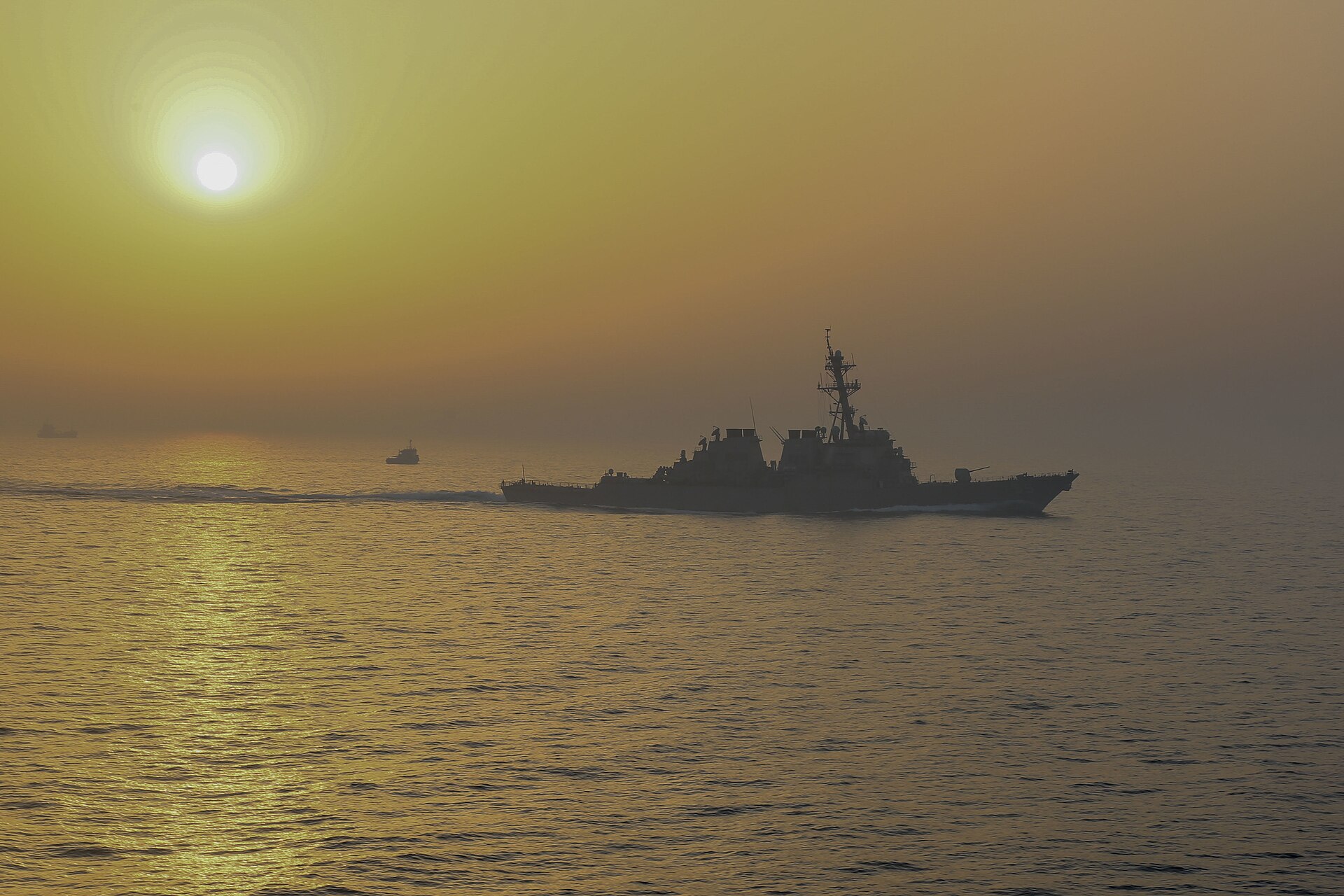
The Houthi blockade declared on July 20 sharpened the distinction further. It targeted Saudi Arabia alone, naming the Saudi strike on Sanaa airport as specific justification, and did not extend the maritime closure to UAE-bound shipping or frame the action as a response to joint Saudi-UAE operations. Twenty-four hours before the photograph was posted, the adversary most directly threatening Gulf maritime commerce had formally declared that the two states occupy separate conflicts with separate causes — a distinction the arm-in-arm image was not designed to contest and could not have overridden if it tried.
Iran’s diplomatic strategy mirrored its military targeting. Iran International reported in June that Tehran had approached “two Persian Gulf states” for bilateral de-escalation arrangements modelled on the UAE’s frozen-asset track — a divide-and-manage posture designed to prevent exactly the unified response the July 21 photograph was intended to project. The strategy works because there is no joint military structure to resist it: no integrated air-defence command, no shared early-warning network, no combined maritime patrol, no mutual-defence treaty. The photograph cannot prevent Tehran from offering Abu Dhabi a bilateral deal that excludes Riyadh, and nothing in the July 21 coordination suggests Riyadh asked Abu Dhabi to refuse one.
What the Photograph Can and Cannot Deliver
The arm-in-arm image serves three audiences, and for each it delivers a message requiring no capability transfer, no military integration, and no resolution of any underlying dispute. For Washington, it communicates that the two largest Gulf economies are not visibly fracturing under Iranian pressure at a moment when Prince Sultan Air Base has lost operational function and the United States is reconsidering its regional posture. For Tehran, it signals that the divide-and-manage approach faces resistance — though the absence of any joint operational content means that resistance remains rhetorical rather than demonstrated. For domestic audiences, it provides an image of leadership coordination that state-adjacent media can circulate without either government having to explain the December bombing, the March ban, the May exit, or the June asset track.
None of these messages require Saudi Arabia and the UAE to coordinate on anything beyond the timing of a social media post. The distinction matters because the audiences capable of reading the difference — Tehran’s military planners, Washington’s Gulf policy desks, the credit-rating agencies monitoring both countries’ fiscal positions — will assess the relationship by what it produces operationally, not by what it photographs.
“Once closely aligned on a regional agenda focused on countering political Islam, containing Iran, and combating Houthi rebels in Yemen, Riyadh and Abu Dhabi had significantly diverged by 2026 and found themselves more in competition than agreement.”
— Brookings Institution, “How the Iran war will change the Middle East,” 2026
Gargash’s own language on July 9 — twelve days before the photograph — captured the gap between aspiration and reality when he told The National that strengthening Gulf unity “is an utmost necessity.” The phrasing is aspirational, not descriptive: it frames unity as a condition that does not yet exist, a goal that has not been achieved, a necessity that remains unmet. The photograph twelve days later did not meet it either.
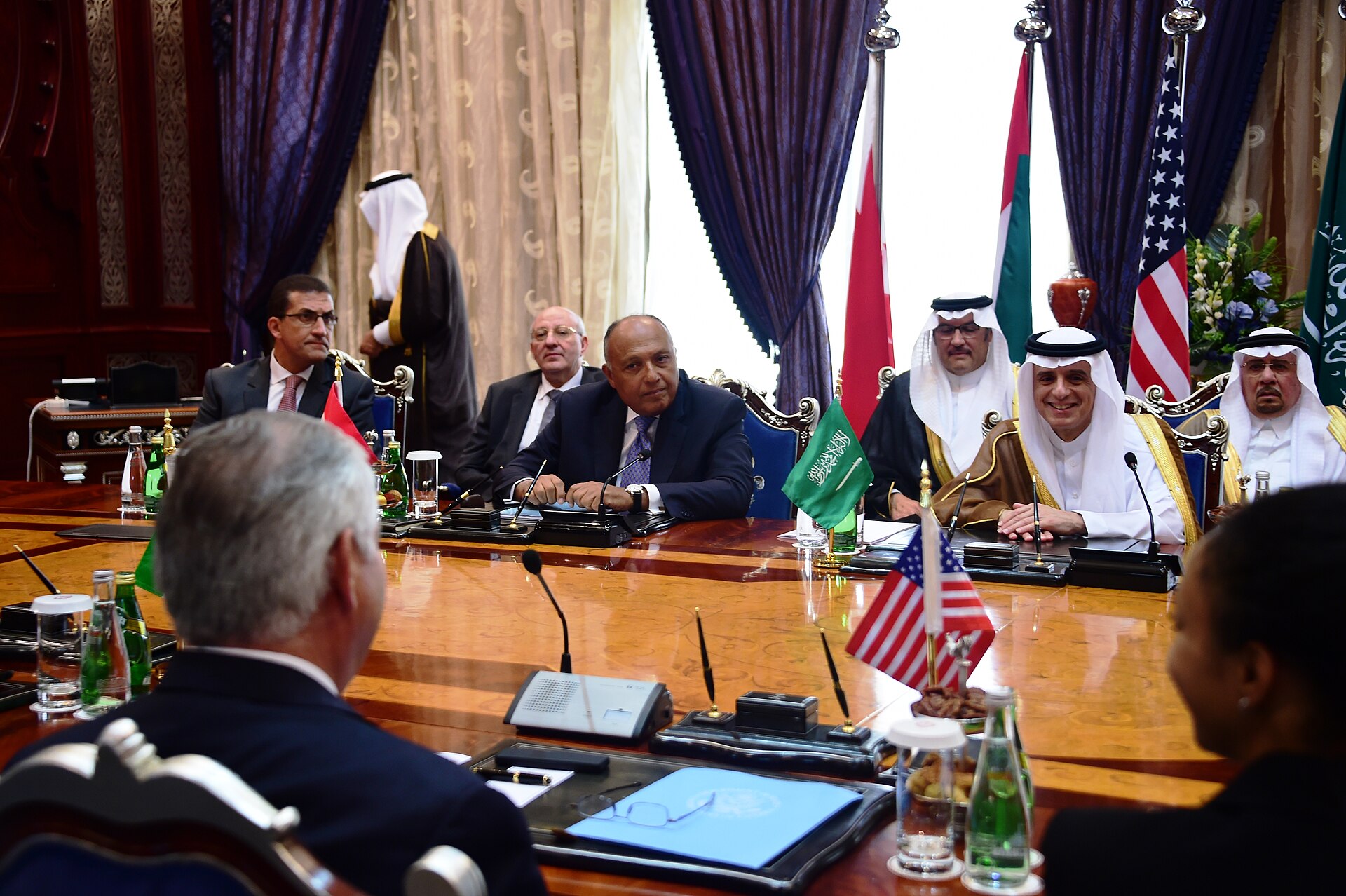
On the evening of July 21, with air-defence stockpiles depleted on both sides of the Gulf partnership, airborne surveillance destroyed in both inventories, diplomatic tracks operating without either capital at the table, and 2.7 million barrels of Saudi crude stranded at sea by a blockade the photograph did not address, the strongest display the two governments could produce was an arm-in-arm image and a proverb about spears. The spears, for the moment, remain apart.
Frequently Asked Questions
Did Khalid bin Salman and Sheikh Mansour bin Zayed meet in person on July 21?
The photograph was posted on X without an accompanying press release confirming the date, location, or agenda of the encounter. Neither government’s official news agency — SPA for Saudi Arabia, WAM for the UAE — released a formal meeting readout, a departure from standard Gulf diplomatic protocol when defence ministers hold bilateral discussions. No joint press conference followed, and no policy outcomes were attributed to the meeting, suggesting the photograph was the intended deliverable rather than a byproduct of a working session.
Has the UAE rejoined any Saudi-led military structure since the photograph?
No. The UAE withdrew the majority of its combat forces from the Saudi-led Yemen coalition in 2019, retaining advisory and special-operations elements aligned with the Southern Transitional Council rather than with the Saudi-backed government. As of July 21, 2026, no public announcement has been made of UAE reintegration into Saudi-led command structures in Yemen or any other theatre, and the Joint Forces Command headquartered in Riyadh does not include an operational UAE combat component in its post-2019 configuration.
What would a genuine Saudi-UAE strategic realignment include?
Defence analysts have identified several indicators that would distinguish substantive realignment from a media exercise: a joint interceptor procurement or sharing agreement addressing both countries’ depletion, a unified position within OPEC or a successor energy-coordination body, a Yemen ceasefire reconciling the factions each country supports, an integrated air-defence command with shared early-warning data and fire-control authority, and a single negotiating position on Iran rather than competing bilateral tracks. None of these were announced, referenced, or implied by the July 21 communications from either government.
Has Iran responded to the solidarity display?
Iranian state media had not issued a formal diplomatic response to the July 21 photograph as of publication. Iran’s operational posture, however, already constitutes a standing response: the continued separation of the UAE and Saudi Arabia as distinct targeting sets, the bilateral de-escalation offer extended to the UAE through the frozen-asset track, and the absence of any Iranian demand addressed to a unified Saudi-UAE entity all indicate that Tehran’s military and diplomatic planning does not treat the two states as a combined adversary. The photograph would need to be followed by operational integration — joint patrols, shared interceptor stocks, combined command authority — before Tehran’s targeting model would require revision.
Does the GCC still function as a collective security framework?
The GCC’s Peninsula Shield Force, the council’s collective defence mechanism, has not been activated in a combat role since the 2011 deployment to Bahrain. The 2017 Qatar blockade split the organisation into opposing camps for over three years, and while the January 2021 Al-Ula Declaration formally ended the dispute, the GCC Secretariat has not conducted a joint military exercise or issued a collective security communiqué in response to the 2026 Iran-US conflict. The Khalid-Mansour photograph was a bilateral signal that bypassed the GCC framework entirely, suggesting neither capital views the council as the vehicle through which Gulf security coordination will operate.