
WASHINGTON — On the same week that a $24.3 billion F-35 sale to Saudi Arabia sat in congressional review, the United States government told American citizens that Saudi airports were too dangerous to use. A State Department advisory, an embassy operational ban, and a Federal Aviation Administration flight warning, issued in parallel across October 2026, delivered that message through three different bureaucratic channels — none of which squared with the language of an alliance that both capitals claim to value.
An American was already dead at King Khalid International Airport, confirmed by Secretary of State Marco Rubio. The most visible instruments of American policy in the days that followed were not military but bureaucratic: a Level 3 “Reconsider Travel” advisory covering the entire country, a prohibition on US government employees using any Saudi airport without the Chief of Mission’s personal authorisation, and a sixty-day NOTAM warning all US-regulated aircraft about every altitude in the Jeddah Flight Information Region.
The warnings escalated from October 5 through October 16, broadening at each step while the Makkah Defence Agreement — the trilateral Saudi-Pakistani-Turkish pact invoked to fill the security gap Washington left — produced no combat operations and no visible air defence reinforcement. Washington armed the kingdom, advised its commanders, and told its own people to stay away.
Table of Contents
- What Did Washington Actually Tell Americans About Saudi Arabia?
- The Twelve-Day Escalation
- How Does a Flight Warning Change the Calculus for Saudi Aviation?
- King Khalid Airport Remains Closed
- Can the Makkah Defence Agreement Fill What Washington Will Not?
- The Alliance That Arms and Warns
- Why Did Washington Order Staff Out Seven Months Early?
- The Summit That Could Not Reach Riyadh
- Frequently Asked Questions
What Did Washington Actually Tell Americans About Saudi Arabia?
The US advisory apparatus deployed three concurrent instruments against Saudi Arabia in October 2026, each carrying different legal weight but arriving at the same practical conclusion. The State Department issued a Level 3 “Reconsider Travel” advisory for all US civilians, citing “risk of Iranian drone and missile targeting of American interests, armed conflict, terrorism, exit bans, and local laws regarding social media activity.” The Saudi-Yemen border zone carries a separate Level 4 “Do Not Travel,” but the Level 3 covers the entire country, including the capital, the commercial hubs, and every airport still accepting traffic.
The US Embassy in Riyadh, through rolling security alerts issued from at least October 5 through October 16, imposed the most operationally specific restriction: “U.S. government employees working in Saudi Arabia require special authorization from Chief of Mission to use any airport in Saudi Arabia following recent missile and UAV attacks on airports in the Kingdom.” The embassy also advised American citizens broadly to “consider ground options” — private car, train, and bus — and to follow “national alerts released by Saudi Arabia’s Civil Defense via cellular broadcast.” When the State Department tells Americans to reconsider visiting a country and the embassy tells them to take the bus instead of flying through it, the combined message is not subtle.
The Federal Aviation Administration issued NOTAM KICZ A0056/26 on October 11, valid until December 10 — a sixty-day window covering the entire Jeddah Flight Information Region. Its language warns that US operators should “exercise caution,” cites “ongoing military activities and GNSS interference,” and notes that threats “could pose a potential risk to aircraft at all altitudes.” The NOTAM applies to US air carriers, commercial operators, FAA certificate holders, and US-registered aircraft operators — the full scope of American commercial aviation.
The Middle East briefing 3,000+ readers start their day with.
One email. Every weekday morning. Free.
Separately, Safe Airspace — an independent aviation risk monitor used by airlines and insurers worldwide — raised Saudi Arabia to Level 1 “Do Not Fly,” its highest category, citing the risk of civil aircraft misidentification during air-defence responses and falling debris from interception attempts. Several other Gulf states, including Bahrain, Qatar, the UAE, Jordan, Oman, Kuwait, and Israel, also carry Level 3 travel advisories in 2026, but the government-employee airport restriction and the FAA NOTAM apply only to Saudi Arabia — a distinction that separates a general regional risk assessment from a specific judgment about one country’s security infrastructure.
The Twelve-Day Escalation
The first US Embassy security alert in the October series appeared around October 5 — the same day that Saudi Defence Minister Prince Khalid bin Salman announced the activation of collective deterrence measures under the Makkah Defence Agreement, signalling to Washington that Riyadh had formally turned to its trilateral partners for the security that the United States had declined to provide through direct strikes. Rolling embassy alerts followed, and the scope widened at each iteration: the October 11 alert named specific airports; by October 12, the restriction had expanded to “any airport in Saudi Arabia”; and by October 13, the full requirement of Chief of Mission authorisation for government employees was in place, reaffirmed daily through October 16.
| Date | Agency | Action |
|---|---|---|
| Oct 5 | US Embassy Riyadh | First security alert in the October series |
| Oct 2026 | State Department | Level 3 “Reconsider Travel” advisory for all US civilians |
| Oct 11 | US Embassy Riyadh | Alert naming specific airports |
| Oct 11 | FAA | NOTAM KICZ A0056/26 issued — 60 days, all altitudes, Jeddah FIR |
| Oct 11 | Safe Airspace (independent) | Saudi Arabia raised to Level 1 “Do Not Fly” |
| Oct 12 | US Embassy Riyadh | Restriction expanded to “any airport in Saudi Arabia” |
| Oct 13 | US Embassy Riyadh | Chief of Mission authorisation required for government employees |
| Oct 14–16 | US Embassy Riyadh | Restriction reaffirmed daily without narrowing |
The escalation tracked the attacks. Houthi strikes on King Khalid International Airport between October 6 and 11 killed at least twenty people and wounded hundreds more, according to GACA statements reported by the BBC, and Secretary of State Marco Rubio confirmed that an American was among the dead. The embassy alerts did not create the danger — they documented Washington’s evolving assessment of it, and with each reaffirmation the bureaucratic message became harder to read as anything other than a formal judgment on the adequacy of Saudi air defences.
Yahya Saree, the Houthi military spokesman, provided his own advisory in parallel. He declared that “the airports and airspace are exposed to targeting and constitute a theatre of operations for our forces,” warned airline companies not to use Saudi airports, and told the Saudi government to “take our warnings seriously, and Saudi Arabia bears responsibility for any failed interceptions.” He exempted Makkah and Madinah airports from targeting — a deliberate religious carve-out designed to isolate the campaign politically while leaving every other airport, including Riyadh’s, inside the declared strike zone. Operations, Saree said, “will continue in the coming days, targeting Saudi enemy airports and oil facilities.”
How Does a Flight Warning Change the Calculus for Saudi Aviation?
An FAA NOTAM carries regulatory weight that extends beyond the cockpit. Airlines, insurers, and operations teams treat it as a risk assessment that determines whether a route remains commercially viable, and when the FAA cites threats at all altitudes across an entire flight information region through December, the commercial consequences arrive before the military ones. Routes get suspended, premiums get repriced, and aircraft get repositioned to airports where the insurance will still cover them — a cascade of financial decisions that grounds traffic regardless of whether the affected country’s own aviation authority considers its airports operational.
Delta Air Lines CEO Ed Bastian said on October 9, before the NOTAM was even issued, that “safety is going to make the call.” Delta’s corporate security team had already issued an internal employee travel alert covering October 8 through 12. By October 12, the airline announced that its planned October 23 Atlanta-to-Riyadh inaugural — a flagship route in the new era of direct US-Saudi commercial aviation — would be postponed to March 2027, five months after the flight that was supposed to open the corridor.
| Airline | Suspension |
|---|---|
| Air France / KLM | Until October 24 |
| British Airways | Until November 3 |
| Qatar Airways | No confirmed resumption date |
| Etihad Airways | Until October 19 |
| Delta Air Lines | Inaugural postponed to March 2027 |
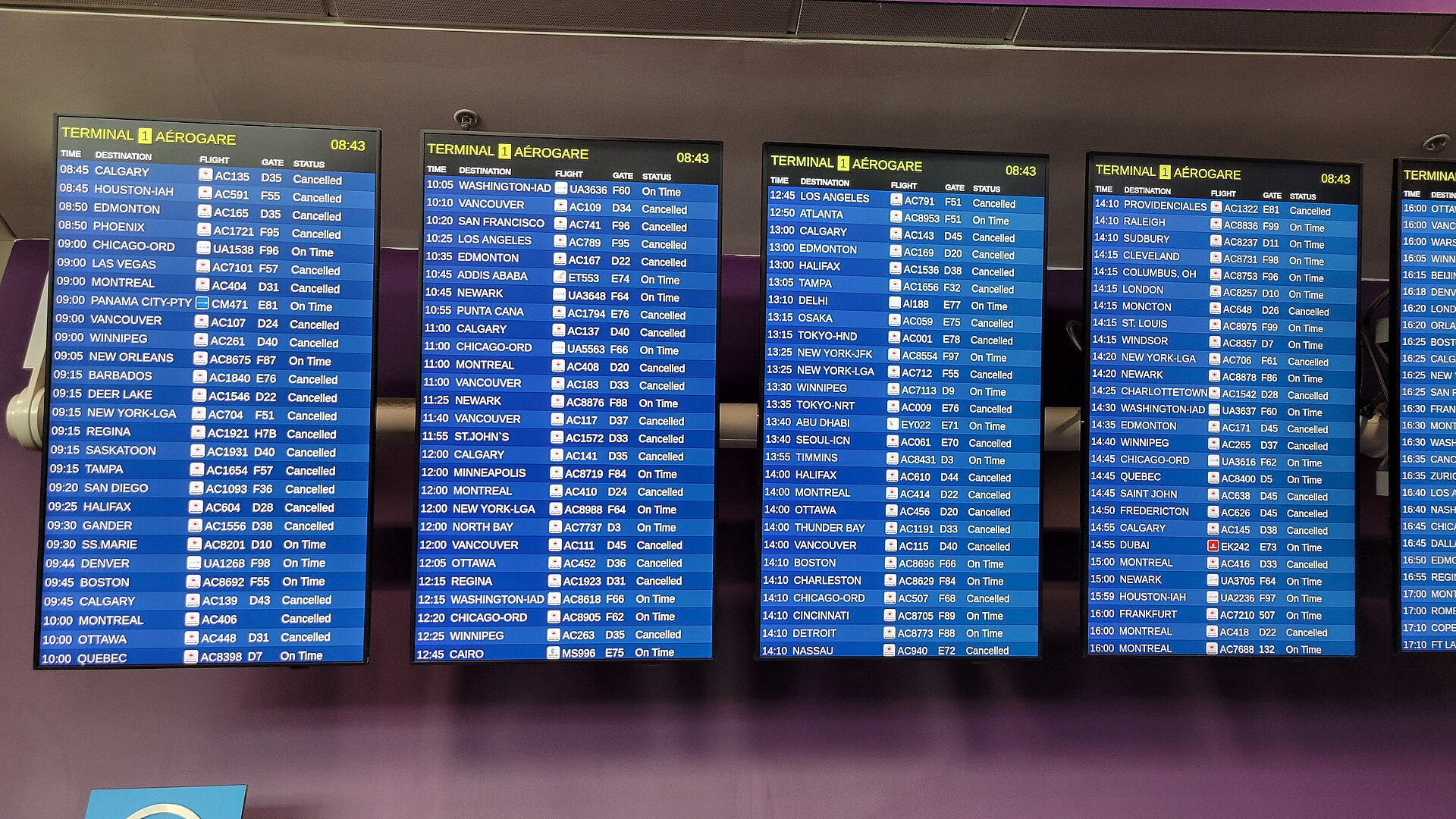
King Khalid International Airport handles approximately 700 flights per day, according to Flightradar24, and the airline suspensions spread through timetables well beyond the carriers listed above — connecting itineraries, cargo routing, and diplomatic scheduling all run through a capital airport that, as of October 17, had no announced reopening date. The closure meant that a country spending billions to attract foreign investment, tourism, and international events could not receive commercial flights at its principal gateway.
King Khalid Airport Remains Closed
Six aircraft were damaged in the strikes on King Khalid International Airport as airlines raced to evacuate their remaining fleets, according to Aerospace Global News. GACA, the Saudi aviation authority, stated that the closure continues “while safety and operational-readiness procedures continue,” with no confirmed reopening date announced as of October 17.
Coalition spokesman Turki al-Maliki called the October 10 airport strike “a full-fledged war crime.” Saudi forces intercepted three Houthi ballistic missiles targeting Riyadh and Khamis Mushait, according to Free Press Kashmir, and separately intercepted a cruise missile over Madinah, according to AP News — confirming that the defence systems are intercepting some of the incoming fire, but not all of it. Saudi authorities are probing how their defence systems failed to stop the strikes that got through, according to Greater Kashmir.
Wolfgang Pusztai, a security policy and defence analyst, told Al Jazeera on October 11 that Saudi ballistic missile defence was “designed mainly against Iran,” not for the scale and tempo of Houthi attacks, and that the Houthis aim “to maximise the strategic impact of these attacks, in this case to disrupt civilian air traffic.” That assessment aligns with the pattern: the Houthis do not need to overwhelm Saudi air defences comprehensively, they need only to demonstrate that one projectile can reach a terminal, and the commercial aviation system — driven by insurance, regulation, and the advisory apparatus of the airline’s home government — does the rest.
“As much as you can have a multi-layered air defence system, one will always come through.”
Nawaf Obaid, Senior Fellow, War Studies, King’s College London — Al Jazeera, October 11, 2026
Obaid’s observation, offered the day after the deadliest airport strike, frames the problem that no warning instrument and no arms sale can solve: the Houthis have made Saudi commercial aviation a target, and Saudi air defences cannot guarantee a zero-intercept-failure rate. The consequences of even a single failure — in human life, in commercial disruption, in diplomatic credibility — have proved catastrophic enough to close an airport, halt commercial aviation at the capital, and trigger three concurrent US advisories for a country that Washington calls a partner.
Can the Makkah Defence Agreement Fill What Washington Will Not?
The Makkah Defence Agreement, signed on August 7 in Mecca by Crown Prince Mohammed bin Salman, Turkish President Recep Tayyip Erdogan, and Pakistani Prime Minister Shehbaz Sharif, treats an attack on one signatory as an attack on all. Its text has not been released. The pact was invoked on October 5, and as of mid-October it had produced no joint combat operations in Yemen, no visible reinforcement of Saudi air defence batteries, and no change in the tempo or reach of Houthi strikes on Saudi infrastructure.
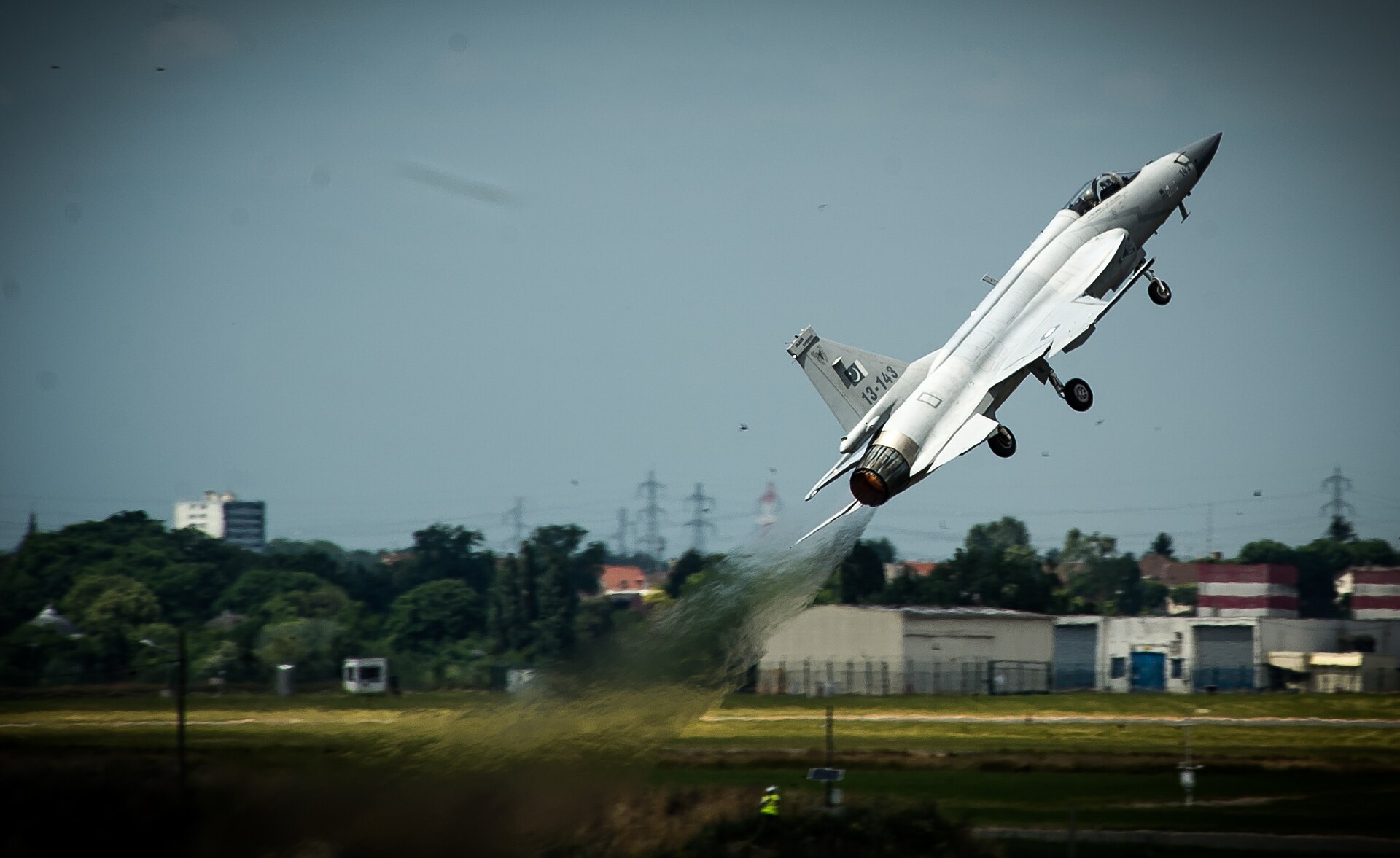
Pakistan initially stated it was “not considering an immediate military response.” Turkey limited its declared role to “defensive and technical support.” Neither country, according to the available record, had been formally asked for support before the pact was invoked, and neither Pakistani nor Turkish forces had conducted operations in Yemen under its provisions by mid-October. Pakistan had earlier deployed approximately 8,000 troops, around 16 JF-17 aircraft, two drone squadrons, and an HQ-9 air defence system financed by Riyadh, according to Reuters — but that deployment predated the Makkah Agreement and was conducted under a separate bilateral arrangement signed in September 2025.
F. Gregory Gause III, an associate fellow at the Middle East Institute and professor emeritus at the Bush School of Government at Texas A&M, assessed in the Georgetown Journal of International Affairs that the pact “primarily functions as a diplomatic signal to the United States.” On the question of whether Pakistan’s nuclear arsenal might backstop Saudi security, Gause was direct: “I find it highly unlikely that Pakistan would use nuclear weapons to repel attacks on Saudi Arabia.” The pact, in other words, was built to change Washington’s behaviour, not to replace Washington’s capabilities — and the three-layer US advisory issued in the same month suggests the signal was either not received or not persuasive.
Doga Eralp of the Marine Corps University described the agreement as an untested “high-stakes political experiment” with “limited integration and unclear response commitments.” Yasmine Farouk of the International Crisis Group noted that all three signatories remain US security partners, and the pact does not represent a clean break from the American framework. Kristian Coates Ulrichsen of the Baker Institute characterised it as offering “additional strategic options rather than replacing the US” — a reading that the October advisory record appears to confirm, given that the additional options have not yet produced additional security.
The Alliance That Arms and Warns
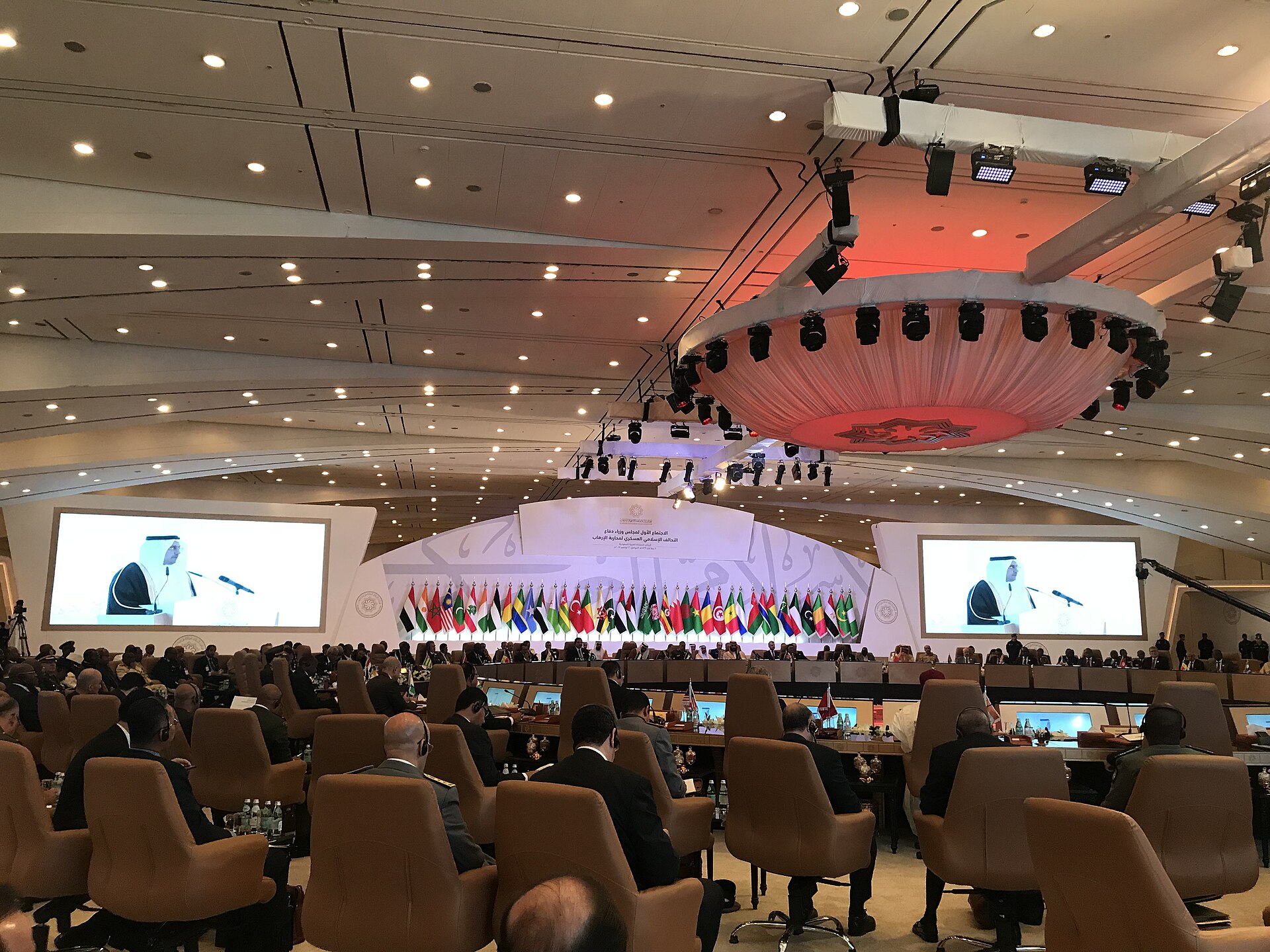
The contradiction sits at the centre of the US-Saudi relationship in October 2026, and the numbers make it impossible to look away from. A $24.3 billion F-35 sale covering 48 aircraft is under congressional review, according to The Aviationist. The United States approved approximately $2 billion in arms sales to Saudi Arabia in July 2026. CNN reported that more than 100 US military advisers have been sent to the kingdom under a new joint command for intelligence support. Secretary of State Rubio said on October 5, days before the airport toll began to climb, that “we intend to live by” the US-Saudi defence agreement.
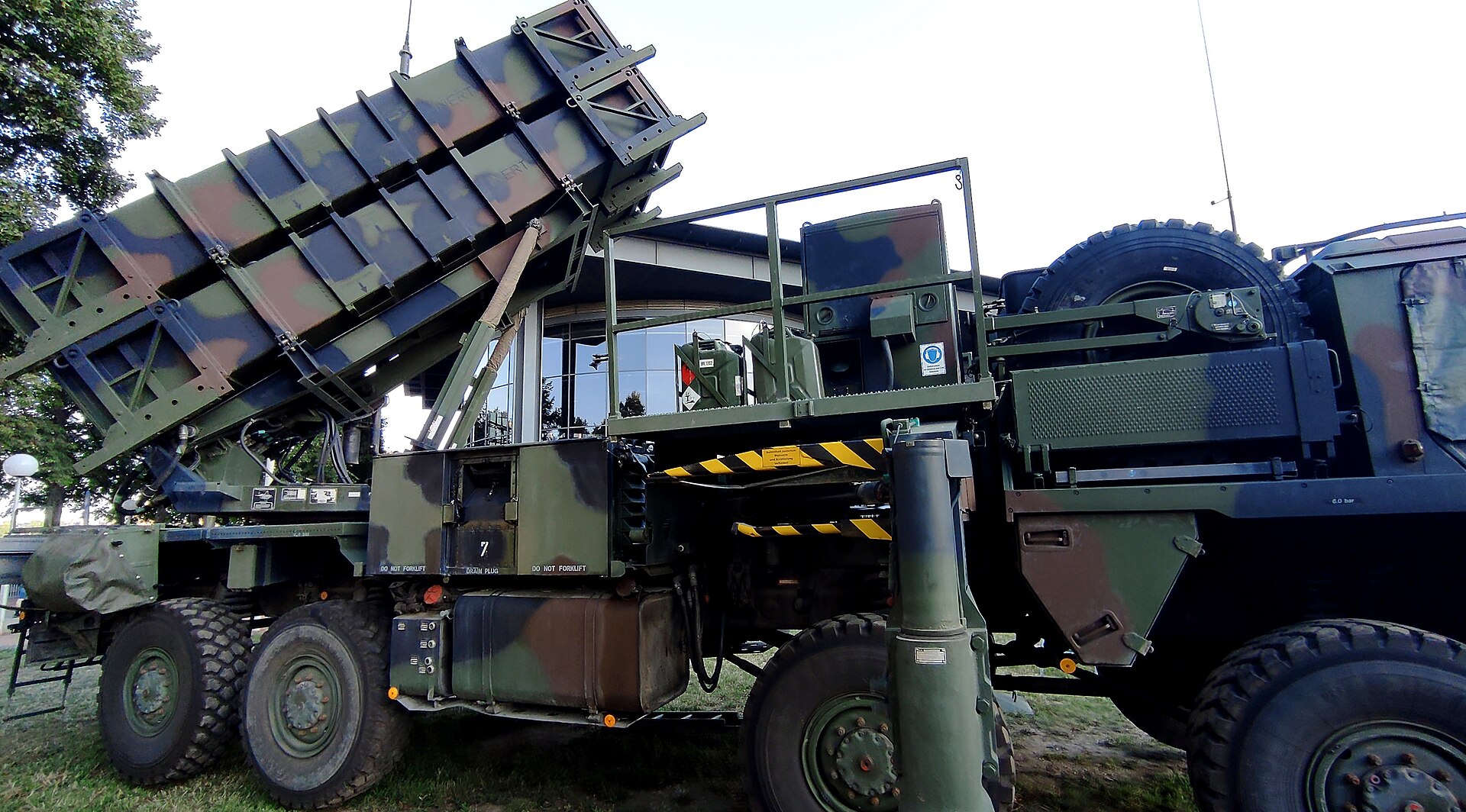
The intelligence is shared, the weapons are sold, the advisers are deployed — and the formal, public position of three US agencies is that American citizens should not use Saudi airports, should reconsider travelling to the country at all, and should note that the airspace poses a risk to aircraft at every altitude. The gap between what Washington sells and what Washington vouches for has never been wider, and the advisory apparatus makes the gap legible in a way that diplomatic language usually obscures: if the air defence shield worked well enough, there would be no NOTAM, no embassy airport ban, and no Level 3 advisory citing missile and drone risk at a country where the weapons Washington sold are supposed to prevent exactly that risk.
President Trump, asked on October 10 whether the United States would join Saudi airstrikes, said: “We may. We’re going to look at it.” He added: “They’re able to defend. The Saudis are good fighters.”
Crown Prince Mohammed bin Salman had called Trump twice in September to ask for US strikes on the Houthis, according to CNN, and both requests were declined. The pattern across both months is consistent: Washington offers language that suggests commitment, takes actions that deliver hardware, and issues documents that say the hardware is not enough.
Iran, for its part, maintained its two-track posture of denial and mediation throughout October. Foreign Minister Abbas Araghchi told Saudi Foreign Minister Prince Faisal bin Farhan that “insisting on a military approach and disregarding a political solution would only further complicate the situation.” Iranian Foreign Ministry spokesman Esmaeil Baghaei told reporters that “Yemen’s armed forces act according to their own interests and assessments” — the standard Tehran formulation that acknowledges the Houthis’ alignment with Iranian strategic interests while maintaining the fiction of operational independence. Neither the mediation offer nor the denial changed the trajectory of the strikes, and neither appeared in the US advisory language, which cited Iranian drone and missile risk without engaging with the diplomatic channel that Iran had offered through Oman and Qatar.
Why Did Washington Order Staff Out Seven Months Early?
The October advisory did not arrive on clean ground. In March 2026, seven months before the airport attacks began, the State Department ordered non-emergency US government staff and their families to leave Saudi Arabia under an “authorized departure” order, according to a State Department notice reported by Signal SCV — a formal mechanism that removes dependants and non-essential personnel from a country where the security environment is assessed as deteriorating beyond the point where their presence can be justified. The March order predated the Houthi escalation to Riyadh by six months and the Makkah Defence Agreement by five, meaning that Washington had already concluded, well before the airport crisis, that the security situation in the kingdom warranted removing families.
The October warnings were therefore an escalation from an already-degraded baseline, not a fresh response to a new threat. The Level 3 advisory environment had been established before the October attacks, and the embassy airport ban, the FAA NOTAM, and the Safe Airspace “Do Not Fly” designation layered additional restrictions onto a situation that the State Department had already classified as dangerous enough to extract its own people’s children from the country.
That timeline matters for the broader trajectory of Saudi Arabia’s international positioning. A country that is simultaneously pitching itself as the future capital of global events — Riyadh Season, the Future Investment Initiative, a World Cup bid, the EU-GCC summit — and operating under a US authorized departure order since March faces a credibility gap that no arms sale can close. The weapons may arrive, the advisers may stay, but the families left months ago, and the formal record says why.
The Summit That Could Not Reach Riyadh
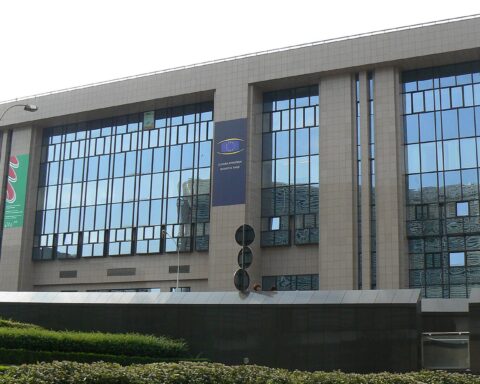
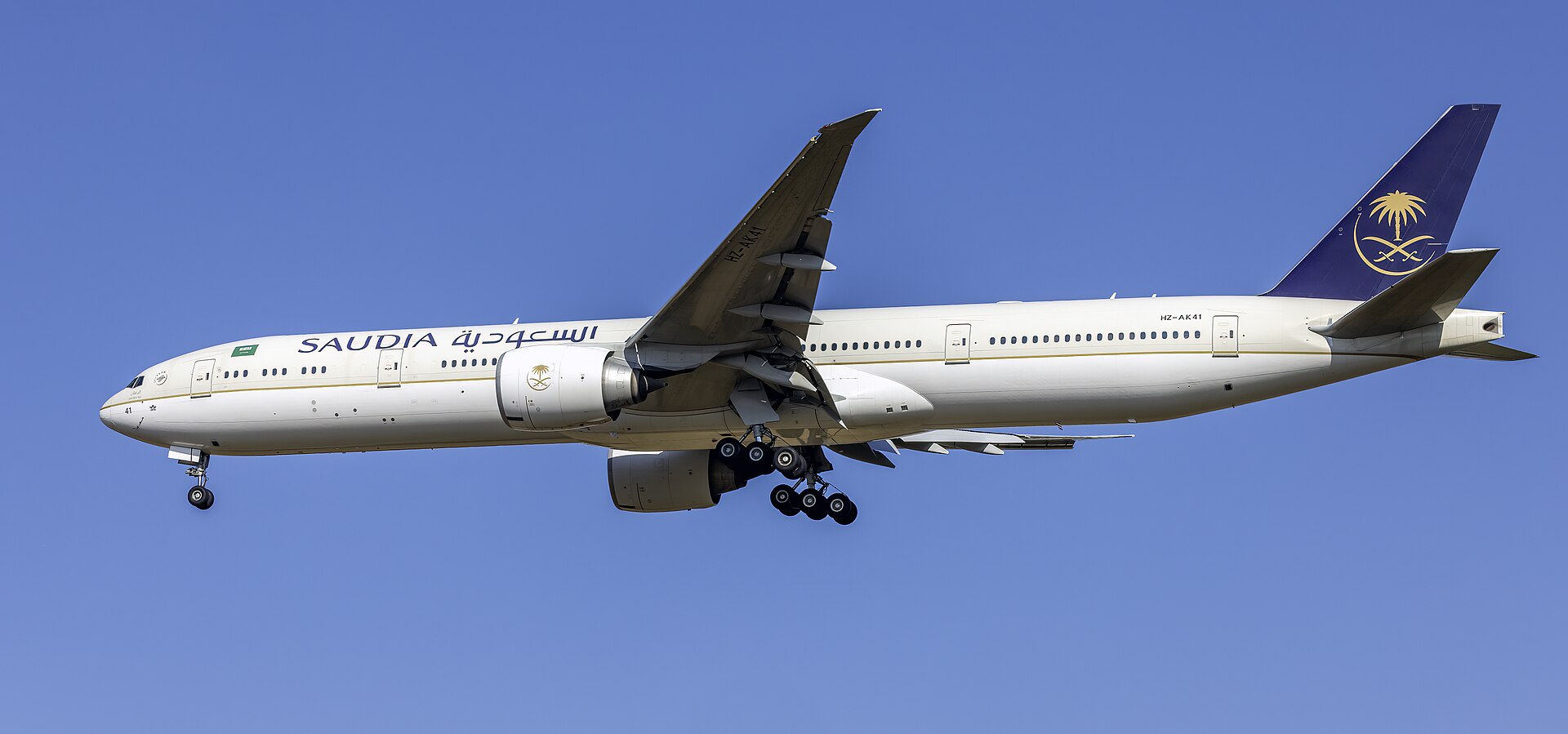
The EU-GCC summit, originally scheduled for October 24 in Riyadh, was formally postponed by the GCC Secretariat on October 15, citing Houthi threats and the suspension of operations at King Khalid International Airport. The statement said the summit “will be rescheduled to a later date to be agreed upon in due course by the GCC and EU sides.” European Council President Antonio Costa’s invitation letter, dated October 6, had set the summit for October 24, co-chaired with Crown Prince Mohammed bin Salman — a high-visibility event designed to cement the GCC-EU relationship at a moment when Gulf energy imports account for more than 75 per cent of EU purchases from the region, according to the European Commission.
The postponement is the advisory made concrete. If European heads of state cannot safely fly to the Saudi capital for a summit that both sides spent months preparing, then the State Department’s Level 3, the embassy’s airport ban, and the FAA’s NOTAM are not overcautious bureaucratic reflexes — they are descriptions of an operational reality that even the host government’s own regional bloc acknowledges. The GCC Secretariat, not the US State Department, made the call to postpone, and its stated reason — the airport closure and Houthi threats — mirrors the language in the American advisories almost exactly.
Riyadh Season was due to open on October 21, the Future Investment Initiative on October 26. The World Petroleum Congress had begun on October 11, though CNN noted that it was unclear how many delegates attended. Each of these events depends on the assumption that Riyadh can receive international visitors safely, an assumption that three US agencies, one independent aviation monitor, and the GCC Secretariat itself have, in different ways, declined to endorse.
Ed Bastian, the Delta CEO, compressed what three federal agencies spent nearly two weeks writing into six words: “Safety is going to make the call.”
Frequently Asked Questions
Is the US travel advisory for Saudi Arabia unique among Gulf states?
Not at the Level 3 tier — Bahrain, Qatar, the UAE, Jordan, Oman, Kuwait, and Israel all carry the same “Reconsider Travel” classification in 2026, reflecting the regional instability that extends beyond the Saudi-Houthi theatre. What distinguishes Saudi Arabia is the additional layer: the Chief of Mission airport restriction for government employees and the FAA NOTAM covering all altitudes in the Jeddah Flight Information Region are applied only to Saudi Arabia and have no equivalent for the other Level 3 Gulf states. The combination of all three instruments — advisory, operational ban, and flight warning — directed at a single country is the signal, not the Level 3 rating alone.
Has the FAA issued similar NOTAMs for other conflict zones?
The FAA maintains active NOTAMs and Special Federal Aviation Regulations for several conflict zones at any given time. After Israel struck Iranian sites in 2025, the State Department issued a worldwide caution for Americans and warned against travel to Israel, Gaza, and the West Bank, citing armed conflict. The distinction in the Saudi case is that the NOTAM covers the entire Jeddah Flight Information Region — effectively all Saudi airspace — for sixty days, a duration and scope that reflects a sustained threat assessment rather than a response to a single incident. The NOTAM expires on December 10, 2026, but it can be extended, amended, or cancelled before then depending on conditions.
How have Saudi Arabia’s Gulf neighbours responded to the airport attacks?
Kuwait, the UAE, and Qatar each issued solidarity statements in the days following the October 10 strike — none imposed travel restrictions on Saudi Arabia comparable to those issued by Washington. Kuwait’s government declared that Saudi security was “an inseparable part of the security” of Kuwait and the GCC. The UAE declared “full solidarity” with the kingdom. Qatar called the strike “a direct threat to the security of the region.” The gap between Gulf ally rhetoric and American advisory language captures a wider divergence: Riyadh’s immediate regional partners treated the attacks as a shared threat requiring solidarity; Washington treated the same attacks as grounds for warning its own citizens to reconsider travelling there at all.
What is Safe Airspace and why does its rating matter commercially?
Safe Airspace is an independent aviation risk monitor that assesses conflict zones for airlines, insurers, and aviation regulators. Its Level 1 “Do Not Fly” classification is its highest risk category. The rating matters because airlines and their underwriters use it alongside government advisories to calibrate war-risk insurance premiums, route viability, and operational exposure. A country rated Level 1 by Safe Airspace faces higher insurance costs for any carrier that continues to operate there, and many airlines treat the rating as effectively prohibitive regardless of whether the country’s own aviation authority considers its airports open.