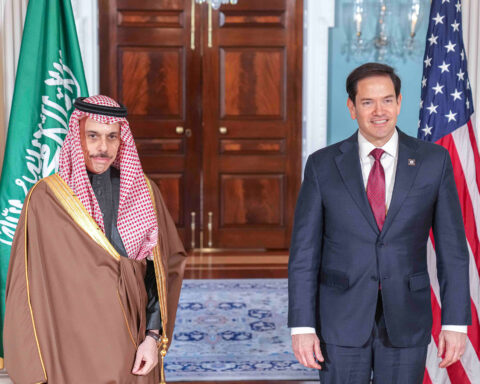
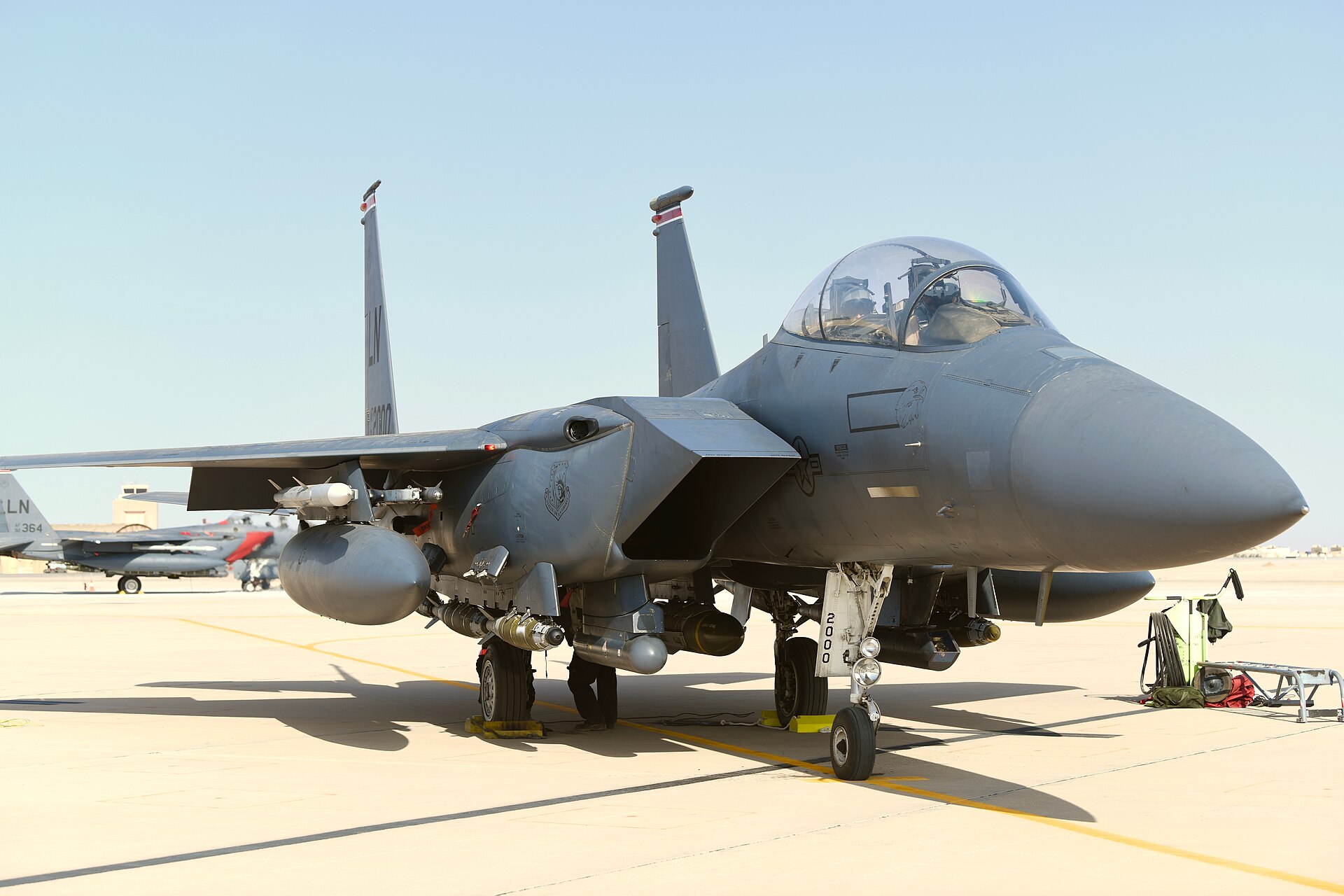
RIYADH — On September 20, at a US military facility within range of Yemen, American ground crews were loading ordnance onto strike aircraft. Target lists had been approved. Admiral Brad Cooper, commander of US Central Command, had presented options to Defence Secretary Pete Hegseth. Mohammed bin Salman had called Donald Trump twice that month asking for exactly this — direct American strikes against the Houthis who had seized control of the Bab al-Mandeb strait and were strangling Saudi Arabia’s oil exports tanker by tanker. By midday, Trump cancelled the operation. No aircraft launched.
The reason was not a change of heart about the Houthis. It was a calculation about the country requesting the strikes. Alex Plitsas, a former Pentagon official now at the Atlantic Council, told Axios that Trump “did not want to open a Pandora’s box by striking because it could cause the Houthis to hold the Bab al-Mandeb at risk and create a second choke point” — a move that “would cause oil prices to spike further when the Saudis were supposed to take the lead.” The military action Saudi Arabia begged for was the military action that would accelerate its own fiscal crisis.
That paradox — Riyadh as both the intended beneficiary and the economic casualty of the intervention it keeps requesting — is the structural truth of this war. The Houthis understand it. The White House understands it. And after the October 12 airport strike that killed thirteen people at King Khalid International, Saudi Arabia’s leadership understands it too. When Yemeni President al-Alimi called Trump following the attack, the president, according to Reuters, made no direct pledge of support during the call.
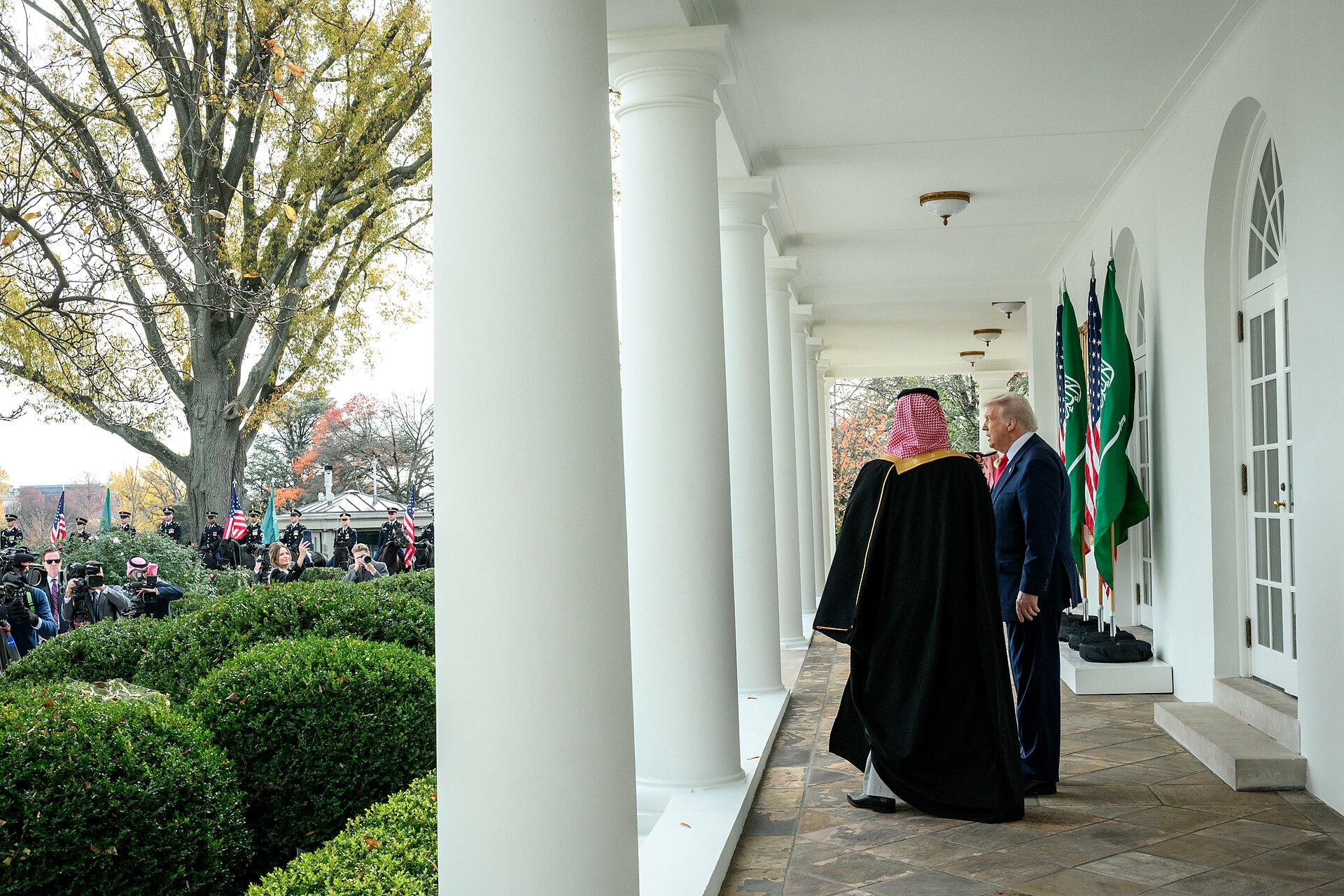
Table of Contents
- The Promise Riyadh Could Not Keep
- Why Did the United States Leave Saudi Arabia Out of the Muscat Deal?
- Target Lists Approved, Operation Cancelled
- Did Saudi Arabia Block US Military Operations in the Gulf?
- Why Would US Airstrikes on the Houthis Hurt Saudi Arabia?
- The Abqaiq Pattern Without the Exit
- What One Hundred Advisers Cannot Do
- Frequently Asked Questions
The Promise Riyadh Could Not Keep
In July, Saudi Arabia told Washington it could handle the Houthis without direct US military involvement. Axios reported the claim in early October, framing it as the starting point of a reversal that unfolded over the following two months. At the time, the position suited both capitals — Riyadh wanted to demonstrate that years of American defence purchases had built self-reliance, and the White House wanted distance from a conflict it had already fought once and lost. For Trump, the claim was convenient: a Gulf ally that could manage its own security was an ally that did not require American blood or treasure three months after the US-Houthi ceasefire brokered in Oman ended Operation Rough Rider.
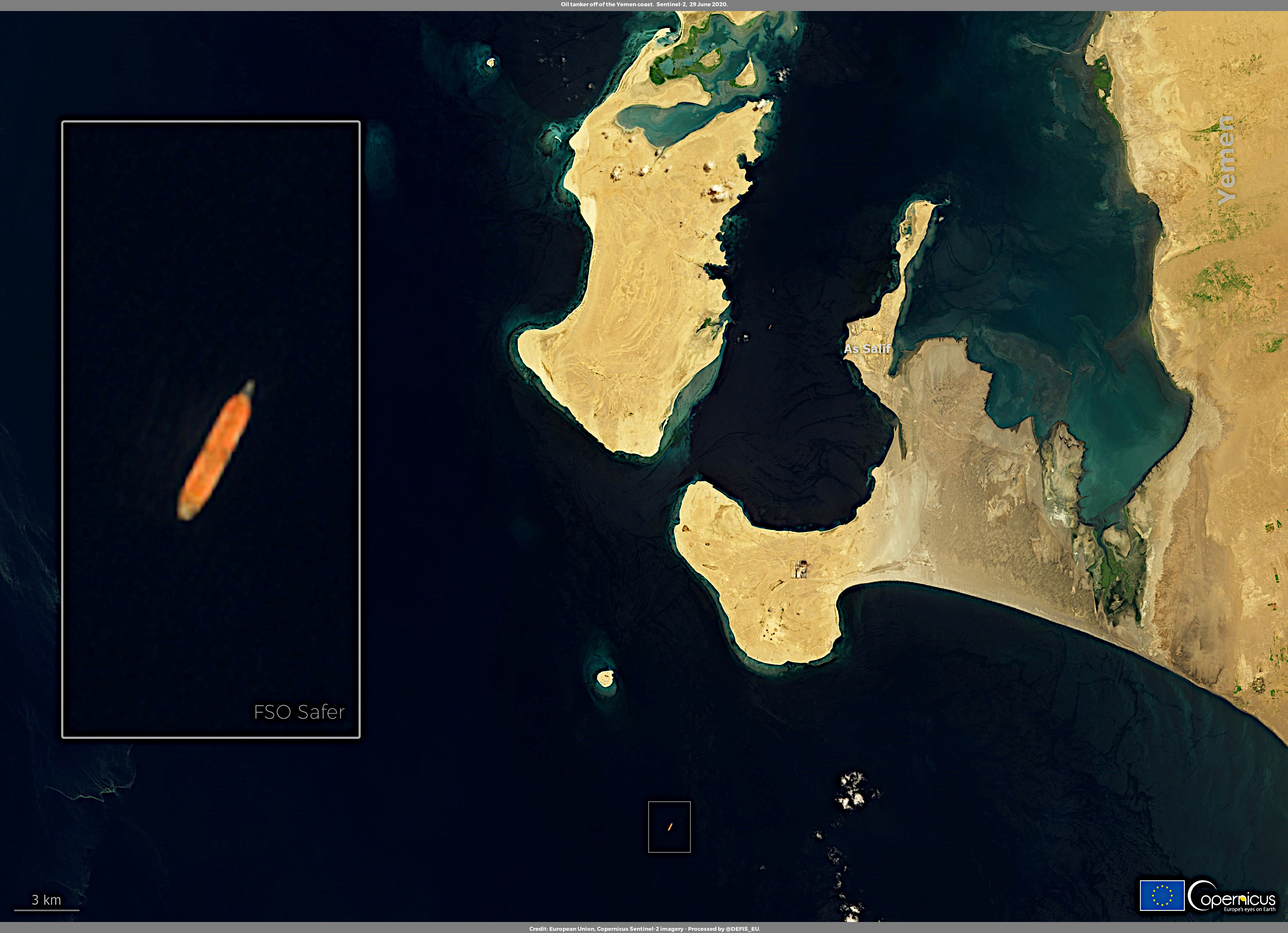
The confidence did not survive contact with the Bab al-Mandeb. By September, the Houthis had seized Dhubab, Perim Island, and Mocha — three positions that gave them physical control of the strait’s entrance, as Al Jazeera reported. These were not symbolic gains. Whoever holds the coastline on both sides of the strait and the islands between them holds the shipping lanes. Saudi Arabia’s Royal Saudi Naval Forces do not have the capacity to clear and hold a contested waterway against an entrenched adversary operating from elevated coastal positions with anti-ship missiles.
The commercial consequences arrived before Riyadh could mount a military response. Saudi oil exports to Asia collapsed from 3.4 million barrels per day in June to 128,000 barrels per day by August — a ninety-six percent drop in two months, according to Al Jazeera. Global oil prices rose above $107 a barrel. US gasoline prices climbed thirty-five percent. The very disruption that made Riyadh desperate for American intervention was the disruption that made Washington reluctant to risk further escalation.
The Middle East briefing 3,000+ readers start their day with.
One email. Every weekday morning. Free.
MBS made two calls to Trump in September requesting airstrikes, as CNN reported on October 10. Trump declined both, offering intelligence and targeting data instead. The crown prince who had told Washington in July that Saudi Arabia could manage alone was now asking the president for the kind of direct military action the United States had attempted the year before — and failed to sustain. Operation Rough Rider, the US campaign that struck more than a thousand Houthi targets between March and May 2025, had not degraded the group’s capacity to wage war. The Houthis withstood nearly two months of sustained American bombing and came back holding more territory than before.
Why Did the United States Leave Saudi Arabia Out of the Muscat Deal?
The short answer is that the deal worked precisely because Saudi Arabia was excluded. The Houthis needed a channel that removed the American threat without constraining their campaign against Riyadh. Washington needed an arrangement that protected US forces and commercial shipping without requiring a new ground war. Saudi Arabia’s exclusion was not an oversight — it was the price of the agreement for both parties that signed it.
One week before Trump ordered the Pentagon to prepare strikes, American diplomats met Houthi representatives at the US Embassy in Muscat. The September 13 meeting, reported by wire services, produced an understanding that restructured the war’s rules in a single afternoon. The Houthis pledged not to attack American forces, commercial vessels, or Israeli ships. In exchange, they received what amounted to a standing assurance that the United States would not resume military operations against them — an assurance Trump reinforced when he told Fox News on September 20 that he was in “constant communication” with the Houthis, who had agreed not to target Americans.
What the Muscat understanding did not include was Saudi Arabia. Saudi vessels remained, in the Houthis’ stated framework, legitimate targets. Every party in the room was protected. The party that needed protection most was not in the room.
The asymmetry was deliberate and informed by recent experience. The Houthis had learned from Operation Rough Rider that the United States could hit them hard but could not sustain the campaign indefinitely — and that American domestic politics created a ceiling on military action that Saudi Arabia’s domestic politics did not. By offering Trump a deal that removed the risk to American forces while preserving the right to escalate against Riyadh, the Houthis gave the president exactly what he needed to justify restraint. Trump cited the Houthi assurances as his reason for standing down. The Houthis had weaponised Trump’s own stated logic against the ally that called him for help.
Mohammed al-Bukhaiti, a member of the Houthi political bureau, made the calculation explicit on October 13, the day after the airport strike that killed thirteen. His warning to CBS News and The New Arab was calibrated with care — not a bluff against American strikes but a reminder that the Muscat understanding held and that any American return to the fight would carry a price Trump could not afford in the final weeks before midterm elections.
If the US becomes involved in the aggression against Yemen, we will not deliberate over the decision to respond; rather, there will be a swift and painful response targeting the US and all its interests in the region.
Mohammed al-Bukhaiti, Houthi political bureau, CBS News / The New Arab, October 13, 2026
Al-Bukhaiti was telling Washington what the Houthis had already demonstrated through action: that deterring the United States was achievable through a direct channel while escalation against Saudi Arabia continued without constraint. The strategy was working precisely because it offered Washington an exit that did not extend to Riyadh.
Target Lists Approved, Operation Cancelled
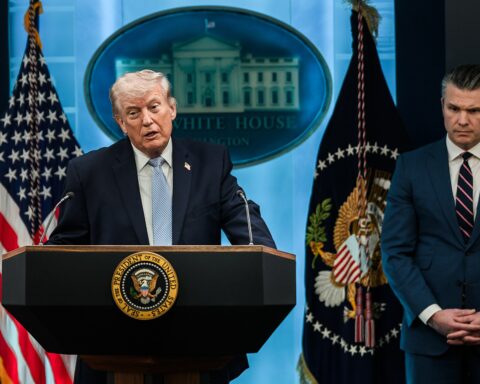
The September cancellation followed a sequence that revealed the internal mechanics of the US decision and the speed with which the White House can reverse itself. On September 18 or 19, after one of MBS’s calls, Trump reversed his earlier refusal and ordered the Pentagon to prepare strikes against Houthi positions. The New York Times, as reported by Axios on September 21, described CENTCOM commander Admiral Cooper presenting options to Hegseth. Target lists were approved. Ordnance was being loaded onto aircraft. The machinery of American military power had been activated at the request of a Gulf ally — and then, at midday on September 20, deactivated by the same president who set it in motion.
No aircraft launched. The cancellation came the same day Trump told Fox News about his “constant communication” with the Houthis, suggesting the decision was connected to the Muscat understanding rather than a sudden strategic reassessment. Plitsas, the Atlantic Council analyst, told Axios that the president’s reasoning centred on oil prices and the question of who would bear the consequences. Striking the Houthis risked provoking exactly the kind of full strait closure that was already devastating Saudi exports — but from the American side, it would look like Washington had caused the price spike. With gasoline prices already up sharply and midterm elections three weeks away, the political arithmetic in Washington was more legible than the military arithmetic in the Gulf.
Trump himself made the electoral calculation explicit. He told Fox News he might not strike “because of the elections,” as Al Jazeera reported. Sixty-five percent of Americans disapproved of the administration’s handling of the Iran war, according to Newsweek polling in October. Jeffrey Feltman of the Brookings Institution captured the strategic bind in comments to The Hill: “War with the Houthis right now would counter [Trump’s] narrative that this conflict is essentially over. It’d be hard to sustain that narrative if you’re suddenly opening a second front.”
The result was a policy that satisfied nobody and taught everyone the wrong lesson. Saudi Arabia watched bombs being loaded for strikes that would never come. The Houthis watched an adversary prepare an operation and then flinch — confirming that the Muscat channel offered reliable deterrence. And the United States demonstrated that its military planning apparatus could be activated and deactivated within a single news cycle, a fact that every actor in the region registered and filed away. Jennifer Kavanagh of Defense Priorities articulated the military case for restraint: the US “cannot afford a wider conflict, is already running short on munitions,” and resuming bombing “would not guarantee an end to the Houthi threat” given the group had previously “withstood nearly two months of sustained U.S. bombing.”
Did Saudi Arabia Block US Military Operations in the Gulf?
Yes — and the episode inverts the conventional narrative of Saudi dependence. In May 2026, Riyadh refused Washington access to Prince Sultan Air Base and Saudi airspace for Operation Project Freedom, a US-proposed plan to escort oil tankers through the Strait of Hormuz. The refusal was not irrational: allowing visible American combat operations from Saudi soil risked marking the kingdom as a co-belligerent, collapsing its carefully maintained position as a victim of the war rather than a participant in it.
The story Washington tells is one of Saudi dependence — a client state calling for help it cannot generate on its own. The story from Riyadh is more complicated, because Saudi Arabia has not simply asked for American protection. It has also blocked it.
In May 2026, the United States proposed Operation Project Freedom — a plan to escort oil tankers through the Strait of Hormuz using American naval and air power. The operation required access to Prince Sultan Air Base and Saudi airspace. Riyadh refused both, as the Jerusalem Post reported. Saudi Arabia blocked the intervention designed to protect its own oil shipments because allowing visible American military operations from Saudi soil carried its own risks — domestic political costs, regional signalling that would mark the kingdom as a co-belligerent, and the collapse of a careful positioning as victim rather than participant in a wider war.
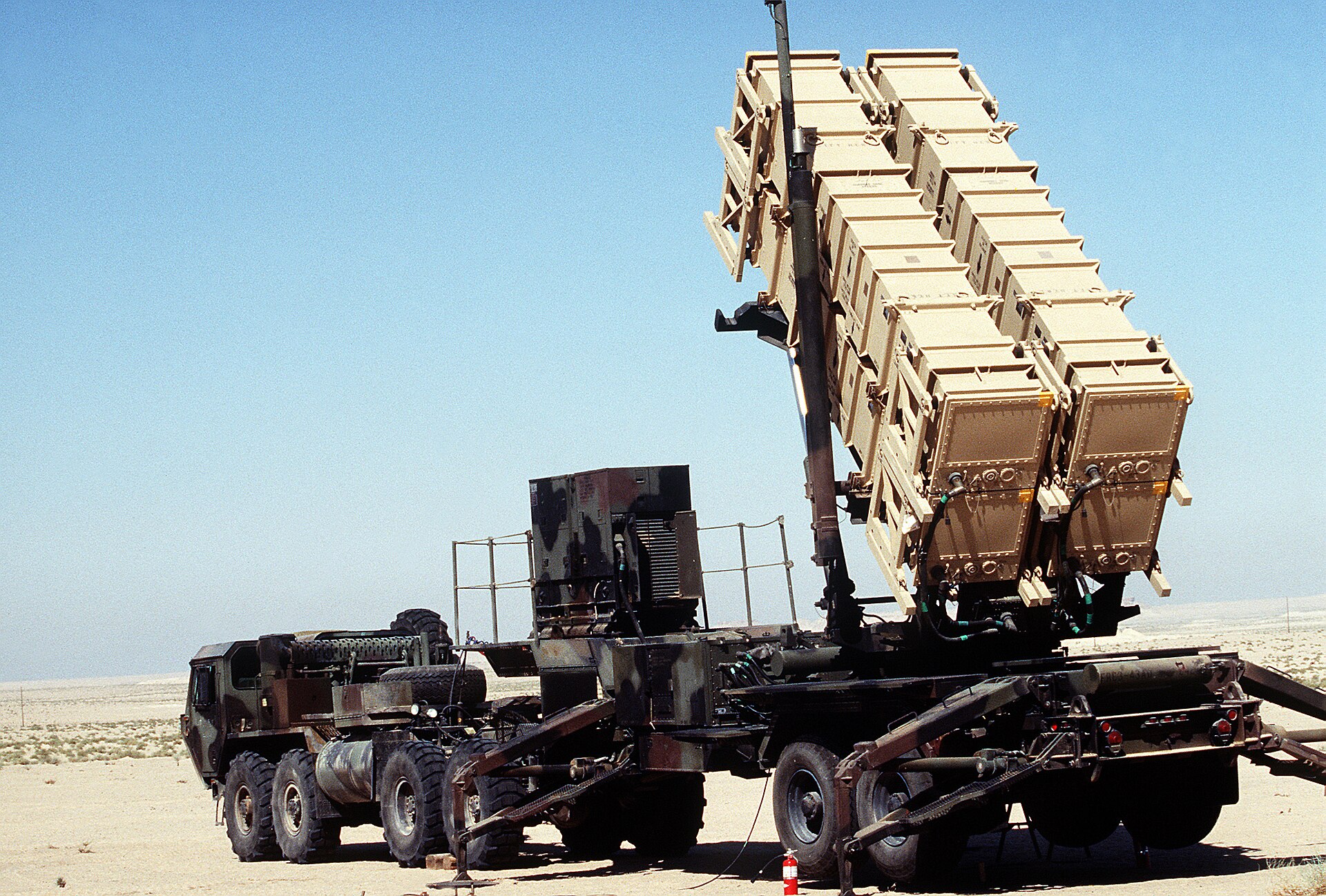
The White House responded with a threat that clarified the alliance’s actual operating logic. Washington told Riyadh it would withhold Patriot interceptor systems — the air defence batteries that form Saudi Arabia’s primary shield against Houthi ballistic missiles — unless Saudi Arabia opened its airspace, as the Jerusalem Post reported in a subsequent article. Riyadh backed down. The interceptors, which the Wall Street Journal estimated at fewer than a thousand remaining in Saudi stocks, were too valuable to lose over an airspace dispute that Riyadh could not win.
The episode revealed a relationship that runs in both directions as a system of mutual constraint. Saudi Arabia needs American interceptors to survive Houthi missile barrages. The United States needs Saudi airspace and basing rights to project power across the Gulf. Neither side can withdraw its contribution without endangering the other’s core interests — but neither side can compel the other to act, either. When commentators in Washington call the current situation abandonment, they miss the reciprocity. Riyadh has refused American requests just as Washington has refused Saudi ones. The alliance is not a hierarchy with a protector and a dependent. It is two governments that each hold something the other cannot do without, while a third party — the Houthis — exploits the distance between them.
Why Would US Airstrikes on the Houthis Hurt Saudi Arabia?
Because the Houthis’ most likely response to American strikes is to seal the Bab al-Mandeb entirely — converting a partial disruption into a total one. Saudi oil exports to Asia have already collapsed from 3.4 million barrels per day to 128,000 by August. A complete strait closure would eliminate what remains, triggering a fiscal crisis that Saudi Arabia’s existing deficit cannot absorb and that no amount of American air power can quickly reverse.
The economic trap is elegant in its cruelty. If the United States strikes the Houthis, the group’s most likely response — sealing the Bab al-Mandeb entirely — would shut down the maritime corridor through which Saudi oil reaches global markets. Oil prices, already well above $100 a barrel, would spike further. Saudi Arabia’s remaining export revenues, already diminished by a Hormuz disruption that has turned 135 ships around since July 14 according to CBS News, would collapse into a deficit the budget cannot absorb. Reuters and Zawya reported in late September that Saudi Arabia’s 2026 deficit had reached 245 billion riyals against a planned 165 billion — a gap of eighty billion riyals that the war was widening by the week.
If the United States does not strike, the Houthis continue their campaign against Saudi territory and shipping lanes without meaningful opposition. The October 12 airport attack demonstrated that Saudi air defences cannot reliably protect civilian infrastructure against a determined adversary with ballistic missiles. Hesham Alghannam of the Carnegie Middle East Center in Riyadh told the Christian Science Monitor on October 13 that “the attacks have narrowed the space Saudi Arabia had maintained between regional conflict and everyday life.” He added that “protecting public confidence has become as strategically important as protecting territory” — an admission that the kingdom’s domestic contract, security in exchange for political quiescence, is under strain in ways that defence spending alone cannot fix.
Thomas Juneau of the University of Ottawa identified the double bind in comments to the Jerusalem Post: “Direct U.S. involvement would likely lead to greater tension in the Red Sea, and therefore create more upward pressure on oil prices.” American refusal, meanwhile, “will cause growing resentment and anger in Saudi Arabia.” Juneau concluded that “Houthis hold stronger cards” and can “hurt Saudi Arabia more” than Riyadh can hurt them — a judgment that would have been unthinkable when the Saudi-led coalition entered Yemen in 2015 but is now a consensus view among analysts who study the group’s military evolution.
Vision 2030 was designed for a world of diversified revenue and managed oil decline. It was not designed for a world in which ninety-six percent of Asian oil exports disappear in two months while missile attacks close commercial airports. The fiscal model assumed peace, or at least the controlled instability that Saudi Arabia had managed since 2015. What arrived instead was a war that penalises Riyadh for action and inaction simultaneously, with no diplomatic exit and no military solution that does not create a larger economic problem than the one it solves. Saudi Arabia cannot spend its way to safety because the war is destroying the revenue that pays for the spending.
The Abqaiq Pattern Without the Exit
Saudi Arabia has been here before. In September 2019, Iran struck the Abqaiq oil processing facility — the largest in the world — and Trump chose sanctions over military retaliation, telling reporters that the United States had “no obligation to defend Saudi Arabia.” The kingdom absorbed the humiliation, adjusted its threat assessment, and pivoted to diplomacy, spending the years between 2021 and 2025 pursuing rapprochement with Tehran through back-channel negotiations that eventually produced the 2023 normalisation agreement.
The 2026 pattern is structurally identical to 2019 in its essential shape: Saudi Arabia is attacked, calls for American help, and receives something less than what it asked for. But the exit that existed in 2019 — diplomatic engagement with Iran — no longer exists. Iran is at war with the United States. The normalisation framework is inoperative. When Iranian Foreign Minister Araghchi called Prince Faisal on October 11 and offered to “facilitate dialogue between Saudi Arabia and Yemen,” as the BBC reported, the offer was not diplomacy. It was theatre, delivered while Iranian-aligned forces were striking Saudi airports and Iranian state media were celebrating the attacks. In 2019, Saudi Arabia could absorb the blow and pursue a diplomatic off-ramp with Tehran. In 2026, there is no off-ramp available, and the blows keep coming.
Steven Cook of the Council on Foreign Relations wrote that “any U.S. military effort would have to include a significant and coordinated ground operation” to defeat the Houthis — a scale of commitment that no one in Washington is proposing — while noting that the US is “potentially running low on critical weapons, such as Patriot interceptors, THAAD missiles, and cruise missiles.” The gap between what would be required to end the Houthi threat and what is politically and materially available is the gap that Saudi Arabia falls into. Aaron MacLean, CBS News’s national security analyst, described the realistic US military option not as a decisive campaign but as “a mowing of the lawn approach” — one that “will almost certainly be indecisive.” Mona Yacoubian of CSIS observed that “the bar for President Trump to authorize strikes now is seemingly pretty high.”
I don’t think that the killing of an American will trigger a military response.
Nadwa al-Dawsari, Middle East Institute, CBS News, October 2026
If al-Dawsari is right — if even an American casualty would not cross Trump’s threshold for action — then Saudi casualties are irrelevant to the decision calculus in Washington. The thirteen dead at King Khalid International on October 12 registered as a tragedy in Riyadh, a condemnation from Cairo and Islamabad, and a data point in the West Wing. Trump, asked on October 10 about an earlier airport strike, told CNN: “We may. We’re going to look at it.” It was the language of a president who has decided that the cost of looking is always lower than the cost of doing.
What One Hundred Advisers Cannot Do
What Washington sent instead of strikes tells the story that the cancellation does not. CNN reported on October 11 that more than one hundred US military advisers are now in Saudi Arabia providing intelligence support. They are there to help Saudi forces identify and track Houthi targets. They are not there to pull triggers, fly sorties, or close the kill chain that connects a target identified on a screen to a weapon arriving at its coordinates. The gap between intelligence and action — between knowing where a missile launcher sits and destroying it before it fires — is the operational problem that Saudi Arabia cannot solve with the forces and systems it currently possesses.
The multinational presence around Saudi Arabia offers breadth without the capacity Riyadh needs. Approximately eight thousand Pakistani troops are deployed under a strictly defensive mandate, according to Reuters — they guard fixed sites, they do not conduct offensive operations. Turkey has discussed a security pact that remains unratified. France deployed Thales GM-200 radars and a small number of troops at Yanbu. Britain contributed one RAF Voyager tanker. Trump called the Turkish and Pakistani deployments “good” when Gulf News asked him on October 7 — the assessment of a man describing other people’s contributions to a problem he has declined to solve himself.
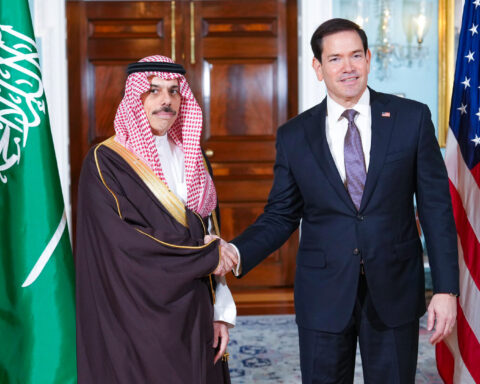
Secretary of State Marco Rubio told The National on October 5 that the United States “intends to live by” its defence agreement with Saudi Arabia. But as the New Lines Institute has documented, no formal US-Saudi mutual defence treaty exists. The American commitment is described as “largely conditional and susceptible to domestic political pressures” — and those pressures, with sixty-five percent of Americans disapproving of the war’s handling and the November midterms now days away, all push in one direction. Trump has explicitly ruled out attacking Iran before the November 3 midterms, as The National reported on October 8. If the principal adversary is off limits until after the election and the proxy cannot be struck without risking an oil crisis, what remains is exactly what has been deployed: advisers, intelligence feeds, and rhetoric about agreements the United States intends to honour without specifying how.
The EU-GCC summit arrives in Riyadh on October 24. The Future Investment Initiative opens on October 26. Saudi Arabia asked the UN Security Council to act, as Al Jazeera reported on October 9, and secured a joint condemnation from Egypt, Pakistan, and Turkey, as CBS News noted on October 11. None of these diplomatic instruments can stop a ballistic missile. None of them can reopen the Bab al-Mandeb. And none of them can resolve the paradox at the centre of Saudi Arabia’s relationship with Washington: the kingdom needs an ally willing to fight, and the ally it has is one that has calculated, correctly, that fighting would make things worse for everyone — starting with Saudi Arabia itself.
I think it’s inevitable that at some point the United States is going to have to engage.
Jeffrey Feltman, Brookings Institution, The Hill, October 2026
Feltman may be right. But “at some point” is doing the work of an entire foreign policy, and every day between now and that point is a day the Houthis consolidate their hold on the strait, Saudi airports sit within missile range, and the shield Rubio reaffirmed exists as a statement of intent rather than a fact on the ground. MBS called twice. Trump loaded the bombs. The bombs went back on the shelf. And Saudi Arabia learned what Abqaiq should have taught it seven years ago: that the most expensive military relationship in the Middle East has a clause neither side will put in writing — the one that says the United States will defend Saudi Arabia only when defending Saudi Arabia does not cost the United States anything.
Frequently Asked Questions
Has the United States ever refused a Saudi request for airstrikes before 2026?
Yes. After Iran struck the Abqaiq processing facility in September 2019, Saudi Arabia sought a forceful American military response. Trump declined, choosing sanctions instead and stating publicly that the US had “no obligation to defend Saudi Arabia.” The 2019 episode established a precedent: American restraint in the face of major attacks on Saudi infrastructure is not new policy — it is recurring policy. The difference in 2026 is that the diplomatic off-ramp Saudi Arabia used after 2019 (rapprochement with Iran) is no longer available because Iran and the United States are at war.
What legal basis does the United States use to justify its defence commitments to Saudi Arabia?
There is no formal mutual defence treaty between the United States and Saudi Arabia comparable to NATO’s Article 5. The relationship rests on a series of bilateral security agreements, arms sales frameworks, and executive-level commitments. The New Lines Institute has described the American obligation as “largely conditional and susceptible to domestic political pressures” — meaning it carries the weight of stated policy rather than binding treaty law. This distinction matters: no US president is legally required to defend Saudi Arabia, and Congress has never ratified a mutual defence obligation with Riyadh.
What would a full Bab al-Mandeb closure mean for oil markets beyond Saudi Arabia?
The Bab al-Mandeb handles a substantial share of global oil and liquefied natural gas flows in normal conditions. A complete closure would force all Gulf exporters — not only Saudi Arabia — to reroute shipments around the Cape of Good Hope, adding roughly two to three weeks of transit time per voyage and driving up freight and insurance costs across the board. Iraqi, Kuwaiti, and UAE crude exports to Asia face the same rerouting burden. The partial disruption already in place has pushed global oil above $107 a barrel; a full closure would compound that pressure on every economy that imports Gulf energy, including those in Asia and Europe that have no stake in the Saudi-Houthi conflict.
Why did Operation Rough Rider fail to end the Houthi threat?
Operation Rough Rider, the US air campaign from March to May 2025, struck more than a thousand Houthi targets but did not achieve the group’s disarmament or territorial rollback for several reasons: Houthi weapons stockpiles and launch infrastructure are dispersed, hardened, and often underground; the group receives ongoing materiel resupply from Iran; and the campaign ended before a ground component — which analysts including Steven Cook argue is necessary for decisive results — was ever deployed. The Houthis emerged from the campaign holding more territory than before it began, and used the subsequent ceasefire period to consolidate control of the Bab al-Mandeb coastline.
What are the electoral stakes for Trump in authorising strikes before the November midterms?
Newsweek polling in October 2026 found that sixty-five percent of Americans disapproved of the administration’s handling of the Iran war. Authorising a second front against the Houthis weeks before the November 3 midterms would require the administration to explain a new military commitment at a moment when its core electoral message has been that the Iran conflict is winding down. Jeffrey Feltman of the Brookings Institution noted that resuming bombing would “counter [Trump’s] narrative that this conflict is essentially over.” The administration’s calculation — restraint now, engagement later — is driven as much by the midterm map as by the military balance in the Gulf.