
DHAHRAN — A ballistic missile struck the nerve centre of Saudi Aramco — the tower housing the operations centre that oversees every rig, refinery, export terminal and pipeline in the kingdom — and Brent crude, the global pricing benchmark for the commodity that building exists to produce, rose sixty-three cents. Not sixty-three dollars; sixty-three cents, a 0.6 per cent move recorded at 03:45 GMT on 14 October, less than a day after the Houthi warhead set fire to three floors of the building where CEO Amin Nasser keeps his office. By the close, Brent had settled at $107.35, up $1.40 or 1.35 per cent — a move that barely registers in a market already carrying what Goldman Sachs estimates is a $22-per-barrel war premium.
The bet the market made on 13 October was specific: that Aramco’s headquarters and Aramco’s production are separable propositions, that the building coordinating the output matters less than the output itself, and that a missile through the CEO’s ceiling is a different category of event from a missile through a processing train. Bloomberg had flagged $120 oil if the conflict widened; the Houthis struck the headquarters of the world’s most valuable energy company; and traders added a dollar. Whether that bet survives the next strike is the question the futures market has declined to price.
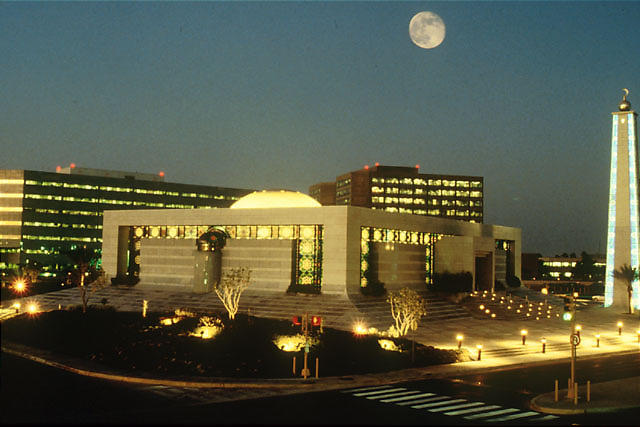
Table of Contents
- The Strike and the Shrug
- What Does the Struck Building Actually Control?
- Abqaiq 2019 vs Dhahran 2026
- Why Did Traders Price This as Symbolic?
- The $22 Risk Premium Goldman Cannot Explain
- Is the $120-$125 Scenario Already Priced In?
- The Houthi Escalation Ladder
- How Exposed Is Saudi Production to the Next Strike?
- The Bet Nobody Tested
- Frequently Asked Questions
The Strike and the Shrug
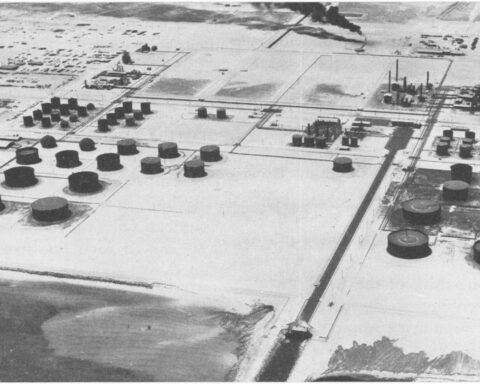
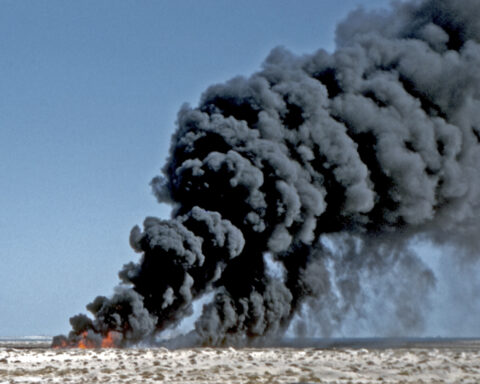
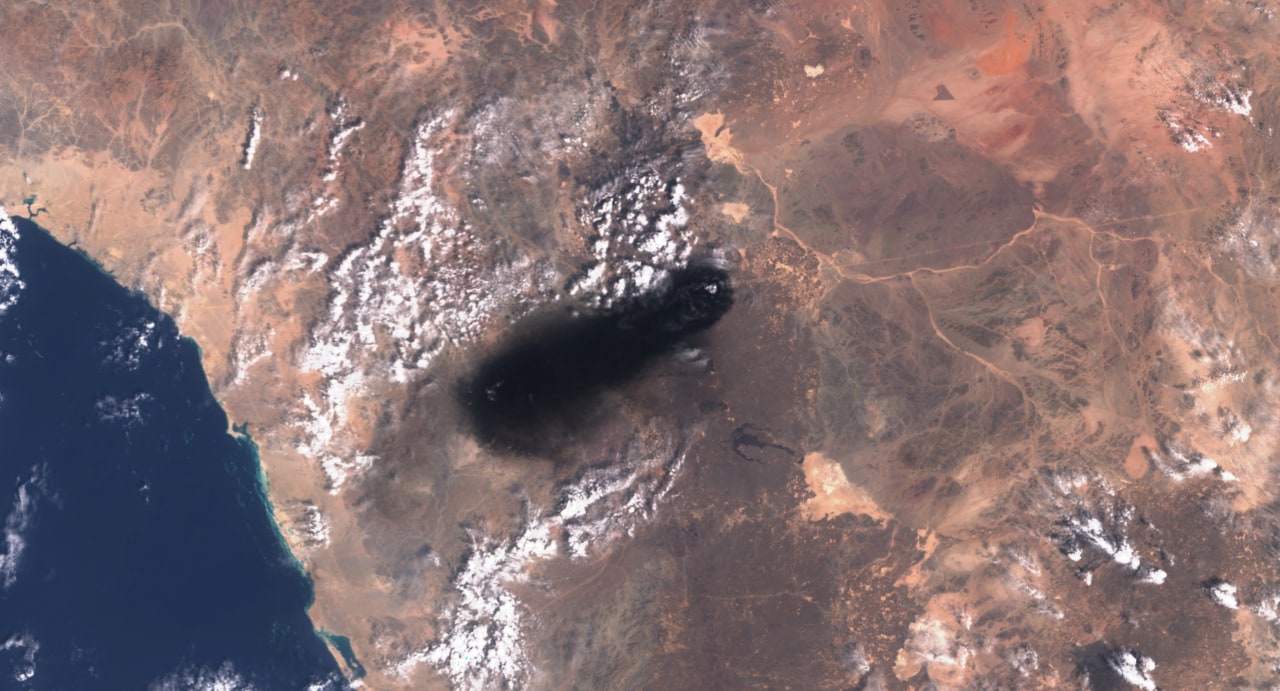
At approximately 14:00 local time on 13 October, a Houthi ballistic missile struck an office tower inside Saudi Aramco’s Dhahran campus, setting a fire between the sixth and tenth floors and causing what Reuters, citing unnamed sources, described as extensive damage to the building’s top three storeys — ceiling collapse, blown-out windows, structural compromise across the floors where Saudi Arabia’s oil command chain sits. The Saudi Energy Ministry, in a statement released hours later, characterised the incident as “a limited fire” in “an administrative building” and reported no injuries or deaths. Houthi spokesperson Yahya Saree had pre-announced the attack, warning civilians to evacuate Aramco’s Dhahran headquarters, King Khalid International Airport and an Aramco-affiliated refinery in Riyadh — a public declaration that the targeting was deliberate, that the nerve centre of Saudi Arabia’s oil economy was now a legitimate extension of the war, and that the Dhahran campus was not the end of the list.
The market’s response was a study in selective attention. Brent had already traded between $102.94 on 9 October and $108 in late September, a range of roughly five dollars driven by pipeline restarts and OPEC+ decisions rather than missiles. The $1.40 the market added after the headquarters was struck barely registered within that band, and WTI rose $1.24 to $95.38 — a 1.32 per cent gain, the kind of move that on a quiet day might be attributed to a weather system in the Gulf of Mexico rather than a ballistic missile through the operational heart of the world’s largest oil company.
The reasoning was not left for analysts to infer. FinanceFeeds, summarising trader logic on 14 October, stated it plainly: “The building hit was an office, not a processing plant, terminal or pipeline.” Traders price oil attacks by barrels at risk, and an office fire — even one with a collapsed ceiling on the floors housing the CEO of a company producing more than eight million barrels per day — posed, in the market’s assessment, no direct supply threat. No barrels left the market; therefore, the market did not move.
What Does the Struck Building Actually Control?
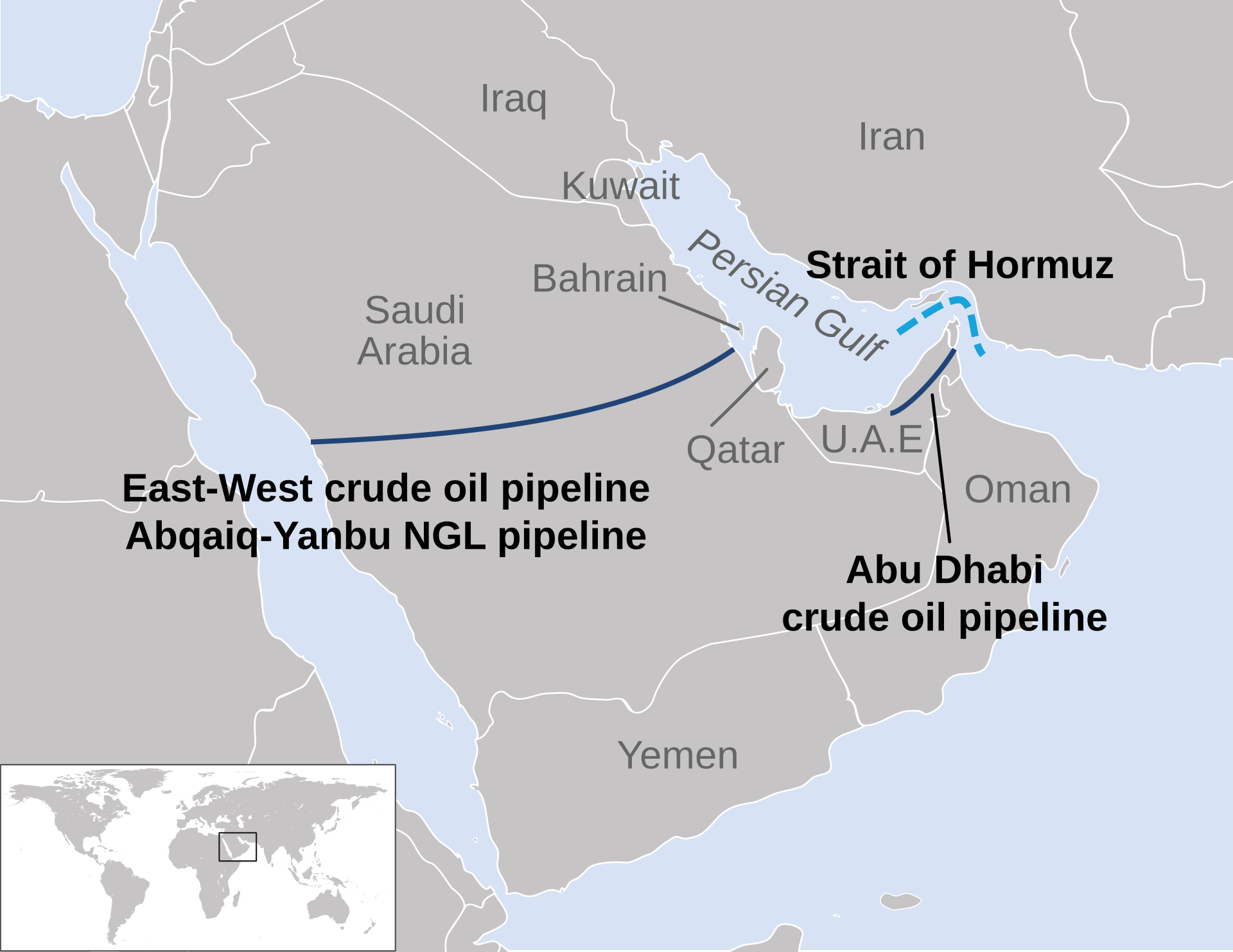
The struck tower houses an operations centre that oversees Aramco’s onshore and offshore oil rigs, refineries, export terminals and thousands of kilometres of pipeline, according to unnamed sources cited by Reuters on 14 October. It is the facility from which Saudi Arabia coordinates the physical production and movement of more than eight million barrels of crude per day — the hub connecting the Eastern Province’s fields to the export terminals on the Gulf coast, through the East-West pipeline to Yanbu on the Red Sea, and into the downstream refining network that extends across both coastlines.
The Middle East briefing 3,000+ readers start their day with.
One email. Every weekday morning. Free.
The “administrative building” the Energy Ministry described in its statement is, by Reuters’s account, something more complex than the phrase implies. Some employees were asked to work from home after the strike; some functions were shifted to Aramco’s global offices — contingency measures that suggest the operations centre’s physical integrity is no longer taken for granted, even if its outputs have so far remained continuous. CEO Amin Nasser, whose office sits on the top floors of the struck building, had told the 25th World Petroleum Congress in Riyadh one day before the missile arrived that “our system is intact” and that Aramco could bring its 12-million-barrel-per-day maximum capacity online within days. Twenty-four hours later, the system was reportedly intact but the building housing the people who oversee it had a hole in its upper floors and fire damage that Reuters sources described as severe enough to include ceiling collapse.
“Our system is intact.”Amin Nasser, CEO of Saudi Aramco, World Petroleum Congress, Riyadh, 12 October 2026 (The National News)
The market’s framing — office versus field, administrative versus operational — depends on the assumption that the operations centre’s function can be replicated remotely, indefinitely, under fire, with no degradation in coordination across a production network spanning thousands of kilometres and dozens of facilities. Reuters reported that operations “continued normally,” but normal operations run from a building that has not been hit by a ballistic missile; the question is whether they continue at the same level from laptops, backup facilities and conference calls for the weeks or months it takes to repair three floors of structural damage. That is the assumption on which sixty-three cents rests, and it is an assumption the market accepted on faith rather than on evidence that has been disclosed.

Abqaiq 2019 vs Dhahran 2026
On 14 September 2019, a combination of drones and cruise missiles struck the Abqaiq processing facility and the Khurais oil field, temporarily knocking offline 5.7 million barrels per day of Saudi production — more than half the kingdom’s output at the time and approximately 5 per cent of global supply, according to Al Jazeera. When markets opened on the following Monday, Brent surged from $60.22 to $71.95, a 14.6 per cent spike that Al Jazeera recorded as the largest single-day price move since the Gulf War. The attack was attributed to the Houthis by the group itself; within two weeks, Saudi Arabia had restored the lost production and Brent had retreated to pre-attack levels.
On 13 October 2026, a Houthi ballistic missile struck the administrative and operational headquarters of the same company whose processing infrastructure was hit seven years earlier. Barrels disrupted: zero, by every official account available as of 14 October. Brent’s response on the day: 1.35 per cent — one-eleventh of the Abqaiq reaction, a ratio that captures everything the market believes about the difference between a field strike and a headquarters strike.
| Abqaiq-Khurais (Sep 2019) | Dhahran HQ (Oct 2026) | |
|---|---|---|
| Target type | Processing plant and oil field | HQ office tower / operations centre |
| Weapon | Drones and cruise missiles | Ballistic missile |
| Production disrupted | 5.7 million bpd | 0 bpd (official) |
| Brent before strike | $60.22 | ~$106 |
| Brent move (day 1) | +$11.73 / +14.6% | +$1.40 / +1.35% |
| Price recovery | ~2 weeks to pre-attack level | N/A (no supply disruption claimed) |
| Market logic | Barrels removed = price spike | No barrels removed = no spike |
The table captures what the market believes: that the variable determining price response is barrels disrupted and nothing else. In 2019 the market moved because physical supply disappeared; in 2026 it did not move because physical supply, by every available measure, continued to flow. The binary is clean, the logic internally consistent, and it has the advantage of having worked in every prior oil-infrastructure attack where production was the target. Its weakness is that it was never tested against a strike on the coordination layer — the command-and-control infrastructure that sits between the field and the market — and the Dhahran HQ strike is, by Reuters’s own description of the operations centre’s function, exactly that test.
Why Did Traders Price This as Symbolic?
Traders applied the standard oil-market pricing model, which values attacks by barrels removed from supply, and found zero barrels at risk. The Energy Ministry reported no production disruption and no casualties. Since no barrels left the market, the market treated the strike as an administrative event rather than a supply event, adding $1.40 to Brent and $1.24 to WTI by the close of 14 October.
The framework has served commodity traders well for decades: oil prices move when supply moves, and supply moves when physical infrastructure — wellheads, processing trains, pipelines, export terminals — is damaged or taken offline. An office fire, in this model, is a personnel event, not a supply event, regardless of what the office controls or whom it employs. The Abqaiq precedent reinforces the model, because the market spiked in 2019 only after 5.7 million barrels per day disappeared from the supply chain, and traders priced the replacement cost and restoration timeline with the precision of a logistics exercise.
But the Abqaiq precedent also exposes the model’s blind spot, because the 2019 spike was temporary — Brent returned to pre-attack levels within roughly two weeks, once Saudi Arabia demonstrated it could restore production at speed. The lesson the trading floor appears to have drawn from that episode is not that oil infrastructure is vulnerable, which the attack proved beyond argument, but that vulnerability is transient: Saudi Arabia can fix what gets broken, and the fix will be fast. Nasser reinforced this expectation in September, saying publicly that Aramco’s disruptions typically last “days, not weeks or months,” according to the Saudi Gazette. Applied to the Dhahran HQ strike, that framework produces the 63-cent response: if a 5.7-million-barrel disruption unwinds in fourteen days, then a zero-barrel disruption is worth almost nothing.
“The building hit was an office, not a processing plant, terminal or pipeline.”FinanceFeeds, summarising trader logic, 14 October 2026
The flaw in the reasoning is that it mistakes sequence for intent. The Houthis did not strike Aramco’s headquarters because they lacked the range or capability to reach a processing facility; they struck it as part of a declared campaign whose next targets — refineries and oil facilities — were named in the same set of evacuation warnings that preceded the HQ attack. The Middle East Eye reported on 14 October that the Houthis “vowed to continue striking petrochemical facilities in Saudi Arabia,” a pledge delivered after the headquarters was hit, not before — which means the headquarters strike was the opening of a phase, not its conclusion. The market priced the strike that occurred; it has not priced the strikes that were announced alongside it.
The $22 Risk Premium Goldman Cannot Explain
Goldman Sachs calculated that the average oil risk premium embedded in Brent futures term spreads reached $22 per barrel in September 2026 — the second-highest monthly level on record, surpassing the peak recorded during the 2022 Russia-Ukraine war, according to data published by BigGo Finance. That figure — $22 of war premium sitting inside every Brent contract — means the market has not ignored the conflict entirely; it has priced a version of it, a baseline scenario in which shipping remains disrupted, the Strait of Hormuz remains contested, and Saudi Arabia continues producing well below its OPEC+ target. The premium also reflects the cost of moving oil through a war zone: VLCC rates from the Gulf to China have reached $1.2 million per day, against roughly $80,000 a year earlier, according to LSEG data cited by bdnews24 on 5 October. The shipping market, unlike the commodity market, has priced the war as though it is real.
What the commodity market has not priced, Goldman’s own analysts acknowledge, is the tail risk sitting above that baseline. Daan Struyven, head of Goldman’s oil research, said on 14 October that “while an eventual recovery and adjustment of Middle East supply could exert downward pressure on oil prices, further regional escalation still poses significant upside risks.” The bank’s December upside scenario — Brent at $125 — requires three conditions: “damage to oil infrastructure, intensified shipping attacks, and a more persistent risk premium.” Intensified shipping attacks are already underway; the risk premium is already near a record $22 per barrel. The missing condition is the first: direct damage to producing oil infrastructure, which the Dhahran HQ strike brought one step closer without delivering.
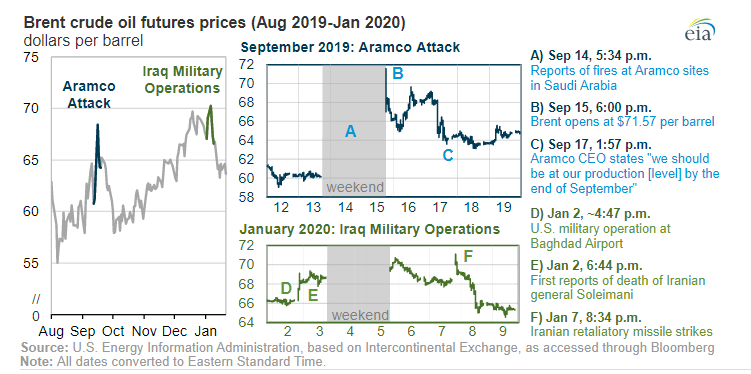
Goldman’s analysts also acknowledged, in the same October report, that their “long-standing Brent crude pricing model has broken down this year,” because inventory drawdowns are occurring primarily in non-OECD countries rather than the tracked OECD reserves on which the model was built. The implication is that the market is flying partially blind: the data that traditionally calibrated the relationship between inventory, production and price no longer captures where the barrels are going or where the shortages are forming. The $22 premium is not, in this light, an overestimate of risk but a guess made with instruments Goldman itself says are broken — and the 63-cent response to the HQ strike is the sound the pricing model makes when it encounters a risk it was not designed to measure.
Is the $120-$125 Scenario Already Priced In?
Bloomberg projected $120 per barrel if the conflict widens; RBC Capital Markets warned Brent could approach $122; Goldman Sachs modelled $125 by December. These three upside scenarios, published between 13 and 14 October, share a common structure: they require direct infrastructure damage, intensified shipping disruption and a persistent risk premium — conditions of which two are already met, leaving only a producing-infrastructure strike as the absent trigger that the Houthis have publicly promised to deliver.
The projections are conditional, phrased in the language of “could” and “if,” and they sit in the risk-scenario pages of analyst notes rather than the base-case forecasts that drive trading decisions. The market, in other words, knows what oil costs if a processing facility goes offline; it has decided, for now, that no facility will go offline. Bloomberg published its $120 estimate on 13 October — the same day the missile struck Aramco’s headquarters — but framed it as a “wider conflict” scenario, as though the headquarters of the world’s most valuable energy company being hit by a ballistic missile while the attackers promise to move on to refineries next occupies some category short of wider conflict.
The gap between the 14 October close of $107.35 and the $120-$125 upside band is roughly $13-$18 per barrel. To cross that gap, the analyst models require one thing: confirmed damage to infrastructure that produces, processes or transports crude. The coalition’s own airstrike on a Sanaa oil site on 13 October — preceding the Aramco HQ strike and establishing what Al Jazeera described as an oil-for-oil escalatory symmetry — confirms that both sides now treat energy infrastructure as a legitimate military target. The Jazan refinery, a 400,000-barrel-per-day facility on the Red Sea coast, has been offline since a Houthi strike on 27 July, with no confirmed restart. A second refinery hit, or a strike on the East-West pipeline’s pumping stations, would close the gap between the current price and the upside band in a single session — not as a forecast revision, but as a settlement price.
The Houthi Escalation Ladder
The Houthi campaign against Saudi Arabia since July 2026 has followed a pattern so transparent that calling it a strategy overstates its subtlety: declare the target category, warn civilians, execute, escalate. When the Houthis declared a maritime blockade of Saudi Arabia on 20 July, they followed it with attacks on commercial tankers. When they turned to airports — Abha, then King Khalid International — Yahya Saree named the targets in advance, and strikes on KKIA between 6 and 11 October killed twenty people and wounded more than three hundred. When they moved to Aramco, the evacuation warnings published on 13 October covered three target categories: the Dhahran headquarters, airports and an Aramco-affiliated refinery in Riyadh.
Of those three categories, only one was struck on 13 October — the headquarters. The AP reported on 8 October that the Houthis had warned people to keep away from oil sites, a broader directive than the specific 13 October evacuation order and one that encompassed the entire class of petrochemical infrastructure rather than a single campus. The Middle East Eye confirmed on 14 October that the group vowed to continue striking petrochemical facilities, a pledge issued after the HQ strike, not before it — language that positions the headquarters as an opening move rather than a destination. The coalition’s airstrike on a Sanaa oil site the same day closed the escalatory circuit: both sides are now operating under a doctrine of oil-for-oil retaliation, declared publicly, with evacuation warnings functioning as a hybrid of humanitarian protocol and operational preview.
The market’s bet, expressed in the 63-cent move, is that the Houthis will stop at the headquarters — that having struck the symbolic apex of Saudi Arabia’s oil industry, they will decline to proceed to the operational targets they themselves named in the same announcement. It is a bet placed against a group that has followed through on every prior public declaration: the maritime blockade happened, the airport strikes happened, the Aramco strike happened. The refineries and field infrastructure named in the same warnings have not been hit since Jazan in late July, but the operational and rhetorical conditions for such a strike are identical to those that preceded every previous escalation. The market, by pricing the HQ strike as an isolated event rather than a rung on a declared ladder, is wagering that a pattern which has held through every previous phase will break in precisely this one.
How Exposed Is Saudi Production to the Next Strike?
Saudi Arabia’s crude supply fell to approximately 6 million barrels per day in August 2026, according to the IEA, before recovering to approximately 8.3 million barrels per day in September as the IEA’s October Oil Market Report documented. The rebound followed the East-West pipeline’s restart on 22 September, after a precautionary shutdown on 12 September, but a gap of more than 2 million barrels per day still separates current output from the kingdom’s OPEC+ November target of 10.5 million barrels per day. The cartel left that target unchanged at its 4 October meeting — a decision that reads less like a production commitment and more like a reminder of the distance between the plan and the infrastructure’s capacity to deliver it.
Energy Minister Prince Abdulaziz bin Salman told a GCC Forum panel in Manama on 6 October that the East-West pipeline was “back up to 5.8 million barrels” per day — roughly 83 per cent of the line’s approximately 7-million-barrel-per-day design capacity, as reported by the Saudi Gazette. The pipeline, Saudi Arabia’s primary alternative to the Strait of Hormuz, carries crude from the Eastern Province to Yanbu for loading onto tankers bound for the Mediterranean and Europe. At 5.8 million barrels per day, it is running at a throughput that can handle the bulk of current production but leaves almost no buffer: a single pumping-station strike could drop the flow rate below the volume needed to sustain September’s 8.3 million barrels per day, and the six-week-plus timeline Reuters reported for full capacity restoration after the September shutdown means any fresh interruption would not be resolved in days.
Aramco’s own pricing tells a story the benchmark does not. The company cut its November Arab Light official selling price to Asia by $3, to $5 below the Oman/Dubai benchmark — the widest discount since June 2020, when pandemic demand destruction and the Saudi-Russian price war had driven crude to historic lows, according to Reuters via bdnews24. The cut means Aramco is selling at a steep discount to Asian buyers at the same moment investment banks are publishing $120-plus upside scenarios — a disconnect that reflects either supreme confidence in supply continuity or an acknowledgement that route disruption and demand erosion pose a more immediate threat than the banks’ tail-risk scenarios. At the same time, Aramco raised its northwest Europe prices by $3, a divergence that maps directly onto the East-West pipeline’s reopened route to Yanbu and the Mediterranean: barrels are being redirected toward the buyers who can be reached without transiting the contested waters of the Gulf.
The budget arithmetic compounds the vulnerability. Saudi Arabia’s pre-budget statement, published on 30 September, raised the projected 2026 deficit to 245 billion riyals from a budgeted 165 billion, and forecast real GDP falling 3.6 per cent on a 21.8 per cent contraction in oil activity. The 2027 projection — a 12.8 per cent GDP rebound — depends on a recovery in production and prices that the current output gap, the wartime fiscal trajectory, and the OSP discounts do not yet support. Saudi Arabia cannot afford to produce below its OPEC+ target for much longer, and it cannot guarantee that the infrastructure supporting its output will remain intact through the end of the year — not when the group that struck its headquarters has promised, publicly and with a record of follow-through, that the refineries and oil facilities are next. The sectors Riyadh diversified into to reduce its dependence on crude were, as the war has demonstrated since July, the same sectors the conflict disrupted first.
The Bet Nobody Tested
The oil market has spent seven years — since Abqaiq — building a mental model in which the only strikes that matter are the ones that physically remove barrels from the supply chain. That model worked in 2019, where a field strike produced a field-strike response: a spike, a scramble, a restoration, a retreat to the prior price. It has not been tested against a strike on the coordination infrastructure, the layer that sits between the producing field and the trading screen — the building from which the production, routing and export decisions are actually made. The Dhahran HQ strike is that test, and the market’s 63-cent response is its preliminary answer: the coordination layer is expendable, the operations centre can work from anywhere, and a CEO’s ceiling can collapse without collapsing the price.
That answer may prove correct. Aramco’s operations have, by all available accounts, continued normally; the East-West pipeline is flowing at 5.8 million barrels per day; September production rebounded from the August lows. But the answer was given before the test is complete, because the HQ strike is not, by the Houthis’ own published warnings, the end of the campaign — it is the latest escalation in a sequence that has proceeded from maritime blockade to airport strikes to headquarters strike, with refineries and oil facilities explicitly named as what comes next. Goldman’s broken pricing model, the $22 premium that already exceeds the 2022 war peak, the Aramco OSP discounts that signal route disruption the benchmark ignores, the VLCC rates that show the shipping market pricing a war the commodity market will not — these are not signs that the market weighed the evidence and found it manageable. They are signs that the market’s instruments no longer measure what needs to be measured, and that sixty-three cents is the sound a pricing model makes when it encounters a category of risk it was never built to assess.
Frequently Asked Questions
Did the Dhahran headquarters strike disrupt Aramco’s oil production?
No confirmed production disruption has been reported as of 14 October. The Saudi Energy Ministry stated there were no injuries or deaths and characterised the event as “a limited fire” in an administrative building. Reuters sources said operations “continued normally,” though some staff were asked to work from home and certain functions were moved to Aramco’s global offices. Whether any degradation in real-time operational coordination occurred has not been disclosed by Aramco, and the IEA has not published revised production figures covering the post-strike period.
How does the current Brent risk premium compare to previous conflicts?
Goldman Sachs estimated the average risk premium in Brent futures at $22 per barrel in September 2026 — the second-highest monthly figure on record, exceeding the peak recorded during the 2022 Russia-Ukraine invasion. However, Goldman noted that its long-standing pricing model has broken down because inventory drawdowns are now concentrated in non-OECD countries whose reserves are not tracked with OECD-level frequency. The premium reflects baseline war risk — shipping disruption, Hormuz contestation, production shortfalls — but does not capture the tail scenario of direct infrastructure damage that Goldman’s own $125 upside case requires as a trigger.
Has Aramco’s operations centre been relocated since the strike?
Reuters reported that some functions were shifted to Aramco’s global offices and some employees asked to work from home, but no formal relocation of the operations centre has been announced. Whether the facility continues to operate from the struck tower, from backup sites within the Dhahran campus, or from a distributed remote configuration has not been confirmed by Aramco or the Saudi government. The extent of the structural damage — ceiling collapse across the top three floors, according to Reuters’s sources — suggests that at minimum the upper floors of the building are not currently habitable.
What is the East-West pipeline’s current operating status?
The pipeline was shut as a precaution on 12 September 2026 and restarted on 22 September. Energy Minister Prince Abdulaziz bin Salman said on 6 October that it was flowing at 5.8 million barrels per day, against a design capacity of approximately 7 million barrels per day as reported by Saudi Gazette. Reuters noted that full restoration to design capacity could take six or more weeks from the restart date. Whether throughput has changed since the 13 October headquarters strike — or whether the operations centre disruption has affected pipeline coordination — has not been publicly addressed.