
TEHRAN — Iran’s foreign minister Abbas Araghchi told the Organization of Islamic Cooperation in Baghdad on October 18 that the Strait of Hormuz could reopen within six days if the United States meets Tehran’s conditions — the same conditions President Trump rejected when they were first presented at the UN General Assembly in September 2026, according to the Wall Street Journal. The offer requires Washington to lift its naval blockade on Iranian ports, drop sanctions on Iranian oil exports, and end hostilities on all regional fronts including Lebanon, according to Asharq Al-Awsat. Washington has not publicly responded.
The restatement lands in a diplomatic void. Trump froze military action against Iran until after the November 3 midterm elections and the blockade remains in full force. Exports through the waterway have fallen roughly 40 percent below pre-war levels, according to Kpler data reported by CNBC, and Brent crude sat at $109.86 on October 18. Iran’s offer is a pressure instrument presented to fifty-seven foreign ministers, built so that Washington — not Tehran — carries the burden of refusal.
Table of Contents
- What Did Araghchi Offer at the Baghdad OIC Summit?
- The September Blueprint: A Plan Restated, Not Renewed
- Why Has Washington Already Rejected These Terms?
- Two Voices, Two Conditions
- What Happens on Day Seven?
- How Does the Offer Affect Tanker Insurance and Gulf Shipping?
- Where Does the Offer Leave Saudi Arabia?
- The Midterm Freeze and the Window That Matters
- Frequently Asked Questions
What Did Araghchi Offer at the Baghdad OIC Summit?
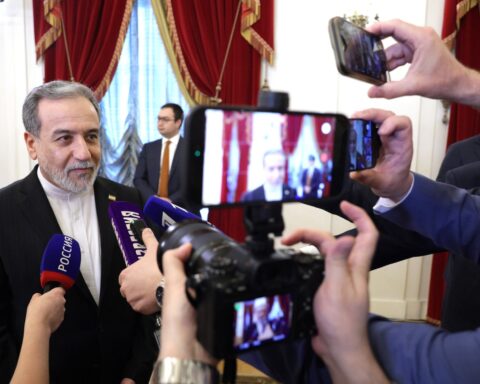
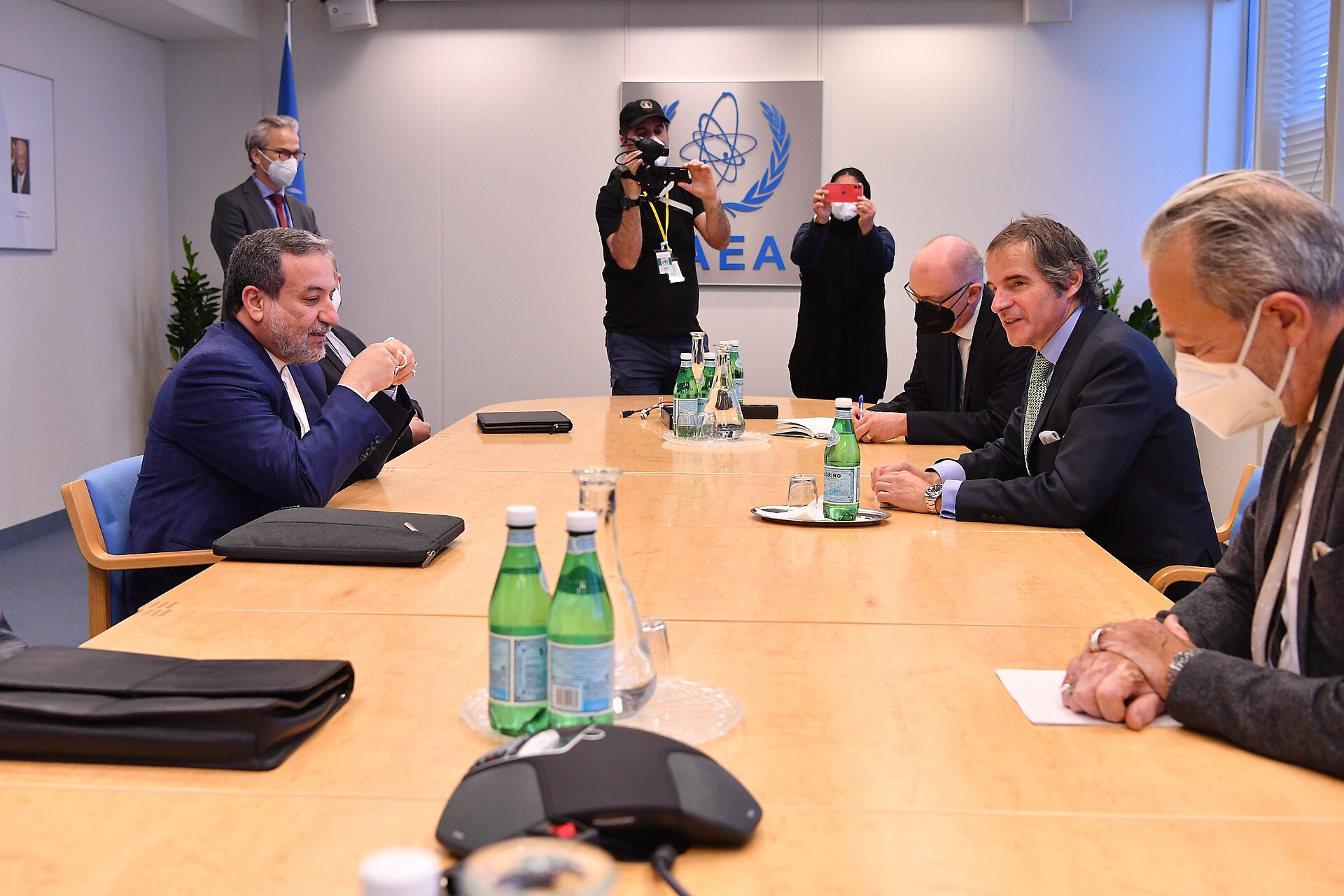
Araghchi restated a seven-day framework at the 52nd OIC Council of Foreign Ministers on October 18 in Baghdad. Under it, Iran would reopen the Strait of Hormuz on day six, with formal negotiations resuming on day seven, provided the United States lifts its naval blockade, removes oil sanctions, and ends hostilities on all fronts including Lebanon — conditions Araghchi described as “not unusual,” according to ANI News.
The framework is operationally specific. Four to five days of preparation precede the reopening, and Araghchi told the gathering that “if there is genuine will on the American side to reopen the Strait of Hormuz,” the conditions could be met “within a few days,” according to the Borna News Agency. He said Iran was still “reviewing the US side’s comments” on earlier exchanges, but that the seven-day plan “still stands.” Reuters, cited by the International Business Times, reported Araghchi confirmed the strait “could reopen within six days.”
The conditions are “not unusual and include matters to which the US had previously committed in prior understandings and negotiations.”
Abbas Araghchi, Iranian Foreign Minister, October 18 (ANI News)
The HOS Daily BriefThe Middle East briefing 3,000+ readers start their day with.
One email. Every weekday morning. Free.
Araghchi framed the conditions as extensions of prior agreements, not fresh demands. He did not specify what “end hostilities” means operationally, who would verify compliance, or what calendar date constitutes “day one.” The three publicly enumerated conditions — blockade, sanctions, and Lebanon — leave open whether additional demands exist beneath the surface.
The venue was deliberate. The OIC’s fifty-seven member states represent the largest bloc of Muslim-majority nations, and presenting the offer in Baghdad — rather than through Qatari back-channels or at the United Nations — puts the rejection in front of the audience Iran most wants to persuade. Araghchi was not speaking to Washington; he was speaking about Washington, to a room predisposed to listen. The pitch was familiar — it was the same one he delivered at the United Nations four weeks earlier.
The September Blueprint: A Plan Restated, Not Renewed
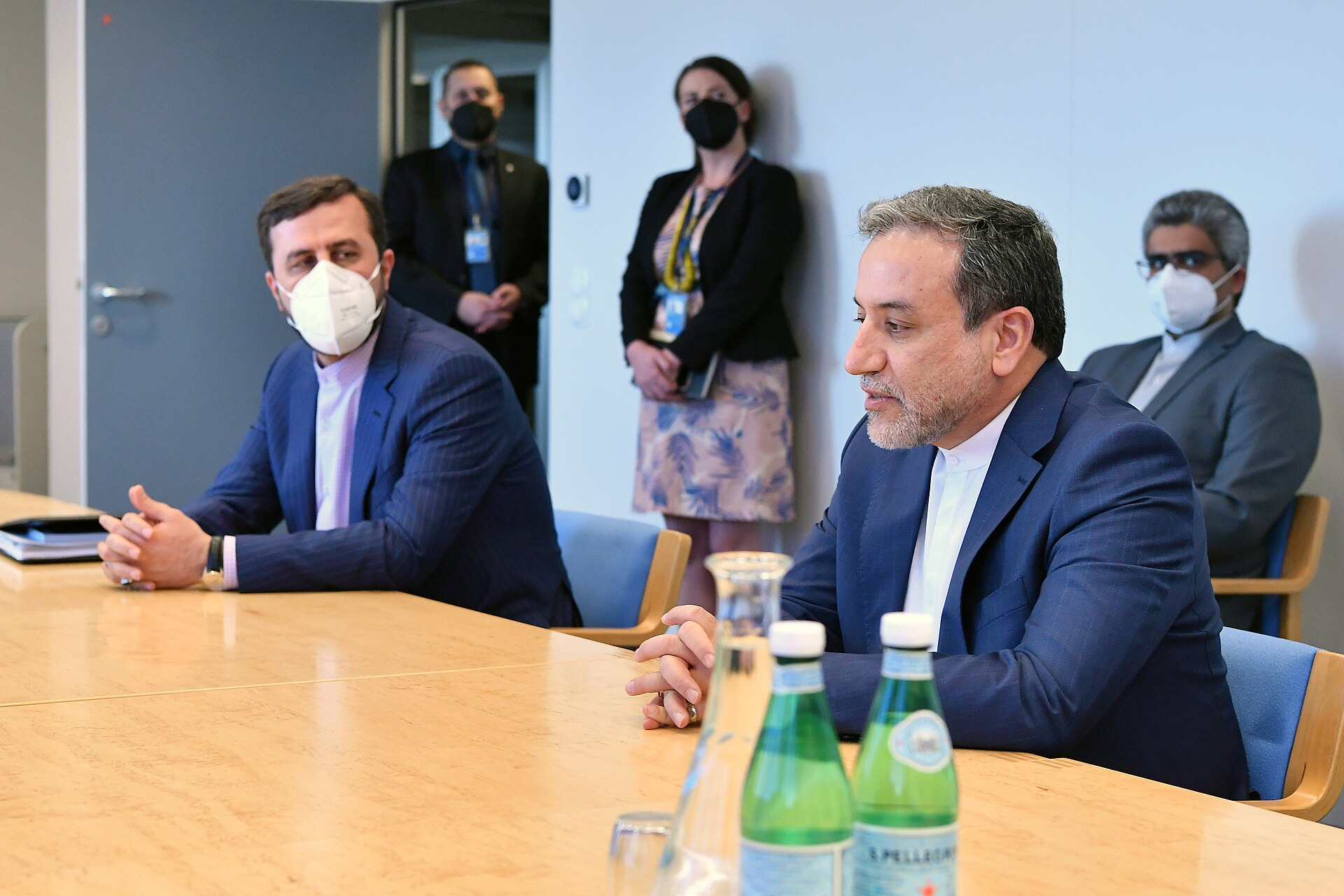
The October 18 offer is not new. Araghchi presented an identical seven-day roadmap at the UN General Assembly on September 24–25, conveyed through Qatar, according to Al Jazeera. That version carried the same architecture: preparation days followed by the Strait reopening, then formal talks. Its reported terms included lifting the US naval blockade, sanctions waivers, the release of approximately $12 billion in frozen Iranian assets, and a ceasefire on all fronts including Lebanon.
Trump rejected the September plan, according to the Wall Street Journal, as reported by Hurriyet. The Journal reported that the administration expected to resume bombing after the midterm elections — a timetable that has since been confirmed by Trump’s own words. The rejection came fast, and no American counter-proposal followed. The September offer entered the diplomatic record as a proposal made and refused.
The September plan reportedly included approximately $12 billion in frozen Iranian assets among its terms, according to Al Jazeera. The publicly enumerated conditions in Baghdad on October 18 — as reported by Asharq Al-Awsat — did not include the asset release, though Araghchi’s statement that the seven-day framework “still stands” suggests no element has been formally withdrawn. Whether the frozen-asset demand remains part of the package or has been quietly set aside is among the details obscured by the gap between what Tehran says publicly and what it conveys through Qatari intermediaries.
The restatement in Baghdad changed nothing in the terms. What changed is the venue, the timing, and the audience. By restating a rejected offer to the OIC rather than to the United Nations, Araghchi moved the conversation from the mediation track Iran claims to support to a public-pressure track aimed at the Muslim-majority world. The offer’s rejection is now a diplomatic talking point for Tehran’s allies, not a private failure passed through intermediaries.
Why Has Washington Already Rejected These Terms?
Washington has effectively rejected the October restatement by declining to respond publicly and by maintaining positions that are structurally incompatible with Iran’s conditions. The US demands that Iran make a “meaningful reduction in uranium enrichment” before any deal proceeds — a sequencing requirement that inverts Tehran’s demand for maritime security first, nuclear second.
Vice President JD Vance stated on October 18 that Iran must cut enrichment before the US moves on any other front, saying the administration had achieved “significant victories” but needed to prevent Iran from rebuilding its nuclear programme, according to Fox News as reported by the International Business Times. Araghchi has explicitly refused to make the nuclear programme the starting point; Iran insists that the blockade and sanctions must end before enrichment enters the discussion. The two positions are not adjacent — they are pointing in opposite directions.
The sequencing deadlock is structural, not tactical. Washington’s position is that Iran’s nuclear programme represents the greater long-term threat and must be addressed before maritime concessions follow. Iran’s position, maintained since at least March 2026, is that the blockade and sanctions are acts of war that must end before any other topic can be discussed. Neither side has proposed a mechanism to bridge this — no simultaneous implementation, no phased approach, no third-party framework that would allow both to claim they went first.
US Central Command rejected Iran’s underlying premise entirely. CENTCOM stated that American forces and regional partners “are in control” of the waterway and that “the vast majority of Iranian attacks on shipping have failed,” according to the International Business Times. The statement refuses to acknowledge that Iran has the authority to close or reopen the Strait, which is the foundation of Araghchi’s entire proposal. If Washington does not accept that Iran controls Hormuz, it has no reason to negotiate the terms under which Iran would relinquish that control.
The last known exchange ended badly. Iran’s security chief Mohsen Rezaei said on October 11 that the latest US response — channelled through Qatar — was “insufficient,” according to Al Arabiya. Araghchi acknowledged on October 18 that Tehran was still “reviewing US comments,” but no new American communication has been publicly reported since Rezaei’s statement. The blockade declared in July continues, and neither side has offered a concession that would move the other. The deadlock is visible from Washington’s side; from Tehran’s, it is not even a single position.
Two Voices, Two Conditions
Iran is running two simultaneous messages about what would reopen the Strait, and they do not align. Araghchi’s diplomatic track, aimed at the OIC, the UN, and Qatari intermediaries, presents three enumerated conditions — blockade, sanctions, and Lebanon — framed as modest and previously agreed. The military track, voiced by Brigadier General Mohammad Akraminia, the Iranian Army spokesman, demands something far larger: that US forces leave the region entirely.
Akraminia said on October 17 that the Strait “would reopen and regional security would be restored if the United States leaves the region,” according to Al Mayadeen. He then warned that Iran would “secure their departure” if they did not leave voluntarily, according to Shafaqna Pakistan. This is not a six-day plan with a preparation phase; it is a structural demand with a military threat attached, carrying no timeline and no negotiation framework.
Parliament Speaker Mohammad Baqer Qalibaf added a third layer on October 4, saying “the strait will not be opened until those seven conditions are met,” referring to conditions from the Islamabad MOU, according to Al Jazeera. The full seven-condition list has not been publicly specified by Tehran, meaning the international community is negotiating against a set of demands it cannot fully see. Rezaei, the Supreme National Security Council secretary, reinforced the military line on October 11: the Strait “will not reopen” while US forces remain, according to Al Arabiya.
| Speaker | Role | Date | Conditions Stated |
|---|---|---|---|
| Abbas Araghchi | Foreign Minister | Oct 18 | Lift naval blockade, lift oil sanctions, end hostilities including Lebanon |
| Brig. Gen. Akraminia | Army spokesman | Oct 17 | US forces leave the region entirely |
| Mohsen Rezaei | SNSC secretary | Oct 11 | Strait will not reopen while US forces remain |
| Mohammad Baqer Qalibaf | Parliament Speaker | Oct 4 | All seven Islamabad MOU conditions (undisclosed) |
The gap between these tracks is the gap between a diplomatic instrument and a military position. Whether this is coordinated good-cop/bad-cop strategy or genuine policy divergence within Tehran’s hierarchy is among the questions no outside analyst can definitively answer. What is clear is that anyone attempting to meet Iran’s conditions does not know which set to meet, because the speaker determines the list.
What Happens on Day Seven?
Araghchi’s framework says formal negotiations begin on day seven — but he has not stated what Iran does if Washington refuses the offer and day seven arrives without agreement. No Iranian official has described the consequence of rejection, and no deadline has been attached to the offer’s expiration.
This is consistent with Iran’s pattern over the past year. Tehran’s conditions-based proposals have functioned as pressure instruments rather than ultimatums with defined trigger responses, and they have followed a recognisable cycle: propose terms, wait for rejection, restate the terms to a larger audience, and present the rejection as proof of the other side’s bad faith. The September UNGA plan was rejected, and Iran’s response was to restate it at the OIC, not to escalate.
The absence of a stated “day eight” consequence is itself informative. An offer with no penalty for refusal is not a negotiation; it is a public record. Araghchi is building a diplomatic file — one that says Tehran offered terms, that Washington refused, and that the Strait remains closed because of American intransigence, not Iranian aggression. That file is addressed to the OIC, to Beijing and Moscow, and to anyone adjudicating blame for the disruption to global energy supplies.
The military track, by contrast, carries implicit consequences. Akraminia’s warning that Iran would “secure the departure” of US forces is a threat, not a proposal. The two tracks allow Tehran to maintain diplomatic credibility through Araghchi while preserving escalation options through the army and the Revolutionary Guards.
For the states and corporations that need certainty — tanker owners, insurance syndicates, Gulf producers whose oil is trapped behind the closure — the distinction between an offer and an ultimatum is material. An ultimatum has a known consequence; planning can account for it. Araghchi’s offer has no stated consequence, which means the only rational planning assumption is that the Strait remains closed regardless of whether the six days elapse. The offer adds information about Tehran’s preferred diplomatic framing; it adds nothing about the physical status of the waterway.
How Does the Offer Affect Tanker Insurance and Gulf Shipping?
The six-day offer changes nothing for the insurers who have effectively sealed the Strait. War-risk premiums for a single VLCC transit reached as high as $10 million as of July 27, according to straits.live, and with more than twenty vessels attacked in October alone — per CNBC — no insurer will revise rates on the basis of an unaccepted proposal carrying conditions that have already been refused once.
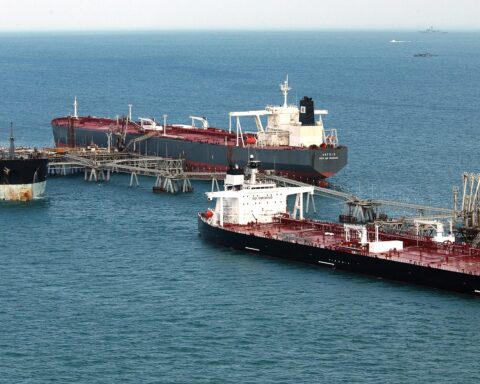
The shipping data tells the operational story. The live tracker straits.live recorded two ship transits on October 11. Exports through Hormuz averaged 8.5 million barrels per day in the week ending October 12, according to Kpler data cited by CNBC. Before the war, roughly one-fifth of the world’s oil and liquefied natural gas passed through the waterway, according to the International Business Times. US Central Command reported that 135 ships had been turned around since the blockade began on July 14, according to CBS News.
| Metric | Figure | Source |
|---|---|---|
| Ship transits, October 11 | 2 | straits.live |
| Exports through Hormuz, week ending Oct 12 | 8.5 million bpd | Kpler via CNBC |
| Vessels attacked in October | 20+ | CNBC |
| Brent crude, October 18 | $109.86 | straits.live |
| VLCC war-risk premium | Up to $10 million | straits.live (July 27) |
| US Navy JMIC threat level | Severe (second-highest) | CNBC |
The US Navy’s Joint Maritime Information Center has rated the threat to merchant shipping “severe” — its second-highest level — according to CNBC. These are the conditions under which Araghchi’s offer is being evaluated, and they explain why the offer’s diplomatic framing is irrelevant to the market actors who actually determine whether ships move through the Strait. Insurers price risk on physical conditions and military posture, not on conditional proposals from one party to a conflict.
The offer would need to be accepted, implemented, and independently verified before any insurer would consider revising war-risk premiums — a process that, even under the most optimistic reading of “six days,” would take weeks, not days. The states most affected by that reality are not the ones making the offer or the ones refusing it.
Where Does the Offer Leave Saudi Arabia?
Saudi Arabia is not a party to Iran’s offer and has no mechanism to accept or reject it, yet the Kingdom bears a disproportionate share of its consequences. Riyadh’s economy depends on the waterway that Iran claims to have closed and the United States claims to control, and the six-day proposal addresses neither Saudi energy exports nor Saudi security directly.
The diplomatic alignment across the Gulf is split. Saudi Arabia and the UAE are lobbying Washington to maintain the embargo on Iran, according to a Reuters analysis reported by Yahoo News. Crown Prince Mohammed bin Salman is reportedly pressing US officials to keep the blockade in place until Tehran signs a new comprehensive agreement. Qatar and Oman, by contrast, are calling for de-escalation — a position that would favour engagement with Iran’s offer rather than its dismissal. Araghchi’s restatement exacerbates that fracture, forcing each capital to decide whether engaging with Iran’s terms or ignoring them serves its interests better.
Riyadh’s position is structurally exposed. Washington has declined to provide the direct military intervention Saudi Arabia has sought, and the Kingdom cannot enforce the Strait’s reopening independently. If the offer were accepted and the Strait reopened, Riyadh would benefit from restored energy flows but lose its bargaining position in pressing for a harder US line on Iran. If the offer is refused — as it will be — the Strait stays closed, Hormuz-dependent exports remain at the depressed levels described above, and Saudi Arabia remains reliant on alternative export routes that cannot fully compensate.
The timing compounds the exposure. The EU-GCC summit is scheduled for Riyadh on October 24, six days after Araghchi’s Baghdad restatement, according to The National. The Future Investment Initiative follows from October 26 to 29. Both events are premised on Saudi Arabia’s positioning as a stable, investable destination — a message undercut by the continued closure of the world’s most important energy chokepoint and by Houthi strikes that have killed twenty people at Saudi airports since October 6, according to the BBC.
Araghchi offered on October 11 to “facilitate dialogue between Saudi Arabia and Yemen,” according to the BBC — presenting Tehran as a mediator in the Houthi conflict while simultaneously maintaining the Hormuz blockade that inflicts the most damage on the Saudi economy. The offer to reopen the Strait is addressed to Washington, but the costs of its rejection fall on Riyadh.
The Midterm Freeze and the Window That Matters
The timing of Iran’s restatement is not coincidental. Trump told reporters on October 8 that the United States would not attack Iran “at any time prior to the midterm elections” on November 3, according to The National. That statement created a hard window of diplomatic paralysis: Washington will not escalate militarily, will not accept Iran’s conditions, and will not offer a counter-proposal before the vote. Araghchi’s six-day plan was restated on October 18, squarely inside that window.
Iran gains from the freeze in two ways. The Strait stays closed, sustaining the economic pressure that serves Tehran’s broader negotiating position, and the absence of American military action allows Iran to present its offer without the risk that rejection triggers an immediate strike. The midterm freeze effectively guarantees that the six-day plan can be offered, rejected, and cited as evidence of American obstruction — all without physical consequences for Tehran.
If the Journal’s reporting about renewed bombing after the midterms holds, the six-day offer is being made inside a window that Tehran knows has an expiration date. Iran’s calculation may be simpler than it appears: present reasonable-sounding terms during the period when Washington cannot respond with force, collect the diplomatic credit for having offered, and prepare for whatever follows the November vote. The midterm freeze does not pause the crisis; it pauses one side’s capacity to act within it, and Iran has timed its public diplomacy to exploit exactly that asymmetry.
The Strait “would reopen and regional security would be restored if the United States leaves the region.” If the US does not leave voluntarily, Iran would “secure their departure.”
Brig. Gen. Mohammad Akraminia, Iranian Army spokesman, October 17 (Al Mayadeen; Shafaqna Pakistan)
Akraminia’s statement, made one day before Araghchi’s Baghdad speech, exposes the hard edge behind the diplomatic language. The army’s demand and the foreign minister’s offer arrived twenty-four hours apart — one proposing six days of structured preparation, the other proposing American withdrawal with no timeline. Araghchi has not stated what happens if Washington refuses. Washington, as of October 18, has not publicly acknowledged the restatement.
Frequently Asked Questions
Has Iran ever reopened the Strait of Hormuz after closing it?
Yes — briefly. An interim ceasefire and safe-passage agreement known as the Islamabad MOU, signed in June 2026, reopened the Strait for a short period. It collapsed in early July, and the blockade reimposed on July 14 has remained in force since.
What are the seven conditions Iran’s parliament has set for reopening?
Parliament Speaker Mohammad Baqer Qalibaf said on October 4 that all seven conditions from the Islamabad MOU must be met before the Strait reopens, according to Al Jazeera. The full list has not been publicly disclosed by any Iranian official. Only three conditions have been publicly enumerated by Foreign Minister Araghchi — lifting the naval blockade, removing oil sanctions, and ending hostilities including in Lebanon. The remaining four conditions are unknown to outside observers, which means any negotiation is proceeding against a partially hidden set of demands.
What role has Qatar played in Iran-US negotiations over Hormuz?
Qatar has served as the primary intermediary between Tehran and Washington throughout the Hormuz crisis. Doha conveyed Iran’s September UNGA roadmap to the United States and channelled Washington’s response back to Tehran — the response that Rezaei called “insufficient” on October 11. Qatar and Oman have both called for de-escalation, a position that puts them at odds with Saudi Arabia and the UAE, which are lobbying to maintain the embargo until Iran signs a comprehensive agreement.
How has Iranian state media framed the six-day offer?
Iranian state media published the plan on October 17 framing it as straightforward news rather than a conditional demand. The state-media treatment presents the Hormuz closure as a defensive measure and the offer as an act of restraint and goodwill — a framing aimed at domestic audiences and at non-aligned states inclined to see the blockade as an American provocation rather than an Iranian one. The diplomatic and state-media tracks reinforce each other: Araghchi offers, state media amplifies, and the rejection is framed as Washington’s choice.