
TEHRAN — Iranian Foreign Minister Abbas Araghchi said on 21 October that the Strait of Hormuz “will remain closed” until Washington accepts Tehran’s seven-day initiative, while Supreme National Security Council Secretary Mohsen Rezaei declared that “not a single gram of enriched uranium will be removed from Iran.”
The two statements, delivered within hours of each other during a visit to Tehran by Pakistan’s Army Chief Asim Munir, placed the Hormuz closure and Iran’s nuclear stockpile into the same negotiating frame. In May, Araghchi described the enriched uranium question as deferred. Five months later, Rezaei has foreclosed that deferral — and Vice President JD Vance has demanded a “meaningful” reduction in Iran’s enrichment capacity. The gap between those positions complicates any prospect of a deal before the 3 November midterm elections and extends the timeline for any reopening of the strait that Saudi crude exports depend on.
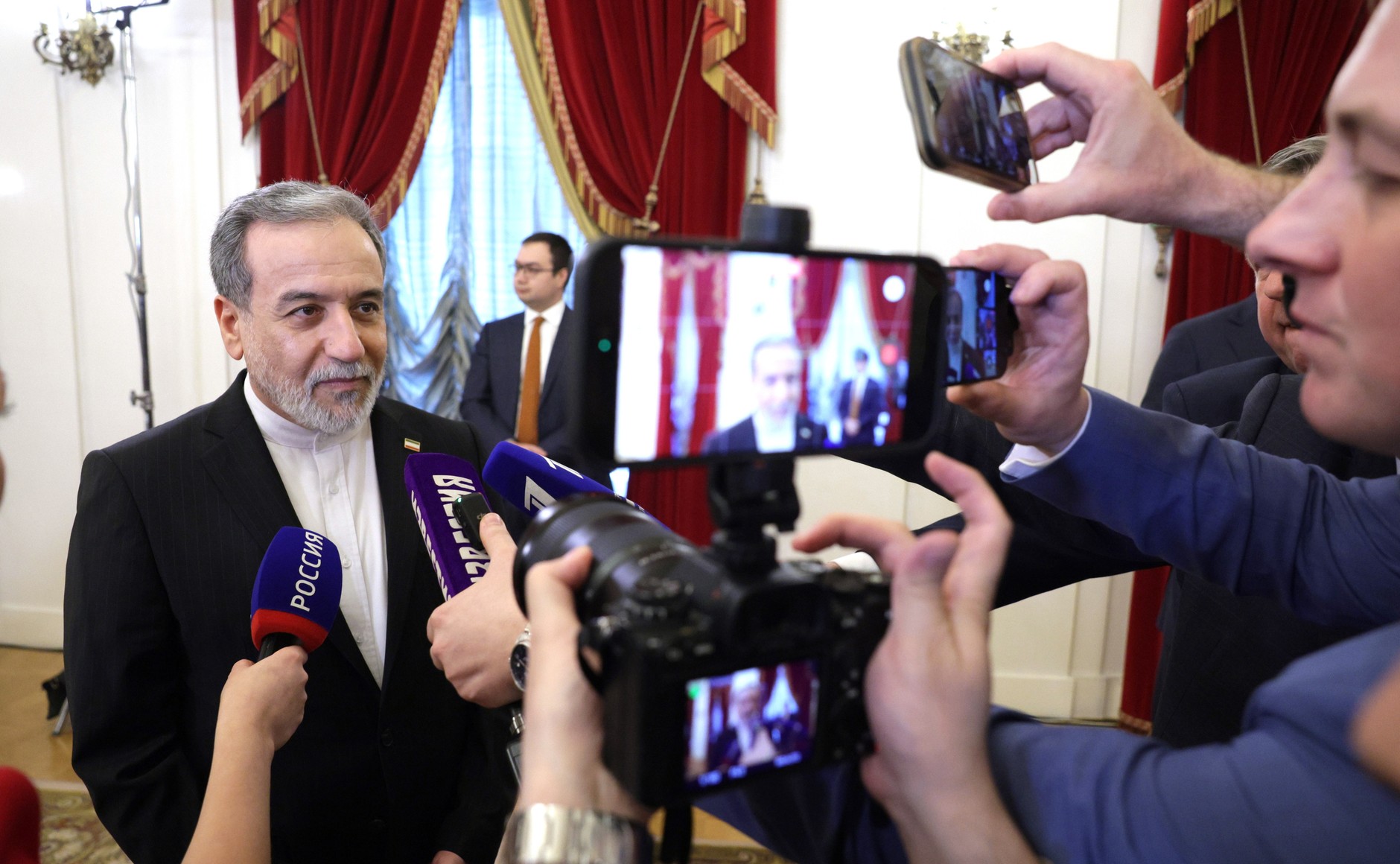
Table of Contents
What Araghchi Said About Hormuz
Araghchi told reporters on 21 October that the United States “agreed to the conditions but wants additional provisions,” describing talks that have stalled on American add-on demands rather than collapsed entirely. Under Iran’s seven-day plan — first presented through Qatar in September — the Strait of Hormuz would fully reopen on the sixth day, with direct negotiations resuming on the seventh.
“The negotiating table is still there. If they adhere to these conditions, they should know that the strait will be fully reopened.”
— Abbas Araghchi, Iranian Foreign Minister, 21 October 2026
Iran’s conditions include ending the US naval blockade, lifting oil export restrictions, releasing approximately $12 billion in frozen assets, and halting regional hostilities. Parliament Speaker Mohammad Bagher Ghalibaf reinforced the stance, telling Gulf News that “the era of wasting time is over” and that the strait would stay closed until the US met the conditions of the June memorandum of understanding signed in Islamabad.
The Middle East briefing 3,000+ readers start their day with.
One email. Every weekday morning. Free.
The remarks came during a day of intensive diplomacy. Pakistan’s Army Chief Munir was meeting separately with Rezaei, President Masoud Pezeshkian, and Araghchi, with Islamabad acting as a back-channel alongside Qatar, which relayed Iran’s original proposal to Washington in September.
US Central Command has recorded 135 ships turned around since the strait’s closure on 14 July. Before the blockade, tens of millions of barrels of crude and petroleum products transited the waterway each day.
Araghchi also noted that “neither Saudi Arabia nor Yemen’s Houthis had responded to Iran’s offer to mediate their conflict” — a bid to position Tehran as a prospective broker even as it maintains the blockade.
What Did Rezaei’s Uranium Statement Signal?
Rezaei made his declaration during a meeting with Pakistan’s Army Chief Munir on 20 October. “Not a single gram of enriched uranium will be removed from Iran,” he posted on X. “This material is a great asset and national wealth for the Iranian people to use domestically.”
He added a precondition for resuming talks themselves: “There will be no negotiations until America takes steps to build trust.”
His statement addressed stockpile transfer — whether Iran would ship enriched material abroad, typically to Russia, as part of any agreement — not the ongoing enrichment process itself. Before the June 2025 US-Israeli strikes, Iran held approximately 440.9 kg enriched to 60% purity, according to the Institute for Science and International Security, citing IAEA data. Weapons-grade enrichment is 90%. The IAEA says it cannot confirm the current size or location of the stockpile because it lost access to Iranian facilities after the strikes.
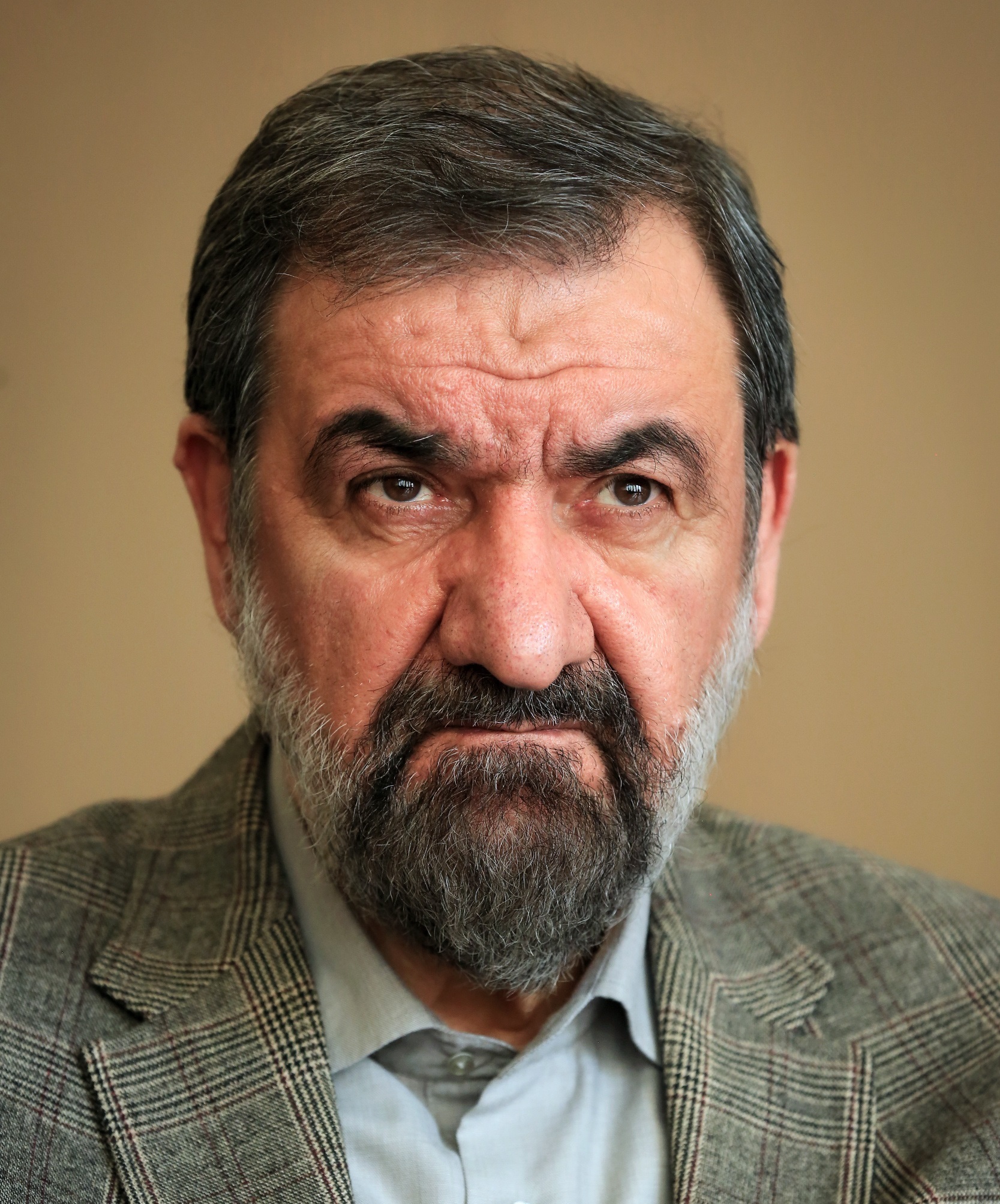
“Not a single gram of enriched uranium will be removed from Iran. This material is a great asset and national wealth for the Iranian people to use domestically.”
— Mohsen Rezaei, Secretary of Iran’s Supreme National Security Council, 20 October 2026
Vice President Vance framed the American counterposition in a Reuters interview on 6 October. “If you don’t want a nuclear weapon, then why do you need 60 per cent enriched fuel?” he said. He demanded that Iran make a “meaningful” reduction in enrichment capacity: “We’re not going to trade words for actions.”
Whether Vance’s enrichment demand is among the “additional provisions” Araghchi referenced on 21 October has not been confirmed by either side.
Whether Araghchi shares Rezaei’s position on the stockpile is also unclear. Araghchi’s October remarks addressed Hormuz and the seven-day plan; he did not repeat Rezaei’s uranium language. As SNSC secretary, Rezaei speaks for the security establishment — not necessarily for the diplomatic track Araghchi manages. Whether the two statements represent a coordinated position or parallel signals from separate institutional bases remains an open question.
The Shift Since May
The distance between Araghchi’s positions in May and October measures how far Iran’s public stance on the nuclear file has moved.
In New Delhi on 15 May, Araghchi described the enriched uranium question as “very complicated” and said Tehran and Washington had “agreed to postpone it to the later stages” of negotiations. It was, he said, “not currently on the table.”
Five months later, Rezaei placed it on the table and declared it non-negotiable.
On 29 September, Araghchi told PressTV: “I categorically state that there has been no change in Iran’s positions.” Within three weeks, Rezaei publicly introduced a condition — the enriched uranium stays — that had not been part of the negotiating framework.
Iranian state media reinforced the framing. PressTV headlined Rezaei’s remarks as “Iran’s national security chief says not a single particle of enriched uranium will go out,” describing the stockpile as sovereign property and the American demand for its transfer as “economic terrorism.” Rezaei had earlier told Iran’s state news agency IRNA that the US response to Iran’s proposals was “insufficient.”
Anonymous Iranian officials told the Times of Israel on 20 October that Tehran is deliberately prolonging negotiations to deny President Trump a political victory before the 3 November midterms. “The clerical establishment is determined not to give Trump a political victory,” one official said.
The Carnegie Endowment for International Peace assessed in May 2026 that Tehran may conclude its ability to disrupt the global economy via Hormuz “provides enough deterrence to begin quietly rebuilding its nuclear program.” Rezaei’s refusal to discuss the stockpile sits within that logic.
How Does This Affect Saudi Arabia’s Energy Exports?
Every additional day that Hormuz stays closed deepens the fiscal damage to Saudi Arabia. Crude exports fell to approximately 3 million barrels per day in August, according to Bloomberg and Kpler data. The International Energy Agency reported that Saudi output dropped 2.6 million bpd that month. The kingdom’s OPEC+ production target for November stands at 10.5 million bpd — a figure it cannot approach without Hormuz.
The restart of the East-West pipeline on 22 September provided partial relief. Exports recovered to approximately 6 million bpd in September, routed through Yanbu on the Red Sea coast. The pipeline has a design capacity of roughly 7 million bpd and can export about 5 million bpd from Yanbu, according to Saudi Gazette, citing Aramco figures. Aramco has confirmed that no fourth export route exists.
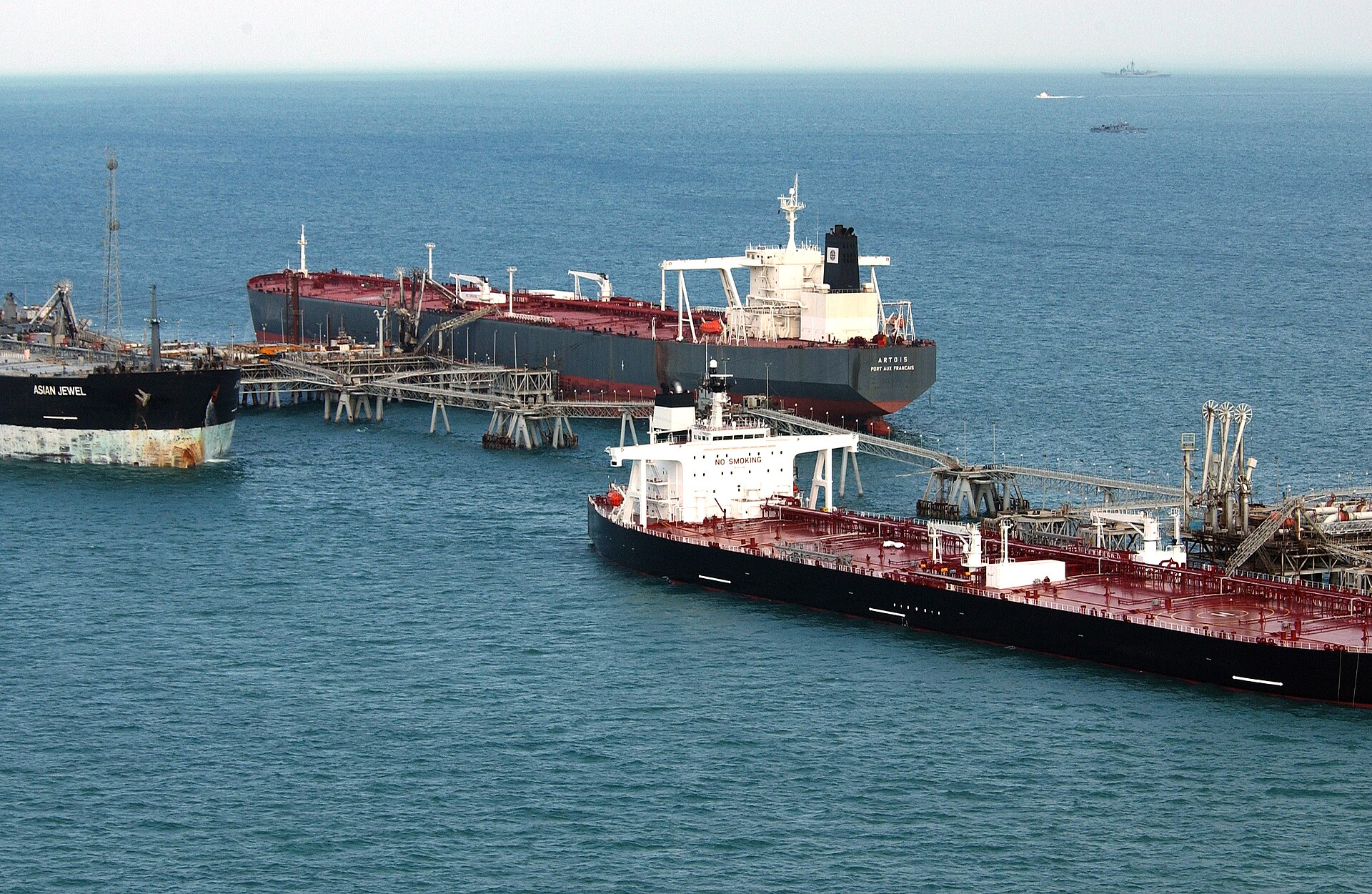
The costs extend beyond volume. Tanker war-risk insurance at the Hormuz approaches has reached 7.5% to 10% of hull value, according to Marsh, as cited by S&P Global. The VLCC freight rate from the Gulf to China has risen to $1.2 million per day, against approximately $80,000 a year earlier, LSEG data shows. Aramco cut its November Arab Light official selling price to Asia by $3, to $5 below the Oman-Dubai benchmark — the widest discount since June 2020.
Saudi Arabia’s 2026 budget deficit has been revised upward to 245 billion riyals from a budgeted 165 billion, with the government forecasting a 3.6% contraction in real GDP driven by a 21.8% drop in oil activities. The Future Investment Initiative, originally scheduled for late October, has been postponed to 2027. Strikes on Dammam airport and broader coalition security concerns have compounded the operational risks.
David Goldwyn and Reed Clabough at the Atlantic Council wrote in July that both sides’ core aims “are diametrically opposed and unchanged” and that Iran aims to become “the de facto manager of the world’s most important trade and transit route.” Thomas Juneau of Chatham House assessed in June that a deal would eventually emerge, “but whatever the terms, the Persian Gulf will not return to the pre-28 February 2026 status quo.”
Can Washington and Tehran Reach a Deal Before 3 November?
President Trump said on 8 October that the US “will not be attacking Iran at any time prior to the midterm elections” on 3 November. The Hormuz blockade, he added, remains in “full force.” The Wall Street Journal reported that Trump rejected Iran’s seven-day plan and expects renewed bombing after the midterms.
Acceptance of the plan would require Washington to lift its blockade, release frozen assets, and halt regional hostilities — none of which has been agreed. Rezaei’s uranium statement adds a dimension the original plan did not contain. When Araghchi presented the proposal through Qatar in September, the enrichment file was deferred. Rezaei has now un-deferred it.
Whether the Munir visit produced any formal communiqué has not been reported.
Iranian state media’s framing has moved accordingly. In September, Araghchi told PressTV that Iran’s positions had not changed, casting the US as the sole obstacle. By October, Rezaei and Ghalibaf have recast the message: the positions will not change. The seven-day plan remains the offer. The uranium stays.
Araghchi keeps the door open on Hormuz: the table is there. Rezaei closes the one on uranium: not a gram leaves. Vance demands a “meaningful” reduction in enrichment capacity. The midterm calendar — already constraining both Washington and Riyadh — gives neither side a reason to move first.
Background
Iran closed the Strait of Hormuz on 14 July 2026 after the Islamabad memorandum of understanding, signed on 17 June, collapsed. Iran claims the MoU’s conditions — including sanctions relief and an end to the naval blockade — were never met. The US reinstated its blockade after Iran resumed attacks on commercial vessels in early July.
Iran’s nuclear program has escalated in stages since the US withdrew from the Joint Comprehensive Plan of Action in 2018. The 2015 deal capped enrichment at 3.67% and limited stockpiles to 300 kg. Iran began breaching those limits in 2019 and was enriching to 60% by the time of the June 2025 US-Israeli strikes. The Arms Control Association estimated before the strikes that Iran could produce enough weapons-grade uranium for five to six bombs in under two weeks. The IAEA lost verification access after the strikes and cannot confirm current capabilities.
Iran has also signaled broader strategic aims around Hormuz, including control over the undersea fibre-optic cables that transit the strait — linking the closure to control over digital as well as energy transit.
Frequently Asked Questions
What does “stockpile transfer” mean in nuclear negotiations?
Under the JCPOA and related proposals, Iran was expected to ship the bulk of its enriched uranium abroad — typically to Russia — to keep fissile material below the threshold needed for weapons development. The JCPOA capped Iran’s total stockpile at 300 kg enriched to no more than 3.67%. Rezaei’s declaration that “not a single gram” will leave Iran rejects this mechanism entirely. The distinction is significant: he did not say Iran would stop enriching uranium. He said the material already produced will not be removed from Iranian territory.
How close is 60% enrichment to weapons grade?
Weapons-grade uranium is enriched to 90% or above. The technical gap between 60% and 90% is substantially smaller than it appears: most of the separative work required to reach weapons grade is completed in the lower enrichment stages. The Arms Control Association estimated that Iran could produce enough 90%-enriched material for five to six nuclear weapons in under two weeks, based on its pre-strike centrifuge infrastructure. The IAEA has been unable to verify the current state of that infrastructure since losing access after the June 2025 strikes.
What role is Pakistan playing in the Iran negotiations?
Pakistan’s Army Chief Asim Munir visited Tehran on 20 October and met separately with Rezaei, President Pezeshkian, and Araghchi. Islamabad has been acting as a diplomatic back-channel alongside Qatar, which relayed Iran’s seven-day proposal to Washington. Pakistan also hosted the original Islamabad MoU negotiations in June 2026, giving it a direct institutional stake in the framework’s revival. Both Araghchi and Rezaei made their headline public statements in the context of the Munir visit.
What was the Islamabad memorandum of understanding?
A US-Iran memorandum signed on 17 June 2026 in Pakistan’s capital. Iran says its terms — including sanctions relief, the lifting of the naval blockade, and the release of approximately $12 billion in frozen assets — were never fully implemented. The US reinstated its blockade after Iran resumed attacks on commercial shipping in early July. Atlantic Council analysts David Goldwyn and Reed Clabough identified what they called a “glaring omission” in the document: it contained no binding provision on the future status of the Strait of Hormuz.
What would a deal need to include for Hormuz to reopen?
Iran has laid out conditions: an end to the US naval blockade, the lifting of oil export restrictions, the release of frozen assets, and a halt to regional hostilities. As of 21 October, Rezaei’s statement has added an implicit condition — the enriched uranium stockpile remains in Iran. The US, through Vance, has demanded a “meaningful” reduction in enrichment capacity. No published framework reconciles these positions. Araghchi said on 21 October that the US “agreed to the conditions but wants additional provisions,” suggesting the distance is in the specifics rather than the structure.