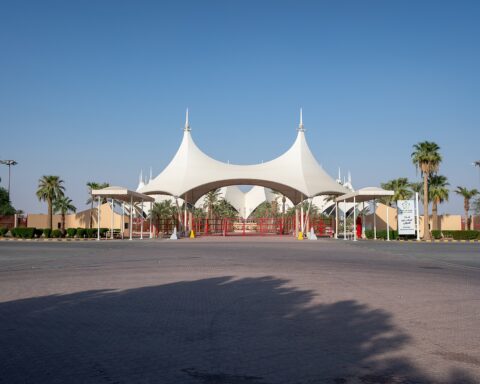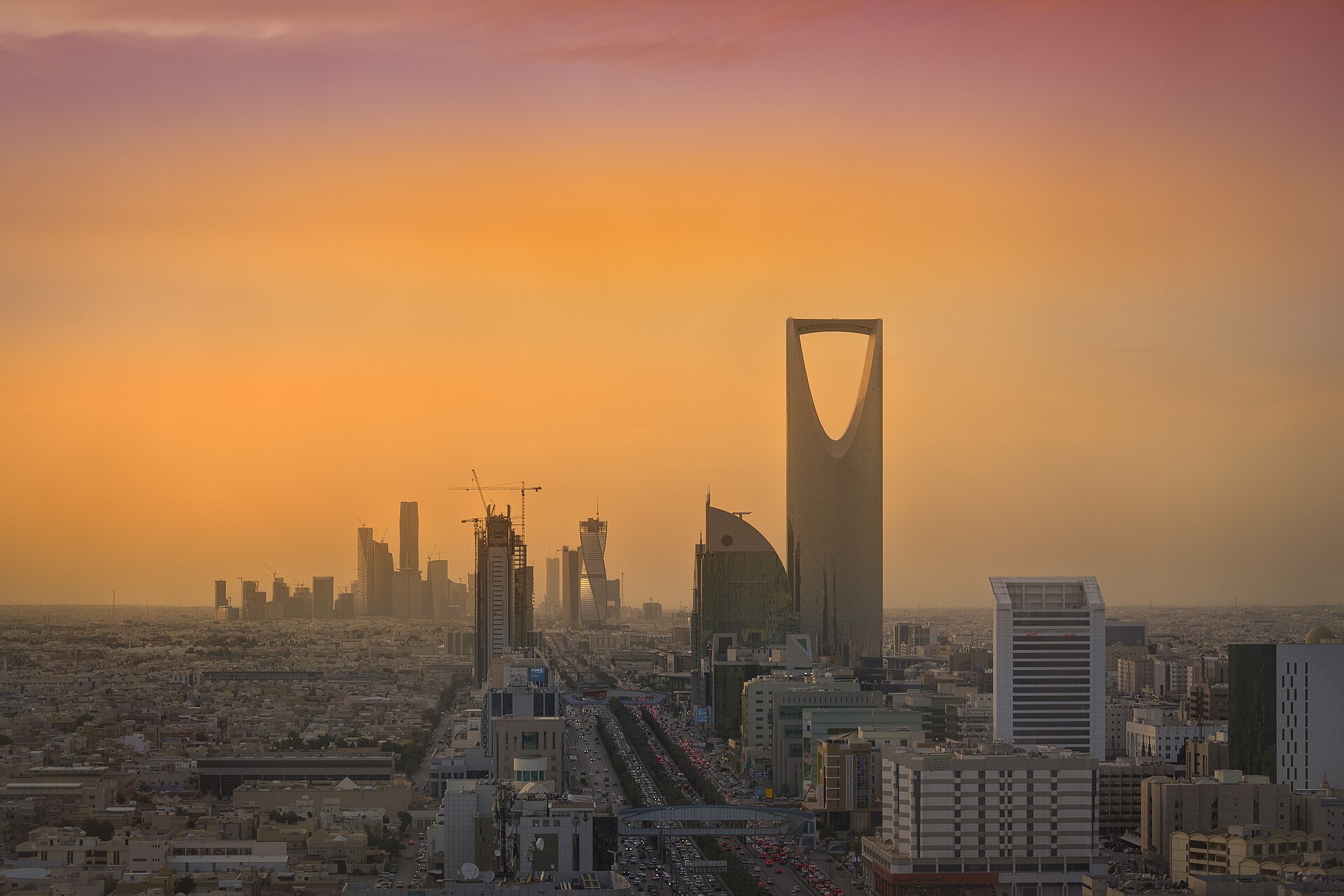

RIYADH — Saudi Arabia postponed the Future Investment Initiative conference, its flagship annual gathering of global finance and business leaders, to 2027 on October 19, one week before the event was due to open. The FII Institute cited a desire to ensure the 10th edition “delivers the full scale, extraordinary quality” its partners expect. The statement made no mention of the Houthi missile and drone campaign that has killed twenty people at Saudi airports since October 6, closed King Khalid International Airport for days, and driven major Wall Street chief executives to withdraw.
The postponement is the first in the conference’s nine-year history. In October 2018, after the murder of Jamal Khashoggi in Istanbul, Jamie Dimon, Larry Fink and dozens of other executives pulled out — but the event went ahead. That the conference now cannot go ahead at all, and that Riyadh’s own institute chose to postpone rather than face an empty stage, marks a different order of damage to the kingdom’s investment narrative.
Table of Contents
What the FII Institute Said
FII Institute CEO Princess Dr. Maha bint Mishari Al Saud announced the postponement via X and by email on October 19. The tenth edition, originally scheduled for October 26–29 in Riyadh, “will now take place in 2027,” she wrote, with new dates to be announced “very soon” (The National, 2026-10-19).
The language was studied. The decision “comes from a deep commitment to our partners, members, speakers and delegates,” the statement read. “A decade of partnership and shared vision deserves nothing less than our absolute best” (The National, 2026-10-19). The word “security” did not appear. Nor did “Houthi,” “attack,” “airport” or “war.”
The FII Institute, established as a nonprofit by royal decree in 2019, operates under the umbrella of the Public Investment Fund. PIF Governor Yasir Al-Rumayyan chairs its board. The conference has served since its 2017 launch as Riyadh’s primary vehicle for pitching Saudi Arabia as an investment destination to international capital — an annual showcase for the diversification programme that Crown Prince Mohammed bin Salman branded Vision 2030.
What the Institute Did Not Say
The causal link between the postponement and the Houthi campaign was established not by the FII Institute but by the outlets reporting on it. CNBC tied the decision to the October 10 airport attack that killed thirteen people (CNBC, 2026-10-19). Reuters framed it as a response to the ongoing strikes. Semafor, in an exclusive report, said big banks and private equity firms had privately relayed safety concerns directly to Al-Rumayyan (Semafor, 2026-10-19).
The Middle East briefing 3,000+ readers start their day with.
One email. Every weekday morning. Free.
That gap — between what the institute said and what everyone who received the email understood — is itself the measure of the problem. An institution designed to project confidence in Saudi Arabia’s economic future could not bring itself to name the reason it was shutting down its largest event. The evasion conceded more than a frank statement would have.
CNN used the word “cancels” in its reporting. The FII Institute’s own language says “postpones.” The distinction matters: a postponement implies continuation; a cancellation implies a rethinking. The institute chose the word that preserves the event’s future. Whether investors read it the same way is a separate question.
Who Was Not Coming
Five chief executives who had been expected to speak at FII10 were not going to attend: Jamie Dimon of JPMorgan Chase, David Solomon of Goldman Sachs, Stephen Schwarzman of Blackstone, Larry Fink of BlackRock, and Jane Fraser of Citigroup (CNBC, 2026-10-19). Collectively, their firms manage trillions of dollars in assets and represent the Wall Street establishment that Riyadh needs at the table for its largest privatisation and capital-raising campaigns.
The Wall Street Journal reported that some executives had already cancelled meetings ahead of the formal postponement (Semafor, 2026-10-19). Hotel rooms at the Ritz-Carlton Riyadh — normally blocked for FII delegates — became publicly bookable in the days before the announcement, a signal that the event was collapsing before the institute acknowledged it (Semafor, 2026-10-19).
The 2018 comparison is instructive. After Khashoggi’s murder, Dimon and Fink both withdrew from that year’s conference, as did media partners including the New York Times, the Financial Times, CNBC, Bloomberg and CNN. Google and Uber also pulled out. The event proceeded regardless, and Saudi Arabia suffered reputational damage but no formal retreat. In 2026, the institute chose not to test whether a depleted guest list could still fill the ballroom. It shut the doors instead.
What Preceded the Postponement
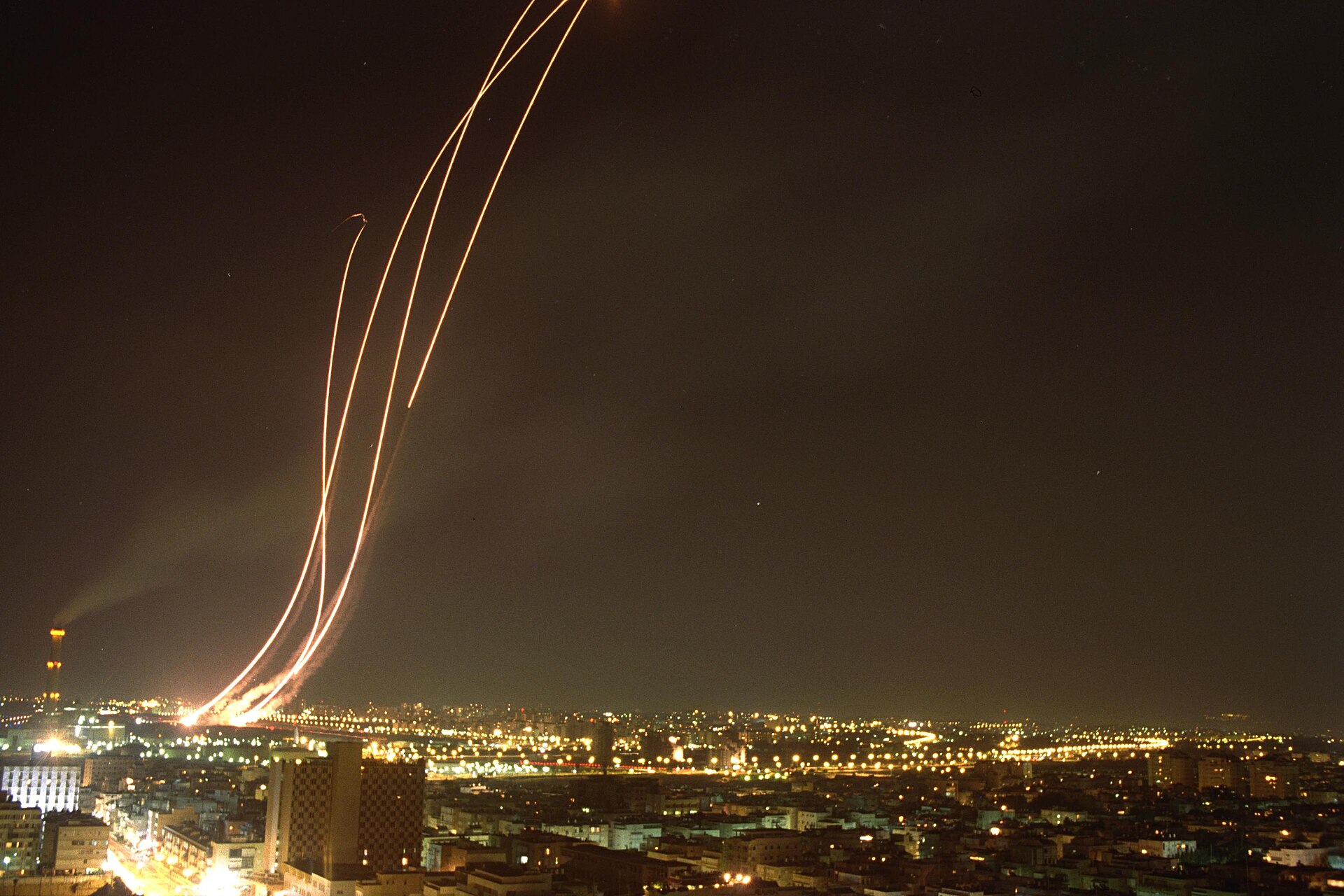
The Houthi campaign against Saudi airports began in earnest in September, when smoke rose near King Khalid International Airport on September 19 and the Houthis claimed what appeared to be their first strike on Riyadh in the current escalation (Kathmandu Post/Reuters, 2026-09-20). Attacks on KKIA and Abha killed three people and wounded thirty-six between October 6 and 7 (BBC, 2026-10-08). Two more attacks on October 8 killed another three Saudis, including Saudia captain Hamoud Ali Al Kalthami (GDN, 2026-10-09).
On October 10, a strike on KKIA killed thirteen and injured 308, according to the BBC; Al Jazeera put the injured at 309 (BBC, 2026-10-11; Al Jazeera, 2026-10-10). The following day, a projectile hit Terminal 4, killing a Pakistani resident and injuring eleven, and Dammam’s airport was also attacked (CNN, 2026-10-11). The cumulative toll between October 6 and 12: twenty dead, more than 350 people wounded across confirmed attacks (BBC, 2026-10-11).
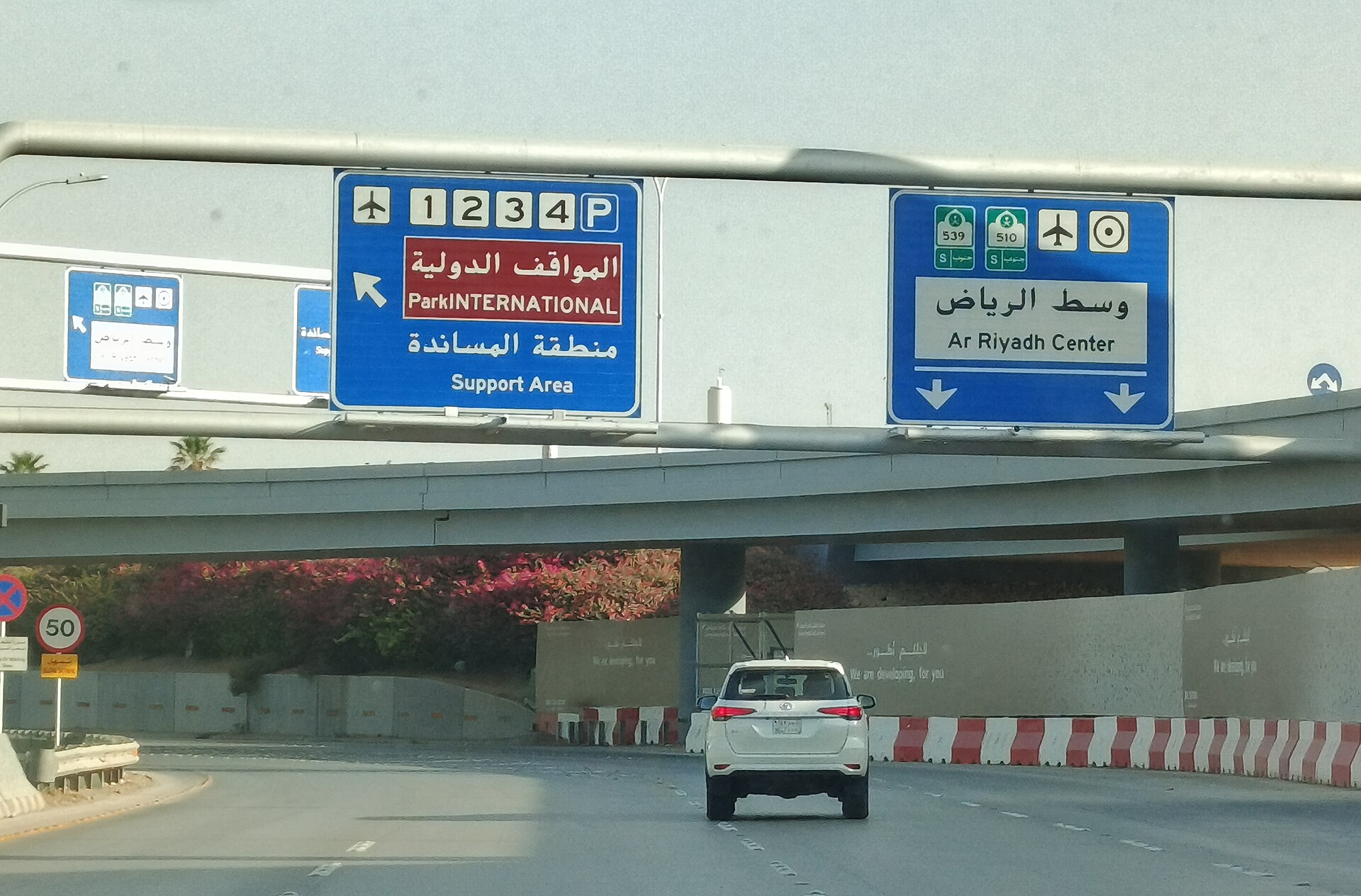
King Khalid International Airport — which handled approximately 110,000 passengers per day before the attacks, according to Fortune — was closed and its closure extended to at least October 17 (Reuters per Wikipedia; Fortune, 2026-10-14). The European Union Aviation Safety Agency widened its Saudi airspace warning (Fortune, 2026-10-09). Airlines cancelled routes. The airport through which most FII delegates would have entered Riyadh was, as of the postponement announcement, still operating under restricted conditions.
On October 14, a Houthi missile struck an administrative building at Aramco’s Dhahran headquarters, causing a limited fire (BBC, 2026-10-14). The Saudi energy ministry confirmed the damage. The Houthis had widened their targeting from airports to the physical infrastructure of Saudi Arabia’s oil economy — the same economy that FII exists to promote.
| Date | Target | Killed | Wounded | Source |
|---|---|---|---|---|
| Oct 6–7 | KKIA, Abha | 3 | 36 | BBC, 2026-10-08 |
| Oct 8 | KKIA | 3 | — | GDN, 2026-10-09 |
| Oct 10 | KKIA | 13 | 308–309 | BBC / Al Jazeera |
| Oct 11 | KKIA Terminal 4, Dammam | 1 | 11 | CNN, 2026-10-11 |
How Many Events Has Riyadh Lost?
FII is not the only event Riyadh has lost. The EU-GCC summit, scheduled for October 24 and co-chaired by Crown Prince Mohammed bin Salman and European Council President Antonio Costa, was postponed on October 15. The GCC cited “continued attempts to target the Kingdom of Saudi Arabia and its civilian infrastructure” — language the FII Institute did not use (Saudi Gazette, 2026-10-15; The National, 2026-10-15). No new date was announced.
Intersec Saudi Arabia, an international security and safety trade fair, moved to October 2027. Its organiser, Messe Frankfurt Saudi Arabia, said the decision “follows close monitoring of recent developments in Saudi Arabia” and aimed to “preserve the international scale and high-calibre attendance” (The National, 2026-10-19). The Saudi Retail Forum also moved, to March 2027 (The National, 2026-10-19).
National Day fireworks and drone shows were postponed indefinitely in late September (Khaleej Times, 2026-09-23). The UCI cancelled the World Cycling Championships that had been planned for Saudi Arabia (Cycling Weekly, 2026-10-16). The New York Times, writing after the October 10 airport strike, said the attacks threatened Riyadh’s entire events calendar (New York Times, 2026-10-10).
Riyadh Season, the kingdom’s largest entertainment programme, was due to open on October 21 (Gulf News, 2026-09-27). As of October 19, no official Saudi source had confirmed or denied whether it would proceed.
Each postponement individually can be framed as prudent scheduling. Collectively, they describe a capital city that cannot guarantee the safety of large international gatherings on its own soil.
What Does the Postponement Cost Vision 2030?
FII9, held in October 2025, closed with more than $50 billion in signed agreements and investment pledges, according to the Saudi Press Agency. The 2026 edition would have been the first held during wartime conditions — and the first opportunity for Riyadh to demonstrate to institutional investors that the conflict had not altered the investment thesis.
The postponement arrives alongside economic data that already tells a difficult story. Saudi Arabia’s pre-budget statement, released September 30, revised the 2026 deficit estimate to 245 billion riyals from a budgeted 165 billion. It forecast real GDP falling 3.6 percent in 2026, driven by a 21.8 percent drop in oil activities, before projecting a recovery of 12.8 percent in 2027 (Reuters via Zawya, 2026-09-30). The first half of 2026 alone produced a budget deficit of 160 billion riyals ($42.7 billion), a 71 percent increase year on year (Fortune, 2026-10-14).
James Reeve, a Saudi macro consultant and former senior director at PIF, told Fortune before the postponement that “more troubling for the Vision 2030 story is the impact on new FDI inflows.” He added: “The images of missiles hitting the capital’s airport will be hard to forget for firms weighing large investments” (Fortune, 2026-10-14).
All in all, I think current events are quite a big blow to the Vision 2030 thesis.
James Reeve, Saudi macro consultant and former senior PIF director (Fortune, 2026-10-14)
Reeve offered a qualification: “Foreign investors are unlikely to up sticks at this point” — suggesting that existing commitments may hold even as new ones dry up (Fortune, 2026-10-14). The distinction matters. Vision 2030’s economic model depends on a continuous flow of new foreign direct investment, not merely on the retention of capital already committed. A conference postponement does not unwind existing joint ventures, but it removes the annual platform through which Riyadh recruited new ones.
Andreas Krieg, a Middle East security analyst at King’s College London, told Fortune that the attacks represent “the return of a security premium to doing business in Saudi Arabia.” He cautioned against over-reading the moment: “I would not extrapolate from several weeks of disruption to the collapse of Vision 2030.” But he added a condition: “The long-term effect depends almost entirely on duration” (Fortune, 2026-10-14).
Saudi Energy Minister Prince Abdulaziz bin Salman offered the official line: “Vision 2030 must continue, investment must continue” (Fortune, 2026-10-14). The FII postponement tested that assertion within days.
S&P affirmed Saudi Arabia’s long-term sovereign credit rating at A+ with a stable outlook on September 11 — before the October attacks began (S&P via vision2030.ai, 2026-09-11). No post-attack rating action has been announced. The rating reflects the kingdom’s balance-sheet strength rather than the trajectory of investor confidence. FII’s postponement registers a signal that credit ratings do not capture: not what Saudi Arabia can afford, but what international capital is willing to attend.
The Conference That Ran
Not every event left Riyadh. The World Petroleum Congress, held October 11–15, ran as scheduled. Asharq Al-Awsat reported that it drew more than 33,000 visitors from 135 countries (Asharq Al-Awsat, 2026-10-16). But the attendance was uneven at the top: BP withdrew entirely, and ExxonMobil, TotalEnergies and Shell all cancelled CEO-level attendance, according to the Financial Times.
The WPC’s decision to proceed and FII’s decision not to exposes a distinction between audiences. Oil executives, many of them already operating in conflict zones and accustomed to security risk, arrived in Riyadh. Wall Street executives — whose presence is performative as much as operational, a signal of confidence that Riyadh converts into deal flow — did not.
Ali al-Bukhaiti, a former Houthi spokesman now distanced from the group, described the Houthi campaign’s purpose as intended to “inflict economic pain on Riyadh and Washington,” according to Al Hurra. No direct Houthi statement naming FII or Saudi investment conferences was found in available reporting. The Houthis have repeatedly struck Aramco facilities, Abha Airport, King Khalid International Airport and Khamis Mushait military base in their current campaign.
Iran’s foreign minister, Abbas Araghchi, offered on October 11 to “facilitate dialogue between Saudi Arabia and Yemen” (BBC, 2026-10-11). Riyadh accepted a call from Tehran, and the strikes continued. Iran has not issued a specific response to the FII postponement. Saudi Arabia accused Iran at the United Nations of encouraging the attacks.
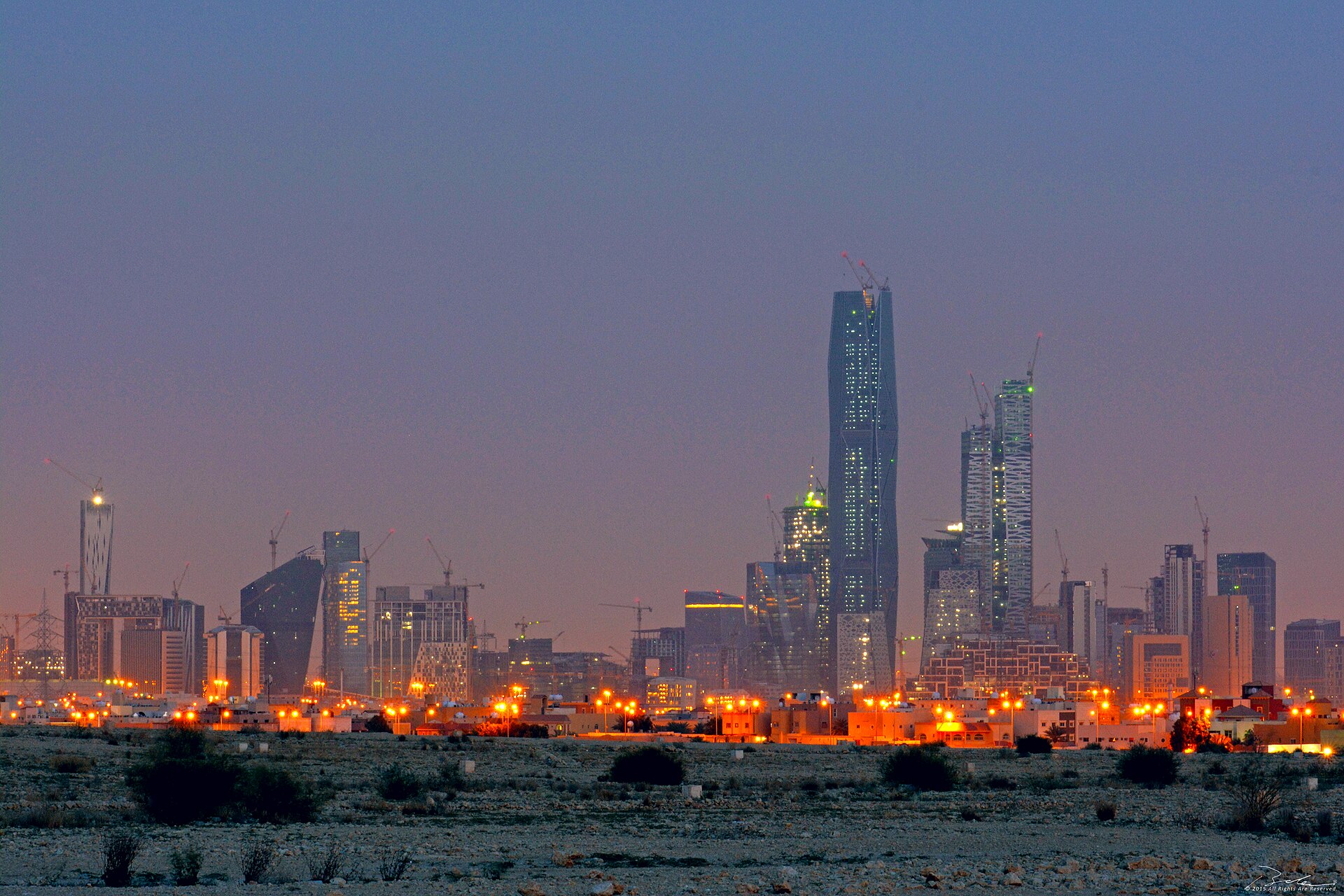
The FII Institute said new dates would come “very soon.” The Houthis have made no corresponding promise about their strikes. The 2027 edition, whenever it is held, will be the first to carry a question its predecessors never faced: whether the guests will come back, and what Riyadh will have to guarantee — beyond “extraordinary quality” — to bring them. The conference that survived a murder did not survive a war.
Frequently Asked Questions
Has Saudi Arabia offered any security guarantees for the rescheduled FII in 2027?
Not as of October 19, 2026. The FII Institute’s statement referenced only its commitment to quality and partnership, with no mention of security measures or conditions for rescheduling. The 2027 dates have not been set, and no framework for assessing whether security conditions have improved has been made public by the institute or PIF.
How does the FII postponement compare to conference disruptions in other conflict-affected countries?
Major investment conferences have been relocated or postponed during periods of conflict before — Beirut’s investment summit circuit was disrupted during the 2006 Lebanon war, and several Gulf conferences were affected during the 1990–91 Gulf War — but the FII case is unusual because the host government itself chose postponement. The more common pattern is for organisers to proceed and absorb lower attendance, as the World Petroleum Congress did in Riyadh on October 11–15.
Is Riyadh Season still happening?
The season draws millions of domestic and regional visitors, predominantly Saudi, whose attendance is far less dependent on international aviation than FII’s Wall Street guest list — which may make it more viable despite airport disruptions. No official statement on whether it would proceed had been issued as of October 19.
What happens to the agreements that would have been signed at FII10?
The institute has not addressed pending deals. Whether agreement pipelines from recent FII editions migrate to bilateral channels, to the rescheduled 2027 event, or stall will depend on individual firms’ risk assessments and the duration of the security situation.
Did any government formally advise against attending FII?
No government issued a specific advisory regarding FII attendance. The UK advises against all travel within 10 kilometres of the Saudi-Yemen border (BBC, 2026-10-11), and the US barred its staff from travel within 20 miles of the border (Gulf News, 2026-10-07). EASA widened its Saudi airspace warning after the October strikes (Fortune, 2026-10-09). The pressure that emptied FII’s guest list came from corporate risk teams and executive security advisers, not from government travel offices.