WASHINGTON — The US Embassy in Riyadh issued a fresh security alert on Friday warning that Houthi hostilities against Saudi Arabia “have the potential to escalate rapidly beyond that immediate area,” the sharpest public language from the mission since Washington ordered all non-emergency staff and their families to leave the country on October 21.
The warning came days after Director of National Intelligence Jay Clayton told Secretary of State Marco Rubio in an unclassified memo that Iranian plots to kill American officials and diplomats abroad had reached advanced stages, Axios reported on October 24, confirmed by Fox News. Together, the embassy alert and the intelligence disclosure frame the Saudi drawdown as a response to a dual threat — Houthi military operations targeting civilian infrastructure and an active Iranian intelligence campaign aimed at US personnel. The Trump administration’s November 3 Iran strike moratorium is now days from expiration.
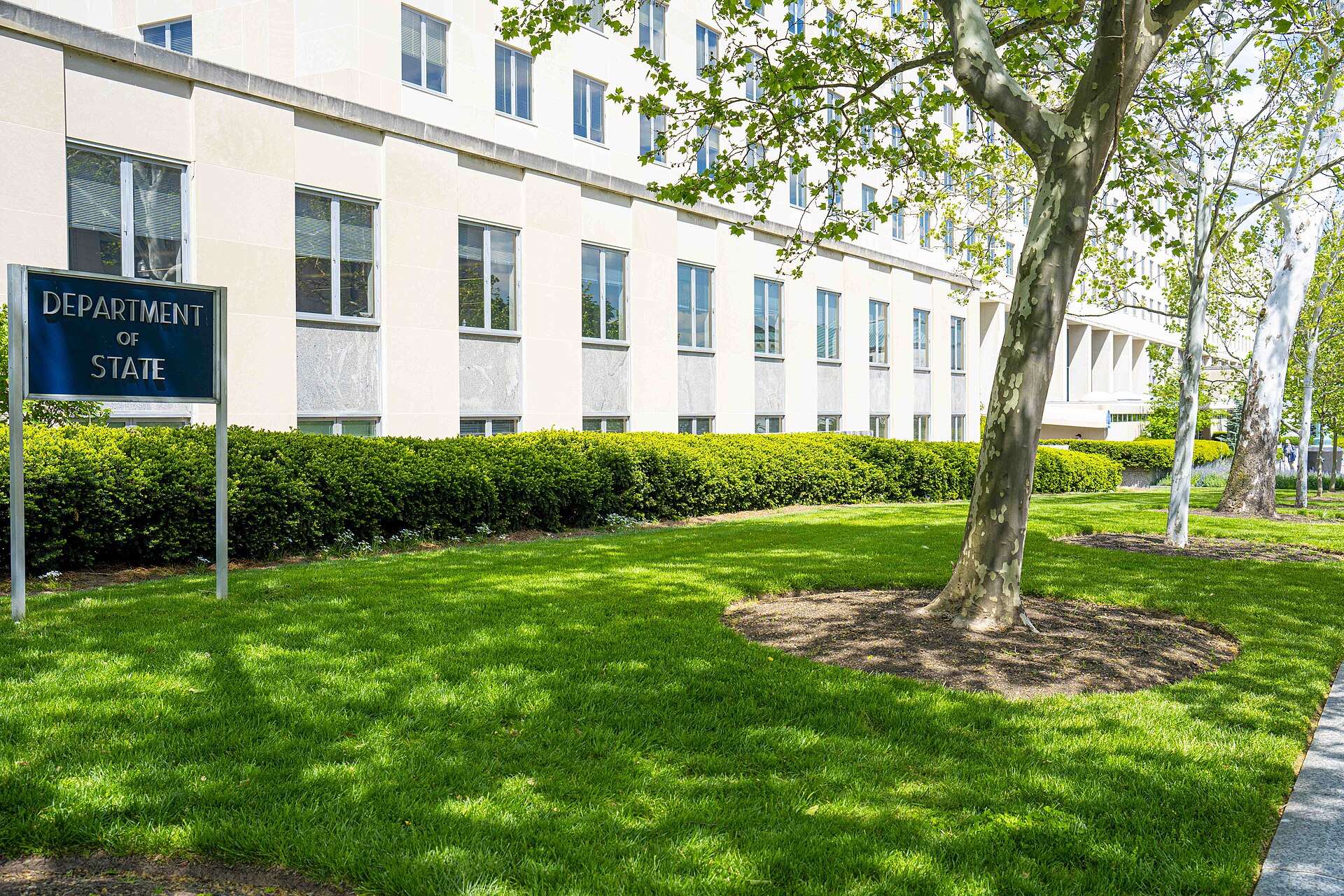
Table of Contents
What Did the October 30 Embassy Alert Say?
The Friday alert warned that Houthi hostilities “have the potential to escalate rapidly beyond that immediate area,” according to Al-Monitor reporting on October 30. The phrase marked a shift in the embassy’s public language. Earlier communications had described ongoing attacks on airports and infrastructure.
The House of Saud Daily Briefing
Saudi Arabia's news in 3 minutes, every morning. Free. See today's issue
The alert followed two earlier embassy notices this month. On October 21, the State Department issued an ordered departure — a mandatory removal of non-emergency government employees and their family members — effective October 23. Al Jazeera and The Week (India) reported that the order covered the Riyadh embassy and the consulates in Jeddah and Dhahran. On October 27, the embassy restated the departure order on its official X account and reiterated the requirement — first imposed on October 13 — that US government employees still in Saudi Arabia must obtain special authorisation from the Chief of Mission before using any Saudi airport.
The State Department’s travel advisory for Saudi Arabia stands at Level 3 (Reconsider Travel) nationwide and Level 4 (Do Not Travel) for the Yemen border region, with the most recent revision dated October 23, per travel.state.gov. State Department spokesman Tommy Pigott confirmed the ordered departure covers “Saudi Arabia only,” rebutting early wire reporting that suggested broader Gulf-wide departures were imminent, according to Middle East Eye.
Other US embassies in the region — in the UAE, Qatar, Bahrain, Lebanon and Jordan — were placed on “restricted operations” status, a lower tier that keeps staff in place under tighter security protocols, CBS News and NBC News reported on October 21. Reuters distributed its full wire report on the ordered departure on October 30 — more than a week after the order was issued — bringing the story to wide Western wire distribution on the same day the embassy sharpened its language about escalation.
The Clayton Intelligence Memo
The ordered departure was publicly attributed to the Houthi threat alone. Behind the official framing, an unclassified intelligence memo outlined a broader picture. DNI Clayton sent an unclassified memo to Rubio warning that the lethal plotting efforts by the Iranians against U.S. officials and diplomats abroad had reached advanced stages, Axios reported on October 24. The memo added that the intelligence was “relevant to more individuals than are currently cleared to receive this information” — language suggesting the threat extended beyond the usual circle of senior diplomats and intelligence officers who receive such briefings.
A US official told NBC News that both Houthi attacks and Iranian terror plots were informing staffing decisions across all embassy posts placed on restricted status. The disclosure positioned the Saudi departure within a wider regional threat assessment: the danger was not confined to rocket debris falling near Saudi airports but encompassed deliberate operations against specific individuals.
This is at least the second time in 2026 that Washington has pulled diplomatic staff out of Saudi Arabia. An earlier cycle in early March followed similar threat assessments, and some personnel returned before the October order, ABC Australia reported on October 22. Those departures were temporary disruptions. The October cycle has been accompanied by a public acknowledgement — through the selective disclosure of the Clayton memo to reporters — that Iran’s own intelligence services, not only its Houthi proxy, were behind the escalation in threat to American personnel.
How Do the Houthi and Iranian Threats Connect?
Pigott’s October 21 statement attributed the departure to the Houthi military campaign. “Iranian-supported Houthis have increasingly engaged in hostilities against Saudi Arabia, including attacks on civilian airports and other critical infrastructure that have caused civilian casualties and severe travel disruptions,” Pigott said, adding that “the safety and security of Department personnel and their families remain our highest priority,” as cited by Al Jazeera, UPI and ABC Australia.
The Clayton memo added a second dimension. The Houthis receive weapons, training and targeting intelligence from Iran’s Islamic Revolutionary Guard Corps, but they operate on a different timeline and through different methods than Iran’s own intelligence services. Houthi drone and missile barrages target infrastructure at scale — airports, refineries, military facilities across the kingdom. The “lethal plotting efforts” described in the DNI’s memo implied something more precise: operations aimed at specific individuals, planned over weeks or months, designed to kill rather than to destroy property.
A senior US military official told CBS News on October 21 that the US military had begun “quietly” reducing its footprint at Middle East bases because of both ongoing Houthi threats and direct threats from Iran. The parallel drawdown of civilian and military personnel reflected an assessment that treated the Houthi campaign and the Iranian intelligence operation as two arms of a single problem — one visible, conducted through mass strikes that Saudi air defences engage nightly, and one covert, conducted through intelligence networks that the DNI’s memo suggested had reached operational maturity. Marwan Ali Noman, political adviser to Yemen’s Foreign Minister, told CBS News that his country was “fighting on behalf of everyone, because the threat and risk of the Houthis will expand.”
The US is not alone in raising its threat posture. The UK Foreign, Commonwealth and Development Office updated its Saudi Arabia advice around October 16–19 to warn against “all but essential travel” to the entire country, Travel Weekly UK reported. Australia raised its travel advice to “Do Not Travel” around October 17, according to ABC Australia. Both are civilian travel advisories — distinct from the US ordered departure, which applies to government personnel — but they reflect a shared assessment across Western intelligence services about the deteriorating security environment in the kingdom.

The Nov 3 Moratorium and Diplomatic Signals
The embassy alerts and the Clayton memo land inside the political window that has shaped every decision on Iran since early October. On October 8, President Trump posted on Truth Social: “We will not be attacking Iran at any time prior to the Midterm Elections to be held in the United States on November 3rd,” NBC News reported. The moratorium expires on election day, and as of Saturday it is 3 days away. Every escalation between now and Tuesday — every Houthi missile barrage, every intelligence disclosure, every IRGC statement about “legitimate targets” — will be read against that calendar.
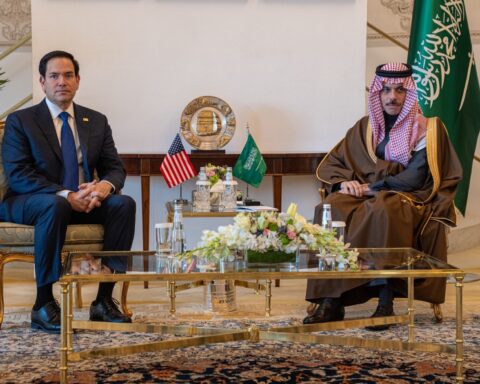
The week between the ordered departure and the October 30 alert produced diplomatic activity that sat in sharp tension with the intelligence warnings. Saudi Foreign Minister Prince Faisal bin Farhan met with Rubio at the G20 foreign ministers’ meeting in Atlanta on Friday. That same day, Trump told reporters that Iran “wants to make a deal.” Qatar has carried a revised US draft proposal to Tehran. Saudi Arabia faces a range of scenarios depending on whether these negotiations produce anything before the moratorium lapses.
The dual-track posture — military pressure and diplomatic outreach running simultaneously — has defined the administration’s Iran approach since the Hormuz crisis escalated. Washington is drawing down its civilian presence in the kingdom, disclosing that Iran is actively plotting to kill Americans, and maintaining that negotiations remain possible. What the Clayton memo changed was the visibility of one half of the equation. The intelligence community’s assessment that Iranian plotting had reached an advanced stage was, until Axios published its account, held at a classification level that excluded most of the people it concerned.
What Has Iran Said?
Iranian Foreign Minister Abbas Araghchi dismissed the significance of the November 3 deadline, saying that US election results were irrelevant to Iran, according to the Tehran Times. The statement positioned Tehran as indifferent to the domestic political calendar driving Washington’s military restraint — and as a signal that Iran would not be rushed into concessions by an American electoral timetable.
The IRGC’s framing was blunter. Unnamed IRGC officials told The Week (India) on October 25 that American diplomats in the region were now “legitimate targets” because the US and Israel had killed dozens of Iranian officials. No elaboration was provided on what constituted a “legitimate target” or what operational threshold that language implied. But the statement appeared days after the Clayton memo’s intelligence assessment reached Rubio, and it aligned with the DNI’s warning of a threat that had moved beyond planning into operational preparation.
No direct coverage of the US embassy departure order appeared on IRNA, PressTV or Tasnim — Iran’s three main state and semi-official news agencies — based on available research. The Houthi outlet al-Masirah carried no identifiable reaction. Tehran’s public posture, through Araghchi’s dismissal and the IRGC’s threat, treated the US drawdown as irrelevant to its own calculations. Whether that posture reflected genuine indifference or a negotiating stance designed to extract better terms from the Qatar-mediated draft remained, as of Saturday, an open question for every Western intelligence service tracking the next 72 hours.

Frequently Asked Questions
What is the difference between an ordered departure and a travel advisory?
An ordered departure is a mandatory instruction for non-emergency US government employees and their family members to leave a country, decided by the ambassador with Washington’s approval after the Emergency Action Committee assesses conditions, according to the Center for European Policy Analysis. It applies only to government personnel and their dependents. A travel advisory is separate guidance for private citizens, issued on a scale from Level 1 (Exercise Normal Precautions) to Level 4 (Do Not Travel). Saudi Arabia is currently at Level 3 nationwide with Level 4 for the Yemen border region. An ordered departure does not necessarily precede a full embassy closure.
Are commercial flights still operating from Saudi airports?
King Khalid International Airport in Riyadh reopened Terminals 1 and 2 on October 25 after earlier closures. International carrier availability remains limited: flydubai extended its Saudi suspension to November 1, according to Gulf Today on October 29; Emirates is serving Jeddah only as of October 30, with Riyadh and Dammam routes suspended until November 8; and Etihad has suspended Saudi service until November 5. US government personnel remaining in Saudi Arabia require Chief of Mission authorisation before using any airport in the country.
Has the US Embassy in Saudi Arabia closed?
No. An ordered departure reduces the mission to emergency-designated staff but does not close it. The Riyadh embassy, the Jeddah consulate and the Dhahran consulate remain operational, with emergency services still available to US citizens. The State Department’s consular affairs division continues to process emergency cases. This pattern repeated at least once before in 2026, with staff returning between cycles.
What does “advanced stages” mean in the context of the DNI memo?
The Clayton memo described Iranian lethal plotting efforts as having reached advanced stages and noted the intelligence was “relevant to more individuals than are currently cleared to receive this information,” according to Axios, which obtained the memo on October 24. The memo did not define the term publicly. The pairing of “lethal” with “advanced” distinguished the assessment from a general threat warning — it described operationally mature planning, not theoretical capability. The broader-than-expected relevance indicated the threat was not confined to the most senior diplomatic figures who typically receive classified intelligence briefings.
The House of Saud Daily Briefing
Saudi Arabia's news in 3 minutes, every morning. Free. See today's issue