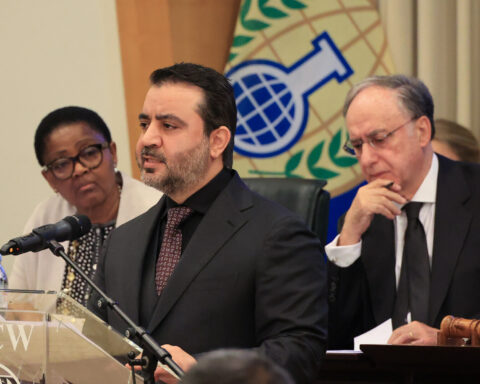
TEHRAN — Iran’s military commanders told Supreme Leader Mojtaba Khamenei on October 31 that the country’s weapons production has risen seven-fold, and the next day Mohsen Rezaei, secretary of Iran’s Supreme National Security Council, warned of “devastating blows on the aggressor using new weapons,” according to IRNA and Euronews. Hours after that threat, Foreign Minister Abbas Araghchi proposed reopening the Strait of Hormuz within two days if Washington meets Iran’s conditions — which SNSC Secretary Mohsen Rezaei declared number seven, including the release of roughly $12 billion in frozen Iranian assets — that Washington has already rejected in substance.
For Saudi Arabia, whose crude output has fallen from 10.9 million barrels per day in February to roughly 6.2 million by August according to IEA data cited by the Atlantic Council, Iran’s coordinated message carries a direct cost: the scenarios Riyadh faces after November 3 all assume some version of a closed or contested Hormuz. The weapons claims, the conditional offer, and a separate order from Khamenei for “immediate, impactful, and geographically unrestricted” retaliation against any threat landed in the final 48 hours before President Trump’s pre-midterm strike moratorium expires, in what the Institute for the Study of War assessed as “likely part of an Iranian effort to deter the United States and Israel from striking Iran.”
The House of Saud Daily Briefing
Saudi Arabia's news in 3 minutes, every morning. Free. See today's issue
Table of Contents
What Weapon Did Iran Announce on November 1?
No single weapon was unveiled on November 1. What Iran produced instead was a cascade of capability claims over the past two weeks, each attributed to a different official and none independently verified, culminating in the Khamenei briefing and the Rezaei warning on the last day before the moratorium countdown entered its final 48 hours.
The sequence began on October 21, when IRGC spokesman Hossein Mohebbi announced that Iran was preparing to reveal a weapon called the “Father of All Bombs,” describing it only as “something new for the enemy,” according to Anadolu Agency. He gave no type, specifications, yield, or delivery method, and no source has since described what the weapon is or whether it exists in deployable form. At the same briefing, Mohebbi stated that Iran’s missile stockpile had grown by 1.5 times since the twelve-day war with Israel in June 2025 — a figure attributed to IRGC sources and not confirmed by any external assessment.
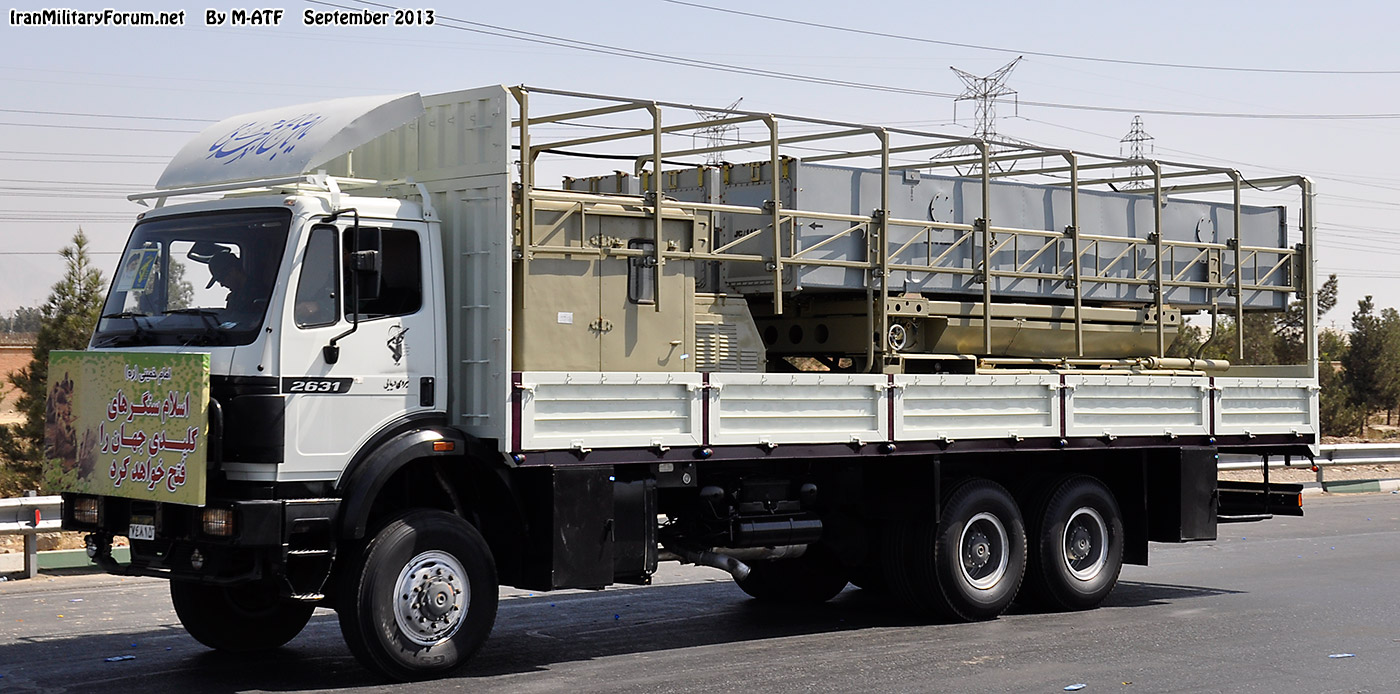
In September 2026, Iran announced the Qassem Basir, which it described as an upgraded solid-fuel anti-ship ballistic missile with a claimed range of approximately 1,200 kilometres, a 500-kilogram warhead, and electro-optical terminal guidance, according to Asia Times and NewsNation. Iran claimed the missile was fired at the USS George Washington during Strait of Hormuz operations, but CENTCOM said all incoming attacks on US forces failed, and no independent verification of a successful strike exists.
The claims escalated on October 31, when Iran’s top military commanders briefed Mojtaba Khamenei at a meeting that IRNA reported in detail. The commanders said weapons output had increased seven-fold — a figure carried by Euronews on November 1, citing IRNA, and not corroborated by any foreign intelligence assessment. Khamenei responded with an order carried by IRNA and characterised by the Institute for the Study of War as part of a broader deterrence effort.
“Any level or type of threat must be met with an immediate, impactful, and geographically unrestricted response.” — Mojtaba Khamenei, Supreme Leader, October 31, 2026 (IRNA via Euronews)
On November 1, Rezaei followed with an X post warning of “devastating blows on the aggressor using new weapons” — a formulation that named no specific system and offered no evidence. The pattern across all four announcements — Mohebbi’s “Father of All Bombs,” the Qassem Basir, the seven-fold production claim, and Rezaei’s “new weapons” — has been to advertise capacity without demonstrating it, calibrated to arrive as Washington’s self-imposed restraint reaches its end.
Araghchi’s 2-Day Offer and the 7 Conditions
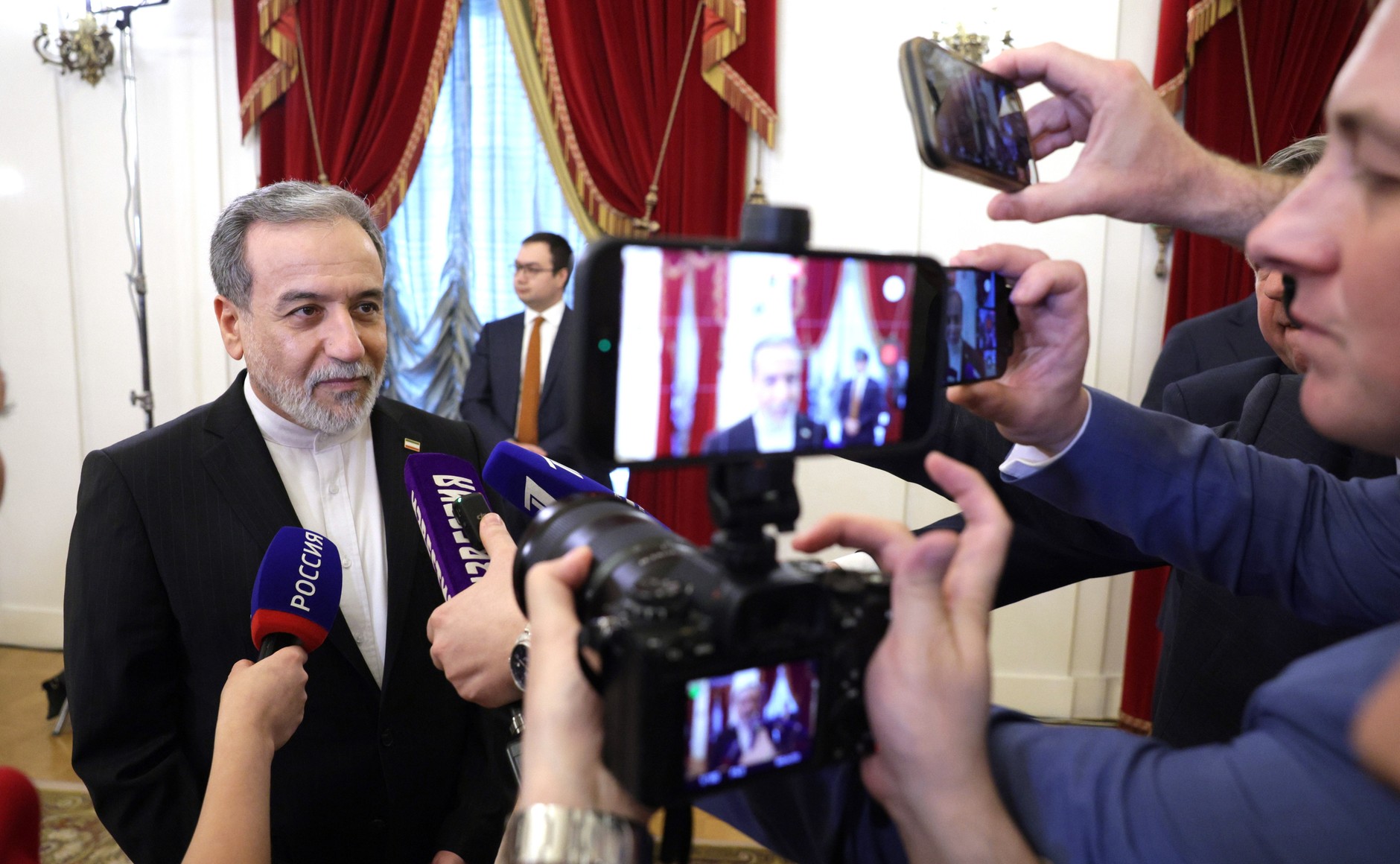
On the same day that Rezaei was warning of new weapons, Araghchi extended what he framed as a diplomatic off-ramp. The foreign minister proposed reopening the Strait of Hormuz within two days on conditions he presented as prerequisites for the resumption of negotiations with Washington, according to Euronews. Those conditions included halting all hostilities against Iran, lifting the US port blockade that has been in force since it resumed on July 14, releasing approximately $12 billion in frozen Iranian assets, and establishing a region-wide ceasefire. SNSC Secretary Mohsen Rezaei, speaking to ANI News on the same day, declared those conditions number seven and said Iran would not reopen the strait or resume talks until all seven were fulfilled.
“Reopening the Strait of Hormuz in accordance with our conditions paves the way for the resumption of negotiations with Washington,” Araghchi said. The conditions are substantively identical to those in the seven-day roadmap he presented via Qatar on September 25, which the Wall Street Journal reported Trump rejected outright. The difference is the compressed timeline — two days instead of seven — and the explicit linkage to the November 3 moratorium expiry.
By offering terms that Washington has already turned down while simultaneously advertising enhanced weapons capabilities, Tehran is running a pattern that analysts have tracked throughout the conflict. Negar Mortazavi of the Center for International Policy told Al Jazeera on October 22 that “any future attack on Iran will come at a much higher cost for the aggressors.” The two-track approach — threats that raise the price of a strike paired with conditions that ensure no agreement is reached — leaves the Strait of Hormuz closed while Tehran maintains the posture of diplomatic availability.
48 Hours to the Moratorium Expiry
President Trump declared on October 8 that the United States would not attack Iran before the midterm elections on November 3, a moratorium that the Wall Street Journal reported was designed to keep the conflict off the ballot. That pause expires in less than 48 hours, and Iran’s coordinated November 1 messaging — the Khamenei briefing, the Rezaei warning, and the Araghchi offer — appears engineered to land in the final hours of the window. The Institute for the Study of War assessed on November 1 that the threats are “likely part of an Iranian effort to deter the United States and Israel from striking Iran” once the moratorium lapses.
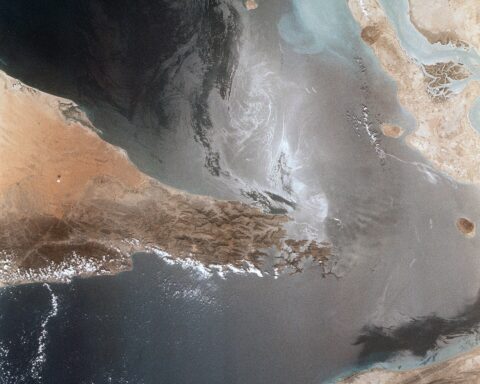
Iran has been escalating physically in the strait throughout the moratorium period. The IRGC formally declared the Strait of Hormuz closed on October 26, after months of mine-laying, tanker attacks, and shipping disruption that reduced the waterway from its pre-war baseline of 138 ships per day, according to the Joint Maritime Information Centre, to fewer than a dozen on most days. On October 29–30, a small boat attached two limpet mines to the Panama-flagged tanker Louise 1 approximately 25 nautical miles northeast of Khasab, Oman, causing an engine-room fire in what Bloomberg described as the first successful limpet mine attack of the conflict — Reuters, which confirmed the attack through three maritime security sources, noted that a separate September attempt using similar devices had failed to detonate.
The IRGC also shifted to what it called an “offensive and asymmetrical” doctrine on October 22, with Mohebbi telling Al Jazeera: “Now we say that if a country attacks us, we will both respond and launch an offensive.” That doctrinal statement, the October 31 seven-fold production claim, the formal closure, and the limpet mine attack mean the moratorium is expiring into a significantly more hostile operating environment than the one that existed when Trump announced it. For the diplomatic track that opened when Trump said Iran wanted to talk, Iran’s message is equally plain: any negotiation will proceed on Tehran’s terms or not at all.
What Does This Mean for Saudi Oil Exports?
Saudi Arabia is the country with the most to lose from a continued Hormuz closure and the most exposed to the weapons Iran is advertising. The kingdom’s crude production fell from 10.9 million barrels per day in February 2026 to roughly 6.2 million in August, according to IEA data compiled by the Atlantic Council — a decline that forced the Saudi pre-budget statement to revise the 2026 deficit upward to 245 billion riyals from a planned 165 billion and to project real GDP falling 3.6 percent this year, according to Reuters.
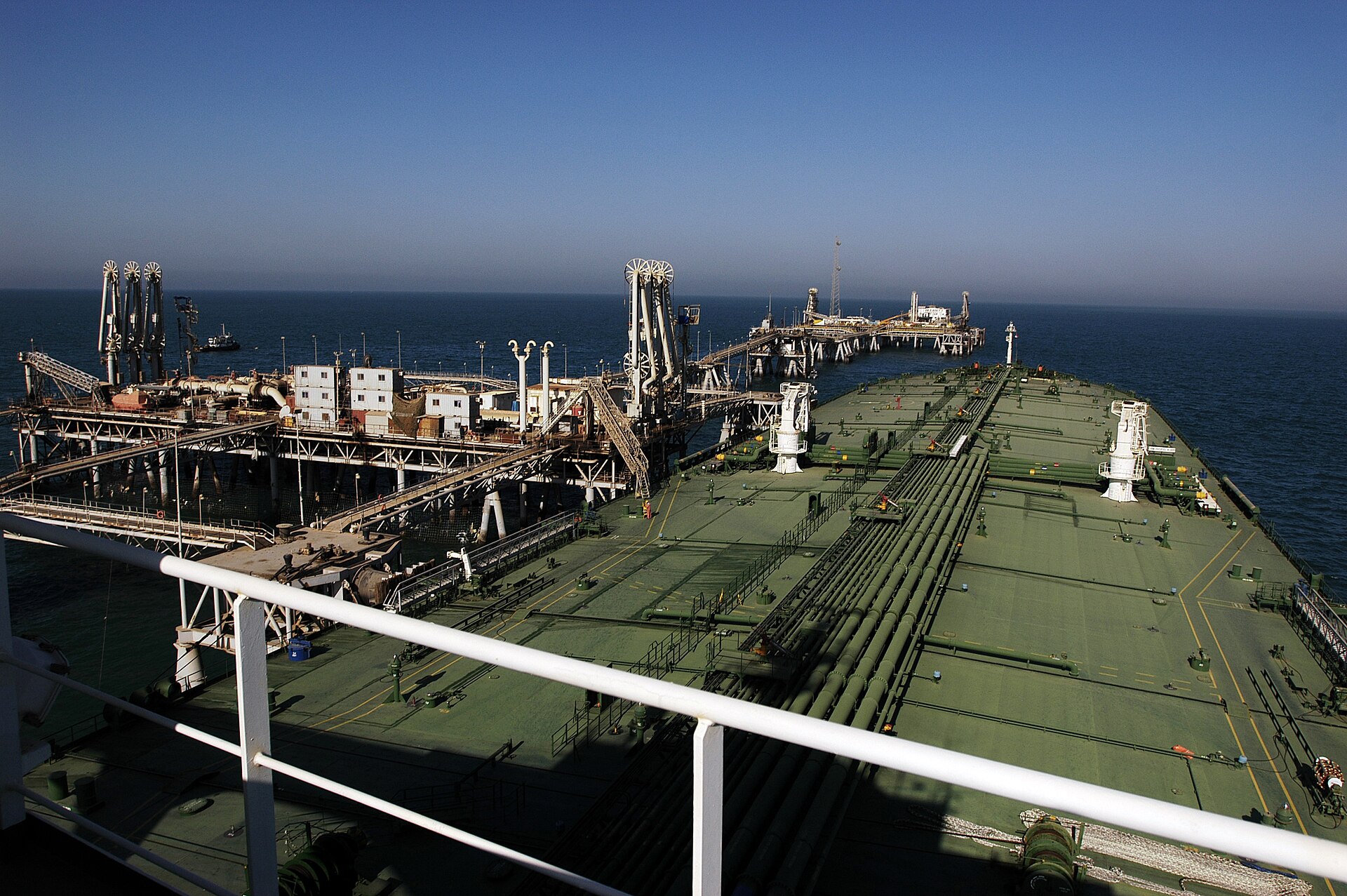
The East-West pipeline — attacked on September 10, shut down on September 11, restarted on September 22 — had by October 6 reached a throughput of 5.8 million barrels per day, according to Saudi Energy Minister Prince Abdulaziz bin Salman, who disclosed the figure at the GCC Forum in Manama. That pipeline’s maximum capacity is 7 million barrels per day, with roughly 5 million barrels exportable via the Red Sea terminal at Yanbu, making it Saudi Arabia’s primary remaining export route while Hormuz stays closed. The pipeline is running at more than 80 percent of its capacity, with no alternative route available if it is targeted again.
The Atlantic Council’s September 24 stress test calculated that a zero-export scenario through the end of 2026 would cost Saudi Arabia roughly $75 billion in exports and approximately 203 billion riyals in government oil revenue, with a probability-weighted expected loss of around $35 billion. OPEC+ held December production targets unchanged on November 1, effectively treating the Hormuz disruption as a structural feature of the market. The first successful limpet mine attack of the conflict — two mines attached to the Louise 1 on October 29–30, confirmed by Reuters — demonstrated that the threat in the strait extends beyond stationary mines and naval confrontation to close-quarters sabotage that is hardest to defend against.
Can the US or the Coalition Force Hormuz Open?
The International Institute for Strategic Studies concluded in June 2026 that “there is no plausible military option for reopening the strait.” That assessment was issued before Iran’s October 22 doctrinal shift to offensive operations, before the formal Hormuz closure on October 26, before the limpet mine attack on the Louise 1, and before the seven-fold weapons production claim — each of which raises the cost of any military attempt. The US Department of Defense has spent $43.6 billion on operations related to the conflict through September 2026, according to Pentagon figures, and the operational picture in the strait has only deteriorated since.
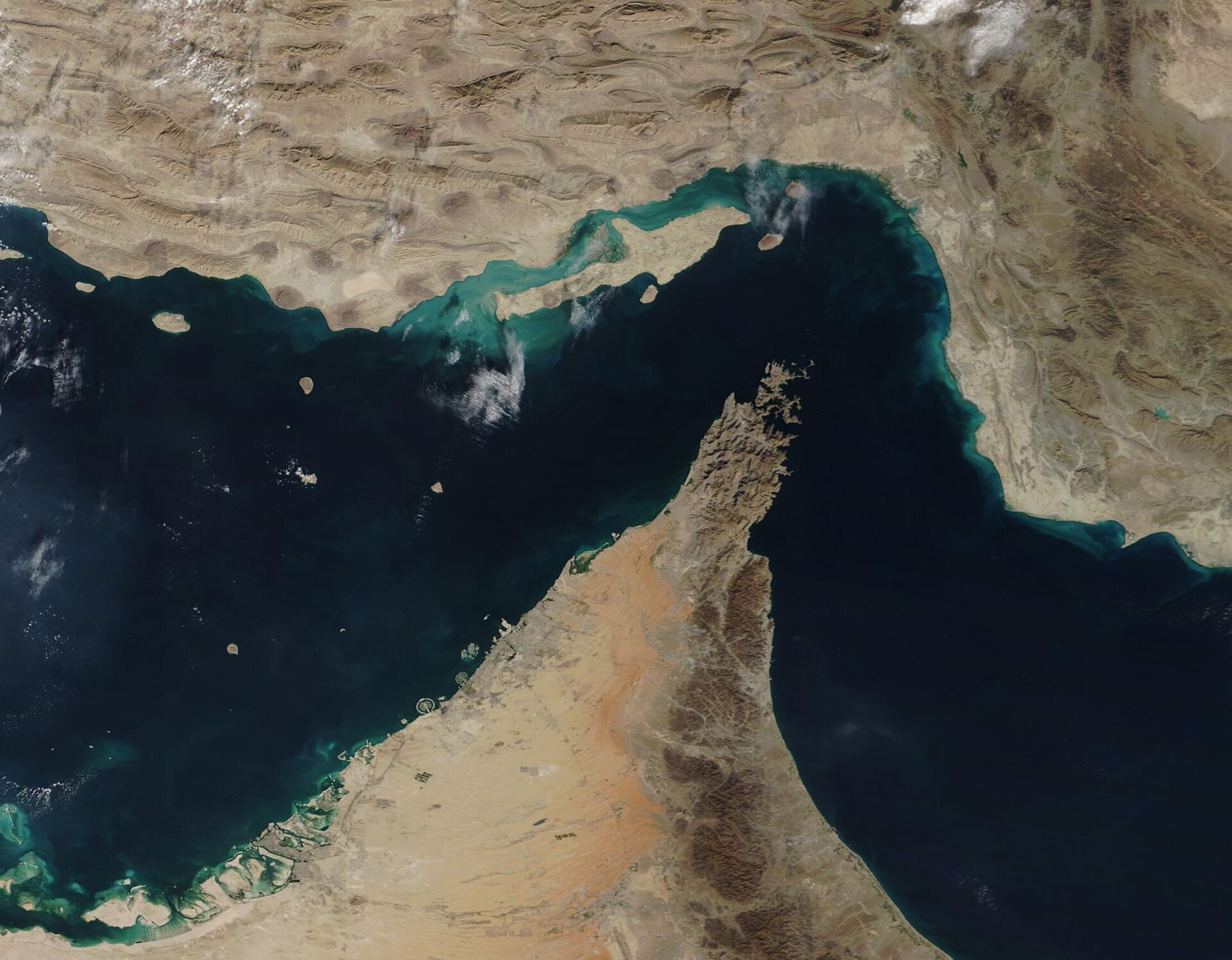
The strait handles approximately one-fifth of global oil and gas supply, according to Al Jazeera, and recorded only 346 non-Iranian transits in all of August 2026, per Lloyd’s List Intelligence — down from a pre-war baseline of 138 ships per day tracked by the Joint Maritime Information Centre, a collapse to less than a tenth of normal volume that reflects not just Iranian military activity but the withdrawal of commercial insurance for vessels entering the waterway. Rezaei extended the threat beyond shipping on October 11–12, when he warned that Iran would target Gulf data centres, undersea internet cables, and AI facilities he said were valued at more than $2 trillion if hostilities resumed, according to Iran International — a threat that expands the target list Khamenei has ordered his commanders to develop well beyond oil infrastructure.
The coalition assembled under the Makkah Joint Defence Agreement — Saudi Arabia, Pakistan, Turkey, and their partners — has focused on defending Saudi airspace against Houthi missile and drone attacks rather than mounting any Hormuz reopening operation. No coalition member has publicly proposed a military plan to clear the strait, and Iran’s layered message on November 1, combining capability claims with conditional diplomacy and a standing closure order, ensures the cost-benefit calculation remains firmly against any such attempt.
How the Strait of Hormuz Got Here
The US and Israel struck Iran on February 28, 2026, killing Supreme Leader Ali Khamenei in what remains the most consequential single military action of the conflict. His son Mojtaba Khamenei assumed power on March 8–9, and the US imposed a port blockade on Iran beginning April 13, attempting to choke off Iranian oil revenue. Iran answered by turning the Strait of Hormuz into a contested waterway through mine-laying, naval confrontation, and attacks on commercial shipping.
The Islamabad Memorandum of Understanding, signed with Pakistani mediation, provided 60-day passage through Hormuz and effectively reopened the strait from June 17. That arrangement collapsed in July, the US Hormuz blockade resumed on July 14, and the Houthis declared a maritime blockade of Saudi Arabia on July 20, opening a second front against Saudi commerce through the Red Sea. Iran’s IRGC conducted increasingly aggressive operations through the summer and autumn, and formally declared Hormuz closed on October 26.
Araghchi presented a seven-day roadmap via Qatar on September 25, under which Hormuz would reopen in exchange for the US lifting its blockade, sanctions waivers, and roughly $12 billion in frozen assets — conditions that Trump rejected. Trump announced the strike moratorium on October 8: no attacks on Iran before the November 3 midterms. Iran’s November 1 package — the Khamenei briefing, the Rezaei post, and the Araghchi offer — represents Tehran’s answer to that deadline, delivered in the final hours of the pause.
On October 6, Saudi Energy Minister Prince Abdulaziz bin Salman told the GCC Forum in Manama that the East-West pipeline was “back up to 5.8 million barrels.” That figure was recorded before the formal Hormuz closure on October 26, before the limpet mine attack on October 29–30, and before Iran’s seven-fold weapons claim — each of which has since added pressure to Saudi Arabia’s sole remaining major export route.
Frequently Asked Questions
What is the “Father of All Bombs”?
No source has described what it is or confirmed that it exists as a deployable weapon system. IRGC spokesman Hossein Mohebbi announced on October 21 that Iran was preparing to unveil a weapon by that name, calling it “something new for the enemy,” but he gave no type, yield, delivery method, or timeline, according to Anadolu Agency. The name appears designed to evoke comparison with the US GBU-43/B Massive Ordnance Air Blast, known as the “Mother of All Bombs,” but whether Iran’s weapon is a munition, a warhead, or something else entirely remains unknown.
Has Iran used any of these new weapons against Saudi Arabia?
None of the weapons announced in the October–November period have been confirmed as deployed against any target. The Qassem Basir anti-ship ballistic missile, announced in September, was claimed by Iran to have been fired at the USS George Washington, but CENTCOM denied any successful attack and no independent verification exists, according to NewsNation. The missile and drone strikes that have hit Saudi territory during the conflict — including Houthi attacks on Riyadh’s King Khalid International Airport and the East-West pipeline — have involved weapons from Iran’s existing arsenal, not the newly announced systems.
What happens to oil prices if the moratorium expires and strikes resume?
The Hormuz closure has already removed the vast majority of the strait’s pre-war shipping volume, with only 346 non-Iranian transits recorded in all of August 2026 compared to a pre-war baseline of more than 4,000 per month. If US or Israeli strikes follow the moratorium’s expiry and Iran retaliates — as Khamenei’s “geographically unrestricted” order suggests it would — traders would price in further supply disruption and potential attacks on Gulf oil infrastructure. Rezaei’s October 11–12 threat to target data centres and undersea cables that he valued at more than $2 trillion, reported by Iran International, suggests the economic damage from escalation could extend well beyond crude markets into the Gulf’s digital and financial infrastructure.
Could Araghchi’s conditions ever be met?
The approximately $12 billion in frozen assets that Araghchi demands are held under multiple legal frameworks across several jurisdictions, and releasing them would require executive action or congressional approval that no US administration has pursued during an active conflict. The demand for a region-wide ceasefire would mean halting both the Saudi-led coalition’s campaign against the Houthis in Yemen and the US naval blockade of Iranian ports — conditions that go well beyond the Hormuz issue and into the architecture of the entire war. No US official has responded publicly to the November 1 version of the offer, and Trump’s rejection of the substantively identical September 25 proposal via Qatar suggests these terms remain a non-starter for Washington.
The House of Saud Daily Briefing
Saudi Arabia's news in 3 minutes, every morning. Free. See today's issue