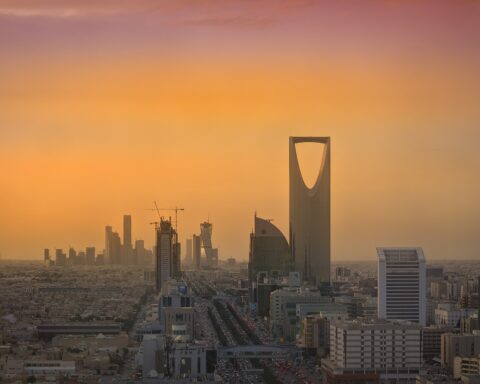
RIYADH — Approximately 94 percent of scheduled departures at King Khalid International Airport were cancelled between October 10 and October 27, according to Cirium data cited by Bloomberg on October 31 — a figure that amounts to the functional closure of Saudi Arabia’s second-largest air gateway under sustained Houthi missile attack. The collapse has cascaded through the kingdom’s aviation sector: more than 7,800 Saudi flights — 45 percent of all scheduled departures — were cancelled in the broader October 8–25 window, per Reuters citing the same aviation analytics firm. The disruption strikes at the structural premise of Vision 2030, which relies on Saudi Arabia becoming a global aviation and events hub. Intercepts do not resolve the problem. As long as missiles fly toward Riyadh, the airport cannot function normally — and the Houthis have stated they will continue. The question is no longer whether Riyadh can intercept incoming missiles. It is whether sustained low-cost missile pressure has accomplished what no adversary achieved militarily against Saudi Arabia: an intermittent blockade of the kingdom’s air gateway that air-defence success alone cannot lift.
Table of Contents
- The 94 Percent: What the Cancellation Data Shows
- Why Does KKIA Matter for Saudi Arabia’s Economy?
- How Do Successful Intercepts Still Close an Airport?
- Which Airlines Have Suspended Saudi Flights?
- The Events Calendar: FII, Riyadh Season and the Cancellation Chain
- What Does the Aviation Collapse Mean for Vision 2030?
- The Houthi Calculus: Maximum Disruption at Minimum Cost
- GDP, Deficits and the Fiscal Fallout
- The Oct 25 Reopening and Its Limits
- Frequently Asked Questions
The 94 Percent: What the Cancellation Data Shows
Bloomberg reported on October 31, citing Cirium aviation data, that approximately 94 percent of 4,345 scheduled departures at KKIA were cancelled in the October 10–27 window. A wider dataset from the same analytics firm, covering October 8–25, put the KKIA figure at 4,071 of 4,736 scheduled flights cancelled — approximately 86 percent — according to Reuters via Al-Monitor on October 26.
The nationwide picture is equally severe. The worst single day was October 12, when 632 of 1,048 Saudi flights were cancelled, a rate of 60.31 percent, per Khaleej Times citing Cirium data.
The House of Saud Daily Briefing
Saudi Arabia's news in 3 minutes, every morning. Free. See today's issue
On that day, KKIA had 665 departures and arrivals scheduled, according to OAG data cited by Aviation Week on October 12. The airport was closed. A NOTAM initially covered closure until October 17, per Khaleej Times. A US security alert suspended operations again around October 19, according to Republic World.
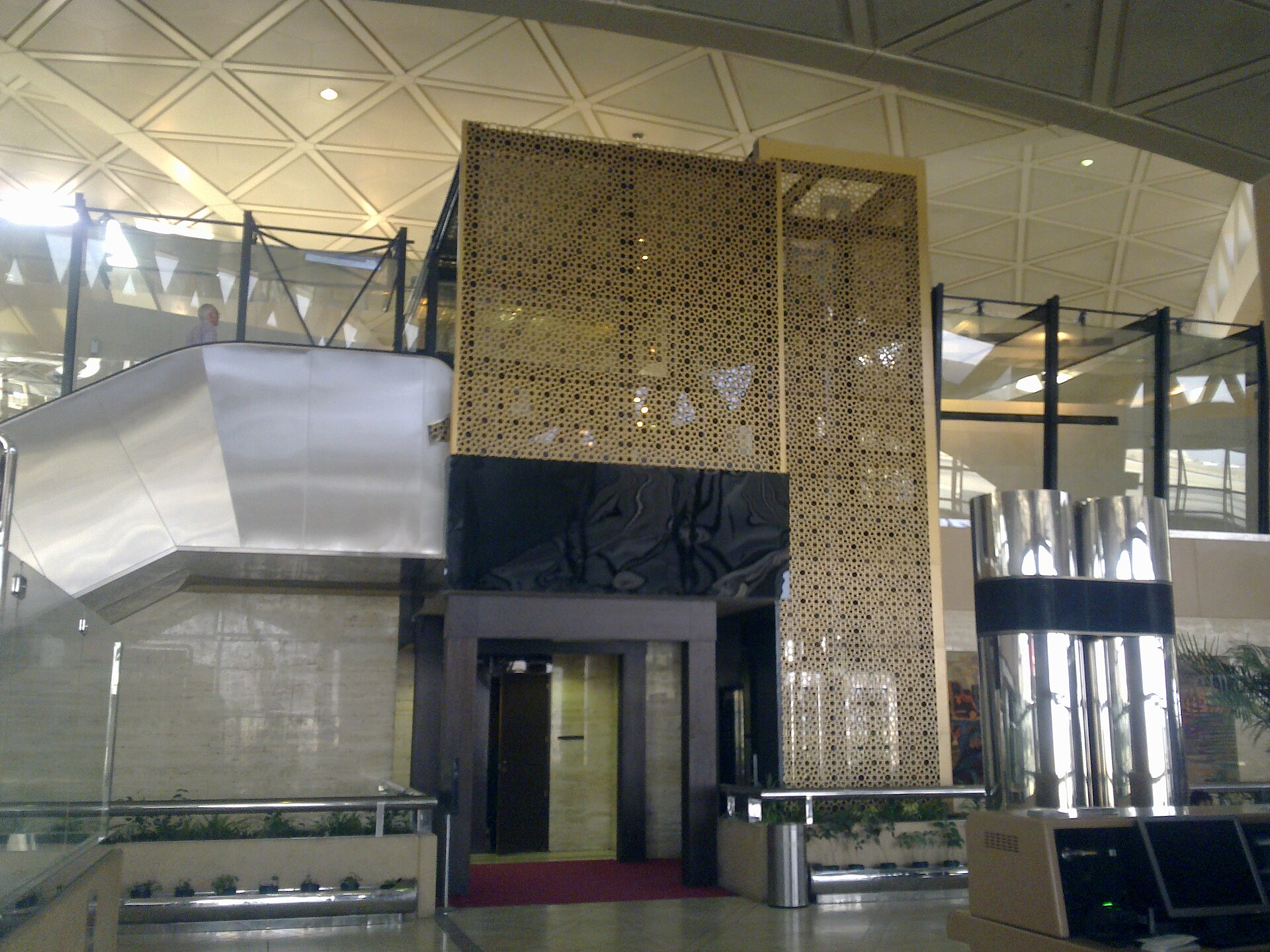
These are not projections or estimates from unnamed officials. Cirium tracks actual flight schedules and operational status across the global aviation system. The data shows that KKIA effectively ceased functioning as a commercial airport for the better part of three weeks.
The two datasets are not contradictory. The higher figure reflects the period after the deadliest strike: on October 10, a Houthi attack on KKIA killed 12 and wounded 309, according to Al Jazeera; the BBC put the injured at 308 and later confirmed 13 killed after an Indian victim’s death. The airport was already under pressure from strikes on October 6–7, which killed 3 and wounded 36 (BBC, October 8), and October 8, when 2 attacks killed 3 Saudis including Saudia captain Hamoud Ali Al Kalthami (GDN, October 9). But the October 10 attack escalated the closure from a temporary security measure into something that persisted for weeks.
On October 11, a projectile hit Terminal 4, killing a Pakistani resident and injuring 11, and Dammam airport was also attacked, per CNN. The strike pattern — Riyadh, Dammam, Abha — meant that no Saudi commercial airport was beyond the Houthis’ demonstrated reach. By mid-October, the question was not whether individual flights could be restored but whether any Saudi airport could operate on a schedule that passengers and airlines would trust.
Why Does KKIA Matter for Saudi Arabia’s Economy?
King Khalid International Airport is Saudi Arabia’s second-largest aviation hub, accounting for 31.4 percent of the kingdom’s departure seats, behind only Jeddah’s King Abdulaziz International Airport at 37.8 percent, according to OAG Schedules Analyser data cited by Aviation Week for the week of October 12. Dammam follows at 9.9 percent. Total Saudi departure seats that week stood at approximately 1.55 million — 840,000 international and 708,900 domestic, per OAG via Aviation Week.
KKIA handled more than 37 million passengers in 2024 and had an annual capacity of 42 million as of 2025, according to the Riyadh Airports Company. It serves as the hub for Riyadh Air, the new Saudi national carrier launched under Vision 2030, which targets more than 100 destinations by 2030.
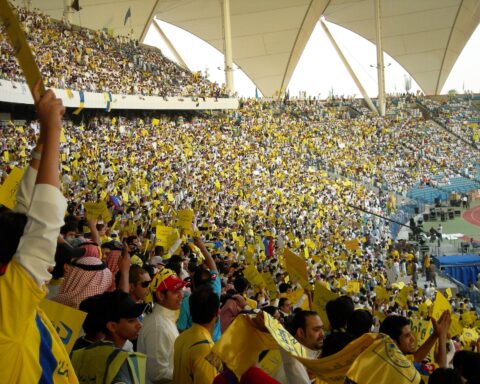
The airport is also the gateway for the kingdom’s events economy. Riyadh Season, the Future Investment Initiative, the Six Kings Slam tennis exhibition, and a growing roster of international conferences all depend on KKIA as the primary point of entry for international visitors. When KKIA closes, Riyadh’s calendar closes with it.
The commercial relationship between KKIA and Vision 2030 is direct. The kingdom’s events economy — Riyadh Season alone was projected to draw millions of visitors — funnels through this airport. International delegations, corporate executives, entertainment tourists and Umrah pilgrims connecting through Riyadh all depend on KKIA’s operational continuity. A capital whose airport functions intermittently cannot sustain the visitor volumes that Vision 2030’s non-oil revenue targets assume.
King Salman International Airport, a six-runway replacement for KKIA, is planned to begin operations around 2030, targeting 120 million passengers per year, according to the Public Investment Fund masterplan. That project’s viability now exists under the same security question that has grounded its predecessor. Larger terminals and more runways do not solve the problem of missiles in the approach corridor.
How Do Successful Intercepts Still Close an Airport?
The European Aviation Safety Agency expanded its Saudi airspace advisory on October 9, warning of three distinct risks: the projectile itself, falling debris from interceptions, and navigation interference, according to Aviation Week on October 12. The FAA issued its own advisory — running through December 10 — warning of “threats at all altitudes,” per Aviation Week.
This is the regulatory expression of a paradox that defines the current conflict. Saudi air defences intercept incoming missiles. Col. Turki bin Saleh al-Maliki, the Saudi military spokesman, confirmed on October 25 that air defences had “intercepted and destroyed” a ballistic missile launched toward Riyadh, per the Star Advertiser citing the Associated Press. The intercept worked. The airport had partially reopened that same day.
But the intercept did not make the airspace safe for commercial aviation. Falling debris from a successful interception is itself a hazard to aircraft on approach and departure. Navigation systems can be disrupted. Airlines and their insurers do not distinguish between a missile that strikes a terminal and one that is destroyed at altitude above the runway: both ground flights.
The Arab Air Carriers’ Organization stated on October 12 that “civilian airports are not battlefields, civilian aircraft are not military targets,” and called for “urgent Arab and international action,” according to Aviation Week. The statement named the problem without offering a solution. As long as projectiles are launched at Riyadh — regardless of whether they are intercepted — aviation regulators and airlines treat the airspace as hostile.
The regulatory framework is layered. EASA advises European carriers. The FAA advises American ones. Each airline’s war-risk insurance underwriters impose their own restrictions. A carrier may choose to fly into Riyadh; its insurer may refuse to cover the aircraft while it does. The October 13 Houthi strike on Aramco’s Dhahran headquarters — which caused a limited fire, according to the Saudi energy ministry — extended the risk perception beyond airports to the broader Eastern Province, reinforcing the case for suspension even among carriers whose routes did not touch KKIA directly.
The result is a compound regulatory barrier that no single Saudi announcement can remove. The coalition’s intercept record may be strong in military terms, but the commercial aviation system does not operate on military risk tolerances. A 99 percent intercept rate still means that debris falls, NOTAMs are issued, and flights are grounded.
Which Airlines Have Suspended Saudi Flights?
The airline response has been sweeping. As of October 30, according to Gulf News and Gulf Today, the following carriers had suspended or postponed Saudi services:
| Airline | Routes affected | Suspension end date |
|---|---|---|
| Cathay Pacific | Riyadh | January 31, 2027 |
| KLM | Riyadh, Dammam | November 27, 2026 |
| Lufthansa | Riyadh | November 18, 2026 |
| Air France | Riyadh | November 14, 2026 |
| IndiGo | Riyadh, Jeddah, Dammam, Madinah | November 14, 2026 |
| Etihad | Riyadh, Dammam, Jeddah | November 5, 2026 |
| Emirates | Jeddah (Oct 30); Riyadh, Dammam | November 8, 2026 |
| flydubai | Saudi routes | November 1, 2026 |
| Delta Air Lines | Atlanta–Riyadh (new route) | Postponed to March 2027 |
| Singapore Airlines | Riyadh (new route) | Postponed to March 28, 2027 |
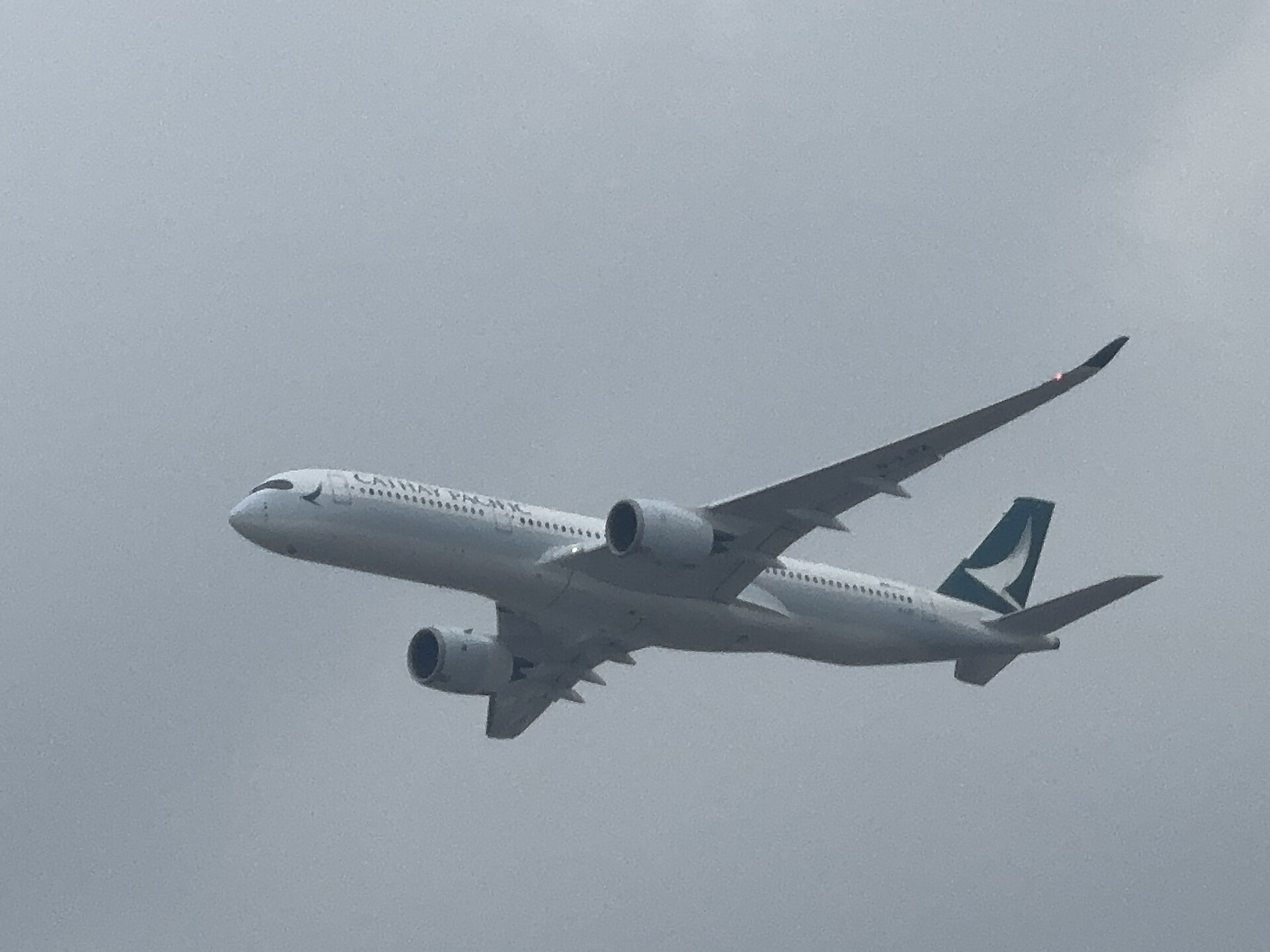
Cathay Pacific’s suspension through January 31, 2027, is the longest named-carrier withdrawal. Delta’s postponement of its planned Atlanta–Riyadh launch and Singapore Airlines’ deferral of its Riyadh service to March 2027 represent something more durable: routes that have not yet begun and may not begin for months. These are decisions driven by risk committees and insurance underwriters, not operations desks. They are slow to reverse.
Saudi Arabia’s own new carrier bore the early brunt. Riyadh Air recorded 80 of 113 flights cancelled between October 8 and 13 — a 70.8 percent cancellation rate, per Khaleej Times citing Cirium — the highest among Saudi carriers in that window.
The Events Calendar: FII, Riyadh Season and the Cancellation Chain
The Future Investment Initiative, Saudi Arabia’s flagship investment conference, was scheduled for October 26–29 in Riyadh. It was postponed to 2027, according to Al Jazeera on October 20. FII Institute CEO Maha bint Mishari Al Saud said the postponement was intended to ensure the tenth anniversary edition delivers the full scale, quality and impact expected by partners, members, speakers and participants, per Gulf News and Al Jazeera.
The Six Kings Slam, a Riyadh Season exhibition tennis event originally scheduled for October 21–24, was moved to December 27–30, per Khaleej Times. Riyadh Fashion Week was postponed to 2027. The Misk Global Forum 2026 was cancelled. The UCI Urban Cycling World Championships in Riyadh were cancelled. The FIFAe Finals in Jeddah were postponed. Messe Frankfurt postponed its Riyadh exhibitions, according to reports from Khaleej Times, Yeni Safak, Arab News, and Northstar Meetings Group across October 2026.
Riyadh Season was due to open October 21, according to Gulf News on September 27. The New York Times reported on October 10 that the airport strikes threatened Riyadh’s events calendar.
Each cancellation carries a compound cost. The events themselves generate revenue and media attention, but they also serve as proof-of-concept for Vision 2030’s tourism and entertainment economy. FII is not a consumer fair; it is the forum where Saudi Arabia courts global capital. Moving it to 2027 signals that the kingdom’s premier investment event cannot safely be held in its own capital — a message that no marketing campaign can offset.
What Does the Aviation Collapse Mean for Vision 2030?
Vision 2030’s aviation targets are explicit. The General Authority of Civil Aviation set a nationwide goal of 330 million passengers annually by 2030. The kingdom-wide total in 2025 was 140.9 million, a 9 percent rise year-on-year, according to GACA. Reaching that target requires sustained, accelerating growth — new routes, new carriers, expanded capacity and, above all, the confidence of international airlines that Saudi airspace is safe.
The October data moves in the opposite direction. Carriers are not adding routes; they are suspending them. Delta and Singapore Airlines are not cancelling scheduled flights; they are refusing to start. The Saudi airport network is contracting at the moment it was supposed to expand.
The hub-economy model requires airports that function every day. A logistics hub that closes intermittently is not a hub. A tourism destination that cannot guarantee air access is not a destination in any commercially meaningful sense. Saudi Arabia does not need to be hit for these consequences to materialise; it needs only to be targeted.
Riyadh Air, the second national carrier, uses KKIA as its hub. Its cancellation rate in the first week of the crisis — the highest among Saudi carriers, as detailed in the airline data above — is a direct measure of what missile proximity does to a startup airline. The carrier’s business plan assumes a functioning home airport. That assumption is now contingent on a military outcome that air defences alone have not delivered.
The gap between aspiration and reality is quantifiable. The GACA passenger figures and the 330-million target cited above assume a compound annual growth rate that pre-supposes new routes, new carriers, expanded infrastructure and stable operations. October’s cancellations do not merely slow that trajectory; they reverse it. International carriers that withdraw routes — whether temporarily or by postponing planned launches — take months to reinstate them. Crew rotations must be re-established, slots re-negotiated, insurance re-priced. The damage is not symmetrical: three weeks of closure takes more than three weeks to undo.
The Houthi Calculus: Maximum Disruption at Minimum Cost
The Houthi strategy targeting KKIA is explicit. Yahya Saree, the group’s military spokesman, said on October 25 — the day KKIA partially reopened — that the airport “remains a military target” and urged airlines, airport staff, and travellers to avoid it, according to Agenzia Nova and The Print. Operations targeting the airport “would continue,” Saree stated.
Hisham al-Omeisy, a conflict analyst and adviser at the European Institute of Peace, predicted on October 12 that the Houthis would expand attacks to oil pipelines and energy facilities and keep targeting airports because of the strong public reaction. He described them as a maximalist group that would do whatever it takes to get what it wants, and said the group’s aim included more concessions from the Saudis. He told Al Jazeera: “Houthis have escalated massively, they’ve crossed that line.” The Houthis framed the airport strikes as retaliation for coalition airstrikes on Yemen, including Saudi strikes on Sanaa International Airport.
The Express Tribune, citing Houthi statements on October 9, framed the campaign as aimed at “shutting Saudi airspace and oil facilities.” The logic is asymmetric: the cost of a ballistic missile or cruise missile is a fraction of the economic damage inflicted by grounding thousands of flights, cancelling a flagship investment conference, and driving international airlines out of Riyadh for months. Even a missile that is intercepted achieves its purpose if the airport closes.
This is not a new insight. Al Jazeera’s October 12 analysis, drawing on al-Omeisy’s assessment, noted that the Houthis calculate civilian airport targeting produces maximum public reaction and maximum pressure on Riyadh. The October 25 statement, issued within hours of KKIA’s partial reopening, demonstrated awareness of precisely that dynamic: the group does not need to destroy the airport. It needs to make resuming operations untenable.
GDP, Deficits and the Fiscal Fallout
The aviation collapse unfolds against an already deteriorating fiscal picture. Saudi Arabia’s pre-budget statement, issued September 30, revised the 2026 deficit estimate to 245 billion riyals from a budgeted 165 billion riyals, according to Reuters via Zawya. The GDP forecast for 2026 was revised to negative 3.6 percent — against a pre-conflict official projection of positive 4.6 percent growth, per the same Finance Ministry statement.
The swing from plus 4.6 to minus 3.6 amounts to an 8.2-percentage-point reversal in a single fiscal year. The pre-budget statement attributed the contraction to oil-sector disruption. The aviation and events collapse adds a non-oil dimension that the September 30 projections had not yet fully absorbed.
When 45 percent of scheduled departures are cancelled nationwide — as occurred in the October 8–25 window — the downstream effects extend through hotels, car rentals, restaurants, retail, and the service economy that Vision 2030 was designed to build. Travel advisories from multiple governments compound the damage, discouraging visitors beyond those directly affected by flight cancellations.
The 2027 projections — 1.39 trillion riyals in spending, 1.20 trillion in revenue, and a deficit of 191 billion riyals (3.6 percent of GDP) — assume a recovery that depends on security conditions the kingdom does not yet control, per Reuters via Zawya on September 30.
The aviation sector is not an isolated line item. Saudi Arabia’s non-oil GDP growth under Vision 2030 depends on tourism, entertainment, logistics and professional services — all of which require air connectivity. When the Future Investment Initiative moves to 2027, the capital it was designed to attract does not wait. When Delta postpones its Atlanta–Riyadh launch, the business-travel market that route was designed to serve finds other hubs. The fiscal damage from the aviation collapse is not confined to airline ticket revenue; it extends through the entire service economy that the kingdom’s diversification strategy was built to create.
The pre-conflict growth assumptions — stable oil production, expanding non-oil sectors, a functioning events calendar — have all been undermined. The revised GDP forecast captures the oil-sector disruption from the Hormuz crisis and pipeline attacks. The aviation collapse adds a non-oil dimension that the September 30 revision may not have fully priced in.
The Oct 25 Reopening and Its Limits
KKIA partially reopened on October 25, with Terminals 1 (domestic) and 2 (international, national carriers) resuming limited service, according to Al-Monitor and the Star Advertiser. The same day, the Saudi military confirmed intercepting a ballistic missile aimed at Riyadh.
On October 26, the Houthis claimed another ballistic missile strike on KKIA and attacks on crude oil pumping stations, per Al-Monitor. Saudi authorities did not confirm either strike. Saree had already issued his warning that the airport “remains a military target.”
The reopening illustrates the limits of the current situation. Saudi authorities can declare an airport open. They cannot compel international airlines to fly there. The insurance and regulatory framework that governs commercial aviation operates independently of sovereign announcements. EASA’s advisory remains in effect. The FAA warning runs through December 10. Airlines make their own risk assessments, and the suspension dates in the table above speak louder than any reopening statement.
The first KKIA-area strike in the current escalation occurred on September 19, when smoke rose near the airport and the Houthis claimed a strike, per Reuters via the Kathmandu Post on September 20. Between then and October 27, the airport endured repeated attacks, closures, partial reopenings, and fresh attacks on the day of reopening. The timeline is instructive:
- September 19: First Houthi strike near KKIA (Reuters via Kathmandu Post, September 20)
- October 6–7: KKIA and Abha struck; 3 killed, 36 wounded (BBC, October 8)
- October 8: Two KKIA attacks; 3 killed including a Saudia captain (GDN, October 9)
- October 10: Deadliest strike — 12–13 killed, 308–309 wounded (Al Jazeera; BBC)
- October 11: Terminal 4 hit; 1 killed, 11 injured; Dammam attacked (CNN)
- October 13: Houthis claimed strikes on KKIA plus two Aramco facilities, including Aramco’s Dhahran headquarters (Bloomberg, Reuters)
- October 25: Partial reopening; missile intercepted the same day (AP/Star Advertiser)
- October 26: Houthis claimed another strike on KKIA; Saudi authorities did not confirm (Al-Monitor)
The pattern — open, attacked, closed, partially reopened, attacked again — does not support the stable operating environment commercial aviation requires. Each cycle erodes confidence further. Airlines that resumed service after earlier disruptions face pressure from insurers and passengers not to repeat the experiment until the threat environment changes in a way that interceptions alone cannot accomplish.
Frequently Asked Questions
How many people have been killed in attacks on Saudi airports in October 2026?
Between October 6 and 11, GACA statements summed by news agencies indicate at least 20 deaths at Saudi airports: 3 on October 6–7 (BBC, October 8), 3 on October 8 including Saudia captain Hamoud Ali Al Kalthami (GDN, October 9), 12–13 on October 10 (Al Jazeera reported 12 killed and 309 wounded; BBC reported 308 wounded and later confirmed 13 killed after an Indian victim’s death), and 1 Pakistani resident killed on October 11 when Terminal 4 was hit (CNN, October 11). On October 21, 2 people were killed and 8 injured in an attack on King Fahd International Airport in Dammam (Al Arabiya, October 22).
Is King Khalid International Airport open as of November 1, 2026?
KKIA partially reopened on October 25 with Terminals 1 and 2, according to Al-Monitor. However, the Houthis claimed further strikes on October 26, and the airport’s operational status has fluctuated throughout October. The FAA advisory warning of “threats at all altitudes” runs through December 10, and most major international carriers have maintained suspensions well beyond the reopening date. Current status should be verified with GACA or the airline before travel.
What is the King Salman International Airport project?
King Salman International Airport is a planned six-runway replacement for KKIA, targeting capacity for 120 million passengers annually by 2030, with operations expected to begin around 2030 per the Public Investment Fund masterplan. The project is part of Vision 2030’s broader aviation expansion. Its construction timeline and viability are subject to the same security conditions that have disrupted KKIA, though no source has reported a delay or cancellation of the project as of November 2026.
How does the KKIA closure affect Saudi Arabia’s Hajj and Umrah operations?
KKIA is not the primary Hajj gateway — that role belongs to Jeddah’s King Abdulaziz International Airport, which holds 37.8 percent of Saudi departure seats (OAG via Aviation Week). However, many Umrah pilgrims and domestic travellers use KKIA for connections, and the nationwide 45-percent cancellation rate affected airports beyond Riyadh. Dammam’s King Fahd International Airport was also attacked on October 11 and October 21, further constraining the network.
Have any Saudi Arabia events been confirmed to proceed in late 2026?
The Six Kings Slam exhibition tennis was rescheduled from October to December 27–30 (Khaleej Times), suggesting organisers expect conditions to improve. No official statement has confirmed whether all Riyadh Season programming will proceed on the revised dates. The EU-GCC summit, set for Riyadh on October 24, has not been confirmed as postponed by a second source.
SOURCE LEDGER
| # | Claim as it appears in the article | Source | URL or (file, line) |
|---|---|---|---|
| 1 | 94% of 4,345 scheduled departures at KKIA cancelled Oct 10–27 | Bloomberg/Cirium, 2026-10-31 | Deep research brief |
| 2 | 4,071 of 4,736 KKIA flights cancelled Oct 8–25 (~86%) | Reuters/Cirium via Al-Monitor, 2026-10-26 | Deep research brief |
| 3 | More than 7,800 flights — 45% of Saudi scheduled departures — cancelled Oct 8–25 | Reuters via Al-Monitor, 2026-10-26 | Deep research brief |
| 4 | Oct 12: 632 of 1,048 Saudi flights cancelled (60.31%) | Khaleej Times/Cirium | Deep research brief |
| 5 | KKIA had 665 departures and arrivals scheduled Oct 12 | OAG via Aviation Week, 2026-10-12 | Deep research brief |
| 6 | NOTAM covered closure until Oct 17 | Khaleej Times | Deep research brief |
| 7 | US security alert suspended operations around Oct 19 | Republic World | Deep research brief |
| 8 | KKIA accounts for 31.4% of Saudi departure seats (Jeddah 37.8%, Dammam 9.9%) | OAG Schedules Analyser via Aviation Week, week of Oct 12 | Deep research brief |
| 9 | Total Saudi departure seats ~1.55 million (840,000 intl; 708,900 domestic) | OAG via Aviation Week | Deep research brief |
| 10 | KKIA handled over 37 million passengers in 2024 | Riyadh Airports Company (via deep research brief) | Deep research brief |
| 11 | KKIA annual capacity: 42 million as of 2025 | Riyadh Airports Company | Deep research brief |
| 12 | Riyadh Air targets 100+ destinations by 2030 | Deep research brief (industry reporting) | Deep research brief |
| 13 | King Salman International Airport planned operations ~2030, 120M passengers/yr by 2030 | PIF masterplan (2022), Gulf News | https://www.pif.gov.sa/en/news-and-insights/press-releases/2022/king-salman-international-airport/ |
| 14 | EASA expanded Saudi airspace advisory Oct 9, warning of debris and navigation interference | Aviation Week, 2026-10-12; Fortune, 2026-10-09 | Deep research brief; context-30-days.md §6 |
| 15 | FAA advisory through Dec 10, “threats at all altitudes” | Aviation Week, 2026-10-12 | Deep research brief |
| 16 | Col. al-Maliki: air defences “intercepted and destroyed” ballistic missile Oct 25 | Star Advertiser/AP, 2026-10-25 | Deep research brief |
| 17 | AACO: “Civilian airports are not battlefields…urgent Arab and international action” | Aviation Week, 2026-10-12 | Deep research brief |
| 18 | Cathay Pacific Riyadh suspension through Jan 31, 2027 | Gulf News, 2026-10-30 | Deep research brief |
| 19 | KLM Riyadh/Dammam until Nov 27 | Gulf News, 2026-10-30 | Deep research brief |
| 20 | Lufthansa Riyadh until Nov 18 | Gulf News, 2026-10-30 | Deep research brief |
| 21 | Air France Riyadh until Nov 14 | Gulf News, 2026-10-30 | Deep research brief |
| 22 | IndiGo all Saudi routes until Nov 14 | Gulf News, 2026-10-30 | Deep research brief |
| 23 | Etihad Riyadh/Dammam/Jeddah until Nov 5 | Gulf News, 2026-10-30 | Deep research brief |
| 24 | Emirates: Jeddah from Oct 30; Riyadh/Dammam not until Nov 8 | Gulf Today/Gulf News, 2026-10-30 | Deep research brief; MEMORY |
| 25 | flydubai extended suspension to Nov 1 | Gulf Today, 2026-10-29 | Deep research brief; MEMORY accuracy flag |
| 26 | Delta Atlanta–Riyadh postponed to March 2027 | Gulf News, 2026-10-30 | Deep research brief |
| 27 | Singapore Airlines Riyadh launch postponed to March 28, 2027 | Gulf News, 2026-10-30 | Deep research brief |
| 28 | Riyadh Air: 80 of 113 flights cancelled Oct 8–13 (70.8%) | Khaleej Times/Cirium | Deep research brief |
| 29 | FII scheduled Oct 26–29; postponed to 2027 | Kuwait Times/KUNA, 2026-08-04; Al Jazeera, 2026-10-20 | Context-30-days.md §4; deep research brief |
| 30 | Maha bint Mishari Al Saud: postponement to ensure full scale, quality and impact (paraphrase from institute message) | Arab News, 2026-10-19; Gulf News / Al Jazeera, 2026-10-19/20 | https://www.arabnews.pk/business/fii-institute-postpones-10th-annual-conference-to-2027-3004641 |
| 31 | Six Kings Slam moved from Oct 21–24 to Dec 27–30 | Khaleej Times | Deep research brief |
| 32 | Riyadh Fashion Week postponed to 2027 | Khaleej Times | Deep research brief |
| 33 | Misk Global Forum 2026 cancelled | Khaleej Times | Deep research brief |
| 34 | UCI Urban Cycling World Championships in Riyadh cancelled | Yeni Safak | Deep research brief |
| 35 | FIFAe Finals (Jeddah) postponed | Arab News | Deep research brief |
| 36 | Messe Frankfurt postponed Riyadh exhibitions | Northstar Meetings Group | Deep research brief |
| 37 | Riyadh Season due to open Oct 21 | Gulf News, 2026-09-27 | Context-30-days.md §4 |
| 38 | NYT: airport strikes threaten Riyadh events calendar | New York Times, 2026-10-10 | Context-30-days.md §4 |
| 39 | GACA 330 million passengers annually by 2030 | GACA via deep research brief | Deep research brief |
| 40 | 140.9 million passengers in 2025, 9% rise | GACA via deep research brief | Deep research brief |
| 41 | Saree Oct 25: KKIA “remains a military target,” operations “would continue” | Agenzia Nova / The Print, 2026-10-25 | Deep research brief |
| 42 | Al-Omeisy: Houthis “a maximalist group…crossed that line” | Al Jazeera, 2026-10-12 | Deep research brief |
| 43 | Express Tribune: Houthi campaign aimed at “shutting Saudi airspace and oil facilities” | Express Tribune, 2026-10-09 | Deep research brief |
| 44 | 2026 deficit revised to 245bn riyals from 165bn budgeted | Reuters via Zawya, 2026-09-30 | Context-30-days.md §4 |
| 45 | GDP forecast: -3.6% for 2026 | Reuters via Zawya, 2026-09-30 | Context-30-days.md §4 |
| 46 | Pre-conflict official projection: +4.6% growth | Finance Ministry pre-budget statement, 2025 (via deep research brief) | Deep research brief |
| 47 | 2027 projections: 1.39T spending, 1.20T revenue, 191bn deficit (3.6% of GDP) | Reuters via Zawya, 2026-09-30 | Context-30-days.md §4 |
| 48 | KKIA partially reopened Oct 25 (Terminals 1 and 2) | Al-Monitor, 2026-10-25; Star Advertiser, 2026-10-25 | Deep research brief; MEMORY accuracy flag |
| 49 | Oct 26: Houthis claimed missile strike on KKIA, Saudi authorities did not confirm | Al-Monitor, 2026-10-26 | Deep research brief |
| 50 | First KKIA-area strike Sept 19 | Reuters via Kathmandu Post, 2026-09-20 | Context-30-days.md §3 |
| 51 | Oct 6–7: KKIA and Abha strikes, 3 killed, 36 wounded | BBC, 2026-10-08 | Context-30-days.md §3 |
| 52 | Oct 8: 2 KKIA attacks, 3 killed including Saudia captain Hamoud Ali Al Kalthami | GDN, 2026-10-09 | Context-30-days.md §3 |
| 53 | Oct 10: 12 killed, 309 wounded (Al Jazeera); 308 wounded, 13 killed after Indian victim (BBC) | Al Jazeera, 2026-10-10; BBC, 2026-10-11 | Context-30-days.md §3 |
| 54 | Oct 11: Terminal 4 hit, 1 Pakistani killed, 11 injured; Dammam attacked | CNN, 2026-10-11 | Context-30-days.md §3 |
| 55 | Oct 21: KFIA Dammam — 2 killed, 8 injured | Al Arabiya, 2026-10-22 | MEMORY accuracy flag (corrected from 1 to 2 killed) |
| 56 | EU-GCC summit set for Riyadh Oct 24 | The National, 2026-10-08 | Context-30-days.md §2 |
| 57 | Saree Oct 13: strikes on KKIA plus two Aramco facilities “using ballistic and cruise missiles and drones” | Bloomberg 2026-10-13; Reuters/Japan Times 2026-10-14 | https://www.bloomberg.com/news/articles/2026-10-13/aramco-headquarters-hit-during-houthi-attacks-on-saudi-arabia |
| 58 | Oct 13 strike on Aramco Dhahran HQ caused limited fire (Saudi energy ministry) | Saudi energy ministry statement, CBC/Japan Times 2026-10-14 | https://www.cbc.ca/news/world/saudi-arabia-aramco-houthis-missile-9.7379854 |
The House of Saud Daily Briefing
Saudi Arabia's news in 3 minutes, every morning. Free. See today's issue