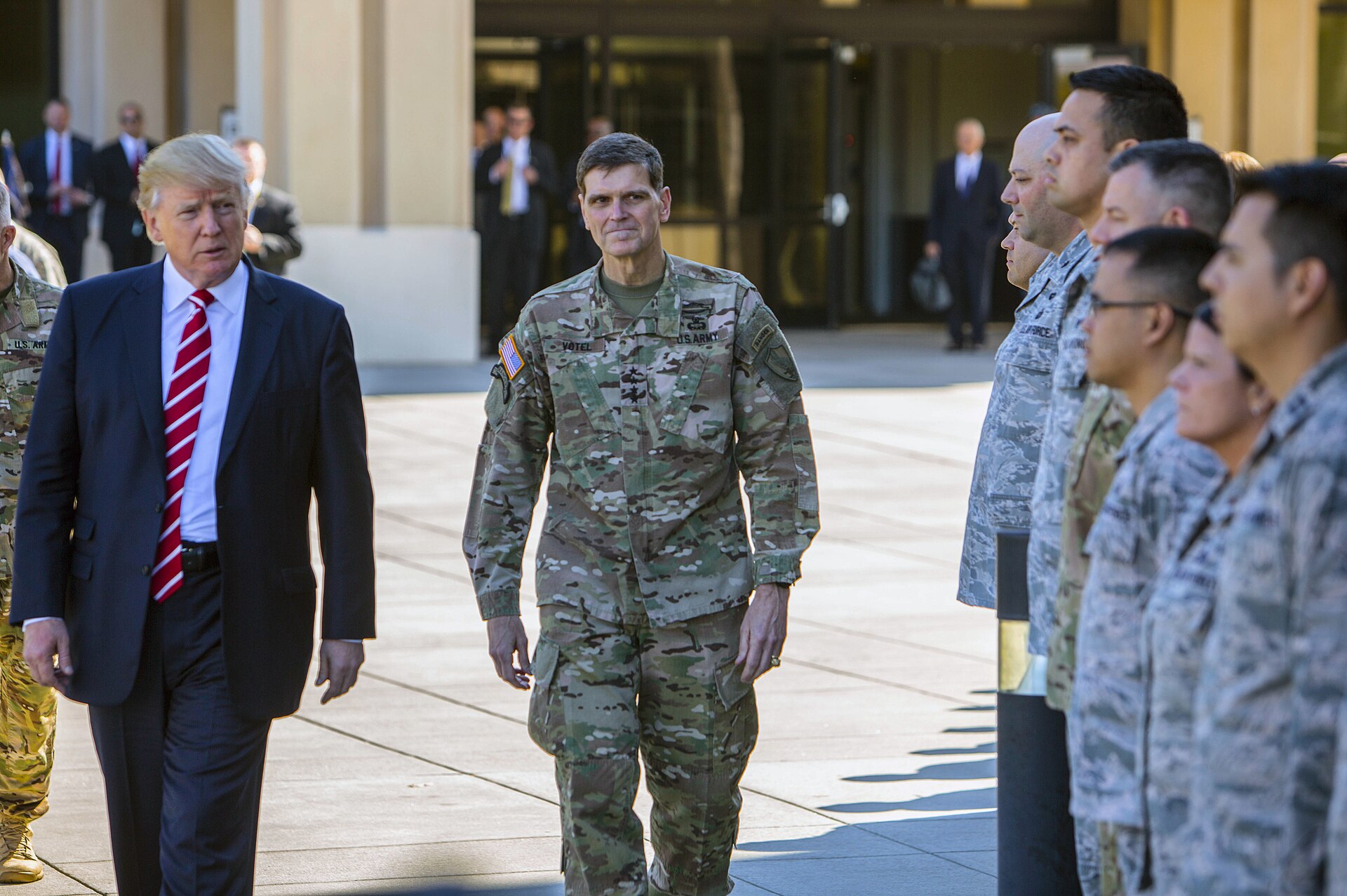

WASHINGTON — Donald Trump told Reuters on November 19 that he would address the question of new strikes on Iran “after the beginning of the year,” deferring any escalation decision past the end of 2026 — hours after his Central Command chief sat across from Mohammed bin Salman in Riyadh for the third time since July. Iran’s Islamic Revolutionary Guard Corps responded later that day by rejecting the limbo outright: “We do not accept a situation of neither war nor peace,” IRGC spokesman Hossein Mohebbi told Press TV on November 19, warning that any US action would be met with “at least three times as much in response.”
The timing strips a layer of ambiguity from Saudi Arabia’s planning horizon. Riyadh has roughly 200 US military advisers on the ground providing targeting data, according to CNN, which reported the figure in September, and a six-month Yemen campaign stretching into 2027 that Saudi planners told Reuters they believe could yield gains “within weeks” if Washington offered offensive support. That support is not coming before January at the earliest, and Tehran is signalling it will not wait quietly for Trump to make up his mind.
The House of Saud Daily Briefing
Saudi Arabia's news in 3 minutes, every morning. Free. See today's issue
Table of Contents
- Trump Pushes Iran Decision Past Year-End
- Why Did Iran Reject the “Neither War Nor Peace” Posture?
- What Does Cooper’s Third Riyadh Visit Mean for Saudi Planning?
- The Gap Between US Presence and US Escalation
- Saudi Arabia’s Six-Month Campaign Without a US Backstop
- Background
- Frequently Asked Questions
Trump Pushes Iran Decision Past Year-End
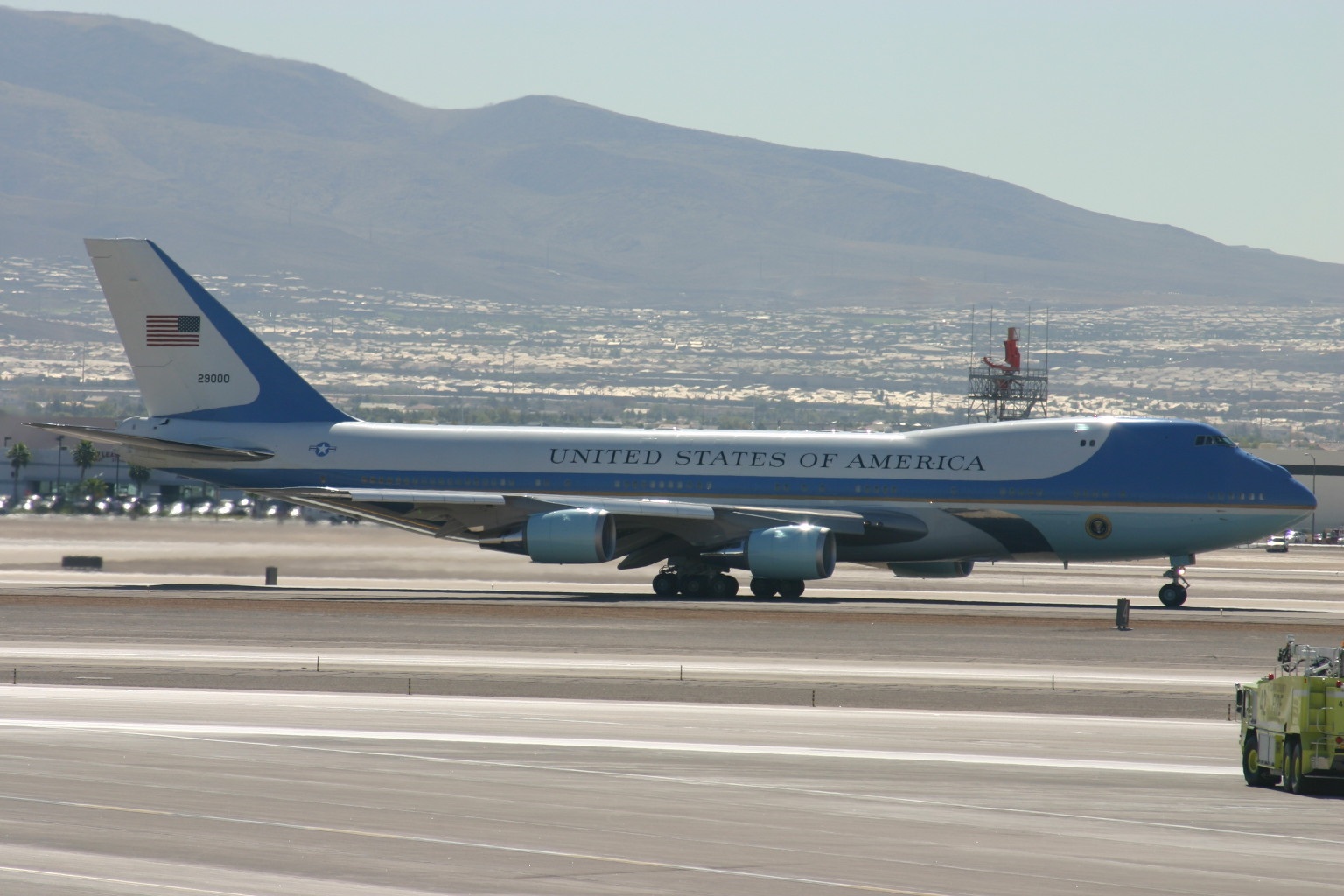
Trump made the remarks aboard his plane, telling Reuters correspondent Steve Holland: “Well, I’ll talk to you about it after the beginning of the year.” Asked whether the delay signalled caution, he added: “We’ve got time.” On Fox News the same day, he offered a slightly harder formulation — “We’ll see what happens after January 1” — and told both Axios and Israel’s News 12 that he was “not rushing to make any decisions on Iran,” according to a Reuters wire report published on November 19.
The rationale he gave for preserving the military option centred on Iran’s nuclear programme. “Because you can’t let Iran have a nuclear weapon,” Trump told Reuters. He also raised a newer claim, alleging that “there is indication that Iran is looking at gases, looking at bio… the biological weapons,” and warning that “if it does happen, we wipe them out.” The chemical and biological weapons allegation tracks with reporting from Axios, which said on November 19 that Mossad chief Roman Gofman had been sent to Washington carrying Israeli intelligence on Iran’s alleged chemical weapons programme — though the Times of Israel noted that some US officials called the intelligence “driven by an agenda.”
The delay extends a pattern that has defined Trump’s approach to Iran since the conflict’s escalation. On October 8, he ruled out attacking Iran before the November 3 midterm elections, posting on Truth Social: “We will not be attacking Iran at any time prior to the Midterm Elections to be held in the United States on November 3rd.” Republicans then lost both chambers of Congress on November 3, and by November 10 Trump was telling CNBC that the US-Iran war was “effectively over” — and by November 19 he was deferring any new escalation decision to 2027.
Secretary of State Marco Rubio offered a parallel track at a G7 foreign ministers’ meeting in Paris on November 10, saying: “The economic pressure on Iran is going to get even worse.” Mark Cancian, a senior adviser at the Center for Strategic and International Studies, had framed the administration’s posture more bluntly in a May interview with RFE/RL: “There’s no question the administration is looking for an exit. They very much want to end the conflict.”
Why Did Iran Reject the “Neither War Nor Peace” Posture?
Iran’s response arrived in layers over the course of a week, escalating from the parliament to the Supreme Leader’s office to the IRGC’s public spokesman. Majlis Speaker Mohammad Bagher Ghalibaf said on November 15, in remarks carried by ISNA and reported by Anadolu Agency: “It doesn’t matter to us at all whether America wants to negotiate or go to war.” He warned that Iran’s armed forces would determine the “geographical scope of the battlefield” if the United States made another mistake, and outlined seven conditions for a settlement:
- lifting the naval blockade;
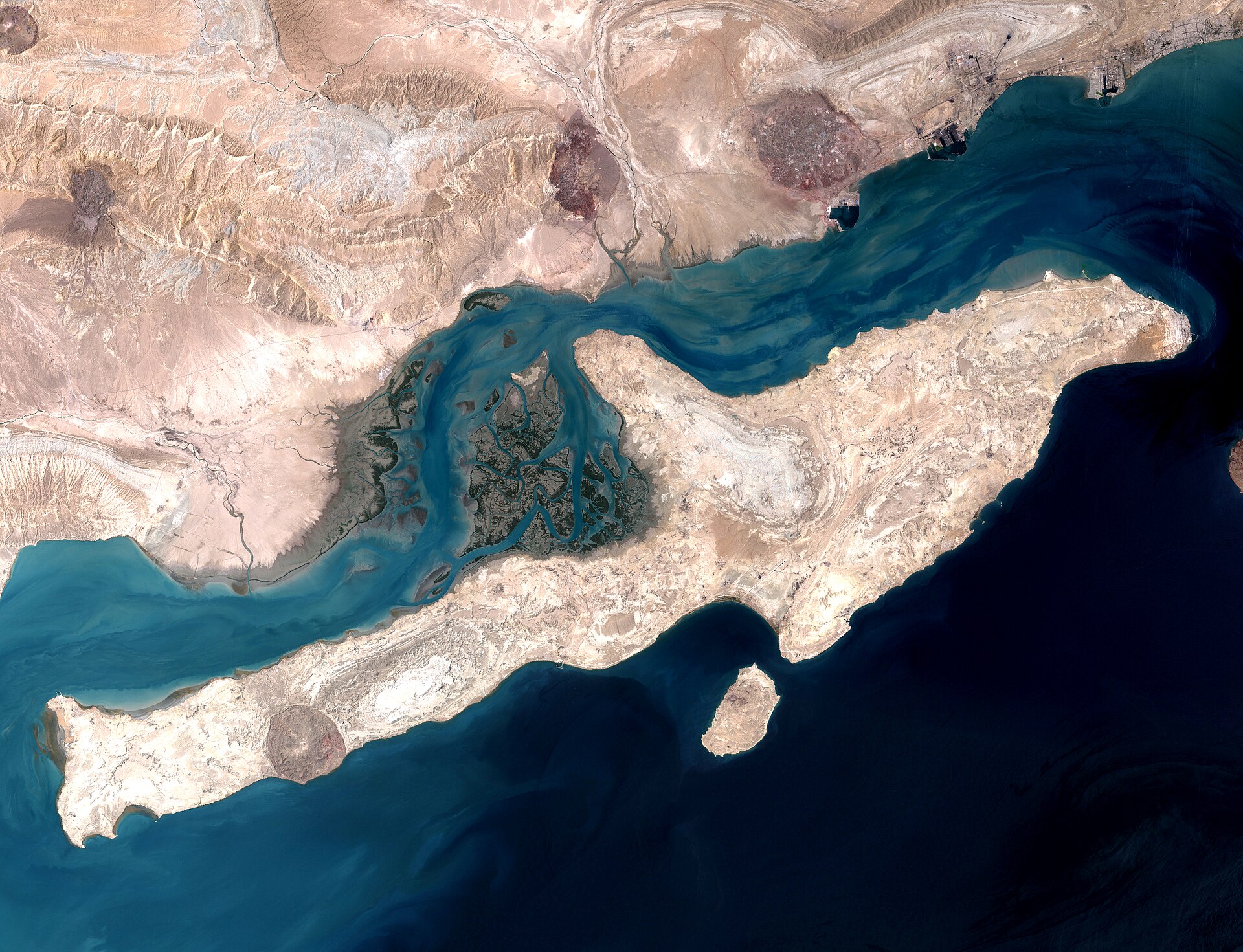
- guaranteeing safe passage for commercial vessels and tankers through the Strait of Hormuz;
- removing unilateral sanctions;
- lifting oil export restrictions;
- releasing frozen assets;
- keeping nuclear materials inside Iran;
- ending the war.
Three days later, Al Jazeera reported on November 18 that Supreme Leader Mojtaba Khamenei had told officials to end the state of “neither war nor peace.” The directive set the frame for Mohebbi’s public statement on November 19, the most explicit yet. “We will settle the matter of the war once and for all,” the IRGC spokesman told Press TV. “This will either be determined on the battlefield, or the United States must accept Iran’s conditions.” Any nation that allowed its territory to be used for attacks on Iran, he added, would become a “legitimate target.”
Iran’s Foreign Ministry spokesman Esmail Baghaei addressed Trump’s chemical and biological weapons claims directly, posting on X on November 19 — in remarks cited by Reuters and reported by The Statesman — that the allegations followed the “same fraudulent script” used to justify the 2003 invasion of Iraq, and were designed to create fear and justify military action. The comparison to Iraq’s non-existent weapons of mass destruction was deliberate, aimed at a domestic and international audience already sceptical of intelligence claims used to build a case for war.
“We do not accept a situation of neither war nor peace. We will settle the matter of the war once and for all.”
— Hossein Mohebbi, IRGC Spokesman, Press TV, November 19, 2026
Hamidreza Azizi, a senior Iran analyst at the International Crisis Group, told Al Jazeera on November 18 that Washington wanted Iran to give up control of the Strait of Hormuz and accept US terms, but no deal had been reached. Rouzbeh Parsi, an Iran analyst at Lund University, told the same outlet that both sides could sustain the current state for months, though costs were mounting — “especially for Iran.” The IRGC’s public posture suggests Tehran has decided that the costs of limbo now exceed the costs of forcing a resolution, even if that resolution comes on a battlefield where Iran mounted about 14 attacks on vessels near the Strait of Hormuz in November alone.
What Does Cooper’s Third Riyadh Visit Mean for Saudi Planning?
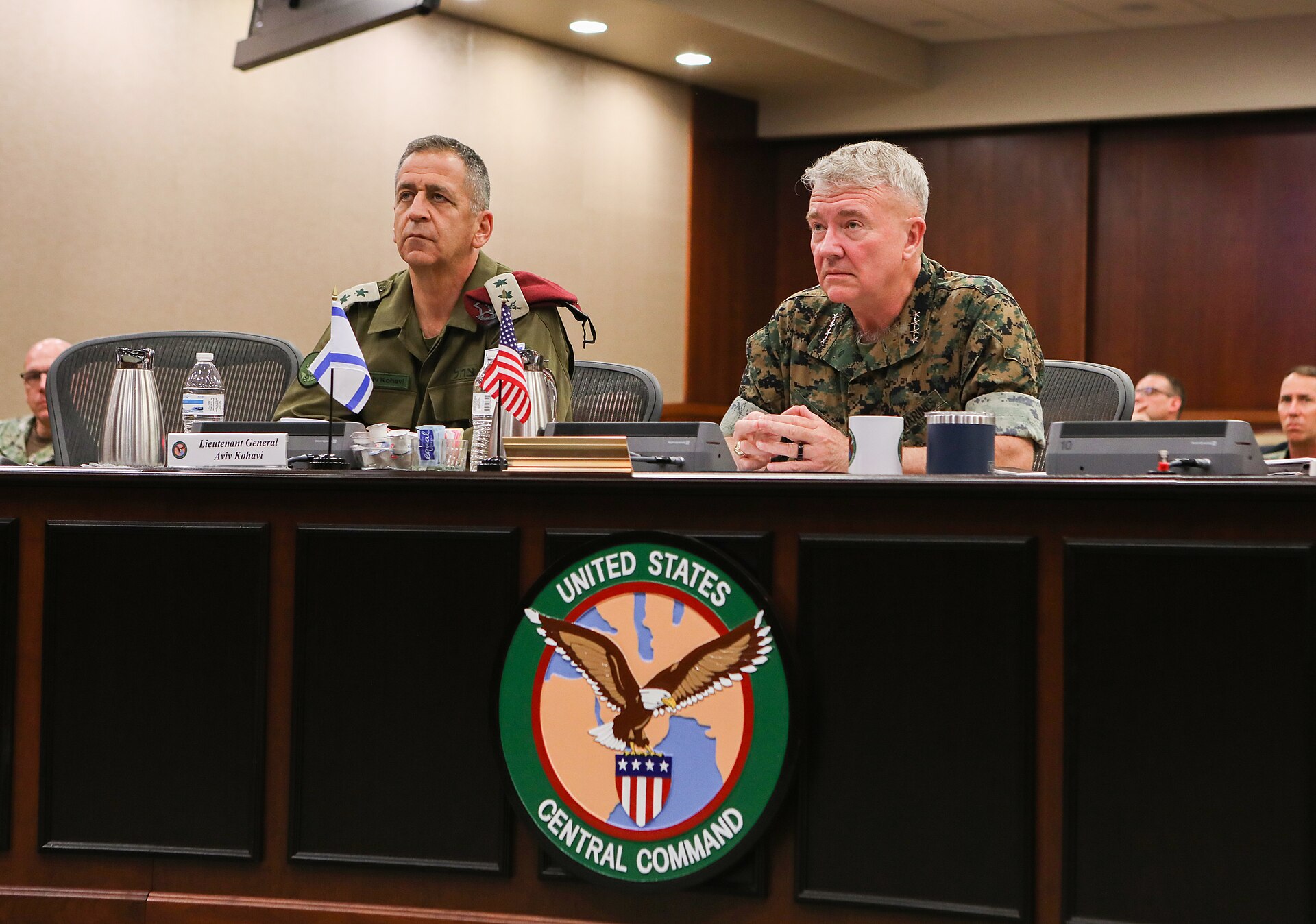
Admiral Brad Cooper, the CENTCOM commander, met Mohammed bin Salman in Riyadh on November 19 — what Al-Monitor, citing Saudi Press Agency reporting, described as his third publicly reported visit to Saudi Arabia since hostilities with the Houthis reignited in July. Cooper’s first publicly confirmed visit was to Jeddah on August 13, according to UQN. The SPA readout from the November 19 meeting said they discussed “bilateral relations, particularly regarding military affairs, as well as regional developments.” Cooper also met Defence Minister Prince Khalid bin Salman, with SPA saying they discussed “defence cooperation and ways to achieve security, stability and peace in the region.”
The SPA language is formulaic, but the cadence of the visits tells its own story. Cooper arrived in Riyadh the same day Trump told Reuters he was in no rush to strike Iran — meaning the top US military commander in the Middle East was sitting with the Saudi crown prince and defence minister while the president was publicly shelving the escalation option that Saudi Arabia’s six-month campaign plan implicitly depends on. The gap between the tactical coordination Cooper represents and the strategic restraint Trump articulated is the central tension Saudi defence planners now face.
The crown prince had tried to close that gap before. Axios reported that MBS made two direct appeals to Trump in September for US strikes on the Houthis; both were declined. The pattern is consistent: Washington provides intelligence infrastructure but withholds the kinetic escalation that Riyadh wants, a division of labour that leaves Saudi Arabia absorbing the military burden of a war whose pace and scope it cannot fully control without American offensive firepower.
The Gap Between US Presence and US Escalation
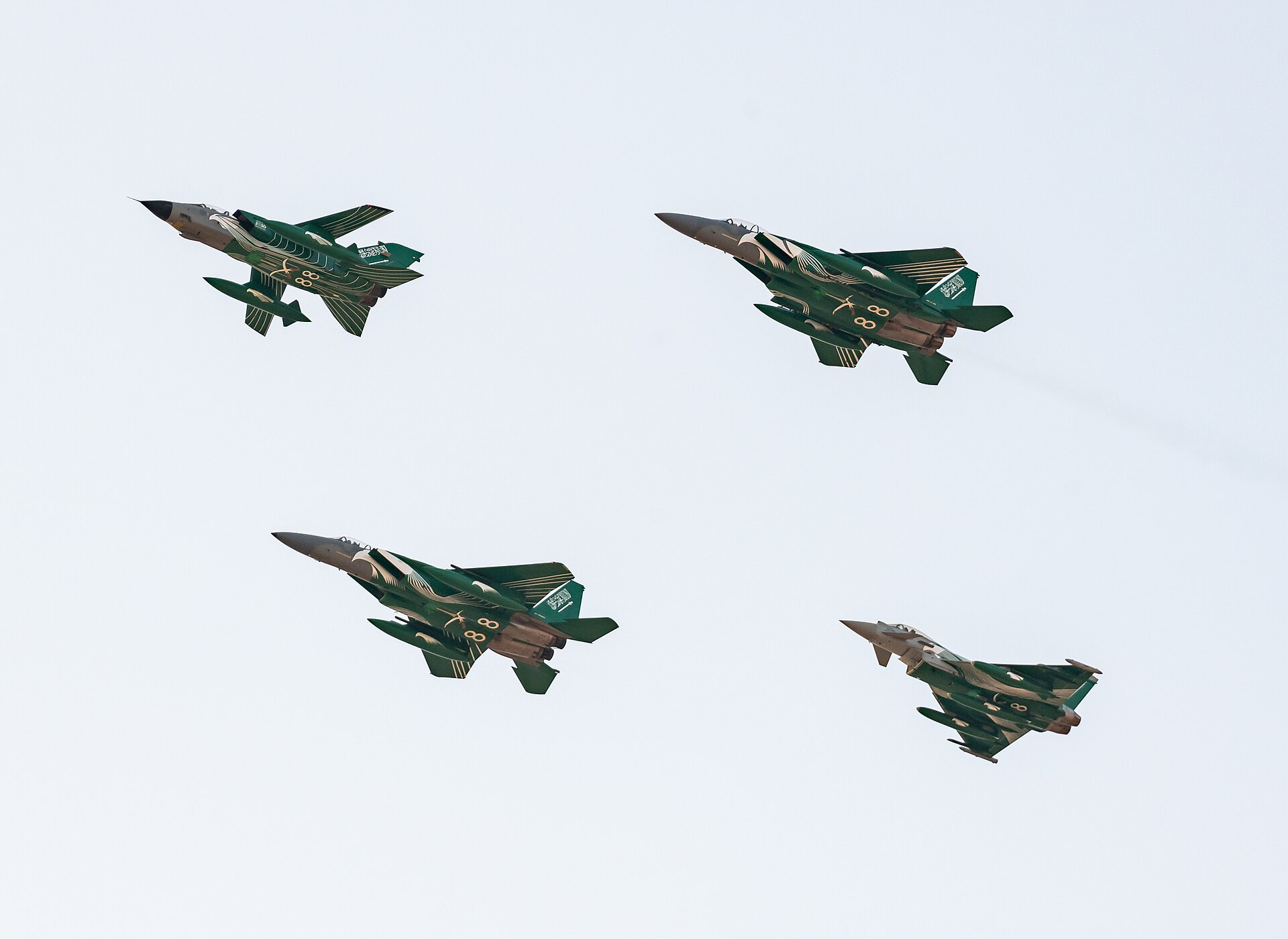
CNN reported in September that more than 100 US military advisers were on the ground in Saudi Arabia, with one official putting the total at “roughly 200.” The advisers were providing a real-time battlefield targeting tool that CNN compared to the Pentagon’s Maven system, along with “geospatial” targeting support. Reuters sources, as reported by Al-Monitor in September, confirmed that Washington had told Riyadh it would provide “intelligence-sharing and targeting assistance.” But tight limits remained: the US was not refuelling Saudi aircraft, and Trump had not agreed to US strikes on the Houthis.
The distinction matters because it defines the ceiling on what Saudi Arabia can achieve in Yemen without a change in US policy. Reuters sources told the Times of Israel and The New Arab on November 18 and 19 that Saudi planners believe US offensive support “could help” government forces in Yemen “make gains within weeks.” Without it, the campaign that those same planners foresee stretching “up to six months” into 2027 becomes an exercise in attrition — Saudi and allied Yemeni forces grinding forward with American eyes but American hands tied behind their backs. The same Reuters sources noted that a US-Iran deal “could see the Yemen conflict draw down,” but no such deal exists, and Iran’s seven conditions show no movement toward one.
JD Vance, the vice president, posted on social media blaming the Iran war for Republican midterm losses on November 4 — a data point that matters because it suggests the domestic political incentive for Trump to avoid deeper entanglement has grown, not shrunk, since the election. Reuters and Al-Monitor reported on November 19 and 20 that Trump had redirected Vance away from Iran diplomacy. The US Senate, meanwhile, rejected another war powers curb, according to Reuters — keeping the legal authority for strikes intact even as the political appetite for them wanes.
Saudi Arabia’s Six-Month Campaign Without a US Backstop
Saudi planners foresee the Yemen campaign stretching up to six months into 2027, with the goal of allowing Yemen’s internationally recognised government forces to make territorial gains before any Houthi negotiations. The Saudi Foreign Ministry declined to comment on the timeline. The campaign’s logic depends on creating facts on the ground — military leverage that translates into a stronger negotiating position.
Trump’s delay complicates that logic in two ways. First, it removes the near-term prospect of US offensive strikes that Saudi planners had hoped could accelerate the campaign timeline from months to weeks. Second, it gives Iran a window in which the IRGC’s threat calculus remains unchanged — Tehran knows it will not face American bombs before January, which means it can continue to pursue its own diplomatic channels and maintain pressure through Hormuz attacks and Houthi operations without the deterrent of imminent US escalation.
King Salman removed the Saudi-led coalition commander on November 16, with Lieutenant General Fayyad bin Hamed Al-Ruwaili — Chief of General Staff since February 2018 — now overseeing the campaign. The command change, combined with Cooper’s visit three days later and Trump’s simultaneous delay, creates a planning environment where Saudi military leadership is reorganising for a long war at the precise moment the American president is signalling that the cavalry is not coming soon. Saudi Arabia has been absorbing Iran war costs with US-Iran talks stalled, and Trump’s remarks ensure those costs will continue through at least year-end.
Background
The US-Iran confrontation escalated after Iran first closed the Strait of Hormuz on February 28, 2026, with a re-closure on April 18 after a brief diplomatic opening. The US naval blockade was reinstated on July 14, and Iran declared Hormuz closed again on that date. Iran’s Supreme Leader, Mojtaba Khamenei — who succeeded Ali Khamenei after the latter was killed on February 28 — has presided over a steady escalation in IRGC operations, including mining of commercial vessels and drone attacks on Gulf state military installations.
Saudi Arabia’s campaign against the Houthis reignited in mid-2026, with the coalition conducting sustained air operations while government-aligned forces in Yemen attempted to push the Houthis back from key positions including the Bab el-Mandeb strait. The Houthis have responded with missile and drone attacks on Saudi cities and infrastructure, including strikes on Riyadh’s King Khalid International Airport and Aramco facilities. The Makkah Joint Defence Pact, ratified by Turkey on November 5 with a parliamentary vote of 279-119 according to Anadolu Agency, and by Pakistan on October 23, has added multinational military commitments to the Saudi-led effort — but the core question of US offensive participation remains unanswered.
Frequently Asked Questions
What are Iran’s seven conditions for ending the conflict?
Majlis Speaker Mohammad Bagher Ghalibaf outlined seven conditions on November 15 (ISNA, Anadolu Agency) spanning three categories: operational (ending the naval blockade, Hormuz safe-passage guarantees for tankers), economic (sanctions removal, oil export restrictions lifted, frozen assets released), and political-strategic (nuclear materials kept inside Iran, formal end to the war). Ghalibaf framed all seven as a package minimum — “If the Americans accept our seven reasonable conditions, the path to an agreement remains open” — while making equally clear that rejection would lead Iran to widen the “geographical scope of the battlefield.”
Has the US Senate authorized additional military action against Iran?
The Senate rejected another war powers curb in November, according to Reuters, keeping existing executive authority for strikes intact. The vote followed a pattern: the Senate has rejected war powers measures related to Iran at least ten times, per NPR. The legal framework for strikes exists; the political will to use it does not, at least not before January 2027 based on Trump’s public statements.
What role did Israeli intelligence play in Trump’s chemical weapons claims?
Axios reported on November 19, via the Times of Israel liveblog, that Mossad chief Roman Gofman was sent to Washington carrying Israeli intelligence on Iran’s alleged chemical weapons programme. Some US officials characterised the intelligence as “driven by an agenda,” according to the same report. Trump’s public claims about Iran “looking at gases, looking at bio” on the same day suggest the Israeli intelligence reached the president, though his phrasing was vague enough to leave the specific basis for the claim unclear.
Could a US-Iran deal end the Yemen war?
Reuters sources told the Times of Israel on November 18 that a US-Iran deal “could see the Yemen conflict draw down.” The logic is that Saudi Arabia’s campaign against the Houthis is part of the wider US-Iran confrontation — if that confrontation ends in a deal, the incentive for Saudi Arabia to sustain a costly military campaign diminishes, and the Houthis lose their principal external backer’s reason to keep them fighting. But with Iran’s seven conditions unmet and Trump deferring any decision until 2027, that scenario remains theoretical.
The House of Saud Daily Briefing
Saudi Arabia's news in 3 minutes, every morning. Free. See today's issue