
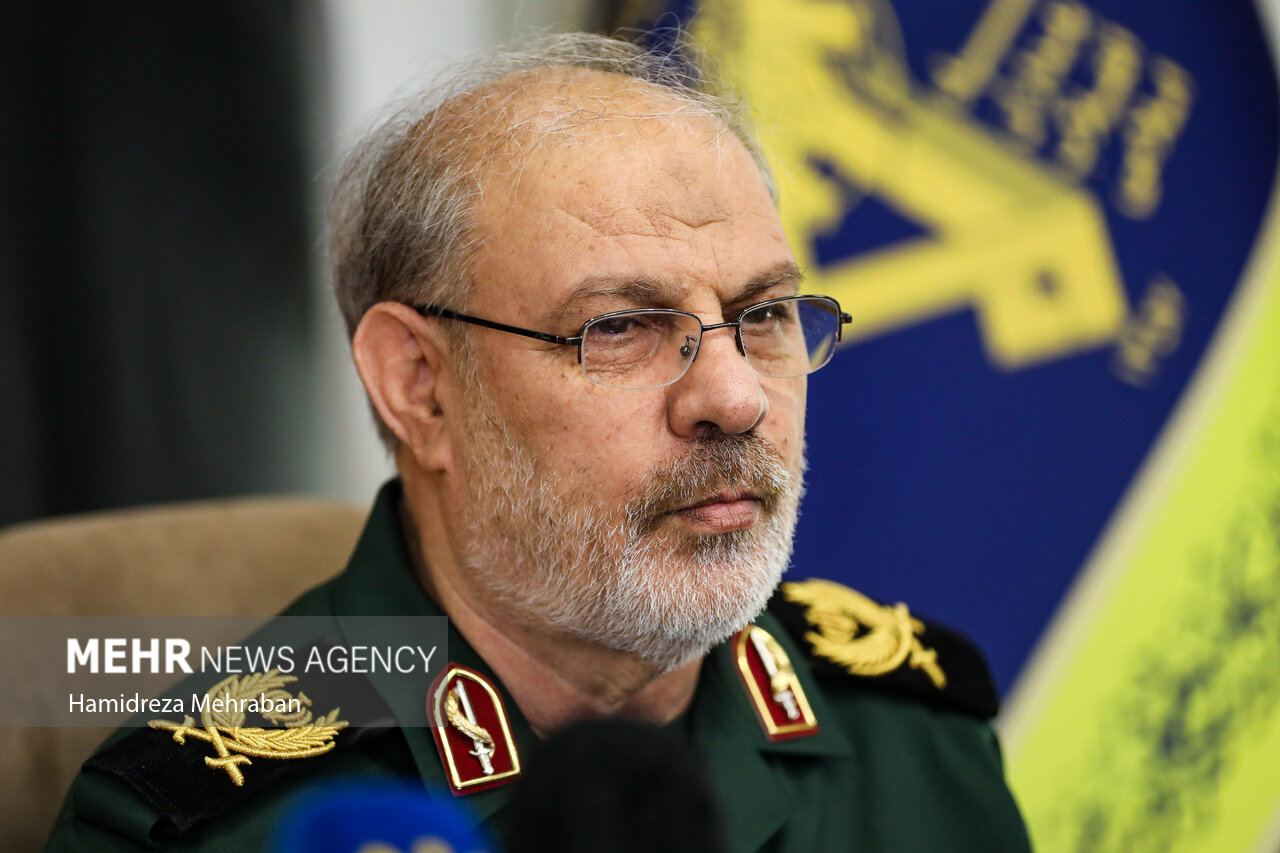
MANAMA — Iran’s Islamic Revolutionary Guard Corps has moved beyond bombing Bahrain and started threatening to end the al-Khalifa monarchy itself, in what amounts to the most explicit Iranian political ultimatum against a Gulf ruling family since the 1979 revolution. IRGC spokesman Brigadier General Hossein Mohebbi posted on X on November 18 that if the al-Khalifa dynasty persists in three “fundamental mistakes” — colluding in the war against Iran, sheltering inside the American security umbrella, and encroaching on the authority of Bahrain’s Shiite religious leadership — “its survival under the new regional security order will be in doubt.” He closed with a proverb that read as a deadline dressed in courtesy: “A word to the wise is enough.”
The statement landed two days after Bahrain’s High Criminal Court sentenced 64 people, including at least 57 Shiite clerics, to life imprisonment for alleged IRGC collaboration and a plot to overthrow the government, according to Reuters — the most sweeping domestic crackdown since the 2011 uprising. It also arrived in the middle of the IRGC’s most sustained air campaign against Bahrain since the war began, with Iranian drones striking at US air-defence radar installations on Bahraini air bases three times in under a week, according to Fox News. The convergence of military escalation, mass sentencing, and an open threat to the dynasty’s survival suggests Tehran is running a pressure campaign on multiple fronts simultaneously — one designed less to destroy Bahrain’s military infrastructure than to make the political cost of hosting the US Fifth Fleet unbearable for the al-Khalifa family.
Table of Contents
- What Did the IRGC Actually Say to the al-Khalifa Family?
- Three Strikes in a Week: The Bahrain Air Base Campaign
- 64 Life Sentences and the Domestic Crackdown
- Is Iran Replicating the 2011 Destabilisation Playbook?
- Why Does the Fifth Fleet Matter More Than the Radar?
- Can Saudi Arabia and the Makkah Pact Actually Protect Bahrain?
- The GCC Response and Its Limits
- The al-Khalifa Survivability Calculus
- FAQ
What Did the IRGC Actually Say to the al-Khalifa Family?
Mohebbi’s X post was not a vague expression of displeasure — it was a structured political ultimatum that named the ruling family, enumerated their alleged offences, and explicitly tied those offences to their survival as a dynasty. The three “fundamental mistakes” he listed, as reported by Fox News, were: “Colluding in the aggression against Islamic Iran,” “living inside the American security bubble,” and “encroaching on the authority of the Shiite religious leadership.” Each charge maps onto a distinct Iranian strategic objective — ending Gulf military cooperation with the US, expelling American forces from the region, and leveraging Bahrain’s Shiite majority as a political pressure point against its Sunni rulers.
The House of Saud Daily Briefing
Saudi Arabia's news in 3 minutes, every morning. Free. See today's issue
The language matters because it marks a qualitative shift in Iran’s public posture toward Bahrain. Previous IRGC statements about the strikes framed them in military terms — a “serious warning” over alleged US “aerial provocations” and “oil smuggling” in the Strait of Hormuz, as the IRGC told Tasnim on November 13 after the first attack. Mohebbi’s post abandoned the military framing entirely and went after the dynasty’s domestic legitimacy, addressing the al-Khalifa by name in a way that Iranian officials have generally avoided since Iran’s parliament ratified the renunciation of its territorial claim to Bahrain on May 14, 1970.
Behnam Ben Taleblu, a senior fellow at the Foundation for Defense of Democracies, told Fox News Digital that the IRGC “has a panoply of gripes against Bahrain as well as against the ruling royal family of that country. Some are sectarian, some are political, some are strategic, and some, again, have to do with the U.S. force presence in the region.” The phrasing captures the layered nature of the threat — Mohebbi was not operating on one axis but on all of them at once, combining the sectarian card with the security card with the sovereignty card, and packaging all three as a warning that the clock is running.
“If it persists in them, its survival under the new regional security order will be in doubt.”
IRGC Brig. Gen. Hossein Mohebbi, via X, November 18, 2026
No Iranian state media outlet had amplified Mohebbi’s post in a formal statement as of November 19, which raises the question of whether the message represents an authorised escalation in Iran’s declared policy or a signal from one faction within the IRGC — the kind of deniable provocation that Tehran has used before when testing new rhetorical territory. Either way, the al-Khalifa family heard it, and so did the approximately 8,000 US military personnel and dependents stationed at Naval Support Activity Bahrain in Juffair, the headquarters of the US Fifth Fleet, which has operated from the island since 1948, according to the Congressional Research Service.
Three Strikes in a Week: The Bahrain Air Base Campaign
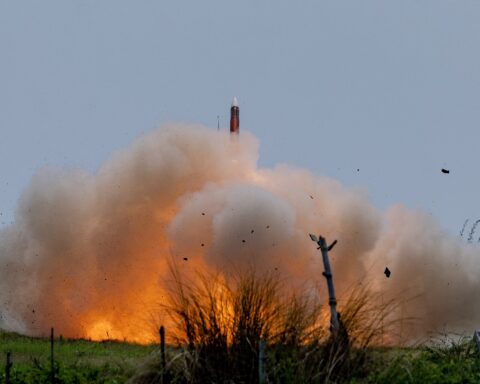
The political ultimatum came on the back of a concentrated military campaign that Iran had been building for days. On November 13, the IRGC claimed it had targeted a US early-warning radar installation in Bahrain — the first Iranian claim of an attack on US military assets in a Gulf country since early September, ending roughly a two-month lull, according to Reuters. CENTCOM said it shot down two Iranian drones that day with no injuries or damage, according to Al Jazeera. Bahrain’s foreign ministry responded with a statement that left no ambiguity: “Bahrain holds Iran entirely accountable for the attacks.”
Two days later, on November 15, the IRGC escalated — claiming six drones had targeted a US air-defence radar at Riffa (Al-Rifaa, the Royal Bahraini Air Force’s helicopter base), which it described as a “second phase of a decisive and crushing response,” according to Kurdistan24. Bahrain’s Defence Force said it intercepted the attacks “before they could achieve their objectives,” and the country issued its first nationwide threat alert in months, according to The National. By November 17, the IRGC was claiming it had struck for the third time in less than a week — this time targeting a US radar at Sheikh Isa Air Base, a separate facility on Bahrain’s southern coast, according to Fox News and the Times of Israel, and Bahrain accused Tehran of a “systematic hostile approach.”
A critical distinction that the IRGC’s own framing can obscure: Riffa Air Base (Al-Rifaa) and Sheikh Isa Air Base are two separate Bahraini military facilities, located roughly 20 km apart — Riffa is the Royal Bahraini Air Force’s helicopter base in the Southern Governorate; Sheikh Isa Air Base is on Bahrain’s Persian Gulf coast and hosts the fighter wing and US radar installations. Both are distinct from NSA Bahrain at Juffair, which hosts the Fifth Fleet headquarters. Riffa and Sheikh Isa house US radar and air-defence systems; Juffair is the naval command hub. The IRGC has been hitting the air-defence perimeter, not the fleet’s home — a distinction that matters operationally, even if the political message of attacking US assets on Bahraini soil carries the same weight regardless of which facility takes the fire.
The cumulative picture since February 2026, when the war began, is of sustained bombardment rather than isolated episodes: Bahrain’s Defence Force reported intercepting 188 missiles and 445 drones by early April, according to Anadolu Agency citing an official BDF statement. (Wikipedia’s summary of the same period gives 468 drones; the BDF’s own published statement, cited by Anadolu on April 3, gives 445.) The Military Times estimated cumulative damage to NSA Bahrain — the Juffair facility, not Riffa — at nearly $400 million as of August 28. The NSA “sustained serious damage in the opening days” of the conflict, according to Military Times. And the IRGC has since expanded its targeting to include non-military infrastructure on the island, including a July 21 cruise missile attack that the IRGC claimed destroyed Amazon data infrastructure in Bahrain, though there was no immediate comment from Bahrain, the US, or Amazon, according to Aaj English.
64 Life Sentences and the Domestic Crackdown
Two days before Mohebbi’s dynasty-survival warning, Bahrain’s High Criminal Court handed down what may be the most consequential mass sentencing in the kingdom’s modern history. On November 16, the court sentenced 64 people to life imprisonment on terrorism-related charges tied to alleged IRGC collaboration and a plot to overthrow the government, according to Reuters via Times Live. At least 57 of those sentenced were Shiite clerics, according to the Deccan Chronicle and Shafaq News. Prosecutors said they found communications between the defendants and the IRGC, according to Fox News.
The scale of the sentencing — dozens of clerics in a single proceeding, all given life — is the kind of judicial action that tends to generate its own political gravity. Bahrain’s Shiite population, estimated at 50 to 60 percent of the country, has long described a pattern of institutional marginalisation under the Sunni al-Khalifa dynasty, a grievance that fuelled the 2011 Pearl Roundabout protests and that Iran has historically sought to amplify. The mass sentencing gives the IRGC a propaganda gift, whether or not the underlying charges are substantiated — it allows Tehran to frame Mohebbi’s warning as protective rather than predatory, positioning the IRGC as a defender of Shiite rights against a dynasty that is jailing clerics by the dozen.
The timing is almost certainly not coincidental. Mohebbi’s post arrived two days after the sentences, which suggests the IRGC either anticipated the ruling and prepared the statement in advance or was reacting to it in real time — either way, the juxtaposition of mass clerical imprisonment with an explicit warning about dynasty survival is designed to work as a compound message, one that plays on Bahraini streets and in Shiite media as well as in the al-Khalifa royal court.
Is Iran Replicating the 2011 Destabilisation Playbook?
In March 2011, Bahrain’s al-Khalifa government faced the most serious challenge to its rule in decades when largely Shiite protesters occupied Pearl Roundabout in Manama, demanding constitutional reform and an end to what they described as systematic discrimination. The government, overwhelmed, requested GCC intervention. Saudi Arabia responded by deploying approximately 1,000 troops with 150 armoured vehicles as the Peninsula Shield Force on March 14, 2011, with additional Emirati participation. The government declared martial law, dismantled Pearl Roundabout, and prosecuted opposition leaders, including Sheikh Isa Qassim — Bahrain’s most senior Shiite cleric — who was among those sentenced to life imprisonment in the November 2026 proceedings.
The Bahrain Independent Commission of Inquiry, established to investigate the 2011 events, found no evidence of Iranian operational direction of the protests, according to the Americans for Democracy and Human Rights in Bahrain citing the BICI report. That finding matters because it undercuts the al-Khalifa government’s standard framing of Shiite unrest as an Iranian proxy operation — a framing the IRGC’s own behaviour in 2026 has made more credible by actually building the kind of operational links that did not exist in 2011.
The 2026 version of this pressure is qualitatively different from 2011 in a way that makes it harder to defeat with the tools that worked last time. In 2011, Iran worked through civil society channels — the pressure was soft, deniable, and stoppable by infantry. In 2026, Iran is using direct military strikes on US assets combined with an explicit political ultimatum against the dynasty. The Peninsula Shield Force could block a street protest. It cannot intercept a drone swarm launched from Iranian territory. The Saudi troops that crossed the King Fahd Causeway in 2011 faced unarmed protesters; a repeat deployment in 2026 would face an adversary that has already launched hundreds of missiles and drones at the island and shows no sign of stopping.
Saeid Golkar, a UC Foundation associate professor of political science at the University of Tennessee at Chattanooga, told Al Jazeera on November 15 that “both sides may prefer to avoid a full-scale war, but the danger lies in miscalculation.” The remark captures the gap between what Iran says it wants — pressure short of regime change — and what a campaign of military strikes, mass-sentencing propaganda, and dynasty-survival threats might actually produce if Bahrain’s internal fault lines fracture under the weight.
Why Does the Fifth Fleet Matter More Than the Radar?
The IRGC’s military strikes have targeted radar installations and air-defence systems — the hardware that protects the Fifth Fleet. But Mohebbi’s statement, by naming the al-Khalifa’s relationship with American security as one of the three “fundamental mistakes,” signals that the ultimate objective is not to destroy the radar but to make hosting the fleet politically untenable for Bahrain’s rulers. Ben Taleblu framed it plainly to Fox News Digital: “The Islamic Republic is also trying to use military force to evict the United States from the region.”
The Fifth Fleet’s presence in Bahrain dates to 1948 — a US naval command headquarters has operated there for 78 years, through coups, revolutions, oil shocks, and multiple Gulf wars. NSA Bahrain at Juffair is NAVCENT’s headquarters, the operational hub for US naval forces across CENTCOM’s area of responsibility. Ben Taleblu called it “the test case as to what the U.S. does with the Fifth Fleet in Bahrain” — suggesting that whatever Washington decides about maintaining its presence under sustained Iranian attack could signal the future of the American military posture across the entire Gulf.
The strategic calculus Iran is attempting to impose on the al-Khalifa family is straightforward, even if its execution is not: hosting the Fifth Fleet makes Bahrain a target. Being a target means military damage, civilian fear, and the political ammunition that comes with foreign bombs falling on sovereign territory. At some threshold of cumulative damage and domestic anxiety, the IRGC is gambling, the al-Khalifa family will decide that the American security umbrella is causing more insecurity than it prevents — and that the dynasty’s survival requires distance from Washington, not proximity to it.
Andrew Leber of the Carnegie Endowment for International Peace, writing in March 2026, identified the structural vulnerability this exploits: “It is easier for Iran to cajole, and the United States to dismiss, individual Gulf states, so Gulf leaders should capitalize on this crisis by pushing their countries closer together.” Bahrain is the smallest, most exposed, and most internally divided of the Gulf states Iran has attacked — the one most likely to buckle under sustained, multi-domain pressure, and the one whose capitulation would send the loudest signal that Iran can break American alliances in the region, one island at a time.
Can Saudi Arabia and the Makkah Pact Actually Protect Bahrain?
The Makkah Defence Agreement, signed on August 7 by Saudi Arabia, Turkey, and Pakistan, commits its three signatories to treat an armed attack on any one of them as an attack on all — a NATO Article 5 analogue for the Islamic world’s three largest conventional militaries. Turkey’s parliament ratified the pact on November 5 by a vote of 279 to 119, according to Anadolu Agency, and Pakistani forces are already deployed in Saudi Arabia. The pact represents the most ambitious mutual defence framework in the region’s history, but it has a problem that is directly relevant to Bahrain’s predicament: Bahrain is not a signatory, and the full text of the agreement has not been made public.
Whether the Makkah Pact’s collective defence clause would extend to Bahrain in practice depends on interpretation, political will, and how Saudi Arabia chooses to operationalise the commitment. Saudi Arabia has historically treated Bahraini security as a core interest — the 2011 Peninsula Shield deployment proved that — and the GCC’s December 2025 Sakhir Declaration, issued at a summit in Bahrain itself, stated that any infringement on a member state’s sovereignty would be treated as a threat to collective GCC security, according to the Khaleej Times. But a declaration of collective concern is not the same as a binding defence commitment with named troop contributions, staging timelines, and rules of engagement.
The practical question is what Saudi protection looks like against the specific threat Iran is posing. Saudi Arabia’s own air defences have been under sustained pressure from both IRGC strikes and Houthi attacks — King Salman removed the coalition’s military commander in mid-November and appointed General Al-Ruwaili in what appeared to be a wartime leadership reshuffle. Saudi Arabia is absorbing enormous war costs of its own while US-Iran diplomacy stalls. Extending an effective air-defence umbrella over Bahrain while defending Saudi cities against simultaneous attacks from Iran and Yemen is a resource allocation problem that no GCC declaration can solve on paper.
Turkey brings different capabilities — a large and experienced military, a growing naval presence in the Gulf under the Makkah Pact framework, and a political willingness to project power that neither Saudi Arabia nor Pakistan has tested at this scale. But Ankara’s interests in the Gulf are not identical to Riyadh’s, and Turkey’s own relationship with Iran includes economic ties and energy dependency that complicate a purely confrontational posture toward Tehran.
The GCC Response and Its Limits
The regional response to Iran’s escalation against Bahrain was swift in diplomatic terms, if not yet matched by military action. Egypt, Qatar, Saudi Arabia, and the UAE each condemned Iran’s attacks on Bahrain on November 17 and 18, calling them a violation of Bahrain’s sovereignty, according to the Times of Israel. Qatar’s foreign ministry went further, stating that Iran’s “continued attacks” on Bahrain “undermine diplomatic efforts” and that escalation posed an “extremely grave danger.”
Qatar’s statement is worth pausing on, because Qatar has been the Gulf state most actively engaged in mediation between Washington and Tehran throughout the war — the channel through which Iran Foreign Minister Abbas Araghchi’s diplomatic proposals have been routed. For Doha to describe Iran’s Bahrain campaign as undermining diplomacy is an unusually direct signal that the attacks are straining even the states that have tried to maintain back-channel relationships with Tehran.
The condemnations collectively invoke the Sakhir Declaration’s language about collective security, but none of the four states has announced specific military measures in response to the IRGC’s attacks on Bahrain beyond their existing bilateral arrangements. Bahrain has demanded UN guarantees after the drone attacks expanded to include Kuwait, but the UN Security Council track has already been tested and found wanting — Russia and China vetoed a Bahrain-drafted resolution on Hormuz shipping on April 7, and the prospects for a Bahrain-specific resolution look no better.
| Date | IRGC Claim | Bahrain/US Response | Source |
|---|---|---|---|
| Nov 13 | IRGC claimed targeted US early-warning radar in Bahrain; called it a “serious warning” (no base named by CENTCOM or Bahraini authorities) | CENTCOM: shot down 2 drones, no damage; Bahrain: “holds Iran entirely accountable” | Reuters, Al Jazeera, Tasnim |
| Nov 15 | 6 drones at Riffa (Al-Rifaa helicopter base); “second phase of decisive and crushing response” | Bahrain Defence Force: intercepted; first nationwide alert in months | Kurdistan24, Al Jazeera, The National |
| Nov 17 (Mohebbi warning: Nov 18) | Third strike at Sheikh Isa Air Base; Mohebbi posts dynasty-survival warning on Nov 18 | Bahrain: accused Tehran of “systematic hostile approach” | Fox News, Times of Israel, Mehr News |
The al-Khalifa Survivability Calculus
The al-Khalifa family has ruled Bahrain since 1783, surviving the transition from tribal sheikhdom to British protectorate to independent kingdom to target of Iranian military operations. The dynasty’s survival has always rested on a triad: internal security apparatus, external great-power protection, and enough economic prosperity to keep a critical mass of the population invested in stability. What Iran’s compound pressure campaign is testing in November 2026 is whether all three legs of that triad can hold simultaneously under conditions that none of them was designed for.
The external protection leg is the most visibly stressed. The US provides the Fifth Fleet, the air-defence cooperation, and the implied threat that attacking Bahrain means attacking a de facto American ally — but the near-$400 million in cumulative damage to NSA Bahrain documented through August has not deterred the IRGC. The Saudi and GCC backstop, proven in 2011 against an internal threat, has not been proven against an external military campaign of this scale. The Makkah Pact adds theoretical depth but no operational specificity for Bahrain’s defence.
The internal security leg is under a different kind of strain. The mass sentencing of 57 Shiite clerics eliminates potential opposition leaders from circulation, but it also generates martyrs and grievances in a country with a Shiite majority. The al-Khalifa government’s calculation appears to be that pre-emptive judicial action prevents the kind of popular mobilisation that happened in 2011 — a reasonable assessment if the clerics were genuinely coordinating with the IRGC, a dangerous one if the sentences are perceived domestically as collective punishment of the Shiite religious establishment.
The economic leg, which rarely makes headlines but governs daily life, faces its own pressures — the Iran war has disrupted Gulf shipping, raised insurance premiums, and created an atmosphere of perpetual military uncertainty that is not conducive to foreign investment or tourism, two sectors that Bahrain’s post-oil economic model depends on. The continued mining of the Strait of Hormuz and the failure of Muscat talks to produce even a temporary reopening means the economic squeeze is tightening, not loosening.
Iran’s bet is that if enough pressure accumulates across all three axes — military, domestic, and economic — the al-Khalifa family will reach a breaking point where the costs of alignment with Washington exceed the costs of accommodation with Tehran. It is a bet that assumes the dynasty will prioritise its own survival over its alliance commitments, and it is not a bet that anyone in the region can confidently dismiss.
FAQ
Has Iran ever claimed sovereignty over Bahrain?
Iran’s 1906 constitution allotted two Majlis seats to Bahrain; the country was formally designated the fourteenth Iranian province administratively in November 1957, according to the Encyclopaedia Iranica, drawing protests from Britain and the Arab League. The Shah renounced the claim via a UN-supervised mission in 1970, and Iran’s Majlis ratified the finding on May 14 that year. Ayatollah Sadeq Rouhani revived the claim in 1979, calling Bahrain a “province,” but no post-revolution Iranian government has formally reasserted it. Ben Taleblu noted on X that “the Shah actually traded away longstanding Iranian claims on Bahrain” — the IRGC’s current campaign could be read as an attempt to regain through coercion what the Shah conceded through diplomacy.
How many times has Iran attacked Bahrain since the war began?
Frequently, and with a notable shift in stated purpose. The first weeks of the conflict produced a broad bombardment across military and civilian infrastructure. The November campaign is the first to combine explicit US-asset targeting — American radar installations at Riffa and Sheikh Isa air bases — with a formal political ultimatum naming the al-Khalifa dynasty by name. Earlier IRGC statements about Bahrain framed strikes in military terms, as a “serious warning” over US aerial provocations and Hormuz oil smuggling, according to Tasnim. Mohebbi’s November 18 post abandoned military framing entirely and named the dynasty’s relationship with the United States as a fundamental error — a qualitative shift in what Iran says it is trying to achieve.
What is the difference between Riffa Air Base, Sheikh Isa Air Base, and NSA Bahrain?
These are three distinct facilities. Riffa Air Base (Al-Rifaa) is the Royal Bahraini Air Force’s helicopter base in the Southern Governorate. Sheikh Isa Air Base is a separate facility on Bahrain’s Persian Gulf coast that hosts the fighter wing and US radar and air-defence systems; it was the target of the IRGC’s November strikes. NSA Bahrain at Juffair is the Fifth Fleet’s home base and headquarters of NAVCENT — a third, separate facility with a different function. By striking Sheikh Isa rather than Juffair directly, the IRGC destroys US hardware without crossing the threshold of a mass-casualty assault on US naval personnel. This creates a gray zone: the United States must respond to protect its assets, but the IRGC retains the ability to claim it is targeting infrastructure rather than initiating a direct confrontation with American service members — managing escalation while sustaining pressure.
Could Bahrain expel the Fifth Fleet?
Bahrain’s basing agreement with the US is a bilateral arrangement that the al-Khalifa government could theoretically terminate. The Philippines expelled the US from Subic Bay and Clark Air Base in 1991 after the Philippine Senate rejected a new basing treaty, and Iraq required US forces to leave in 2020 after a parliamentary vote. In both cases, the host country retained sovereignty and the US complied. Whether the al-Khalifa family would consider such a move depends on whether they judge the Iranian threat as more survivable with or without American military presence — a calculation that the IRGC is actively trying to tilt.
Does the Makkah Pact protect Bahrain?
Not automatically — and that gap matters for deterrence. Because Bahrain is not a signatory to the Makkah Defence Agreement, there is no treaty tripwire that obligates Saudi Arabia, Turkey, or Pakistan to respond to an attack on Bahrain. Any Saudi intervention would be a bilateral or GCC political choice, not a binding legal obligation. An adversary calculating the cost of attacking Bahrain can factor in that ambiguity: Saudi Arabia might choose to respond, but it cannot be forced to. The GCC’s December 2025 Sakhir Declaration treated sovereignty infringement on any member as a collective threat, but a political statement carries no enforcement mechanism. Iran’s campaign is designed to test whether political commitments hold under sustained pressure — which is precisely the question the absence of a binding tripwire leaves open.
The House of Saud Daily Briefing
Saudi Arabia's news in 3 minutes, every morning. Free. See today's issue