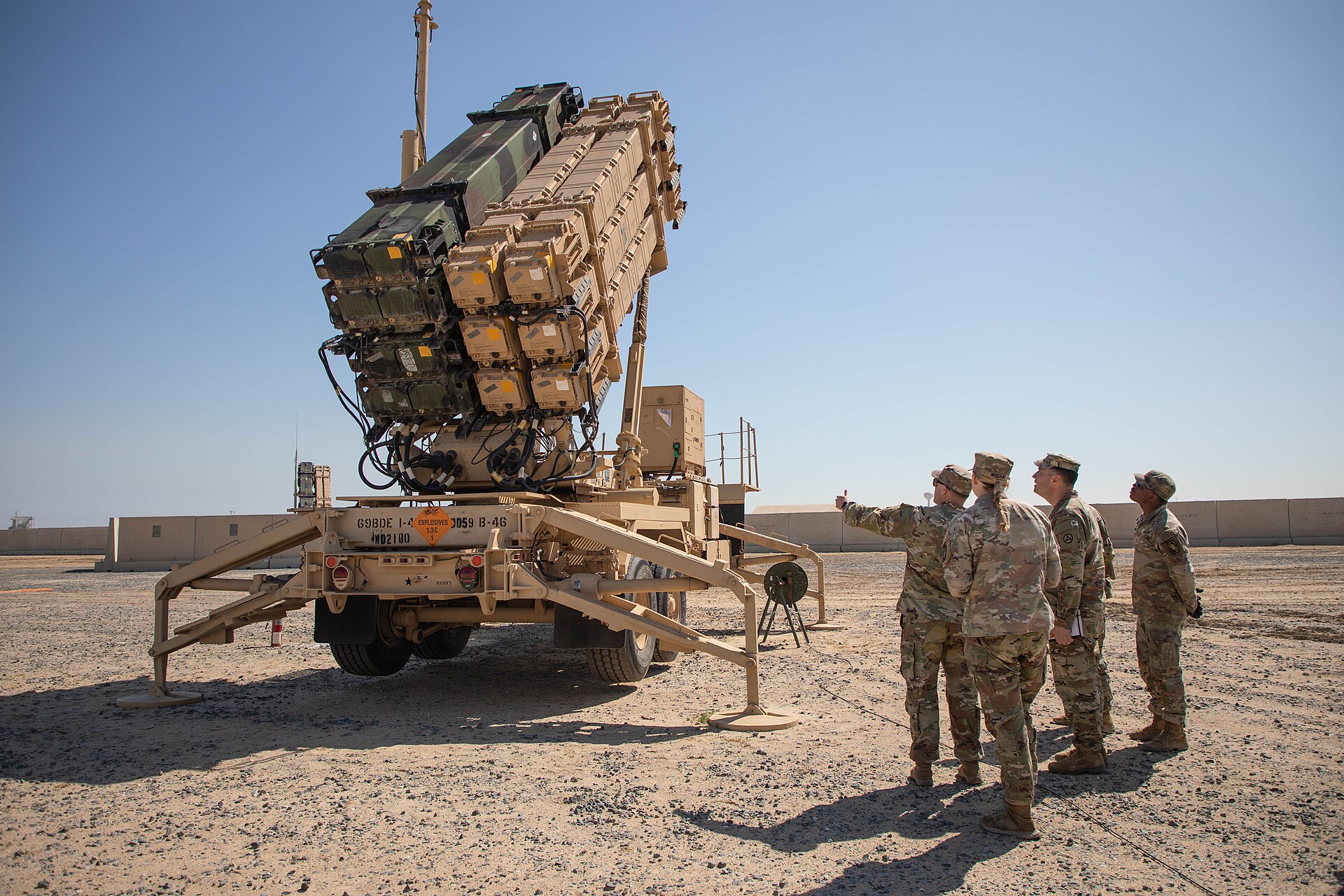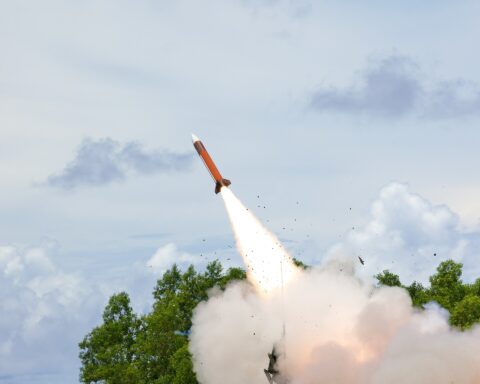

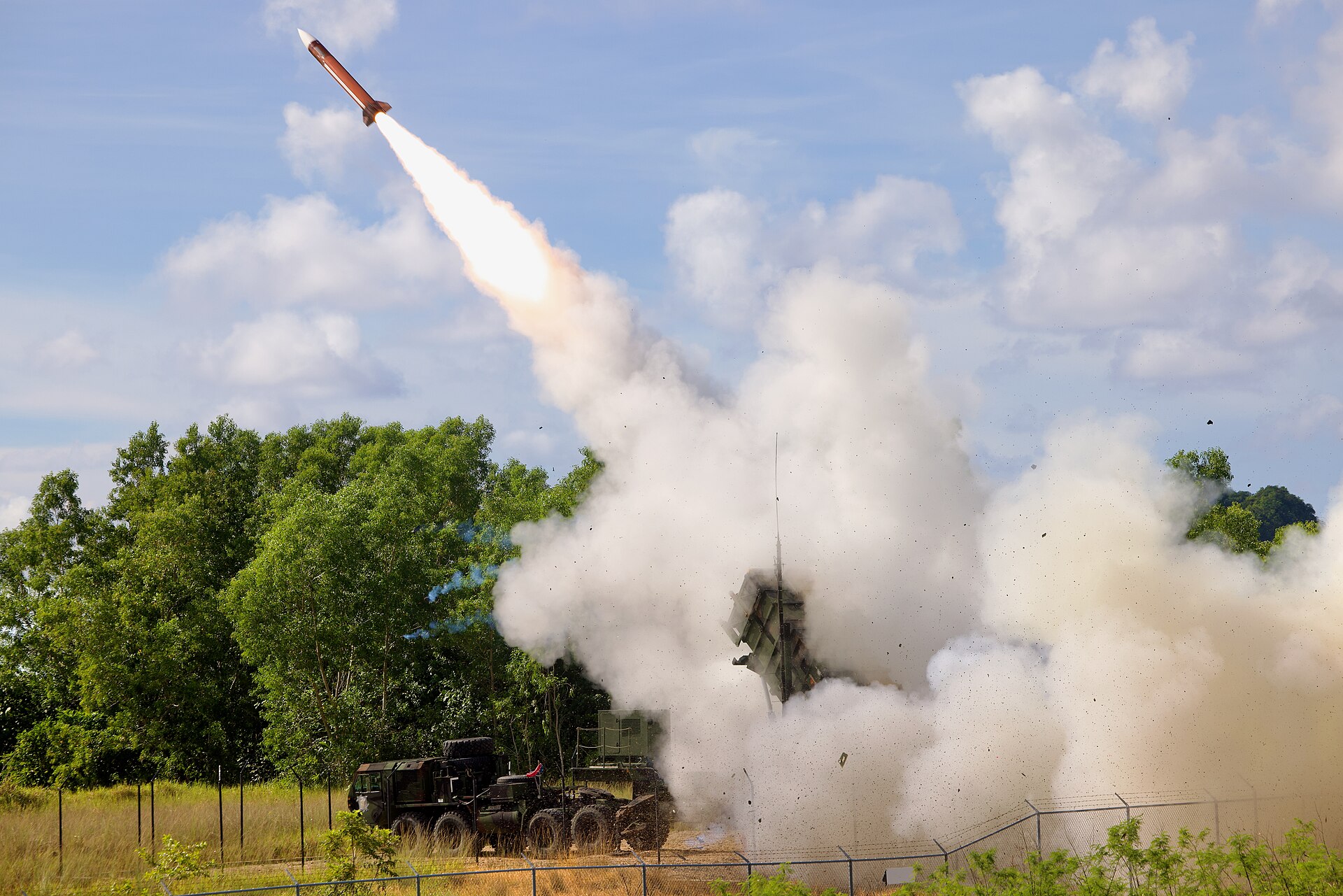
WASHINGTON — Donald Trump told Fox News on Sunday that he is inclined to order military strikes on Iran after the new year if the two countries fail to reach an agreement, calling Iranian negotiators “professional tap dancers” and warning that any ship testing the US naval blockade would end up “at the bottom of the sea like the rest of the navy.” The threat marks the sharpest escalation of Trump’s Iran rhetoric since he ruled out strikes before the November 3 midterms on October 8, and it landed less than 72 hours after he said he was “not rushing” a decision — a gap filled by the IRGC claiming to have struck US Patriot radars in Bahrain — the fourth attempted attack on American forces there in about a week, a US official told CBS News.
The shift matters for Saudi Arabia at least as much as it matters for Tehran. Riyadh is waging an extended campaign against the Houthis expected to run well into 2027, a war it cannot sustain without American support in missile defence, intelligence and naval operations, and Trump just signalled that the US military option against Iran — the country arming and directing the Houthis — may arrive in the new year with teeth.
The House of Saud Daily Briefing
Saudi Arabia's news in 3 minutes, every morning. Free. See today's issue
Table of Contents
What Did Trump Say About Striking Iran?
Trump’s remarks to Fox News, published on November 22 in a report by Eric Mack and Trey Yingst, represent a tone shift measured in days rather than the weeks that typically separate one presidential posture from the next. Fox News characterised the president as “warning that he is inclined to order military strikes against Iran after the new year if the two countries fail to reach an agreement, dismissing ongoing diplomatic talks with Tehran as meaningless.”
“They talk all the time, all they do is talk, but it’s all b——,” Trump told Fox News, adding that Iranian officials are “more aggressive now than before the election.”
“I hope they do, they’ll all be at the bottom of the sea like the rest of the navy.”
Donald Trump on Iran testing the US naval blockade, Fox News, November 22, 2026
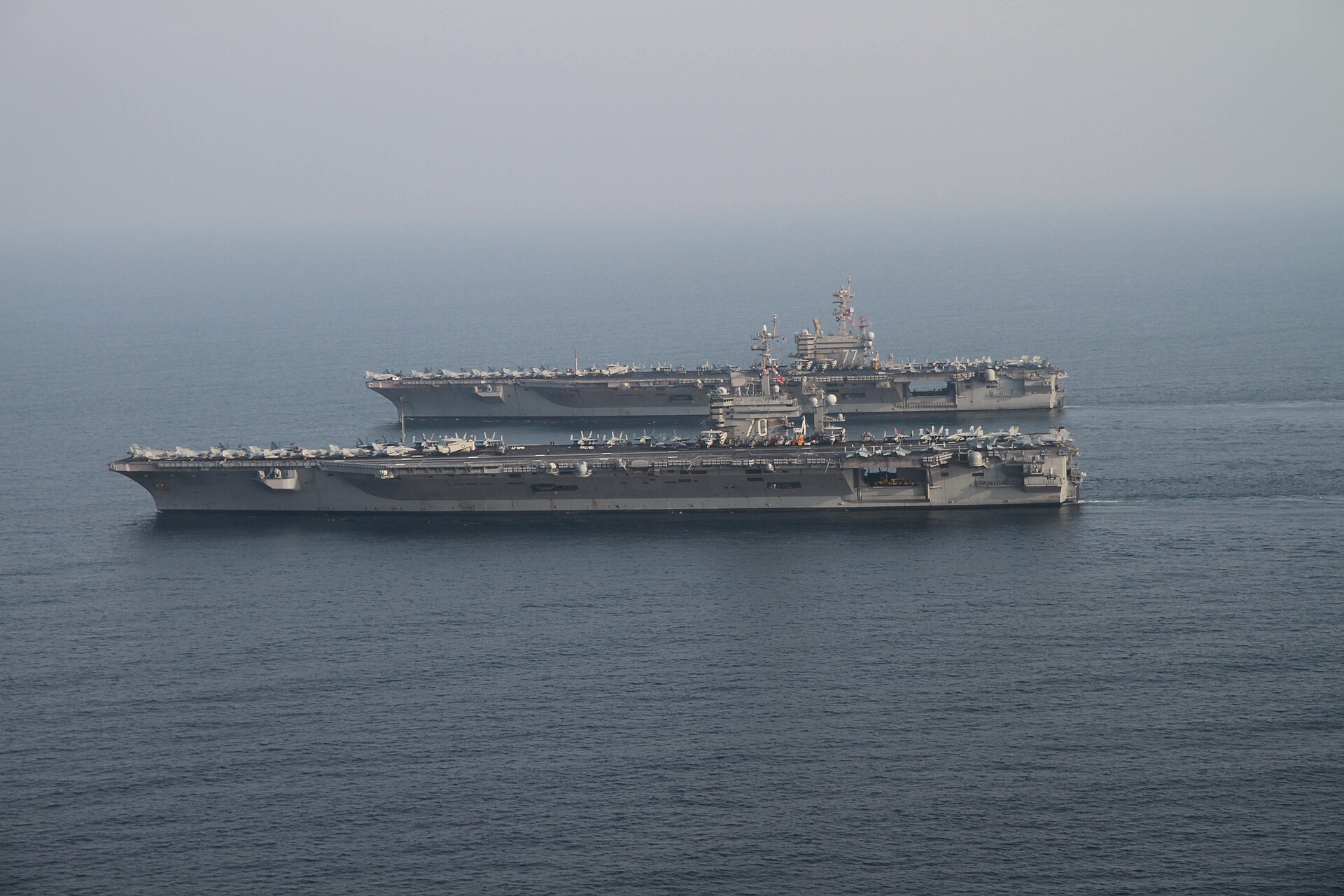
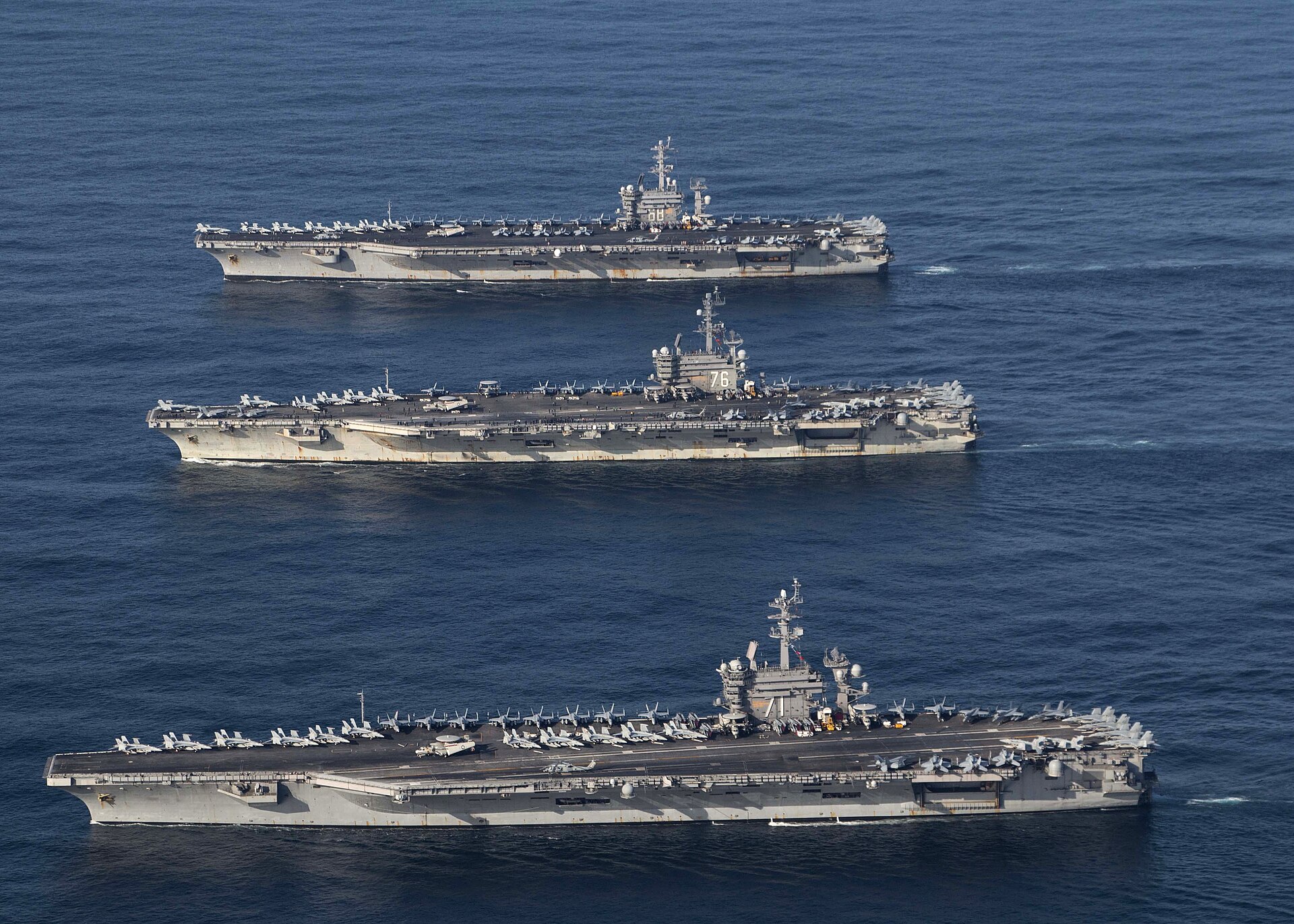
When asked whether Iran might challenge the US naval blockade — enforced by two carrier strike groups operating in the Gulf (the USS George Washington departed the region on November 18–19, leaving the USS George H.W. Bush and USS Theodore Roosevelt) — Trump dared them to try. Iran’s deputy foreign minister, Kazem Gharibabadi, had called the blockade “an act of war” the day before, and Trump’s response to that characterisation was not diplomatic restraint but a threat to sink whatever Iran sent.
On the same day, Trump posted on Truth Social that “Iran has launched more drones and missiles in the last week than at any time for over a year,” adding: “Don’t worry, they’ve all been knocked down, and done no damage.” The claim that all attacks caused no damage is disputed — Bahrain issued air-raid warnings and reported a fire at a civilian site hit in the November 21 strike, while the IRGC has claimed damage to US Patriot radar systems at two Bahraini bases.
From “We’ve Got Time” to “Bottom of the Sea”
Three days before he threatened to send Iranian ships to the seabed, Trump’s public posture was patience — almost ostentatiously so. On November 19, speaking to reporters in remarks carried by Reuters and covered by Al Monitor, he said: “Well, I’ll talk to you about it after the beginning of the year,” adding: “We’ve got time” and “I’m not rushing to make any decisions on Iran.”
By November 20, at a press conference covered in a Gulf News live blog, the language was harder but still pointed at the negotiating table rather than the target list. Trump said Iran’s leaders “want to make a deal, but they don’t want to make a deal that’s acceptable to me,” and accused them of having “been bullsh*tting people for 51 years.” These are not the words of a president preparing to strike — they are the words of a president who thinks he holds the stronger hand and has time to play it.
Then came November 21, and the language shifted from deal-making to permanence. In a Fox News phone interview reported by CBS News and Iran International, Trump said: “What I’m doing is I’m going to make it so that if we have an incompetent president in four years or 15 years or 20 years, I’m going to make a deal that is going to be permanent.” He addressed regime change more directly than at any point since the conflict began in February: “I’ve taken out two regimes already… we’re dealing with the third group. So you could call that the ultimate regime change.”
What drove the shift between the 20th and the 22nd was not abstract escalation but a specific provocation. The IRGC said it struck two US Patriot air defence radars at bases in Riffa and Awali in Bahrain with missiles and drones on the night of November 21, Iran International reported. A US official told CBS News it was the fourth attempted attack on American forces in Bahrain in about a week, after a pause of nearly two months. The US said the attacks caused no damage to American forces; Bahrain’s foreign ministry said the target was a civilian site, not a US military installation — a denial that leaves the basic facts of each strike contested even among the parties being attacked.
How Did Iran Respond?
Tehran’s response came layered — the military defiant, the diplomats hedging, the political class positioning for whichever outcome January brings. Iranian Army spokesman Mohammad Akraminia said Iran is “considerably stronger than before, and any new aggression will face a decisive, immediate and effective response” that would “not be limited to any specific geographical area,” according to Iran International on November 21. The phrasing is an implicit threat to US bases across the Gulf, and it was delivered before Trump’s Fox News interview, not after — meaning the IRGC was already signalling escalation while Trump was still signalling patience.
Deputy Foreign Minister Gharibabadi maintained on November 22 that the “window of diplomacy is still open” while warning that Iran was “ready for any scenario,” per Iran International. He also declared that “enriched materials will under no circumstances leave the country” — language that closes the door on the core US demand in any nuclear deal and suggests Tehran does not expect a diplomatic resolution soon.
Majlis Speaker Mohammad Bagher Ghalibaf said the state of “neither war nor peace” cannot continue and that Iran had “reached the deterrence point,” according to Mehr News on November 22. Mohsen Rezaei, Secretary of Iran’s Supreme National Security Council, went further, dismissing Trump’s posture as relying on “outdated photographs” and calling the United States “a defeated nation,” according to Mehr News the same day.
Foreign Minister Abbas Araghchi, the man who would lead any negotiations, took a different tack. He said the “path of diplomacy continues” and that reopening the Strait of Hormuz “would not be difficult” if Washington accepted Tehran’s conditions, Iran International reported. He also insisted that “the blockade must be broken” — language that nods to both the negotiating table and the IRGC’s convoy planners. Araghchi, who had signalled openness to a new US deal as recently as last week, is experienced enough to know the ambiguity is the point.
What Does This Mean for Saudi Arabia’s War?
Saudi Arabia’s calculation shifted on two tracks simultaneously last week. On one, Riyadh is committed to a Houthi campaign expected to continue well into 2027. On the other, Trump just gave the strongest signal yet that the American military option against Iran — the country arming the Houthis — may resume after the new year.
The Saudi foreign ministry warned on November 22 that Iran would “bear the consequences” if attacks on Bahrain continued, Iran International reported. It was a direct threat, notable because Riyadh has largely let Washington handle the Iran confrontation while it focused on the Houthi front. But the IRGC’s escalating strikes on Gulf states — Bahrain four times in a week, Kuwait repeatedly targeted, Saudi Arabia absorbing daily Houthi missile and drone fire — are pulling the kingdom toward a broader confrontation it has spent months trying to defer.
Trump had relayed a Saudi message on November 12, in a White House interview with Stephen A. Smith, that the kingdom asked him to “please just let it be the way it is now for a while, because they’re disintegrating,” referring to Iran, as reported by Iran International and Middle East Eye. Eleven days later, Trump’s own rhetoric has outpaced the patience Riyadh requested. The war has cost $48.3 billion as of November 13, according to Pentagon deputy comptroller Arthur Miller speaking to Gulf News, and the US naval flotilla enforcing the blockade — two carriers, 13 destroyers, two cruisers and a littoral combat ship (the USS George Washington having departed November 18–19), per ITV and US Navy — represents a commitment that generates its own pressure to produce results.
The Countdown: Congress, Israel, and Diplomacy
Trump’s window to act is bounded by multiple clocks, not all of them under his control. Democrats, who won the House in the November 3 midterms, take their seats in January, and incoming Speaker Hakeem Jeffries told CBS News that Democrats would seek to end “this reckless and costly war of choice in Iran,” Iran International reported on November 23. Any major military action after the new House is seated would face immediate congressional pushback, potentially including war powers resolutions — a tool that Congress has invoked at least ten times, per NPR.
Israel is pushing in the opposite direction. Prime Minister Benjamin Netanyahu is pressing Washington for “a short, intensive campaign” that he believes could severely weaken Iran’s government, Iran International reported on November 23, citing i24NEWS. CENTCOM remains at “maximum readiness” and favours a joint strike with Israel, according to the same report. Bloomberg reported, via Iran International, that Britain and several Arab Gulf states have privately urged Washington not to launch new strikes — a plea that may carry less weight after a week of attacks on US forces in Bahrain.
Egyptian Foreign Minister Badr Abdelatty told CNN that Egypt is working with Qatar, Turkey, Saudi Arabia and Pakistan to bring Washington and Tehran back to the negotiating table, Iran International reported on November 23. Israeli outlet Ynet reported on Sunday, citing US administration officials, that the US has decided to delay a potential attack by at least a week — not the kind of statement that offers Tehran reassurance, given that Trump’s public posture moved from “we’ve got time” to “inclined to strike” in roughly the same number of days.
Frequently Asked Questions
How many US carrier strike groups are currently in the Gulf?
Two: the USS George H.W. Bush and USS Theodore Roosevelt. The Roosevelt arrived on November 15–16, according to ITV, briefly making three carriers in the region, but the USS George Washington departed the Middle East on November 18–19 to return to its homeport in Yokosuka, Japan, per USNI News and Bloomberg. Together with 13 destroyers, two cruisers, and one littoral combat ship, the remaining two carrier strike groups form the naval force enforcing the blockade under CENTCOM command.
What is the US naval blockade of Iran?
The US reimposed a naval blockade of Iranian ports on July 14, after Iran re-closed the Strait of Hormuz on July 12. CENTCOM has redirected more than 150 merchant vessels and disabled five since the blockade began, according to Iran International. UKMTO data counted at least 19 vessel strikes in November through November 18, the second-highest monthly total since the war began (October recorded 31 strikes, the highest), with the Joint Maritime Information Centre reporting seven tankers hit in the Strait of Hormuz since November 16 alone.
Has Trump ordered strikes on Iran before during this war?
Yes. The war began on February 28 with joint US-Israeli strikes on Iranian nuclear facilities. Trump also ordered strikes on Iran’s Qeshm Island in the Strait of Hormuz in October–November 2026, which he described to Fox News as “minor.” The November 22 warning signals a potential return to larger-scale action if diplomacy fails by the new year.
What conditions has Iran set for lifting the blockade?
Iran’s stated position, as of November 22, links any settlement to two demands it has made publicly. Deputy Foreign Minister Gharibabadi declared that “enriched materials will under no circumstances leave the country,” ruling out Washington’s core demand on nuclear material, Iran International reported. Foreign Minister Araghchi said reopening the Strait of Hormuz “would not be difficult” if Washington accepted Tehran’s conditions, framing the blockade’s continuation as the primary obstacle to a deal.
The House of Saud Daily Briefing
Saudi Arabia's news in 3 minutes, every morning. Free. See today's issue