
RIYADH — Saudi warplanes struck Hodeidah again on Saturday evening, according to Houthi-run al-Masirah TV, a day after the Saudi-led coalition launched a “special operation” against the Red Sea port that the UN says carries 70 percent of Yemen’s commercial imports. Within hours of the first raid on Friday, the Houthis told shipping companies to pull their vessels out of Saudi Arabia’s own Red Sea ports.
That threat is the part of this week’s escalation that reaches furthest beyond Yemen. Saudi Arabia has spent the past month intercepting Houthi missiles over Riyadh, Jizan and the holy cities, and the coalition has now struck the port through which most of northern Yemen’s food arrives, while the Houthis have named Jeddah and the kingdom’s other Red Sea ports as their answer.
Table of Contents
What did the coalition hit in Hodeidah and Sanaa?
The coalition announced the operation on Friday, November 20, after first warning civilians to leave the port area, Reuters reported. Coalition spokesman Turki al-Malki said forces had “targeted operational capabilities at Hodeida port” that were used in “smuggling operations and the transport of weapons and ballistic missiles.” That sentence is the only official description of what was struck, and no coalition statement has named a dock, pier, crane or warehouse.
The House of Saud Daily Briefing
Saudi Arabia's news in 3 minutes, every morning. Free. See today's issue
The same operation reached inland. Al-Malki said the coalition hit “military targets” in Sanaa, including missile and drone facilities and what it described as one of the Houthis’ main supply depots, AFP reported. Attacks also struck Saada and Taiz governorates, and al-Masirah broadcast images of a damaged power station in the Red Sea city of Mocha after what it said was a coalition air raid on November 20.
Yemen’s internationally recognised government backed the operation’s stated rationale, accusing the Houthis of using Hodeidah port’s facilities “to receive smuggled Iranian weapons,” Al Jazeera reported. Government forces also reported six air strikes near Marib, according to the same report. HOS covered Friday’s opening strike and the first Houthi threats against Jeddah as the operation began.
Saturday’s follow-up raids
The second wave came on Saturday evening, November 21. Al-Masirah reported fresh Saudi strikes on Hodeidah and called them “Saudi aggression,” without giving details of casualties or damage, according to Xinhua. A local resident told the Chinese agency that more than five powerful explosions shook the city: “The blasts were extremely loud, and we could still hear aircraft above us.”
The coalition had not, by Sunday, issued a statement naming any Saturday targets in Hodeidah. Houthi military spokesman Yahya Saree claimed on X that Saudi warplanes and missiles carried out 71 strikes across eight Yemeni provinces over 24 hours, and that the total had reached “5,500 since the renewed military escalation began.” Xinhua described both figures as unconfirmed.
Why Hodeidah?
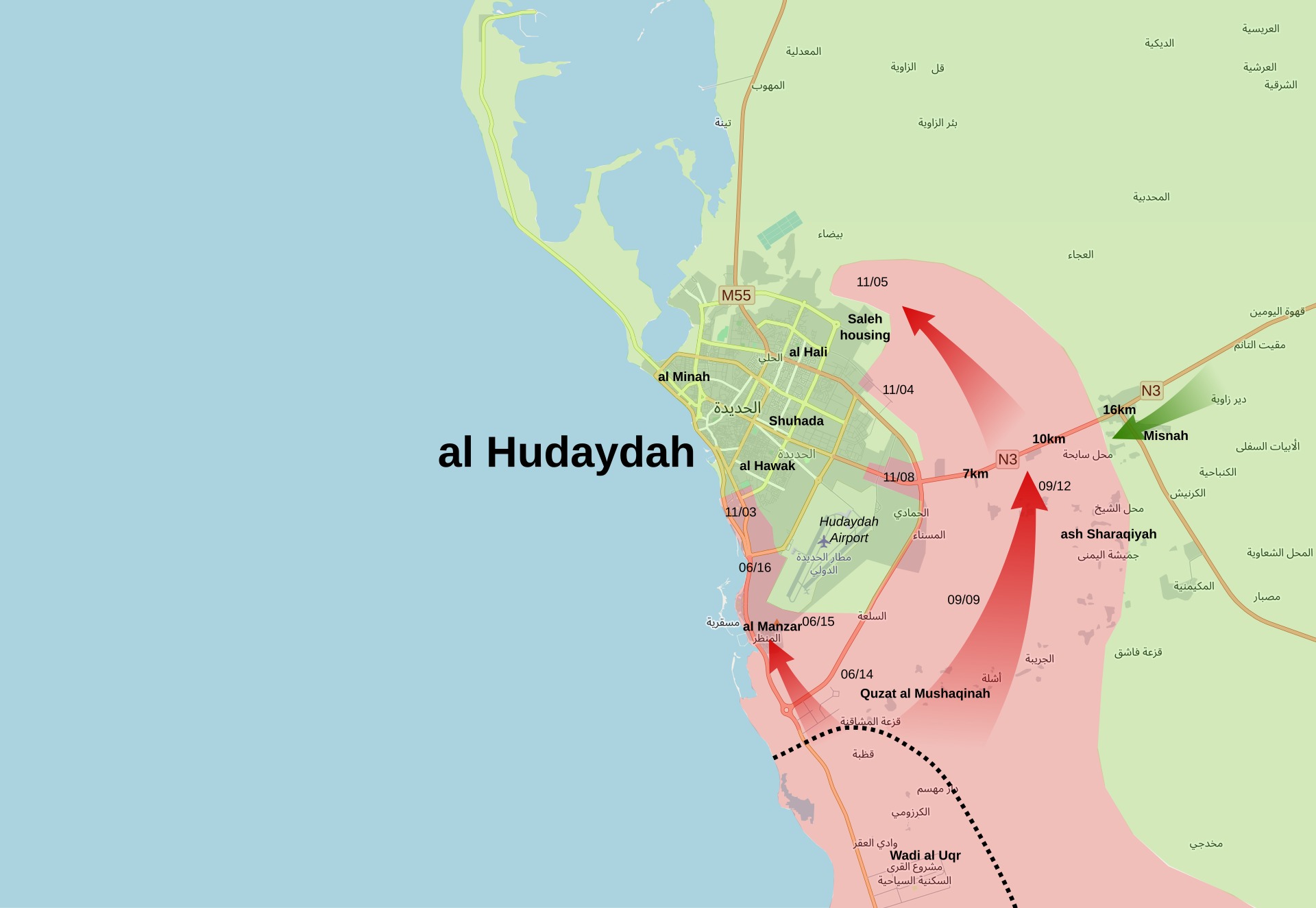
Hodeidah is the main port bringing food and other supplies into Houthi-controlled northern Yemen, Reuters noted in its report on Friday’s strike. UN News put the figures at 70 percent of Yemen’s commercial imports and 80 percent of humanitarian deliveries when the Security Council renewed the UN’s Hodeidah mission in July 2025, adding that earlier US and Israeli strikes had already left key port infrastructure partly inoperable.
Those numbers explain both why the coalition wants to choke the port and why it frames the strike so narrowly. A port that feeds most of the north is also, in the government’s account, the entry point for Iranian weapons, and the coalition’s language — “operational capabilities,” “smuggling operations” — is written to target the second function without claiming to target the first. Yemen’s information minister said after Friday’s strike that the port “remains fully operational and the flow of goods will continue,” Reuters reported, though no independent inspection has confirmed the port’s condition.
The UN did not accept that the line between the two is easy to hold. Farhan Haq, deputy spokesman for UN Secretary-General António Guterres, told reporters in New York that the organisation remained “deeply concerned about the ongoing military escalation in and around Yemen,” The National reported. The UN said Yemen’s Red Sea ports “must remain operational” because millions of people depend on the supplies that enter through them.
“We reiterate that ultimately there is no military solution to the conflict and urge all parties to find a pathway back to political negotiations.”
— Farhan Haq, Deputy Spokesman for the UN Secretary-General, November 20, 2026
Have the Houthis carried out their threats against Saudi ports?
The Houthis had promised in advance that an attack on Hodeidah would bring strikes on Jeddah and other Saudi Red Sea ports, AFP reported. Once the coalition moved, Saree issued the warning in full: “We warn all employees, workers, and those in the vicinity of (Saudi Arabia’s Red Sea) ports to evacuate them immediately and stay away. We also urge all shipping companies to immediately evacuate their ships from these ports.”
The group then went past public statements. The Houthis’ Humanitarian Operations Coordination Centre sent emails to shipping companies and other bodies using Jeddah port, warning them to evacuate, according to AFP. Saree’s published statement named no individual port beyond the general reference to Saudi Arabia’s Red Sea coast, and the only port named in the AFP account of the emails is Jeddah.
What the Houthis say they have already done is narrower. Saree claimed “accurate and direct” strikes on the Al-Shuqaiq power station and Jizan port that caused “extensive damage,” AFP reported, and none of those claims has been independently verified. Saree had flagged Al-Shuqaiq in advance as a target “in the coming hours,” presenting it as retaliation for Saudi strikes on power plants in Saada and Mocha, This Is Beirut reported. The coalition said two ballistic missiles were intercepted over the Jizan region, with debris falling at Al-Shuqaiq, as HOS reported from Jizan.
Saudi airspace and the financial district
The port warning came alongside a second one aimed at the sky. Saree declared Saudi airspace “unsafe” for civilian aviation and said it would become “a theater of Houthi military operations in the coming hours,” This Is Beirut reported, with an exception for the airspace over Mecca and Medina. Reuters quoted him telling airlines to avoid Saudi skies “because it will be the scene of our operations in the coming hours.”
The group also named Riyadh’s King Abdullah Financial District as a “military target” and urged people to stay away, AFP reported. That district contains the PIF Tower, which a suspected Houthi missile damaged on November 19; witnesses told AFP the tallest skyscraper in Riyadh, home to the sovereign wealth fund, was hit. Egypt was among the governments that condemned that strike.
Early on Saturday the threats turned into launches. The coalition said it “intercepted and destroyed” three Houthi ballistic missiles headed for Riyadh, and an AFP journalist heard two explosions shortly after authorities warned that the city was “under a hostile aerial threat,” as HOS reported on Saturday. Al-Malki later said a drone heading toward the Riyadh region had also been destroyed, Xinhua reported.
Saudi Arabia’s civil defence agency issued eight public emergency alerts in the 24 hours from 7:30am Saudi time on Friday, the third consecutive day that alerts were issued and quickly lifted, according to Al Jazeera. Pakistan’s foreign minister, Mohammad Ishaq Dar, condemned the attack on Riyadh’s financial district “in the strongest terms” and called for the attacks to stop immediately, stressing that targeting civilian infrastructure endangered lives and threatened regional peace and security, Dawn reported.
Why the Red Sea coast matters to Saudi Arabia now
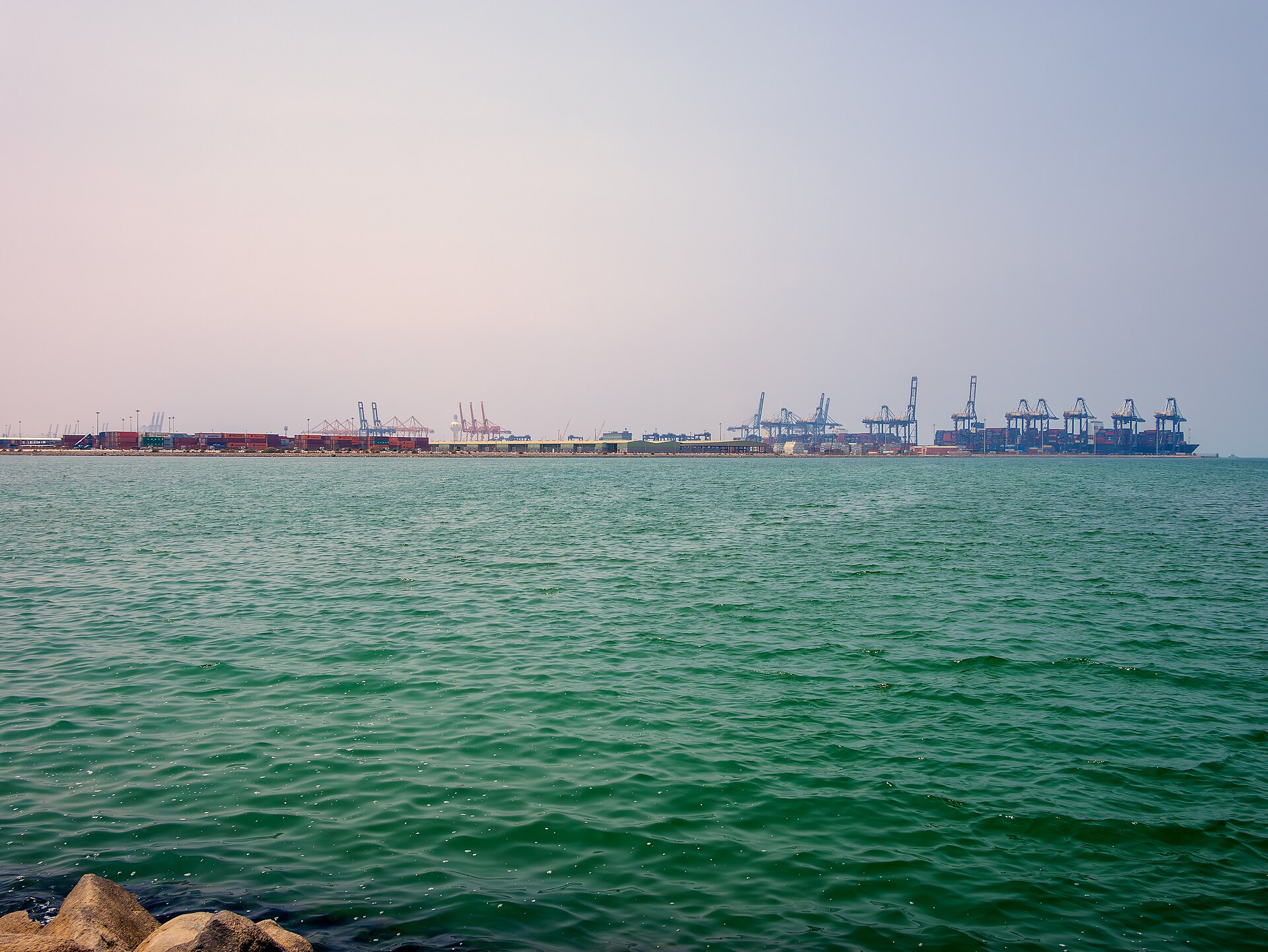
The Saudi coast under threat is not new territory for the Houthis, who have previously claimed attacks on Aramco and SAMREF facilities at Yanbu. What this week added was a named commercial port, Jeddah, and a direct written warning to the companies that use it, although no Houthi statement published by Sunday claimed a strike on Jeddah itself.
No shipping company had publicly announced moving ships out of Jeddah in response to the emails by Sunday, and the Reuters report on Saree’s warning carried no immediate industry reaction. The only Saudi port the Houthis claim to have hit this week is Jizan, and that claim rests on Saree’s word alone.
Rival Casualty Claims Remain Unverified
The two sides’ numbers do not overlap. Al-Masirah, citing health authorities in Sanaa, said coalition strikes across Yemen killed at least 41 people, including 11 children and seven women, over 24 hours, and injured 28 others, including three children, CGTN reported. The figures could not be independently verified, and there was no immediate comment from Saudi authorities.
Yemen’s Saudi-backed armed forces offered a count of a different kind. They said dozens of airstrikes and drone attacks, along with hundreds of artillery attacks, had “killed or wounded 193 Houthi fighters,” AFP reported, adding that those figures were also “impossible to verify independently.” The government figure combines killed and wounded and does not separate the two.
The most serious single allegation came early on Friday. The Houthis accused Saudi forces of striking a civilian boat and killing 19 people, AFP reported, and the coalition has not responded publicly to the claim. No independent investigator, UN body or wire agency has confirmed the boat’s passengers, its location or the cause of the deaths.
Saudi Arabia Plans a Yemen Campaign Into 2027
The Hodeidah operation fits a timetable that leaked earlier in the week. Saudi officials expect the campaign against the Houthis to last up to six months, well into 2027, two Western officials briefed by their Saudi counterparts told Reuters on November 18, and a third source familiar with the plans confirmed the account. A Saudi foreign ministry official declined to comment, and HOS detailed the plan when it was first reported.
According to the Western officials, Saudi Arabia wants its Yemeni allies to gain ground before any negotiations with the Houthis, and Saudi and Yemeni forces are reorganising to protect Aden from the Houthi advance. All three sources told Reuters that a deal to end the wider Iran war could see the Yemen conflict draw down.
The ground picture has moved against that goal this month. Houthi forces reached roughly 60km from Aden by mid-November, according to Al Jazeera, as HOS reported from the southern front. Southern forces had withdrawn from Dhubab on the Bab el-Mandeb coast on November 15, which HOS covered at the time, putting the Houthis back on the strait’s shoreline.
The cost on the Saudi side has run through its capital. A Houthi attack struck Aramco’s Riyadh headquarters in the week before the Reuters report, and a string of deadly strikes on King Khalid International Airport has kept it closed to most flights since October, Reuters reported. Yemen’s government launched its offensive to retake Houthi-held territory on October 4, Al Jazeera reported, and the four-year truce that preceded it had collapsed in July, according to AFP.
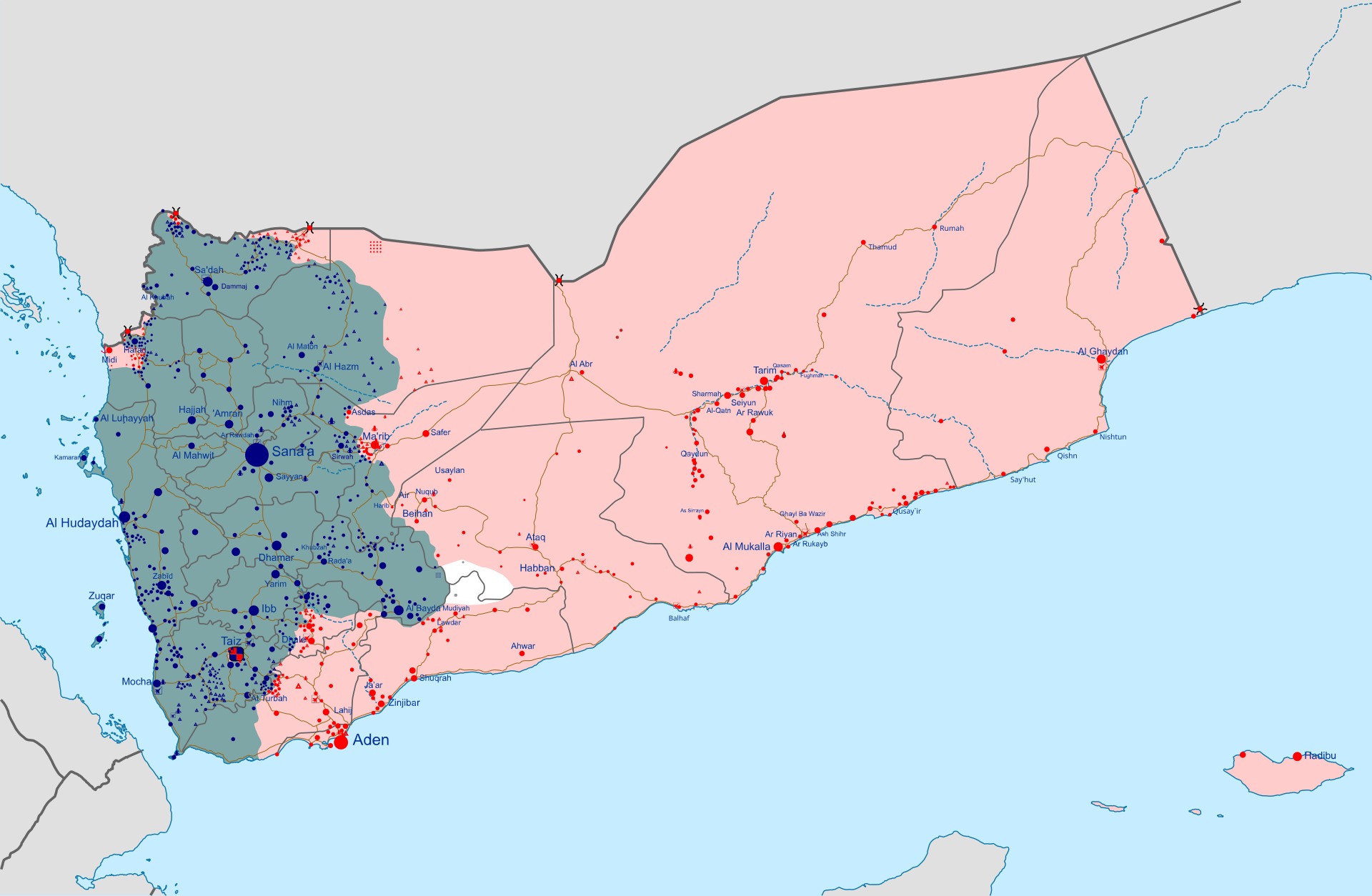
Stockholm Agreement Protections Have Lapsed
For most of the past seven years, Hodeidah had a form of international protection that no longer exists. The UN-brokered Stockholm Agreement of December 2018 gave the city and its ports special status, and the Security Council created the UN Mission to support the Hudaydah Agreement, known as UNMHA, under resolution 2452 in January 2019, according to the mission.
That mission no longer exists. UNMHA’s mandate concluded on March 31, 2026, after a final two-month extension under Security Council resolution 2813, and its remaining work passed to the Office of the UN Special Envoy for Yemen, the mission says. When the coalition’s jets reached Hodeidah this week, there was no UN monitoring presence left in the city to record what they hit.
The humanitarian arithmetic has not changed with the mandate’s end. The same port remains a declared military target, and the warring parties dispute both whether it is still working and who is being killed around it.
The exchange has not paused since. Saudi forces have intercepted a Houthi missile near Mecca, HOS reported on November 22, even though Saree’s airspace warning two days earlier exempted the skies over Mecca and Medina, and the group’s port threats this week singled out Jeddah by name.
Frequently Asked Questions
Which other Yemeni ports sit near Hodeidah?
Hodeidah is one of three Houthi-held Red Sea ports covered by the 2018 Hudaydah Agreement, alongside Salif and Ras Issa, according to UN News. A letter from the UN Secretary-General in June 2025 reported Houthi restrictions on UN patrols to all three ports. The Security Council resolution renewing the mission that July cited “challenges” that had directly impeded UNMHA’s capacity to deliver its mandate.
How badly was Hodeidah port damaged before this week?
A UN official said in 2025 that operations at the port had fallen to about a quarter of capacity after Israeli strikes, Arab News reported. Four of the port’s five tugboats, which are needed to escort large cargo ships into berth, had sunk, and the fifth was damaged, according to the same UN account. UN News later reported that strikes had left key port infrastructure partly inoperable.
How did the Security Council vote to end the UN Hodeidah mission?
Resolution 2813, adopted on January 27, 2026, passed with 13 votes in favour and none against, while China and Russia abstained, according to UNMHA. It called for an orderly drawdown and for planning to hand residual tasks to the Special Envoy’s office. The UK, which sponsored the text, said the mission had played a stabilising role.
When did the Saudi-led coalition first intervene in Yemen?
The coalition intervened in early 2015, after the Houthis forced the internationally recognised government out of Sanaa in 2014, AFP noted in its November 21 report. The war has killed hundreds of thousands of people and created one of the world’s worst humanitarian crises, according to AFP. The government now operates from Aden, its interim capital.
The House of Saud Daily Briefing
Saudi Arabia's news in 3 minutes, every morning. Free. See today's issue