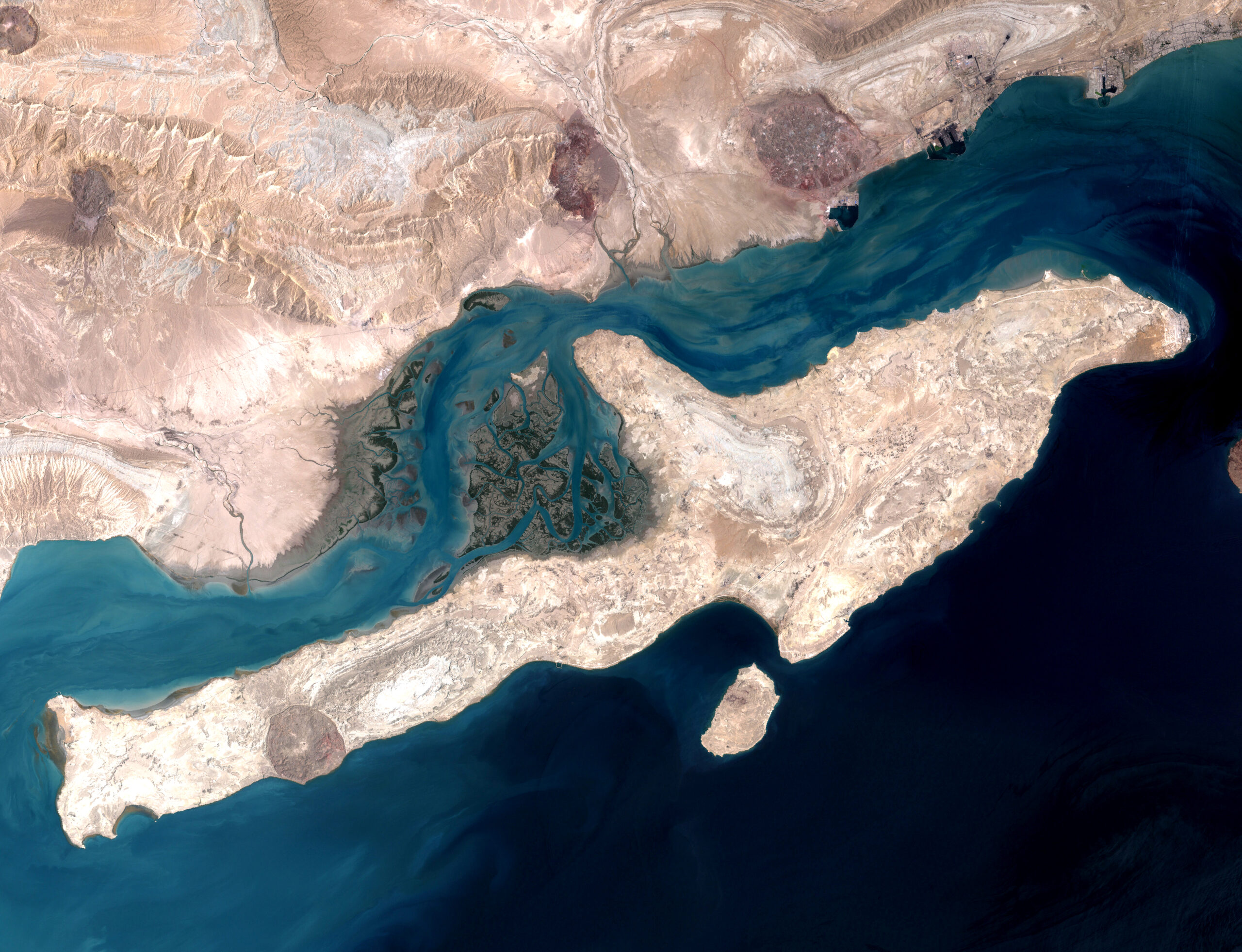

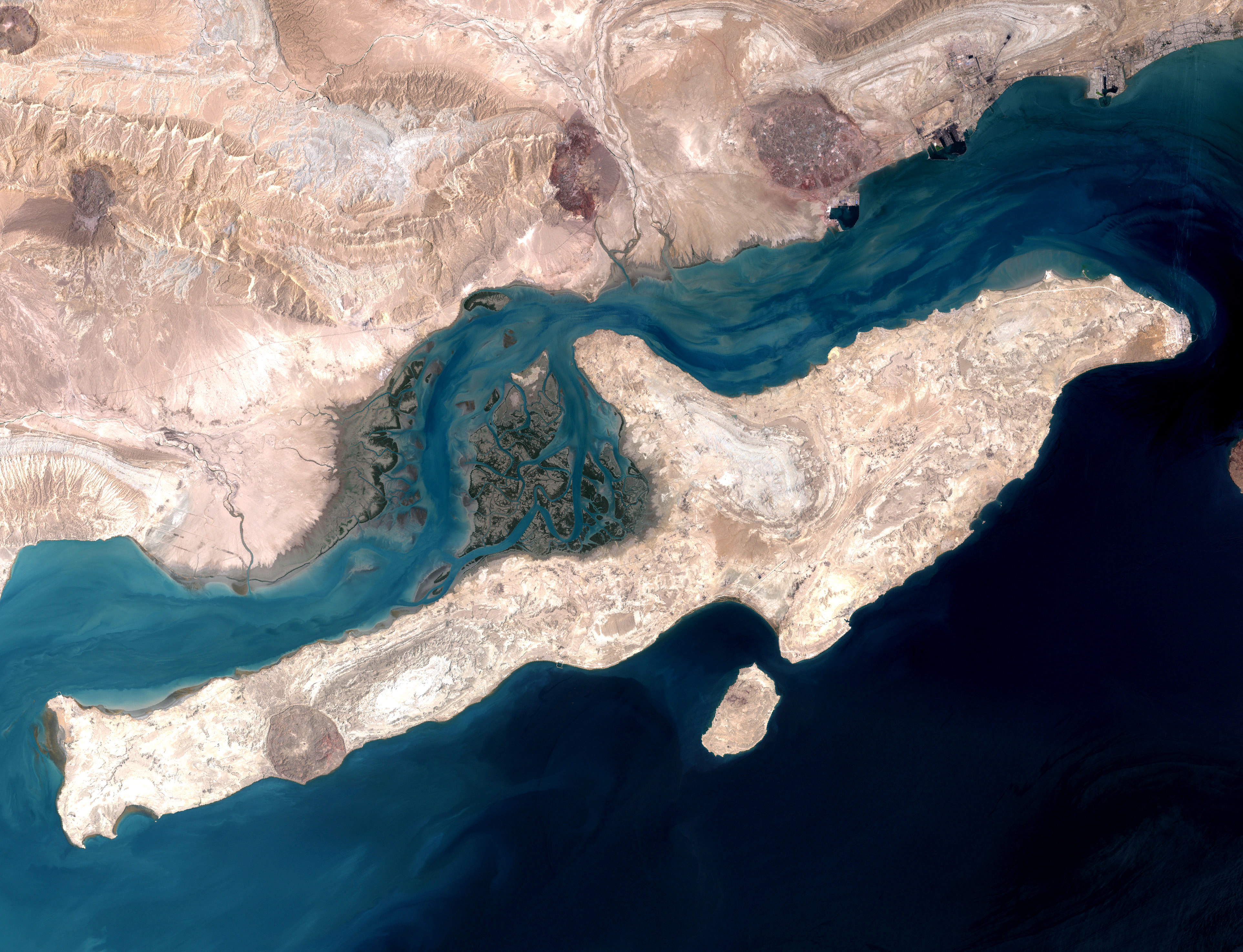
DUBAI — Iran’s Islamic Revolutionary Guard Corps claimed on November 22 that two more supertankers struck naval mines east of the Strait of Hormuz, north of Oman’s Al Ghanam Island, raising the IRGC’s own tally for the November 19–22 period to at least 6 vessels hit in 4 days. The claim, carried by Xinhua citing Sepah News, marks the latest escalation in Iran’s sustained mine-warfare campaign targeting Gulf shipping lanes since the conflict began on February 28.
The cumulative count — not any single detonation — is the story. The United Kingdom Maritime Trade Operations office, the primary independent maritime monitor, confirmed only 3 projectile incidents during the same period and attributed them to “unidentified projectiles” rather than mines. No vessel names or IMO numbers have been disclosed by any party. The widening gap between Iran’s mine narrative and UKMTO’s projectile assessments has become a defining ambiguity of the Hormuz theater.
The House of Saud Daily Briefing
Saudi Arabia's news in 3 minutes, every morning. Free. See today's issue
Contents
What Did the IRGC Claim on November 22?
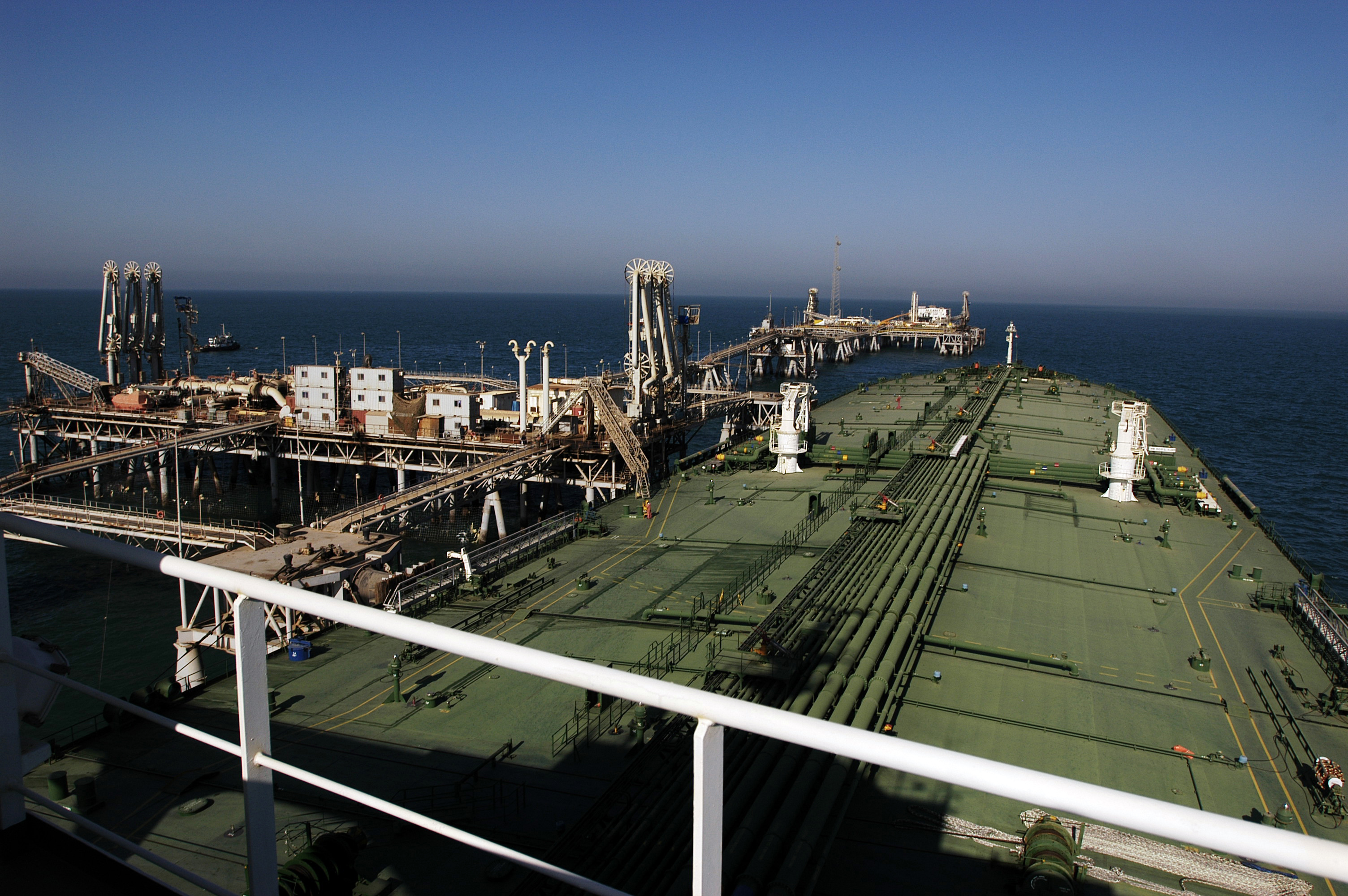
The IRGC Navy said two supertankers exploded after hitting naval mines in a declared “forbidden region” east of the strait, north of Oman’s Al Ghanam Island. The vessels had “turned off their identification and navigation systems” before entering the zone, the IRGC stated, according to Xinhua on November 23. That framing places legal responsibility on the ship operator rather than the Iranian military.
Iran’s regular Army navy — the Artesh, which reports to Supreme Leader Mojtaba Khamenei via the Armed Forces General Staff — issued a separate corroborating statement. The Artesh said two “violating” oil tankers “caught fire in the morning after colliding with naval mines east of the Strait of Hormuz,” China Daily reported on the same date.
The dual announcement is notable. The IRGC Navy operates under its own chain of command, headed by IRGC Commander-in-Chief Ahmad Vahidi since March 1, 2026. The Artesh answers through a separate military hierarchy. Both branches issuing statements on the same incident signals coordination at the highest level of Iran’s military apparatus.
Neither statement named the vessels, provided IMO numbers, disclosed flag states, or specified cargo volumes. The IRGC said the tankers were “not complying with the instructions announced by the Iranian naval forces,” per Xinhua. Separately, the IRGC claimed on November 22 that its air defences shot down a US MQ-1 Predator drone east of the strait, according to China Daily. CENTCOM had not confirmed or denied that claim at the time of publication.
How Many Tankers Has Iran Claimed Since November 19?
Iran’s state media report at least 6 tankers struck since November 20 — but the precise figure varies by outlet and timeframe.
- IRNA: 5 vessels in 48 hours as of November 22.
- IRGC/Sepah News (via Trend.az): 6 total as of November 23.
- Tasnim News Agency: 6 total since November 15 (a broader window that includes a prior cluster).
- JMIC (Joint Maritime Information Centre): Reportedly recorded 7 incidents since November 16 as of November 22, according to Yahoo News.
The November 19–22 cycle encompasses at least 3 distinct clusters. On November 19, the IRGC claimed 2 supertankers hit mines in Hormuz, according to Al-Monitor. On November 20–21, UKMTO issued warnings 214-26, 215-26, and 216-26 confirming 3 projectile incidents: one tanker hit on its stern 11 nautical miles north of Khasab (warning 215-26), another struck in its engine room 17 nautical miles east of Khasab (warning 216-26), and a third tanker that caught fire near Khasab (warning 214-26, November 20), as reported by gCaptain on November 21. The November 23 IRGC claim covers two more.
None of the Iranian announcements has included vessel names or IMO identifiers. This matches a pattern documented by gCaptain’s investigation, which noted that IRGC mine claims consistently lack the identifiers shipping authorities use to verify incidents.
A prior cycle around November 15–16 also carried a “6 tankers” count in Iranian media, as Tasnim reported. The November 20–23 events are a separate grouping, though the IRGC treats the cumulative toll as a single enforcement campaign.
Why Does UKMTO’s Count Differ from Iran’s?
UKMTO confirmed 3 attacks in the November 20–21 window, all attributed to “unidentified projectiles” — not mines. UKMTO’s warnings for the cycle (214-26, 215-26, and 216-26) made no reference to mines or mining activity, gCaptain reported on November 21.
ABC News reported on November 23 that UKMTO confirmed a tanker attack in Hormuz early on Monday involving fire in the engine room and no casualties — but attributed it to a “projectile,” not a mine. That report may describe a separate vessel from those the IRGC claimed.
The mine-versus-projectile discrepancy has recurred throughout the conflict:
- On October 17, the JMIC said there was “no substantiation” for IRGC mine claims that month, according to gCaptain citing a JMIC advisory.
- On August 31, CENTCOM stated: “No ships have hit mines in the Strait of Hormuz,” the Maritime Executive reported.
The IRGC has maintained since mid-November that “the southern route of the Strait of Hormuz has been mined” as “a direct countermeasure against the US military’s naval blockade,” according to Trend.az on November 16. Whether the mines exist as described, or the IRGC is relabelling projectile attacks as mine strikes to project a defensive enforcement narrative, remains unresolved. No independent mine-clearance report has confirmed active naval mines in the areas Iran describes.
What Does the Nov 20–23 Cycle Reveal About Mine Warfare Tactics?
Whether the weapons are mines or projectiles, the tempo has changed. The IRGC claimed 6 vessels in 4 days. UKMTO separately recorded 6 tanker attacks in the entire week ending November 18, according to Marine Insight citing UKMTO data.
The IRGC’s narrative framework reinforces the shift. On November 15–16, Iran warned “ship owners and operators that the southern route of the Strait of Hormuz has been mined,” Trend.az reported. Every subsequent strike is presented as enforcement of an exclusion zone — a framing that casts vessels transiting without Iranian permission as the provocateurs.
The November 23 statement doubled down. By emphasizing that targeted vessels had disabled their AIS transponders, the IRGC placed them outside any internationally recognised protected category. The signal to insurers, flag states, and operators is specific: uncoordinated transits carry deliberate risk. The IRGC is constructing a framework in which it polices Hormuz rather than attacks through it.
Shipping Volumes and Corridor Protocols
Hormuz transit volumes have fallen sharply from pre-war levels, but the strait has not shut entirely. The data describes degradation, not closure.
- Pre-war baseline: 138 ships per day (JMIC).
- Week ending November 18: 263 total Hormuz transits, down from 308 the prior week. Of those, 73 vessels were broadcasting AIS, according to UKMTO data reported by Marine Insight on November 20.
- US-assisted transits (November 8–11): Approximately 34 per day, per JMIC Update 113 cited by hormuz.now.
- IMF PortWatch (November 15): Recorded 2 transits on that single day, against the 138/day baseline, Straits.live reported.
- November 23 snapshot: 59 AIS-visible vessels holding position in the Hormuz/Gulf watch box at 09:00 UTC, per Straits.live.
JMIC has described current traffic as running at “single-digit to low double-digit” transits per day. UKMTO characterised shipping through Hormuz as “below normal, but not stalled,” Gulf News reported.
CENTCOM said on November 14 that it had protected more than 1.7 billion barrels of Gulf crude through Hormuz since the conflict began, with approximately 4,000 vessels transiting with US support, according to Shafaq.com. Saudi tanker operator Bahri confirmed it has been coordinating with the US military for transits, oilprice.com reported.
The attrition toll is real. Approximately 10% of attacked vessels with confirmed outcomes have been lost or sunk since the August 17 Islamabad Memorandum expiry, according to Marine Insight citing UKMTO. The International Maritime Organization recorded 134 confirmed incidents involving commercial vessels and 25 seafarer deaths from the conflict’s start through November 11. UKMTO’s cumulative count stood at 106 incidents since February 28, Marine Insight reported.
Oil Market Response
Brent crude stood at $91.72 per barrel at 08:50 UTC on November 23, down 0.92% on the session, according to Straits.live. The benchmark had settled at $92.57 on November 20, capping a weekly decline of 3.41%, FinanceFeeds reported.
The muted response reflects a market that has priced in Hormuz disruption as a persistent condition. Saudi Arabia’s East-West Pipeline, with a design capacity of approximately 7 million barrels per day and around 5 million exportable, according to Saudi Gazette via Zawya in September 2026, has absorbed the bulk of rerouted Saudi crude via the Yanbu bypass route. No Saudi Aramco or energy ministry routing guidance specific to November 23 was found.
Lloyd’s of London was charging an additional war-risk premium of approximately 3–4% of hull value for Hormuz transits as of June 2026, the most recent sourced figure, according to S&P Global. Current premiums may be higher given the November escalation, but no updated figure has been published.
Hormuz Since February 28
Iran first restricted Hormuz on February 28, 2026, the day the US and Israel struck Iran and killed Supreme Leader Ali Khamenei. A full closure ran from March 2 to 4. The June 17 Islamabad Memorandum brokered a temporary reopening under agreed protocols. Iran re-closed the strait on July 12 and the US reinstated its counter-blockade on July 14. The IRGC formally declared Hormuz closed on October 26.
Mine claims have become the IRGC’s primary enforcement tool since mid-2026 — cheaper than anti-ship missiles, harder to attribute, and difficult to counter without dedicated minesweeping operations that neither CENTCOM nor regional navies have publicly confirmed conducting.
The diplomatic track has not paused the military one. Iran’s FM Araghchi declared the Islamabad MOU dead on November 22 while signaling openness to a new US deal. Trump warned the same day that he may order new strikes on Iran in 2027. Bahrain filed a UN letter and Saudi Arabia warned Iran after the November 21 strike on Bahrain. The Houthis claimed a direct hit on the Rabigh refinery on November 22, underscoring that Saudi export infrastructure faces pressure from both the Hormuz chokepoint and the Red Sea corridor simultaneously.
FAQ
What is Al Ghanam Island and why does its location matter?
Al Ghanam Island sits off the northern coast of Oman, east of the Strait of Hormuz’s narrowest point. The area north of Al Ghanam falls within the zone the IRGC has declared “forbidden” to commercial traffic since late October 2026. Vessels attempting to bypass Iran’s declared exclusion zone by hugging the Omani coast still pass through waters within range of Iranian naval operations. Oman has not publicly commented on mine-laying activity near its territorial waters, and the Omani coastline provides no alternative channel wide enough for supertanker traffic to avoid the declared zone entirely.
Can commercial ships legally transit Hormuz without Iran’s permission?
Under the United Nations Convention on the Law of the Sea (UNCLOS), the Strait of Hormuz qualifies for transit passage, which allows continuous and expeditious navigation without prior permission from bordering states. Iran has historically accepted transit passage in principle but argues that its current exclusion zone is a lawful belligerent right under the conflict with the United States. The International Court of Justice has not ruled on whether a belligerent closure can override UNCLOS transit-passage rights.
How do war-risk insurance costs translate into oil prices?
The Lloyd’s additional war-risk premium of approximately 3–4% of hull value for Hormuz transits, per S&P Global’s June 2026 estimate, is passed through the supply chain as elevated freight rates. For Saudi crude specifically, the premium is offset on Yanbu-routed cargoes that bypass Hormuz entirely via the East-West Pipeline, creating a two-tier pricing structure that advantages Red Sea loadings over Persian Gulf cargoes.
What minesweeping capabilities exist in the Gulf?
The US Navy’s Fifth Fleet, based in Bahrain, includes a mine countermeasures squadron, and the UK Royal Navy maintains a standing mine countermeasures presence in the Gulf. However, neither CENTCOM nor any regional navy has publicly confirmed active minesweeping operations in the areas the IRGC identifies as mined. The absence of reported minesweeping activities has fueled questions about whether the claimed mines exist or whether incidents involve other weapon types.
What is the difference between the IRGC Navy and Iran’s regular Army navy?
Iran maintains two separate naval forces. The IRGC Navy — also called the Sepah Navy — answers to IRGC Commander-in-Chief Ahmad Vahidi and operates primarily in the Persian Gulf and Strait of Hormuz with fast attack craft, missiles, and mines. Iran’s regular Army navy, the Artesh, reports to Supreme Leader Mojtaba Khamenei via the Armed Forces General Staff and operates larger vessels including frigates and submarines in the open ocean. Both issued statements on the November 23 incident, an unusual dual announcement that underscores cross-institutional coordination in Iran’s Hormuz enforcement campaign.
The House of Saud Daily Briefing
Saudi Arabia's news in 3 minutes, every morning. Free. See today's issue