
WASHINGTON — The State Department on July 15 approved the sale of 20,000 APKWS-II laser-guided rocket kits to Saudi Arabia at an estimated cost of $1.96 billion — the largest single foreign military sale of the weapon in the system’s history — while four Saudi airports sat closed under Houthi missile threat and 43 American warplanes remained grounded at Prince Sultan Air Base under a Saudi sovereignty order that Washington has not reversed. Neither the Royal Saudi Air Force’s F-15SA fleet nor its Typhoon fleet has publicly completed the weapon system qualification required to fire a single APKWS round.
The notification arrived forty-eight hours after Houthi missiles struck Abha International Airport, and sixteen months after a predecessor sale of 2,000 kits whose delivery has never been publicly confirmed. The sale tells you what the Foreign Military Sales pipeline does well — process paperwork — and nothing about when Saudi Arabia will receive a guidance kit, whether its aircraft can use one, or how a counter-drone round addresses the ballistic missiles that are actually closing its airports.
Table of Contents
- What the $1.96 Billion Sale Contains
- Where Are the First 2,000 Rounds?
- Can Saudi Arabia’s Jets Actually Fire APKWS?
- The Emergency Lane Saudi Arabia Cannot Enter
- What Does the Shield Gap Mean for a Counter-Drone Weapon?
- Forty-Eight Hours After Abha
- The Grounded Fleet
- Who Benefits From a Sale That Won’t Arrive?
- Frequently Asked Questions
What the $1.96 Billion Sale Contains
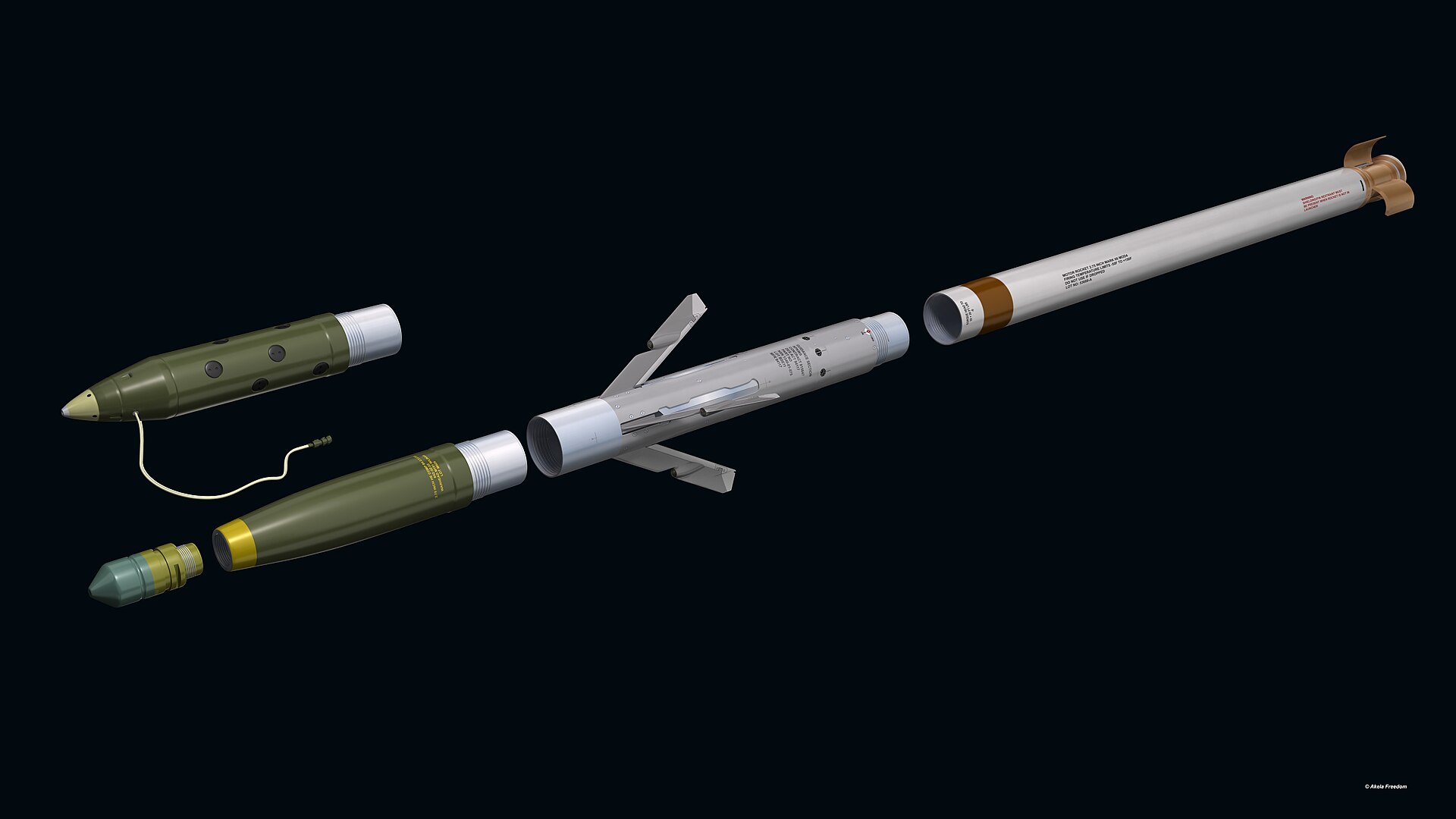
The Defense Security Cooperation Agency notification covers 10,000 APKWS-II air-to-air guidance sections and 10,000 air-to-ground guidance sections — a symmetrical split that reflects dual-use intent. The air-to-air variant, designated AGR-20F under the FALCO programme, exists to kill drones. The air-to-ground variant, AGR-20A, is a precision strike round for soft targets where a Paveway or JDAM would be grotesque overkill. The package also includes LAU-131/A seven-shot rocket pods, Mk-152 high-explosive warheads, Mk66 rocket motors, proximity fuzes, practice warheads, test support equipment, training, and spares.
The APKWS-II is not a missile but a guidance section — a collar of semi-active laser seeker hardware that slots into the mid-body of an unguided 70mm Hydra rocket and gives it the ability to steer toward a laser spot designated by a targeting pod or ground controller. BAE Systems of Nashua, New Hampshire, is the prime contractor. At US procurement cost, a single guidance section runs between $15,000 and $20,000 — roughly one-fiftieth the cost of an AIM-9X Sidewinder ($450,000) and one-hundredth of an AIM-120 AMRAAM ($1 million). At the stated FMS value of $1.96 billion for 20,000 units, the implied per-unit price rises to approximately $98,000, reflecting the standard FMS markup that bundles associated hardware, training, sustainment, and contractor margin into a single line.
The cost-exchange arithmetic is the one part of this sale that makes immediate operational sense. “It’s our primary weapon against a drone,” Air Force Lieutenant General Derek France, the commander of Air Forces Central, said in 2025. “We’ve had multiple shoot-downs with it.” The US Air Force did not arrive at that conclusion through doctrine — it arrived at it after watching $450,000 Sidewinders disappear into $5,000 Houthi drones over the Red Sea, and the interceptor economics running catastrophically in the wrong direction.
| Munition | Unit Cost (approx.) | Typical Target | Cost Ratio vs. Houthi Drone |
|---|---|---|---|
| APKWS-II (AGR-20F) | $15,000–$20,000 | Small UAS, slow-movers | 0.3:1 to 4:1 |
| AIM-9X Sidewinder | ~$450,000 | Fixed-wing, UAS | 9:1 to 90:1 |
| AIM-120 AMRAAM | ~$1,000,000 | Fixed-wing, cruise missiles | 20:1 to 200:1 |
| PAC-3 MSE | ~$5,500,000 | Ballistic/cruise missiles | 110:1 to 1,100:1 |
Where Are the First 2,000 Rounds?
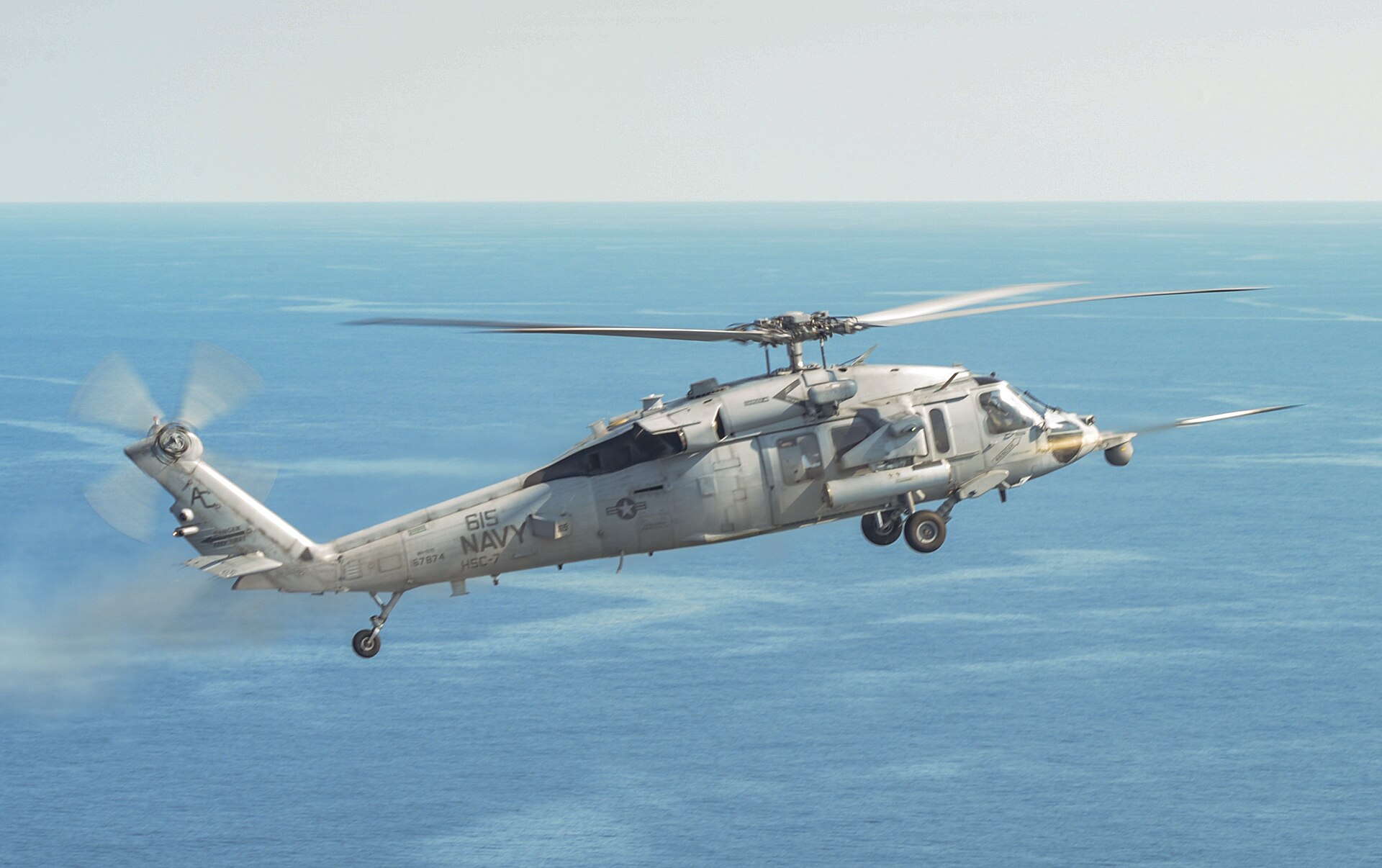
On March 20, 2025, the State Department approved the sale of 2,000 APKWS-II guidance kits to Saudi Arabia for $100 million — same contractor, same FMS track, same State Department boilerplate. That sale covered a different set of platforms entirely: Boeing AH-64 Apache attack helicopters and Lockheed Martin MH-60R Seahawk maritime helicopters, rotary-wing aircraft already in Saudi Army Aviation service with established APKWS clearances. Sixteen months later, no public confirmation exists that Saudi Arabia has received, integrated, or fired a single round from that tranche.
The Middle East briefing 3,000+ readers start their day with.
One email. Every weekday morning. Free.
The Congressional Research Service is explicit about why. “Partners often do not take delivery of the full package until years after the LOA [Letter of Offer and Acceptance] is finalized,” the CRS states in its standing brief on foreign military sales transfers. The Pentagon’s own institutional language is bleaker still, acknowledging in materials supporting the consolidation of its arms-transfer agencies that “on average the DoD takes almost 12 years to deliver the first version of a weapon system.” Munitions move faster than platforms — nobody expects APKWS kits to take twelve years — but they enter the same pipeline, the same contractor queue, and the same industrial base constraints that govern every other FMS case.
The jump from 2,000 units in March 2025 to 20,000 in July 2026 is a tenfold increase, and the shift from rotary-wing to fixed-wing platforms represents a fundamentally different integration challenge. Helicopter-launched APKWS clearances — the kind Saudi Arabia actually ordered sixteen months ago — cannot be transferred to fast jets without separate weapon system certification, separate pilot training, and separate targeting-pod software validation. The State Department’s assessment that Saudi Arabia “will have no difficulty absorbing this equipment” into its armed forces reads less like operational analysis and more like the kind of confidence that bureaucracies produce when they are not required to deliver the equipment themselves.
Can Saudi Arabia’s Jets Actually Fire APKWS?
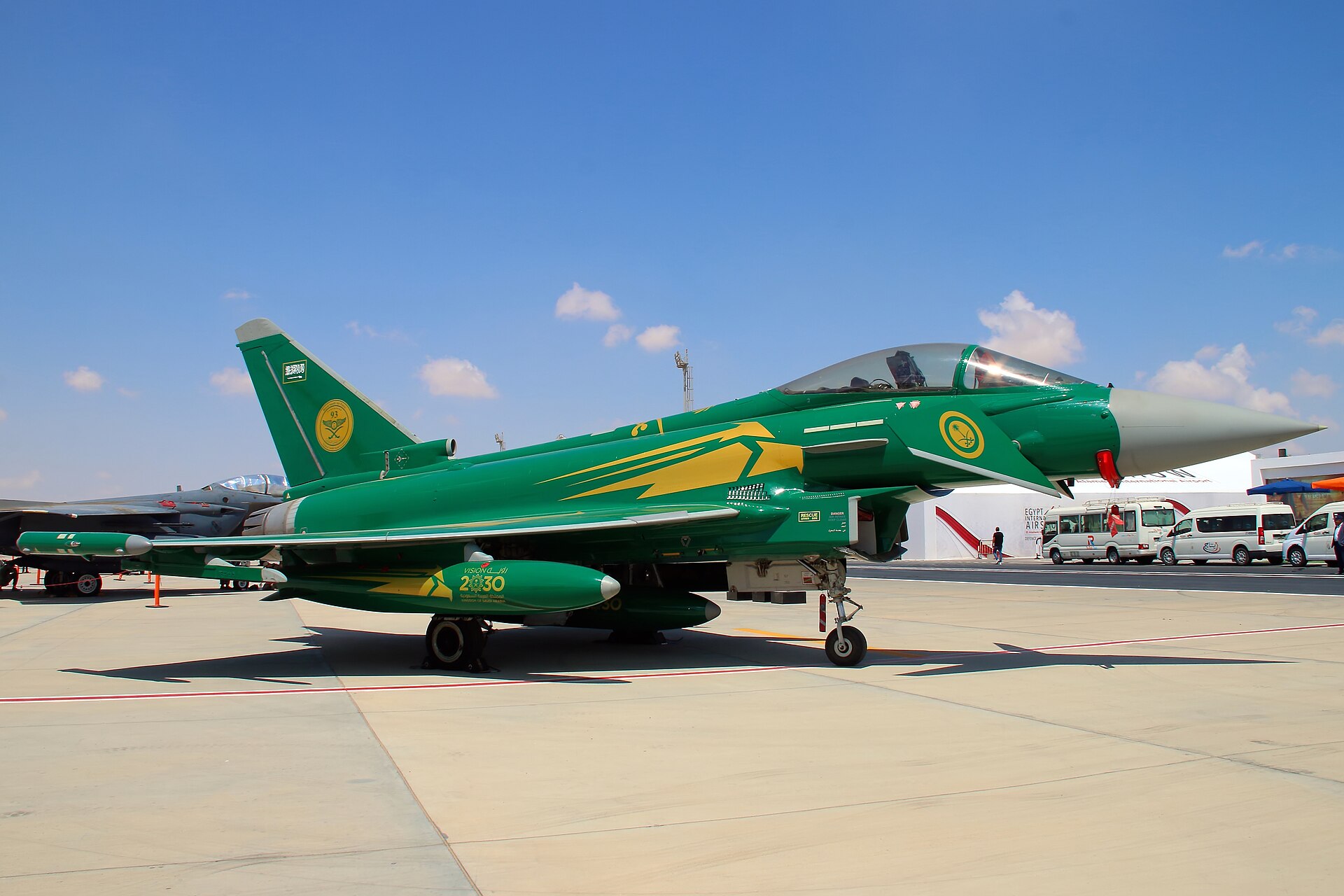
No. Neither the RSAF’s Typhoon fleet nor its F-15SA fleet has publicly completed the weapon system qualification required to fire APKWS-II. The RAF became the first Eurofighter operator to achieve that qualification in May 2026, after a three-month integration under wartime urgency. Saudi Arabia’s equivalent process has not visibly begun.
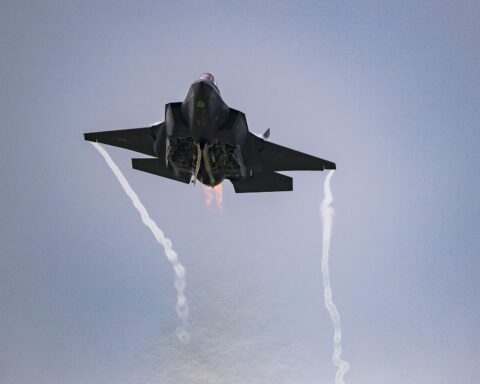
The DSCA notification does not name specific aircraft. The War Zone reported that the kits “will most likely be loaded onto the RSAF’s Eurofighter Typhoon and F-15SA fighter jets” — probable rather than confirmed, which is the first visible crack in the sale’s operational logic. Saudi Arabia operates 72 Typhoons (54 single-seat, 18 two-seat) delivered under the 2007 Project Salam contract, and 152 F-15SAs (84 newbuild plus 68 upgraded) from the $29.4 billion programme signed in December 2011. That is 224 fast jets that could in theory carry APKWS pods, and none that has publicly completed the weapon system qualification required to fire one.
The Typhoon only became APKWS-capable in any air force two months ago. RAF No. 9 Squadron, operating from Akrotiri in Cyprus, reached operational status with APKWS in May 2026 after a compressed integration that began with live-fire ground trials in March and air-to-air qualification by 41 Test and Evaluation Squadron in April — all dependent on software updates to the Rafael Litening 5 targeting pod. The entire programme, from first test shot to operational deployment, took roughly three months under wartime urgency, with BAE, QinetiQ, and the Ministry of Defence collaborating at a pace that peacetime procurement bureaucracies almost never sustain. BAE has said publicly that it is prepared to support other Eurofighter operators, Saudi Arabia included, “if they wish” to take the capability onto their fleets — language that delegates the timeline entirely to a customer whose integration work has not visibly begun.
The F-15SA pathway is more straightforward — the Hydra 70 family has a longer integration history with the F-15 platform, and US F-15Es have fired APKWS operationally — but the Saudi SA variant is a distinct airframe with its own weapon system software baseline, and no Saudi F-15SA APKWS qualification has been publicly announced. The War Zone’s assessment that the system is “nearly plug-and-play” on both platforms glosses over the distance between a compatible airframe and a combat-ready one: certification trials, weapons-release authority protocols, targeting pod software validation, and the pilot training hours that turn a cleared weapon into one that aircrew can employ under fire.
The Emergency Lane Saudi Arabia Cannot Enter
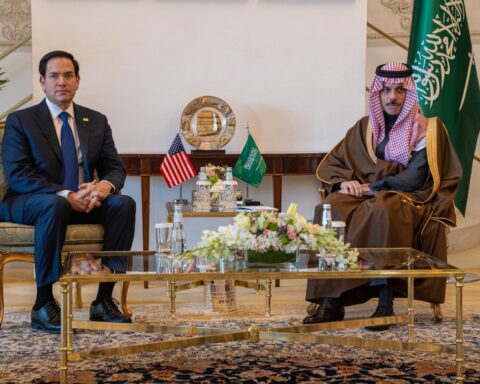
On May 5, 2026, Secretary of State Marco Rubio invoked emergency authority under Section 36(b) of the Arms Export Control Act to push $8.6 billion in arms sales through without the standard 30-day congressional review. Qatar received $4.01 billion in PAC-2 and PAC-3 interceptors and Kuwait received $2.5 billion in Integrated Battle Command Systems. Israel received $992.4 million, including 10,000 APKWS-II kits — the same weapon, in half the quantity of the Saudi request, delivered through the fast lane — while the UAE received 1,500 APKWS guidance sections for $147.6 million. Saudi Arabia’s name did not appear on any of the paperwork, for the second consecutive emergency authorisation since the Iran war began.
The exclusion is structural, not political, though the consequences are indistinguishable. Emergency FMS certification requires a baseline legal instrument — a Status of Forces Agreement, a Defence Cooperation Agreement, or an equivalent bilateral framework — that establishes the US military presence in the recipient country as a matter of law rather than political arrangement. Qatar hosts CENTCOM’s forward headquarters at Al Udeid under a 1992 Defence Cooperation Agreement with roughly 10,000 US personnel, Kuwait holds 13,500 troops across four land bases under a full 1992 SOFA, and Israel’s defence relationship is so deeply embedded in US law that emergency certification is effectively automatic.
Saudi Arabia has none of these instruments. The kingdom’s only governing framework for the American military presence is a 1977 USMTM memorandum of understanding, limited by its own terms to training advisory services and FMS administration — a document that predates the F-15SA, the Typhoon, the PAC-3, and the war the kingdom is fighting.
| Recipient | APKWS-II Quantity | Value | FMS Track | SOFA/DCA |
|---|---|---|---|---|
| Israel (May 2026) | 10,000 | $992.4M | Emergency waiver | Yes |
| UAE (May 2026) | 1,500 | $147.6M | Emergency waiver | Yes |
| Saudi Arabia (Jul 2026) | 20,000 | $1.96B | Standard 30-day | No |
| Saudi Arabia (Mar 2025) | 2,000 | $100M | Standard 30-day | No |
Israel’s 10,000 kits, approved under emergency waiver in May, are presumably in transit or delivered — processed on a timeline measured in weeks. Saudi Arabia’s 20,000, approved through standard notification in July, will enter a queue measured in years. The kits come from the same BAE production line. The difference is legal architecture, and legal architecture is not something a DSCA notification can fix.
What Does the Shield Gap Mean for a Counter-Drone Weapon?
The APKWS-II kills drones, but it does not intercept ballistic missiles, and the distinction matters because the weapons that closed four Saudi airports on July 13 were not drones — they were missiles. Saudi Arabia retains approximately 400 PAC-3 MSE interceptors from a pre-war inventory of roughly 2,800, an 86 percent depletion rate that has left the Kingdom’s ballistic missile defence operating on a margin that a single sustained salvo could erase. Lockheed Martin’s Camden, Arkansas facility — the only final-assembly line for PAC-3 MSE on the planet — produced approximately 620 rounds in 2025 for all global customers combined, and Saudi Arabia’s January 2026 FMS notification for 730 rounds exceeds one full year of that output. No deliveries are expected before mid-2027.
Retired Kuwaiti Air Force Colonel Zafer Al Ajami told Breaking Defense that the APKWS kits “convert cheap, unguided rockets into precise, low-cost interceptors,” protecting “expensive Patriot missile stockpiles from being depleted by cheap drone swarms.” The framing assumes Patriot stockpiles exist to protect. At 400 rounds — with no resupply for at least twelve months and a production ramp to 2,000 rounds per year not expected before 2030 — Saudi Arabia’s do not. The shield that the APKWS sale was supposed to preserve has already been spent.
The logic of the combined procurement is sequential in theory: use cheap APKWS rounds against drones to conserve expensive PAC-3 interceptors for ballistic missiles. The reality is that Saudi Arabia has neither the APKWS rounds (not delivered, aircraft not qualified) nor the PAC-3 rounds (depleted, no resupply before mid-2027). Iran’s systematic destruction of regional air defence infrastructure — including a Patriot battery and AN/FPS-117 radar destroyed at Kuwait’s Ali Al-Salem and Ahmad Al-Jaber air bases around July 13 — is removing early-warning nodes from Saudi Arabia’s own defensive perimeter faster than any procurement pipeline can replace them.
Iran’s decision to spare PSAB across ten Nasr-2 waves — while striking every other US installation in the Gulf — is examined in Ten Waves In, Prince Sultan Air Base Remains Unstruck.
Forty-Eight Hours After Abha
On July 13, Saudi-aligned Yemeni government forces cratered the runway at Sanaa International Airport to prevent an Iranian aircraft from landing — an aircraft carrying Houthi delegates returning from Ayatollah Khamenei’s funeral in Tehran. Houthi military spokesman Yahya Saree called the strike “blatant aggression” and said it had “ended a period of de-escalation.” Within hours, missiles and drones were inbound to Abha International Airport in southern Saudi Arabia — the first direct attack on Saudi civilian aviation infrastructure since the 2022 truce froze the Yemen front. At least ten departures were cancelled, and Saree warned all commercial airlines to take Saudi airspace warnings “seriously until the blockade on Sanaa International Airport is lifted.”
Two days later, the State Department published the APKWS notification. The juxtaposition is not causal — DSCA notifications move through bureaucratic channels on weeks-to-months timelines, and the July 15 publication date reflects a review process that began long before anyone struck Abha — but the timing captures the structural gap between what the FMS pipeline produces and what the theatre demands. The sale offers a counter-drone weapon for a conflict whose escalation has already moved past drones to ballistic missiles targeting civilian airports and Iranian instructions to the Houthis to prepare for Bab al-Mandeb closure. The air-defence architecture underneath is so depleted that the kingdom cannot protect its own commercial aviation without interceptors it does not have and cannot receive for at least twelve months.
The State Department’s notification language describes the sale as intended to “augment Saudi Arabia’s operational aircraft and enhance its air-to-air, and air-to-ground self-defense capability” — language that addresses neither the SOFA absence that locked Saudi Arabia out of the emergency arms channel that Israel and the UAE used in May, nor the platform qualification gap that means the kits cannot be loaded even if they arrive.
Partners often do not take delivery of the full package until years after the LOA is finalized.
Congressional Research Service, Transfer of Defense Articles: Foreign Military Sales
The Grounded Fleet
The State Department characterises Saudi Arabia as a “Major non-NATO Ally” and frames the APKWS sale as improving “interoperability with U.S. forces.” Both phrases use the present tense, as though the partnership operates on the same terms it did before Riyadh grounded 43 US warplanes at Prince Sultan Air Base in May.
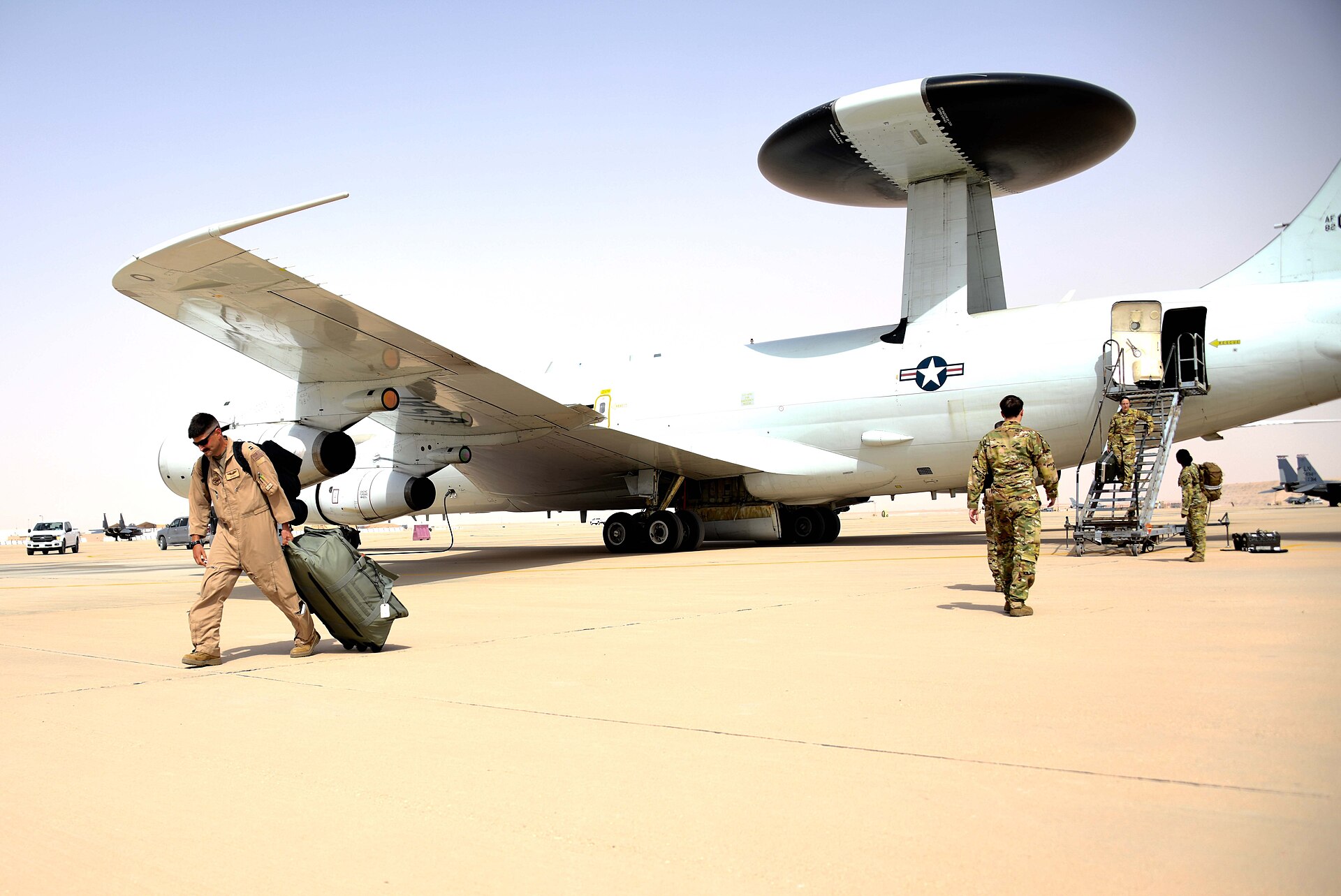
Operation Project Freedom, announced by Donald Trump on Truth Social on May 3 without consulting Gulf partners, was a US naval escort mission for commercial shipping through the Strait of Hormuz. Saudi Arabia’s response was to shut down every American military operation at the largest US air installation in the Gulf: all aircraft grounded, 2.15 million square kilometres of Saudi airspace closed to US military flights, all operating authority from the base suspended. The grounded fleet included KC-135 Stratotankers — the aerial refuelling backbone for US strike operations over the Gulf — and E-3G AWACS surveillance aircraft providing the radar coverage that allowed Hormuz patrols to function. Two phone calls from Trump to MBS were required to restore access on May 7, and the terms of the second call remain undisclosed eleven weeks later. Washington subsequently began weighing a punitive drawdown — withdrawal of the maintenance contractors, Link-16 datalink support, and PAC-3 sustainment personnel that Saudi Arabia cannot replace domestically.
The APKWS notification moved through the Bureau of Political-Military Affairs as though none of this had happened, because the FMS pipeline is not designed to register what happens. The open FMS case pipeline stood at $934 billion across 16,098 active cases in fiscal year 2025, serving 183 countries — a bureaucratic apparatus whose internal momentum is governed by industrial commitments, production schedules, and pre-negotiated relationships, not by whether the buyer and seller are functionally allied at the moment of signature. The pipeline runs. It does not ask questions.
The pattern has been consistent across four administrations. The Obama administration authorised $117 billion in Saudi arms deals over eight years, pausing precision-guided munitions only briefly in January 2017 on human-rights grounds after a strike on a funeral hall in Sanaa killed more than 140 people. The Trump administration restored all munitions sales within months. The Biden administration paused offensive arms transfers in February 2021, citing Yemen civilian casualties, then selectively resumed sales of air-to-air missiles, guided bombs, and maintenance contracts over the following two years as the political cost of the pause exceeded the political cost of the sales. Each administration applied its own moral arithmetic to the same pipeline, and the pipeline absorbed each perturbation and continued processing — producing, in July 2026, a $1.96 billion APKWS notification at a moment when the American aircraft that would demonstrate the “interoperability” the State Department cites are sitting on a tarmac they are not allowed to leave.
Who Benefits From a Sale That Won’t Arrive?
BAE Systems benefits immediately. The $1.96 billion notification, even before a Letter of Offer and Acceptance is signed, signals a production commitment that supports BAE’s Nashua facility through the Lot 13-17 contract window that stretches to December 2031. The company delivered its 100,000th APKWS unit in February 2026, and the Saudi order — if finalised — would represent a single-customer allocation larger than the entire March 2025 predecessor sale by a factor of ten. The umbrella contract covers up to 55,000 kits across those five lots, and Saudi Arabia’s 20,000-unit request represents 36 percent of the total allocation, behind the Pentagon’s own FY2026 order of approximately 11,000 kits and behind the emergency allocations to Israel and the UAE that shipped in May.
The State Department benefits procedurally — the notification demonstrates continuity in the bilateral relationship at a moment when every other metric of that relationship is deteriorating. Congress benefits from the 30-day review window, which gives members the appearance of oversight over a sale whose delivery timeline will extend well beyond any individual congressional term. Saudi Arabia gets a queue number and a dollar figure it can point to as evidence of a partnership whose operational architecture has already collapsed — a partnership in which the arms sales continue, the emergency channels remain closed, the interceptors remain undelivered, and the war remains unaddressed.
Iran’s state media framed the combined Saudi-Kuwait package accordingly. PressTV headlined the approvals as “US approves $2.5bn in new arms packages for Saudi Arabia, Kuwait amid aggression against Iran,” characterising them as “reinforcing Washington’s expanding military footprint in the Persian Gulf under the guise of strengthening regional security.” The framing is adversarial and maximally loaded, but it lands in a region where the gap between American arms-sale rhetoric and American operational commitment is visible to every government watching — and where Kuwait, which received its $484 million C-17 sustainment package on the same day, has a SOFA, received $2.5 billion in emergency arms in May, and operates within a legal framework that allows Washington to resupply it at the speed of war rather than the speed of paperwork.
The pilot at King Khalid Air Base in Khamis Mushait, 80 kilometres north of Abha, whose Typhoon has no APKWS integration and whose airfield sits within range of the same Houthi missiles that shut four airports to his south, is waiting for a $1.96 billion congressional notification to become a combat-ready round. The FMS pipeline offers no timeline for when that happens. The war does not wait for the pipeline.
Frequently Asked Questions
What is the difference between the APKWS air-to-air and air-to-ground variants?
The air-to-ground variant (AGR-20A) uses a standard semi-active laser seeker optimised for stationary or slow-moving surface targets and has been in production since 2012. The air-to-air variant (AGR-20F), designated FALCO (Forward-firing Anti-drone, Low-Cost Ordnance), required significant software modification to track fast-crossing aerial targets — particularly small UAS with low radar and infrared signatures — and only reached initial operational capability with US forces in 2024. The Saudi notification splits evenly between the two, but the operational integration challenge differs: AGR-20A engagement requires a ground-designator or targeting-pod laser hold on a fixed point, while AGR-20F requires the seeker to acquire and track a moving aerial target in flight, demanding targeting-pod software that can maintain lock through high-G manoeuvres and closure rates that surface engagements do not produce. Both variants depend on separately procured Mk66 rocket motors and Mk-152 warheads — three distinct supply chains that must converge before a single complete round is available.
Could Congress block the sale?
Congress has 30 days from the July 15 notification to pass a joint resolution of disapproval. In practice, Congress has never successfully blocked a major Saudi arms sale through this mechanism — the closest attempt came in 2019 when both chambers passed resolutions opposing precision-guided munition transfers over Yemen civilian-casualty concerns, but President Trump vetoed both resolutions and the sales proceeded. The APKWS-II’s defensive framing — counter-drone rather than offensive strike — makes it a harder target for congressional opposition than the Paveway and JDAM transfers that drew humanitarian scrutiny during the 2015-2022 Yemen air campaign. The 30-day window expires in mid-August 2026; no member of either chamber had publicly announced opposition as of July 16.
How does the Saudi order affect US military APKWS supply?
Defence analyst Trent Telenko has publicly argued that the Pentagon’s current annual order of approximately 11,000 kits is “a delusionally low production rate given the known Shahed/Geran OWA drone production rates in Iran, Russia and China,” contending that monthly output should match what the contract currently delivers annually. Saudi Arabia’s 20,000-unit order, placed on top of existing US military requirements and new Eurofighter-operator demand following the RAF’s combat deployment, competes with that constrained supply for priority allocation within the Lot 13-17 production schedule. Each FMS customer draws from the same BAE production capacity; a large sovereign order displaces domestic procurement unless production expands — an expansion that the Boeing seeker-component bottleneck makes structurally difficult before 2030.
What is the PGSA and why does it matter in this context?
The Persian Gulf Security Arrangement is an Iranian-imposed maritime toll structure for Strait of Hormuz transit, with $253 million in assessed fees outstanding against Gulf states and an accrual rate of $5.5 million per day from an August 18 activation deadline. The PGSA is relevant because it represents a parallel coercion track operating simultaneously with the military escalation that justifies the APKWS sale: Saudi Arabia faces missile attacks on its airports, depletion of its air defences, exclusion from emergency arms channels, and a financial deadline imposed by the country whose proxies are firing the missiles. The August 18 deadline falls within the 30-day congressional review window for the APKWS notification, meaning the PGSA financial trigger will activate before Congress has finished deciding whether to allow the sale — a collision of timelines that captures the mismatch between the FMS pipeline’s institutional tempo and the speed at which the Gulf crisis is moving.