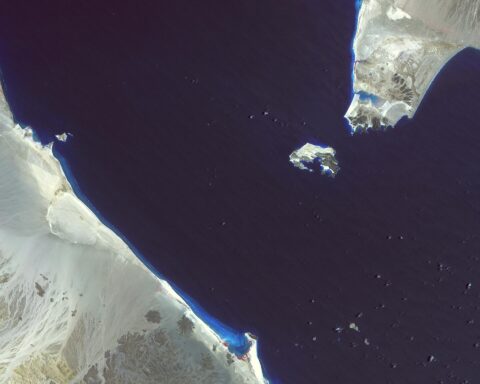
RIYADH — Iran has asked the Houthi movement to stand ready to close the Bab al-Mandeb strait if the United States strikes Iranian power infrastructure, according to three sources — two senior Iranian and one regional — who spoke to Reuters on Wednesday.
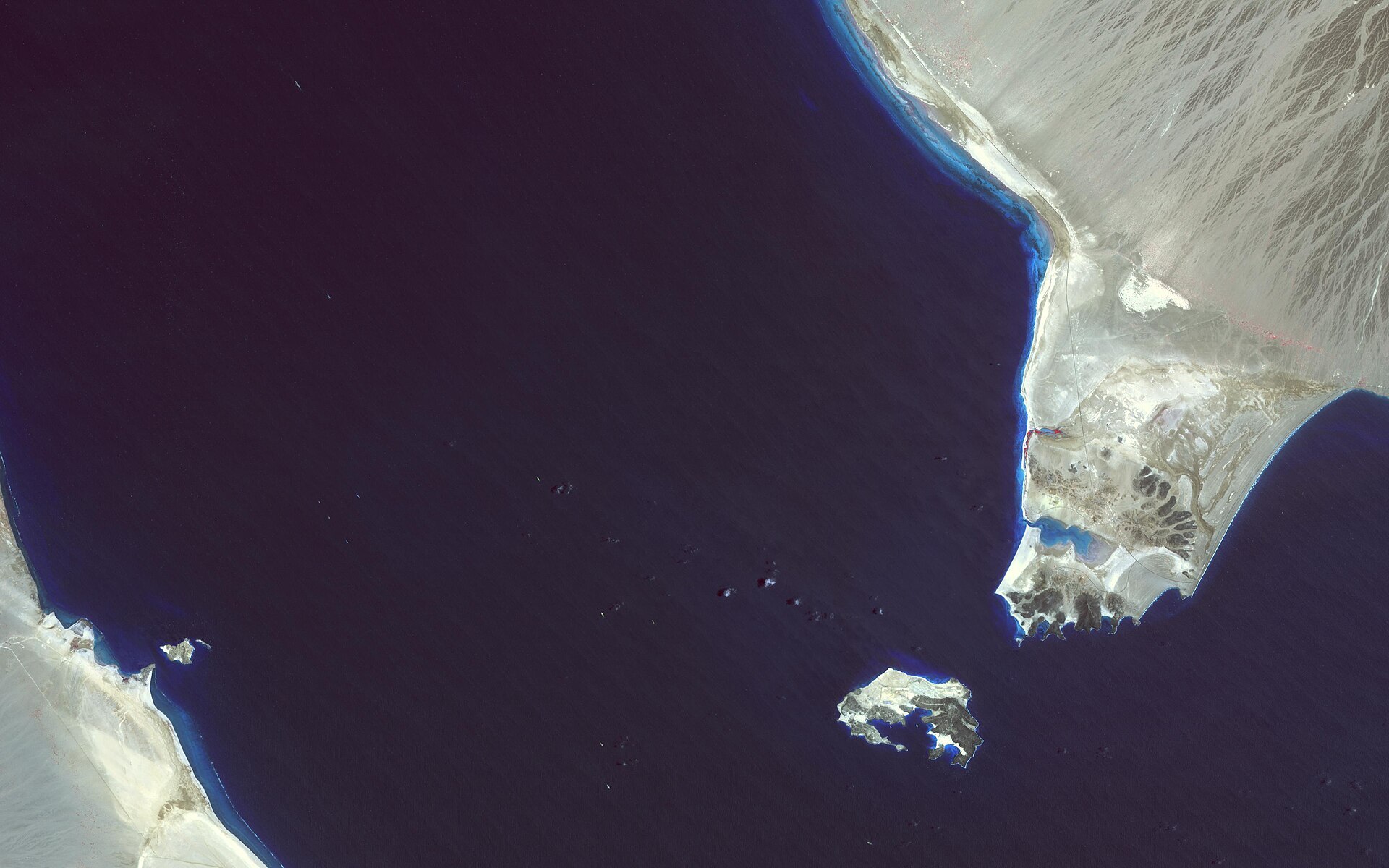
The conditional order, discussed within Iran’s leadership before being conveyed to Yemen, would shut the second of two chokepoints through which Saudi Arabia exports crude oil. The first, the Strait of Hormuz, has been effectively closed since late February. Saudi Arabia’s only bypass — the East-West Pipeline to Yanbu on the Red Sea — routes an estimated 70 to 75 percent of its loadings directly through the Bab al-Mandeb.
Table of Contents
What Did Iran Ask the Houthis to Do?
Reuters reported on July 16 that Iran had conveyed a conditional instruction to the Houthi movement: prepare to block the Bab al-Mandeb strait if the United States strikes Iranian power plants and bridges. The sources did not specify whether the communication was written or verbal, but confirmed it had been discussed at the leadership level within the Islamic Republic before reaching Yemen.
A source close to the Houthis told Reuters the group had “completed preparations” to attack shipping by deploying missiles and drones in Yemen’s highlands overlooking Hodeidah and the Gulf of Aden and was “awaiting the order.”
The conditional trigger is specific. President Trump told Fox News on July 15 that “next week comes the power plants” and that the United States would “knock out all their power plants, knock out all their bridges unless they get to the table and negotiate.” Iran’s Foreign Minister Ali Baghaei responded the same day: “No plans for negotiations.”
A separate Houthi official told Middle East Eye that the Bab al-Mandeb was a card Yemen had the “luxury of utilising” against nations “actively transgressing” against it.
The Middle East briefing 3,000+ readers start their day with.
One email. Every weekday morning. Free.
IRGC Command Authority in Yemen
The Reuters report contained a detail that distinguishes this from prior Houthi threats: IRGC representatives already stationed in Yemen will control the decision on when to execute the closure. Command authority does not rest with the Houthis themselves.
This transfers the Bab al-Mandeb from a Yemeni military asset to an Iranian-controlled chokepoint — the same command structure that governs the Hormuz closure. The IRGC’s public communiqué via IRNA, stating that the region’s energy exports would be “either for everyone or for no one,” applies the same doctrine to both straits.
“The Bab al-Mandeb card is a strategic asset that Yemen has the luxury of utilising. We will use this card against nations that are actively transgressing on us.”
— Unnamed Houthi official, Middle East Eye, July 16, 2026
The Washington Institute has documented the IRGC’s presence in Yemen as including missile and drone trainers, operators, and tactical intelligence personnel. The Houthi arsenal by 2026 includes the Qudus-1 cruise missile, Tankil anti-ship ballistic missile, Shahed-136 and Samad-3 drone series with ranges exceeding 2,000 kilometers, and unmanned underwater vehicles.
The operational capability is not theoretical. The Houthis sank the MV Eternity C between July 7 and 9, killing four crew members and taking eleven hostage. The MV Magic Seas was sunk on July 6. MARAD Advisory 2026-006 remains in effect, formally warning commercial vessels against transiting the Red Sea, Bab al-Mandeb, Gulf of Aden, and Arabian Sea.
The Export Arithmetic
Saudi Arabia’s Hormuz bypass — the East-West Pipeline, known as the Petroline — reached its hard capacity ceiling of 7.0 million barrels per day in March 2026 when NGL pipelines were converted to carry crude, according to Bloomberg. No further expansion is physically possible.
Yanbu port loadings were running at approximately 4.0 to 4.3 million barrels per day as of mid-July. An estimated 70 to 75 percent of those exports transit Bab al-Mandeb on routes to Asia and Europe, according to the Observer Research Foundation.
| Metric | Value | Source |
|---|---|---|
| East-West Pipeline capacity | 7.0 Mbpd (hard ceiling) | Bloomberg, March 2026 |
| Yanbu loadings (mid-July) | ~4.0–4.3 Mbpd | Industry estimates |
| Yanbu exports via Bab al-Mandeb | 70–75% | ORF Middle East |
| Brent crude (July 16) | $84.63/bbl | Trading Economics |
| Dual-closure price projection | $150–$200/bbl | discoveryalert.com.au |
| Global trade at risk (dual closure) | ~$10 billion/day | ORF Middle East |
| Cape of Good Hope reroute cost | $1.2–$1.8M per vessel | Middle East Insider |
| War-risk premium increase | >1,000% | Middle East Insider |
The arithmetic is direct. If Hormuz remains closed and Bab al-Mandeb is blocked simultaneously, Saudi Arabia retains only the fraction of Yanbu exports bound for Mediterranean destinations via the Suez Canal — roughly 25 to 30 percent of current Yanbu throughput. The SUMED pipeline offers a partial Mediterranean outlet but cannot absorb Asia-bound volumes. Asia is Saudi Arabia’s largest crude market.
Alternative routing via the Cape of Good Hope adds 10 to 14 days and $1.2 to $1.8 million in additional fuel costs per vessel per round trip. War-risk insurance premiums have risen more than 1,000 percent since the conflict began.
Can Saudi Arabia Route Around Both Straits?
No. The kingdom has no third bypass route.
The East-West Pipeline was the contingency for Hormuz. There is no contingency for the contingency. Every barrel of Saudi crude bound for Asia must pass through one of the two straits Iran now threatens to control. The Petroline moves crude from Abqaiq to Yanbu. Yanbu loads tankers. Those tankers sail south through the Bab al-Mandeb.
The SUMED pipeline from Ain Sukhna to Sidi Kerir can move approximately 2.5 million barrels per day of Egyptian and transit crude to Mediterranean ports, according to the U.S. Energy Information Administration, but its capacity is already substantially committed and its terminus serves European, not Asian, buyers.
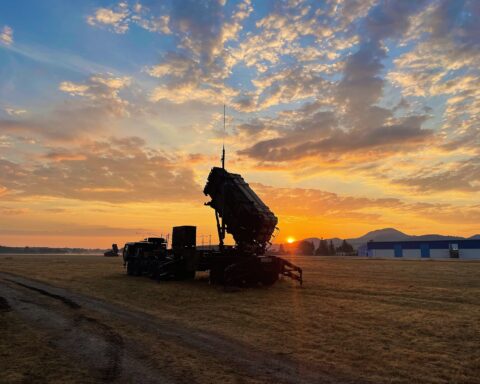
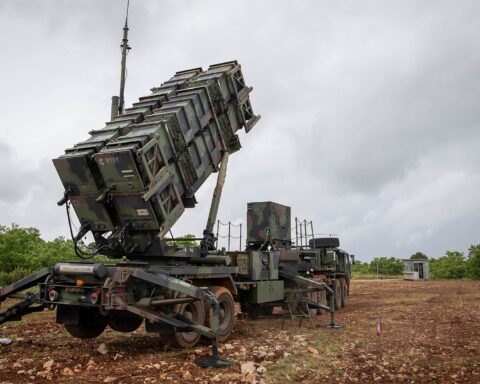
Saudi PAC-3 interceptor stocks stand at approximately 400 of an original 2,800 — 86 percent depleted — with no resupply expected before mid-2027, according to DSCA filings. Camden, Arkansas, the sole manufacturing facility, produces approximately 620 rounds per year. The kingdom’s air defense can no longer guarantee protection of its own export infrastructure, let alone project force over the Bab al-Mandeb approaches.
The Dual-Trigger Architecture
The Reuters report describes a single trigger: US strikes on Iranian power infrastructure. But a second, parallel trigger may already be active.
Houthi spokesperson Yahya Saree declared on July 14 that Saudi Arabia’s strike on Sanaa airport had ended the “de-escalation phase” and that “this aggression will not go unanswered or unpunished.” The Houthis’ own framing links Bab al-Mandeb action to Saudi bombing — independent of any Iranian instruction.
On July 16, the Giants Brigades intercepted a boat in the Bab al-Mandeb strait carrying weapons-manufacturing components destined for Houthi forces, according to The National. The intercept suggests active resupply for operations already in preparation.
Two separate activation conditions now sit on the same capability: Tehran’s trigger — a US decision to strike power infrastructure — and the Houthis’ self-declared trigger — continued Saudi airstrikes on Yemeni targets. Saudi Arabia struck the airport it had agreed to reopen on July 13, collapsing what remained of the ceasefire the same day six Houthi missiles forced four Saudi airports closed.
Saudi Arabia controls neither trigger. The kingdom has no seat at the US-Iran negotiating table — Iran’s foreign minister has said no negotiations are planned. It has no seat at the Houthi table. And it has no military means to force the Bab al-Mandeb open: the four-year pause in coalition airstrikes on Houthi targets, despite al-Maliki’s July 4 threat of “unprecedented force,” has produced zero operational follow-through.
“Next week comes the power plants. We’re going to knock out all their power plants. We’re going to knock out all their bridges unless they get to the table and negotiate.”
— President Donald Trump, Fox News, July 15, 2026
What Has Changed Since Hormuz Closed?
When Iran effectively closed the Strait of Hormuz in late February 2026, the Saudi response was to max out the East-West Pipeline. Bloomberg reported in late March that the kingdom had converted NGL pipelines to crude service to reach 7.0 million barrels per day — the physical maximum.
That conversion was treated as a solution. The Iran conditional order to the Houthis reveals it as a single corridor running directly into a second chokepoint controlled by the same adversary.
Iran’s state broadcaster PressTV published analysis on July 15 headlined “How Bab el-Mandeb closure could send oil to $200 and trigger a global economic shock,” framing closure as a legitimate retaliatory instrument. The IRGC’s “either for everyone or for no one” doctrine, carried by IRNA, establishes the public framework without explicitly confirming the Houthi order.
This is the first occasion on which both Hormuz and Bab al-Mandeb have been simultaneously threatened at an operational rather than rhetorical level, according to the Observer Research Foundation. The combined disruption would place an estimated 30 percent of global container shipping at risk. That threat moved from conditional to declared on July 20, when the Houthis formally announced a maritime blockade of Saudi Arabia, closing Bab al-Mandeb to Saudi shipping — activating the dual-chokepoint scenario this article described as imminent.
Background
Saudi Arabia has been excluded from all active negotiation tracks involving Iran. The kingdom has no representative at the US-Iran table and no channel to the Houthi leadership following the collapse of the ceasefire on July 13, when six Houthi missiles forced four Saudi airports closed and Saudi Arabia struck Sanaa airport the same day.
IRGC Operation Nasr-2 has completed six waves of strikes targeting US bases in Bahrain, Kuwait, Jordan, and Qatar. Prince Sultan Air Base — the primary US installation in Saudi Arabia — has not been struck but has been operationally degraded since May, when Saudi Arabia grounded 43 US warplanes for four days under Operation Project Freedom.
Frequently Asked Questions
Has Iran officially confirmed the order to the Houthis?
No. The Reuters report cites three anonymous sources — two senior Iranian and one regional. Iran has not publicly confirmed conveying the instruction. The IRGC’s “either for everyone or for no one” statement via IRNA establishes doctrinal alignment without operational confirmation. The Houthis have not publicly acknowledged receiving a specific order, though a source close to the group confirmed preparations are complete and forces are “awaiting the order.” The deniability is built into the structure: Iran can activate the blockade through IRGC personnel in Yemen without any public Iranian order ever needing to exist.
What would simultaneous closure do to oil prices?
Brent crude was $84.63 per barrel on July 16. Analysts modeling a simultaneous dual-chokepoint closure project prices in the $150 to $200 per barrel range. The scenario would remove the vast majority of Saudi Arabia’s export capacity from the market simultaneously, as the East-West Pipeline delivers crude to Yanbu, where 70 to 75 percent of loadings transit Bab al-Mandeb. Saudi Aramco’s fiscal breakeven requires approximately $86.60 per barrel according to IMF estimates, but at projected volumes the price per barrel becomes secondary to the inability to physically deliver crude to buyers.
Could the US Navy keep the Bab al-Mandeb open?
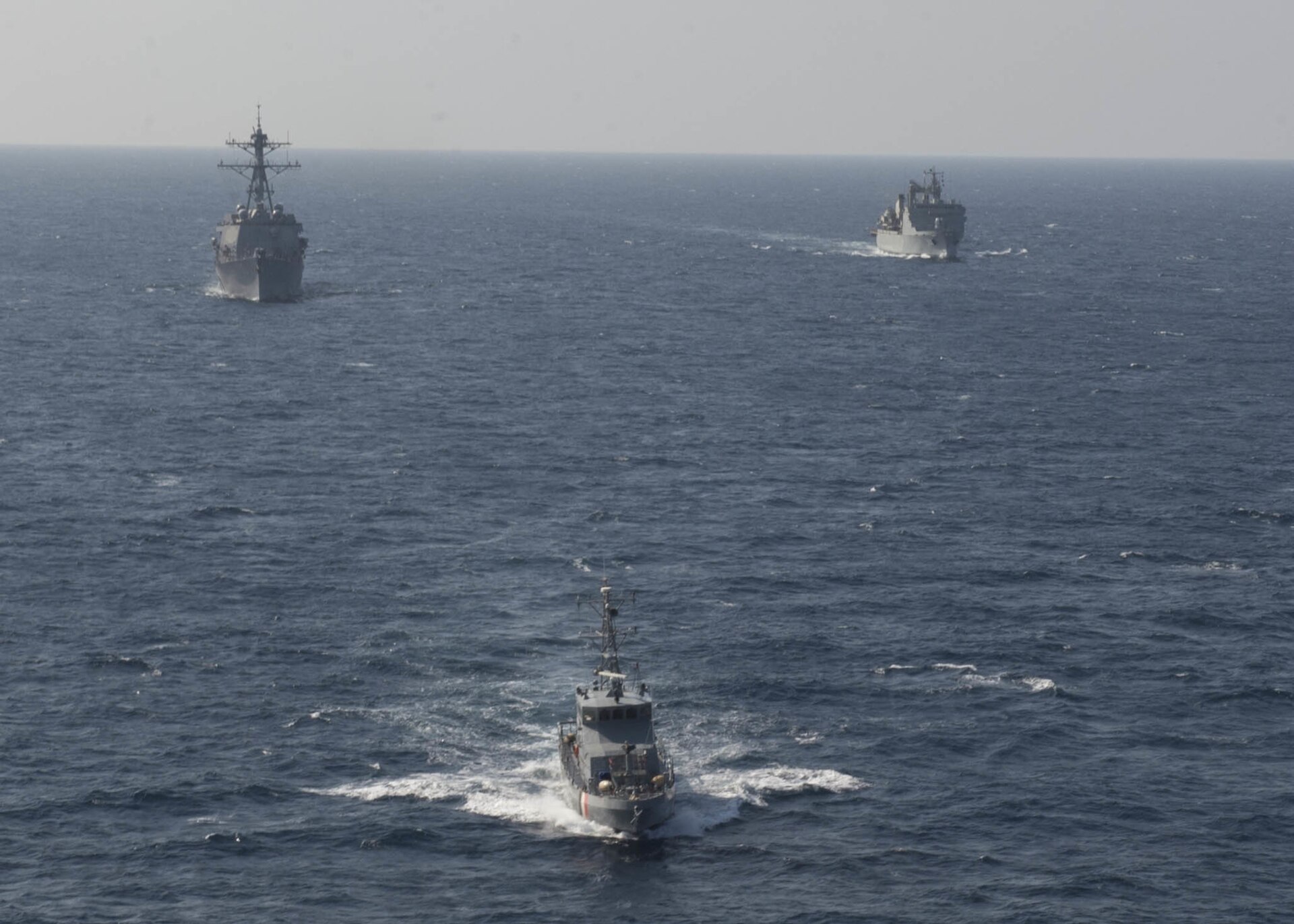
The US Fifth Fleet and Combined Maritime Forces operate in the region, and the Prosperity Guardian coalition was established to protect Red Sea shipping. However, the Houthi campaign against Red Sea shipping since 2023 has demonstrated that sustained anti-ship missile and drone operations from Yemen’s highlands are difficult to suppress without ground-force deployment or sustained air campaigns targeting launch infrastructure in Houthi-controlled territory. Neither operation has been authorized. MARAD Advisory 2026-006 — a US government advisory warning commercial vessels against transiting the area — remains in effect, an acknowledgment that military operations have not secured the strait for commercial traffic.
What is the Giants Brigades intercept?
On July 16, the Giants Brigades — a Yemeni ground force aligned with the Saudi-led coalition, operating under the National Resistance Forces in Shabwa and Marib governorates — intercepted a boat in the Bab al-Mandeb strait carrying weapons-manufacturing components destined for Houthi forces, according to The National. The intercept reveals more than its immediate context: the Giants Brigades are one of the few coalition-aligned forces with a ground presence near the strait’s Yemeni shoreline, yet their interdiction capacity is constrained to small-boat seizures. They have no capability to suppress missile or drone systems deployed in Yemen’s highlands overlooking the waterway — the launch infrastructure that any closure order would actually use.
Does Saudi Arabia have any diplomatic channel to prevent the closure?
Saudi Arabia is excluded from all current negotiation tracks involving Iran. Deputy Foreign Minister El-Khereiji delivered condolences to Iranian President Pezeshkian after the death of Supreme Leader Khamenei, but at a sub-FM rank that signaled limited engagement rather than a diplomatic opening. The kingdom has no representative at the US-Iran table — where the trigger condition will be decided — and no functional channel to the Houthis following the July 13 Sanaa airport strike. The only Saudi move that could affect the outcome would be persuading Washington not to strike Iranian power plants, which would require influence over a US decision-making process from which Riyadh has been absent.
Iran has already shown willingness to strike civilian infrastructure across the GCC: the IRGC’s Wave 15 strike on Kuwait’s Shuaiba desalination complex on July 17 — the first confirmed hit on civilian water production in the campaign — indicates that Iran’s escalation calculus now encompasses the infrastructure Gulf populations depend on for basic services, not only military and energy export facilities.