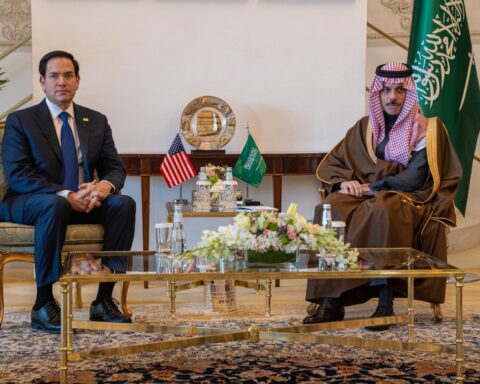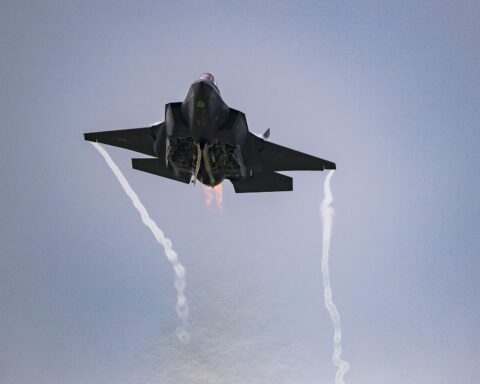

WASHINGTON — The State Department notified Congress on July 15, 2026, of a potential $1.96 billion sale of APKWS II precision-guided munitions to Saudi Arabia — 20,000 guidance sections, split evenly between air-to-ground and the FALCO air-to-air variant designed for counter-drone warfare. The package moves through the standard Foreign Military Sales channel. So did January’s $9 billion PAC-3 MSE notification and February’s $3 billion F-15SA sustainment deal. Combined, roughly $14 billion in conventional FMS has reached Riyadh’s desk in 2026.
During the same period, the White House authorised approximately $25.8 billion in emergency arms transfers to Qatar, the UAE, Kuwait, Jordan, and Israel. Saudi Arabia received none of it. In May, Washington withheld scheduled PAC-3 interceptor shipments as direct coercion during the Operation Project Freedom crisis — and Riyadh reversed within four days. The standard pipeline keeps flowing. The emergency channel remains shut. That distinction is the architecture of the current relationship.
Table of Contents
- What the $1.96 Billion APKWS Package Contains
- Why the FALCO Variant Changes the Counter-Drone Calculus
- The Two-Channel Architecture of US Arms Sales
- How PAC-3 Withholding Became a Coercion Instrument
- Who Got Emergency Access — and Who Did Not
- The Trump EO and the Industrial Logic Behind the Sale
- Does Riyadh Read the Pipeline as Reassurance or Restraint
- The Houthi Escalation and the Demand Signal
- FAQ
What the $1.96 Billion APKWS Package Contains
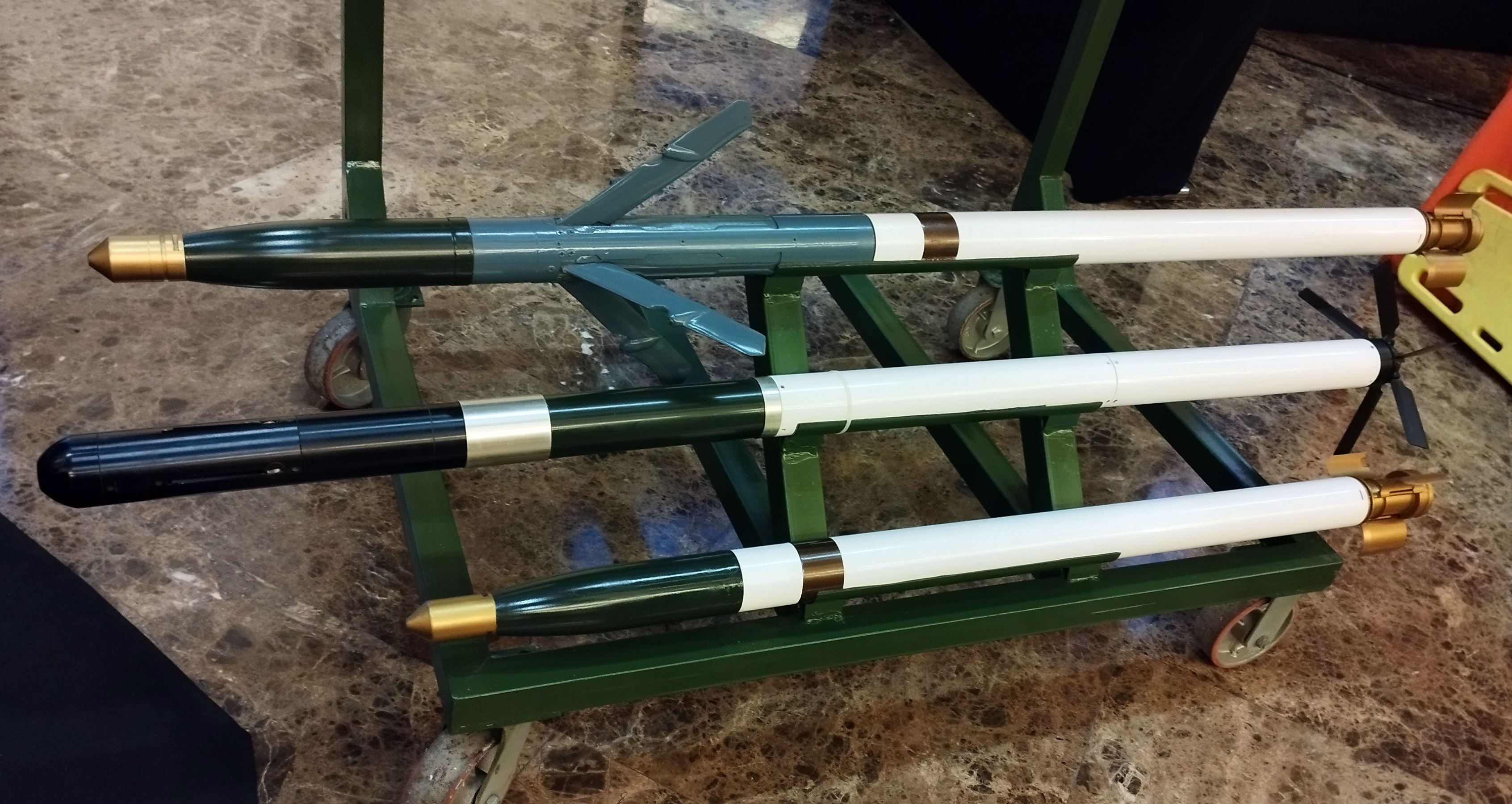
The Defense Security Cooperation Agency notification, dated July 15-16 2026, covers up to 10,000 AGR-20 APKWS II air-to-ground guidance sections and 10,000 AGR-20F FALCO air-to-air guidance sections, along with LAU-131/A launcher pods, Mk66 rocket motors, Mk-152 high-explosive warheads, proximity fuzes, spare parts, and training. The prime contractor is BAE Systems, based in Nashua, New Hampshire. The package does not include complete rockets — guidance kits only, designed to convert unguided 2.75-inch Hydra 70 rockets into laser-guided precision munitions.
This is Saudi Arabia’s third APKWS procurement, not its first. In 2019, a $10.7 million integration contract covered 23 AH-6SA light attack helicopters. In March 2025, the DSCA notified Congress of a $100 million sale covering 2,000 systems. The July 2026 package represents a tenfold scale-up in quantity and a twentyfold increase in dollar value. BAE Systems reached its 100,000th cumulative APKWS delivery in February 2026, according to The Defense Post. The Saudi order alone — 20,000 guidance sections — amounts to roughly one-fifth of the company’s entire historical production run.
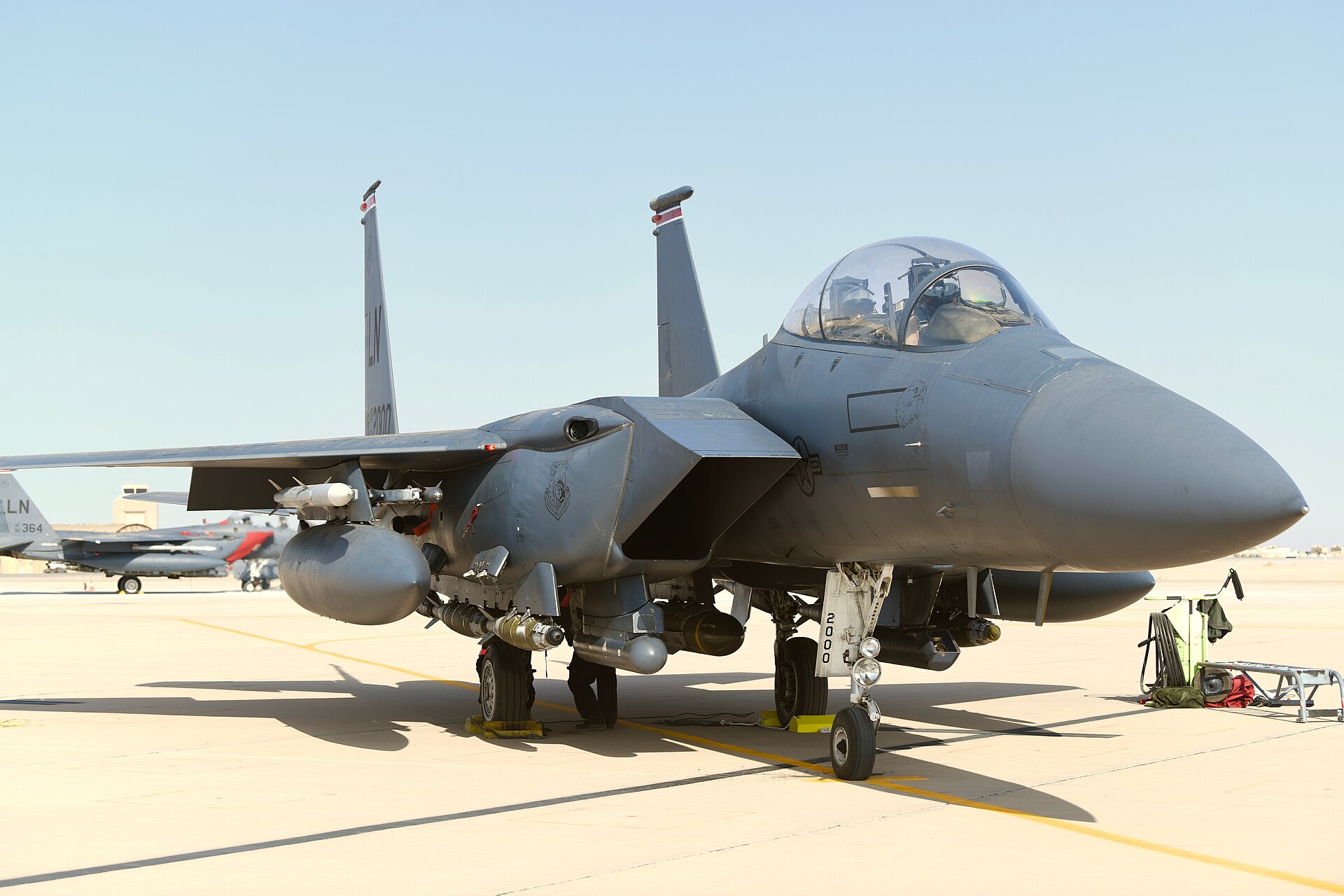
The platforms are Royal Saudi Air Force Eurofighter Typhoons and F-15SA Strike Eagles. The War Zone assessed that both fleets would carry APKWS, and the integration pathway for the Typhoon is already operational — No. 9 Squadron RAF confirmed Typhoon APKWS employment in the Middle East theatre as of May 2026, according to Air & Space Forces Magazine. The F-15SA, with its AESA radar and thirteen weapons stations, can carry APKWS on triple-rail launchers without displacing heavier ordnance.
Why the FALCO Variant Changes the Counter-Drone Calculus
The air-to-air half of the package — 10,000 FALCO guidance sections — addresses a specific vulnerability in Saudi air defences. The FALCO variant adds a proximity fuze to the standard APKWS guidance section, enabling engagement of small unmanned aerial systems from manned fighter aircraft. USAF Lt. Gen. Derek France described it as “our primary weapon against a drone,” adding: “We’ve had multiple shoot-downs with it,” according to Air & Space Forces Magazine.
The Middle East briefing 3,000+ readers start their day with.
One email. Every weekday morning. Free.
The economics are the analytical core. A single APKWS guidance section costs between $15,000 and $20,000. A complete round — guidance section, Mk66 motor, and warhead — runs approximately $24,900, according to The War Zone. An AIM-9X Sidewinder costs roughly $450,000. An AIM-120 AMRAAM exceeds $1 million. At current Houthi drone-launch rates, using AIM-9X against every incoming threat would exhaust a fighter squadron’s missile inventory within weeks and cost more per intercept than the drone being destroyed. APKWS reverses that ratio.
Between March 3 and April 7, 2026, Saudi defences intercepted 894 threats — 799 drones and 95 ballistic missiles, according to Saudi Ministry of Defence data. At $450,000 per AIM-9X engagement against the drone portion alone, that five-week period would have consumed $360 million in air-to-air missiles. The same engagements using APKWS would cost under $20 million. That cost asymmetry explains the tenfold scale-up from the March 2025 order and the urgency behind the July 2026 notification.
The DSCA’s statement on the earlier March 2025 sale noted that the APKWS would “improve the Kingdom of Saudi Arabia’s capability to meet current and future threats” while offering “the ability to precisely engage targets with much less risk of collateral damage than other guided missile systems.” The July 2026 sale uses identical language, adding that the deal “will support the foreign policy and national security objectives of the United States” and improve Saudi “interoperability with US and NATO forces,” according to The National.
The Two-Channel Architecture of US Arms Sales
The Foreign Military Sales system operates through two distinct channels with different timelines, different legal authorities, and different political signals. The standard DSCA channel — Letter of Request, months-to-years interagency review, State Department determination of eligibility, 30-day congressional notification, then Letter of Offer and Acceptance — is the route through which Saudi Arabia’s $14 billion in 2026 approvals has moved. The January PAC-3 notification, the February F-15 sustainment package, and the July APKWS sale all followed this path.
The emergency channel operates under Section 36(b) of the Arms Export Control Act, which permits the Secretary of State to waive the 30-day congressional notification period. In practice, this allows weapons to begin shipping within days rather than months. The White House used this authority repeatedly in 2026 — $17.2 billion in March for the UAE, Kuwait, and Jordan; $8.6 billion in May for Qatar ($5 billion in PAC-3 and APKWS), Kuwait ($2.5 billion), the UAE ($148 million in APKWS), and Israel ($992 million in APKWS), according to Al Jazeera and DSCA filings.
Saudi Arabia received zero dollars through the emergency channel. The standard pipeline continued uninterrupted. Both facts are true simultaneously, and the gap between them contains the actual policy.
The distinction matters because delivery timelines determine operational reality. A standard-channel PAC-3 notification in January 2026 means the first interceptors reach Saudi Arabia in mid-2027, according to Lockheed Martin production schedules cited by Breaking Defense. An emergency-channel PAC-3 authorization can begin shipping within weeks. Qatar’s $5 billion May package included PAC-3 rounds drawn from existing US stockpiles — the same rounds Saudi Arabia needs and cannot get on an accelerated timeline. The standard channel is an institutional commitment. The emergency channel is a security guarantee. Riyadh is receiving the first and being denied the second.
| Recipient | Standard FMS | Emergency FMS | Total |
|---|---|---|---|
| Saudi Arabia | ~$14B | $0 | ~$14B |
| Qatar | — | $5B | $5B |
| UAE | — | $148M+ | $148M+ |
| Kuwait | — | $2.5B+ | $2.5B+ |
| Jordan | — | Included in $17.2B Mar | — |
| Israel | — | $992M | $992M |
How PAC-3 Withholding Became a Coercion Instrument
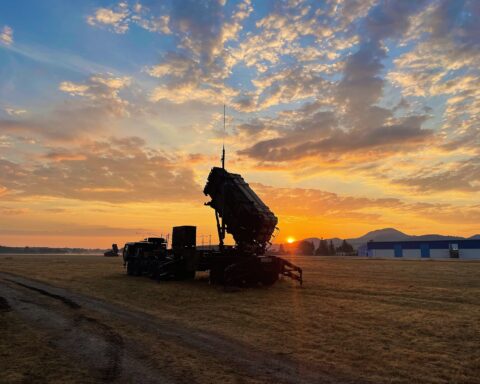
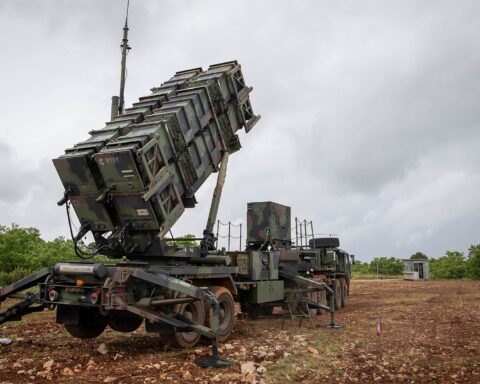
The January 30, 2026 DSCA notification covered 730 PAC-3 MSE interceptors at a total package value of $9 billion — the largest single air-defence sale in FMS history. It moved through the standard channel. The notification was not the delivery. Lockheed Martin’s Camden, Arkansas facility produces approximately 620 PAC-3 rounds per year for all global customers combined, according to Breaking Defense. Saudi deliveries are not expected before mid-2027 at the earliest.
Saudi Arabia’s existing PAC-3 stockpile stands at roughly 400 rounds from a pre-war inventory of approximately 2,800 — an 86 percent depletion rate. At the intercept tempo recorded between March and April 2026, when the Ministry of Defence reported 95 ballistic missile intercepts over five weeks, the remaining stock covers between four and six weeks of sustained Houthi missile fire before exhaustion.
The coercion mechanism activated in May. When Saudi Arabia grounded 43 US warplanes at Prince Sultan Air Base on May 3, 2026 — the episode designated Operation Project Freedom — Washington withheld scheduled PAC-3 and THAAD interceptor deliveries. The withholding operated through bureaucratic instruments within the FMS export-license and end-use monitoring chain, not through a public executive order. Saudi Arabia reversed the runway closure within four days, between May 7 and 8, according to reporting confirmed by the Wall Street Journal and Defense News.
The reversal demonstrated the mechanism’s precision. The interceptor supply chain — production schedules, export licenses, end-use certificates, maintenance contracts — provided the United States with a coercive lever that did not require a congressional vote, a presidential directive, or a public confrontation. Four days of withheld paperwork achieved what a diplomatic ultimatum would have taken weeks to negotiate.
| Metric | Value | Source |
|---|---|---|
| Pre-war PAC-3 inventory | ~2,800 | Saudi MoD |
| Current remaining stock | ~400 | Saudi MoD |
| Depletion rate | 86% | Derived from Saudi MoD figures |
| PAC-3 MSE on order (Jan 2026) | 730 rounds / $9B | DSCA |
| Lockheed Martin annual output (all customers) | ~620 rounds/yr | Breaking Defense |
| Earliest Saudi delivery | Mid-2027 | Breaking Defense |
| Threats intercepted (Mar 3 – Apr 7) | 894 (799 drones, 95 BMs) | Saudi MoD |
| Operation Project Freedom duration | 4 days (May 3-7) | WSJ / Defense News |
Who Got Emergency Access — and Who Did Not
The exclusion is not a legal constraint. It is a policy choice with a clear precedent running against it. In 2019, Secretary of State Mike Pompeo certified $8.1 billion in emergency arms sales to Saudi Arabia, the UAE, and Jordan, explicitly invoking the Iranian threat to bypass congressional notification. The legal instrument was identical to the one Secretary Marco Rubio’s State Department used in May 2026 for Qatar, Kuwait, the UAE, and Israel. The mechanism exists. It was simply not applied to Riyadh.
The stated legal basis for the current exclusion rests on the 1977 US Military Training Mission Accord, which limits the Saudi bilateral relationship to “foreign military sales program management only” and lacks the Status of Forces Agreement provisions that trigger Section 36(b) emergency certification for other Gulf states. But the Pompeo precedent negates this argument: if the same legal framework permitted emergency certification in 2019, its absence in 2026 reflects a policy decision, not a statutory barrier.
Forecast International’s Defence Systems Monitor, published April 23, 2026, tallied Q1 2026 global FMS at over $45 billion, with the Middle East accounting for $36.6 billion — 81 percent of the total. The report noted “strong, and in some cases direct, alignment between these disclosed potential sales and ongoing combat activity.” Saudi Arabia’s $14 billion through the standard channel made it one of the largest recipients by dollar value. Yet Riyadh was the only major Gulf partner excluded from every emergency authorisation.
The pattern suggests a deliberate calibration. The standard channel maintains the institutional infrastructure of the alliance — the training pipelines, the maintenance contracts, the interoperability standards that bind the RSAF to American platforms. The emergency channel is where responsiveness becomes a political instrument, where the speed of delivery signals the depth of the security commitment. Washington kept the infrastructure alive and withheld the signal.
The Trump EO and the Industrial Logic Behind the Sale
On February 6, 2026, President Trump signed an executive order titled “America First Arms Transfer Strategy,” reframing FMS policy around expanding US defence-industrial production capacity rather than traditional foreign policy conditionality. The order created an alternative rationale for approving arms sales to partners whose political relationship with Washington might otherwise trigger congressional opposition or executive hesitation.
The industrial logic is visible in the APKWS sale’s structure. BAE Systems received a $1.7 billion indefinite-delivery, indefinite-quantity APKWS contract from the US military in December 2025, running through 2031, according to OvertDefense. The Saudi $1.96 billion package is roughly equivalent in value to the entire US IDIQ contract. For BAE Systems’ Nashua facility, Saudi Arabia represents a production-line anchor that sustains the workforce and unit economics underlying the Pentagon’s own supply. The sale serves American industrial policy regardless of the bilateral political temperature.
Lockheed Martin’s Camden facility faces the same dynamic with PAC-3. At 620 rounds per year for all global customers, Saudi Arabia’s 730-round order represents more than a full year of dedicated production line capacity. The $9 billion contract underwrites the production expansion that the US military needs for its own stockpile replenishment after transfers to Ukraine and the current Gulf conflict. Denying Saudi Arabia the standard-channel sale would impose costs on American production capacity — a constraint the February executive order was designed to remove.
The EO creates a framework in which Saudi FMS approvals can proceed on industrial grounds even when the political relationship is in crisis. The APKWS sale, the PAC-3 notification, and the F-15 sustainment deal all serve American production lines. Whether they also serve American strategic objectives in the Gulf is the question the standard-channel-only approach leaves unanswered.
Does Riyadh Read the Pipeline as Reassurance or Restraint
The analytical question at the centre of the bifurcation is whether Saudi decision-makers interpret the continued flow of standard FMS as evidence that the bilateral rupture is tactical — a Trump-era coercive episode that will pass — or as evidence that the relationship has been structurally downgraded to a transactional, industry-servicing arrangement stripped of the security guarantees that once defined it.
The evidence for the tactical reading is not trivial. A $1.96 billion precision-weapons sale, a $9 billion air-defence package, and a $3 billion fleet sustainment deal in a single calendar year would, under any previous administration, signal deep strategic alignment. The State Department’s boilerplate language on the APKWS sale — that it “will support the foreign policy and national security objectives of the United States” — echoes every major Saudi FMS notification of the past three decades.
But the tactical reading requires ignoring the emergency channel entirely. When the US approved emergency PAC-3 and APKWS for Qatar in May 2026 under Section 36(b), it demonstrated that the capacity to accelerate existed, that the legal authority was available, and that other Gulf states met whatever threshold Riyadh did not. NBC News reported that MBS told Trump the Operation Project Freedom announcement was “not well thought-out” and risked Iranian retaliation against Gulf states — a characterisation that framed the episode as a misunderstanding rather than a structural confrontation. The four-day reversal supports that framing, as does the ambassador-level meeting between Princess Reema and Secretary Rubio that followed.
The structural reading points elsewhere. Saudi Arabia tried to source compatible interceptors from Poland — and was refused, according to Breaking Defense. The SAMP/T system remains politically unavailable. An S-400 acquisition would trigger CAATSA sanctions. Every alternative leads back to the American supply chain, and the supply chain runs through bureaucratic chokepoints that Washington demonstrated, in May, it is willing to use. The punitive drawdown discussion around Prince Sultan Air Base reinforced the point: the 2,300 US personnel, the IESP maintenance contractors, the Link-16 network access, and the PAC-3 resupply all move through channels the US can constrict without firing a shot or issuing a public threat.
Iran’s IRGC phased escalation sequence — striking US bases in Kuwait and Bahrain on July 8, then Jordan and Qatar on July 9 — left Prince Sultan Air Base as the only unstruck major US installation in the Gulf. Iran’s decision to spare PSAB across ten Nasr-2 waves — while striking every other US installation in the Gulf — is examined in Ten Waves In, Prince Sultan Air Base Remains Unstruck. PSAB’s 43 warplanes had been grounded since Operation Project Freedom. The base was already functionally neutralised before Iran fired. For Riyadh, the implication is direct: the air defence system that protects Saudi Arabia’s most valuable military infrastructure depends on an interceptor supply chain that the same country hosting that infrastructure has already demonstrated it will interrupt for political purposes.
Iranian strategic analysts have consistently framed Saudi FMS dependency as a structural vulnerability. The destruction of Saudi air-defence capacity through sustained Houthi and Iranian missile campaigns has exposed a timeline mismatch that no FMS notification can resolve: the threats arrive now; the replacements arrive in 2027. A $1.96 billion APKWS sale addresses the drone threat at the low end of the escalation spectrum. It does nothing for the ballistic-missile threat at the top.
The Houthi Escalation and the Demand Signal
The operational context provides the immediate demand signal for 20,000 APKWS guidance sections. On July 13, Saudi Arabia struck Sanaa International Airport to prevent a Mahan Air flight from returning Houthi delegates who had attended Ayatollah Khamenei’s funeral in Tehran. The Houthis declared the “de-escalation phase” over and resumed missile fire against targets in southern Saudi Arabia, according to Newsweek and Free Malaysia Today reporting from July 15-16.
The collapse of the truce reactivated the volume problem that APKWS is designed to solve. Houthi drone launches during the March-April escalation averaged more than twenty per day. F-15SA and Typhoon sorties carrying APKWS can engage multiple drones per mission at a fraction of the cost of dedicated air-defence interceptors. The 20,000 guidance sections in the July package, if expended at the March-April rate, cover approximately eighteen months of sustained operations — assuming no additional procurement.
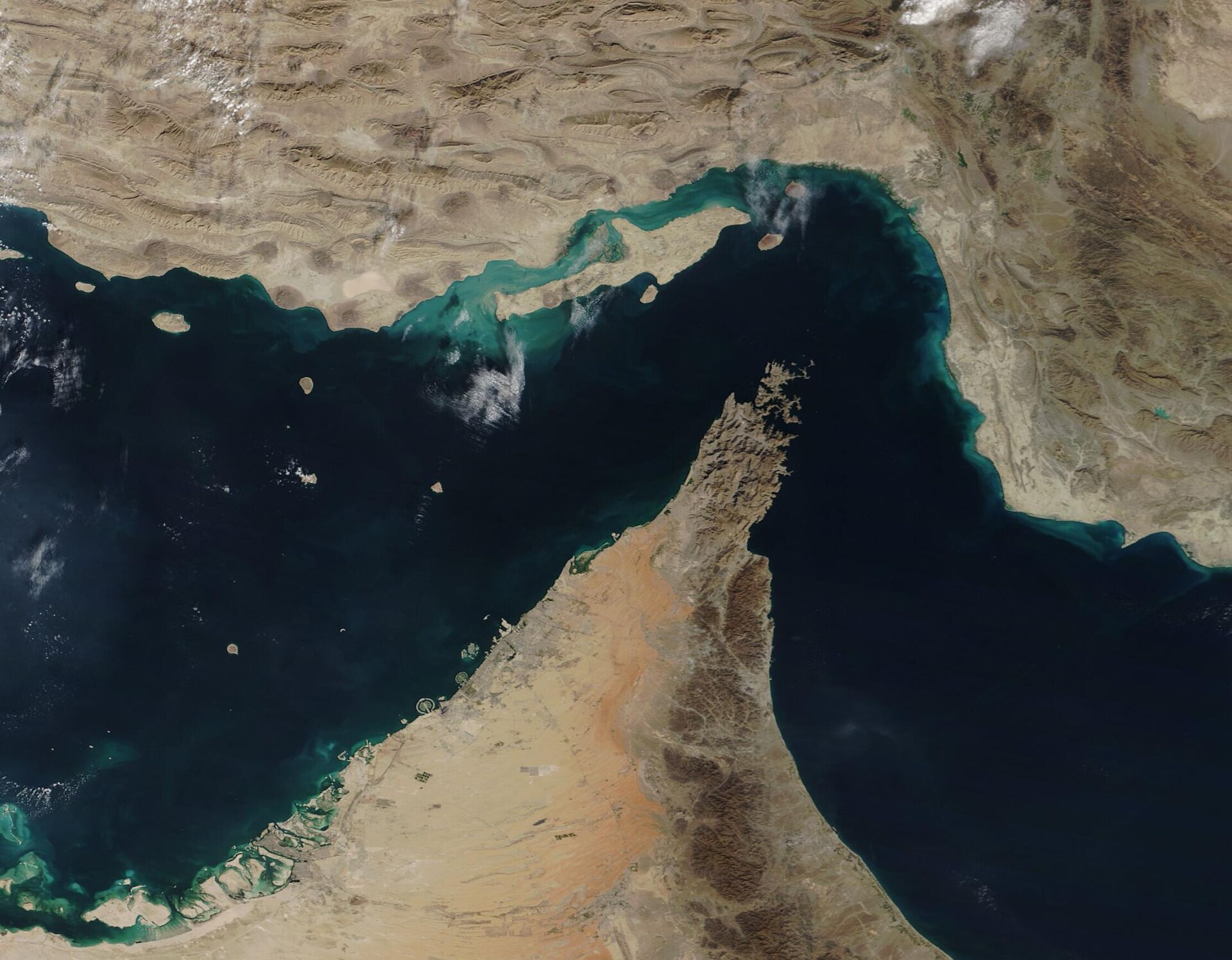
The timing also intersects with the broader Iran campaign. US forces struck Greater Tunb Island on July 16, the fifth consecutive day of strikes against Iranian targets. The APKWS sale strengthens Saudi offensive capability — precision strike against Houthi ground targets — while the PAC-3 delay weakens Saudi defensive capability against Iranian ballistic missiles. Iranian state media, including Iran International, covered the $1.96 billion approval factually on July 15 without editorial commentary, a restraint likely conditioned by the active US military operations against Iranian naval assets in the Strait of Hormuz.
The asymmetry serves Iranian strategic interests in a specific way. Every APKWS guidance section that reaches the RSAF makes Saudi Arabia more capable of prosecuting the Yemen campaign. Every PAC-3 round that does not arrive on time makes Saudi Arabia more vulnerable to Iranian retaliation. The FMS bifurcation — offence flows, defence is delayed — mirrors the structural position Iran would design if it were writing Saudi Arabia’s procurement schedule. Tehran did not write it. But the schedule reads as though it did. Iran has taken note of the defensive gap this bifurcation created: the July 16 declaration by Khatam al-Anbiya Central Headquarters threatened all regional infrastructure conditional on US civilian infrastructure strikes — a threat that Abqaiq cannot answer with 400 interceptors and no resupply arriving before mid-2027.
The war MBS asked for and the alliance that was supposed to underwrite it now operate on different timelines. The APKWS sale keeps the institutional relationship functioning. The emergency exclusion keeps the security guarantee conditional. For Saudi Arabia, the $1.96 billion in guided rockets addresses the drone threat. It does not address the question of whether the country that sold them will still be there when the ballistic missiles arrive. Two days after the APKWS approval landed, Khalid bin Salman flew to the Pentagon for the July 17 Hegseth–Khalid meeting — the highest-level US-Saudi defense contact since the FMS bifurcation became operationally consequential.
FAQ
What is the APKWS II and how does it differ from a conventional rocket?
The AGR-20 APKWS II is a guidance section — 18.5 inches long and 9.8 pounds — that inserts between the warhead and motor of a standard 2.75-inch Hydra 70 unguided rocket, converting it into a semi-active laser-guided precision munition. The assembled round weighs 32.6 pounds, measures 73.77 inches, and has an effective range of 1.2 to 6.8 miles. BAE Systems describes it as “nearly plug-and-play” on existing platforms, requiring minimal aircraft modification for integration.
Has the US ever used emergency FMS authority for Saudi Arabia before?
Yes. In May 2019, Secretary of State Mike Pompeo invoked emergency authority under Section 36(b) to certify $8.1 billion in arms transfers to Saudi Arabia, the UAE, and Jordan, citing Iranian threats as justification. Congress had been blocking conventional Saudi arms sales over the Yemen war. The 2019 precedent demonstrates that the legal framework permits emergency Saudi sales — and that the 2026 exclusion represents a deliberate policy reversal rather than a newly discovered statutory barrier.
Can Saudi Arabia source PAC-3-compatible alternatives from non-US suppliers?
Riyadh explored one option and was refused. Poland, which operates Patriot systems acquired in a 2018 deal, declined to transfer PAC-3 interceptors to Saudi Arabia, according to Breaking Defense. The Franco-Italian SAMP/T system is politically unavailable due to European arms-export restrictions related to Yemen. Russia’s S-400 would trigger US CAATSA sanctions, forfeiting American maintenance support for the existing Patriot fleet. South Korea’s M-SAM-II, while technically capable, has an altitude gap against the terminal phase of Iran’s Zolfaghar missile. No compatible alternative exists outside the US supply chain on a timeline relevant to the current conflict.
What did the February 2026 Trump executive order change about arms sales?
The “America First Arms Transfer Strategy” EO shifted the stated rationale for FMS approvals from foreign-policy conditionality to US defence-industrial capacity building. Under this framework, a sale’s contribution to American production lines — sustaining workforces, lowering unit costs, maintaining warm production capacity — can justify approval independent of the bilateral political relationship with the buyer. The EO effectively depoliticised the bureaucratic approval process for standard-channel sales while leaving emergency-channel decisions as discretionary political instruments.
How does the APKWS cost compare to other counter-drone weapons in Saudi Arabia’s inventory?
At approximately $24,900 per complete round, APKWS costs less than one-eighteenth of an AIM-9X Sidewinder ($450,000) and less than one-fortieth of an AIM-120 AMRAAM (over $1 million). A PAC-3 MSE interceptor carries an implied per-unit cost of roughly $12.3 million based on the $9 billion / 730-round contract — making it nearly 500 times the price of a single APKWS round. The cost hierarchy matters operationally: APKWS is the only guided munition in the Saudi inventory whose price-per-kill falls below the replacement cost of the drones it destroys, which Houthi procurement sources assessed by the UN Panel of Experts in 2025 at between $2,000 and $20,000 per airframe.
The depletion made tangible what the withholding only implied: on July 13, Houthi ballistics and drones forced the closure of Abha, Jizan, Najran, and Sharurah under a single four-minute NOTAM window — four southern civilian airports whose exposed status is a direct consequence of the interceptor arithmetic the withholding accelerated.
The platform qualification gap compounds the delivery problem further: a .96 billion APKWS-II sale cannot load itself onto aircraft that have not completed weapon system certification — and neither the RSAF’s Typhoon fleet nor its F-15SA fleet has publicly done so.
By the eighth night the withholding pattern had a new dimension: CENTCOM sent fighter jets 650 kilometres into central Iran while Saudi Arabia’s own intercept capacity — already at 400 of 2,800 PAC-3 rounds — absorbed another wave without confirmed US resupply authorisation, the same asymmetry the APKWS sale illustrated in miniature. The resupply gap became a casualty question on July 18, when Iranian ballistic missiles struck PSAB, wounded twelve US service members, and hit KC-135s on the flight line — all without triggering a public statement from Riyadh, CENTCOM, or the Pentagon. Iran Struck Prince Sultan and No One Was Required to Say So traces how the decision to withhold acknowledgement is driven by the same PAC-3 arithmetic this article identified: with approximately 400 rounds remaining, naming the intercept count names the arrival date at zero.