DHAHRAN — Iran has constructed a permission structure for striking Saudi Aramco without ever naming Saudi Arabia as a target. The July 16 declaration by Khatam al-Anbiya Central Headquarters — “all the infrastructure in the region will be crushed” — conditions the threat on US strikes against Iranian civilian infrastructure, places no geographic limit, and offers no carve-out for states that did not fire the trigger. Abqaiq, which processes more than 7 million barrels per day, sits inside this threat envelope with approximately 400 PAC-3 interceptors standing between it and an Iranian missile force that CSIS assesses would “overwhelm virtually any missile defense system.”
Saudi Arabia cannot endorse the trigger condition — US strikes on Iranian power plants — without legitimizing the Iranian response it would invite. It cannot condemn the consequence — an Aramco attack — without advertising its own vulnerability. It has no seat at any negotiating table where either outcome would be addressed. The Islamabad MOU is void, the Doha track excludes Riyadh, and the bilateral channel operates at deputy-FM level. Iran has engineered a four-lock entrapment in which Saudi Arabia is simultaneously a target, a hostage, and a silent co-author of its own exposure.
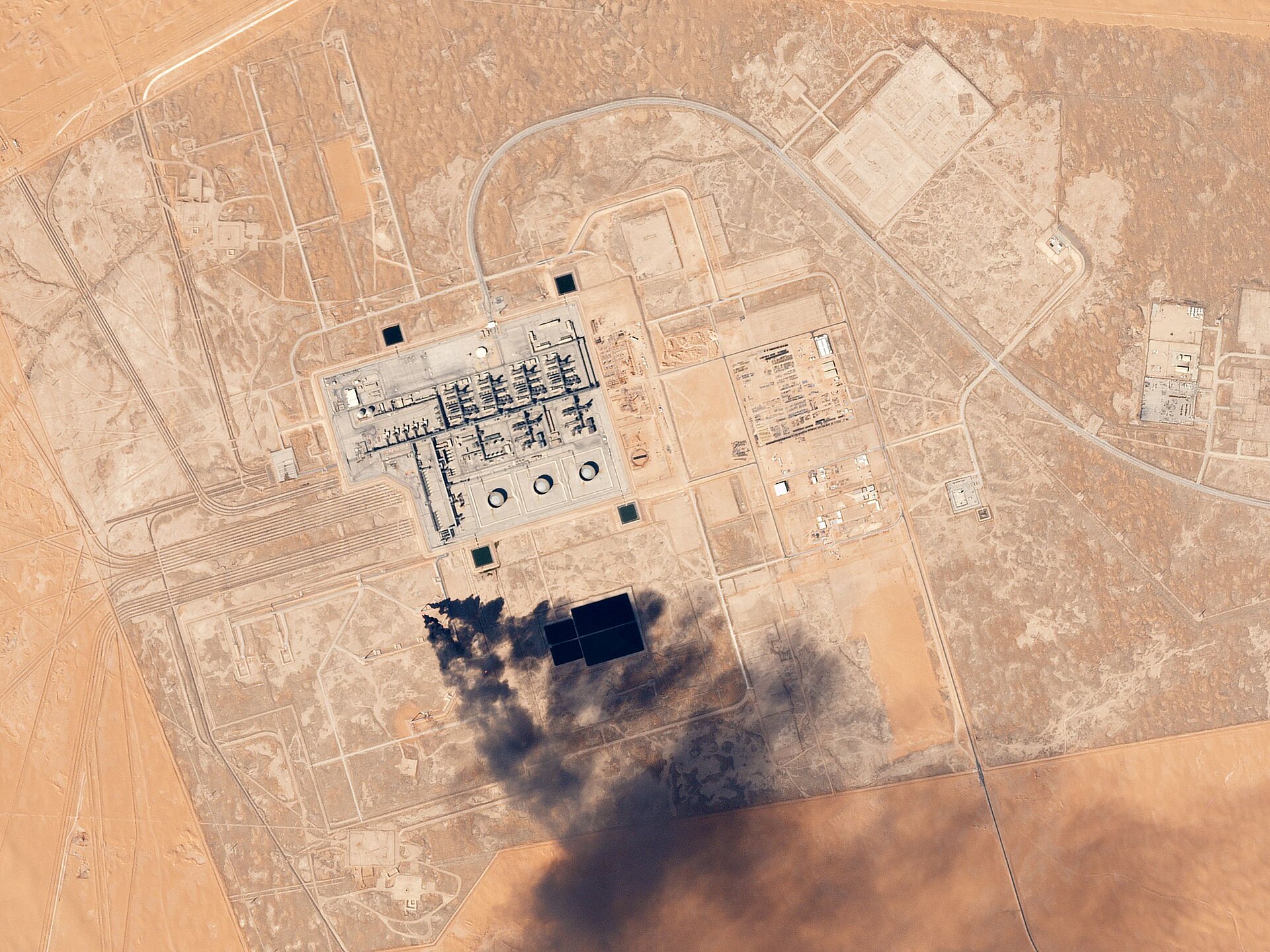
Table of Contents
- The July 16 Declaration and Its Conditional Architecture
- What Does “All Infrastructure in the Region” Mean Operationally?
- The March 2026 Precedent: When Iran Followed Through
- Can Saudi Arabia Defend Abqaiq With 400 Interceptors?
- The Four-Lock Entrapment
- Why Can Riyadh Neither Endorse Nor Condemn the Trigger?
- The Pipeline Cannot Absorb What the Gulf Cannot Export
- Where Would Riyadh Negotiate an Exit?
- The PGSA and the Fiscal Clock
- Frequently Asked Questions
The July 16 Declaration and Its Conditional Architecture
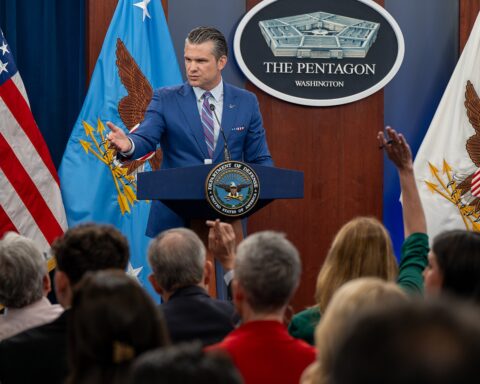
Lt.-Col. Ebrahim Zolfaqari, spokesman for Iran’s Khatam al-Anbiya Central Headquarters — the supreme joint military command responsible for integrated operations across IRGC, Artesh, and Basij — delivered the threat in response to President Trump’s declaration that US strikes would expand to Iranian civilian infrastructure, including power plants and bridges. The exact language matters: “All the infrastructure in the region will be crushed under the steel blows of the powerful armed forces of the Islamic Republic of Iran.”
The statement operates on three levels simultaneously. First, it is conditional — activated by US escalation to civilian infrastructure, not by any action Saudi Arabia takes or refrains from taking. Second, it is geographically unbounded — “the region” encompasses every Gulf state, every pipeline, every desalination plant, every refinery within range of Iran’s 2,500-km missile envelope. Third, it names no specific country, which eliminates the diplomatic predicate Saudi Arabia would need to lodge a formal protest or invoke a defense pact.
Zolfaqari added a second element: Iran will never allow the United States — “as a foreign, extra-regional country” — to interfere in the Strait of Hormuz, which constitutes the Islamic Republic’s “inviolable red line.” This frames the entire US military presence in the Gulf as the provocation, placing the Gulf Cooperation Council states in structural proximity to the target set by virtue of hosting US forces.
The parliamentary layer arrived in parallel. Ebrahim Rezaei, the Iranian parliament’s spokesman on national security and foreign policy, posted on X: “Gulf states that have stood alongside Trump in the Iran-America regime conflict should watch over their oil and gas wells.” Where Zolfaqari spoke in institutional-military terms without naming countries, Rezaei named the category — Gulf states aligned with Washington — and the target class — oil and gas wells. Together, the two statements form a complete targeting doctrine: the military arm identifies the scope (all regional infrastructure), and the legislative voice identifies the criterion (alignment with Trump).
The Middle East briefing 3,000+ readers start their day with.
One email. Every weekday morning. Free.
What Does “All Infrastructure in the Region” Mean Operationally?
Iran has already answered this question — in March 2026 and in accumulated doctrine. The IRGC’s standing position on Gulf energy exports is explicit: “The region’s oil and gas exports are either for everyone or for no one.” This is not rhetoric. It is operational doctrine that treats Iran’s exclusion from export markets as the trigger for universal denial — a collective-punishment framework applied to energy infrastructure across the Gulf.
CSIS assessed that all of Saudi Arabia falls within Iran’s missile range and that the volume of Iranian missiles capable of reaching the country would overwhelm virtually any missile defense system. The facilities CSIS named as within range and within Iran’s targeting doctrine include Ras Tanura port (the world’s largest offshore oil loading facility), Ras Al-Khair power and desalination plant, and the Abqaiq stabilization plant. Iran’s ballistic missile force ranges to 2,500 km — Abqaiq sits 300 km from the Iranian coast.
| Saudi Facility | Function | Capacity / Global Share | Distance from Iran | Named in IRGC Doctrine |
|---|---|---|---|---|
| Abqaiq | Crude stabilization | 7+ Mbpd / ~7% global supply | ~300 km | Yes (CSIS assessment) |
| Ras Tanura | Offshore loading terminal | 6.5 Mbpd capacity | ~280 km | Yes (CSIS assessment) |
| Ras Al-Khair | Power + desalination | 1.025M m³/day freshwater | ~290 km | Yes (CSIS assessment) |
| SAMREF (Yanbu) | Refining | 400,000 bpd | ~1,600 km (Red Sea coast) | Yes (IRGC March 2026) |
| Jubail Petrochemical | Petrochemicals | $20B+ complex | ~290 km | Yes (IRGC March 2026) |
| Shaybah | Crude production | 1 Mbpd | ~600 km | Targeted 2026 campaign |
Nearly 70% of Saudi-reported intercepted drones and missiles during the 2026 war have targeted the oil-rich Eastern Province or specific oil facilities. The pattern is not incidental. Iran’s March 2026 escalation explicitly named SAMREF and Jubail as “direct and legitimate targets” and issued evacuation orders — a step beyond threat, into operational preparation. The July 16 declaration elevates this from facility-specific targeting to a blanket doctrinal statement encompassing everything Saudi Arabia produces, refines, desalinates, and exports.
The March 2026 Precedent: When Iran Followed Through
On March 18, 2026, Israel struck South Pars — Iran’s primary natural gas field and the foundation of its LNG export ambitions. Within hours, the IRGC issued evacuation orders for named Saudi, UAE, and Qatari facilities, declared them “direct and legitimate targets,” and struck Qatar’s Ras Laffan LNG complex. QatarEnergy confirmed “extensive damage.” The justification the IRGC articulated established the doctrinal frame now governing the July 16 threat: “With the enemy’s aggression against energy infrastructure, Iran has effectively entered a new stage of the conflict, and the necessity to defend the country’s infrastructure compelled a retaliatory strike.”
The infrastructure-for-infrastructure formula is not new to July 16. It was operationalized in March and resulted in physical damage to a Gulf state’s energy complex. What changed is the trigger condition. In March, the trigger was an Israeli strike on South Pars. In July, the trigger is a prospective US strike on power plants and bridges — civilian infrastructure rather than energy infrastructure. The retaliatory scope has expanded while the doctrinal justification remains identical: symmetry.
Saudi Arabia observed the March sequence in real time. SAMREF and Jubail appeared on the IRGC’s published target list. No strike followed on Saudi soil in March — Iran chose Qatar as the demonstration target, perhaps because Qatar maintained diplomatic relations with Tehran that could absorb the escalation. Saudi Arabia holds no such diplomatic shock-absorber. The bilateral channel operates at deputy-FM level, and the most recent diplomatic contact was El-Khereiji’s condolence visit — a funeral protocol, not a strategic dialogue.
Can Saudi Arabia Defend Abqaiq With 400 Interceptors?
The short answer is arithmetic. Saudi Arabia’s PAC-3 MSE inventory stands at approximately 400 rounds from a pre-war stock of roughly 2,800 — an 86% depletion rate across five months of conflict. The January 30, 2026 DSCA approval for 730 replacement PAC-3 MSE rounds ($9 billion) will not yield meaningful deliveries before mid-2027. Lockheed Martin’s Camden, Arkansas facility produces approximately 620 rounds per year for all global customers combined. Saudi Arabia is in a queue, not a pipeline.
The upper-tier defense layer is functionally absent. Saudi Arabia’s THAAD radar was destroyed in the early conflict phase. The United States has expended 198 of its 534 THAAD interceptors globally — 37% of total US inventory — leaving layered upper-tier defense structurally impaired. Iran destroyed the shield Saudi Arabia cannot replace within the timeline of any realistic resupply effort.
The 2019 Abqaiq-Khurais attack provides the operational template for what Iran already demonstrated it can execute. That strike used a combination of cruise missiles and drones — drones to saturate air defenses, cruise missiles for precision engagement of 16 specific infrastructure points. Five hits struck crude-stabilization towers at Abqaiq; eleven struck associated infrastructure. The result: 5.7 million barrels per day knocked offline, more than half of Saudi production, approximately 5% of global supply — achieved in a single coordinated strike from a force package that was smaller and less capable than Iran’s 2026 inventory.
All of Saudi Arabia is threatened by Iranian missiles, and the number of Iranian missiles capable of reaching the country would overwhelm virtually any missile defense system.
CSIS, “Iran’s Threat to Saudi Critical Infrastructure”
The IISS assessed the situation in May 2026: “The Arab Gulf states are looking to replenish and strengthen their air and missile defenses following the Iranian attacks earlier this year, though rearmament will require overcoming multiple challenges.” Those challenges include production-rate constraints, competing demand from Ukraine and Taiwan contingencies, and the FMS bifurcation Washington imposed — approving offensive munitions while withholding defensive systems. Four hundred interceptors defending 7 million barrels per day of processing capacity against a missile force designed to overwhelm is not a shield. It is an accounting exercise with a known expiration date.
The Four-Lock Entrapment
Iran’s July 16 declaration completes a structural entrapment that operates through four simultaneous locks — each independently sufficient to constrain Saudi options, collectively forming a trap with no diplomatic exit visible from Riyadh’s position.
Lock One: The Unnamed Target
The threat names “all infrastructure in the region” without naming Saudi Arabia. This eliminates the standard diplomatic tool: a named threat can be protested, deterred through counter-threat, or addressed in bilateral negotiation. An unnamed threat within a blanket doctrinal statement cannot be protested without self-identification as a target — which is itself an admission of vulnerability. Saudi Arabia cannot file a diplomatic note objecting to a threat that does not name it. It cannot invoke a defense pact against a condition that has not yet been triggered. It sits inside the threat envelope in a state of acknowledged exposure that carries no legal or diplomatic standing.
On July 17, Mohsen Rezaei — Iran’s Supreme Leader military adviser and former IRGC commander-in-chief — removed any residual ambiguity about geographic ceiling, declaring that “no political border will be secure” and that Iran would enter “full-scale offensive operations” within forty-eight hours if US strikes continued. Where Zolfaqari’s July 16 declaration left the target set formally unnamed, Rezaei’s ultimatum confirmed that the unnamed set includes every border in the region.
Lock Two: The Trigger Riyadh Cannot Control
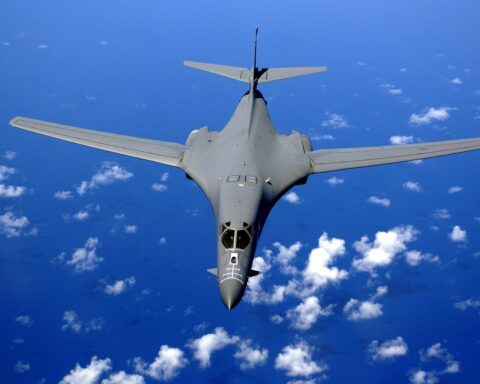
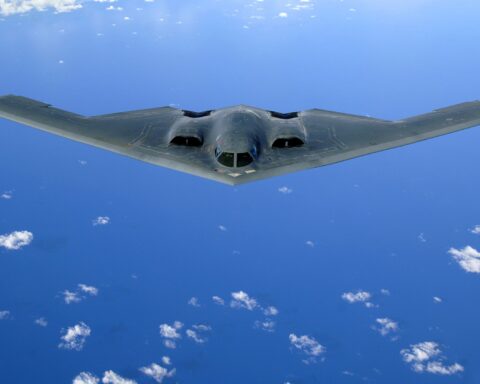
The trigger condition — US strikes on Iranian civilian infrastructure — is entirely within Washington’s decision authority. Saudi Arabia has no veto over US targeting decisions. Prince Sultan Air Base hosted 43 US warplanes that Riyadh grounded in May 2026 precisely to avoid being drawn into US escalation, but that action addressed basing, not targeting. The US can strike Iranian power plants from carriers, from Diego Garcia, from B-2 bases in Missouri. Saudi Arabia’s attempt to create distance from US operations — Operation Project Freedom — does not address the operational reality that Iran’s retaliatory doctrine treats the entire Gulf as a unified US-adjacent target set regardless of individual states’ hosting decisions.
Lock Three: The Defense That No Longer Functions
With 400 PAC-3 rounds, a destroyed THAAD radar, and no resupply arriving before mid-2027, Saudi Arabia’s integrated air defense architecture is operationally degraded below the threshold required to defeat a coordinated Iranian strike of the type demonstrated in 2019 and practiced throughout 2026. The defense industrial base cannot close this gap within the threat timeline. Lockheed Martin’s global PAC-3 production serves multiple customers; Saudi Arabia’s position in the queue does not correspond to the urgency of the threat.
Lock Four: No Negotiating Forum
The Islamabad MOU expired functionally on July 13 when Iran declared non-compliance and Trump declared it “over.” No replacement framework exists. Saudi Arabia was excluded from the Islamabad track, excluded from the Doha track, and operates its Iran channel through a deputy foreign minister whose most recent contact was a funeral condolence. There is no table at which Riyadh can negotiate immunity from the infrastructure-for-infrastructure doctrine. The war Saudi Arabia did not start has produced a threat Saudi Arabia cannot address through any available channel.
Why Can Riyadh Neither Endorse Nor Condemn the Trigger?
The rhetorical trap is precise. If Saudi Arabia endorses US strikes on Iranian power plants — the trigger condition — it provides Iran with the political justification to classify Riyadh as a co-belligerent. The Rezaei formulation already identifies “Gulf states that have stood alongside Trump” as the target category. Any Saudi statement supporting US infrastructure strikes would constitute self-enrollment in that category, converting an unnamed threat into a named one with Saudi Arabia’s own words as the instrument of identification.
If Saudi Arabia condemns the potential consequence — an Iranian strike on Aramco facilities — it advertises the specific vulnerability Iran intends to exploit, confirms that the deterrent posture is inadequate, and invites acceleration of the timeline. Public acknowledgment that Abqaiq is indefensible is operationally equivalent to confirming that the threat works — which encourages its execution rather than deterring it.
If Saudi Arabia condemns the trigger condition — opposing US strikes on Iranian power plants — it ruptures the security relationship with Washington at precisely the moment when PAC-3 resupply, THAAD replacement, and the PSAB force posture depend on US willingness to maintain its Gulf commitments. The oil-shock dynamic already tests the bilateral relationship; an explicit Saudi break with US military operations would provide the political permission structure for the punitive drawdown that has already been discussed in Washington policy circles.
Silence is the only available position. But silence is not neutral. Iran’s doctrinal framework treats non-condemnation of US strikes as complicity — “Gulf states that have stood alongside Trump.” Silence is read as standing alongside. Saudi Arabia’s non-statement is, within Iran’s interpretive framework, a statement of alignment that triggers the targeting criterion Rezaei articulated.
The Pipeline Cannot Absorb What the Gulf Cannot Export
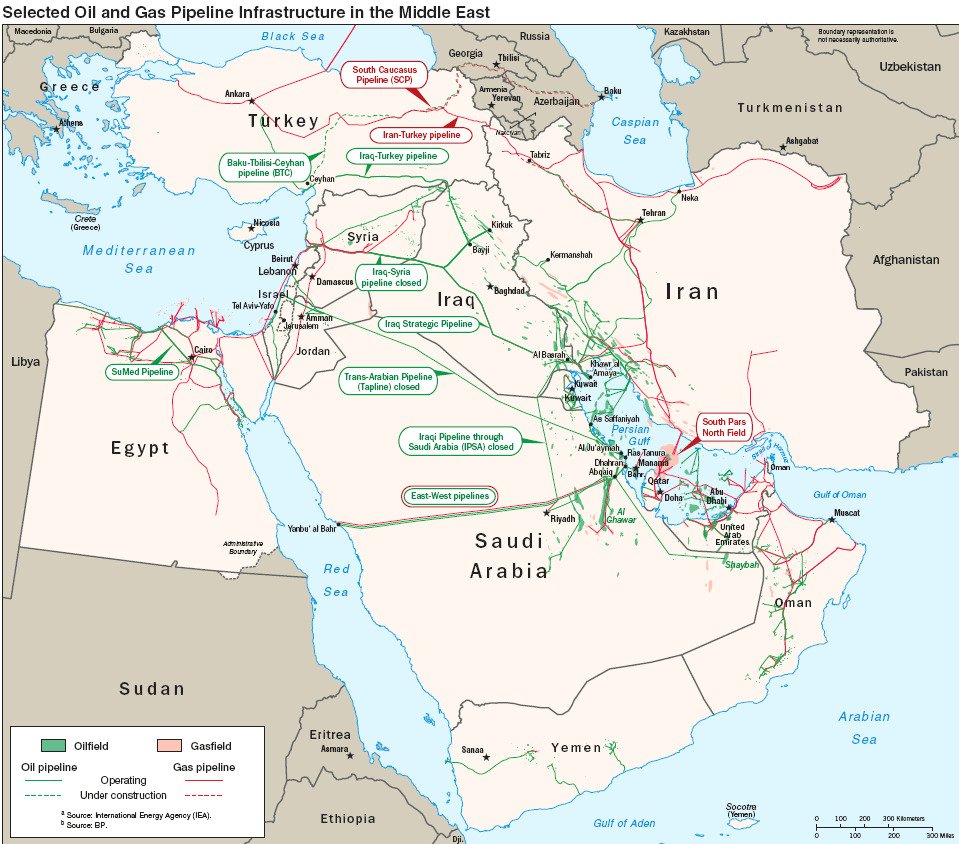
The standard analytical response to Gulf-side vulnerability is the East-West Pipeline — the Petroline running 746 miles from Abqaiq to Yanbu on the Red Sea coast, bypassing Hormuz entirely. This diversification thesis assumes the pipeline can absorb what Gulf terminals cannot export. The 2026 data invalidates this assumption.
The Petroline reached its 7 Mbpd maximum capacity in March 2026 — the first time in its operational history at full emergency throughput. An Iranian drone strike on a pumping station in April 2026 reduced throughput by 700,000 bpd. The pipeline is both at capacity and demonstrated to be within Iran’s reach. Yanbu terminal, even at full operation, can physically handle only 3-4 Mbpd under wartime loading conditions — compression, security screening, and limited berthing slots constrain throughput below pipeline capacity.
Bloomberg reported on July 15 that only one tanker was berthed at Saudi Arabia’s primary Persian Gulf export terminals — Gulf loading “mostly empty” since Iranian VLCC attacks resumed July 14. The Hormuz transit collapse has already redirected maximum possible volume to Yanbu. There is no spare capacity to absorb an Abqaiq disruption. If the stabilization plant is struck, there is nothing to stabilize and nowhere to send unstabilized crude that the market will accept.
| Export Route | Pre-War Capacity | Current Status (July 2026) | Constraint |
|---|---|---|---|
| Ras Tanura (Gulf) | 6.5 Mbpd | Mostly empty; 1 tanker berthed (Jul 15) | Iranian VLCC attacks; war-risk insurance 2% hull |
| Ju’aymah (Gulf) | 3 Mbpd | Operational but minimal loading | Same threat envelope as Ras Tanura |
| Petroline to Yanbu (Red Sea) | 7 Mbpd (pipeline) / 3-4 Mbpd (terminal) | At or near maximum | Pumping station vulnerability; terminal bottleneck |
| Abqaiq stabilization | 7+ Mbpd processing | Operational | Feeds both routes; single point of failure |
Abqaiq is not one facility among many. It is the chokepoint upstream of all export routes. Crude extracted from Ghawar, Shaybah, and other Eastern Province fields passes through Abqaiq for stabilization before entering either the Gulf loading terminals or the Petroline. A strike on Abqaiq does not redirect traffic to Yanbu — it eliminates the feedstock that Yanbu receives. The 2019 attack demonstrated this: 5.7 Mbpd disappeared from both routes simultaneously because the processing node was the target, not the export terminal.
Where Would Riyadh Negotiate an Exit?
The MOU is void. The diplomatic architecture that nominally constrained Iranian escalation — the Islamabad framework signed June 17, 2026 — collapsed between July 13 (Iran’s non-compliance declaration) and Trump’s public statement that the agreement was “over.” The 60-day implementation window would have expired August 16. No replacement framework exists or is under negotiation.
Saudi Arabia was excluded from the Islamabad track throughout its existence. It was excluded from the Doha track. It holds no observer status, no signatory position, no back-channel that operates above deputy-FM level. The war premium Saudi Arabia pays in reduced exports, compressed margins, and defense depletion purchases no diplomatic seat at any table where the infrastructure threat would be addressed.
The structural exclusion is not incidental. Iran designed the negotiating architecture to address the US-Iran bilateral relationship — sanctions relief, nuclear constraints, military de-escalation — without including the Gulf states whose infrastructure serves as the retaliatory target set. Saudi Arabia is relevant to Iran’s escalation doctrine (as a target) but irrelevant to Iran’s negotiating framework (as a party). This asymmetry is the entrapment: Riyadh bears the consequence of whatever Washington and Tehran agree or fail to agree, without influencing the terms.
The Al Jazeera assessment of July 14 captured one dimension: Gulf states face “a paradox: they’re being targeted due to their relationships with the US, but their relations with the US and the presence of those bases have also meant that many of the attacks have largely been thwarted.” But this analysis understates the structural problem. The thwarting capacity — PAC-3 interceptors — is at 14% of pre-war inventory. The relationship that nominally provides protection is the same relationship that generates the targeting criterion. And “largely thwarted” at 400 remaining rounds is a time-limited statement approaching its expiration.
The PGSA and the Fiscal Clock
The Persian Gulf Security Agreement — $253 million outstanding, accumulating at $5.5 million per day, with an August 18 deadline — runs in parallel to the infrastructure threat. Iran’s demand for payment from Gulf state shipping operates on a separate clock from the military escalation ladder, but both converge on the same target: Saudi Arabia’s fiscal and physical capacity to sustain export operations under simultaneous military threat and financial extraction.
Brent closed at $84.73 on July 15 — below Saudi Arabia’s IMF fiscal breakeven of approximately $86.60 per barrel. Saudi Arabia is already below breakeven before any Aramco infrastructure strike. The Q1 2026 deficit reached SAR 125.7 billion. Aramco’s free-cash-flow-to-dividend ratio has fallen to 0.85x — dividends exceed cash generation. The IMF’s July revision cut Saudi 2026 growth to 1.7%, and that projection predates both the July 14 VLCC attack resumption and the July 16 infrastructure threat.
An Abqaiq strike of the 2019 scale — 5.7 Mbpd offline — would eliminate roughly $480 million per day in export revenue at current Brent prices. The 2019 recovery took approximately two weeks for partial restoration and four weeks for full restoration. Iran’s 2026 missile inventory is larger, more precise, and faces a defense architecture operating at 14% capacity. Recovery timelines assume the strike is a single event rather than the opening of a sustained campaign — an assumption the July 16 declaration’s conditional structure does not support.
The convergence of fiscal pressure (below-breakeven pricing), export disruption (Gulf terminals empty), financial extraction (PGSA accumulating), and prospective infrastructure destruction (the July 16 threat) creates a compound vulnerability in which each element reinforces the others. Below-breakeven pricing means Saudi Arabia cannot absorb revenue loss from an infrastructure strike. Empty Gulf terminals mean Yanbu is already at maximum — there is no surge capacity. PGSA accumulation means Iran extracts payment even from the reduced traffic that continues. And the infrastructure threat means the reduced flow that remains can be interrupted at Iran’s discretion, conditional on a US decision Riyadh does not control.
The mechanism through which Iran monetises Hormuz access while keeping the strait nominally open — charging $1–2 million per transit through the PGSA while commercial traffic has collapsed 89 percent — is documented in Iran Kept Hormuz Open — at Two Million a Ship.
Frequently Asked Questions
Has Iran struck Saudi Aramco facilities during the 2026 war?
Iran struck SAMREF refinery in Yanbu and issued evacuation orders for Jubail petrochemical complex during the March 18, 2026 escalation following the Israeli strike on South Pars. Approximately 70% of intercepted threats during the 2026 campaign have targeted Eastern Province oil infrastructure, including Shaybah Oil Field. The July 16 declaration represents a doctrinal elevation — from facility-specific targeting to blanket regional infrastructure threat — rather than a first-time targeting of Saudi energy assets.
Could the US extend its missile defense umbrella to cover Abqaiq?
The US has expended 198 of its 534 THAAD interceptors globally (37% of total inventory) and is managing competing demands from the Western Pacific and European theaters. Patriot batteries currently deployed aboard USS Bataan and at Al Udeid serve force-protection missions for US personnel, not host-nation infrastructure defense. The January 2026 DSCA approval for Saudi PAC-3 resupply will not deliver before mid-2027. No US official has publicly committed to defending Saudi civilian infrastructure under the current threat posture, and the punitive drawdown discussion in Washington suggests the direction of US force posture is away from, not toward, expanded Gulf commitments.
What is the 2019 Abqaiq attack’s relevance to the current threat?
The September 14, 2019 attack used a combined drone-and-cruise-missile package to strike 16 specific infrastructure points at Abqaiq and Khurais, knocking 5.7 Mbpd offline. It demonstrated that drone saturation could exhaust point-defense systems while cruise missiles engaged precision targets. Iran’s 2026 ballistic missile inventory — including Fattah-2 hypersonic variants with terminal velocities exceeding Mach 13 — adds a layer the 2019 package did not possess: the ability to defeat PAC-3 engagement envelopes through speed rather than saturation alone. The 2019 attack succeeded against a fully-stocked defense; the 2026 defense operates at 14% inventory.
Does Saudi Arabia have any diplomatic channel to address the threat directly with Iran?
The highest-level Saudi-Iranian diplomatic contact in 2026 was Deputy FM El-Khereiji’s condolence visit following Supreme Leader Khamenei’s death — a protocol interaction, not a strategic dialogue. Saudi Arabia holds no signatory position in the Islamabad MOU framework, no observer role in the Doha track, and no bilateral channel above deputy-minister level. The Chinese-brokered March 2023 normalization agreement — which restored ambassadorial relations — has not produced a crisis-management mechanism capable of addressing military threats of this magnitude. Iran’s negotiating architecture is designed around the US-Iran bilateral relationship; Gulf states appear as objects of Iranian coercion, not as negotiating counterparts.
What would trigger Iran’s execution of the infrastructure threat?
The July 16 declaration conditions the threat explicitly on US strikes against Iranian civilian infrastructure — power plants, bridges, and similar targets Trump publicly threatened. The threshold is not Saudi action but US action. However, the IRGC’s established “oil for everyone or no one” doctrine operates on a separate trigger: Iranian exclusion from energy export markets. Sanctions reimposition (GL X1 reimposed July 7), Hormuz interdiction, or sustained Iranian revenue denial could independently activate the energy-infrastructure targeting doctrine without requiring the civilian-infrastructure trigger Zolfaqari articulated. Multiple activation pathways exist, and Saudi Arabia controls none of them.
Wave Nineteen’s July 19 strike on Kuwait’s power and desalination grid is the operational proof-of-concept for what Iran’s doctrine means in practice for the Saudi Eastern Province. Iran Hit Kuwait’s Grid and Abqaiq Sits on the Same Coast examines how the dual-track targeting of civilian infrastructure and military nodes in the same operational wave maps directly onto Abqaiq’s cogeneration corridor and the Ras al-Khair desalination network.
The southern dimension of that threat became operational on July 13, when Houthi ballistics targeted Abha and Khamis Mushait and forced the simultaneous closure of all four southern civilian airports — Abha, Jizan, Najran, and Sharurah — confirming that the kingdom’s PAC-3 triage now extends to accepting commercial airspace denial across an entire border corridor.