
RIYADH — Abbas Araghchi flew to Beijing on Tuesday not to negotiate but to dictate. By the time Donald Trump steps onto the tarmac in the Chinese capital nine days from now, Wang Yi will already have China’s position on Hormuz, on Iran’s enrichment, and on a Gulf security architecture without Americans in it — locked into the official record by Iran’s foreign minister himself.
The sequencing is the story. Oman hosts the fourth round of US-Iran talks on May 11. Trump lands in Riyadh on May 13. He arrives in Beijing on May 14-15. Mohammed bin Salman will receive an American president whose deal framework has already been shaped in Muscat and pre-negotiated in Beijing — two capitals where no Saudi diplomat sits. The kingdom that will pay the bill for any settlement, host any reconstruction, and underwrite any regional order is being asked to ratify terms it had no hand in writing. That is not a coincidence of calendars. That is what happens when the country with the most exposure has the least authorization.
Table of Contents
- Why did Araghchi fly to Beijing this week?
- Wang Yi’s three locked positions
- The May 11–13–14 sequencing trap
- Where is Saudi Arabia in this triangle?
- What can Araghchi actually agree to?
- Why do Iran and China publish different readouts?
- China’s Hormuz exposure as bargaining chip
- UNCLOS, Iran, and the law of who controls the strait
- What Riyadh can still do before May 13
- What happens after May 15?
- FAQ
Why did Araghchi fly to Beijing this week?
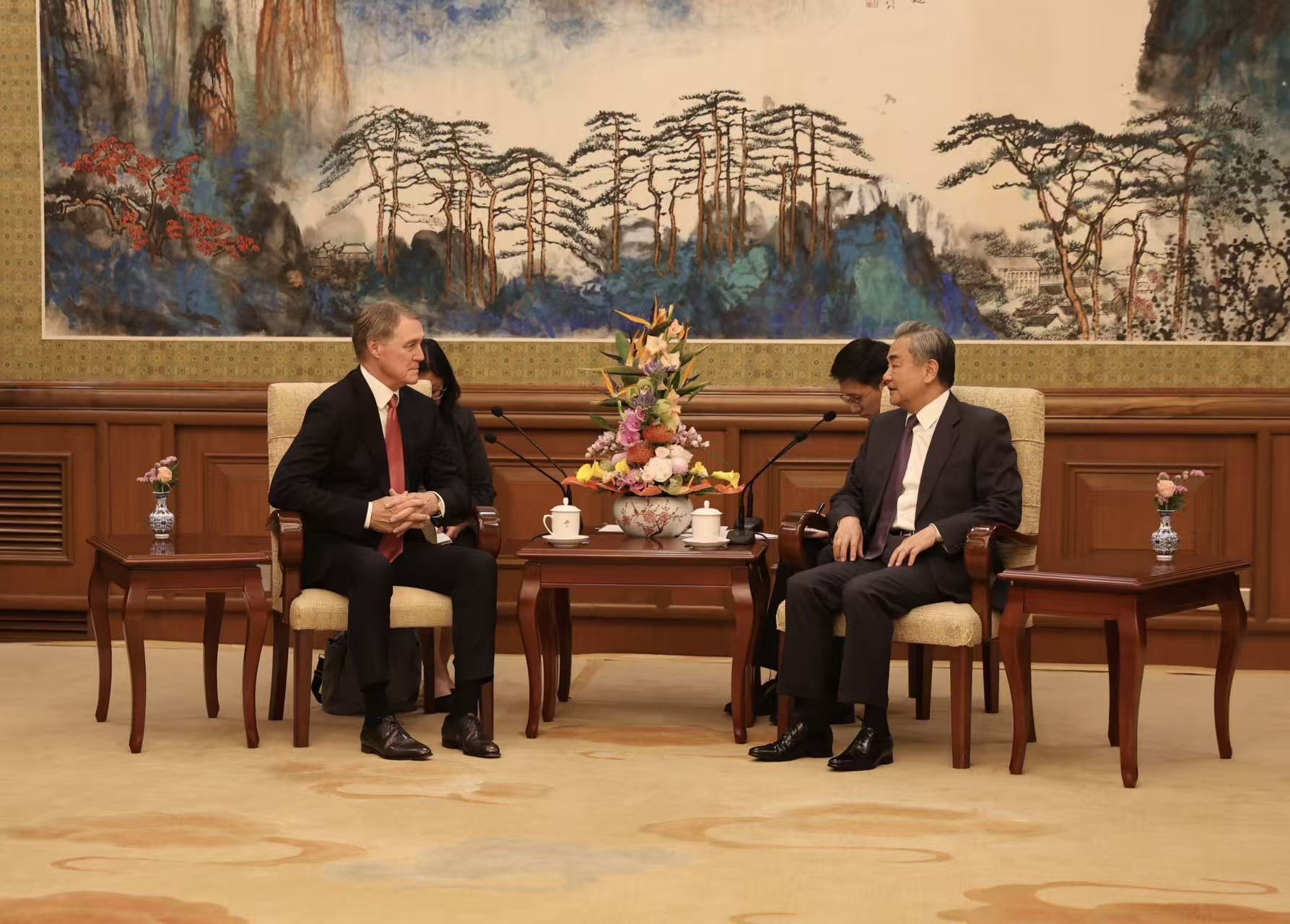
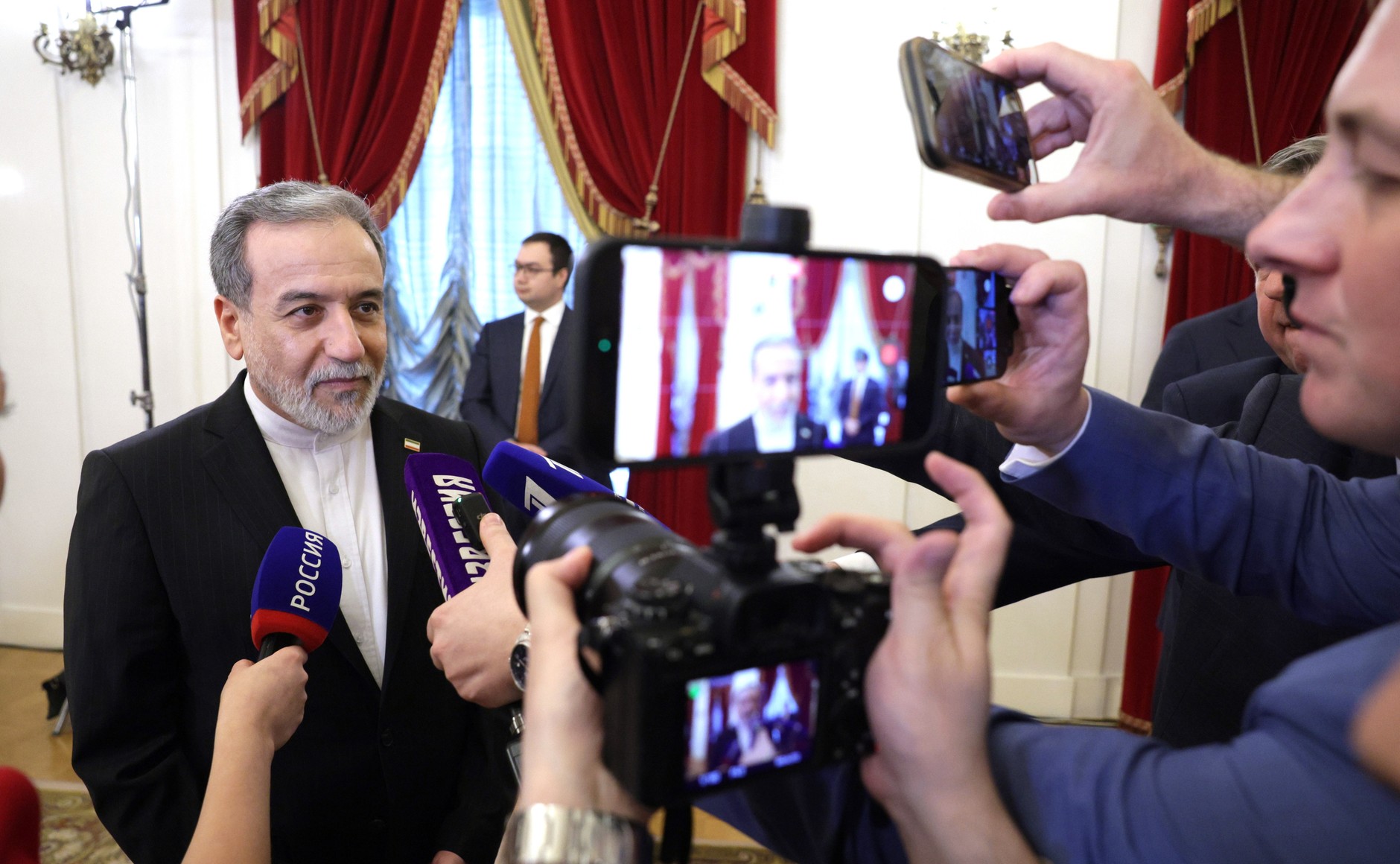
Araghchi went to Beijing on May 6 because Trump arrives there on May 14-15, and Iran needed China’s terms on the table before the Americans set their own. This was the foreign minister’s first China visit since the war began on February 28 — a 67-day gap broken precisely one week before the Trump-Xi summit. The choreography is intentional. Tehran is using Beijing as the venue where conditions get drafted, then daring Washington to cross them.
Marco Rubio appeared to understand this on May 5. The Secretary of State told reporters: “I hope the Chinese tell him what he needs to be told.” Rubio’s framing assumed Beijing would deliver a message. Wang Yi did deliver one — but it was Iran’s message, not Washington’s. China called for “a comprehensive ceasefire,” “a prompt resumption of shipping traffic through the Strait of Hormuz,” and affirmed Iran’s “legitimate right to the peaceful use of nuclear energy.” Each of those formulations is a position Trump cannot simply override when he arrives in Beijing without inviting a public rupture with Xi.
Araghchi’s mandate from Tehran was narrower than the optics suggested. The foreign minister is operating as a courier for a fractured authorization structure in which Ahmad Vahidi at the Supreme National Security Council retains effective veto, Ghalibaf in parliament publicly contradicts cabinet positions, and Mojtaba Khamenei is the only signatory whose ratification binds the IRGC. Araghchi did not go to China to make a deal. He went to make a record.
Wang Yi’s three locked positions
The Chinese foreign minister did something unusual on May 6: he stated three substantive positions on the war in a single readout, then had spokesperson Lin Jian repeat the “comprehensive ceasefire” formulation from the ministry podium. That sequence converts a bilateral talking point into Chinese government policy of record. CGTN ran the readout. The Washington Post and ABC News logged the quotes. Trump cannot now arrive in Beijing claiming Beijing has not stated its terms.
The Middle East briefing 3,000+ readers start their day with.
One email. Every weekday morning. Free.
The first position — “comprehensive ceasefire urgently needed” — translates into a procedural floor. Anything short of full hostilities cessation is rejected by China’s stated framework. The second — “prompt resumption of shipping traffic through the Strait of Hormuz” — looks like a US-aligned ask, but the wording matters: “shipping traffic,” not “freedom of navigation under UNCLOS Article 38.” China is treating Hormuz as a logistics problem, not a sovereignty question. That distinction tracks Iran’s position, not Washington’s. The third — Iran’s “legitimate right to the peaceful use of nuclear energy” — is the JCPOA-era language that Khamenei’s office has used continuously since 2003. Beijing has just put it back in the official channel three days before Oman.
The line that was not in any briefing document but surfaced through SCMP is the one Riyadh should read twice. Wang Yi and Araghchi jointly “voiced support for a new Gulf security framework” to be “established by regional countries with common participation for common interests and common development.” Read literally, that formulation excludes the United States by construction. It is also a formulation in which Saudi Arabia is one regional country among several, alongside Iran — not the convening power, not the security guarantor, not the underwriter. China is sketching an architecture in which the kingdom’s bilateral defense relationship with Washington becomes a legacy item rather than a load-bearing wall.
| Wang Yi position (May 6, 2026) | Translates to | Closer to |
|---|---|---|
| “Comprehensive ceasefire urgently needed” | Procedural floor: no partial deal acceptable | Iran’s position |
| “Prompt resumption of shipping traffic through Hormuz” | Logistics framing, not UNCLOS sovereignty framing | Iran’s position |
| “Iran’s legitimate right to peaceful nuclear energy” | JCPOA-era language reinstated | Iran’s position |
| “Gulf security framework established by regional countries” | External powers (US) excluded by construction | Iran’s position |
The May 11–13–14 sequencing trap
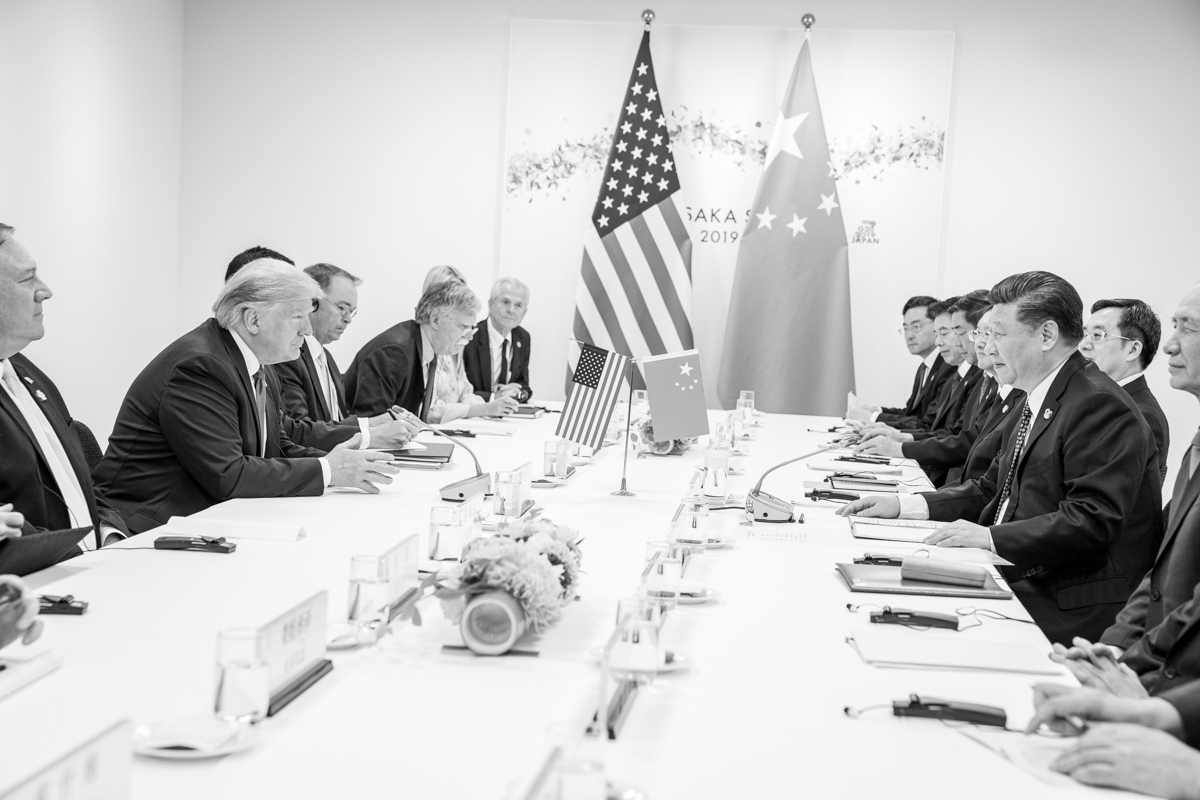
Look at the calendar the way a chief of staff does. May 11 is Oman, the fourth round, the venue where Witkoff and Araghchi run text on the 14-point Iranian proposal Pakistan delivered last week. May 13 is Riyadh: Trump lands, embraces MBS, signs whatever facility deals have been pre-cooked, gives a speech. May 14-15 is Beijing: Trump, Xi, Wang Yi, and a Chinese position paper that Iran’s foreign minister has already underwritten.
Riyadh sits structurally between two rooms it is not in. The Muscat round will set what concessions are on the table — enrichment ceilings, IRGC veto carve-outs, Hormuz transit modalities. Beijing will set what concessions are off the table — anything that contradicts Wang Yi’s three positions becomes a public Chinese loss in a summit that has chip restrictions, Taiwan, and tariff resets stacked behind it. By the time Trump’s plane crosses the Saudi coast on May 13, both ceilings and floors have moved without Riyadh in the room.
What MBS gets is a briefing, not a co-authorship. The kingdom’s room to maneuver in this sequence is reduced to whether it signs the joint communique on May 13 and what defense package it accepts. Compare that to Trump’s two Iran tracks running on American time — the timeline is American, but the policy substance is being shaped by Iran in Beijing, not by Saudi Arabia in Riyadh. The implication is uncomfortable: the United States may be willing to trade Saudi exposure to Iranian pressure for Chinese cooperation on a ceasefire announcement that lets Trump land in Beijing with a deliverable.
Where is Saudi Arabia in this triangle?
Saudi Arabia is not in any of the three rooms. The kingdom is not at the Muscat table — those talks are bilateral US-Iran, mediated by Oman. The kingdom is not at the Beijing table — that is a bilateral Iran-China consultation now feeding into a US-China summit. The kingdom is not at the Pakistani back-channel — Munir’s relay handles Iran-US text, with Riyadh receiving briefings rather than co-drafting.
That exclusion is not new, but its consequences are sharpening. Pre-war, Saudi Arabia’s diplomatic position rested on three pillars: hosting US Central Command-adjacent infrastructure, controlling spare crude capacity OPEC+ used to manage prices, and being the convening power for any Sunni-led regional architecture. The war has eroded all three.
Saudi production has crashed to 7.25 million bpd against an OPEC+ quota of 10.2 million, a gap of nearly 3 million bpd that empties the spare-capacity pillar. The 2023 China-brokered Saudi-Iran normalization established Beijing — not Riyadh — as the authoritative regional convener. The CENTCOM relationship survives, but a Trump White House willing to pre-cook policy in Beijing has narrowed the operational meaning of that relationship to base access and arms sales.
The mechanic to watch is what happens when MBS asks for additions to whatever deal text Trump brings on May 13. The standard ask would be Saudi-specific guarantees: Iranian undertakings on cross-border missile and drone strikes, IRGC withdrawal from Houthi support architecture, an explicit Saudi seat in any Gulf security arrangement. Each of those collides with Wang Yi’s “regional countries with common participation” formulation, which gives Iran an equal vote and treats Saudi-specific demands as bilateral grievances rather than architecture provisions. If Trump accepts Saudi additions in Riyadh, he risks blowing up Beijing 36 hours later. If he tells MBS the additions go in a side letter, the kingdom’s structural concerns get dispatched to a footnote.
“The current situation has actually turned out to be favorable to China.”
Chinese foreign ministry adviser, anonymous, CNN, May 4, 2026
What can Araghchi actually agree to?
Araghchi cannot agree to anything binding in Beijing because he does not control the authorization stack in Tehran. What he could do — and did, at Muscat Round 4 on May 11 — was table a regional enrichment consortium proposal that forces every Arab state to answer whether Iran’s enrichment rights are legally distinguishable from Saudi Arabia’s. That is a position the IRGC authorized. A ceasefire is not. Pezeshkian and Ghalibaf — the elected president and the parliament speaker — described the foreign minister as recently as April 30 as effectively “an aide to Ahmad Vahidi” rather than a cabinet principal. Vahidi runs the Supreme National Security Council under Article 176; the SNSC’s resolutions require Khamenei’s ratification to bind the IRGC; Mojtaba Khamenei has been the audio-only signatory for 60-plus days while his father’s whereabouts remain officially unconfirmed.
That stack means Wang Yi extracted no enforceable Iranian commitments on May 6. He extracted a public position from a foreign minister whose own president has accused his security counterpart of running unauthorized operations — including the IRGC strikes on the UAE that Pezeshkian called “completely irresponsible” and “madness” on May 4. Araghchi’s job in this sequence is not to extract concessions for Iran. It is to keep the channel open while the people who can actually sign — Mojtaba via Vahidi via Khatam al-Anbiya commander Abdollahi — decide whether to sign at all.
The IRGC Navy has been without a named commander for 37 days since Tangsiri’s death on March 30. That vacancy is not bureaucratic — it is the operational nerve center for any Hormuz-related undertaking. China has just publicly committed to “prompt resumption of shipping traffic,” but the entity that actually controls whether shipping resumes — the IRGC Navy — has no signatory. Wang Yi has put a deliverable on Beijing’s record that Tehran cannot deliver.
Why do Iran and China publish different readouts?
Because they are not in fact agreed. China’s official readout on May 6 included Wang Yi’s call for “prompt resumption of shipping traffic through the Strait of Hormuz.” Iran’s Foreign Ministry Telegram readout omitted that line. Two governments publishing different versions of the same meeting is a tell — the Hormuz commitment is China’s position, not a shared one.
The asymmetry is the most operationally important detail of the entire visit. Al Jazeera flagged it within hours: the Chinese-language and international readouts published the Hormuz reopening line; the Persian-language readout did not. That is not translation drift. That is Tehran refusing to ratify in Persian what Beijing put in Chinese. The Hormuz Sovereignty Law moving through the Iranian parliament — 12 articles requiring IRGC coordination, rial-denominated tolls, and bans on vessels from “hostile” states — is incompatible with “prompt resumption” as Beijing defines it. Araghchi let Wang Yi say it in his readout. He did not say it back in his own.
The diplomatic mechanism that asymmetric readouts perform is well documented. Both governments get to claim the meeting produced what they wanted. China gets to tell Trump on May 14-15: “We pressed Iran on Hormuz.” Iran gets to tell its parliament and the IRGC: “We did not concede Hormuz.” Each side runs its own line back to its own audience. The actual point of agreement is narrower than either readout suggests.
China’s Hormuz exposure as bargaining chip
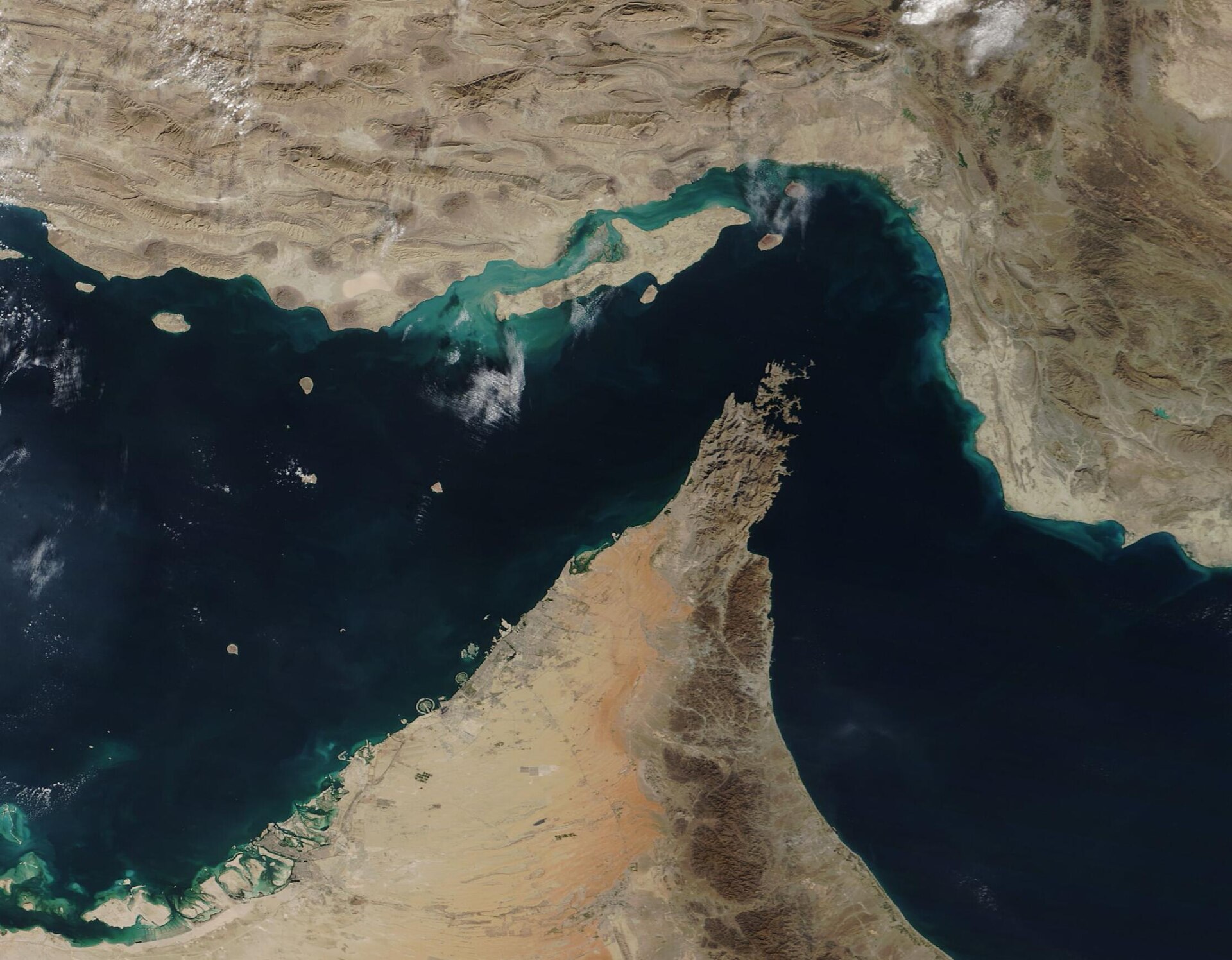
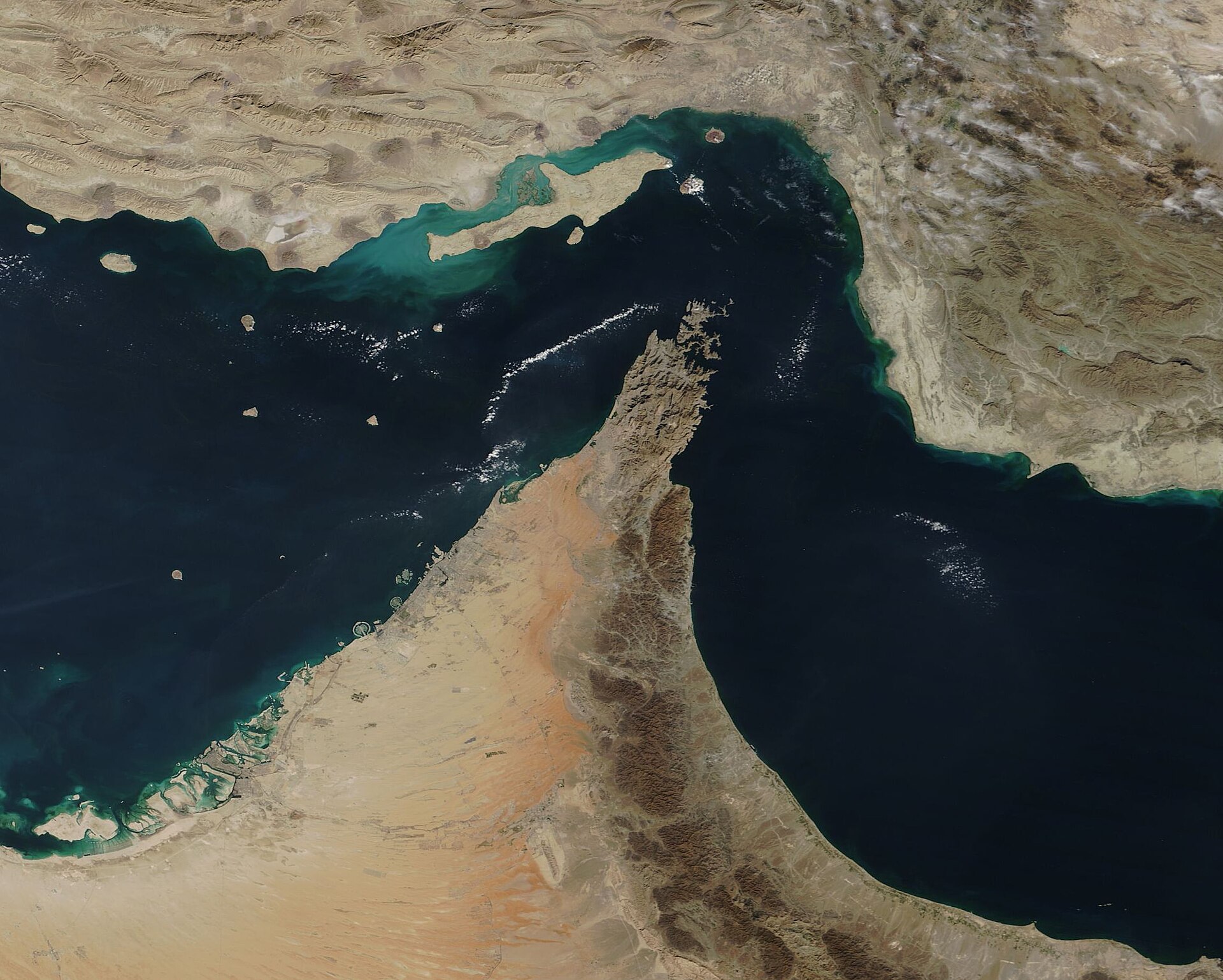
China imports roughly 5.4 million barrels per day of crude through the Strait of Hormuz — at least double its pipeline volumes from Russia. Half of all Chinese crude imports and roughly one-third of its LNG come from the Middle East. Rubio used those numbers on May 5 to argue Beijing has been hit harder than Washington by the closure. The argument is correct on the energy ledger and wrong on the political one.
Beijing pre-stockpiled. Bruegel’s analysis of customs data shows Chinese crude imports surged 16% in January-February 2026 — the two months immediately preceding the war’s outbreak on February 28. That is not coincidence. China bought ahead of a war it saw coming, and the buffer has compressed the political cost of disruption. Meanwhile, 98% of Iranian oil exports go to China, which means Iran’s pull over Beijing operates only when Beijing wants Iranian crude — and Beijing’s stockpile has reduced that want.
What Wang Yi did on May 6 was monetize a temporary informational advantage. China’s Hormuz call lets Beijing tell Washington it is pressuring Tehran, while telling Tehran the call is a diplomatic ritual not a delivery deadline. The political bargaining chip — being seen to act on Hormuz — is worth more to Xi than the energy chip, because the energy chip has been hedged in advance. Trump arrives in Beijing on May 14-15 with no basis to demand Chinese pressure on Iran beyond what Beijing has already publicly volunteered.
| Metric | Figure | Source |
|---|---|---|
| Chinese crude imports through Hormuz | ~5.4 million bpd | Bruegel, 2026 |
| Iranian oil exports going to China | ~98% | CNBC, 2026 |
| Chinese crude import surge Jan-Feb 2026 | +16% (pre-war stockpiling) | Bruegel, 2026 |
| China-Iran 25-year agreement (2021) | $400 billion notional | 2021 framework |
| Days between Araghchi visit and Trump-Xi summit | 8 days | Calendar, May 6 → May 14-15 |
UNCLOS, Iran, and the law of who controls the strait
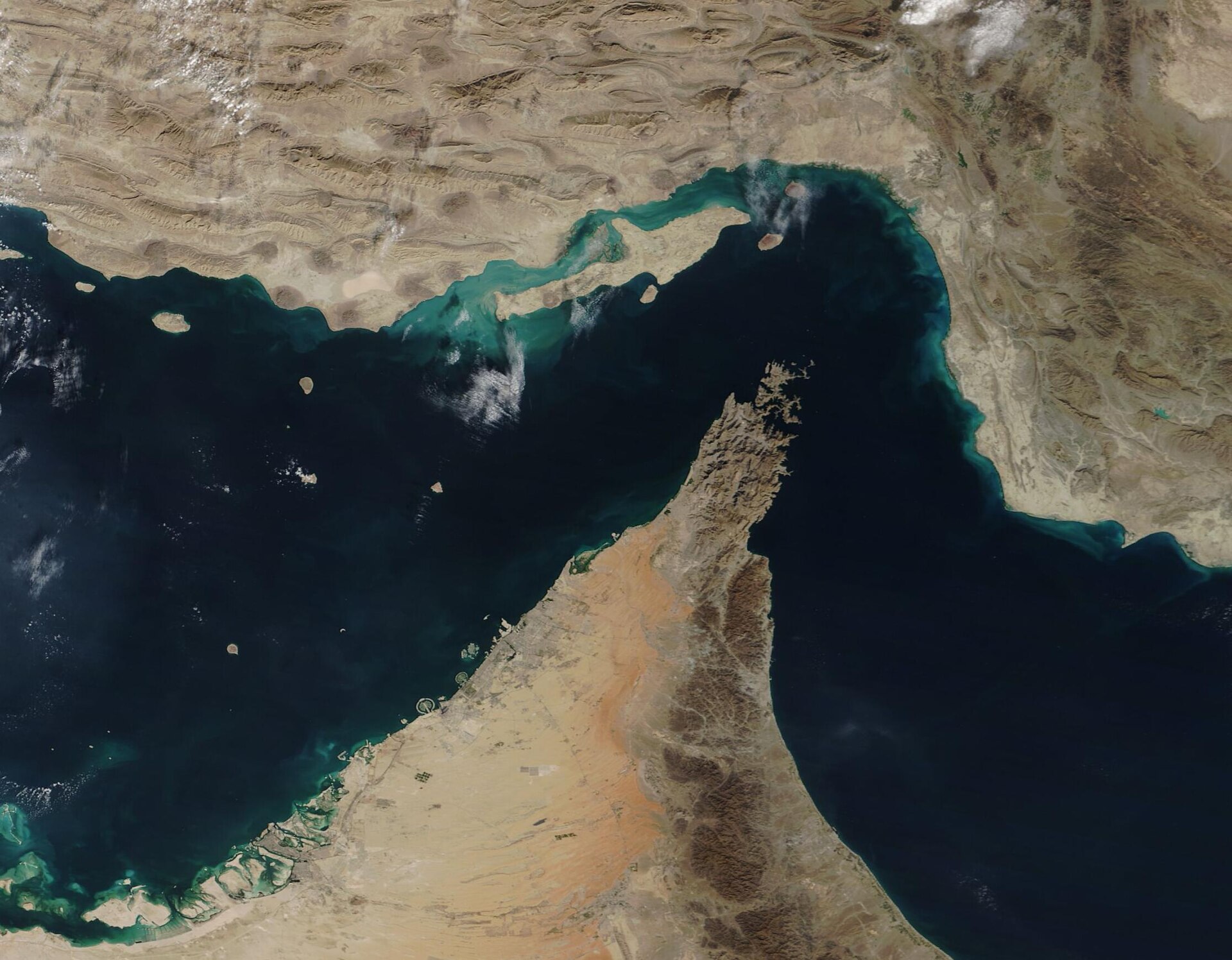
One detail in Wang Yi’s language deserves a lawyer’s attention. The Chinese foreign minister did not invoke UNCLOS Article 38 transit passage. He talked about “shipping traffic” and “stability.” That is not accidental. Iran signed UNCLOS in 1982 but never ratified it; China ratified UNCLOS but with interpretive declarations that diverge from the US Freedom of Navigation Operations doctrine. On the legal status of Hormuz, China and Iran sit closer to each other than either sits to Washington.
The Iranian parliament’s 12-article Hormuz Sovereignty Law — advancing through committee since April 21 — frames the strait as a national territorial waters question rather than an international transit corridor. That framing is incompatible with the standard US position. It is not incompatible with the Chinese position, because Beijing’s UNCLOS interpretive addenda treat coastal-state jurisdiction expansively. When Wang Yi calls for “prompt resumption of shipping traffic” without invoking transit passage rights, he is leaving Iran’s sovereignty framework intact. The Hormuz Sovereignty Law is a structural project Project Freedom cannot repeal — and China just declined to challenge it in writing.
For Riyadh, that legal asymmetry has direct consequences. Saudi crude exports through Hormuz operate on the assumption that the strait is an international waterway in which neither coastal state can extract tolls or impose conditions. If a deal that emerges from Muscat-Beijing-Riyadh leaves Iran’s sovereignty framework standing — even informally — the kingdom’s exports are conditioned on Iranian goodwill rather than international law. That is the architecture Washington’s Hormuz-first concession is already conceding to the IRGC, and Wang Yi has now reinforced it from Beijing.
What Riyadh can still do before May 13
The kingdom has roughly 168 hours between Wang Yi’s readout and Trump’s arrival to shape the deal text MBS will be handed. The available levers are narrow but real. First, Riyadh can call Witkoff before Muscat and put Saudi-specific red lines into the US negotiating brief — IRGC withdrawal from Yemen support, drone-and-missile undertakings, an explicit Saudi role in any Gulf security framework. That demands the Crown Prince trade something for placement; the obvious chip is the Vision 2030 investment language Trump will want to announce on May 13.
Second, Riyadh can use Pakistan. Iran’s 14-point proposal moves through Pakistan, and Munir owes Saudi Arabia for the $5 billion loan maturing in June. A Saudi message routed via Munir to Tehran — that the kingdom will not underwrite reconstruction or normalize relations on terms set in Beijing — has more bite than a public statement. The downside is that any leak of such a message strengthens the IRGC hawks who claim Saudi-Iranian rapprochement was always conditional. The upside is that Tehran’s authorization stack is the actual decision-maker, and Munir is the only outside actor with a direct line into it.
Third, Riyadh can move the energy lever. Reactivating spare capacity — even partially — to a level that signals OPEC+ discipline survives the war independent of Iranian re-entry would change Trump’s position in Beijing. Xi cares about price stability; a credible Saudi signal that prices will be managed by OPEC+ regardless of the deal text gives Trump something to trade. The risk is fiscal. Both Hormuz coalitions need Riyadh — but Riyadh needs a war that ends in a way the kingdom can finance, not in a way the kingdom is told to bankroll.
“Each side has sufficient leverage over the other side in the trade and investment relationship, and this leverage has not changed.”
— William Klein, retired US diplomat, CNN, May 4, 2026
What happens after May 15?
The most important question about the Beijing visit is the one no one has asked publicly. If Trump and Xi emerge from their May 14-15 summit with a joint statement endorsing Wang Yi’s three positions — comprehensive ceasefire, Hormuz reopening, Iran’s peaceful nuclear right — the political architecture of any subsequent deal is locked. Saudi Arabia would then be operating inside a framework written in Tehran, edited in Muscat, ratified in Beijing, and announced in Washington. Riyadh’s role would be to write the cheques.
The alternative scenario is that the IRGC collapses the framework. Vahidi vetoes Araghchi’s Beijing language; Mojtaba does not ratify; the SNSC’s authorization on Hormuz reopening fails to materialize; the May 11 Muscat round produces no text Witkoff can take to Trump. In that scenario, the Beijing summit happens with no Iran deliverable, China loses the pressure-on-Iran narrative, and Trump arrives in Riyadh on May 13 with the war intact and the kingdom’s exposure unchanged. That outcome is structurally more consistent with how Iran’s authorization stack has actually functioned for 67 days than the breakthrough scenario.
Either way, the diagnostic moment is May 11. If Araghchi shows up in Muscat with the same language he gave Wang Yi — and if Vahidi has signed off on it — the Beijing-led architecture moves forward. If the foreign minister hedges, contradicts his Beijing readout, or invokes the parliament’s Hormuz Sovereignty Law as a constraint, the Iranian authorization ceiling has reasserted itself and the entire May 14-15 summit becomes about other matters. Riyadh should be reading Muscat readouts, not Beijing readouts.
FAQ
Did the May 6 Wang Yi-Araghchi meeting produce a binding agreement? No. Joint readouts from bilateral foreign minister meetings are political signals, not binding instruments. The asymmetry between China’s published readout (which included Hormuz reopening language) and Iran’s Telegram readout (which did not) confirms there is no shared text. Beijing-Tehran joint communiques on enforceable matters historically run through the National Development and Reform Commission and Iran’s Supreme National Security Council, not through bilateral foreign minister statements. Neither was involved on May 6.
Has China previously brokered a Middle East deal without being a security guarantor? Yes. The March 10, 2023 Saudi-Iran normalization was brokered in Beijing with Wang Yi as facilitator, but China assumed no enforcement role — neither party could call on Beijing to penalize the other for violations. That precedent is the template for what Wang Yi is signaling now: convening power without underwriting power. The Saudi side was reportedly skeptical of the durability of this model when it was used in 2023, and the durability question has only sharpened since the war’s outbreak.
What is the legal status of the Iranian parliament’s Hormuz Sovereignty Law? The 12-article bill cleared committee review on April 21 and is awaiting a plenary floor vote. Under Article 94 of the Iranian constitution, parliament-passed laws require Guardian Council certification — historically a 3-to-6 week process for security legislation. If passed and certified before any deal is signed, the law becomes a domestic legal constraint that Iranian negotiators can invoke as a hard ceiling, identical in function to how the US Senate’s two-thirds treaty rule has historically constrained American executive negotiating positions.
Why is Pakistan in the diplomatic chain at all? Pakistan has acted as Iran’s “protecting power” with the United States since 1992, when the Swiss assignment was supplemented by Pakistani channels for sensitive communications. The current war has elevated that role: Asim Munir’s army-to-army channel with Tehran (via the Quds Force liaison) and his bilateral relationship with MBS make him the only external actor with simultaneous credibility in Tehran, Riyadh, and Washington. The 14-point Iranian proposal was delivered via Pakistan in late April; the US response went back via Pakistan around May 4.
What does “98% of Iranian oil exports go to China” actually mean operationally? The figure refers to seaborne Iranian crude exports during 2025 — primarily routed via ship-to-ship transfers off Malaysian and Singaporean waters using vessels with falsified flags and AIS data. Roughly 1.4-1.6 million bpd at peak, paid in yuan via Kunlun Bank and other secondary Chinese institutions outside SWIFT. Since the war began February 28, those flows have been disrupted by Hormuz closure and CENTCOM’s April 13 enforcement action — but the underlying commercial architecture (sanctioned tankers, yuan settlement, Chinese teapot refineries) remains intact and would resume rapidly if Hormuz reopens. How Beijing leverages that commercial architecture to extract tariff concessions from Trump before applying pressure on Tehran — and what that means for the Riyadh deadline — is the subject of Trump’s Riyadh-Beijing Sprint and the Clock Only Xi Controls.