DHAHRAN — The memo of understanding being negotiated between Washington and Tehran offers a thirty-day window to resolve the conditions under which the Strait of Hormuz reopens. The Pentagon has told Congress that clearing Iranian mines from the strait will take six months — and that operations cannot begin in earnest until the conflict formally ends. Saudi Arabia, which absorbs the entirety of the physical, fiscal, and commercial costs generated by the gap between these two timelines, has no seat at the US-Iran bilateral where the Hormuz security architecture is being designed. On May 11, Aramco will hold its Q1 earnings call — reporting record profits on 30 percent less oil — on the same day that US and Iranian negotiators convene in Oman for their fourth round. The market will price in MOU optimism. The Strait will remain physically impassable. And Riyadh will be briefed afterward. The oil price collapse on May 6 showed how deal optimism is already compounding Saudi Arabia’s fiscal exposure before a single additional barrel clears the strait.
Table of Contents
- What Does the MOU’s Thirty-Day Window Actually Promise?
- The Mine-Clearance Clock Runs on Physics, Not Diplomacy
- Why Can’t Saudi Arabia Reopen Hormuz Within the Negotiation Window?
- May 11: When Aramco’s Earnings Call Collides with the Oman Round
- How Does the OSP Trap Work When Hormuz Cannot Physically Reopen?
- The JCPOA Precedent Shows What Exclusion Produces
- Who Decides What Hormuz Looks Like After the MOU?
- The Structural Gap Diplomacy Cannot Bridge
What Does the MOU’s Thirty-Day Window Actually Promise?
The one-page MOU framework reported by Axios and confirmed by CNN on May 6, 2026, establishes a thirty-day negotiation window following signature. Within that window, the United States and Iran are expected to finalize terms on three interlocking issues: an enrichment moratorium exceeding ten years, the shipment of Iran’s stockpile of highly enriched uranium to the United States, and the reopening of the Strait of Hormuz.
Iran’s Foreign Ministry spokesman Esmaeil Baghaei confirmed on May 3 that “the Americans have given their answer to Iran’s 14-point plan to the Pakistani side, and we are currently reviewing it.” He simultaneously stated that Iran’s proposal “is centred on ending the war. There are absolutely no details regarding the country’s nuclear issues in this proposal.” The gap between these two positions — a US framework that packages nuclear and Hormuz issues together, and an Iranian framework that explicitly separates them — defines the structural incoherence the thirty-day window must somehow resolve.
Iran’s FM subsequently “strongly rejected” the Axios characterization of the MOU terms while confirming Tehran is “still examining” the latest US proposal. Al Jazeera posed the question directly on May 6: has the United States accepted Iran’s demand to settle Hormuz first and nuclear issues later? No answer has been forthcoming. The sequencing dispute hands the IRGC a structural veto over the nuclear track regardless of what the MOU’s text says.
What the thirty-day window does not contain is any mechanism for physical implementation. It is a diplomatic instrument operating on diplomatic timelines. The Strait of Hormuz operates on physical ones.
The Mine-Clearance Clock Runs on Physics, Not Diplomacy
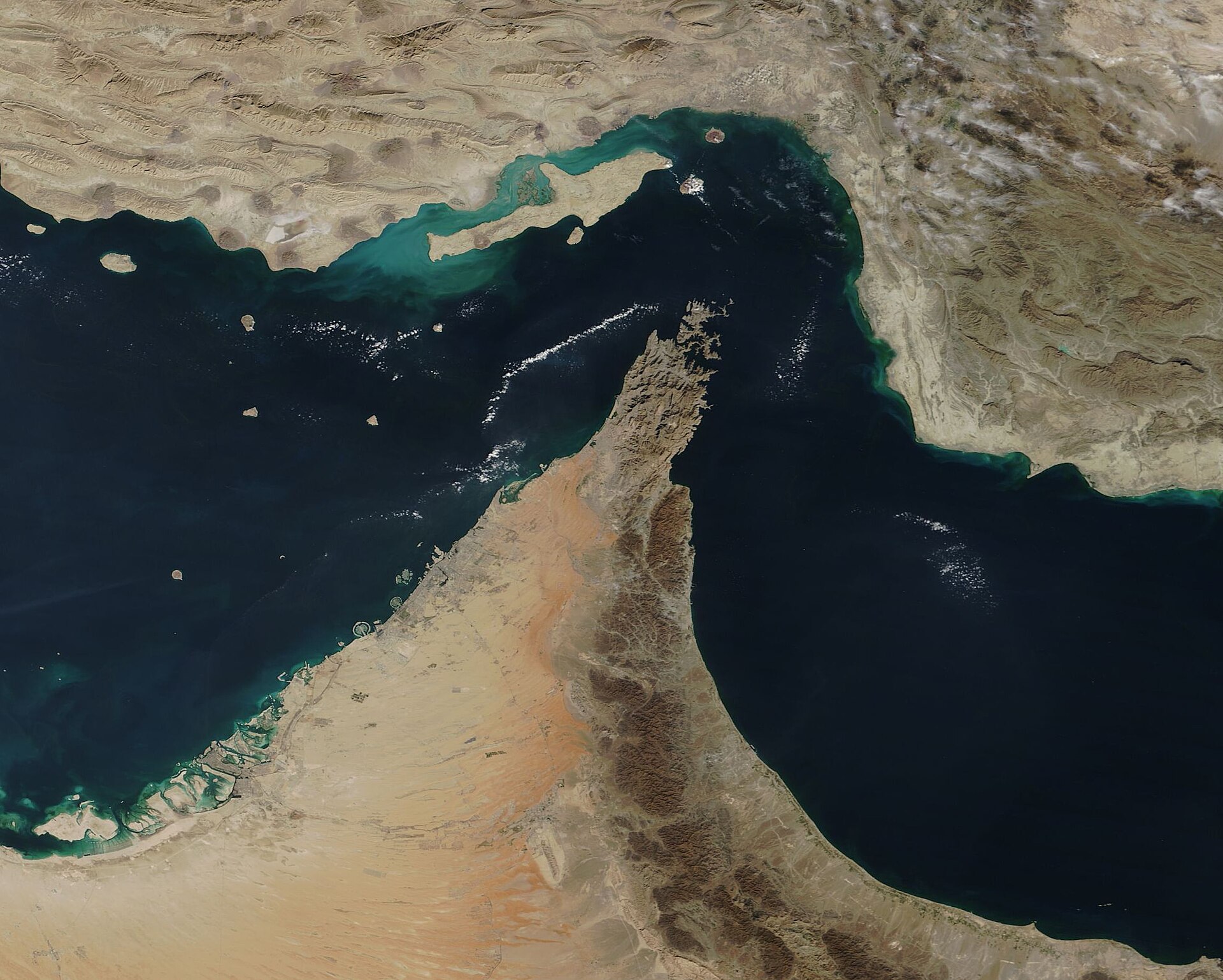
On April 22, 2026, Pentagon officials told Congress that mine clearance of the Strait of Hormuz “could take six months” and that operations “cannot begin in earnest until the conflict formally ends.” This testimony, reported by the Washington Post, establishes the foundational physical constraint that the MOU’s thirty-day window cannot override.
The Middle East briefing 3,000+ readers start their day with.
One email. Every weekday morning. Free.
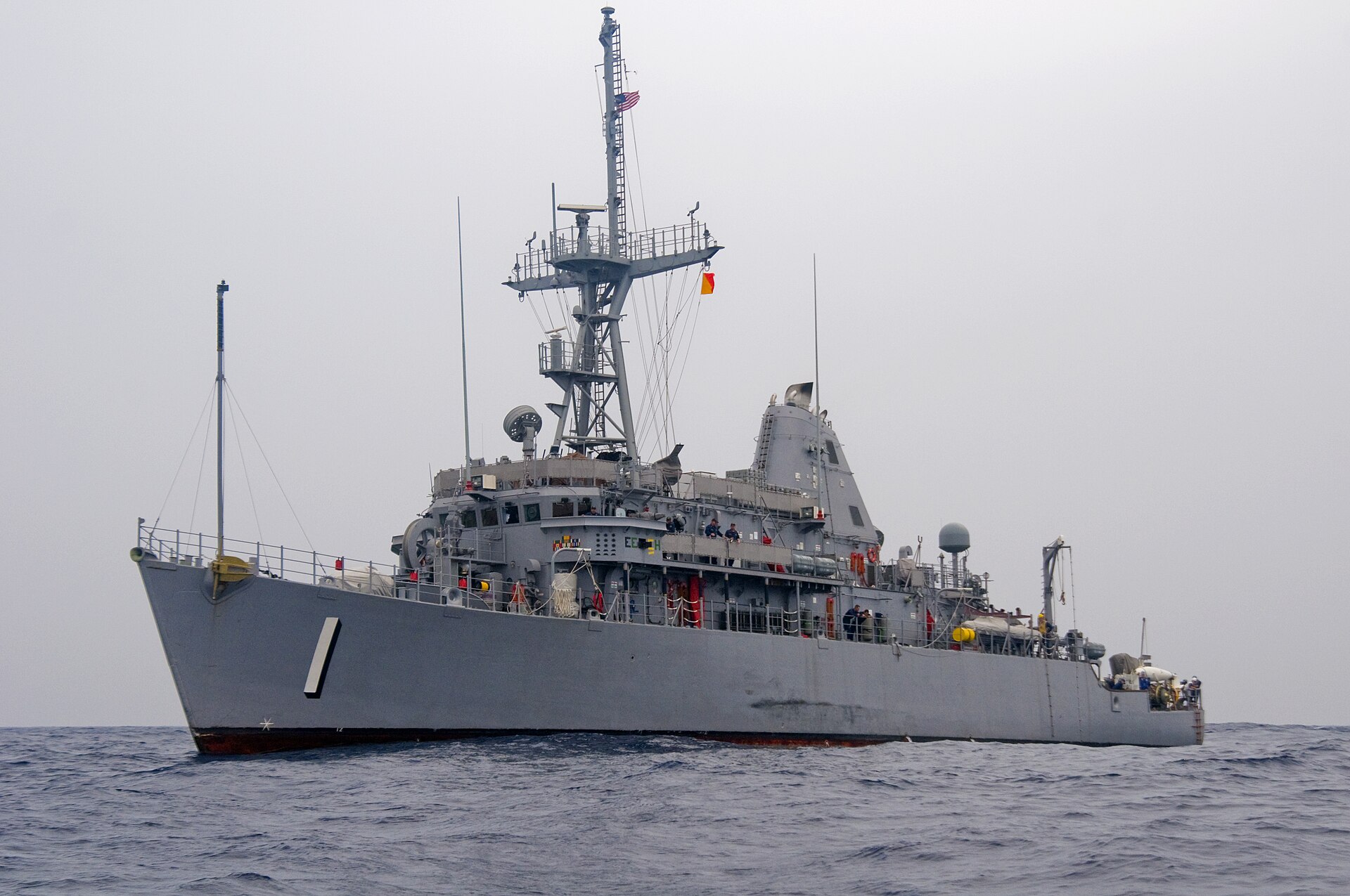
The constraint is compounded by capacity. Four Avenger-class mine countermeasures ships — the US Navy’s dedicated MCM platforms stationed at Bahrain — were decommissioned in September 2025, five months before the conflict began. CENTCOM announced on April 11 that it had begun “setting conditions” for mine clearance using two guided-missile destroyers, DDG-121 and DDG-112. These are surface combatants. They are not purpose-built mine-hunting vessels. The distinction matters: a destroyer can transit a mined waterway at speed; it cannot methodically clear one.
Project Freedom, launched May 4 as an armed escort operation to move commercial vessels through Hormuz, managed two ships in 48 hours before being paused on May 5 — with Reuters reporting the pause followed at Pakistan’s request as MOU talks advanced. Helima Croft, Managing Director and Head of Global Commodity Strategy at RBC Capital Markets, assessed the operation as “likely not sufficient to start the process of normalizing Hormuz transit.” She added on CNBC that “companies are still saying it is not safe to traverse the Strait of Hormuz.”
NBC News and The National confirmed on May 6 a fact that collapses the MOU’s optimistic framing entirely: Iranian military intelligence has lost track of the full extent of sea mines planted in Hormuz. A politically willing Iran cannot certify the strait as clear because its own forces do not know where all the ordnance is. The structural inadequacy of Project Freedom is not a function of political will. It is a function of physics.
The benchmark for modern mine clearance is Kuwait 1991, where clearing approximately 200 square miles of mined waterway required 51 days — with a full international MCM fleet deployed and zero ongoing hostilities. The Hormuz shipping lanes encompass a far larger area, the available MCM capacity is a fraction of what was deployed in 1991, and the conflict has not formally ended.
Why Can’t Saudi Arabia Reopen Hormuz Within the Negotiation Window?
Saudi Arabia cannot reopen Hormuz within the MOU’s thirty-day window because the Kingdom controls none of the three variables that determine when the Strait becomes physically passable: the diplomatic end-state that triggers clearance operations, the mine-countermeasures capacity that executes clearance, and the Iranian administrative framework that governs post-clearance transit.
The first variable is bilateral. The MOU is a US-Iran instrument. Saudi Foreign Minister Prince Faisal bin Farhan has been “briefed on developments related to the ceasefire” — the language of a passive recipient, not a participant. Chatham House’s published assessment of how the Iran war is reshaping Saudi strategy addresses this directly: Riyadh is adapting to outcomes it did not negotiate.
The second variable is military. Mine-clearance capacity belongs to the US Fifth Fleet and whatever allied MCM assets can be assembled. Saudi Arabia’s Eastern Fleet operates in the Persian Gulf, but its mine-warfare capability is limited to four Sandown-class coastal minehunters — vessels designed for the shallow waters of the Gulf, not the deep-water approach channels of Hormuz.
The third variable is adversarial. Iran’s 10-point plan, Point 7, demands “controlled passage through the Strait of Hormuz in coordination with the Iranian armed forces.” The Persian Gulf Strait Authority that Tehran announced would codify IRGC administrative authority over transit as the permanent post-war governance framework. Iran’s parliament is advancing a 12-article Hormuz sovereignty law that would convert this into domestic legislation — creating a lock-in that any MOU must navigate but that Saudi Arabia has no mechanism to contest at the negotiating table.
The IRGC Navy’s May 6 statement promised safe passage but set a precondition — “aggressors’ threats neutralized” — that the US blockade of Iranian ports has not met. The conditional language is non-operative. Hormuz remains closed regardless of what the MOU’s text promises within thirty days.
May 11: When Aramco’s Earnings Call Collides with the Oman Round
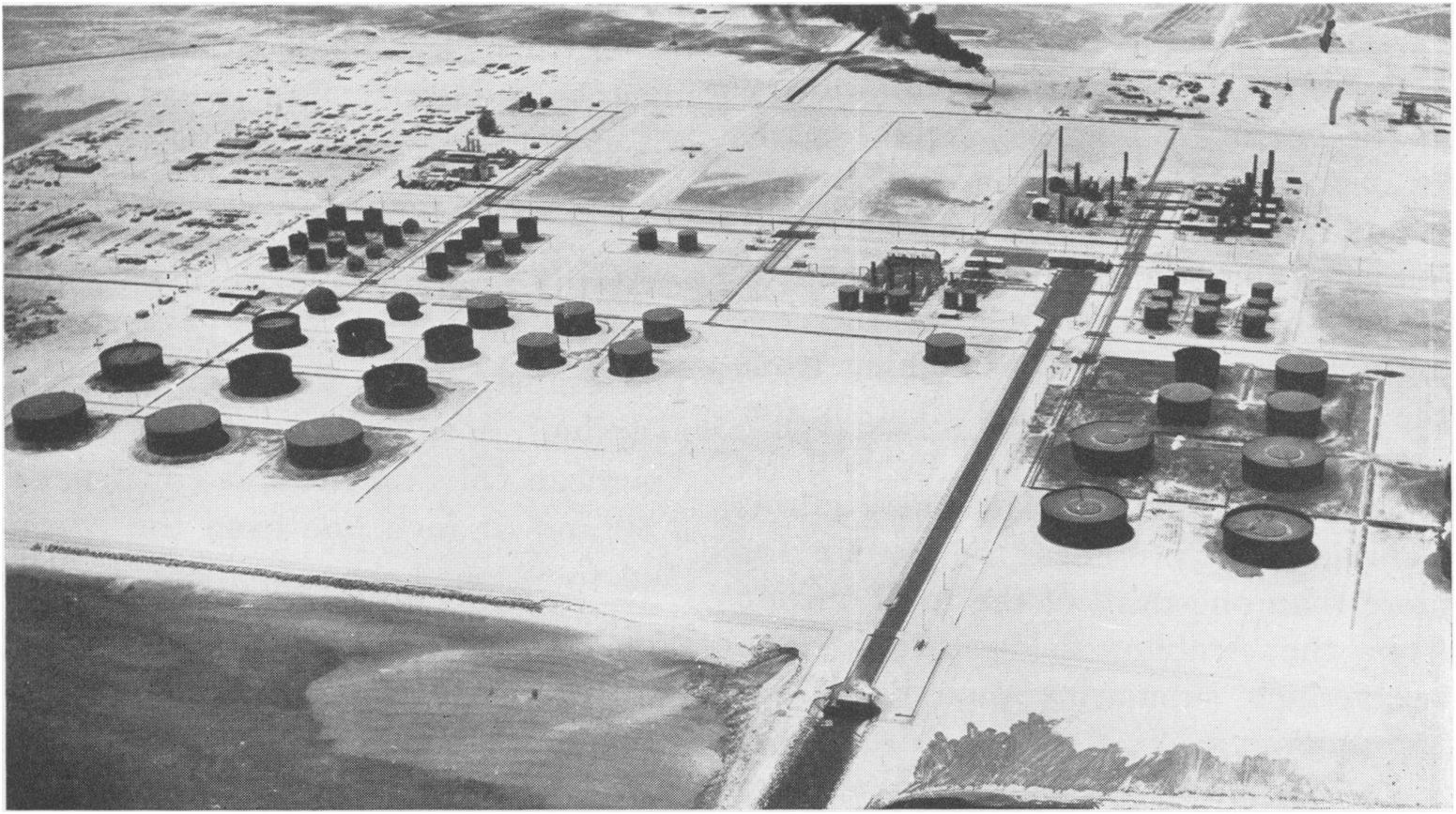
Saudi Aramco will report Q1 2026 results on May 10 and hold its earnings call on May 11. Analysts forecast net profit of SAR 108.8 billion ($29.01 billion) — a 57 percent jump quarter-on-quarter and 13.8 percent year-on-year — driven by a 24.8 percent surge in crude oil prices during Q1. On the same day, May 11, US and Iranian negotiators convene in Oman for the fourth round of bilateral talks.
Aramco will report into a market primed by MOU optimism — the belief that a deal is imminent, that Hormuz will reopen, that the war-premium in crude prices will dissipate. If Aramco’s executives cannot articulate when physical volumes will recover to pre-war levels, the market will do its own arithmetic. A company earning record profits on 30 percent less oil is a company whose revenue base is structurally diminished even at elevated prices.
Saudi output collapsed from 10.4 million barrels per day in February 2026 to 7.25 million bpd in March — a 3.15 million bpd drop, or 30 percent of production capacity, gone in a single month. The IEA confirmed this as the physical context. Aramco’s Q1 profits are a war artifact: elevated price multiplied by reduced volume produces a higher per-barrel margin but a lower absolute revenue base for the sovereign.
Aramco was designed at its 2019 IPO as a commercially independent entity whose profitability is insulated from Saudi sovereign fiscal pressures. The Iran war has stress-tested that design to failure. Aramco reports record quarterly profits. The Saudi sovereign is simultaneously borrowing approximately $57.9 billion in 2026 to fund operations. The company is profitable. The state needs to borrow. The designed separation between corporate returns and sovereign fiscal health — the intellectual architecture of the IPO itself — is now producing its intended output at the worst possible moment.
Goldman Sachs estimates the war-adjusted Saudi deficit at $80-90 billion, against an official projected deficit of $44 billion. The fiscal arithmetic does not improve even if the MOU is signed on May 11, because the physical constraint — six months of mine clearance before Hormuz reopens — means Saudi production cannot recover to pre-war levels within the current fiscal year regardless of diplomatic outcomes.
| Metric | Figure | Source |
|---|---|---|
| Q1 2026 net profit (consensus) | SAR 108.8B ($29.01B) | Zawya / Reuters wire |
| Q-o-Q profit surge | +57% | TradingView / Argaam |
| Y-o-Y profit increase | +13.8% | Argaam |
| Saudi output (February 2026) | 10.4M bpd | IEA |
| Saudi output (March 2026) | 7.25M bpd | IEA |
| Production collapse | -3.15M bpd (-30%) | IEA |
| 2026 sovereign borrowing | ~$57.9B | Bloomberg / Saudi MoF filings |
| Goldman war-adjusted deficit | $80-90B | Goldman Sachs |
| Official projected deficit | $44B | Saudi MoF |
How Does the OSP Trap Work When Hormuz Cannot Physically Reopen?
Aramco’s Official Selling Price is a monthly differential set before cargo loading. It is not negotiable retroactively. There is no price review clause. The May OSP for Arab Light to Asia was set at +$19.50 per barrel above the Oman/Dubai benchmark — established when Brent was approximately $109. With Brent currently at $112, the May differential is $15-17 underwater relative to spot market conditions. Asian term contract buyers who locked into May cargoes have no legal mechanism to recoup the premium.
The OSP formula, as documented by S&P Global Platts, incorporates refining margins, benchmark structure movement, crude competitiveness, quality adjustment, and timing mechanism. What it does not incorporate is a force majeure clause, a conflict adjustment, or any retroactive relief provision. The formula was designed for peacetime commodity markets in which the differential represents a quality and logistics premium, not a war-risk surcharge with no corresponding delivery guarantee.
Aramco has already set the June OSP at +$15.50/bbl above Oman/Dubai — a $4/bbl cut from May’s record level, but still among the highest differentials in the modern pricing era. The cut acknowledges market dislocation without addressing it. Asian refiners — Reliance, Sinopec, SK Innovation, ENEOS — are absorbing a structural premium for barrels that must route through Yanbu at reduced volumes, with no timeline for Hormuz reopening that would restore the logistics baseline on which the original term contracts were negotiated.
The MOU’s thirty-day optimism will create a specific commercial trap. If markets price in a deal and Brent softens, the June OSP differential becomes even more punitive in absolute terms. If Brent holds at $112, the differential represents a premium that Asian buyers are paying for access to Saudi crude that is physically constrained to Yanbu’s 5.9 million bpd ceiling — a price Saudi Arabia cannot afford to see either rise or fall.
There is no modern peacetime precedent for an OSP differential this elevated persisting for this long. The closest analog is the 1990 Gulf War period, when Saudi OSPs spiked briefly before normalizing within weeks as Hormuz remained open. In 2026, the differential has persisted for over two months with no physical reopening in prospect.
The JCPOA Precedent Shows What Exclusion Produces
When Oman facilitated secret US-Iran talks in 2012-2013 that led to the Joint Comprehensive Plan of Action, GCC states including Saudi Arabia were, as the New Lines Institute documented, “unaware of the talks and were understandably stunned.” The JCPOA was signed on July 14, 2015. Adoption Day was October 18, 2015. Implementation Day — when sanctions were actually lifted — was January 16, 2016. Six months elapsed between framework and operational implementation, and the JCPOA did not require physical infrastructure clearance as a prerequisite.
The JCPOA’s gaps are precisely the items dominating the 2026 negotiations. The 2015 deal contained no limits on ballistic missiles. No restrictions on proxy financing. No Hormuz governance provisions. These three absences are not historical curiosities — they are the structural conditions that enabled the 2026 conflict. The New Lines Institute assessment is direct: the issues at Islamabad “are not peripheral to Saudi security. They are Saudi security.”
The MOU framework replicates the JCPOA’s structural architecture with one critical addition: it promises physical outcomes (Hormuz reopening) that the JCPOA never attempted. The 2015 deal was purely regulatory — sanctions lifted in exchange for enrichment limits, verified by IAEA inspections. The 2026 framework demands physical mine clearance, naval redeployment, and the creation of a Hormuz transit governance system. Each of these requires more time, more operational capacity, and more stakeholder coordination than anything the JCPOA attempted. Yet the 2026 framework allocates thirty days where the JCPOA took six months for purely administrative implementation.
Saudi Arabia’s exclusion from the JCPOA produced a decade of regional policy designed to compensate for the deal’s gaps — the Yemen intervention, the Qatar blockade, the Abraham Accords, the NEOM and Vision 2030 diversification sprint, the $100 billion war expenditure. Each was, in part, a response to the security architecture deficit that exclusion from the 2015 negotiations created. The 2026 MOU framework is now replicating the structural conditions of that exclusion while the costs of the previous exclusion are still being absorbed. The latest compensatory move came on May 6 in Ankara, where Saudi Arabia, Turkey, Pakistan and Egypt institutionalised a four-way security framework designed to give Riyadh a forum with genuine enforcement capacity that operates entirely outside the US-Iran bilateral track. The structural dynamics of Saudi Arabia’s exclusion across the critical May 13–15 window — when Trump visits Riyadh and then flies to Beijing for the summit where Iran’s fate is decided without Riyadh’s input — are detailed in Seventy-Two Hours in Riyadh: Indispensable, Powerless, and Not in the Room.
Who Decides What Hormuz Looks Like After the MOU?
The MOU’s thirty-day window is the period in which the post-war Hormuz governance architecture gets designed. The negotiation runs on American time, not Riyadh’s. The parties at the table are the United States — whose interest is nuclear non-proliferation and domestic political returns — and Iran — whose interest is sanctions relief and sovereignty validation. Saudi Arabia’s interest — unrestricted commercial access to its primary export waterway without IRGC administrative oversight — is structurally unrepresented.
The IRGC’s conditional language on May 6 — “with aggressors’ threats neutralized and new protocols in place” — reveals the architecture being sought. “New protocols” is governance language. It means rules that did not exist before, administered by an authority that did not previously hold jurisdiction. If those protocols are negotiated within the MOU’s thirty-day window by parties that do not include Saudi Arabia, Riyadh will face a permanent transit framework designed without its input but applying exclusively to its commercial flows.
Both Hormuz coalitions need Riyadh — the US needs Saudi production to hold post-war energy security, and Iran needs Saudi acquiescence to legitimize any transit authority. But need is not the same as inclusion. The thirty-day window creates facts on the ground — or, more precisely, facts in the text — that constrain all subsequent negotiations. What is agreed bilaterally becomes the baseline. What is not contested during the window becomes the default.
Araghchi’s pre-positioning in Beijing compounds the dynamic. China — Saudi Arabia’s largest crude customer, absorbing approximately 1.7 million bpd of Saudi exports pre-war — has its own interest in Hormuz governance that aligns with neither Riyadh’s nor Washington’s. If the MOU framework accommodates Chinese transit guarantees negotiated through Tehran, Saudi Arabia’s commercial leverage over its own primary customer erodes regardless of what the bilateral text says about “reopening.”
The Structural Gap Diplomacy Cannot Bridge
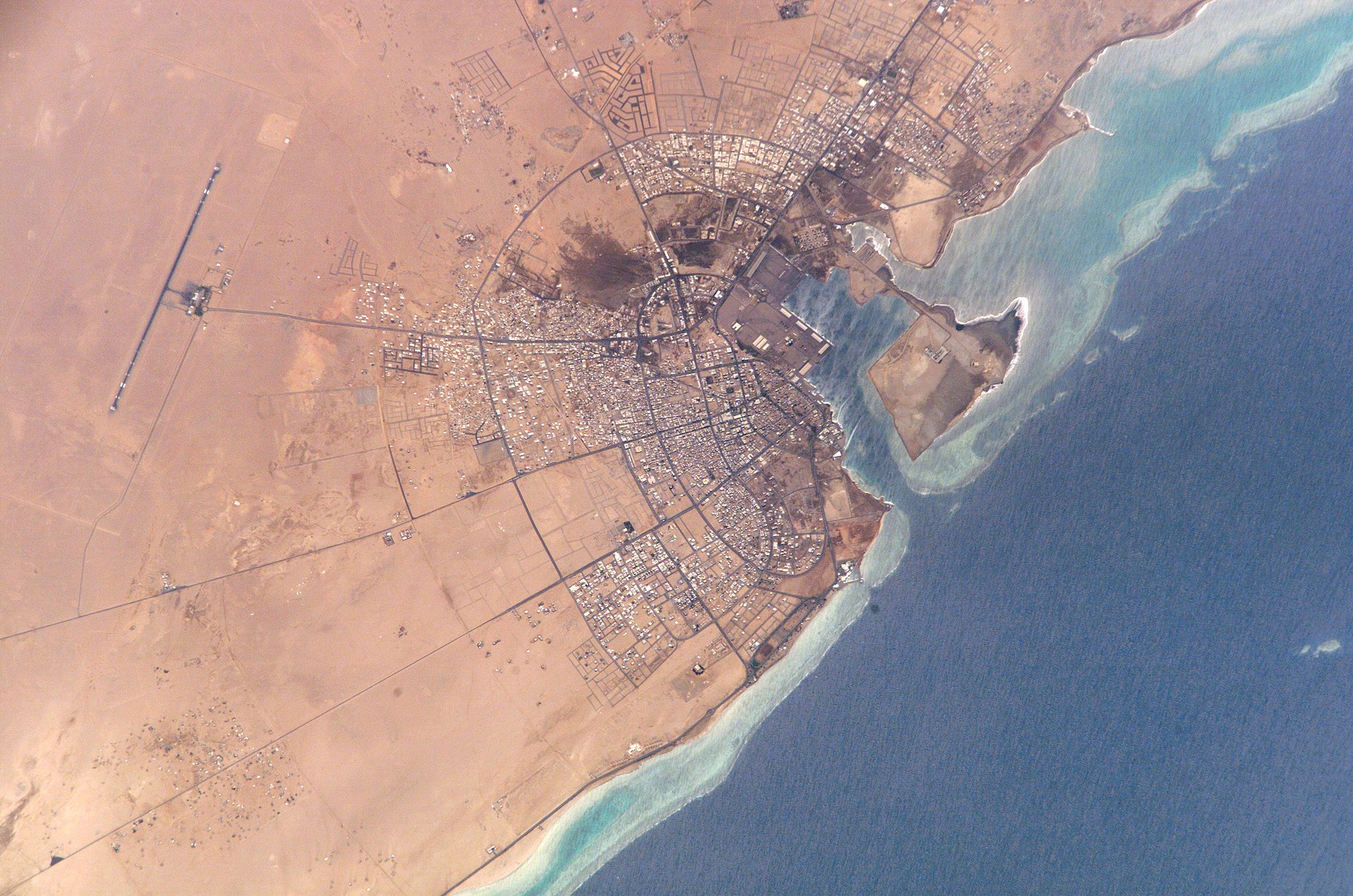
Saudi Arabia’s pre-war Hormuz throughput was 7 to 7.5 million barrels per day. The East-West Pipeline delivers crude to Yanbu on the Red Sea coast, where loading capacity is approximately 5.9 million bpd of crude plus 900,000 bpd of refined products. The structural gap — 1.1 to 1.6 million bpd — cannot be bridged without Hormuz reopening. Khurais field, contributing 300,000 bpd, remains offline with no announced recovery timeline.
This gap is not a function of diplomacy. It is infrastructure. The East-West Pipeline cannot be expanded within any timeline relevant to the MOU. The Yanbu loading facilities cannot process more than their designed throughput. Even a best-case scenario — Iranian agreement on Day 1, simultaneous US blockade removal, mine clearance beginning that afternoon — places full Hormuz reopening no earlier than late 2026, with Q1-Q2 2027 the more realistic planning estimate for any naval mine-warfare officer who accepts the Pentagon’s six-month clearance benchmark.
The OPEC+ meeting on May 3 approved a 188,000 bpd increase for June — the first meeting without the UAE, which exited OPEC unilaterally effective May 1. The increase is largely symbolic. Saudi Arabia’s physical ceiling is determined by Yanbu loading capacity plus whatever residual volumes move through alternative routes, not by OPEC+ quotas. The Kingdom’s actual production authority is constrained by port infrastructure, not cartel politics.
| Constraint | Figure | Implication |
|---|---|---|
| Pre-war Hormuz throughput | 7-7.5M bpd | Baseline that must be restored |
| Yanbu crude loading ceiling | 5.9M bpd | Maximum bypass capacity |
| Structural gap | 1.1-1.6M bpd | Unrecoverable without Hormuz |
| Khurais field (offline) | 300K bpd | No recovery timeline announced |
| Vessels trapped in Gulf | ~2,000 (230 loaded tankers) | Physical congestion persists post-MOU |
| Seafarers stranded | ~20,000 | Humanitarian dimension unaddressed |
| Mine clearance timeline | 6 months minimum | Cannot begin until conflict formally ends |
| MCM capacity in theater | 2 destroyers (not purpose-built) | No dedicated MCM ships since Sept 2025 |
| Global supply offline | 13M bpd (IEA) | “Biggest energy security threat in history” |
IEA Director Fatih Birol’s characterization — 13 million bpd offline as “the biggest energy security threat in history” — remains operative regardless of MOU signature. The MOU addresses the political conditions for eventual reopening. It does not address the physical, logistical, and commercial realities of the interim period. That interim period has a minimum duration of six months. Its costs land on Saudi Arabia. Its governance is being decided without Saudi Arabia. And its timeline is being compressed in political rhetoric while remaining fixed in operational reality.
Saudi fiscal breakeven estimates vary by methodology: IMF and Oxford Economics place it near $80/bbl on a pure revenue basis; Bloomberg’s PIF-inclusive calculation puts it at $108-111/bbl. At $112 Brent, the per-barrel arithmetic looks tolerable by the first measure and uncomfortable by the second. Either way, comfort requires volume. At 7.25 million bpd actual production versus the 10.4 million bpd February baseline, the Kingdom is earning a serviceable margin on a structurally diminished base — while the deficit eats through fiscal reserves at a pace that no per-barrel calculation captures.
The thirty-day window will expire. The mines will remain. The OSP will reset for July without retroactive relief for May or June buyers. Aramco’s earnings call will have passed, its Q2 guidance constrained by a physical reality that no diplomatic instrument can accelerate. And Saudi Arabia — which has absorbed the full cost of Iran’s sequencing strategy, the full cost of the US blockade’s commercial disruption, and the full cost of mine-clearance timelines it did not create — will remain outside the room where the permanent architecture is being drawn.
Whether the MOU is signed matters less than what it prices into markets in the interim: thirty days of diplomatic optimism embedded in Aramco’s share price, in Asian refiners’ forward purchase decisions, in the expectation of a physical opening that the physics cannot deliver on schedule. The war reduced volumes. The MOU may reduce leverage.
FAQ
What happens to Asian refiners locked into May OSP contracts if a deal is signed?
Asian term contract buyers — including India’s Reliance Industries, China’s Sinopec, South Korea’s SK Innovation, and Japan’s ENEOS — who loaded May cargoes at +$19.50/bbl above Oman/Dubai have no contractual remedy. Aramco’s OSP is a delivered-price formula with no renegotiation window, no war-risk adjustment clause, and no retroactive correction mechanism. If Brent falls post-MOU, these buyers will have paid a premium for crude that the market subsequently prices lower, with the contractual lock-in preventing any clawback. The structural exposure for a single VLCC cargo at 2 million barrels is approximately $30-34 million in premium above what spot market pricing would have delivered.
Could Saudi Arabia unilaterally begin mine-clearance operations without waiting for a formal deal?
Saudi Arabia’s mine-warfare capability consists of four Sandown-class MCVs (Al-Jawf class) procured from the UK in the 1990s — shallow-water coastal minehunters designed for Gulf littoral operations, not deep-water clearance of the Hormuz approach channels. The Kingdom also operates three MH-53E Sea Dragon equivalents for airborne mine countermeasures. Neither platform is suited to the Hormuz deep-water shipping lanes, which run through the Musandam Strait at depths exceeding 80 meters. More critically, any Saudi naval operation in the Hormuz approaches would enter Iranian-claimed waters and could trigger an escalatory response that the MOU framework is specifically designed to prevent.
How does the OPEC+ framework interact with Saudi Arabia’s physical production constraints?
Saudi Arabia’s OPEC+ quota for May 2026 is approximately 10.2 million bpd. Actual production is 7.25 million bpd — meaning Saudi Arabia is producing nearly 3 million bpd below its cartel allocation. The 188,000 bpd increase approved for June is operationally meaningless: Saudi Arabia cannot produce to its existing quota, let alone an expanded one, while Hormuz remains closed and Yanbu operates at ceiling capacity. The OPEC+ framework has become a political fiction for Saudi Arabia — a production authorization without physical production possibility. The UAE’s OPEC exit on May 1 compounds this: Abu Dhabi can now increase output unilaterally from its Fujairah bypass facilities without cartel constraints, while Saudi Arabia remains trapped behind the Yanbu ceiling regardless of what OPEC+ authorizes.
What is the earliest realistic date for full Saudi export recovery?
Working backward from the Pentagon’s six-month mine-clearance estimate and the prerequisite that the conflict must formally end before clearance begins in earnest: if the MOU is signed on May 11 and the thirty-day window concludes successfully by June 11, formal conflict termination could theoretically be declared by late June 2026. Adding six months of mine-clearance operations places earliest full Hormuz reopening in late December 2026 or January 2027. This assumes no delays, no clearance complications from uncharted mines, and no IRGC administrative obstruction of clearance vessels — assumptions that no naval mine-warfare officer would accept. A more realistic planning estimate is Q1-Q2 2027. Saudi Arabia will have operated at reduced capacity for twelve to sixteen months by that point.
Has Saudi Arabia publicly responded to its exclusion from the US-Iran bilateral?
Riyadh has not publicly protested its absence from the table. Saudi FM Prince Faisal bin Farhan was described by Chatham House as having been “briefed on developments related to the ceasefire” — passive-voice diplomacy. The Kingdom’s public posture has emphasized readiness to contribute to reconstruction and stabilization rather than demanding negotiating-table inclusion. This silence is itself strategic: public protest would acknowledge diminished leverage, while private channels — particularly the Saudi FM’s April 13 call to Araghchi on the day the US blockade was announced — suggest Riyadh is operating a parallel track that does not depend on US inclusion. Whether that parallel track can produce outcomes before the thirty-day window creates permanent facts remains the unanswered question. The answer arrived on May 7: Saudi Arabia denied US basing and airspace access for Project Freedom, demonstrating that Riyadh’s parallel track has its own hard limits — and that exclusion from the table has not translated into operational deference. The institutional answer Riyadh is building outside the US-Iran bilateral is examined in GCC Was a Club With No Sellers. STEP Fixed That.
Saudi Arabia’s diplomatic silence acquired a new dimension on May 25: Trump told eight leaders during Hajj that signing the Abraham Accords was “mandatory” for any nation joining the Iran deal framework — a demand that arrived while Saudi Arabia was hosting two million pilgrims and could not publicly respond without disrupting the 96-hour Arafah no-escalation window. Saudi Arabia’s Hajj silence on Trump’s mandatory Abraham Accords demand illustrates how the Hajj calendar itself has become a structural constraint on Saudi diplomatic timing.