KUWAIT CITY — Iran’s Foreign Minister Abbas Araghchi posted on X on May 13 that Kuwait had “unlawfully attacked an Iranian boat” and detained “4 of our citizens” in the Persian Gulf, demanding their immediate release and reserving “the right to respond.” The four men in Kuwaiti custody are two IRGC colonels, a captain, and a first lieutenant captured on Bubiyan Island on May 1 after a firefight that wounded a Kuwaiti soldier, and Kuwait’s Interior Ministry says they admitted under questioning that the IRGC had tasked them with infiltrating Kuwaiti territory.
The escalation to foreign minister level is the moment Iran stopped letting its first-day denial — a “routine maritime patrol” with a “malfunction in the navigation system” — carry the diplomatic weight. Araghchi has now done something different: he has replaced the operatives with “citizens,” replaced the infiltration with an “attack,” and inserted a clause framing Bubiyan as an “island used by the U.S. to attack Iran.” Each move is calibrated, and each one borrows from the legal grammar Kuwait used first.
Table of Contents
The Post That Inverted the Story
Araghchi’s X post, published May 13 and amplified through Iranian state outlets the following day, is 49 words long. It contains three rhetorical operations that matter more than its surface complaint. “In clear attempt to sow discord, Kuwait has unlawfully attacked an Iranian boat and detained 4 of our citizens in the Persian Gulf,” the foreign minister wrote. “This illegal act took place near island used by the U.S. to attack Iran. We demand immediate release of our nationals and reserve right to respond.”
The first operation is the noun. Kuwait’s Interior Ministry, via the state news agency KUNA, identified the four men by full name and military rank: Col. Amir Hussein Abd Mohammed Zara’i, Col. Abdulsamad Yadallah Qanwati, Capt. Ahmed Jamshid Gholam Reza Zulfiqari, and 1st Lt. Mohammed Hussein Sehrab Faroughi Rad. Araghchi calls them “citizens.” The word “fishermen” never appears in his post, and Iran’s Foreign Ministry has yet to officially deny IRGC affiliation by name. PressTV’s own May 13 headline reproduced the same softening: “Iran reserves right to respond to Kuwait’s ‘unlawful’ boat attack, arrest of 4 citizens.”
The second operation is the verb. On May 1, six Iranians arrived at Bubiyan aboard a rented fishing boat — Kuwait’s Interior Ministry says it was “specifically chartered to carry out hostile acts against Kuwait” — and a firefight followed in which one Kuwaiti soldier was wounded and two of the Iranians escaped. Araghchi compresses all of that into “Kuwait has unlawfully attacked an Iranian boat.” The party that opened fire becomes the party attacked. The party that crossed a maritime border becomes the party trespassed against.
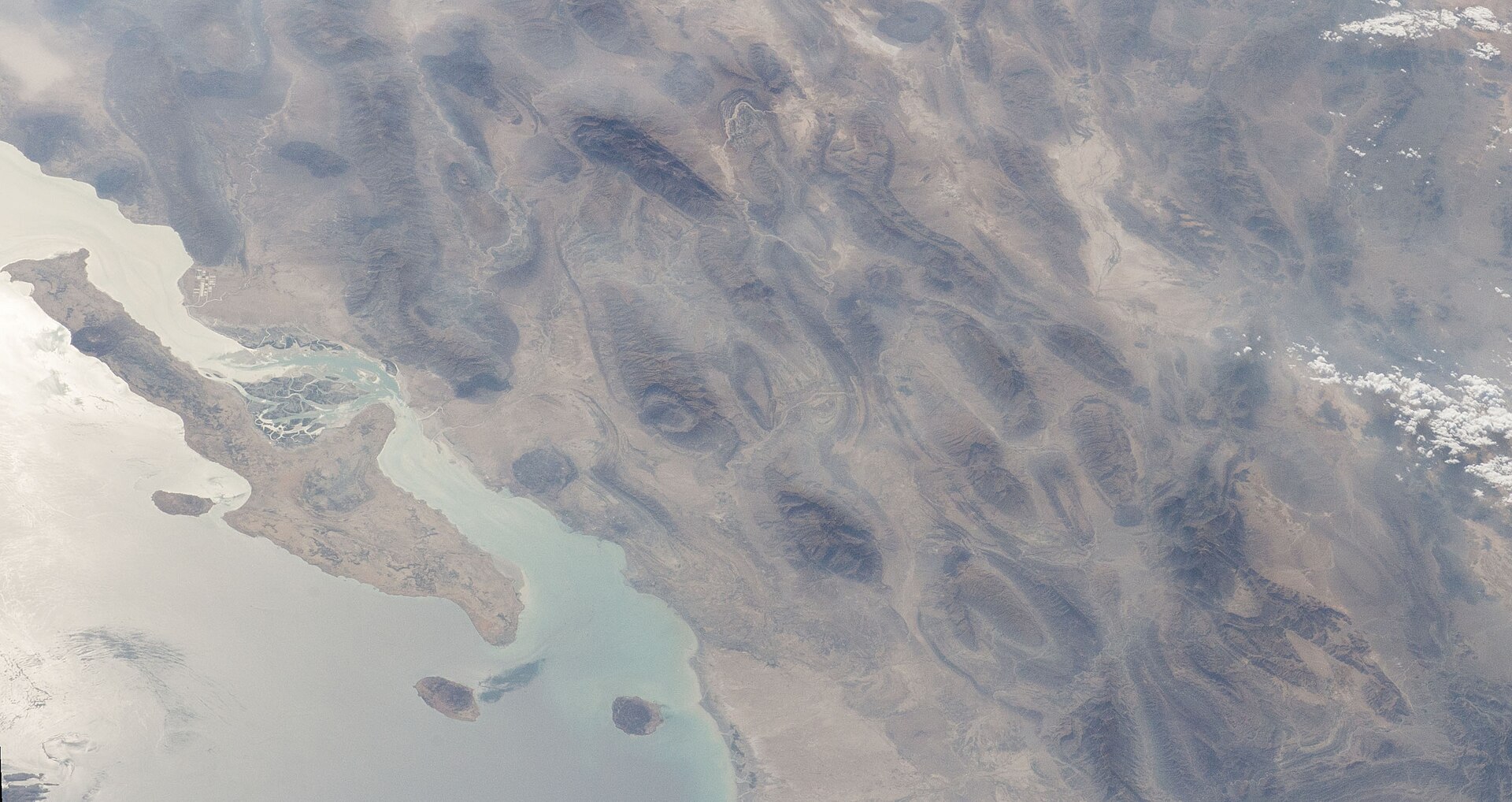
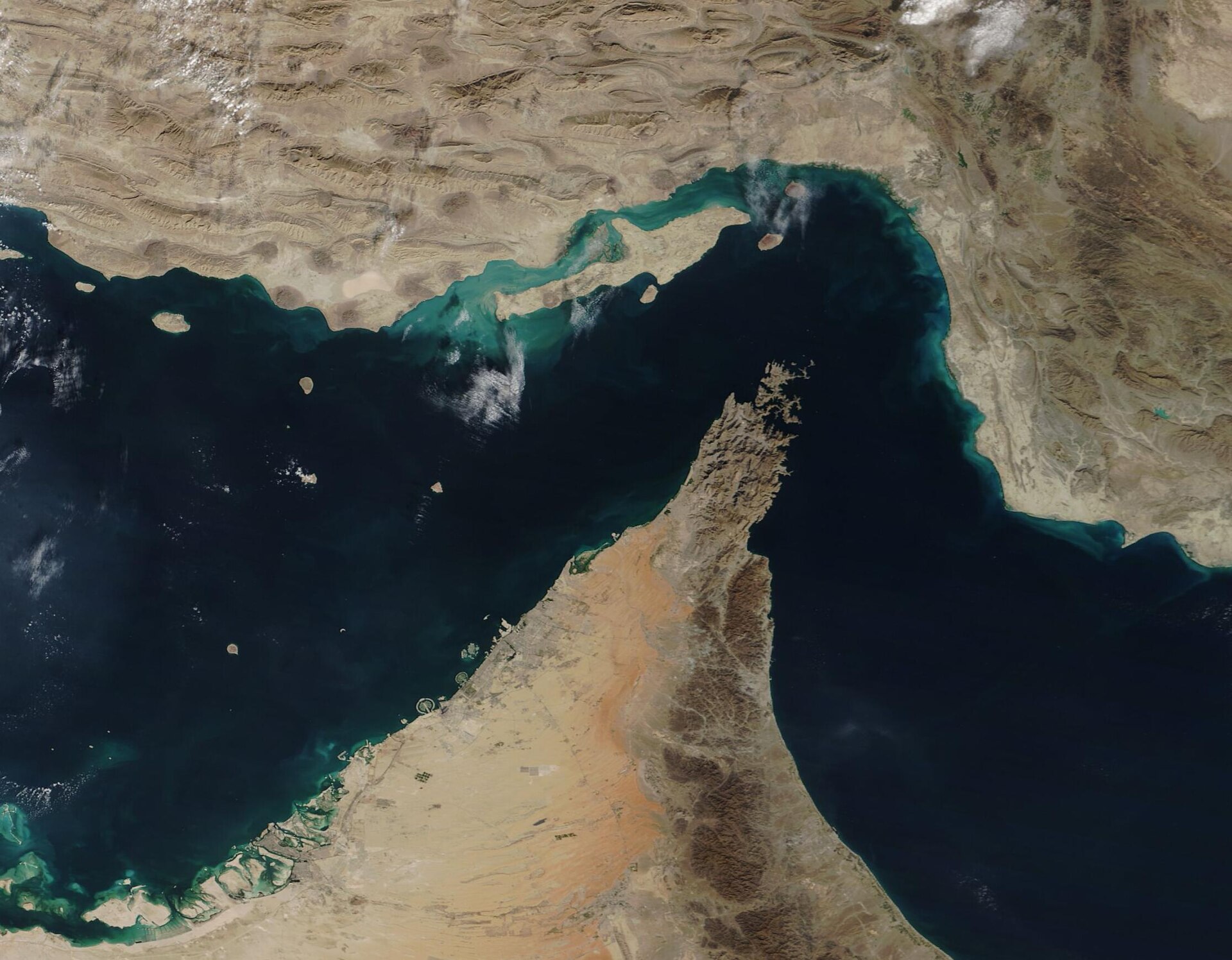
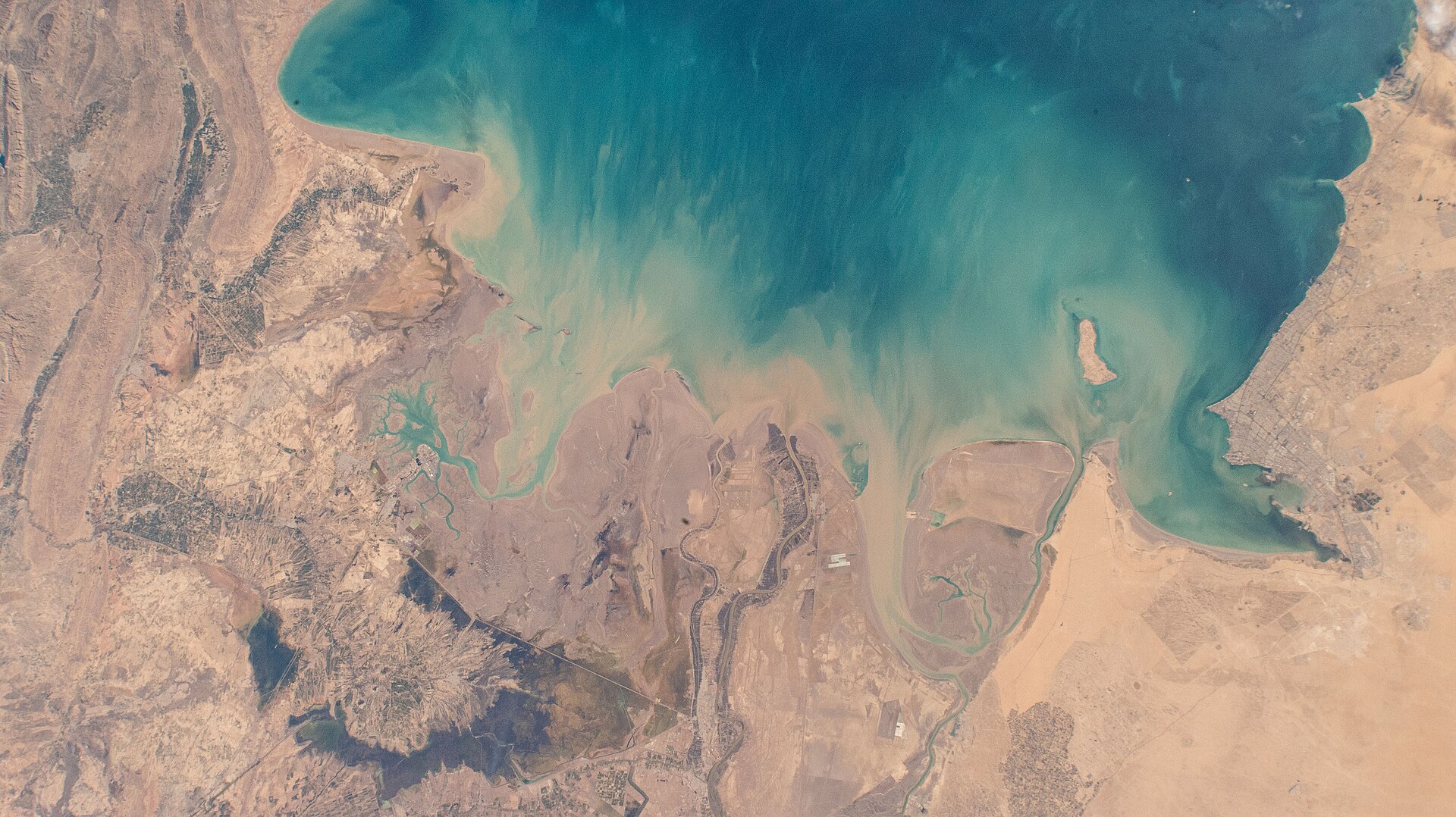
The third operation is the location. Bubiyan Island is Kuwaiti sovereign territory — 863 square kilometres at the northwestern corner of the Persian Gulf — but Araghchi reframes it as “island used by the U.S. to attack Iran.” The clause does no work as fact; it does a great deal of work as audience cue, signalling to Iranian, Russian and Chinese audiences that the four men in custody were not poachers on a GCC member’s island but combatants against an American forward base.
The Middle East briefing 3,000+ readers start their day with.
One email. Every weekday morning. Free.
What Kuwait Says It Caught
Kuwait disclosed the incident publicly on May 12, eleven days after it occurred — a gap that reflects the country’s standing diplomatic habit of letting facts settle before they are weaponised. The Interior Ministry’s account, distributed through KUNA and picked up by Arab News, the Washington Times and ANI, names six operatives in total: the four in custody, plus Navy Captain Mansour Qambari and the boat’s captain Abdulali Kazem Siamari, both at large. According to Kuwait, the men in custody admitted during questioning that they had been tasked by the IRGC with “infiltrating” Kuwait, and that the fishing boat had been chartered specifically for hostile action.
The ranks themselves are the loudest fact in Kuwait’s disclosure. Two colonels, one captain and a first lieutenant is not a deniable cell. Senior IRGC officers are not deployed in groups of four on rented fishing boats for “routine maritime patrol,” and Iran’s own Foreign Ministry statement — issued before Araghchi’s X post — avoided naming the men or addressing their seniority, calling the allegations only “completely baseless and unacceptable.” That asymmetry of specificity, with Kuwait publishing full names and ranks and Iran responding with abstractions, is itself a tell.
Kuwait’s Deputy Foreign Minister Ambassador Hamad Sulaiman Al-Masha’an summoned Iran’s ambassador in Kuwait, Mohammad Toutounchi, on May 13 and delivered a formal protest note holding Iran “fully responsible” for what it called a “flagrant violation of the sovereignty of the State of Kuwait, a grave breach of international law, the United Nations Charter, and Security Council Resolution 2817 of 2026.” We covered the diplomatic posture and its limits in Kuwait Summons Iran’s Ambassador Over Bubiyan Infiltration — and Stops There, and the underlying arrests in Kuwait Arrests Four IRGC Officers After Armed Infiltration of Bubiyan Island.
The protest note matters because of the resolution it cites. UNSCR 2817, adopted earlier in 2026, gives Kuwait an explicit Security Council reference point for treating the infiltration as a breach of an existing international instrument rather than a bilateral grievance. That is the legal scaffolding Araghchi is now trying to dismantle by relabelling the operatives as civilians and Bubiyan as a U.S. base.
Why Did Araghchi Escalate Now?
Iran’s first-day response, on May 13, ran through the Foreign Ministry and Tasnim — middle-tier channels that allow Tehran to test a story without committing the foreign minister’s signature to it. Tasnim called the allegations “completely baseless” and Tehran “strongly condemned Kuwait’s improper political and propaganda exploitation” of the case. IRNA repeated the “routine maritime patrol mission” line and the “malfunction in the navigation system” framing. Both formulations are recoverable; both can be quietly retired if a deal is reached.
Araghchi’s X post is not recoverable. By posting under his own name, with the words “we reserve right to respond,” the foreign minister has anchored Iran’s position at a level that requires a counter-move from Kuwait to climb back down from. That is the choice he made on May 13, and the timing tracks three pressures converging on Tehran in the same week. Saudi Foreign Minister Faisal bin Farhan was in London on May 13 meeting UK Foreign Secretary Yvette Cooper with Hormuz and regional stability on the agenda. Donald Trump was in Qatar on May 14 calling the April 8 ceasefire “on life support” and Iran “the most destructive force in the Middle East.” The GCC’s emergency interior ministers’ meeting was convening in Riyadh under Bahraini chairmanship the same day the protest note was being delivered.
A foreign minister-level statement compresses all three pressures into a single talking point Iran’s allies in Moscow and Beijing can amplify without parsing detail. It also pre-empts the moment, likely days away, when the four officers’ confessions might appear on Kuwaiti state television in the format Iran itself used against the U.S. Navy in January 2016. The 2016 precedent is the operational template here: ten American sailors entered Iranian waters, Iran claimed they had been seized lawfully, displayed them on state TV with an on-camera apology, and released them after fifteen hours. The “navigation malfunction” phrase that Iran’s Foreign Ministry used on May 13 is a near-verbatim borrowing from how the U.S. described its sailors’ error a decade ago.
The inversion is the point. In 2016, Iran was the captor and the U.S. was the embarrassed party. In 2026, on Bubiyan, Iran is the captured party — and Araghchi is attempting to retrofit the 2016 script with the roles reversed.
The Legal Mirror: “Right to Respond”
The phrase “right to respond” is the rhetorical core of Araghchi’s post, and it is borrowed directly from the legal vocabulary Kuwait used first. When Kuwait summoned Toutounchi on May 13, the protest note invoked Article 51 of the UN Charter — the self-defence provision — and framed Kuwait’s military response on May 1 as lawful action against an armed infiltration. Araghchi has now lifted the same syntax, scrubbed the context, and turned it back at the country that introduced it.
That is not accidental drafting. Iran’s foreign minister was educated as a diplomat in the same multilateral instruments Kuwait is citing, and Article 51’s “inherent right of self-defence” language is among the most familiar phrases in modern international law. By using the parallel formulation against an Article 51 invocation, Araghchi is testing whether third-party media — particularly in the Global South, in BRICS-aligned outlets, and in the parts of European opinion that have framed the post-ceasefire period as a U.S.–Iran standoff — will treat Iran’s “right to respond” claim as legally equivalent to Kuwait’s.
It is not equivalent. Article 51 requires an armed attack to have occurred; Kuwait can point to a firefight on its own sovereign territory and a wounded soldier. Iran would need to point to an attack on Iranian territory or vessels in Iranian waters. The Bubiyan operation, by Kuwait’s account and by Iran’s own initial “navigation malfunction” admission, placed the IRGC personnel on Kuwaiti soil. The legal architecture does not support Araghchi’s claim. What he is testing is whether the architecture matters, given that the audience is not a tribunal but a public.
This is the same compellence logic Iran has used through the ceasefire window — asymmetric provocations paired with legalistic counter-claims to keep adversaries reactive. We traced the cross-Gulf pattern in Iran’s Compellence Doctrine: Why the Drones Hit Qatar, Kuwait, and the UAE on the Same Day Tehran Submitted Its Peace Response. The Bubiyan infiltration on May 1 fell on the same date as the UAE’s unilateral OPEC exit — a synchronisation Gulf analysts read as Iranian doctrine targeting GCC political-economic seams during institutional flux moments.
Can the GCC Counter a Hostage Frame?
Within 48 hours of Kuwait’s May 12 disclosure, the GCC machinery moved through every step short of enforcement. Saudi Arabia, the UAE, Qatar and Bahrain all issued individual condemnation statements. UAE Foreign Minister Sheikh Abdullah bin Zayed used the word “terrorist,” writing that “Kuwait’s security is inseparable from the security of the UAE” and condemning “in the strongest terms the infiltration by members of the IRGC of Kuwait’s Bubiyan Island to carry out hostile acts.” Saudi Arabia’s Foreign Ministry condemned “the attempted infiltration of Kuwait’s Bubiyan Island by an Iranian armed group sent by the IRGC with the aim of carrying out hostile acts.” Qatar’s MFA called it a “blatant violation” representing “a dangerous escalation with implications for regional security.” The OIC and the Arab League each issued separate statements.
GCC Secretary-General Jasem Al Budaiwi, presiding over the emergency interior ministers’ meeting in Riyadh on May 13, called the operation a “systematic attempt” by Iran to destabilise the region. That is the seventh time since March that the GCC has applied that register of language to an Iranian action without converting the language into a binding enforcement mechanism. The pattern is set out in The GCC Called Iran “Treacherous” for the Seventh Time. The Word It Dropped Tells the Real Story, and what Araghchi is now wagering is that condemnation without enforcement has a half-life. Within 24 hours of that session, King Salman signed seven decrees restructuring the National Guard, Finance Ministry, and Cabinet secretariat — the institutional response to the GCC’s procedural one, analysed in King Salman’s Seven Decrees Were One Decision.
A hostage-diplomacy frame works on a different timetable from a condemnation statement. The GCC statements answer the question of what happened on May 1. Araghchi’s frame, by contrast, is forward-projecting: it puts a clock on Kuwait. Every additional day the four officers remain in custody is a day Iran can argue that “4 of our citizens” are being held without charge. Every day Kuwait does not produce televised, named-by-name confessions — which it has not, as of May 14 — is a day the abstraction of “citizens” can outrun the specificity of “Col. Zara’i, Col. Qanwati, Capt. Zulfiqari, 1st Lt. Faroughi Rad.”
Kuwait’s tradition of equidistance diplomacy complicates the speed of its response. Unlike the UAE, which moved within hours to “terrorist” framing, and unlike Saudi Arabia, which has handled IRGC provocations with combinations of public condemnation and unannounced kinetic response — covered in Operation Epic Fury: Saudi Arabia Was Bombing Iran While Calling for Peace — Kuwait historically preserves channels even while condemning actions. The 11-day silence between May 1 and May 12 reflects that doctrine. So does the absence, as of May 14, of any formal Kuwaiti public rebuttal to Araghchi’s specific escalation. Kuwait’s position is the protest note. The protest note will not, on its own, displace a hashtag.
Bubiyan, Mubarak Al Kabeer, and the Chinese Stake
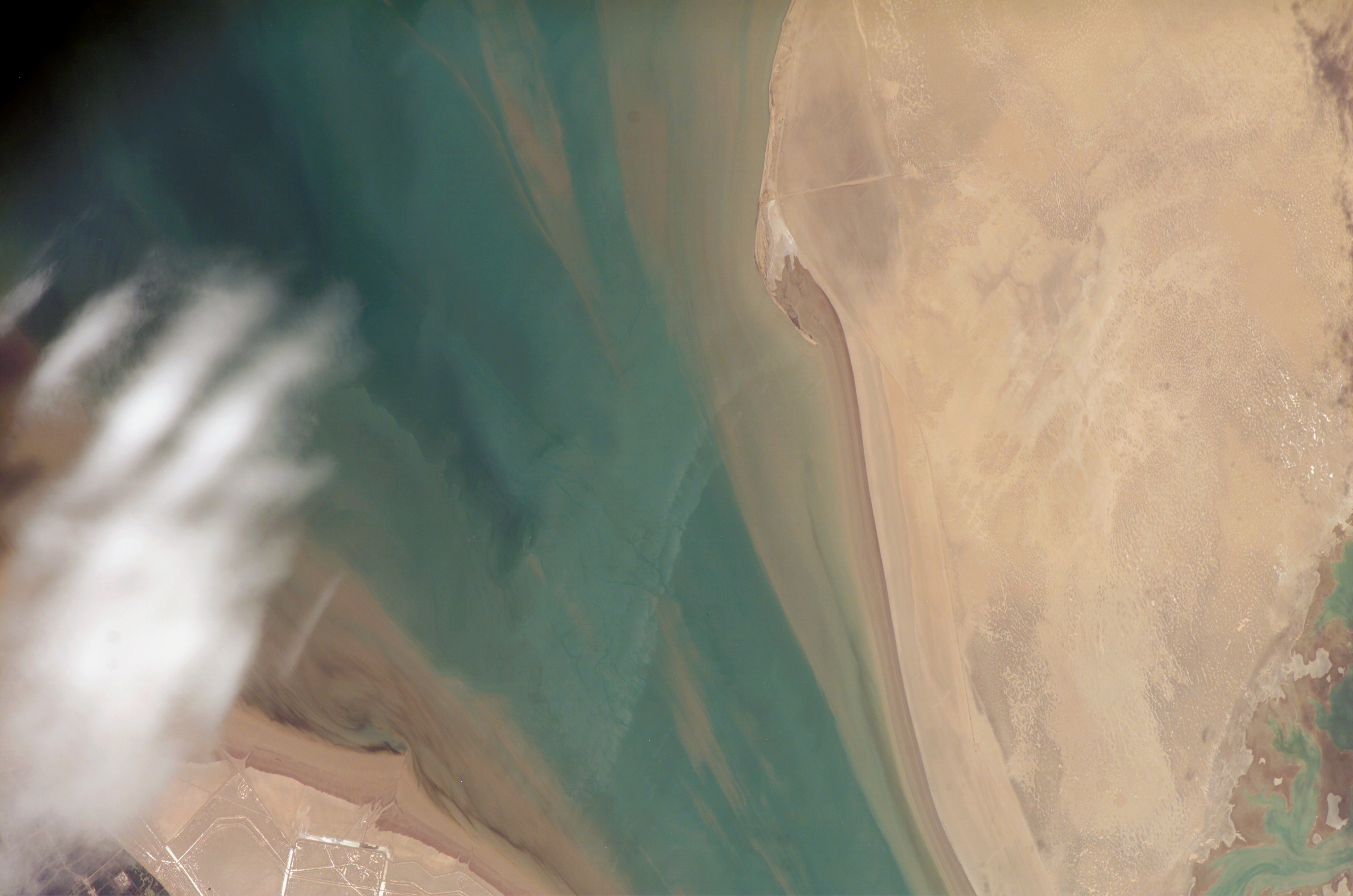
Bubiyan is not empty water and a sand bar. Mubarak Al Kabeer Port, on the island’s eastern flank, is a $4.1 billion project tied to China’s Belt and Road Initiative, with a planned 24 berths and 8.1 million TEU of annual container capacity at full handover, which is scheduled for 2026. The first four-berth phase has been operational since April 2021. The infiltration on May 1 placed senior IRGC officers, by Kuwait’s account armed and chartered for hostile action, on an island that is in the final year of becoming one of the most consequential Chinese commercial assets in the upper Gulf.
That changes the calculus around any “right to respond” Iran proposes to act on. China has not commented on the Bubiyan incident as of May 14, and it is not in Beijing’s diplomatic habit to do so publicly. But the Mubarak Al Kabeer footprint creates a Chinese stake in Kuwaiti sovereignty over Bubiyan that did not exist a decade ago, and an IRGC operation that endangers the port’s final handover phase imposes costs on Iran’s relationship with its most important political and economic backer.
Iran’s customs and port architecture moves in the opposite direction. We covered the formal construction of Iran’s parallel maritime regime in Iran Built a Hormuz Customs Agency While the World Negotiated. Tehran’s approach has been to build the institutional facts on the water — toll regimes, customs declarations, IRGC Navy “full authority” claims — while keeping the diplomatic surface plausible. The Bubiyan infiltration breaks that pattern. It places named, ranked IRGC officers in foreign custody with confessions on file, and it puts an active Chinese BRI port asset directly in the operational frame.
The 845 drones, 354 ballistic missiles and 15 cruise missiles Kuwait absorbed during the pre-ceasefire war period set the threshold for what Kuwait’s domestic political environment can tolerate as restraint. That threshold has been crossed before. The fact that Kuwait waited 11 days, and that its formal response remains a protest note rather than a kinetic action, says more about Kuwaiti doctrine than about Kuwait’s options.
How Did Bubiyan Become a Flashpoint?
Bubiyan Island has been part of the State of Kuwait throughout the modern era, though Iraq disputed sovereignty until November 1994, when Baghdad accepted the UN-demarcated border under Security Council Resolutions 687, 773 and 833. Its development as a commercial port — beginning with the 2011 contracting cycle and accelerating through China’s BRI engagement — has made it strategically distinct from the southern Kuwaiti coast.
The April 8 ceasefire framework, brokered through Pakistan with Witkoff-Araghchi backchannel exchanges, has held nominally for 36 days as of May 14 but has been violated in the field repeatedly. Bubiyan is where that pattern became a custody problem: named, ranked IRGC officers held on foreign sovereign territory with confessions on file, and a foreign minister who has now formally claimed them as citizens and reserved the right to respond.
Frequently Asked Questions
What is the legal status of UNSCR 2817 (2026)?
UNSCR 2817 is the 2026 Security Council resolution Kuwait cited in its May 13 protest note as one of the international instruments Iran’s Bubiyan operation breached. As a Chapter VII-adjacent reference it gives Kuwait an explicit Security Council scaffold for treating the infiltration as a breach of an existing instrument rather than a bilateral grievance. Iran’s counter-framing does not address UNSCR 2817 by name, which is consistent with Araghchi’s strategy of contesting the factual record rather than the legal architecture.
What does “reserve the right to respond” actually permit Iran to do?
Under international law, the phrase carries no automatic operational entitlement. Iran would need to establish that Kuwait committed an armed attack under Article 51 of the UN Charter — which requires the aggression to originate on or from Iranian territory. Tehran has no legal basis to assert self-defence over an incident on Kuwaiti soil involving personnel Kuwait says were armed and chartered for hostile action. The phrase is political signalling, not a legal trigger.
Who are the two operatives still at large?
Kuwait’s Interior Ministry has identified them as Iranian Navy Captain Mansour Qambari and the boat’s civilian-cover captain Abdulali Kazem Siamari. Both escaped during or after the May 1 firefight and their current location has not been publicly disclosed by Kuwait. The presence of a serving Navy captain among the escapees, alongside a chartered fishing-vessel captain, reinforces Kuwait’s account that the infiltration was conducted under deliberate commercial cover rather than as a navigational accident.
What are Kuwait’s legal obligations regarding the detained IRGC officers?
Under the Geneva Conventions, individuals captured in armed conflict are entitled to prisoner-of-war protections if they qualify as lawful combatants — which IRGC officers operating under orders would normally claim. However, Kuwait has framed the incident as a criminal infiltration rather than a wartime capture, which places the men in a domestic law-enforcement track rather than a PoW framework. How Kuwait formally charges or prosecutes them will determine whether international humanitarian law or Kuwaiti criminal statute governs their detention.
What enforcement mechanisms does the GCC actually have?
The GCC’s institutional architecture relies on diplomatic coordination, joint condemnation statements, and reference to UN Security Council instruments rather than on automatic military enforcement. The Peninsula Shield Force, the GCC’s collective defence body, has been activated only once at scale — in 2011, to deploy Saudi Arabian National Guard troops to Bahrain. The May 13 emergency interior ministers’ meeting in Riyadh produced political solidarity but no announced kinetic response. Kuwait’s protest note, Iran’s ambassador summoning, and the Saudi/UAE/Qatar/Bahrain condemnation statements collectively represent the full deployable diplomatic toolkit short of unilateral action by individual GCC states.
The same separation of institutional identity that Araghchi performs on IRGC personnel reappears at a higher order on May 14: the authorization ceiling extended to Iran’s courts when Chief Justice Mohseni-Ejei’s office formally declared jurisdiction over tanker seizures — a constitutional body that Araghchi’s government cannot represent at any negotiating table.