
TEHRAN — Abbas Araghchi’s statement on May 5 contained two propositions that Western correspondents treated as contradictory: Pakistan’s mediation is “making progress,” and the United States’ Operation Project Freedom is an act of escalatory aggression. CNN placed these side by side as evidence of incoherence. They are not contradictory. They are addressed to different audiences — and the fact that IRGC-aligned media has not attacked the statement is the proof.
When Araghchi declared the Strait of Hormuz “completely open” on April 17, Tasnim called it a “bad and incomplete tweet” within hours and the IRGC Navy broadcast on VHF Channel 16 that the strait would reopen “by the order of our leader, Imam Khamenei, not by the tweets of some idiot.” That reversal cost him what remained of his institutional credibility. On May 5, Tasnim, Fars, and Mehr published nothing. The attack pattern did not fire — because the statement was calibrated to pass internal review before it was posted.
“Project Freedom is Project Deadlock” is not diplomacy aimed at Washington. It is a permission slip addressed to Ahmad Vahidi, to the Majlis security committee, and to the IRGC media apparatus that nearly ended Araghchi’s career eighteen days earlier.
Table of Contents
- The Two-Audience Architecture
- What April 17 Taught Araghchi
- The Pattern That Makes the Silence Meaningful
- Why Did IRGC Media Stay Silent on May 5?
- The Triple Contradiction on Enrichment
- What Is the Pakistan Channel Actually Delivering?
- The Authorization Ceiling Has Not Moved
- Can This Survive Trump Confirming or Denying the Ceasefire?
- Vahidi as the Real Audience
- Is Dual-Track Diplomacy Sustainable Under Escalation?
- Frequently Asked Questions
The Two-Audience Architecture
Araghchi’s full statement, posted to X on May 5: “Events in Hormuz make clear that there’s no military solution to a political crisis. As talks are making progress with Pakistan’s gracious effort, the US should be wary of being dragged back into quagmire by ill-wishers. So should the UAE. Project Freedom is Project Deadlock.”
Read it once for Washington. The “quagmire” warning and the dismissal of Project Freedom as deadlock track standard Iranian deterrence messaging — the language of cost imposition, familiar since 2019. But Washington is not Araghchi’s problem. Washington cannot fire him.
Read it again for Tehran. “Pakistan’s gracious effort” signals continued engagement with the mediation channel that Vahidi’s SNSC deputy, Mohammad Bagher Zolghadr, formally complained Araghchi had deviated from the delegation’s mandate in pursuing. The condemnation of Project Freedom — “piracy” in IRGC terminology, a ceasefire violation in Majlis Chairman Ebrahim Azizi’s formulation — is the price of admission. Araghchi pays it publicly so that the Pakistan channel can survive privately.
The Middle East briefing 3,000+ readers start their day with.
One email. Every weekday morning. Free.
The structure is not incoherence. It is transactional rhetoric: denounce the thing the IRGC wants denounced, and in exchange receive permission to continue the thing the IRGC tolerates but does not endorse.
What April 17 Taught Araghchi
The April 17 incident was not a policy disagreement. It was a public humiliation broadcast on an open maritime frequency.
Araghchi had posted that the Strait of Hormuz was “completely open” — language consistent with the ceasefire framework and with Foreign Minister Ishaq Dar’s understanding of the Islamabad Accord. The statement initially moved markets. Brent crude dropped 9.5 percent to $89.89 on the declaration; more than a dozen commercial vessels took the opening at face value and began transiting. Then the IRGC reversed it. The Channel 16 broadcast — “not by the tweets of some idiot” — was delivered on the same VHF frequency that every commercial vessel in the strait monitors. Ships that had already entered the transit corridor were turned back. Brent recovered to $94–99 as the market priced in the reversal’s implications. It was not a leak. It was a public disciplinary action conducted in front of the shipping traffic Araghchi had just released.
Tasnim’s editorial called it a “bad and incomplete tweet” and accused Araghchi of “incorrect ambiguity-creation.” Ghalibaf — Parliament Speaker and former IRGC Aerospace Force commander, a man who ran that branch from 1997 to 2000 — validated the override with operational language: “The Strait of Hormuz is under the control of the Islamic Republic.” His framing was deliberate. The statement was “a field judgment, not a social media statement” — a formulation that places IRGC authority in the physical domain of ships and weapons, and strips civilian ministry declarations of operational standing. The SNSC’s Zolghadr then filed what amounted to a disciplinary complaint, accusing the Foreign Minister of expressing “flexibility on the Axis of Resistance” without authorization.
By late April, both Pezeshkian and Ghalibaf were seeking Araghchi’s dismissal, accusing him of acting “without informing the president, in full coordination with Vahidi.” The accusation is structurally revealing: Araghchi’s survival depends not on presidential support but on IRGC tolerance.
The Pattern That Makes the Silence Meaningful
April 17 was not the first time the IRGC media ecosystem moved to discipline a civilian concession. The pattern runs back to the earliest phases of ceasefire negotiation. When Araghchi engaged with the Witkoff 45-day framework in February, Tasnim and Fars ran coordinated pieces questioning his authority to accept phased arrangements without IRGC sign-off. When early talks in March appeared to accept US conditions on enrichment monitoring, the IRGC-aligned press attacked the Foreign Ministry’s “softness” within hours. When the Islamabad Accord’s draft language showed flexibility on Hormuz governance, Mehr News published that diplomats had “exceeded their mandate.”
The pattern is consistent and its mechanics are not subtle. Civilian diplomacy opens space for de-escalation. IRGC media attacks the concession as unauthorized or nationally humiliating. Operational action — a broadcast, a seizure, a reversal — closes the space that the civilian statement had opened. The civilian diplomat absorbs the institutional damage, while the IRGC retains the diplomatic record of having neither approved nor rejected the initiative.
This disciplinary architecture means that IRGC media silence on May 5 carries positive evidentiary weight. It is not merely the absence of criticism. It is the absence of a response pattern that has fired reliably for seventy days. That reliability is what makes the break meaningful — Araghchi has apparently learned to structure statements that pre-empt the attack rather than invite it.
Why Did IRGC Media Stay Silent on May 5?
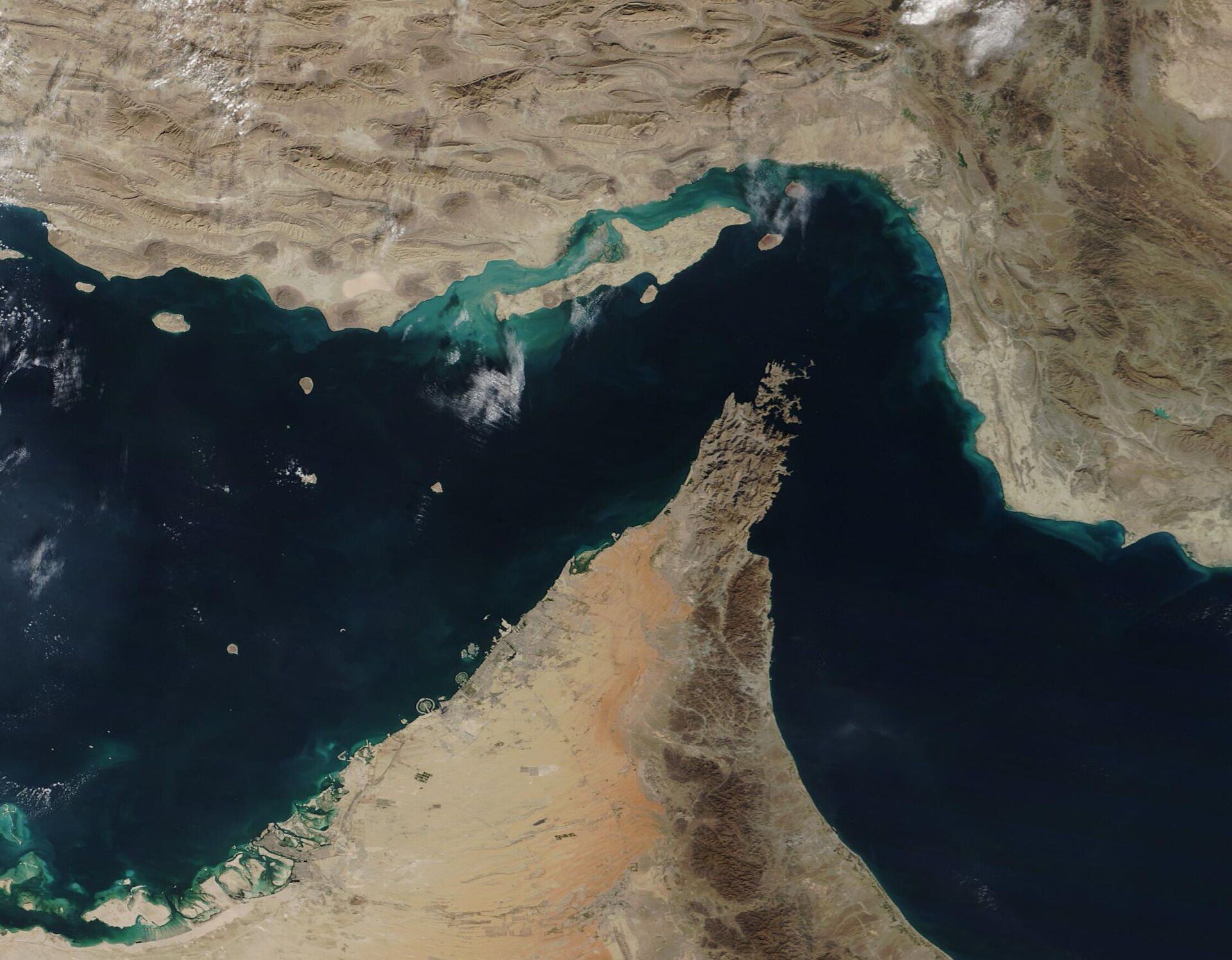
The IRGC media ecosystem — Tasnim, Fars, Mehr — operates on a pattern visible across the war’s seventy days. When Araghchi says something the Revolutionary Guards oppose, the attack is immediate: editorials within hours, Channel 16 broadcasts within a day, Majlis statements within forty-eight hours. The pattern fired on April 17. It fired when he showed “flexibility” in Islamabad. It fired when he engaged with Witkoff’s 45-day framework.
On May 5, silence. No Tasnim editorial. No Fars condemnation. No Mehr analysis piece questioning his authority to speak on Hormuz.
The absence is not coincidence. “Project Freedom is Project Deadlock” is consonant with IRGC messaging. Khatam al-Anbiya Central Headquarters had warned on May 4 that “all foreign forces approaching the strait will be attacked.” Azizi’s parliamentary security committee declared that US interference “breaks the April framework.” Araghchi’s statement positioned him inside the IRGC’s rhetorical perimeter — condemning the same operation, using compatible language, directing the same warning at the same targets.
The attack pattern does not fire on allies. Its silence is evidence of alignment.
The Triple Contradiction on Enrichment
The most structurally revealing element of May 5 is not what Araghchi said about Hormuz but what he told the Majlis the previous day about enrichment — and how that statement collides with both Trump’s public claims and Iran’s own diplomatic filings.
Araghchi told Iranian lawmakers on May 4 that nuclear enrichment is “not on the agenda” for the current round of talks. That statement was addressed to a domestic constituency — the Majlis security committee, the hardliners who have spent seventy days demanding that the Foreign Ministry hold the nuclear line. It was not intended for the Reuters wire. It was a reassurance: whatever is being discussed with Pakistan, Iran’s uranium program is not on the table.
Trump, speaking to NewsNation within forty-eight hours, said the opposite: “Iran agrees to stop enriching uranium.” He told CBS that Iran had “agreed to everything, including removal of enriched uranium.” Iran’s Foreign Ministry responded with a categorical rejection: “Enriched uranium is as sacred to us as Iranian soil and will not be transferred anywhere under any circumstances.”
The result is a triple contradiction that reveals the dual-audience structure operating simultaneously on three tracks. Araghchi tells the Majlis that enrichment is not on the agenda. Iran’s Foreign Ministry tells the world press that enrichment will never be transferred. Trump tells his domestic audience that Iran has already agreed to stop. Iran’s own 14-point counter-proposal, submitted May 2 via Pakistan, defers all nuclear provisions to Phase 2 — meaning the question of what Iran agreed to is not merely disputed but structurally deferred by Iran’s own framework. Iran privately offered to “discuss the idea” of pausing enrichment for up to fifteen years; Washington demanded twenty.
None of these positions is compatible with the others. The Majlis statement (“not on the agenda”) and the 14-point plan (deferred to Phase 2) cannot both describe the same negotiating reality — one says enrichment is outside the conversation, the other says it is inside but sequenced later. The Foreign Ministry rejection (“sacred as Iranian soil”) contradicts both. Trump’s confirmation claims contradict all three. The dual-audience architecture, taken to its logical conclusion, produces not two contradictory statements but four, each addressed to a constituency that lacks the information to fact-check the others in real time.
Araghchi is not managing this contradiction. He is benefiting from it. As long as Trump says Iran agreed and Tehran says it did not, the space between those claims is where the Foreign Ministry continues to exist as a functioning institution.
What Is the Pakistan Channel Actually Delivering?
Pakistan Foreign Minister Dar called Araghchi on May 4 — the day Project Freedom launched — to “assess the rapidly evolving regional situation.” Both Dar and Field Marshal Munir were described as “personally engaged.” Araghchi’s reference to “Pakistan’s gracious effort” the following day was not generic diplomatic courtesy. It was a public signal that the channel remains active despite Abdollahi’s threat to target US forces and despite the kinetic escalation of the preceding twenty-four hours.
The channel’s substance: Iran submitted a 14-point counter-proposal on May 2 via Pakistan. The proposal contains no nuclear provisions in Phase 1 — enrichment is deferred entirely to Phase 2. Iran privately offered to “discuss the idea” of pausing enrichment for up to fifteen years; Washington demanded twenty. Trump told Israel’s Kan broadcaster the plan was “unacceptable.” PressTV reported on May 3 that Iran was “reviewing” the US response.
Steve Witkoff’s sole public comment, delivered to CNN on May 4: “We’re in conversation.”
The Pakistan channel is delivering process, not progress. But process is what Araghchi needs — not to achieve a deal, but to demonstrate to domestic constituencies that diplomacy has not been abandoned, that the Foreign Ministry retains a function, that the IRGC’s maximalist posture has not entirely consumed the state’s external engagement capacity.
The Authorization Ceiling Has Not Moved
The structural constraint that paralyzed the Islamabad talks in April remains unchanged in May. Article 110 of Iran’s constitution vests supreme command of the armed forces with the Supreme Leader. The president has zero authority over the IRGC. Pezeshkian named Vahidi and Abdollahi publicly as the commanders who wrecked the ceasefire — then discovered he had no constitutional mechanism to act on the accusation. On May 5, the Pentagon confirmed the ceiling’s practical consequence: more than ten Iranian attacks on US forces since April 8, every one of them classified below the threshold for US retaliation.
Vahidi’s April declaration was explicit: “All key and sensitive managerial posts must — until further notice — be selected and overseen directly by the IRGC.” This is not ambiguity. It is a statement of administrative seizure ratified by the absence of any countermanding authority.
“All key and sensitive managerial posts must — until further notice — be selected and overseen directly by the IRGC.”
— Ahmad Vahidi, IRGC Commander-in-Chief, Iran International / Euronews, April 2026
Khamenei has been absent from public decision-making for over sixty days. Mojtaba Khamenei’s involvement has been audio-only. The SNSC — which Zolghadr now controls under IRGC pressure — requires the Supreme Leader’s approval before its decisions carry legal force. The authorization ceiling is not a metaphor. It is a constitutional mechanism that prevents any Iranian negotiator from delivering commitments on Hormuz, on enrichment, or on the Axis of Resistance without a chain of approvals that currently has no functioning terminus.
Araghchi knows this. His dual-track statement on May 5 is not an attempt to negotiate past the ceiling. It is an attempt to remain employed beneath it.
Can This Survive Trump Confirming or Denying the Ceasefire?
Trump was asked directly on May 4 — by Hugh Hewitt — whether the ceasefire still exists. His answer: “Well, I can’t tell you that. You wouldn’t — if I answered that question, you’d say this man is not smart enough to be president.”
He then told Hewitt the conflict could continue “probably another two weeks or maybe three weeks.” He had previously told NewsNation that Iran “agreed to no longer enrich uranium” — a claim Iran’s foreign ministry rejected categorically: “Enriched uranium is as sacred to us as Iranian soil and will not be transferred anywhere under any circumstances.”
Araghchi’s dual-track architecture depends on ambiguity. The ceasefire is neither confirmed nor denied. Talks are neither succeeding nor collapsing. Project Freedom is simultaneously a violation of the April framework (Azizi’s position) and an irrelevance that changes nothing (Araghchi’s “deadlock” framing). This ambiguity creates the space in which a foreign minister with no constitutional authority over the military can continue to function.
The Western press has begun to close that space. The Irish Times ran the headline “Ceasefire all but over” on May 5 — the first major Western broadsheet to state the conclusion rather than hedge it. Al Jazeera’s framing was only marginally softer: “Ceasefire pushed to the brink.” A Pakistani diplomat, speaking to Reuters in late April and not identified by name, offered the formulation that has since circulated among regional analysts: the ceasefire is “neither alive nor dead.” That characterization was diplomatic courtesy. By May 5 the Western editorial framing had moved past it.
If Trump confirms the ceasefire is dead — explicitly, unambiguously — then Araghchi’s “progress” claim collapses. There is nothing to make progress on. The Pakistan channel becomes performative rather than functional, and even its performative value depends on a counterparty willing to perform.
If Trump confirms the ceasefire holds, Araghchi faces the opposite problem: the IRGC’s position that Project Freedom “breaks the April framework” becomes the governing interpretation, and any engagement with a ceasefire-violating counterparty exposes him to the same accusation Zolghadr filed in April — deviation from mandate.
Trump’s refusal to answer is, for Araghchi, the optimal outcome. It is unclear whether Trump understands this.
Vahidi as the Real Audience
The conventional reading of Iranian diplomacy treats the Supreme Leader as the ultimate audience for all internal signaling. But Khamenei’s absence — now exceeding sixty days without a public decision on the war — has shifted the functional audience downward. Vahidi is not merely executing policy. He is setting it.
His April 30 declaration that all key posts must be IRGC-selected was not a wartime emergency measure with a sunset clause. The phrase “until further notice” creates an indefinite administrative occupation of civilian governance. Pezeshkian’s accusation — that Araghchi acted “in full coordination with Vahidi” — is structurally ambiguous. It could mean Araghchi betrayed the president by taking IRGC orders. It could also mean Araghchi understood, correctly, that Vahidi’s approval was the only approval that mattered.
Araghchi’s May 5 statement resolves this ambiguity in Vahidi’s favor. The condemnation of Project Freedom mirrors IRGC language. The “quagmire” warning echoes Khatam al-Anbiya’s threat posture. The Pakistan channel reference — “gracious effort” — is sufficiently anodyne to avoid triggering the same “flexibility” accusation that generated Zolghadr’s complaint. Araghchi is not coordinating with Vahidi in the sense of receiving direct orders. He is performing alignment — speaking in a register that does not provoke attack, on a frequency that Vahidi’s media apparatus monitors in real time.
The Pakistan enforcement architecture depends on this performance. Munir visited Khatam al-Anbiya headquarters on April 16 and presented “a report on the measures taken to help bring the war to an end” — to Abdollahi, the same commander Pezeshkian publicly accused of sabotage. The channel survives because Pakistan addresses both the civilian and military tracks simultaneously. Araghchi’s May 5 statement mimics this structure: one sentence for Washington, one sentence for the IRGC, delivered in a single post.
Is Dual-Track Diplomacy Sustainable Under Escalation?
Operation Project Freedom deployed 15,000 CENTCOM personnel, over 100 aircraft — F-15s, F-16s, F-35s, EA-18G Growlers, AH-64 Apaches — and guided-missile destroyers. Two US-flagged vessels transited. The IRGC responded with cruise missiles, drones, and fast boats. Six IRGC small boats were destroyed. This is not a diplomatic environment. It is a kinetic one.
Araghchi’s architecture requires that the kinetic track and the diplomatic track remain separable — that Pakistan can call him about “the rapidly evolving regional situation” on the same day that CENTCOM sinks Iranian vessels, and that both conversations can proceed as if they inhabit different realities. This separation is artificial. It holds only as long as both sides benefit from maintaining it.
Washington benefits because “We’re in conversation” (Witkoff) provides domestic cover for an operation with no clear exit strategy. Iran benefits because the channel’s existence — regardless of its content — demonstrates that the Islamic Republic has not been reduced to a pariah state that no one will talk to. Pakistan benefits because mediation is the structural basis of its post-war regional positioning and because a $5 billion Saudi loan matures in June 2026.
The architecture fails when someone is forced to choose. If Project Freedom escalates — if a US-flagged vessel is struck, if CENTCOM responds with strikes inside Iranian territory — Araghchi cannot simultaneously condemn the attack and claim talks are progressing. The dual-audience structure requires ambiguity about the level of hostility. Unambiguous escalation collapses it.
Trump’s “two weeks or maybe three weeks” timeline is, in this reading, a countdown not to military resolution but to the moment when Araghchi’s rhetorical architecture can no longer bear the weight of events.
Frequently Asked Questions
What specific constitutional mechanism prevents Pezeshkian from overriding IRGC decisions on Hormuz?
Article 110 of Iran’s constitution grants the Supreme Leader — not the president — “supreme command of the Armed Forces,” including authority to appoint and dismiss the IRGC commander-in-chief. Article 176 requires all SNSC decisions to receive the Supreme Leader’s approval before carrying legal force. The president chairs the SNSC but his signature alone binds nothing. With Khamenei absent from public decision-making for over sixty days and Mojtaba Khamenei’s role limited to audio-only communication, there is no functioning constitutional pathway for civilian authority to issue orders to the IRGC Navy regarding Hormuz transit policy.
How does Iran’s 14-point counter-proposal differ from the US nine-point plan on nuclear issues?
Iran’s 14-point plan, submitted May 2 via Pakistan, defers all nuclear provisions to Phase 2 — meaning the first phase of any agreement would address the ceasefire, sanctions relief, and Hormuz governance without requiring enrichment concessions. Iran privately offered to “discuss the idea” of a fifteen-year enrichment pause; Washington demanded twenty years. The US nine-point plan reportedly front-loaded enrichment commitments into Phase 1. The structural gap is not the five-year difference but the sequencing: Iran insists on sanctions relief and blockade removal before discussing its nuclear program, while Washington demands irreversible nuclear concessions as a precondition for everything else.
What is Zolghadr’s role and why does his complaint matter for Araghchi’s position?
Mohammad Bagher Zolghadr was installed as SNSC Secretary in March 2026 under direct IRGC pressure — Vahidi compelled Pezeshkian to appoint him despite presidential objections. Zolghadr is himself subject to US sanctions. His formal complaint that Araghchi “deviated from the delegation’s mandate” by showing flexibility on the Axis of Resistance during Islamabad talks functions not as a policy disagreement but as an IRGC-aligned institutional filing — effectively a disciplinary record from the body that constitutionally oversees foreign policy coordination. The complaint establishes that any future flexibility by Araghchi has been formally documented as unauthorized.
What happened to the previous ceasefire framework and why is its status ambiguous?
The Islamabad Accord — brokered by Pakistan in early April — established an immediate ceasefire with a 15-20 day MOU framework. It expired April 22. Trump extended it at Pakistan’s request, but the extension’s legal basis and expiration date were never publicly clarified. On May 4, Trump refused to confirm whether the ceasefire still exists. Simultaneously, Azizi declared Project Freedom “breaks the April framework” while Araghchi claimed talks are “making progress” — implying the framework still functions. The Islamabad Accord contains no enforcement clause and no defined mechanism for extension or termination, which means its status is whatever each party finds convenient to claim at any given moment.
Why does Pakistan continue mediating despite having no enforcement power over IRGC commanders?
Pakistan’s mediation persistence reflects three structural incentives independent of its actual enforcement capacity. First, a $5 billion Saudi loan matures in June 2026, and visible diplomatic utility to Riyadh strengthens Pakistan’s position in renegotiation. Second, the 27th Constitutional Amendment consolidated foreign policy authority under Field Marshal Munir rather than elected officials, making ceasefire diplomacy an extension of military-institutional positioning. Third, Pakistan has served as Iran’s protecting power in the United States since 1992 — a role that grants unique bilateral access regardless of whether that access translates into IRGC compliance. Munir’s April 16 visit to Khatam al-Anbiya headquarters — meeting Abdollahi directly — represents an attempt to build a parallel enforcement relationship with the actual decision-makers, bypassing the civilian government that Vahidi has already sidelined.
How Tehran turned the rejection into a diplomatic narrative — weaponizing Washington’s refusal of the Hormuz sequencing proposal to shift blame toward the United States — is documented in Iran Told Everyone Washington Rejected the Hormuz Deal — Because the Rejection Was the Product.
The US counter-architecture to Iran’s dual-audience diplomacy — Trump’s public dismantlement demand paired with Witkoff’s back-channel — is analysed in Trump’s Two Iran Tracks Run on American Time, Not Riyadh’s.
Beijing added a third external pressure point on May 6 when Wang Yi publicly demanded Araghchi reopen Hormuz — while Iran’s own readout erased the demand entirely, confirming that Araghchi lacks the domestic authority to acknowledge concessions he cannot deliver. The Beijing dimension and its summit-positioning logic are documented in Beijing Sets the Clock: Wang Yi’s Hormuz Demand Is a Pre-Summit Signal, Not a Peace Plan.