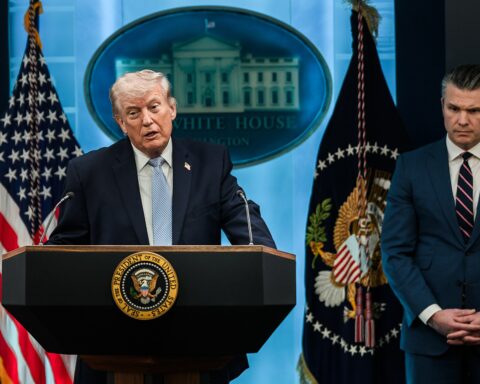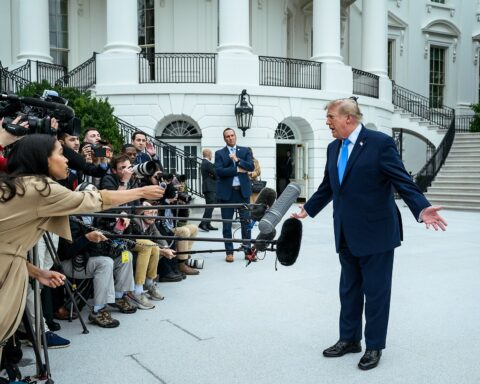

WASHINGTON — Trump told NBC on May 4 that “complete dismantlement” of Iran’s nuclear programme is “all I’d accept” — and the statement was designed to be believed, which is exactly what makes the architecture around it work. Within 72 hours, Vice-President Vance offered a softer formulation that implicitly permits civilian enrichment, Iran’s foreign minister responded with the word “maximalism” for the fourth time since the Islamabad collapse, and a Foreign Ministry spokesman clarified the same day that what matters to Tehran is “the stances of the U.S. negotiating team,” not the president’s public position. The contradictions are not dysfunction but architecture — a deliberate two-track system in which Trump’s public floor serves a domestic and coercive purpose while Steve Witkoff’s back-channel keeps Abbas Araghchi at the table, and the distance between the two tracks is where the actual deal will be negotiated.
The problem for Riyadh is that this architecture runs on American time. Trump’s double-track is calibrated for pressure that compounds over months — sanctions attrition, blockade economics, the slow accumulation of concessions from a weakening adversary — while Saudi Arabia’s clock runs on weeks: the Day of Arafah falls on May 26, Aramco’s June OSP has already been cut $4 per barrel from May’s war-premium, output sits at 7.25 million barrels per day against a fiscal break-even north of $108, and every day without a Hormuz resolution costs the kingdom revenue it cannot recover. Washington built two tracks to Tehran, and neither was calibrated for Riyadh’s survival.
Table of Contents
- What Is the Double-Track?
- The Muscat Pattern — Offer, Disavow, Repeat
- Why Does Trump Need Both Tracks?
- How Does Iran Read the Architecture?
- The North Korea Precedent — CVID to Singapore in Twelve Months
- Can Saudi Arabia Survive a Twelve-Month Timeline?
- Twenty-One Days to Arafah
- The 123 Asymmetry — Saudi Enrichment and the Dismantlement Demand
- What Happens at the Fourth Round in Oman?
- Frequently Asked Questions
What Is the Double-Track?
The double-track is a negotiating architecture in which the president maintains a public maximum — in this case, complete nuclear dismantlement — while an envoy operates a private channel at a lower, more flexible threshold, and the gap between the two creates the space in which the actual settlement will be located. It is visible across four rounds of talks, three contradictory public positions within ten days, and one envoy whose apparent technical limitations keep proving useful. On May 4, Trump set the public floor on NBC: “complete dismantlement” of Iran’s nuclear programme, no civilian enrichment, no face-saving carve-outs, no phased approach. Three days later, Vance told reporters that Iran cannot have “the kind of enrichment program that allows you to get to a nuclear weapon” — language that, unlike Trump’s formulation, implicitly permits limited enrichment for non-weapons purposes.
In between, the third track had already been exposed and withdrawn: Witkoff’s earlier offer of free enriched uranium for medical use — an inducement designed to test whether Araghchi could sell a deal to the Supreme National Security Council — had been publicly killed by the president with the words “I’m not giving them anything. I wouldn’t have approved that.” Three positions from three officials on the same question, and the administration has made no visible effort to reconcile them, because the contradictions are load-bearing — Trump’s NBC floor gives 52 Senate Republicans, led by Foreign Relations Committee Chairman Jim Risch, the maximalist formulation they demanded in writing, while Witkoff’s channel gives Araghchi a space below the public floor where enrichment percentages and uranium swaps can be discussed without triggering the president’s domestic exposure. Vance’s softer formulation sits between the two, broad enough to cover either outcome if the talks produce a deal or if they collapse.
The architecture has historical precedent that nobody in the White House would cite by name. Richard Nixon ran a version with Vietnam, Ronald Reagan with the Soviets, and Trump himself ran it with North Korea in 2017 and 2018, moving from “fire and fury” to the Singapore handshake in twelve months — and the Singapore joint statement dropped the very demand, complete and verifiable denuclearisation, that the public floor had been built around. The architecture works by design, and the question — the one that matters for Riyadh — is who pays for the time it takes to work.
The Muscat Pattern — Offer, Disavow, Repeat
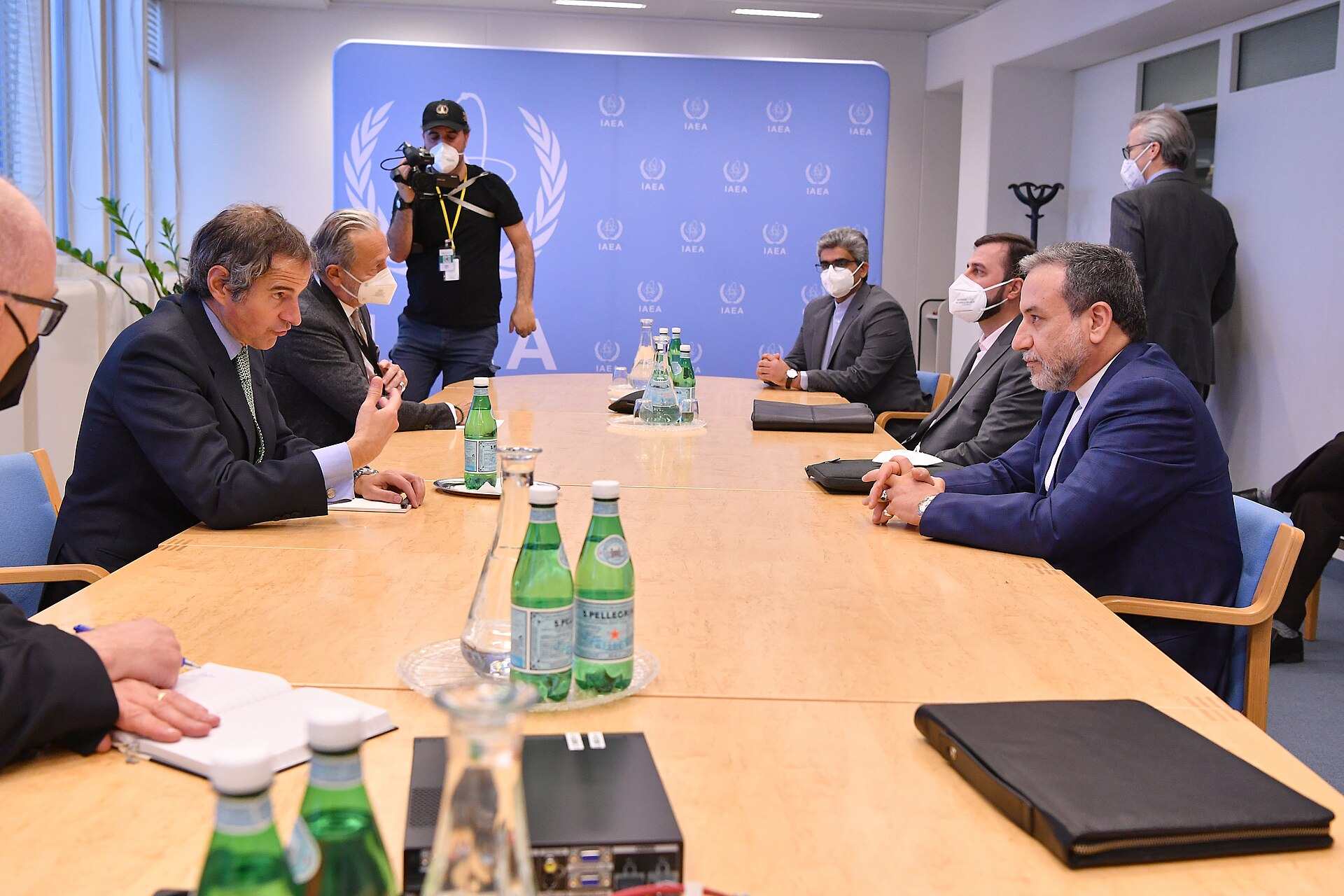
The first round of talks in Muscat established the template that every subsequent round has followed. Witkoff arrived with limited technical knowledge of nuclear enrichment — a limitation the Arms Control Association described in language unusual for a Washington think tank, noting that Araghchi “explained the stages of nuclear fuel production and the difference between an enrichment facility and a reactor to Witkoff on several occasions during the negotiation.” Witkoff told Fox News after the round that Iran would need to reduce enrichment to 3.67 per cent, the JCPOA ceiling; the next day he reversed himself and said Iran must completely dismantle. An unnamed Persian Gulf diplomat told MS NOW that “Witkoff’s description of the conversation was false — the Iranians told Witkoff that Iran was willing to give up the enriched uranium as part of a new agreement with Trump.”
The Middle East briefing 3,000+ readers start their day with.
One email. Every weekday morning. Free.
“Witkoff was too — I’m going to say a strong word: incompetent — and technically ill-informed to understand the significance of what was on the table.”
Daryl Kimball, Executive Director, Arms Control Association, TIME, April 2026
Whether Witkoff was genuinely out of his depth or operating within a deliberate architecture matters less than the outcome, which is that every round has followed the same sequence: Witkoff signals flexibility, Iran engages, Trump publicly withdraws the concession, the talks survive. The enriched-uranium episode laid the pattern bare — Witkoff offered free enriched uranium for medical purposes, testing whether Iran’s pragmatist wing could deliver a deal to the SNSC on terms the IRGC might tolerate, and when Araghchi showed interest the offer had served its intelligence-gathering purpose: Washington now knew where Iran’s civilian negotiators could go, and Trump withdrew it publicly, resetting the floor without losing the information.
The pattern carries an Iran-Contra-shaped vulnerability that neither track has resolved. Iran-Contra collapsed precisely because the back-channel became public and the president’s official position was exposed as contradicting the private negotiations — a gap that destroyed Reagan’s credibility with Congress and nearly ended his presidency. Trump’s “I’m not giving them anything” disavowal of Witkoff’s uranium offer has already partially exposed the distance between the two tracks, and each subsequent round carries the risk that the gap between what Witkoff discusses in Muscat or Oman and what Trump says on television becomes too wide for either side to maintain. Araghchi identified this vulnerability on April 12, posting on X that the parties had been “just inches away” from a memorandum of understanding before encountering “maximalism, shifting goalposts, and blockade” — language calibrated to describe an architecture, not a person, and identical in framing to his May 5 post about “maximalist positioning.”
Why Does Trump Need Both Tracks?
Trump needs the public floor because the domestic politics of an Iran deal will not survive without it. The Risch letter — demanding full dismantlement, a position so maximalist that even the original JCPOA would fail to meet it — gives Trump political cover for holding that floor, but it also constrains him: any deal that visibly permits Iranian enrichment becomes a domestic target for the same Republican coalition that destroyed Obama’s JCPOA through legislative erosion and, under Trump’s first term, outright withdrawal.
But Trump also needs an outcome before the costs of not having one exceed the costs of a compromised one. The war is degrading American bargaining position in ways the blockade was designed to prevent: Saudi production has collapsed from 10.4 million barrels per day to 7.25 million, Iran’s Fujairah strikes have eliminated bypass capacity, and the IRGC’s Hormuz management regime — where vessels require Iranian authorisation to transit — has become a self-reinforcing reality that grows harder to dismantle with each passing week. The CENTCOM blockade, imposed April 13, was designed as a coercive instrument with a finite window; at Day 22, it is generating diminishing returns while its costs in insurance premiums, shipping disruption, and near-total Gulf crude shutdown continue to compound.
The double-track resolves this tension by giving Trump access to two outcomes simultaneously. If Witkoff delivers a deal that falls short of dismantlement, Trump can describe it as Phase 1, frame it as a down-payment, and point to his own NBC statement as proof he never accepted less — the Singapore playbook, rerun with different geography and higher oil prices. If the talks collapse, Trump points to the same statement and argues he held the line. Both outcomes are politically survivable for the president, which is the architecture’s purpose, and neither timeline accounts for the third party in the room — a country that cannot frame a collapsed round as domestic strength when its pilgrims are arriving and its fiscal position is deteriorating by the week.
How Does Iran Read the Architecture?
Iran has separated the two tracks in its own public signalling with a precision that suggests its negotiators understand the architecture at least as well as the people who designed it. On May 5, Araghchi posted on X that “maximalist positioning and incendiary rhetoric achieve nothing except eroding the chances of success” — aimed squarely at Trump’s NBC interview. On the same day, Foreign Ministry spokesman Esmaeil Baghaei told reporters that contradictory US messages are “unhelpful,” but added that what matters to Iran is “the stances of the U.S. negotiating team” — a deliberate, almost clinical separation of the president from his envoy. Araghchi attacks Track One, Baghaei keeps Track Two alive, and the co-ordination between the two is not accidental.
Iran’s 14-point proposal, delivered on May 2, offers the sharpest evidence of this dual reading. The proposal calls for the war to end within 30 days, US troop withdrawal, release of frozen assets, sanctions relief, reparations, and a new Hormuz mechanism — but it contains zero provisions on Iran’s nuclear programme. The omission is deliberate: by decoupling war-ending from nuclear dismantlement, Iran accepts the reality that Witkoff’s channel can deliver a Hormuz deal and a ceasefire but cannot deliver what Trump’s NBC floor demands. Iran’s counter-proposal of a joint enrichment project with regional Arab states and American investment tested whether the back-channel could accommodate a face-saving alternative to full dismantlement; Witkoff denied it was being discussed, which told Tehran that Track Two still exists but is retreating toward Track One under political pressure.
The fracture on the Iranian side complicates this reading in ways that serve Washington’s timeline while punishing Riyadh’s. Iran International reported in late April an “unprecedented rift in Iran’s hardline camp,” with Tasnim — the IRGC-linked agency — calling its own coalition’s preconditions “unrealistic,” while Raja News, aligned with former presidential candidate Saeed Jalili, insisted on maximum demands. The double-track is fragmenting the hardline consensus that has held since Vahidi blocked the Islamabad accord in April, but fragmentation takes time — weeks or months to translate into negotiating concessions — and time is the commodity Saudi Arabia has run out of.
“The US faces a choice between an impossible military operation and a bad deal.”
IRGC statement, May 4, 2026, via Taipei Times
The IRGC’s May 4 formulation is addressed to the Witkoff channel, not the Trump floor — it acknowledges that the back-channel is where any deal will be made, and that the deal will be “bad” by Washington’s public standards. For Saudi Arabia, this is the worst of all readings: a deal that takes months to negotiate, arrives below Trump’s public floor, and does not address the Hormuz regime or the war’s broader regional consequences until the nuclear question is resolved or deferred. Trump’s “complete dismantlement” demand also hands IRGC hardliners domestic ammunition against any Witkoff-negotiated compromise, because the president’s own words make the case for rejection: if even Trump says dismantlement, what exactly is Araghchi negotiating?
The North Korea Precedent — CVID to Singapore in Twelve Months
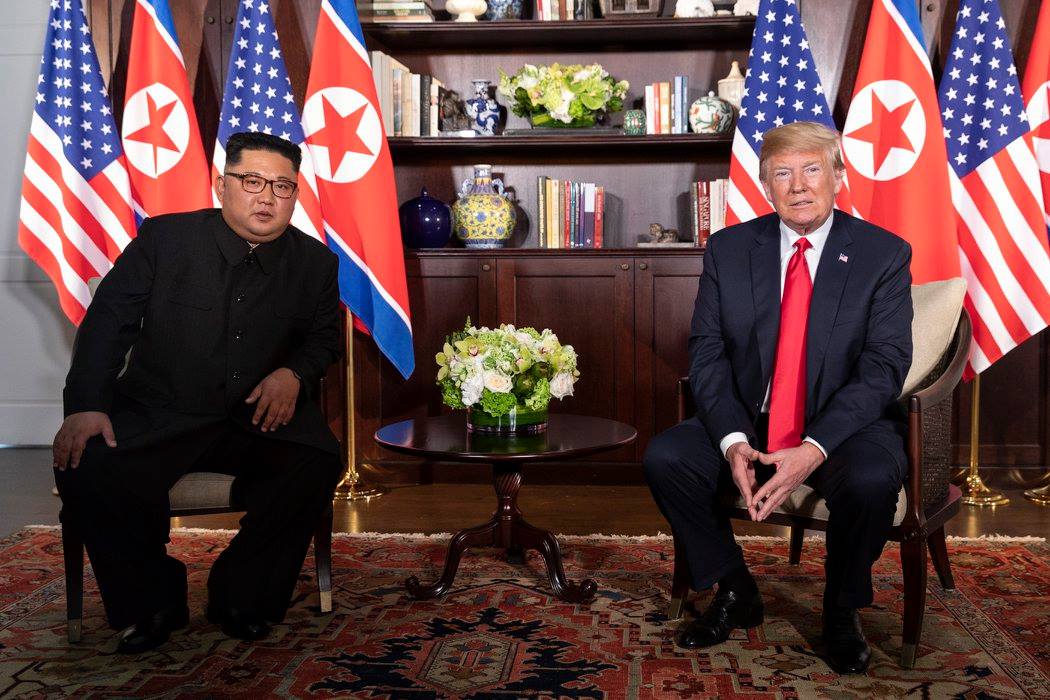
Trump has run this architecture before, and the North Korea case is the one Saudi strategists should study with the most discomfort. In June 2017, Trump’s public position was CVID — complete, verifiable, irreversible denuclearisation — accompanied by “fire and fury” threats and personal attacks on Kim Jong Un that made the current Iran rhetoric look restrained. Behind the public maximalism, back-channels through intelligence services and South Korean intermediaries tested Pyongyang’s willingness to negotiate. By June 2018, Trump had signed the Singapore joint statement, which committed both sides only to “work toward complete denuclearization of the Korean Peninsula” — language the Georgetown Journal of International Affairs described as a capitulation disguised as a commitment. North Korea kept its arsenal, its enrichment facilities, and its missile programme.
The trajectory from CVID to Singapore took approximately twelve months, and the parallel to the current Iran architecture is uncomfortable in its precision. Trump’s “complete dismantlement” NBC statement occupies the same structural position CVID occupied in mid-2017: a public ceiling so high that any deal achievable through negotiation will fall below it, serving a coercive and domestic function until the private channel delivers something the president can sell as a win regardless of its relationship to the original demand. The question for Riyadh is not whether Trump will eventually accept something less than dismantlement — the North Korea precedent suggests he will, and the Vance formulation of May 7 is already the linguistic preparation for that retreat — but how many months of maximalist posturing and back-channel probing will precede that acceptance.
| Phase | North Korea (2017-18) | Iran (2026) |
|---|---|---|
| Public maximalism | CVID, “fire and fury” (June 2017) | “Complete dismantlement” (May 2026) |
| Back-channel probing | CIA via Seoul, approximately 8 months | Witkoff via Oman and Pakistan, ongoing |
| Envoy concession withdrawn | Pompeo “bright future” walked back | Witkoff uranium offer disavowed by Trump |
| Domestic floor | Congressional hawks, Bolton appointment | 52 Senate Republicans, Risch letter |
| Outcome | Singapore summit dropped CVID (June 2018) | Fourth round Oman, May 11 (pending) |
| Timeline to settlement | Approximately 12 months | Unknown — Saudi cannot absorb 12 months |
The difference between the two cases is collateral cost, and it is the difference between an abstraction and a catastrophe. The twelve months between CVID and Singapore cost the United States nothing material — no American industry depended on North Korean trade, no ally was haemorrhaging fiscal reserves because of the timeline’s length, no American-protected religious obligation with two million participants fell inside the negotiating window. The gap between “complete dismantlement” and whatever Witkoff is actually negotiating costs Saudi Arabia revenue it cannot replace, strategic position it cannot rebuild, and — if it extends past May 26 — regime legitimacy it cannot afford to test. The architecture works the same way in both cases; the collateral falls differently.
Can Saudi Arabia Survive a Twelve-Month Timeline?
At current production levels and price volatility, a twelve-month negotiating timeline would cost Saudi Arabia between $75 billion and $120 billion in foregone revenue relative to pre-war output — a range wide enough to reflect uncertainty but narrow enough to convey the scale of what the double-track’s pacing means for the kingdom’s finances. Saudi production in March stood at 7.25 million barrels per day, down 3.15 million from February’s 10.4 million, a 30 per cent collapse that the IEA called “the largest disruption on record.” Aramco’s June OSP for Arab Light to Asia has been cut to +$15.50 per barrel above the Oman-Dubai average, down $4 from May’s war-premium of +$19.50, meaning the kingdom is selling into a falling-premium environment while physical output remains suppressed.
| Metric | Pre-War (February 2026) | Current (May 2026) | Gap |
|---|---|---|---|
| Production | 10.4M bpd | 7.25M bpd | -3.15M (-30%) |
| June OSP to Asia | +$4.50/bbl (January baseline) | +$15.50/bbl | +$11.00 war premium |
| Fiscal break-even | $78-84/bbl (pre-PIF estimate) | $108-111/bbl (PIF-inclusive) | At margin versus Brent |
| Budget deficit | 3.3% GDP (official projection) | 6.6% GDP (Goldman, war-adjusted) | 2x official estimate |
| Asia-bound exports | Pre-war baseline | -38.6% (Kpler data) | Structural loss |
| Yanbu bypass ceiling | 7M bpd (pipeline rated capacity) | 4-5.9M bpd (operational) | 1.1-3M bpd shortfall |
The fiscal break-even — the price Saudi Arabia needs to balance its budget inclusive of PIF commitments and Vision 2030 spending — sits between $108 and $111 per barrel by Bloomberg’s calculation, and Brent has oscillated between $109 and $114 without the stability that fiscal planning requires. Goldman Sachs places the war-adjusted deficit at nearly double the official projection. The Yanbu bypass — the East-West Pipeline that was supposed to insulate Saudi exports from Hormuz — operates at a loading ceiling well below its rated capacity, and Asia-bound exports have dropped 38.6 per cent according to Kpler, a loss that reflects not just reduced volumes but the structural re-routing of global crude flows away from Gulf producers.
For comparison, the JCPOA negotiating period from the November 2013 interim agreement to the July 2015 final deal lasted twenty months, and Saudi Arabia entered those talks producing at or near capacity with Brent above $100 and reserves undepleted by a decade of giga-project spending. The kingdom enters the current window producing at 30 per cent below capacity, with Hormuz partially closed, its bypass operating below ceiling, and its fiscal buffers — while still substantial — drawn down by pandemic spending, a price war it initiated and lost, and eight years of Vision 2030 commitments premised on production levels the kingdom can no longer sustain. The double-track timeline has no diplomatic counterweight from Riyadh — but it now has a Chinese variable: Araghchi’s arrival in Beijing eight days before Trump introduces a third competing clock that runs on neither American nor Saudi time.
Twenty-One Days to Arafah
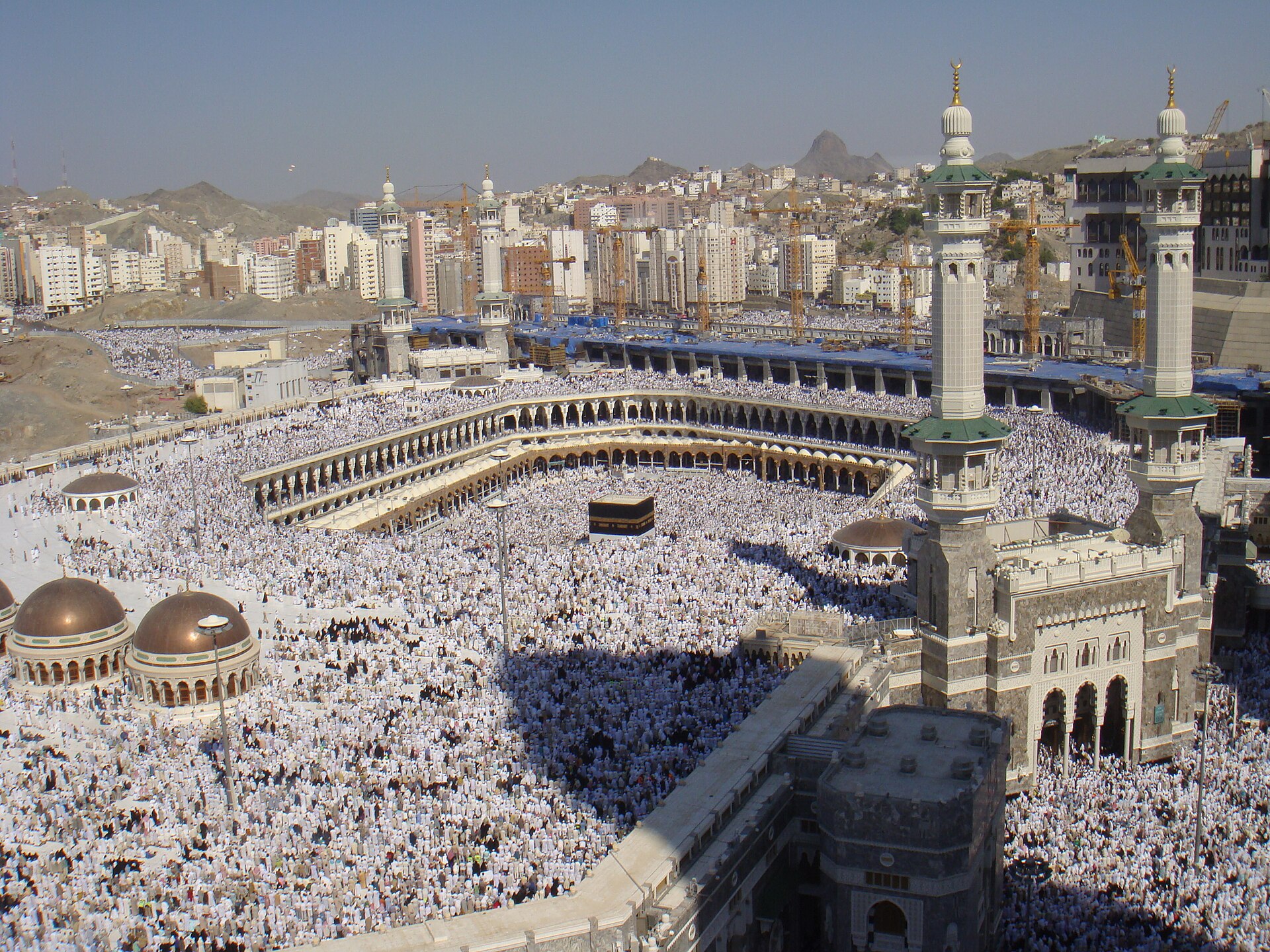
The Day of Arafah falls on May 26, twenty-one days from now, and it imposes a deadline on Saudi Arabia that no American negotiating architecture can accommodate or defer. Between 750,000 and two million pilgrims will converge on Makkah and the holy sites during the final week of May — the Saudi government has not released final visa totals for 2026 — and any kinetic escalation in the Gulf during that window would carry consequences for the Custodian of the Two Holy Mosques that transcend fiscal arithmetic entirely. King Fahd adopted the Custodian title in October 1986, seven years after the Grand Mosque seizure and one year before the 1987 Hajj massacre that killed 402 pilgrims; the title was designed to fuse Saudi sovereignty with stewardship of the holy sites, which means any threat to pilgrims is, by the monarchy’s own constitutional logic, a threat to the state itself.
Saudi Arabia’s indispensability to any Hormuz resolution gives Riyadh a bargaining position in theory, but the Hajj deadline converts that position into exposure: the kingdom cannot walk away from the table, cannot delay a deal, cannot afford a collapse in talks during the one period when its domestic legitimacy is most visible and most vulnerable. Trump’s double-track does not account for May 26 because it does not need to — the Day of Arafah is not an American deadline, and the architecture was designed for American pressure cycles, not the Hijri calendar. Indonesia’s first Hajj departures are scheduled to coincide with the ceasefire expiry, a convergence that the Caine sub-threshold framework has not addressed, because it was built for American military decision-making, not for the protection of 1.5 million pilgrims whose governments will hold the Custodian responsible for their safety.
The 123 Asymmetry — Saudi Enrichment and the Dismantlement Demand
The proposed US-Saudi 123 civil nuclear cooperation agreement, under negotiation alongside the Iran talks, reportedly does not prohibit Saudi uranium enrichment — an asymmetry so politically combustible that it has become ammunition for both Iranian hardliners and American nonproliferation advocates simultaneously. PBS NewsHour and Responsible Statecraft have reported that the agreement falls below the “gold standard” set by the US-UAE 123 agreement of 2009, which required Abu Dhabi to forswear domestic enrichment entirely. If Saudi Arabia secures the right to enrich while Iran is told to dismantle, the double-track acquires a structural contradiction that Araghchi has already weaponised: his May 5 post asserting Iran’s right “as a founding signatory to the NPT” to the “full nuclear fuel cycle” is aimed not at Trump’s dismantlement demand but at the 123 agreement sitting on a desk in the State Department.
The contradiction limits Witkoff’s negotiating space in ways that serve Iran’s delay strategy. Any offer Witkoff makes permitting limited Iranian enrichment — the kind the Vance formulation would technically accommodate — becomes harder to defend at home if Saudi Arabia is simultaneously acquiring enrichment rights under a less restrictive agreement. Conversely, if Trump holds the dismantlement floor for Iran while permitting Saudi enrichment, Iran’s hardliners gain a permanent justification for rejection — not because dismantlement is inherently unacceptable, but because the asymmetry poisons the principle behind it. The IRGC does not need principled arguments to block a deal; it needs arguments that play on Tasnim’s front page, and “America lets Saudi Arabia enrich while demanding we dismantle” writes its own headline in Farsi and English alike.
The nuclear data compounds the problem. The IAEA last verified 440.9 kilograms of uranium enriched to 60 per cent as of September 2025, but inspections were suspended when the war began and the agency cannot confirm the stockpile’s current location or quantity. A single cascade of approximately 200 IR-6 centrifuges could enrich 50 kilograms from 60 to weapons-grade 90 per cent in roughly ten days, and NBC News reported in May that American strikes destroyed only one of three Iranian nuclear sites, with Iran’s weapons timeline “unchanged despite weeks of strikes.” The dismantlement demand is not merely maximalist — it is aspirational, requiring a degree of Iranian capitulation that American airpower has already demonstrated it cannot compel by force, which is precisely why the back-channel exists and precisely why it takes longer than Saudi Arabia can afford.
What Happens at the Fourth Round in Oman?
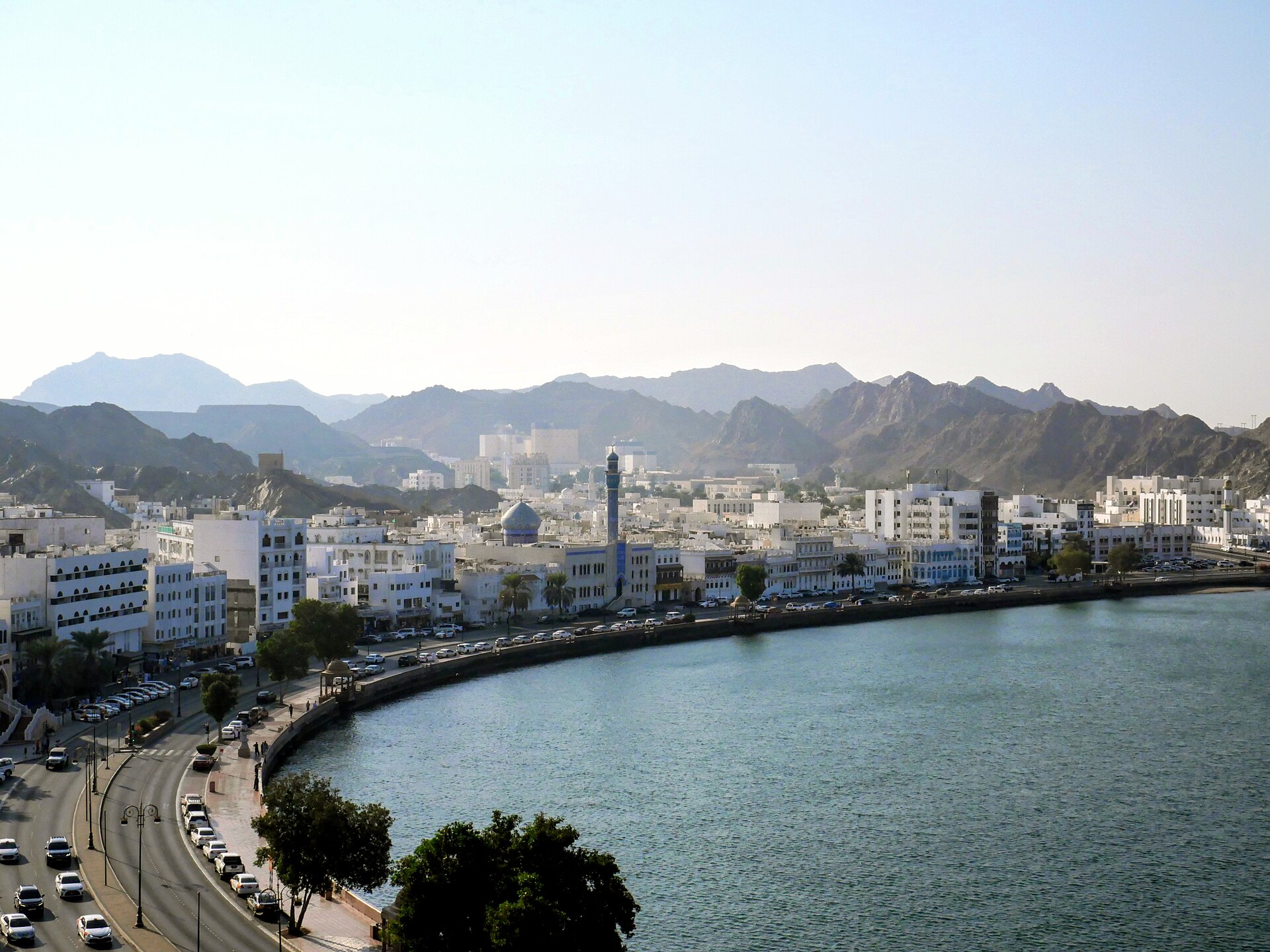
The fourth round of US-Iran talks, scheduled for May 11 in Oman, will be the last realistic opportunity for diplomatic movement before Hajj — six days from now, fifteen before the Day of Arafah, and quite possibly the last round where the Witkoff channel retains enough credibility to function after repeated presidential disavowals. Both sides have already constrained the outcome before a word is spoken: the talks will be high-level only, with technical negotiators excluded, which means enrichment percentages, centrifuge cascades, and verification protocols are off the agenda. What remains is political architecture — who frames the deal, who reserves the right to reject it, and whether the back-channel can produce enough to survive another cycle of offer and withdrawal.
Iran’s 14-point proposal set the terms: war end in 30 days, no nuclear provisions, a new Hormuz mechanism, sanctions relief. Trump called it “unacceptable.” The gap between “unacceptable” and the Witkoff channel’s actual operating parameters — which the Persian Gulf diplomat’s account and the enriched-uranium episode suggest are more flexible than the president’s public language — is where the fourth round will be conducted. But the round is designed, like every one before it, for the pace of American pressure accumulation rather than the pace of Saudi fiscal deterioration, and if it follows the Muscat pattern — Witkoff tests, Trump withdraws, Araghchi recalibrates — it will generate intelligence and positioning, not a framework that Riyadh can take to its OSP calculations or its Hajj security planning.
Trump’s April 25 cancellation of the Witkoff-Kushner trip to Pakistan — “too much time wasted on traveling,” he said, citing Iranian “infighting” — revealed how the White House values time in this process. The president cancelled a negotiating round because the timeline was inconvenient for his calendar, not because the substance had been exhausted, and that is the prerogative of the party setting the pace. The sequencing deadlock that has defined every round since Islamabad — Iran demands sanctions relief before nuclear concessions, Washington demands nuclear concessions before sanctions relief — has not been broken by the double-track, only managed by it, and management can continue for as long as Washington chooses. Saudi Arabia will be in Oman on May 11, as it has positioned itself near every round since the war began, for the same reason it cut its June OSP rather than holding the premium — not because Riyadh expects the double-track to deliver on its timeline, but because the kingdom cannot afford to be absent when Washington decides, on its own schedule, that dismantlement is a word it no longer needs.
Frequently Asked Questions
Has Trump used double-track negotiating architecture outside the Iran and North Korea cases?
The pattern extends beyond adversary diplomacy. In trade negotiations with China during his first term, Trump imposed tariffs publicly while Treasury Secretary Mnuchin negotiated carve-outs privately, and the Phase 1 trade deal of January 2020 fell well below the “structural reform” demands the administration had maintained as its public position for eighteen months. The Abraham Accords operated on a different model — bilateral normalisation deals negotiated in parallel rather than a two-track approach to a single adversary — but shared the same instinct for maintaining a public ceiling above the private settlement point. The February 2019 Hanoi walkout, where Trump left the North Korea summit without a deal after Kim demanded full sanctions relief, is the closest analogue to a potential fourth-round collapse in Oman: a deliberate mid-process reset that extended the timeline by months while the collateral costs were borne by regional allies.
What role does Pakistan play in relaying communications between the two tracks?
Pakistan serves as Iran’s protecting power in the United States, a formal diplomatic role it has held since 1992, and the 27th Constitutional Amendment of late 2025 concentrated foreign policy authority in the military establishment rather than the elected government — meaning Army Chief General Munir, not Prime Minister Sharif, manages the relay between Washington and Tehran. Munir visited Khatam al-Anbiya headquarters, the command centre of IRGC Brigadier General Abdollahi, on April 16, establishing a direct military-to-military channel that bypasses both countries’ foreign ministries entirely. The September 2025 Saudi-Pakistan Military Defence Agreement simultaneously makes Pakistan Iran’s interlocutor and Saudi Arabia’s treaty ally, a position that gives Islamabad influence over both tracks but formal authority over neither, and any deal that emerges will carry Munir’s fingerprints regardless of which American track produced it.
Could Witkoff be replaced as envoy without collapsing the back-channel?
Trump considered sending Jared Kushner alongside Witkoff to the cancelled Islamabad round in late April, suggesting the president recognises the back-channel may need a second operator or an eventual replacement. Brian Hook, who served as Iran envoy during Trump’s first term and managed the JCPOA withdrawal process, has been discussed in Washington as a potential successor whose technical knowledge would address the competence gap that Kimball and the Arms Control Association identified. The risk of any transition is that a new envoy would need to rebuild personal rapport with Araghchi — the Muscat rounds created a direct relationship that Iran’s Foreign Ministry has explicitly distinguished from the president’s public position — and the transition period would extend the timeline further, adding weeks or months that Saudi Arabia does not have before Hajj and the next OSP cycle.
What would a deal below Trump’s public floor actually look like?
The Vance formulation of May 7 provides the linguistic template: enrichment capped below 20 per cent but above zero, with an inspection regime modelled on the IAEA Additional Protocol rather than the more intrusive JCPOA verification architecture that allowed inspectors access to undeclared sites. Russia’s Rosatom has positioned itself as a potential custodian for Iran’s existing HEU stockpile, offering to remove enriched uranium from Iran in exchange for fabricated fuel rods — an arrangement that would technically satisfy a loose reading of “dismantlement” while leaving centrifuge infrastructure intact. Such a deal would mirror Singapore in both structure and vocabulary: the original demand quietly retired, the private arrangement dressed as victory, and the adversary’s core capability preserved behind a change in language rather than a change in physics.
Has Iran ever voluntarily accepted limits on its enrichment programme?
Iran suspended enrichment entirely between 2003 and 2005 under President Khatami, a voluntary freeze offered to the EU-3 — Britain, France, and Germany — during negotiations that collapsed when Washington refused to join the talks, and accepted the JCPOA’s 3.67 per cent ceiling in 2015 under a deal that held until Trump withdrew in May 2018. Iran’s current 60 per cent enrichment began in April 2021, explicitly framed by Tehran as a direct response to Trump’s first-term withdrawal, establishing a documented pattern in which American maximalism produces Iranian nuclear escalation rather than restraint. The 14-point proposal’s omission of nuclear provisions may itself signal willingness to accept enrichment limits under a separate framework — but only if the terms arrive through Witkoff’s channel rather than through the president’s NBC appearances, and only if the timeline permits the kind of internal IRGC negotiation that Araghchi cannot conduct in public. How Araghchi used his May 6 Beijing visit to pre-position China’s public stance before Trump’s arrival — locking Wang Yi into language that Saudi Arabia had no input on — is examined in Araghchi Went to Beijing to Write Trump’s Talking Points Before Riyadh Got the Memo.