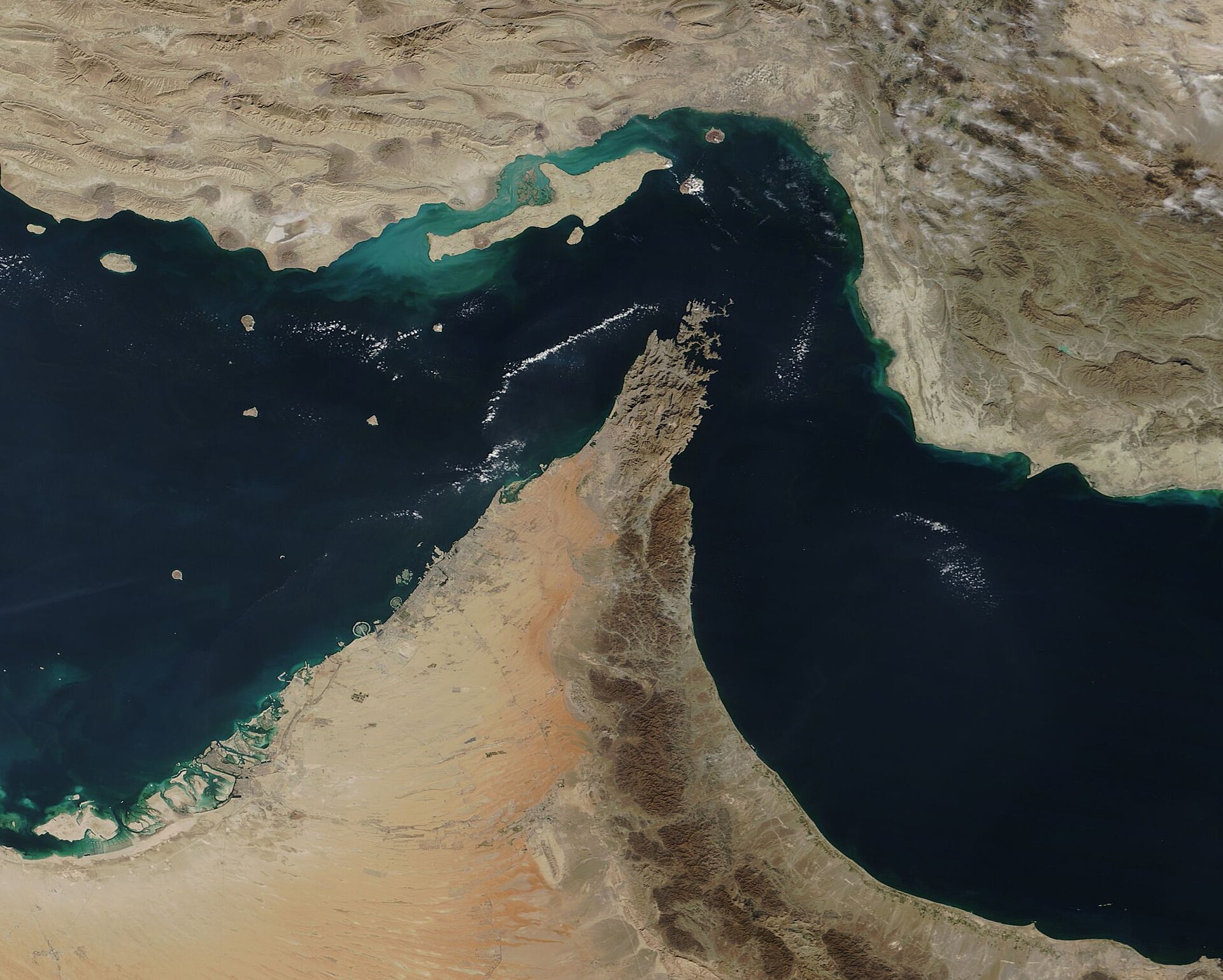

WASHINGTON — Project Freedom’s first operational day on May 4 produced a military transit and a diplomatic catastrophe in equal measure. Two US guided-missile destroyers passed through the Strait of Hormuz under the new convoy framework. Zero neutral commercial vessels followed them. The shipping industry publicly refused to participate, Iran’s parliament gained the “foreign aggression” predicate it needed to advance a sovereignty law over the strait, and the IRGC broadcast a “prevented entry” narrative that will circulate whether or not it is factually true. The mechanism designed to reopen Hormuz may have structurally hardened the deadlock it was built to break.
The evidence is not ambiguous. Tim Huxley, chairman of Mandarin Shipping, told Reuters the strait remains “incredibly hazardous” and most ships will avoid transit until something “more concrete” emerges. Hapag-Lloyd declared Hormuz transit “impossible” for its vessels. BIMCO — the world’s largest shipowner association — disclosed that no formal guidance on Project Freedom’s procedures had even been provided to the industry. The operation launched without the participation of the people it was designed to serve, on the same day Iran struck Fujairah’s petroleum complex and closed off the UAE’s only non-Hormuz export route.
Table of Contents
- What Actually Happened on May 4?
- Why Did Zero Commercial Shipping Follow the Destroyers?
- The Information War Iran Won Without Firing Accurately
- Did Project Freedom Legitimize Iran’s Hormuz Sovereignty Law?
- Fujairah and the Closure of the Back Door
- What Does the Shipping Industry’s Refusal Mean for the Mechanism?
- Operation Earnest Will’s Ghost
- The Mechanism’s Structural Contradiction
- Frequently Asked Questions
What Actually Happened on May 4?
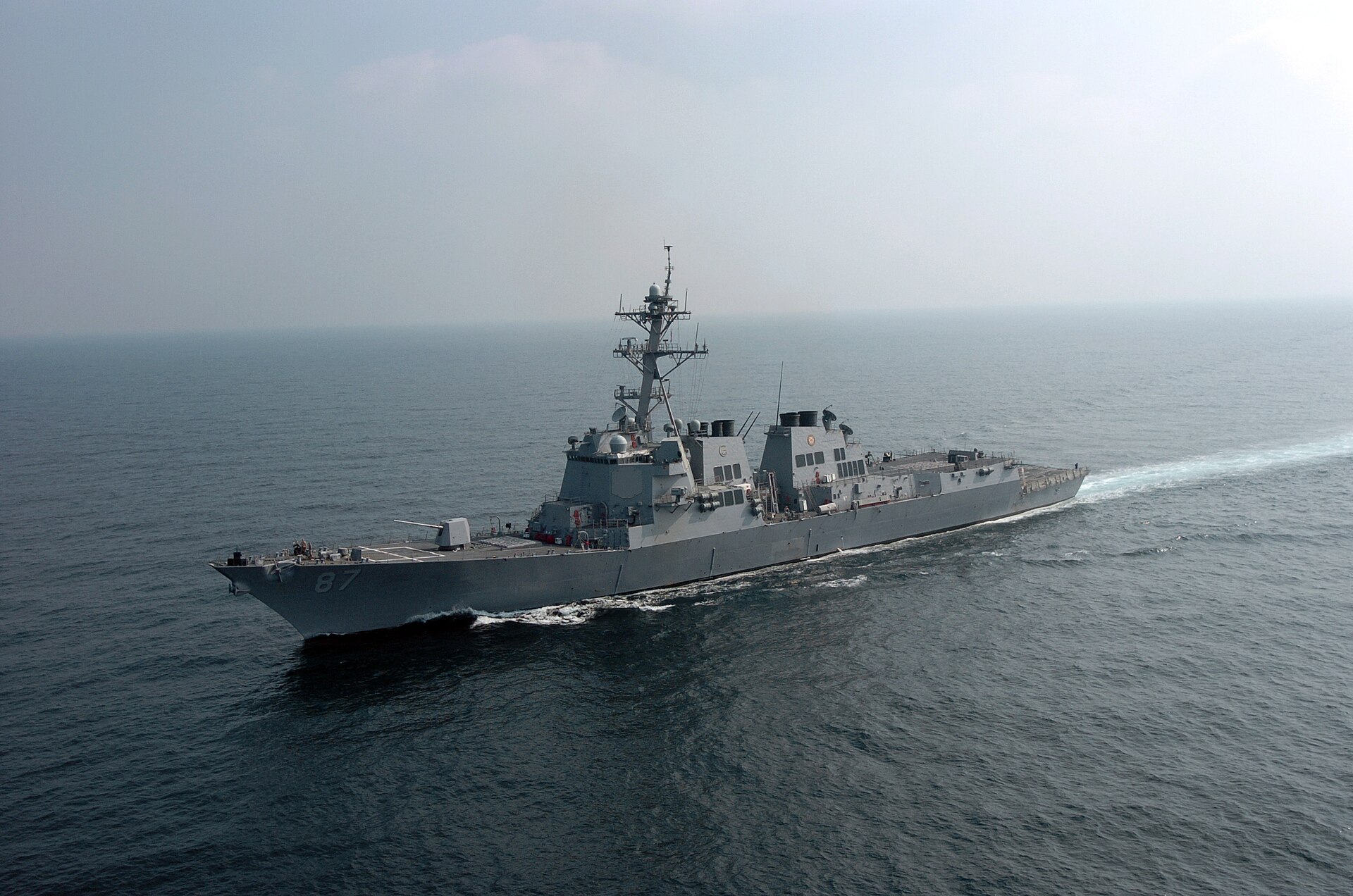
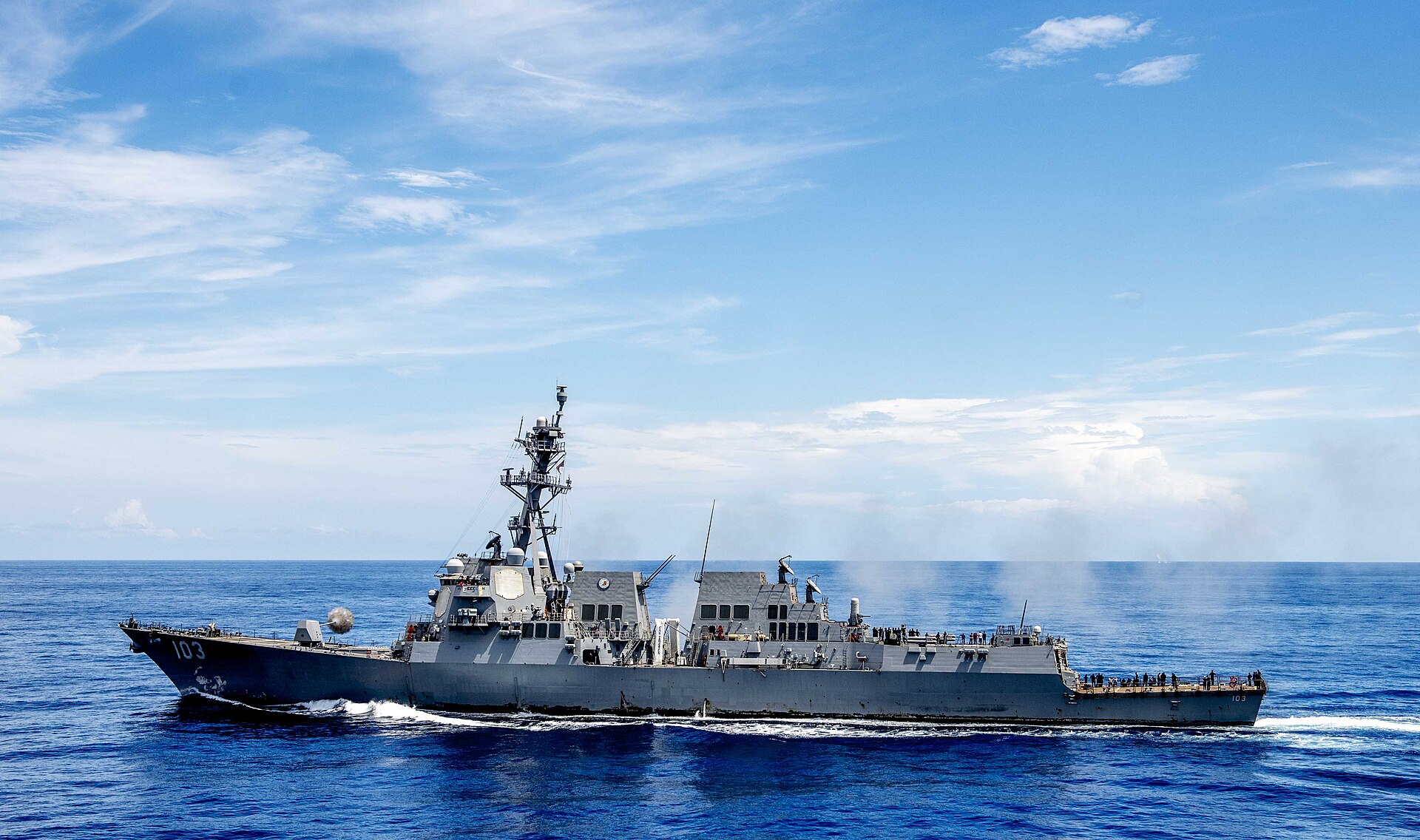
USS Truxtun and USS Mason transited the Strait of Hormuz under Project Freedom on May 4, 2026. Neither was struck, according to CENTCOM. Six Iranian small boats were sunk by US AH-64 Apache and MH-60S Seahawk helicopters, with Admiral Brad Cooper citing boats “threatening commercial shipping.” Two commercial vessels transited — both US-flagged, both already inside the Persian Gulf. No neutral commercial tonnage followed.
The force structure CENTCOM declared for the operation — 100-plus land- and sea-based aircraft, multi-domain unmanned platforms, approximately 15,000 service members — was built around two destroyers and two commercial ships already inside the Gulf. MarineTraffic AIS data on May 4 showed only one sanctioned LPG tanker, a few cargo ships, and a cable-laying vessel moving into the Gulf of Oman, according to Reuters. No surge of commercial traffic materialised.
A South Korean-operated bulk carrier caught fire in the strait on the same day. Seoul and HMM opened an investigation into the cause. Trump attributed the damage to Iran and urged South Korea to join the Hormuz mission. Brent crude jumped to approximately $115 per barrel as WTI rose roughly 3 percent during the firefight.
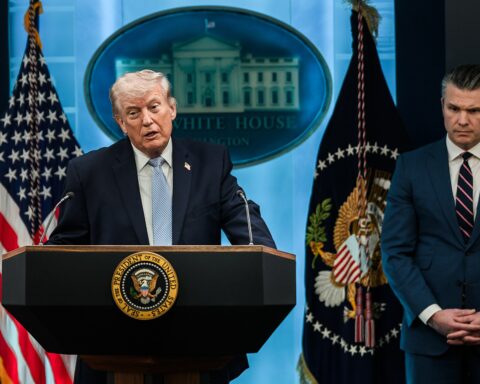
The operation’s legal framing carried its own signal. CNN reported that Project Freedom does not constitute formal military escort — which would require congressional notification under the War Powers Resolution — but rather “military support,” a distinction with consequences for both domestic accountability and allied participation. And ABC News reported that the US-led task force told ships to reroute on the first day. Even under Project Freedom, CENTCOM was routing shipping away from the strait, not through it.
The Middle East briefing 3,000+ readers start their day with.
One email. Every weekday morning. Free.
Why Did Zero Commercial Shipping Follow the Destroyers?
The shipping industry declined to participate in Project Freedom on Day 1 because the operation launched without providing the commercial sector the procedural clarity, insurance framework, or demonstrated safety record that would justify routing vessels through an active combat zone. Three of the world’s most authoritative maritime voices said so publicly within hours of the transit.
Jakob Larsen, BIMCO’s Chief Safety and Security Officer, told Reuters there were “still no formal details or guidance available to the wider shipping industry” on Project Freedom’s procedures. He flagged specifically “a risk of hostilities breaking out again if Project Freedom goes ahead, given Iranian threats against any ship attempting to transit the Strait of Hormuz without coordination with Iran’s military.” BIMCO represents shipowners controlling more than 60 percent of global merchant tonnage. Its members had not been briefed.
Hapag-Lloyd, the world’s fifth-largest container line, issued a corporate statement that transit through Hormuz “remained impossible for its vessels because there still was not enough clarity on secure passage procedures.” The statement did not reference uncertainty about Iranian capabilities. It referenced uncertainty about American procedures — the convoy mechanism itself was opaque to the people it purported to protect.
Tim Huxley put it plainly: “The strait is still incredibly hazardous and I expect most ships will continue to avoid transit until both sides come up with something more concrete.” Huxley chairs Mandarin Shipping and has operated vessels in the Gulf for decades. His public repudiation of the mechanism on its first day of operation represents exactly the kind of market signal that cannot be walked back by press releases.
Mark Cancian, senior adviser at CSIS’s Defense and Security Department, explained the commercial logic to Breaking Defense: “Shipping companies will want to see several convoys transit successfully and undamaged before they are willing to make a move.” He added that running convoys through the strait “increases the possibility of renewed fighting, with convoy battles potentially producing heavier casualties because so many ships would be exposed to damage from Iranian weapons, including anti-ship missiles and mines with 1,000-pound warheads.”
The structure of the refusal matters. This was not shipping companies hedging while quietly preparing to transit. This was the industry’s representative body disclosing that it had not received the documentation that would precede any transit decision. The mechanism was announced to the world before it was explained to its intended beneficiaries. That sequencing — public spectacle first, operational substance later or never — tells the industry everything it needs to know about whose interests Project Freedom was designed to serve on May 4.
The Information War Iran Won Without Firing Accurately
Iranian state media claimed the IRGC Navy “prevented US Navy ships from entering the Strait of Hormuz.” IRGC-aligned Fars News Agency additionally claimed two missiles struck a US naval frigate near the port of Jask at the southern entrance to the strait, forcing it to turn back. CENTCOM formally denied both claims: “No U.S. Navy ships have been struck.” The destroyers completed their transit.
The factual outcome is irrelevant to the information architecture Iran built around it. The “prevented entry” narrative circulates on IRIB, Fars, Tasnim, and Mehr regardless of CENTCOM’s denial, because the target audience for that narrative is not the Pentagon — it is the Iranian domestic population, the Iranian parliament advancing the Hormuz sovereignty law, and the neutral states (Pakistan, Oman, Turkey) that serve as mediators. For each of those audiences, the claim need not be true. It need only be plausible enough to sustain a political position.
Iran’s Foreign Minister Araghchi understood this with precision. His written reframe — “Project Freedom is Project Deadlock” — was designed not for domestic Iranian consumption but for Western media and neutral-state diplomatic channels. The phrase appeared in Al Jazeera’s liveblog and the Irish Times within hours. It is a four-word information operation targeting the English-language narrative frame, and it worked because the commercial evidence supported it. When zero neutral ships follow a freedom-of-navigation convoy, calling it “Project Deadlock” requires no propaganda infrastructure. It requires only a functioning news cycle.
The structural asymmetry is this: the IRGC wins whether the destroyers transit or not. If they transit, Iran broadcasts “aggression against our sovereign waters” and fires the claim — true or false — that it engaged and damaged US vessels. If they don’t transit, Iran broadcasts “prevented entry” with a stronger factual basis. The only scenario in which Iran loses the information war is one in which commercial shipping follows the destroyers in volume, the strait demonstrably reopens, and the IRGC’s deterrent credibility collapses. May 4 produced the opposite of that scenario. Two US-flagged ships already inside the Gulf used the operation to leave. Nobody else came in.
Mohamad Elmasry of the Doha Institute for Graduate Studies told Al Jazeera the deadlock stems partly from a US miscalculation: “Washington appears to believe Iran is ‘almost ready to surrender’ and ‘on the verge of an oil storage crisis,’ when in fact Tehran believes it can hold out for some time.” The miscalculation produces force without commerce, which is the precise combination that maximises Iran’s narrative advantage.
Did Project Freedom Legitimize Iran’s Hormuz Sovereignty Law?
Iran’s parliament passed a Hormuz toll law establishing a formal legal regime of Iranian “sovereignty, control and oversight” over the strait, with rial-denominated fees, IRGC-coordinated corridors, and a blanket ban on US- and Israeli-linked vessels. Project Freedom provided the “foreign aggression” predicate the law needed to advance.
The law’s lead proponent, lawmaker Mohammadreza Rezaei Kouchi, chairs the Civil Affairs Committee. Iran signed but never ratified UNCLOS, meaning Tehran claims it is not bound by Article 26’s prohibition on transit charges or Article 38’s guarantee of transit passage. The law codifies what the IRGC has been doing operationally since March 4 — the parliamentary vote converted operational practice into legal architecture.
Every sovereignty law requires a triggering event that justifies the assertion of extraordinary authority. A firefight between US Navy destroyers and Iranian forces in the strait is that triggering event. IRGC Major General Ali Abdollahi had pre-positioned the framing before the operation began: “We warn that any foreign military force, especially the aggressive US military, that intends to approach or enter the Strait of Hormuz will be targeted.” He characterised Project Freedom explicitly as a ceasefire violation. The Pentagon’s own briefing on May 5 confirmed that Iran had conducted more than ten attacks on US forces since the April 8 ceasefire — all classified as below the threshold of restarting major combat operations.
Ebrahim Azizi, chairman of Iran’s parliamentary security committee, stated that “any US interference in Hormuz breaks the April framework.” This is not a post-hoc rationalisation. It is a pre-established legislative position that Project Freedom’s execution confirmed. The parliamentary timeline — drafting, committee passage, floor vote — was already advancing before May 4. What the firefight added was political acceleration. Legislators pointing to American destroyers firing on Iranian boats in Iranian-claimed waters face no domestic opposition to a sovereignty assertion. The vote becomes unanimous rather than contested.
The law’s specific provisions reveal its operational architecture. SNSC approval is required for vessels flagged to “hostile” nations. IRGC-designated corridors become the sole legal transit routes. Rial-denominated fees — not dollar-denominated, which would implicitly acknowledge American financial infrastructure — assert monetary sovereignty alongside territorial sovereignty. The ban on US- and Israeli-linked vessels converts a military dispute into a permanent legal exclusion. None of these provisions are enforceable against a carrier battle group. All of them are enforceable against a container ship whose insurer requires compliance with local law.
The UNCLOS architecture underlying international transit rights has always depended on consensus legitimacy rather than enforcement capacity. Iran’s non-ratification was, until 2026, a legal footnote. Project Freedom’s firefight converts it into an operational reality. When a state that never accepted transit passage as binding international law asserts sovereignty through domestic legislation on the day a foreign navy fires weapons in the strait, the diplomatic cost of contesting that assertion rises for every neutral state. Pakistan, Oman, and Turkey — the ceasefire mediators — must now choose between endorsing American freedom of navigation and acknowledging Iranian legislative sovereignty. Project Freedom forced that choice on May 4 without providing any diplomatic off-ramp.
Fujairah and the Closure of the Back Door
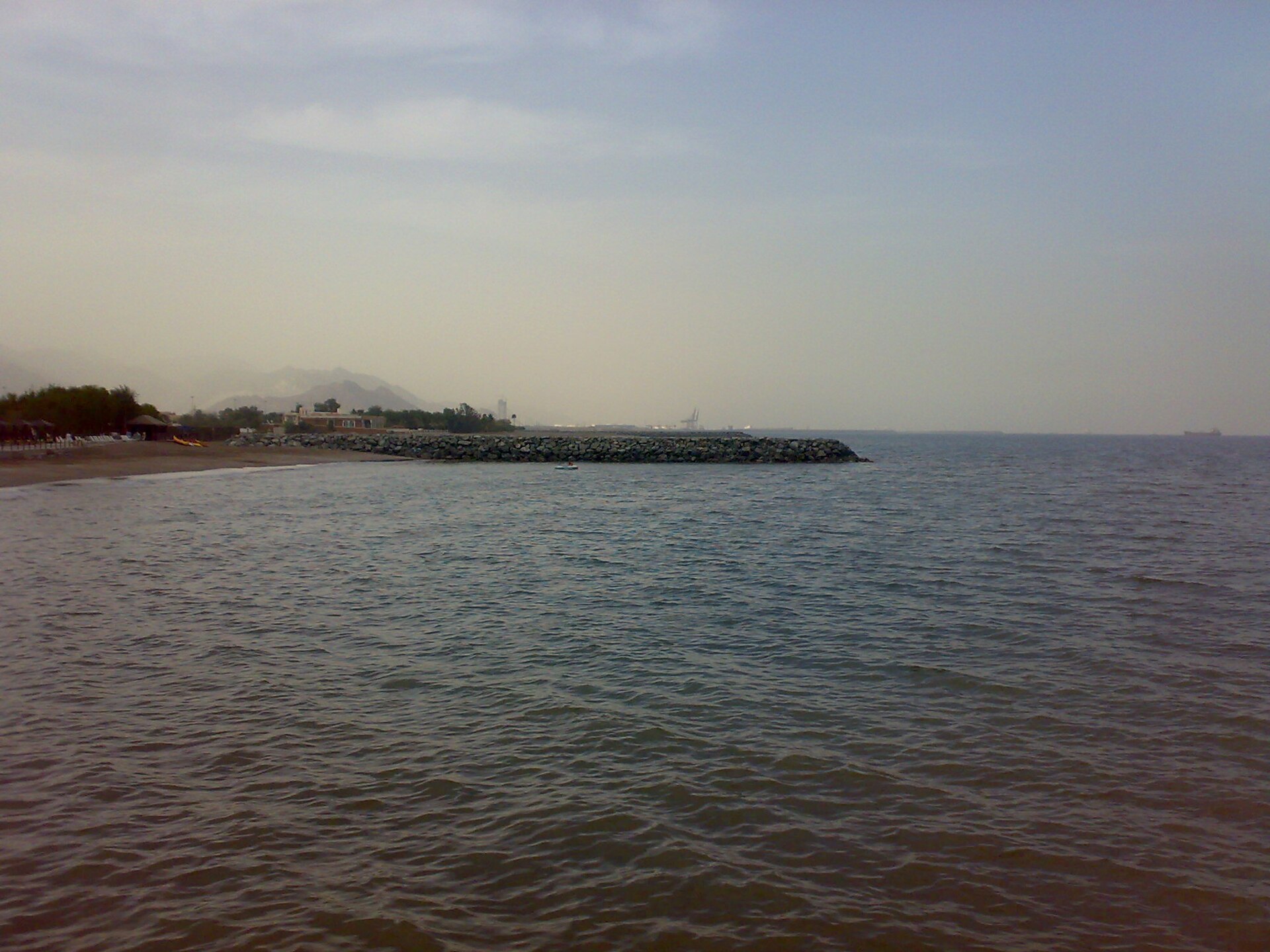
Iran struck the Fujairah Petroleum Industries Zone on May 4 with a drone attack, causing a fire at the facility. UAE authorities confirmed the strike and said Iran also fired cruise missiles, three of which were intercepted by UAE air defenses, with a fourth falling into the sea. Three Indian nationals were injured. The strike coincided with Project Freedom’s execution — the same day, the same operational window.
The targeting logic requires no speculation. The Abu Dhabi Crude Oil Pipeline — ADCOP, running from Habshan to Fujairah — carries 1.5 million barrels per day with planned expansion to 1.8 million, representing over half of UAE daily crude exports. Its sole terminus is Fujairah. The pipeline exists because the UAE built it after the 2011-2012 Iran tensions specifically as a Hormuz bypass — crude that reaches Fujairah can be loaded onto tankers in the Gulf of Oman without transiting the strait. Striking Fujairah degrades the UAE’s only alternative to Hormuz on the same day America claims to be reopening Hormuz itself.
The simultaneity is the message. Iran burned the back door on the same day America opened the front. A commercial operator calculating whether to route through Hormuz under Project Freedom or bypass through Fujairah discovered on May 4 that neither option was available. The strait had a firefight. The bypass had a petroleum fire. The operational calculus for a tanker owner became: which active combat zone would you prefer your uninsured vessel to enter?
Saudi Arabia’s position crystallises further under this dual closure. The East-West Pipeline to Yanbu — Saudi Arabia’s own Hormuz bypass — has a loading ceiling of 4-5.9 million barrels per day against pre-war Hormuz throughput of 7-7.5 million from Saudi ports alone. ADCOP was the second-largest non-Hormuz crude route in the Gulf. Its degradation removes capacity that the regional export system cannot replace. The structural gap between what bypasses can carry and what the Gulf needs to export widens on the day the convoy mechanism claims to be narrowing it.
Iran returned the next day. On May 5 — while Project Freedom’s first operational day was still being assessed — Iran launched a second consecutive strike on UAE territory, firing 15 missiles and 4 drones at the eastern seaboard. The back door was still burning when the front door was hit again. Gen. Caine classified both days’ attacks as “below the threshold of restarting major combat operations.”
The Saudi MFA formally condemned Iranian targeting of UAE civilian and economic facilities. Saudi Foreign Minister Prince Faisal met Singapore’s foreign minister on May 5 with a joint call to protect international waterways — language calibrated to avoid endorsing Project Freedom specifically while affirming the principle it claims to serve. Both Hormuz coalitions need Riyadh, and Riyadh needs neither — but Fujairah’s fire narrows even that calculated neutrality.
What Does the Shipping Industry’s Refusal Mean for the Mechanism?
A convoy mechanism that the shipping industry refuses to use is not a freedom-of-navigation operation. It is a military exercise with a public-relations name. The distinction matters because the stated objective of Project Freedom — reopening the Strait of Hormuz to commercial traffic — is falsifiable. Either commercial traffic resumes or it does not. On May 4, it did not.
The two vessels that transited were both US-flagged and both already inside the Persian Gulf. Maersk’s Alliance Fairfax had been stranded since February 28 — it was not entering Hormuz but leaving it. The operation facilitated an evacuation, not a reopening. No vessel voluntarily entered the strait from the Gulf of Oman side under Project Freedom’s aegis. The direction of commercial movement was outbound, not inbound. For a mechanism named “Freedom,” the traffic pattern on Day 1 was indistinguishable from a withdrawal.
Cancian’s CSIS analysis identifies the threshold: “several convoys transit successfully and undamaged.” The word “several” is doing significant work. One successful transit does not establish a pattern. Nor do two.
The insurance market — which determines whether commercial vessels sail — requires actuarial evidence, not military assurance. War-risk premiums in the Hormuz transit zone have been at prohibitive levels since March. A single day of destroyer transit with a firefight attached does not reduce them. It may increase them.
The pre-war Hormuz baseline was approximately 1,200 transits per day. Post-ceasefire throughput through April 26 was roughly 45 transits total since April 8 — 3.6 percent of baseline. Project Freedom added two transits on May 4.
The arithmetic of reopening requires not dozens of convoys but hundreds of daily independent transits by commercial vessels operating on commercial insurance at commercial risk. Nothing in the May 4 operation moved that arithmetic. The gap between two US-flagged ships and 1,200 daily transits is not a gap that military force can close. It is a gap that only market confidence can close, and market confidence moved in the wrong direction on May 4.
Oil at $115 per barrel is the price the market assigned to Project Freedom’s first day. Not the price of reopening. The price of a firefight that confirmed closure.
Operation Earnest Will’s Ghost
The last time the United States ran naval convoys through the Strait of Hormuz was Operation Earnest Will, from July 1987 to September 1988 — the largest US naval convoy operation since World War II. Reflagged Kuwaiti tankers transited under US Navy escort through Iranian-mined waters during the Tanker War. On the very first escort mission, July 22, 1987, the MV Bridgeton struck an Iranian mine 20 miles west of Farsi Island. The mine had been planted days earlier by IRGC Pasdaran. Iran’s mine-laying consistently outpaced US minesweeping for the duration of the operation.
The structural parallel to May 4, 2026, is not the firefight with small boats — those are tactically manageable. The parallel is the mine threat that Project Freedom has not addressed. The Washington Institute for Near East Policy flagged in a pre-operation policy brief that mine clearance, not surface action, is the binding constraint on any Hormuz reopening. Convoy operations without prior mine clearance expose escorted vessels to the same threat that stopped Earnest Will on Day 1. Four Avenger-class mine countermeasure ships were decommissioned from Bahrain in September 2025. Only two remain in theater. The 1991 Kuwait benchmark required 51 days to clear 200 square miles.
The 1987 comparison also reveals what has changed. Earnest Will operated against the backdrop of Soviet strategic competition — Moscow’s interest in Gulf access created a third-party constraint that shaped both American and Iranian behaviour. No analogous constraint exists in 2026, except that China is already threading tankers through independently, brokering its own transit arrangements with Tehran outside any American framework. The information environment is incomparably different: in 1987, Iran could not broadcast “prevented entry” claims globally in real time. In 2026, Fars News Agency’s missile claim reached Al Jazeera, Euronews, and CNBC within the hour. The narrative moves faster than the convoy.
Earnest Will worked — Kuwaiti oil moved through Hormuz for fourteen months under escort. But it worked because the Iran-Iraq War ended, not because the convoy mechanism defeated Iranian asymmetric warfare. The mines never stopped. The small-boat attacks never stopped. The operation absorbed casualties (the USS Samuel B. Roberts was nearly sunk by a mine in April 1988) and persisted through political will rather than tactical superiority.
Project Freedom has made no case that it possesses either the fourteen-month timeline or the casualty tolerance that Earnest Will required. It has made a case — on Day 1 — that the firefight-to-commerce ratio is approximately 6:2, with the commerce heading outbound.
The Mechanism’s Structural Contradiction
Project Freedom contains a contradiction that May 4 exposed but did not create. The force structure CENTCOM assembled — destroyers, attack helicopters, aircraft, and 15,000 service members — is designed to defeat Iranian military interference with commercial transit. But Iranian interference with commercial transit does not primarily take the form of military attack on escorted vessels. It takes the form of insurance-market signaling, port-state jurisdiction claims, mine ambiguity, and the credible threat of strikes on alternative infrastructure. None of these are problems that a guided-missile destroyer can solve by transiting the strait.
The Iranian strategy since March 4 has been to make Hormuz transit theoretically possible and commercially impossible. Every tanker owner in the world can see that two US destroyers passed through on May 4. Every tanker owner can also see that the IRGC sank nothing — or claims it sank something — and that the strait remains, in Huxley’s word, “incredibly hazardous.” The ambiguity is the weapon. Project Freedom attempted to resolve the ambiguity through a demonstration of military force. The demonstration instead confirmed that the ambiguity requires military force to navigate, which is the opposite of the market signal commercial shipping needs.
Abdollahi’s pre-operation warning — “any foreign military force that intends to approach or enter the Strait of Hormuz will be targeted” — remains operationally credible after May 4 regardless of what CENTCOM destroyed. The warning was directed at commercial operators, not at the US Navy. A destroyer can absorb or evade an anti-ship missile. A VLCC cannot. The warning’s audience heard it correctly: the IRGC is telling you, the tanker owner, that your vessel will be targeted. Not the escort. You.
The two-chokepoint trap — structurally deepened by the UAE’s OPEC exit days earlier — has now been demonstrated operationally. Hormuz had a firefight. Fujairah had a drone strike. The East-West Pipeline to Yanbu operates at reduced capacity after the April 8 pumping-station attack. Every export route from the Gulf was under active threat on the same day.
Project Freedom addressed one route with military force and failed to address the threat to the others. A mechanism that secures one transit lane while the adversary degrades all alternatives is not a reopening strategy. It is a target-fixation problem expressed as foreign policy.
The ceasefire — already strained past functional meaning, with Saudi air defenses down to 14 percent of pre-war interceptor stocks — absorbs another blow. Azizi’s framing from Tehran (“any US interference in Hormuz breaks the April framework”) and Abdollahi’s characterisation of Project Freedom as a ceasefire violation place Iran’s formal diplomatic position on record. The next round of negotiations — whenever Pakistan convenes them — will begin with Iran citing May 4 as the American violation that preceded any Iranian escalation.
The firefight provides the timestamp. The sovereignty law provides the legal architecture. The commercial refusal provides the evidence that the status quo has not changed. Project Freedom produced, on its first day, the complete information package Iran needed to prosecute its diplomatic case and gained nothing in return except the knowledge that two destroyers can transit a strait when accompanied by 15,000 service members and 100 aircraft.
Frequently Asked Questions
How does Project Freedom differ legally from Operation Earnest Will?
Earnest Will reflagged Kuwaiti tankers under the US flag and provided direct military escort, which triggered congressional notification requirements under the War Powers Resolution. CNN reported on May 4 that Project Freedom is structured as “military support” rather than formal escort — a legal distinction that avoids War Powers notification but also means the United States has not assumed the same legal and operational responsibility for protected vessels that it accepted in 1987-88. This ambiguity may contribute to the shipping industry’s reluctance to participate.
What is the ADCOP pipeline and why does the Fujairah strike matter beyond the UAE?
The Abu Dhabi Crude Oil Pipeline runs 264 miles from Habshan in Abu Dhabi’s interior to the Fujairah export terminal on the Gulf of Oman coast, bypassing the Strait of Hormuz entirely. At 1.5 million barrels per day (with planned expansion to 1.8 million), it handles over half of UAE crude exports and serves as the model for every Hormuz bypass proposal in the region. Its degradation on May 4 signals to Saudi Arabia, Kuwait, and Iraq that their own bypass infrastructure — whether built or planned — faces the same targeting calculus.
Can Iran actually enforce the Hormuz sovereignty law against international shipping?
Enforcement against warships is impossible — the law cannot stop a carrier battle group. But enforcement against commercial vessels operates through a different mechanism: port-state jurisdiction, insurance-market signaling, and the credible threat of seizure. A tanker whose flag state has not been approved by Iran’s SNSC faces potential seizure, crew detention, and cargo confiscation. Insurers pricing that risk will simply exclude Hormuz transit coverage, achieving Iran’s objective without the IRGC firing a shot. The law’s power is commercial, not military.
Which countries have meaningful mine countermeasure capacity and why haven’t they committed?
The UK, France, Japan, and South Korea each operate modern mine countermeasure vessels. None has committed assets to Project Freedom. The gap is political, not technical: European MCM commitments require NATO coordination, Japan faces legal constraints on collective self-defence operations outside its immediate maritime environment, and South Korea’s MCM assets are dedicated to the Yellow Sea threat posture. The US went into Project Freedom with two Avenger-class vessels in theater — a coalition MCM contribution would require the political decision each ally has declined to make.
How does Iran’s parliament Hormuz law interact with the ongoing ceasefire negotiations?
The sovereignty law creates a legislative fact that Iran’s negotiating team can now point to as a domestic political constraint — analogous to how Khamenei’s absence was used to block ceasefire authorization. Pakistani mediators facilitating the next round cannot ask Tehran to simply rescind a parliamentary law; they would need a face-saving suspension mechanism. The law’s rial-denominated fee structure also means any negotiated Hormuz reopening must now address the fee question explicitly, adding a third-party revenue claim to what was already a bilateral security deadlock.
Project Freedom’s operational presence also created the rhetorical raw material for Araghchi’s May 5 dual-audience statement: his condemnation of the operation was directed at IRGC media, not at Washington, serving as permission-buying for continued Pakistan talks rather than diplomatic protest. How Araghchi’s dual-audience strategy exploits Project Freedom as internal cover for the Pakistan channel is examined in full.
The two-track architecture Project Freedom operates within — Trump’s public dismantlement floor and Witkoff’s parallel back-channel — and what the distance between those tracks costs Saudi Arabia, is examined in Trump’s Two Iran Tracks Run on American Time, Not Riyadh’s.
On the same evening Project Freedom was suspended, Iran launched Iran’s new Hormuz transit-permit system—the Persian Gulf Strait Authority—formalizing the administrative architecture that filled the vacuum Project Freedom left behind. The proximate cause of the suspension — an IRGC cruise missile strike on the CMA CGM San Antonio on May 5, the second CMA CGM vessel hit in 18 days — is examined alongside the MOU timing and France’s deployment of the Charles de Gaulle carrier group.