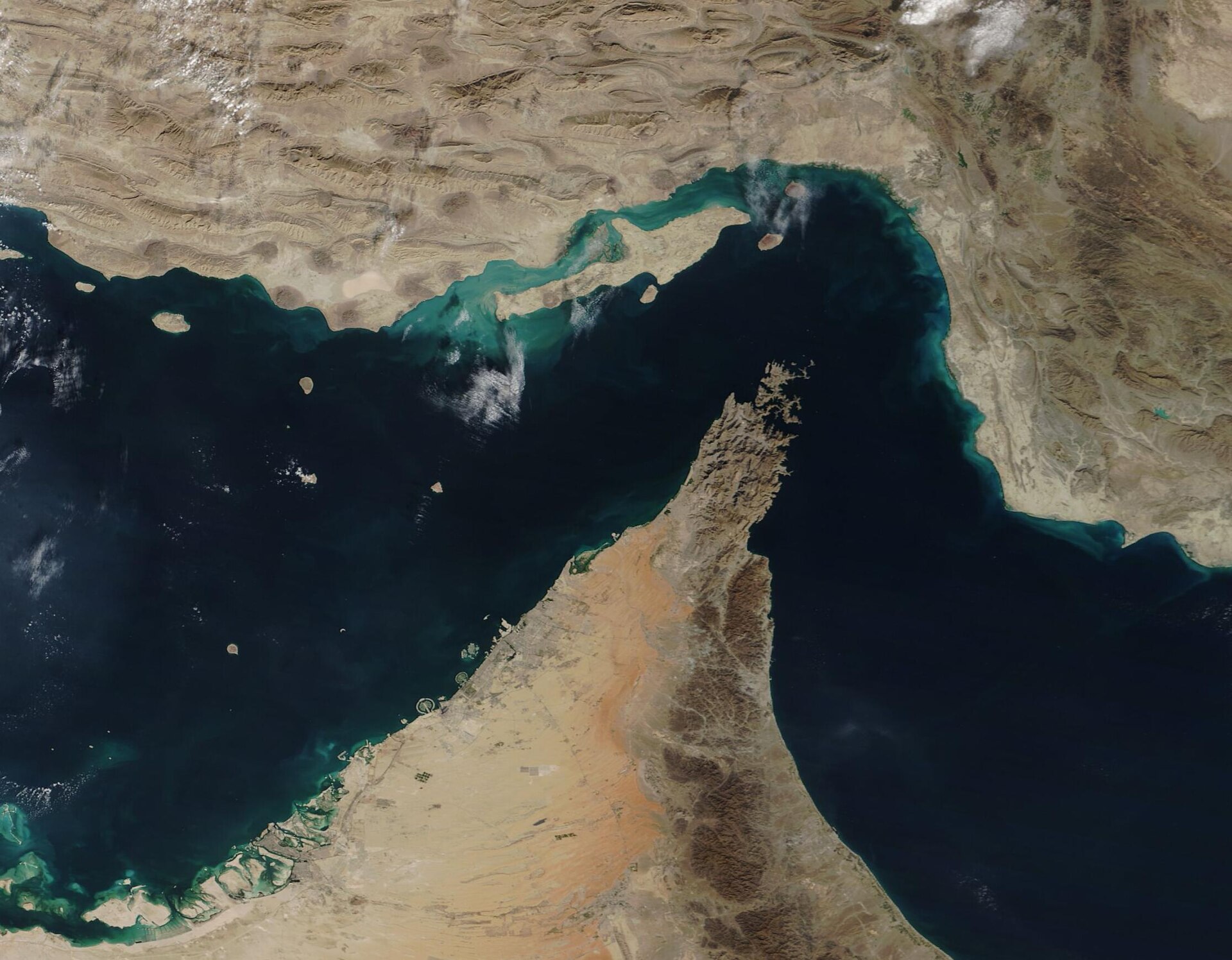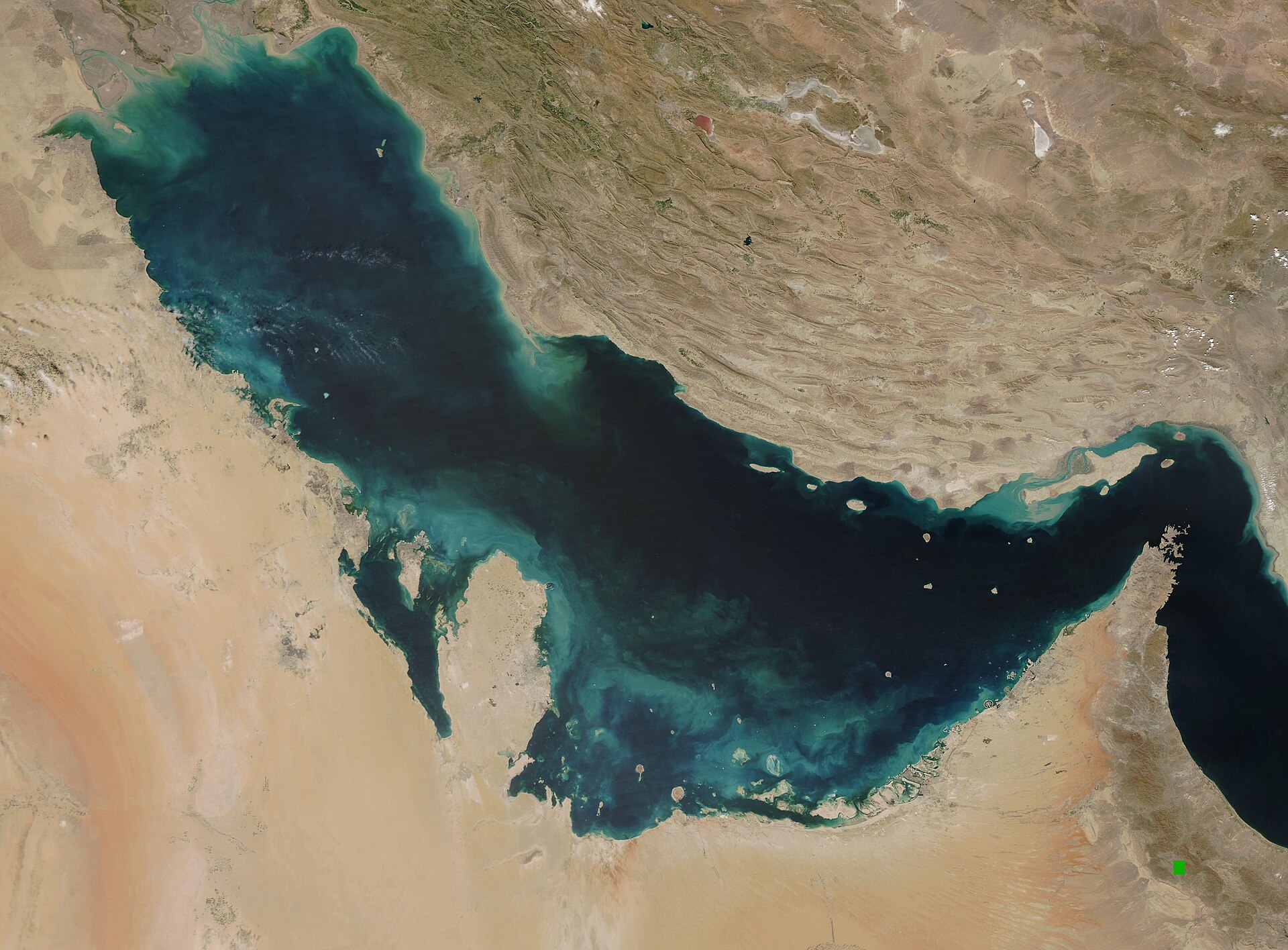

TEHRAN — Iran’s “Hormuz first, nuclear later” proposal — formally embedded in the 14-point plan submitted to Washington on May 2 — was a blame-assignment mechanism, not a diplomatic concession. Tehran publicized Washington’s rejection within 24 hours to reframe the US naval blockade as American intransigence, shifting the central question from “Why won’t Iran address its nuclear program?” to “Why won’t Washington open the strait?”
The speed of disclosure mattered more than the content of the proposal. Iran offered a three-stage architecture — ceasefire, then Hormuz normalization, then nuclear talks — knowing Washington cannot accept a framework that eliminates its primary coercive tool before the central issue reaches the table. By the time Trump told Kan public broadcaster on May 3 that the plan was “not acceptable,” Iran’s Foreign Ministry had already briefed Gulf Arab and European counterparts on the rejection, building a coalition around the framing before Washington’s counter-narrative could take hold.
This article examines the three-stage sequencing, explains why it is structurally unacceptable to the United States, identifies who Iran was actually addressing, and traces the blame architecture that connects the May 3 disclosure to the 30-day escalation deadline announced the same day.
Contents
- What Did Iran Actually Propose?
- Why Did Washington Say No?
- What Happens When You Remove Coercive Pressure Before Negotiating?
- Who Actually Controls the Strait?
- The JCPOA Lesson Tehran Will Never Unlearn
- Who Was Iran Actually Talking To?
- The 66-Day Black Box
- The Deadline That Proves the Design
- Frequently Asked Questions
What Did Iran Actually Propose?
Iran proposed a three-stage framework for ending the war: first, halt fighting and secure guarantees against renewed military action; second, reopen the Strait of Hormuz and lift the US naval blockade; third, only then begin nuclear negotiations including enrichment and Iran’s uranium stockpile. The nuclear file was explicitly removed from the initial deal structure.
The proposal was conveyed through Pakistani mediators in late April and codified in the 14-point plan submitted to Washington on May 2, 2026 (Axios, April 27; NPR, May 2). The three-stage architecture was explicit. Stage 1 addressed the war itself — halting hostilities, securing mutual non-aggression guarantees. Stage 2 addressed Hormuz — lifting the US blockade, restoring commercial shipping, normalizing transit. Stage 3 — and only Stage 3 — would open the nuclear file.
The Middle East briefing 3,000+ readers start their day with.
One email. Every weekday morning. Free.
Iran’s Foreign Ministry spokesperson stated on May 3: “The 14-point plan exclusively focuses on ending the war and contains no issues related to the nuclear domain” (Al Jazeera). The framing was deliberate. By presenting a proposal that addresses the visible, kinetic crisis — a closed strait, blocked shipping, military confrontation at sea — while deferring the invisible, technical crisis — centrifuges spinning, enrichment climbing, stockpile growing — Tehran positioned itself as the party offering to solve the problem the world can see.
Buried in Stage 3 was a 15-year freeze on nuclear enrichment (Times of Israel, May 3). But the freeze was structurally contingent on the completion of Stages 1 and 2. Washington would have to lift its blockade, end the war, withdraw forces from interdiction positions, and provide non-aggression guarantees before Iran made any verifiable nuclear commitment. The 14-point proposal was, as HOS has analyzed, not a peace offer but an authorization ceiling document — a text whose primary function is to establish the maximum Iran’s negotiating team is permitted to concede.
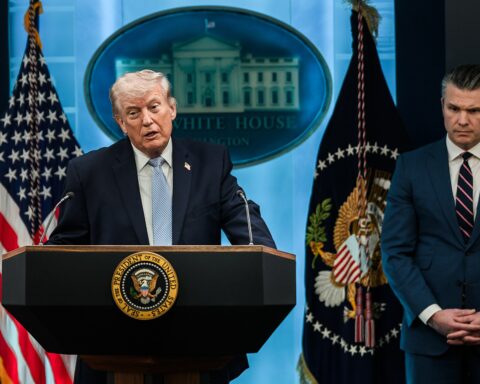
Trump’s response to Kan was unequivocal: “It’s not acceptable to me. I’ve studied it, I’ve studied everything — it’s not acceptable” (Times of Israel, May 3).
Why Did Washington Say No?
Washington rejected the sequencing because accepting it would dismantle the only coercive structure that makes a nuclear deal possible. The US naval blockade, effective since April 13, has been — by Trump’s own admission — more effective than the air campaign that preceded it.
“The blockade is somewhat more effective than the bombing. They are choking like a stuffed pig. And it is going to be worse for them. They can’t have a nuclear weapon.” — President Donald Trump, Axios, April 29, 2026
The International Crisis Group identified the structural logic with precision: “Iran is unlikely to surrender its leverage — above all, its stockpile of highly enriched uranium — up front, absent US guarantees of reciprocal sanctions relief… To concede on the blockade at the outset might lessen the imperative for Iran to engage in meaningful talks on the nuclear file.”
The key word is “imperative.” Once the blockade lifts and the war ends, Iran faces no external pressure to constrain its nuclear program. The 15-year enrichment freeze offered in Stage 3 becomes a promise made from a position of restored sovereignty and zero coercion — a promise Washington has no mechanism to enforce if Tehran changes course. The sequencing wall was already visible before the formal proposal arrived: Washington will not lift pressure before nuclear commitments, and Tehran will not make nuclear commitments under pressure. The 14-point plan did not resolve this deadlock. It entrenched it — by design.
The rejection was also categorical in tone. Trump did not leave room for negotiation on the sequence. He did not propose a counter-order. He dismissed the entire architecture. That categorical quality — no counter-proposal, no partial acceptance, no diplomatic hedging — is itself part of the dynamic Iran anticipated and required. A qualified rejection would have generated a different headline. An absolute one generated the headline Tehran wanted.
What Happens When You Remove Coercive Pressure Before Negotiating?
Lifting the blockade in Stage 2 while deferring nuclear talks to Stage 3 would produce a specific set of structural consequences. All of them favor Tehran.
Since the April 8 ceasefire, CENTCOM has logged approximately 45 Hormuz transits under blockade conditions — roughly 3.6% of the pre-war baseline (Bloomberg, April 26). The Foundation for Defense of Democracies has estimated the economic damage to Iran at $435 million per day. Removing that pressure before nuclear talks begin would restore Iran’s oil revenue — the $12.4 billion annual military budget funded by crude exports would resume. It would eliminate the domestic economic pressure that drove President Pezeshkian’s April warning that the economy would “collapse in 3-4 weeks” without relief. It would allow enrichment activities to continue unmonitored during the undefined transition from Stage 2 to Stage 3. And it would produce a negotiating dynamic in which the United States has already surrendered its primary demand while Iran has conceded nothing on the nuclear file.
The asymmetry is structural. In any staged negotiation, the party that moves first accepts greater risk. Iran’s proposal ensures the United States moves first on every front — ceasefire guarantees, blockade withdrawal, non-aggression commitments, force withdrawal — before Iran moves on any. This is not an oversight. It is a design feature, calibrated to the lesson Tehran drew from the last time it agreed to move first.
Who Actually Controls the Strait?
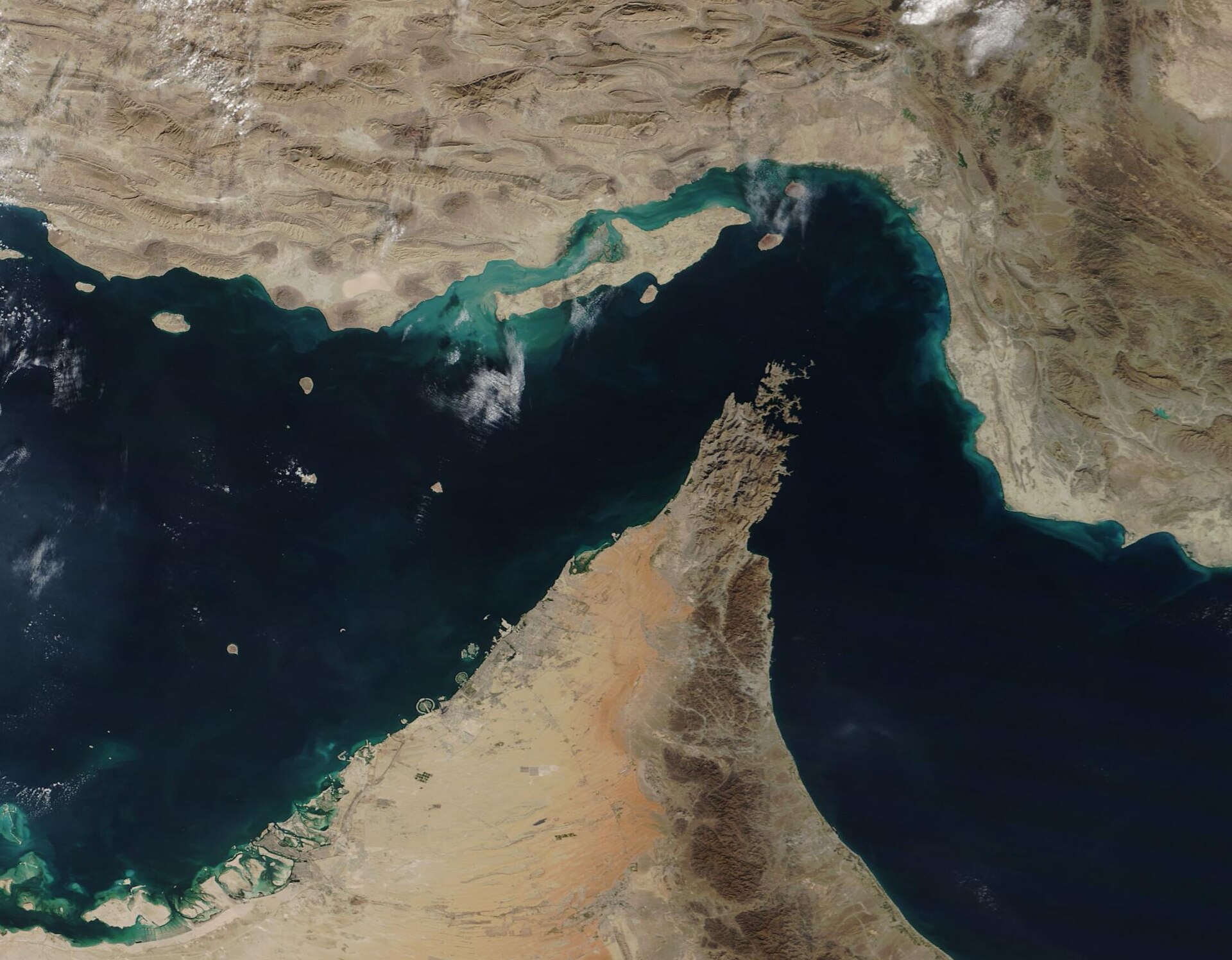
Even if Washington accepted the sequencing, the institution that made the Hormuz promise cannot deliver on it. The IRGC Navy — not Iran’s Foreign Ministry or civilian government — controls physical transit through the Strait of Hormuz. The team that drafted the 14-point proposal has no authority over the forces that would have to implement it.
On April 17, the IRGC mandated that all vessels, commercial or military, require explicit IRGC naval authorization to transit. Routes are designated by the IRGC, not by Tehran’s civilian diplomats (PressTV, April 17; GlobalSecurity). That same day, Foreign Minister Araghchi declared the strait “completely open” to commercial vessels. The IRGC simultaneously contradicted him — a public split Euronews described on April 19 as revealing “a widening divide between Iran’s diplomatic leadership and the IRGC.”
Prof. Mehran Kamrava of Georgetown University-Qatar identified the actual decision-making body: “Most likely Iran’s Hormuz Strait strategy and its broader strategy is shaped and influenced by the headquarters of Khatam al-Anbiya, which is the central key security decision-making within the Revolutionary Guards” (Euronews, April 10). The negotiating team — Araghchi, the Foreign Ministry, Pakistan’s intermediaries — has no command authority over Khatam al-Anbiya. Araghchi cannot order the IRGC Navy to stand down. He cannot countermand Mojtaba Khamenei’s directive governing Hormuz operations.
As HOS has reported, Iran’s Hormuz offer has no verifiable sovereign behind it. The proposal asks Washington to dismantle its primary coercive tool in exchange for a promise made by an institution — the Foreign Ministry — that does not command the forces — the IRGC Navy — controlling the asset — the Strait. The supreme authority over the IRGC, Mojtaba Khamenei, has appeared only via audio in recent weeks. Civilian leadership, including Pezeshkian and Araghchi, lacks direct access to the command structure that would have to execute any reopening (The Defense News).
The IRGC Aerospace Commander reinforced this dynamic on April 18, warning publicly against “enemy’s false narratives on Strait of Hormuz” — language that targeted Araghchi’s own statements classifying the strait as open (PressTV). The message to any mediator receiving the 14-point proposal was unambiguous: whatever Araghchi signs, the IRGC’s operational rules govern.
The JCPOA Lesson Tehran Will Never Unlearn
Iran’s insistence on reversing the traditional negotiating sequence — relief before constraints, not constraints before relief — is the direct institutional memory of the JCPOA’s collapse. This is not a negotiating posture. It is a scar.
The original 2015 deal front-loaded nuclear constraints. Iran reduced its centrifuge count by two-thirds, capped enrichment at 3.67%, slashed its stockpile to 300 kg, and redesigned the Arak heavy-water reactor — all verified before Implementation Day in January 2016, when sanctions relief arrived. The sequence was explicit: Iran gives nuclear concessions first, then receives economic benefits.
On May 8, 2018, the United States withdrew from the JCPOA. Iran had already made its concessions. They were irreversible in the short term but rendered strategically meaningless by a single American policy decision. Tehran’s institutional conclusion was permanent: the party that front-loads concessions bears the full cost of the other side’s defection.
The Libya model compounded the lesson. Muammar Gaddafi verifiably eliminated his nuclear program in 2003-2004, receiving economic normalization in exchange. NATO-backed forces killed him in 2011. North Korea explicitly cited Libya as the reason it would never denuclearize. Iran internalized the same calculus — now reinforced by direct experience rather than inference.
The “Hormuz first” proposal inverts the JCPOA architecture entirely. By insisting that all coercive mechanisms — blockade, military presence, non-aggression guarantees — be resolved before nuclear discussions begin, Tehran ensures it never again makes concessions from a position of vulnerability. The problem, from Washington’s perspective, is that this logic is symmetrically unacceptable. The US cannot lift coercive pressure before securing nuclear concessions without creating a precedent that rewards proliferation brinkmanship. Both sides learned the same lesson from the JCPOA collapse. Neither will move first. The sequencing deadlock is the permanent structural product of a deal that was supposed to prevent exactly this crisis.
Who Was Iran Actually Talking To?
Iran was not talking to Washington when it disclosed the rejection. It was talking about Washington, to everyone else. The most revealing feature of the sequencing proposal is not its content but its distribution pattern — who received the information, how quickly, and in what framing.
Al Jazeera’s April 27 headline — “Iran offers Hormuz deal without nuclear talks, as it seeks broader buy-in” — explicitly identified the strategy. The phrase “seeks broader buy-in” is the tell. The proposal’s audience was never Washington. It was the mediators, the Europeans, and the Gulf Arab capitals that Iran needed to absorb a specific framing before the US counter-narrative could take hold.
Araghchi conducted a 72-hour shuttle diplomatic sprint surrounding the disclosure, calling Saudi, Qatari, Egyptian, and French foreign ministers (Washington Post, April 27; Al Jazeera, April 27). The operational sequence was precise: propose something that sounds reasonable, get rejected, call every mediator and European capital to inform them of the rejection, let those capitals ask Washington the question Tehran wanted asked — “Why won’t you open the strait?”
The National’s headline on May 2 — “US rejected proposal to open Hormuz shipping and leave nuclear talks for later, Iran says” — used Iran’s framing as its headline structure. The proposal was designed to produce exactly this sentence. As HOS has reported, Araghchi is not talking to Washington — he is buying permission from the IRGC while simultaneously building an international narrative that frames Washington as the obstacle to peace.
The CJUI analysis on April 28 named the mechanism directly: “Iran’s latest diplomatic maneuver — offering to reopen the Strait of Hormuz while deferring meaningful nuclear negotiations — is not a breakthrough. It is a delay tactic, carefully engineered to relieve pressure without conceding anything of substance… Sequencing matters in diplomacy, and by pushing the nuclear issue to a later stage, Tehran is effectively asking the world to trust a regime that has consistently used negotiations as a shield.”
GCC Secretary-General Jasem Mohamed AlBudaiwi had already identified the broader strategy on April 16: “Iran is responsible for weaponizing the Strait [of Hormuz] to score a geopolitical win” (Euronews). The sequencing disclosure is the latest iteration of that weaponization — using the strait not as a military chokepoint but as a narrative one.
Iran’s state media simultaneously ran the adversary framing. PressTV positioned the rejection as “US pressure backfires and desperation grows.” The IRGC Navy vowed to “enforce Leader’s ‘historic’ directive in the Persian Gulf” (PressTV/GlobalSecurity, May 1), presenting military control as legitimate sovereign authority rather than coercion. The dual messaging — reasonable offer through diplomatic channels, sovereign defiance through state media — is the operational architecture of the blame campaign. Each channel reinforces the other: Araghchi’s diplomacy makes the IRGC look restrained by comparison, and the IRGC’s maximalism makes Araghchi look like the adult in the room.
The 66-Day Black Box
The nuclear file cannot be deferred because it is already unverifiable. Iran terminated all IAEA access on February 28, 2026 — the day the war began. As of May 5, that represents 66 days of unmonitored nuclear activity at a minimum.
The last verified data point: Iran held 440.9 kg of uranium enriched to 60% as of June 2025 (IAEA GOV/2026/8). Converting from 60% to weapons-grade 90% requires approximately 564 separative work units — roughly four to five weeks of operation on existing IR-6 cascades (Bulletin of Atomic Scientists, March 2026). That stockpile, at weapons-grade, would be sufficient for nine nuclear devices (Arms Control Association). But those figures are eleven months old. Since February 28, Iran could have increased its 60% stockpile, begun enrichment to 90%, dispersed material to undeclared facilities, or advanced weaponization research — all without detection.
Any nuclear negotiation that begins after the blockade has been lifted would start from a baseline of zero verified knowledge. Washington cannot write enforceable limits on a stockpile whose current size, location, and enrichment level are unknown.
The enforcement architecture is equally hollowed out. The E3-triggered JCPOA snapback mechanism expired on October 18, 2025 — triggered by the E3 on August 28, reimposed September 27-28, and exhausted on its fixed schedule. No automatic UN sanctions reimposition mechanism remains. If Iran makes nuclear concessions under a post-Hormuz framework and subsequently reneges, neither Washington nor the E3 has a pre-authorized tool to restore multilateral pressure.
This is not a footnote. It is the structural core. Iran’s proposal asks the United States to dismantle its bilateral coercive tool — the blockade — after the multilateral coercive tool — snapback — has already expired. Stage 3 nuclear talks would begin in an environment where Washington holds no blockade, the UN holds no reimposition mechanism, and the IAEA holds no verified baseline. The 15-year enrichment freeze becomes a promise resting on nothing but Tehran’s continued willingness to comply — from a government that, as documented above, does not command the institution enriching the uranium.
The Deadline That Proves the Design
Iran set a 30-day blockade deadline on May 3 — the same day Washington’s rejection of the 14-point proposal became public (CBS News). The timing was not coincidental. It was the final element of the blame architecture snapping into place.
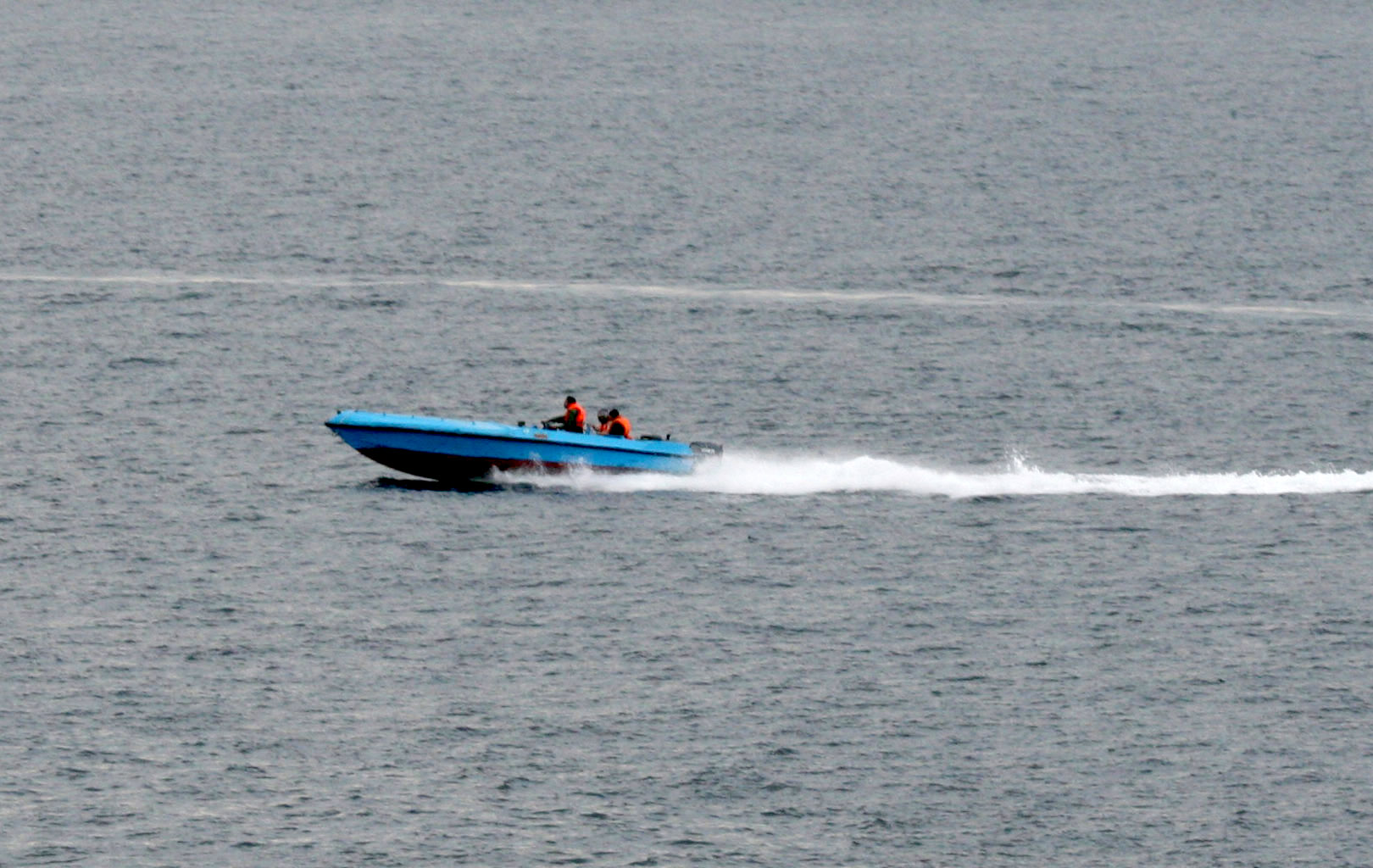
Project Freedom, the CENTCOM escort operation, launched May 4 — one day after the deadline was announced — with approximately 15,000 service members, guided-missile destroyers, and more than 100 aircraft (Military.com). Iran responded with missile and drone attacks. The US sank six Iranian fast-attack boats (CBS News, May 5). Araghchi’s prepared response was a line designed for repetition: “Project Freedom is Project Deadlock.” As HOS reported, Project Freedom made Hormuz harder to open, not easier — and Tehran’s framing anticipated exactly that outcome.
The 30-day deadline — expiring approximately June 2 — completes the blame framework. When it arrives, Iran can escalate while pointing to the publicly disclosed rejection of its Hormuz-first offer. The narrative is pre-built: Iran offered to open the strait, Washington said no, and now consequences arrive. Iran’s escalation pattern — documented in the Fujairah bypass denial campaign and the Hormuz sovereignty law advancing through parliament — will not be framed as aggression. It will be framed as the cost of American refusal.
The shift Iran seeks is precise: from “Why did Iran attack?” to “Why didn’t Washington accept the deal?” That shift — from Iranian aggression to American intransigence — is the product the 14-point proposal was designed to manufacture. Not peace. Not a framework. A headline. And the headline has already been written.
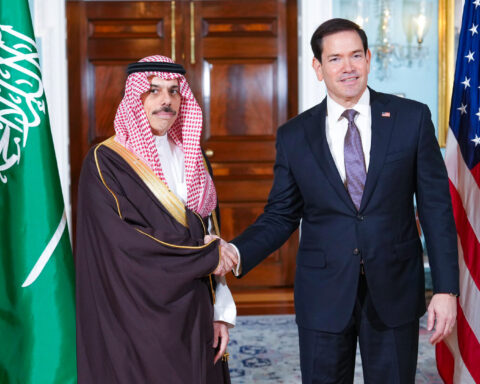
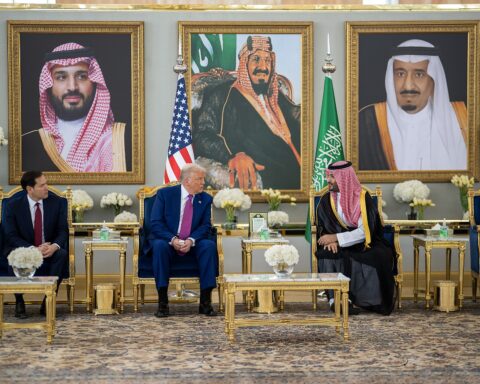
Saudi Arabia is the real target audience for this architecture — not because Riyadh has a formal role in the US-Iran negotiation, but because it is the only actor whose discomfort with the blockade’s indefinite duration could fracture the coalition maintaining it. Both Hormuz coalitions need Riyadh, and Riyadh — trapped between a blockade it did not request and an escalation it cannot absorb — is exactly where Tehran intended it to be: forced to choose between endorsing an American rejection it privately supports and publicly questioning a policy that protects Saudi oil flows. The sequencing proposal’s disclosure was engineered to accelerate that discomfort before the deadline arrives.
Frequently Asked Questions
Could a parallel approach — addressing Hormuz and nuclear issues simultaneously — resolve the deadlock?
European intermediaries have informally floated parallel-track frameworks. Both sides reject them for structural reasons. Washington fears Iran would pocket Hormuz concessions while slow-rolling nuclear compliance over years. Tehran fears parallel engagement locks it into nuclear constraints before coercive pressure is fully removed. The Witkoff 45-day phased framework attempted a compressed parallel model in early April but collapsed after the Islamabad walkout — confirming that parallel tracks remain vulnerable to the same authorization ceiling problem that defeats sequential ones.
What role does China play in the sequencing impasse?
China is the primary structural beneficiary of the current deadlock. Chinese-intermediated transits through Hormuz — including the Al Daayen LNG carrier in early April — demonstrated that Beijing operates a parallel access regime outside the US blockade framework. China blocked new UN sanctions at the Security Council in early May, directly supporting Iran’s ability to sustain the sequencing demand by preventing additional multilateral pressure. CNPC and Sinopec hold contracted LNG offtake from Qatar’s North Field and 5% equity in North Field East, giving Beijing a direct economic interest in managing Hormuz access bilaterally with Tehran rather than through a US-led architecture.
What enforcement mechanism would replace the expired snapback if Iran violates future nuclear commitments?
None currently exists. The JCPOA snapback was the only pre-authorized automatic mechanism for reimposing UN sanctions without a fresh Security Council vote. Its October 2025 expiration means any future nuclear violations would require a new UNSC resolution — which China and Russia would almost certainly veto based on their current posture. The United States could reimpose unilateral sanctions, but those are already in effect. The structural gap is specifically multilateral enforcement: no agreement reached in Stage 3 of Iran’s proposal would carry an automatic penalty for non-compliance beyond whatever bilateral terms Washington could extract at a table where it has already surrendered its primary source of pressure.
Why did Iran choose a 30-day deadline specifically?
The 30-day window aligns with several external calendars that maximize the diplomatic audience for any post-deadline escalation. The Hajj pilgrimage season intensifies through late May into June, raising the kinetic threshold for military action near the holy sites. Iran’s Central Bank has indicated that continued blockade conditions would trigger a currency crisis within 30 to 45 days of early May. The deadline also positions any escalation after June 1 — when European parliamentary calendars resume and G7 foreign ministers meet — ensuring the blame narrative reaches peak diplomatic attention at the moment of greatest impact.
Does Saudi Arabia support Washington’s rejection of the sequencing proposal?
Riyadh’s position is structurally ambivalent. Saudi Arabia needs Hormuz reopened to restore the 3.15 million barrels per day of production lost since March, according to IEA data. But it also needs Iran’s nuclear program constrained — particularly because the draft US-Saudi 123 Agreement does not prohibit Saudi enrichment, making any Iran deal that legitimizes Iranian enrichment a precedent Riyadh would want to shape rather than simply accept. Saudi FM Prince Faisal called Araghchi on April 13, the day the blockade began, suggesting Riyadh maintains a parallel diplomatic channel operating independently of Washington’s stated sequencing position.
How Trump’s public maximalism and Witkoff’s back-channel form a deliberate two-track architecture — and why Saudi Arabia pays for the timeline mismatch — is examined in Trump’s Two Iran Tracks Run on American Time, Not Riyadh’s.