SANAA — Saudi-led coalition warplanes struck a gas facility and a Yemen Petroleum Company building in the Yemeni capital on November 10, 2026, killing one person and wounding nine others, according to Houthi health officials. The strikes, which set gas tanker trailers ablaze at the al-Mafzar station north of Sanaa and damaged the state oil company’s offices in the city’s south, marked the second time in a month that the coalition targeted energy infrastructure in Houthi-controlled territory.
The attacks came on the same day the coalition said it intercepted a ballistic missile and a cruise missile fired at Riyadh, a ballistic missile over the southern region, and a drone over Saudi Arabia’s Eastern Province. They followed the coalition’s destruction of a Houthi missile launch platform in Sanaa just one day earlier — a shift in target selection from military hardware to civilian energy sites that carries implications under international humanitarian law.
Table of Contents
- What Did the Coalition Strike in Sanaa on November 10?
- Casualties and Damage
- Why Has the Coalition Not Confirmed the Strikes?
- From Launch Platforms to Fuel Depots: A Pattern Emerges
- What Are the Legal Questions Around Striking Energy Infrastructure?
- Sanaa’s Fuel Dependency and Civilian Impact
- Frequently Asked Questions
What Did the Coalition Strike in Sanaa on November 10?
Coalition aircraft hit two energy-linked sites in Yemen’s capital on November 10, according to the Houthi-run Saba news agency, al-Masirah television and multiple international wire services. Neither strike has been confirmed or explained by the Saudi-led coalition, whose public statements on November 10 focused exclusively on the interception of Houthi projectiles over Saudi territory.
The House of Saud Daily Briefing
Saudi Arabia's news in 3 minutes, every morning. Free. See today's issue
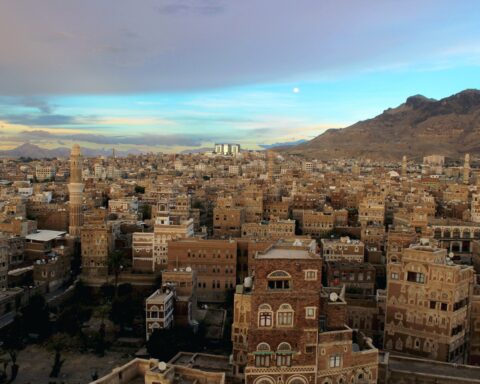
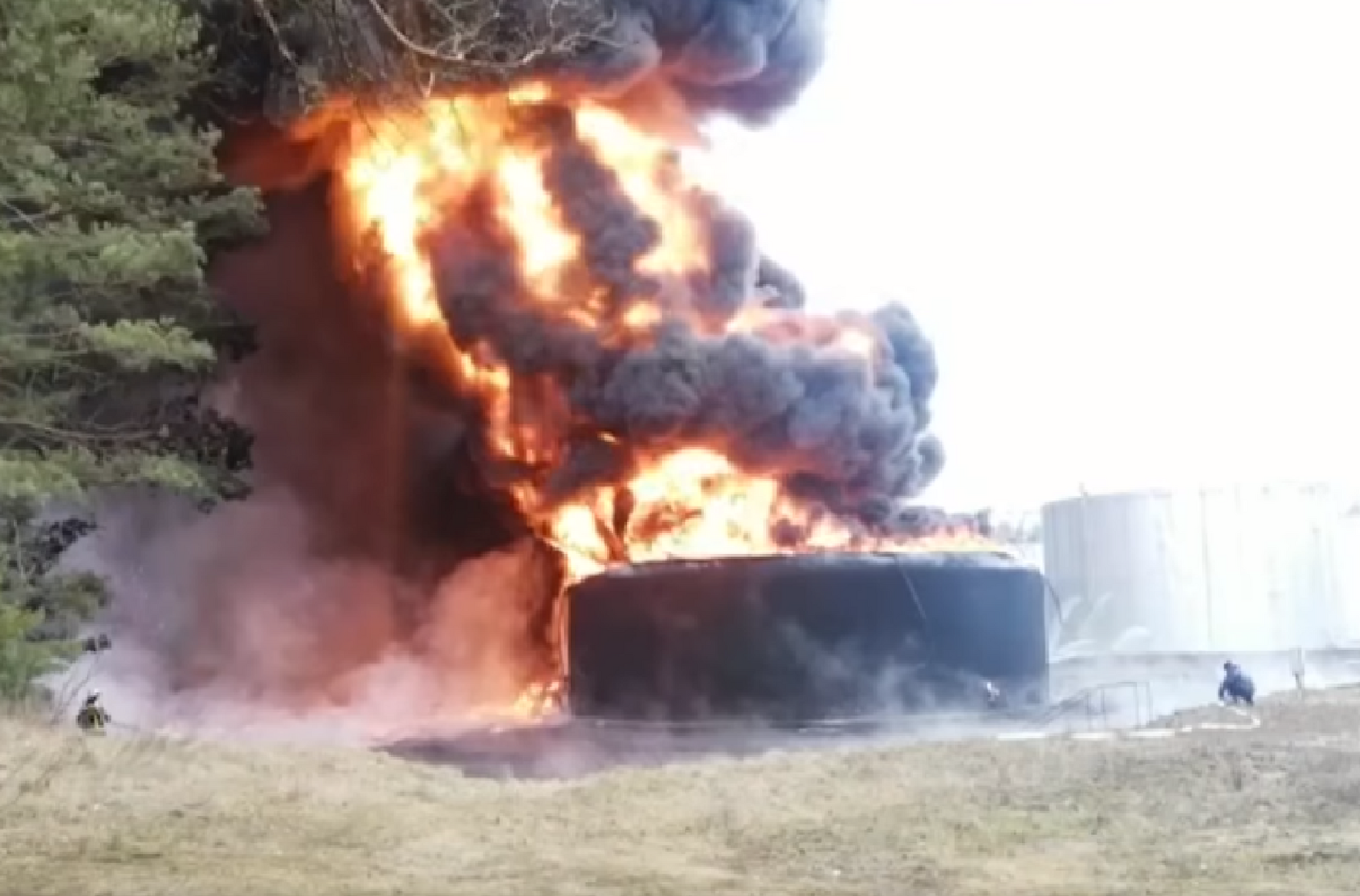
The first target was the al-Mafzar gas station, a fuel distribution point north of the capital. Saba, relayed by Al-Monitor, reported that coalition jets struck the facility and that several gas tanker trailers caught fire, according to Xinhua. Civil defence crews were dispatched to fight the blaze at the station, Saba reported. There is a discrepancy in reporting on the precise location: Saba and Al-Monitor place the station in “Jadar district,” while al-Masirah and Xinhua describe it as being in “Bani al-Harith district.” Both descriptions position the site north of the capital. The discrepancy has not been resolved.
The second target was a building belonging to the Yemen Petroleum Company, a subsidiary of the Yemen Oil and Gas Corporation, on Southern al-Sittin Street in the al-Wahda district in southern Sanaa, according to ABNA24 and Xinhua. The YPC is a state-owned entity under Yemen’s Ministry of Oil and Minerals that operates in Houthi-controlled territory as the principal domestic fuel distributor.
Nearby residential homes and shops sustained damage in the strikes, Xinhua reported. No evacuation warning for either site has been reported by any outlet — an absence that contrasts with the coalition’s public evacuation warning before its last major strike on a Sanaa fuel facility on October 13, which Sabq and Gulf Business reported as an unusual evacuation warning for the Yemeni capital.
Casualties and Damage
Houthi Health Ministry spokesman Anees al-Asbahi said in a statement on X that a strike on the gas station killed one civilian and injured three others, according to PressTV. A second strike on the oil company headquarters wounded six people, al-Asbahi said, as reported by PressTV.
All casualty figures originate from the Houthi Health Ministry and have not been independently corroborated. No statement from the International Committee of the Red Cross, UNOCHA or any independent monitoring group specifically addressing the November 10 strikes has been published as of the time of writing.
Al-Masirah television reported that the fire at the al-Mafzar station engulfed several gas tanker trailers, with civil defence teams working to contain it. The extent of damage to the YPC building was not specified beyond the reported casualties. Xinhua’s account noted damage to residential properties near both sites but did not provide further detail on the scale of destruction.
Why Has the Coalition Not Confirmed the Strikes?
The Saudi-led coalition has issued no statement confirming or explaining the November 10 strikes on the al-Mafzar gas station or the Yemen Petroleum Company building. The coalition’s communiqués on the same day, reported by Al Jazeera and Al-Monitor, addressed only the interception of Houthi missiles and a drone over Saudi territory.
This silence is not unprecedented. The coalition routinely confirms strikes on what it characterises as military targets — missile launch platforms, weapons depots, command-and-control centres — while remaining slower or entirely silent on strikes that hit facilities with a civilian designation. When it struck the YPC’s al-Sabaha central fuel station on October 13, the coalition did eventually provide a justification. Spokesman Turki al-Maliki told Sabq that the facility and its underground fuel depots had been used “for their arsenal of missiles and drones.” The YPC rejected that claim, stating that its al-Sabaha storage facilities were empty of petroleum products and had no military significance, according to AP.
The absence of a coalition statement on the November 10 strikes leaves three possibilities open. The coalition may yet issue a dual-use justification, as it did in October. It may consider the strikes part of a broader operational tempo that does not warrant individual confirmation. Or the strikes may have been carried out by aircraft operating under coalition command without prior authorisation for specific targets — a question that cannot be answered without a coalition response.
The October 13 strike on the al-Sabaha station followed the deadliest single Houthi attack of the war: the October 10 strike on King Khalid International Airport that killed at least 13 people and wounded 309, according to Al Jazeera (BBC reported 308 injured). The November 10 energy strikes followed a sustained period of Houthi attacks on Saudi territory, including the Aramco KAFD tower damage on November 8 and the East-West pipeline hit on November 9.
From Launch Platforms to Fuel Depots: A Pattern Emerges
The November 10 strikes did not occur in isolation. They sit within a sequence of coalition operations in Sanaa that, over the past month, has expanded from military hardware to energy infrastructure.
On October 20, the coalition said it destroyed a ballistic missile launch platform targeting Riyadh, according to the Qatar News Agency. On October 26, the coalition announced it had destroyed Houthi missile launchers and tunnels in Sanaa after a foiled attack on Riyadh, according to Al Jazeera. On November 9 — one day before the energy strikes — the coalition confirmed it had destroyed a Houthi missile launch platform in Sanaa, a classic military-target operation consistent with its prior public statements.
The shift from launch platforms to fuel infrastructure is not new to November 10. The October 13 al-Sabaha strike set the precedent, and the coalition’s justification rested on a dual-use argument: that the Houthis stored weapons in fuel depots. That argument was contested by the YPC and has not been independently verified.
The coalition’s November 9 strike on the launch platform came after Houthi officials said Saudi strikes killed 27 people in a Sanaa province village on November 7 — a toll that, if accurate, would make it one of the deadliest single incidents for Yemeni civilians in the current escalation. The broader pattern through October and November 2026 shows the coalition operating across two tracks. The first consists of strikes on Houthi military assets — launch platforms, weapons caches, command posts — which the coalition routinely confirms. The second targets energy and fuel sites, which the coalition either confirms belatedly with dual-use justifications or does not confirm at all. The November 10 strikes on the al-Mafzar gas station and the YPC building fall squarely into the second category.
Whether this represents a deliberate escalation in target selection or an expansion of what the coalition defines as a legitimate military target is unclear. The Houthis have themselves warned civilians away from oil and energy sites in Saudi Arabia — the AP reported in October 2026 that the group told people to stay away from Aramco facilities — which the coalition could cite as evidence that the other side treats energy infrastructure as a military asset.
What Are the Legal Questions Around Striking Energy Infrastructure?
Strikes on energy facilities in a conflict zone raise immediate questions under international humanitarian law, particularly the principles of distinction and proportionality codified in Additional Protocol I to the Geneva Conventions.
The principle of distinction requires parties to a conflict to distinguish between military objectives and civilian objects. A gas station serving a civilian population is, on its face, a civilian object. It becomes a legitimate military target only if it makes an “effective contribution to military action” and its destruction offers a “definite military advantage” — the dual-use threshold that the coalition invoked for the October 13 al-Sabaha strike.
Human Rights Watch addressed this issue in August 2026, stating that the conduct of parties in the conflict “may be in violation of international humanitarian law,” specifically citing Houthi attacks on airports and oil facilities in Saudi Arabia. Mwatana for Human Rights, a Yemeni human rights organisation, documented attacks on civilian infrastructure including “ports, airports, power and fuel stations” as a leading pattern in its annual briefing.
The proportionality question is equally relevant. Even if a fuel facility has a demonstrable dual-use function — storing both civilian petroleum and military materiel — a strike that causes disproportionate harm to civilians relative to the military advantage gained violates IHL. The reported casualties at the al-Mafzar station (one killed, three wounded) and the YPC building (six wounded), if accurate, are relatively low. But proportionality assessments also account for damage to civilian infrastructure and its downstream effects on the population.
The absence of a reported evacuation warning before the November 10 strikes stands in contrast to the October 13 operation, when al-Maliki said the coalition issued advance notice. Under IHL, parties must give “effective advance warning” of attacks that may affect the civilian population, unless circumstances do not permit. No reporting has indicated that such a warning was given or that operational conditions prevented one.
Sanaa’s Fuel Dependency and Civilian Impact
Sanaa residents depend heavily on the Yemen Petroleum Company for access to cooking gas and vehicle fuel. The YPC is the principal distributor of petroleum products in Houthi-controlled territory. Strikes on its infrastructure — whether a gas distribution station or its administrative offices — have the potential to disrupt fuel supply chains in a city that has endured intermittent fuel crises since the war began in 2015.
The al-Mafzar gas station, which stored and distributed liquefied petroleum gas via tanker trailers, served a direct civilian function. The fire that engulfed several trailers at the site, according to Xinhua and Saba, destroyed an unknown quantity of fuel stock. Previous fuel shortages in Sanaa have led to long queues, price spikes and the collapse of public transport services — effects that fall disproportionately on the poorest residents.
The strike on the YPC building on al-Sittin Street, a major commercial artery, carries a different kind of risk. While the building itself is an administrative office rather than a fuel storage site, its destruction or degradation could impair the YPC’s ability to coordinate fuel distribution across Houthi-controlled areas. The six people wounded there, according to al-Asbahi, were inside or near an office building on a busy commercial street in the middle of a working day.
The coalition has not addressed the civilian impact of the November 10 strikes. In the October 13 case, al-Maliki argued that the al-Sabaha station’s underground depots held Houthi weapons, not fuel. The YPC said that was false. No independent party has verified either claim. The same ambiguity now surrounds the al-Mafzar station and the YPC building: neither the coalition nor any independent body has said whether either site held military materiel.
The broader context of the November 10 strikes includes the coalition’s interception of Houthi missiles fired at Riyadh the same day and the sustained campaign of Houthi attacks on Saudi civilian and energy targets. On November 8, a Houthi attack damaged the Aramco tower in Riyadh’s King Abdullah Financial District. On November 9, the Houthis struck the East-West pipeline in the Madinah region. These attacks — targeting Saudi economic infrastructure — provide the military and political backdrop against which the coalition’s strike on Yemeni energy infrastructure occurred.
None of this resolves the legal or humanitarian questions. Both sides are striking the other’s energy infrastructure. Both claim military justifications. And independent verification of those claims remains absent in nearly every case.
Frequently Asked Questions
Has the coalition struck Sanaa fuel sites before November 10?
Yes. On October 13, 2026, coalition aircraft struck the YPC’s al-Sabaha central fuel station west of Sanaa. Coalition spokesman Turki al-Maliki said the facility stored Houthi missiles and drones, according to Sabq. The YPC said the station was empty of petroleum products. That strike was preceded by a public evacuation warning, reported by Sabq and Gulf Business as an unusual step, and followed the October 10 KKIA attack that killed at least 13 and wounded 309, according to Al Jazeera.
What is the Yemen Petroleum Company?
The Yemen Petroleum Company, a subsidiary of the Yemen Oil and Gas Corporation, is a state-owned entity under Yemen’s Ministry of Oil and Minerals. In Houthi-controlled territory, it operates as the principal domestic fuel distributor, managing the import, storage and sale of petroleum products including cooking gas and vehicle fuel. Its headquarters on al-Sittin Street in Sanaa was one of the two sites struck on November 10.
What international bodies have commented on strikes against energy infrastructure in Yemen?
Human Rights Watch said in August 2026 that parties’ conduct in the conflict “may be in violation of international humanitarian law,” citing attacks on oil facilities. Mwatana for Human Rights, a Yemeni organisation, documented strikes on “ports, airports, power and fuel stations” as a recurring pattern. The UN Security Council issued a September 2026 statement condemning Houthi attacks against Saudi civilian and energy infrastructure, according to the Kathmandu Post, but has not issued a comparable statement specifically addressing coalition strikes on Yemeni energy sites.
Were civilians warned before the November 10 strikes?
No evacuation warning has been reported by any source for the November 10 strikes. This contrasts with the October 13 al-Sabaha strike, where coalition spokesman al-Maliki said advance notice was given. Under Additional Protocol I to the Geneva Conventions, parties must give “effective advance warning” of attacks that may affect the civilian population unless circumstances do not permit. Whether such circumstances existed on November 10 has not been addressed by the coalition.
How many Houthi projectiles did the coalition intercept on November 10?
The coalition said it intercepted and destroyed a ballistic missile and a cruise missile fired toward Riyadh, a ballistic missile over the southern region, and a drone over Saudi Arabia’s Eastern Province, on November 10, according to Al Jazeera and Al-Monitor. The Houthi attacks were part of a sustained campaign that included strikes on the Aramco KAFD tower on November 8 and the East-West pipeline on November 9.
The House of Saud Daily Briefing
Saudi Arabia's news in 3 minutes, every morning. Free. See today's issue