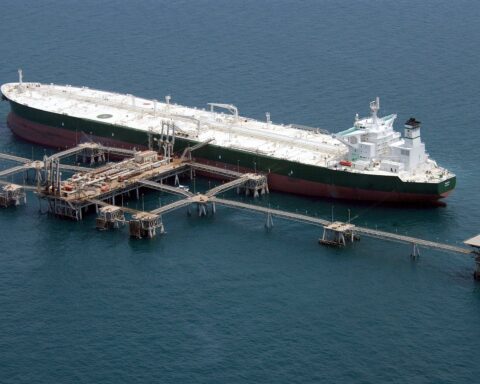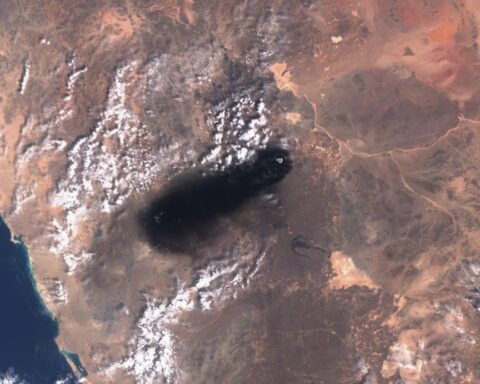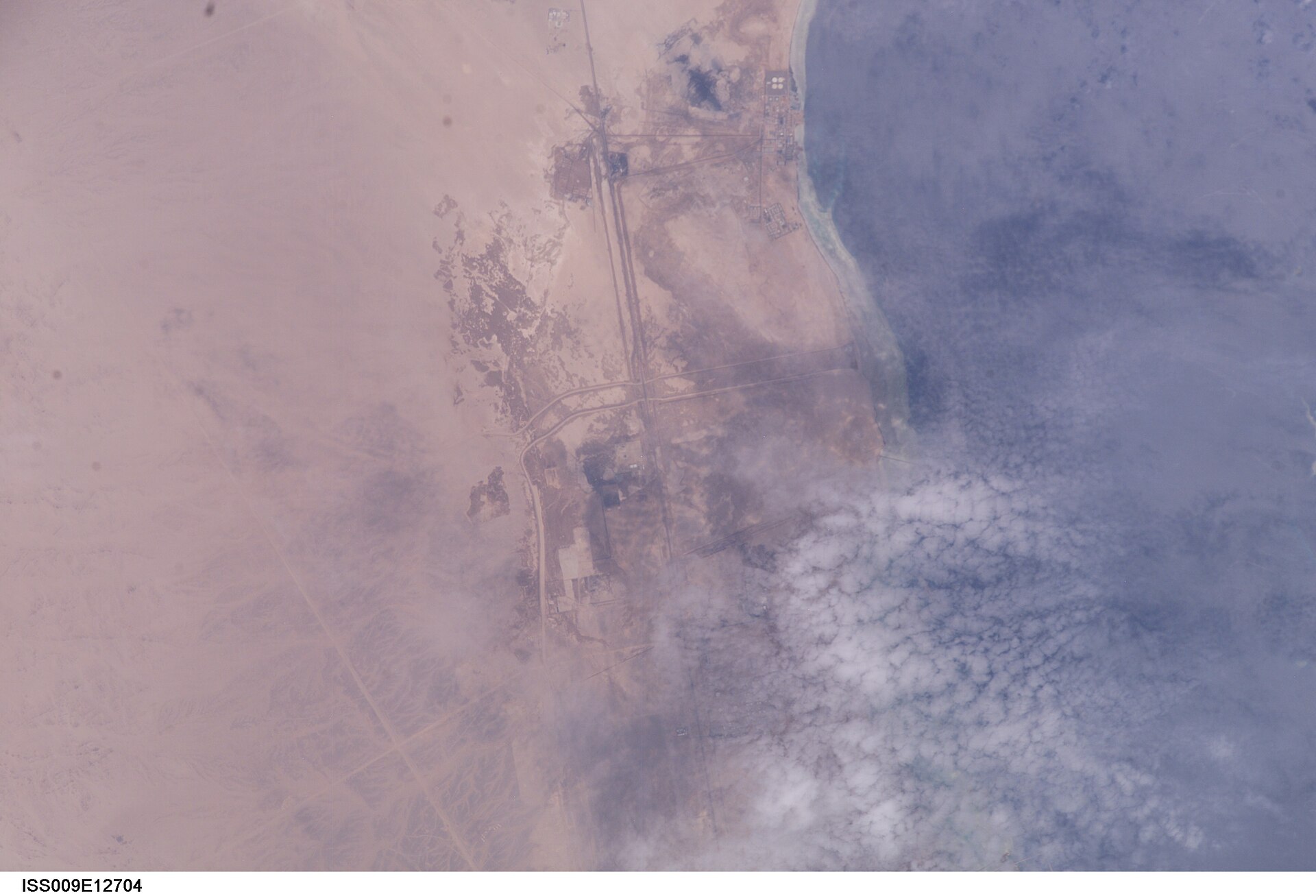

WASHINGTON — Saudi Energy Minister Prince Abdulaziz bin Salman addressed the US-Saudi Business Council’s board meeting in Washington over the weekend of November 7–8, stressing the kingdom’s commitment to energy security and what a US Embassy statement described as emerging opportunities in artificial intelligence and critical infrastructure, according to The National citing the embassy’s post on X. The following day, on November 9, the East-West crude oil pipeline in the Medina region was struck and briefly set ablaze in an attack the Saudi Press Agency reported but did not attribute — the latest in a week of strikes on Saudi energy assets that has reached Aramco’s headquarters tower in Riyadh’s financial district, the Shaybah desert oilfield, and now the kingdom’s most important alternative export route.
The Saudi Ministry of Energy said the pipeline fire was extinguished quickly with “no effect on operations,” and no independent reporting has contradicted that claim. But the juxtaposition between the Washington meeting and the Medina fire was difficult to miss: Prince Abdulaziz had spent the weekend telling American executives from BlackRock, ExxonMobil, Bank of America, and Google that the Saudi energy system was holding, while back home the pipeline carrying roughly 5.8 million barrels per day from the Eastern Province to the Red Sea port of Yanbu — the only major route left since Iran’s IRGC mined and closed the Strait of Hormuz on October 26 — was absorbing yet another hit, according to Al Jazeera’s October 6 report on the pipeline’s throughput citing Prince Abdulaziz’s own figures.
The House of Saud Daily Briefing
Saudi Arabia's news in 3 minutes, every morning. Free. See today's issue
Table of Contents
What Did Prince Abdulaziz Tell American Executives?
The November 8 session was co-chaired by Olayan Group’s Lubna bint Suliman Olayan and Citi CEO Jane Fraser, and represented the US-Saudi Business Council’s third major engagement of 2026, following its May reconstitution and an October 26 Fall Board of Directors meeting in Vienna, Virginia, according to PR Newswire. Saudi Minister of Investment Fahad Al-Saif also attended, and the board’s membership includes executives from BlackRock, Saudi Aramco, Bank of America, ExxonMobil, and Google, the USSBC said in its October press release. No transcript or detailed readout of the November 8 discussion has been published; The National’s November 9 report relied entirely on a US Embassy in Riyadh statement posted on X, which paraphrased Prince Abdulaziz as stressing Saudi commitment to energy security and industrial development alongside the “strength of the US-Saudi business partnership.”
The minister’s most substantive public articulation of that energy-security argument came not in Washington but at the 25th World Petroleum Congress in Riyadh on October 12, where he told delegates that “there could be no energy future for all without energy security for all,” according to Zawya. He defined resilience in operational rather than rhetorical terms, calling it “a continuous state of preparedness, built through sustained investment and demonstrated through action,” and argued that it “is not measured only by output, pipelines, or power generation” but “by the ability to keep operations running, repair damaged infrastructure, reroute supplies, and recover under pressure.” At Singapore International Energy Week on October 26 — the same day the IRGC declared the Strait of Hormuz closed — he reprised the theme, telling the audience that ensuring energy security requires “more resilient systems, sustained investment, and reliable partnerships,” Saudi Gazette reported.
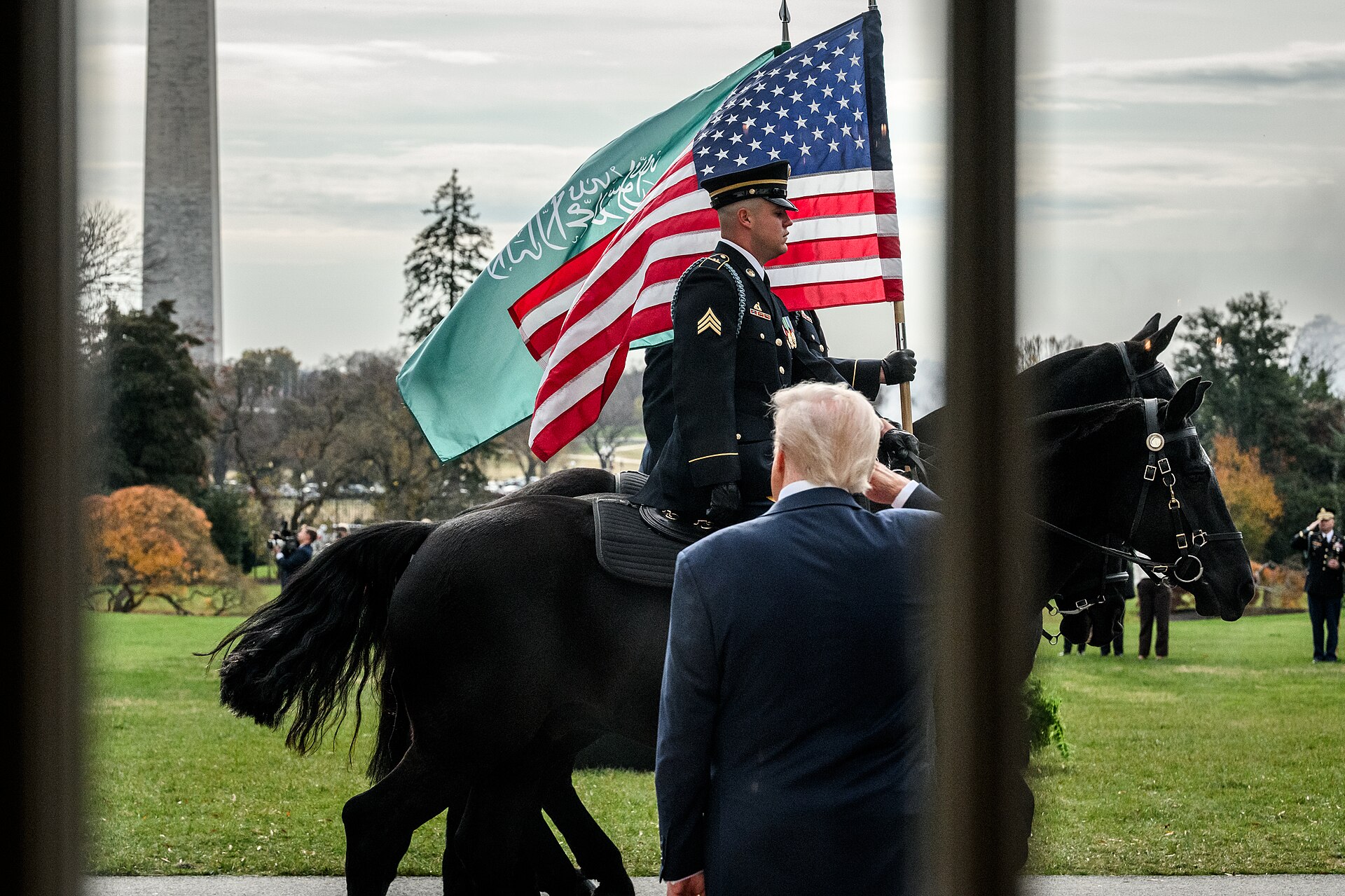
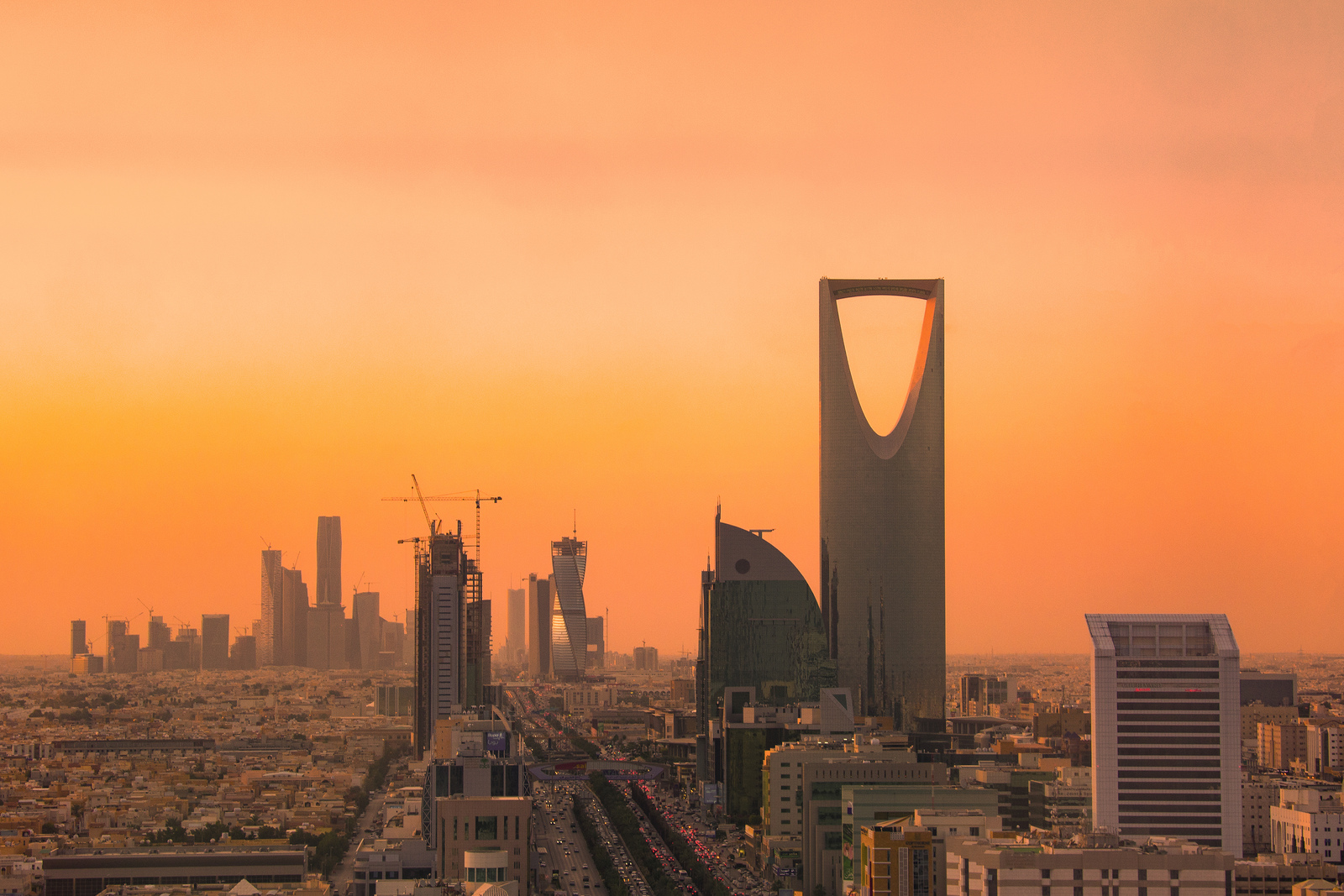
“Even amid the challenges facing our region, the business community remains focused on the opportunities ahead,” Olayan said in the USSBC’s October press release, a statement that reads rather differently six weeks later with pipeline fires on the evening news. Fraser described the council as playing “a vital role in strengthening connections, fostering investment” between the two economies — boilerplate language, but boilerplate that carries weight when the investment climate it describes includes drone strikes on the Riyadh financial district where several of these companies maintain their Saudi operations, and when the kingdom’s primary export artery is under repeated attack.
East-West Pipeline Struck in Medina Region
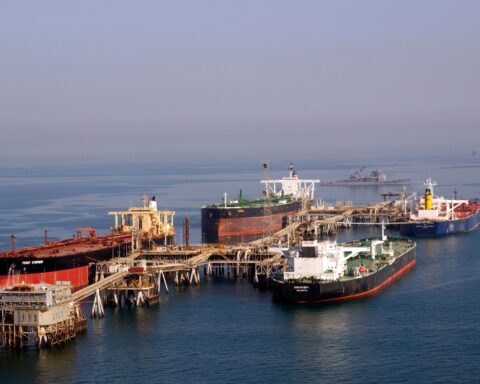
The East-West crude oil pipeline, stretching across the peninsula from the Abqaiq processing facility in the Eastern Province to the Yanbu export terminal on the Red Sea coast, was struck on November 9 and briefly caught fire in the Medina region, according to Business Recorder citing the Saudi Press Agency. The Saudi Ministry of Energy said the fire had been extinguished and there was “no effect on operations,” a formulation that has become familiar as Aramco’s sprawling network absorbs repeated strikes. No independent verification of the ministry’s operational claim has emerged, and the pipeline’s pumping status — it was handling approximately 5.8 million barrels per day as of early October, per Al Jazeera citing Prince Abdulaziz — has not been confirmed by third-party sources since the attack.
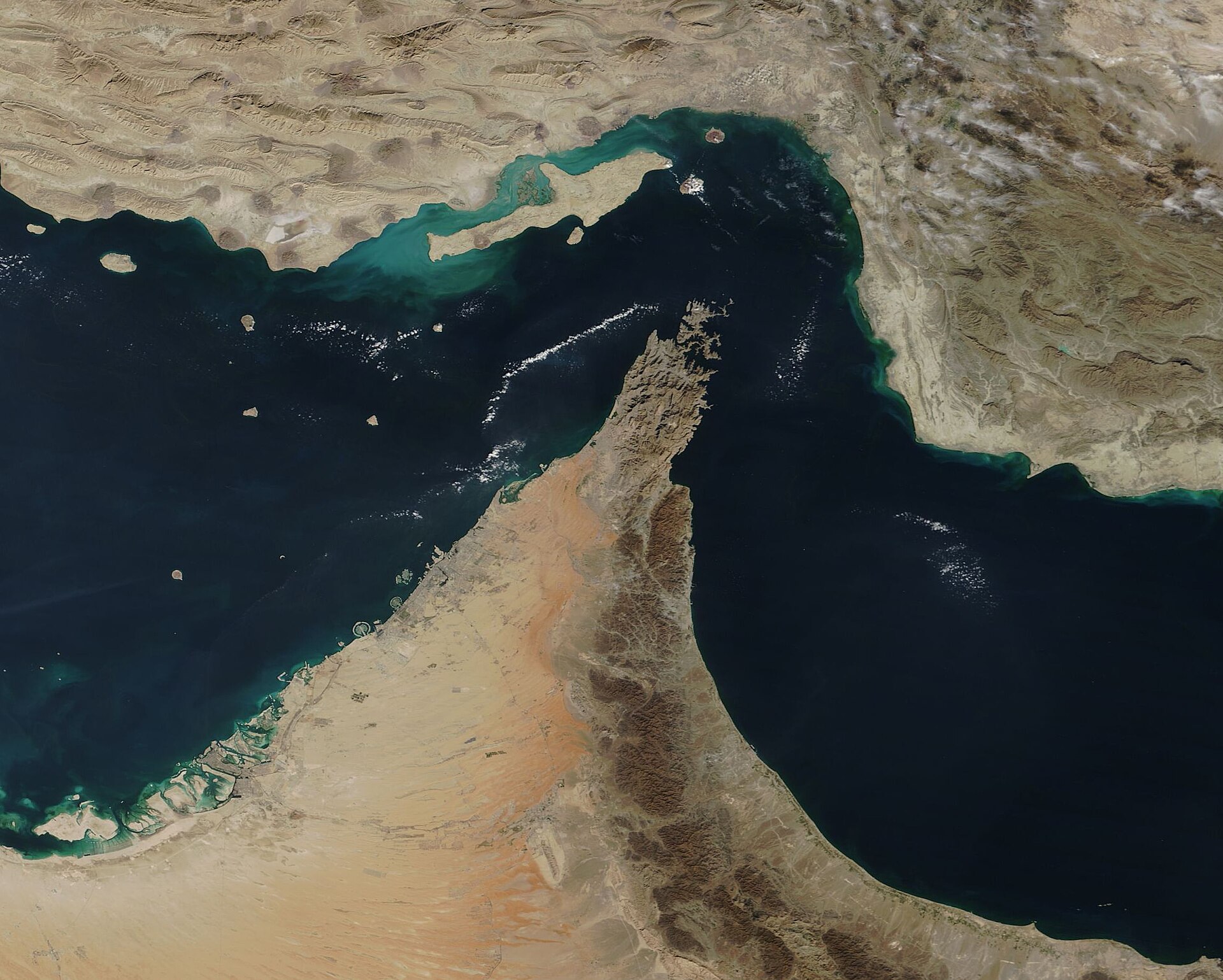
The pipeline’s role in the current environment is difficult to overstate. With the Strait of Hormuz mined and closed by the IRGC since October 26, the East-West pipeline has become Saudi Arabia’s primary route to international crude markets — a function it was built for in the 1980s during the Iran-Iraq War but had not been asked to perform at this scale in decades. Prince Abdulaziz said at the World Petroleum Congress that the line could be expanded to handle up to 10 million barrels per day within two to three years, according to Al Jazeera’s October 6 report, but its current pre-war maximum capacity sits at 7 million bpd, leaving a margin of roughly 1.2 million bpd above throughput that offers limited buffer.
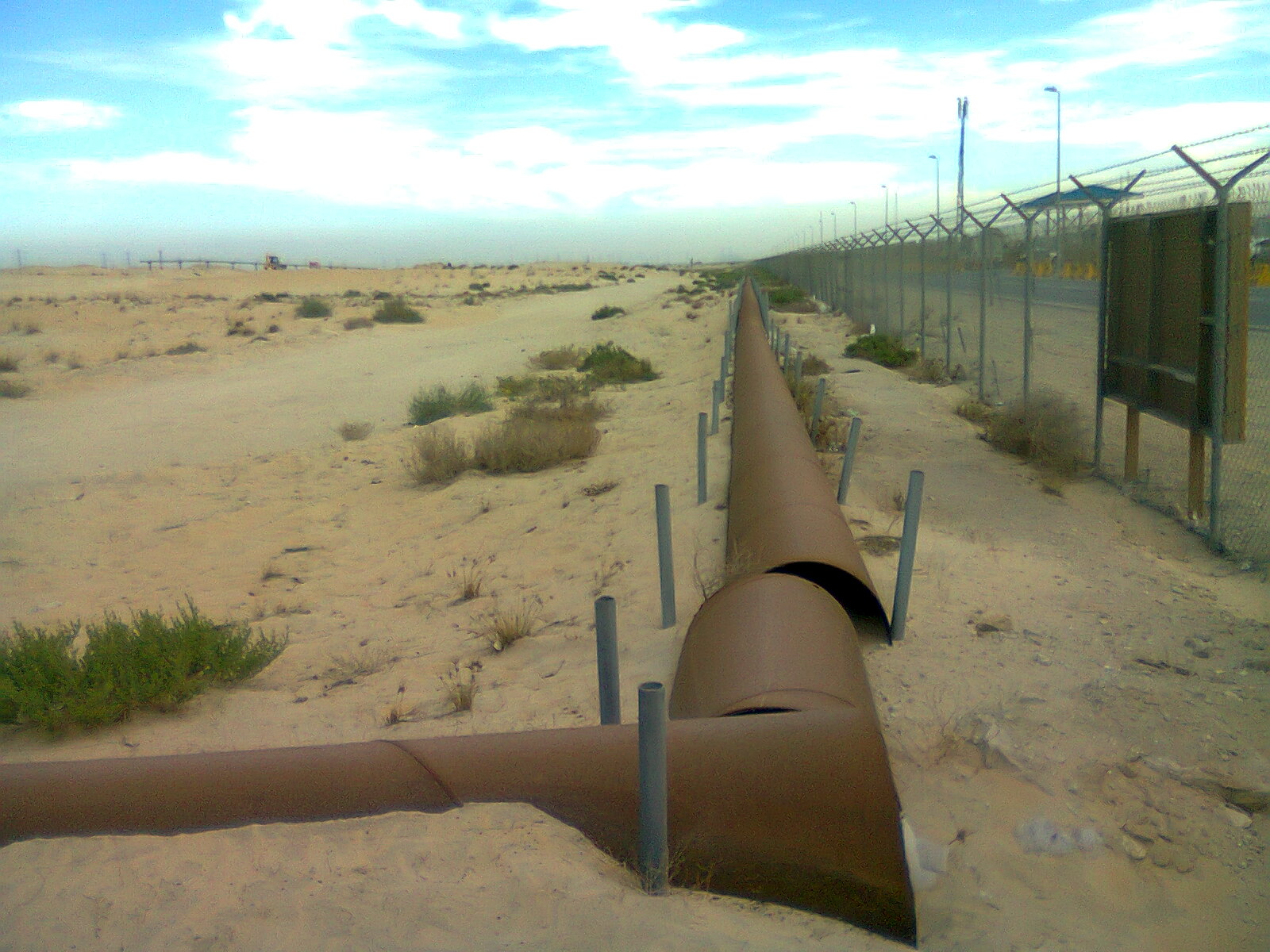
This was not the first time the pipeline has been attacked in 2026: drone strikes shut it down entirely from September 10 until it restarted at reduced capacity on September 22, according to Reuters and Al Jazeera — a twelve-day shutdown — and the escalation from that September closure to the November 9 fire suggests that attacks on this specific piece of infrastructure are deliberate and improving in precision, though no group has formally claimed the November 9 strike. The Aramco KAFD tower in Riyadh was damaged by shrapnel from a missile interception just the day before, on November 8, CNN and NBC News reported, while the Shaybah oilfield in the Rub’ al Khali was hit by a drone on November 2, killing two workers, and Aramco’s Dhahran headquarters was targeted in a fire on October 30.
How Is Saudi Arabia Routing Oil Without Hormuz?
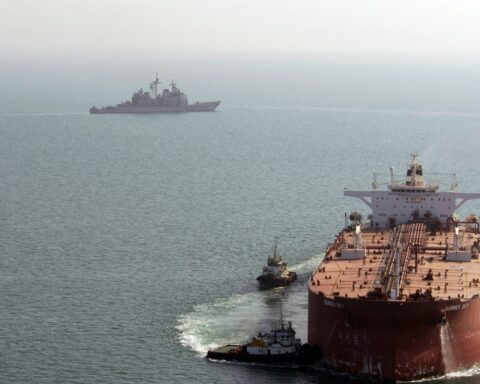
The short answer is through the pipeline that was just set on fire, supplemented by a US Navy-protected corridor near the Omani coast that allows a limited number of tankers to transit the strait under armed escort, according to Fortune and CNBC. Before the IRGC closure, approximately 10.3 million barrels per day of crude passed through the Strait of Hormuz, Kpler data cited by Al Jazeera showed on October 6 — roughly a fifth of the world’s daily oil consumption. Saudi Arabia’s ability to reroute a substantial share of its exports through the Yanbu terminal has prevented the total supply collapse that markets feared when Iran first mined the waterway, but the tracking data that attempts to measure actual export volumes tells a fractured story.
The divergence in October export estimates is worth spelling out, because it captures the fog of wartime energy markets. Kpler estimated Saudi crude exports at approximately 5.72 million barrels per day for October, Bloomberg reported on October 28; Vortexa, a rival tracker, put the figure at 6.5 million bpd; TankerTrackers.com, which relies on satellite imagery, estimated between 6.99 and 7.9 million bpd, per Baird Maritime. The gap — more than 2 million barrels per day between the lowest and highest estimates — exists because a growing number of tankers have switched off their Automatic Identification System transponders to avoid Iranian targeting, making satellite tracking the only partially reliable method, Bloomberg noted.
Bloomberg’s own production survey estimated Saudi output at 9.2 million barrels per day in October, which if accurate would mean that somewhere between 1.3 million and 3.5 million bpd of production was either stored domestically, consumed internally, or simply unaccounted for by any tracker. Aramco CEO Amin Nasser said on November 3, when announcing the company’s Q3 results, that Aramco could return to pre-conflict output of approximately 10.4 million bpd within “days” and reach maximum sustainable capacity of 12 million bpd in under three weeks once conditions permitted, according to AGBI — a statement aimed as much at Washington as at shareholders.
Aramco’s Wartime Numbers
The financial results, somewhat improbably, support the confidence. Aramco reported Q3 2026 net profit of $36.25 billion, a 34 percent increase year-on-year, with an average oil price realisation of $95.20 per barrel against $70.10 a year earlier, according to The National and Aramco’s quarterly release on November 3. The conflict has been good for Aramco’s top line in the crudest accounting sense: the risk premium embedded in every barrel of Gulf crude has pushed realisations far above peacetime levels, and the company’s ability to maintain exports at those elevated prices — even at reduced volumes — has driven a windfall that would have been difficult to imagine a year ago.
“The unwavering dedication of our workforce, our operational excellence, the flexibility of our system, and the strength of a supply network built over decades enabled us to continue delivering reliably to our customers.”
— Amin Nasser, Aramco CEO, Q3 2026 results statement, November 3
But the reliability metric tells a more sobering story. Aramco’s supply reliability in Q3 came in at 97.8 percent, down from its normal level of above 99 percent, Rigzone reported on November 5 citing the quarterly results. That means roughly 2.2 percent of output did not reach customers as scheduled — and against production of 9.2 million barrels per day, that 2.2 percent translates to approximately 200,000 barrels per day, enough to move commodity markets and enough to matter to Asian refiners who depend on Saudi crude as feedstock. Nasser warned in October that global oil inventories were “scarily thin” and that replenishing them while meeting demand could take up to two years, Gulf Business and OilPrice.com reported.
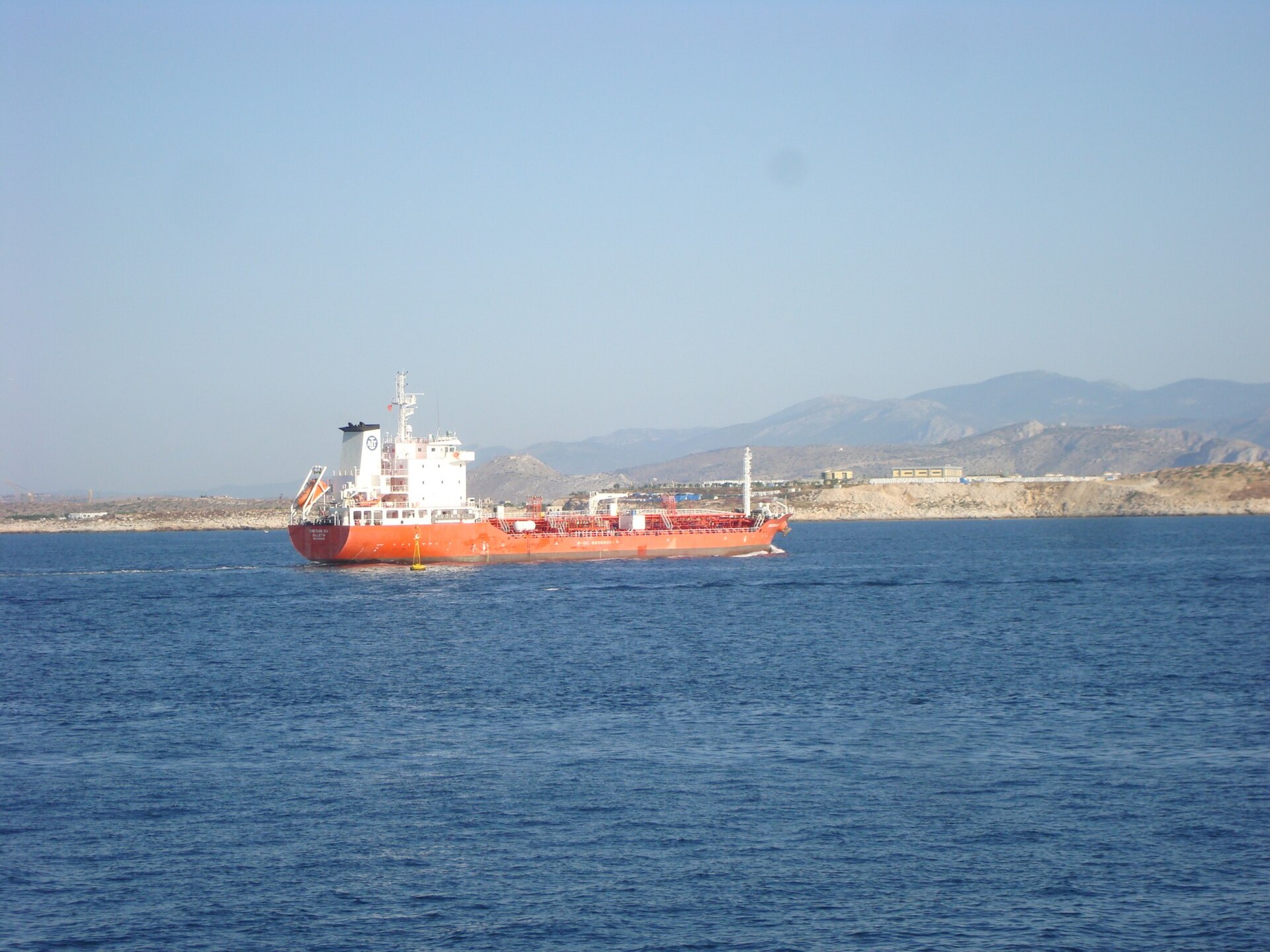
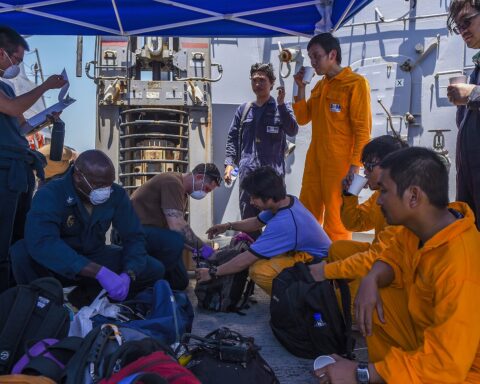
The attack on the Navig8 Messi tanker off Khasab on November 8, which left all 22 crew rescued but the ADNOC-chartered vessel burning near the Strait of Hormuz, offered a daily reminder of the hazards that Nasser’s logistics teams navigate. Saudi-led coalition strikes on Houthi launch platforms in Sanaa have attempted to degrade the threat from the south, while the cancellation of more than a third of Saudi domestic flights as of November 9 has shown that the attacks extend well beyond energy infrastructure into civilian life.
The Fiscal Strain Behind the Confidence
If Aramco’s balance sheet looks robust, the Saudi government’s does not, and that gap matters for the USSBC audience Prince Abdulaziz was addressing. Saudi Arabia posted an SR84 billion budget deficit in Q3 2026, with oil revenue falling 23 percent year-on-year to SR116.5 billion despite higher crude prices, Saudi Gazette reported — a seeming paradox explained by the fact that lower export volumes, a consequence of both OPEC+ production restraint and conflict disruption, more than offset the price gains. The nine-month cumulative deficit from January through September reached SR244.31 billion, approximately $65 billion, with the government’s general reserve balance standing at SR399.5 billion at the end of Q3, Saudi Gazette reported.
The full-year outlook has deteriorated sharply: Saudi Arabia revised its 2026 deficit projection to SR245 billion, up from the SR165 billion originally budgeted, and the finance ministry now forecasts real GDP contraction of 3.6 percent, with oil sector activity falling 21.8 percent, Reuters reported via Zawya on September 30. Those are the numbers behind Prince Abdulaziz’s messaging about resilience and preparedness — the kingdom can absorb the fiscal hit, because SR399.5 billion in reserves is not trivial, but the nine-month pace of deficit spending leaves that cushion finite and the war’s economic cost compounds even as inflation remains relatively contained at 1.9 percent.
Crown Prince Mohammed bin Salman’s pledge to invest $1 trillion in the United States, referenced by The National in its USSBC coverage, sits uneasily alongside these figures. The pledge was made in a different economic climate, and while nobody in Washington is publicly questioning whether Riyadh can deliver, the USSBC board members who sat across from Prince Abdulaziz on November 8 would have been conscious — as executives from BlackRock and Bank of America tend to be — that the kingdom’s fiscal trajectory has shifted since the commitment was announced.
Background
The US-Saudi Business Council was first proposed in 1978, during the Carter administration, as a mechanism to deepen commercial ties beyond the oil relationship that had defined the partnership since the 1940s. Olayan and Fraser were appointed co-chairs in October 2025, and the board was substantially reconstituted and expanded in May 2026, PR Newswire reported — a restructuring that preceded the Hormuz crisis and was driven by the broadening scope of Saudi-US business engagement under Vision 2030, which now encompasses defence, technology, entertainment, and financial services alongside energy.
The energy relationship has deepened in ways that extend beyond crude exports. Prince Abdulaziz and US Energy Secretary Chris Wright signed a 123 Agreement on nuclear cooperation on July 22, 2026, giving Saudi Arabia a pathway to uranium enrichment under US oversight and committing the kingdom to American-supplied reactors, the Department of Energy and the Washington Post reported. Chatham House, in an August 2026 analysis, noted that “Saudi Arabia still views the US as its main strategic partner” and that Riyadh seeks to reinforce its importance to Washington, partly out of concern that any US-Iran deal could leave the kingdom more vulnerable.
The GCC states signed a Gulf Railway general agreement in Bahrain on November 8, the same day as the Washington USSBC meeting — a parallel development reflecting the region’s push to build physical infrastructure even as existing assets come under attack. The wider context is a Saudi economy in the midst of the most ambitious transformation programme in the Gulf’s history, one that was upended when the Hormuz closure and the Houthi escalation altered the operating environment — a transformation that depends on the kind of foreign investment the USSBC exists to attract.
Frequently Asked Questions
What is the East-West pipeline’s route and capacity?
The East-West crude oil pipeline runs from the Abqaiq processing facility in Saudi Arabia’s Eastern Province westward across the peninsula to the Yanbu export terminal on the Red Sea coast. It was built in the 1980s during the Iran-Iraq War to provide an alternative export route bypassing the Strait of Hormuz. Its current throughput is approximately 5.8 million barrels per day, with a pre-war maximum capacity of 7 million bpd; Prince Abdulaziz has said expansion to 10 million bpd is achievable within two to three years, according to Al Jazeera.
Who are the current co-chairs of the US-Saudi Business Council?
The USSBC is co-chaired by Lubna bint Suliman Olayan, chair of the Olayan Group, and Jane Fraser, CEO of Citigroup, both appointed co-chairs in October 2025; the board was subsequently reconstituted in May 2026 to reflect the broadening of US-Saudi commercial ties under Vision 2030. Board members include executives from BlackRock, Saudi Aramco, Bank of America, ExxonMobil, and Google, according to the USSBC’s October 2026 press release via PR Newswire.
How much oil normally passes through the Strait of Hormuz?
Before the IRGC declared the strait closed on October 26, 2026, approximately 10.3 million barrels per day of crude oil transited through Hormuz, according to Kpler data cited by Al Jazeera on October 6 — roughly a fifth of daily global oil consumption. A limited number of tankers have continued to pass through under US Navy escort via a corridor near the Omani coast, but the majority of Gulf exports that previously used the strait have been rerouted through pipelines or delayed.
What is the 123 Agreement between the US and Saudi Arabia?
Signed on July 22, 2026, by Prince Abdulaziz bin Salman and US Energy Secretary Chris Wright, the 123 Agreement is a nuclear cooperation deal named after Section 123 of the US Atomic Energy Act, which requires bilateral agreements before the United States can share nuclear technology or materials with another country. It gives Saudi Arabia a pathway to uranium enrichment under American oversight and commits the kingdom to US-supplied reactors. The Washington Post reported that the agreement was a longstanding Saudi objective and was interpreted as a signal of Washington’s view of Riyadh as a durable strategic partner.
Has the East-West pipeline been shut down before in 2026?
Yes — drone strikes shut the pipeline down entirely from September 10, 2026, with operations restarting at reduced capacity on September 22, according to Reuters and Al Jazeera, temporarily diverting exports to the riskier Hormuz route, which was still partially open at the time, and contributing to a spike in crude prices. The November 9 fire is the second confirmed strike on the pipeline in two months, though the Saudi Ministry of Energy said this time there was “no effect on operations.”
The House of Saud Daily Briefing
Saudi Arabia's news in 3 minutes, every morning. Free. See today's issue