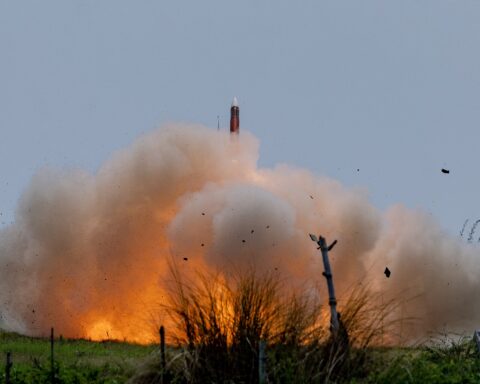
SANAA — Saudi-led coalition airstrikes killed at least 27 people and wounded 36 others in al-Shariya, a farming village in Sanaa province, on Saturday, the Houthi-run Health Ministry told the Associated Press. The toll, which the ministry said included mostly women and children, more than doubled from an initial count of 11 dead within roughly seven hours as rescue crews pulled bodies from the rubble of five destroyed houses, according to AP and Xinhua.
The House of Saud Daily Briefing
Saudi Arabia's news in 3 minutes, every morning. Free. See today's issue
The strikes marked the second mass-casualty event on the Yemen front in less than 24 hours. On Friday, a separate strike on a market in Taiz province killed at least 30 people, with the Houthis and the Saudi-backed military each blaming the other for that attack. Saudi Arabia’s Information Ministry did not respond to AP’s request for comment on al-Shariya, and the coalition’s only public statement on Saturday addressed a Houthi cruise missile it said it had intercepted over the Riyadh region — not its own offensive operations inside Yemen.
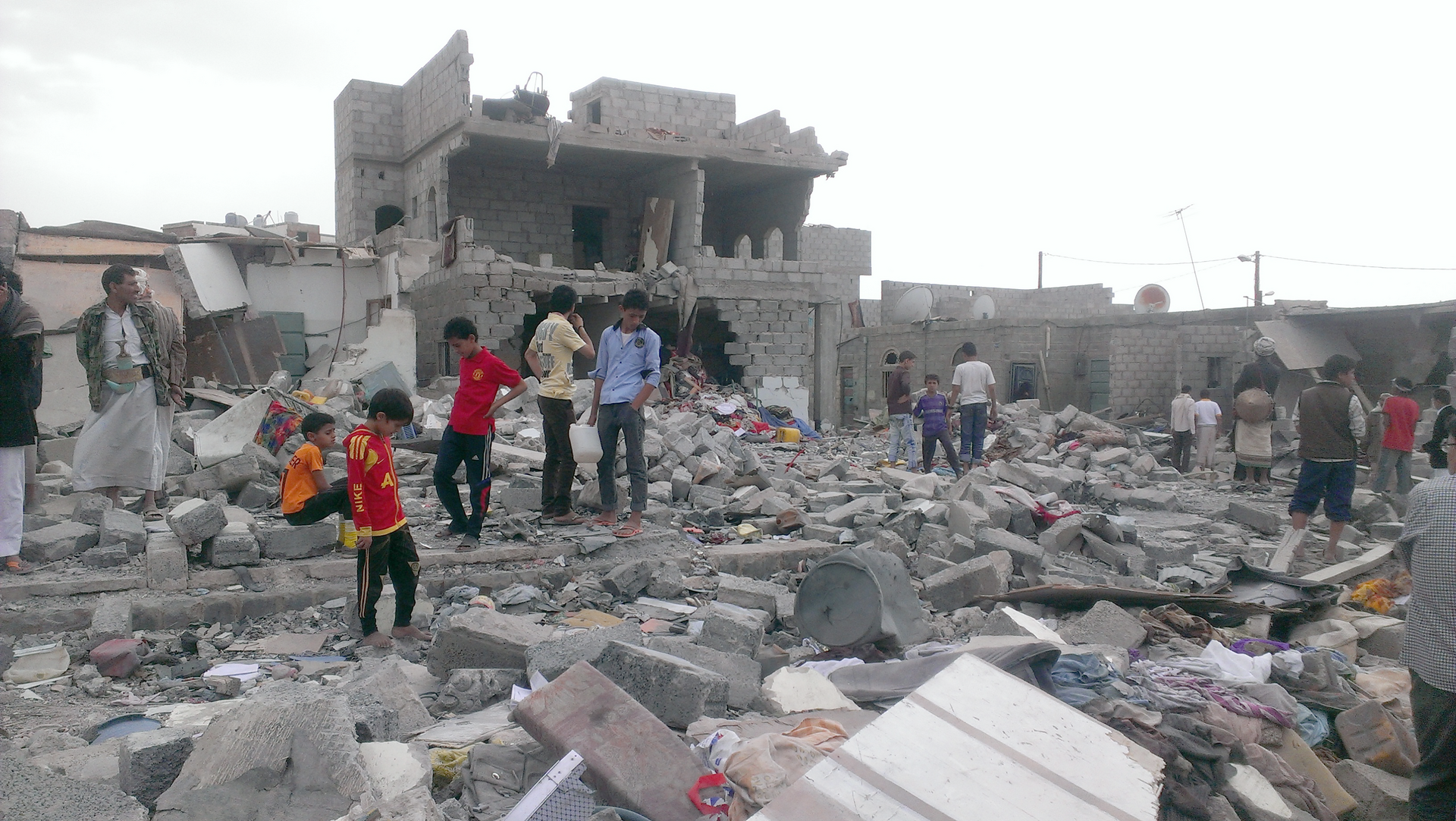
Table of Contents
What Hit al-Shariya?
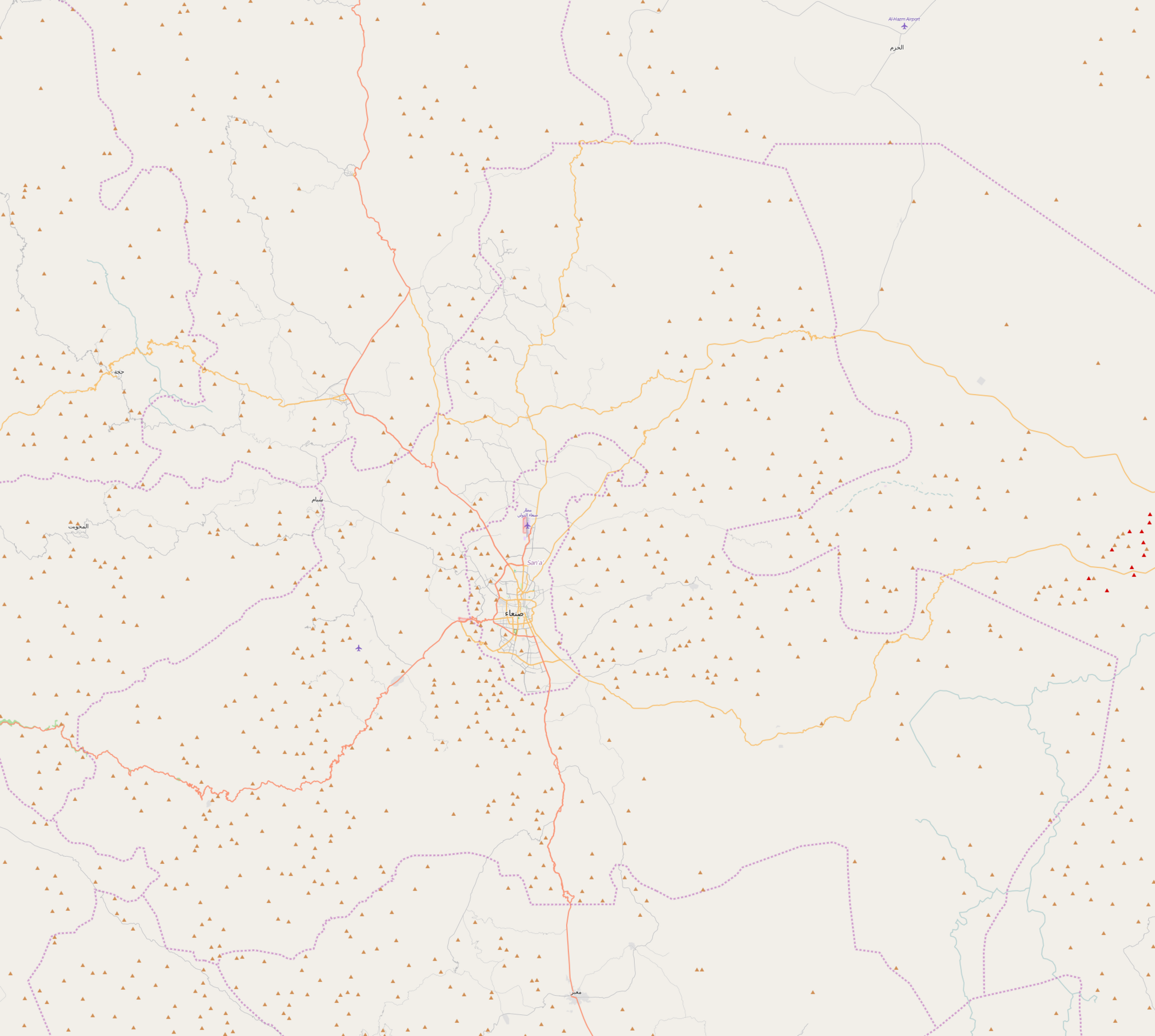
Al-Shariya — also rendered al-Shariyah in some wire filings — sits approximately 15 kilometres northeast of Yemen’s Houthi-held capital, Sanaa, in the Bani Hushaysh district, according to AP and Xinhua. Wire agencies described it as a farming village. The district lies on the northeastern outskirts of the greater Sanaa region, an area that has been under continuous Houthi administration since the group seized the capital in late 2014.
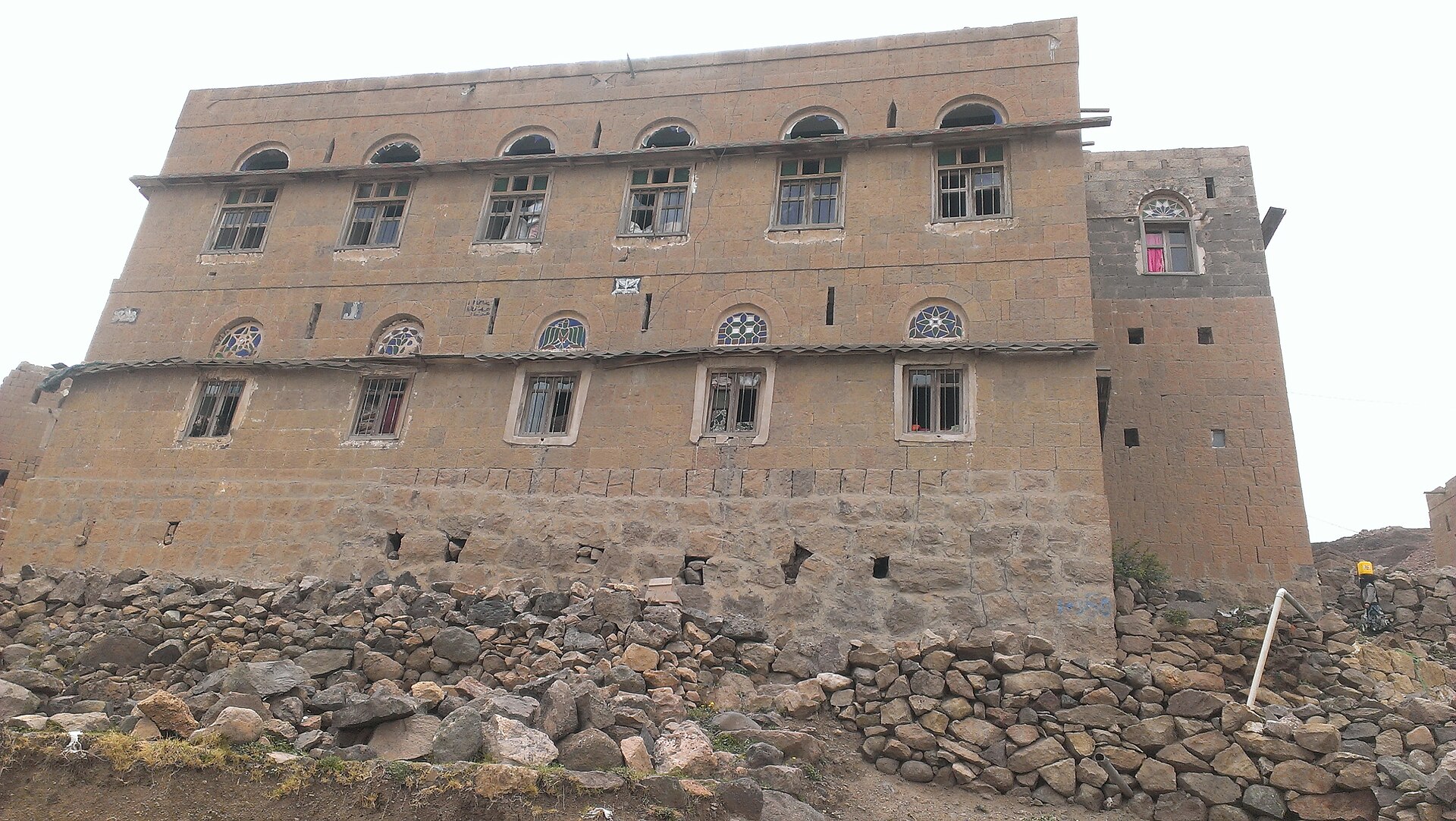
The strikes hit residential homes. Houthi Health Ministry spokesman Anees al-Asbahi told AP that five houses were destroyed and that civilians remained buried under the rubble after the initial bombardment. No source has given the exact time the first strikes landed, and neither al-Asbahi nor any other Houthi official quoted in wire coverage identified the type of munitions used. The chief of the district health office in Bani Hushaysh told reporters that rescue teams had recovered 11 bodies from the debris and described the count as preliminary, according to Xinhua, citing the Houthi-run Saba news agency.
AP noted that the Saudi-led coalition has said in general terms that it is conducting airstrikes in Houthi-held territory against military infrastructure. That blanket statement was not issued in reference to al-Shariya specifically, and no coalition official has addressed the village by name. Whether there were military targets in or near the farming settlement is a question that only the coalition could answer, and it has chosen not to do so.
A Death Toll Revised Three Times in Seven Hours
The death count from al-Shariya was revised upward at least three times on Saturday, a pattern consistent with ongoing recovery operations at sites where residential buildings have collapsed onto their occupants. Each revision came from a different node in the Houthi information chain — a sequence that matters because in a conflict where independent verification is unavailable, understanding which institution released which number is one of the few ways to assess the reliability of the reporting.
The first figure to reach international wires was 11 dead, carried by the Houthi-run Saba news agency via AFP. The district health office chief in Bani Hushaysh was the named source, and his qualifier — “preliminary” — set the pattern for what followed.
The Houthi satellite television channel al-Masirah then broadcast an intermediate figure of 22 killed and 30 wounded, as reported by AP through the Canberra Times and DPA. Health Ministry spokesman Anees al-Asbahi subsequently told AP directly that the toll had reached 25 dead and 30 wounded. By the time AP filed its final version of the story, the numbers had climbed again: 27 killed and 36 wounded. Al Jazeera matched the 27-dead figure but used the softer phrasing “about 30” for the wounded, a discrepancy consistent with reporting from an operation still in progress.
Al-Asbahi said most of the dead were women and children, and warned that the death toll was expected to rise further because rescue teams had not finished searching the collapsed structures. None of the figures have been independently verified. AP, Al Jazeera, and Xinhua each carried the explicit caveat that casualty claims from Houthi-run institutions could not be confirmed by outside sources. Bani Hushaysh has been under Houthi control for over a decade. The upward revisions might have continued uninterrupted on Saturday had the rescue effort itself not been disrupted by what Houthi media described as follow-up strikes on the same site.
Did Follow-Up Strikes Target Paramedics?
Al-Masirah and the Houthi-run Saba news agency reported that coalition aircraft returned to strike al-Shariya after rescue workers had arrived, targeting paramedics with what they described as two additional attacks, according to Xinhua and AFP via the Times of Israel. The Houthi outlets also reported that military aircraft struck roads leading into the village — a claim that, if accurate, would have impeded both the recovery of bodies and the evacuation of the wounded to medical facilities elsewhere in the district.
Al-Asbahi told AP that subsequent strikes targeted emergency workers who were pulling survivors from the rubble. If the account is accurate, such an attack would constitute a strike on medical personnel and first responders, a category of protection under international humanitarian law that applies regardless of which party to a conflict controls the territory in question. The claim has not been confirmed by any independent source, and Saudi Arabia has not responded to the specific allegation.
So-called “double-tap” strikes — in which a second bombardment is timed to hit first responders arriving at the scene of an initial attack — have been reported in multiple armed conflicts. The practice, when deliberate, is widely considered a violation of the laws of war. Whether the al-Shariya follow-up strikes were aimed at rescue crews intentionally, or whether they hit other targets in the same area and caught paramedics in the blast radius, cannot be determined from the available wire reporting.
What is clear from both Houthi-aligned media accounts and AP’s own dispatch is that the air campaign over al-Shariya was not a single sortie. It continued over a span of hours, with multiple waves of strikes hitting the same small farming village — a pattern that raises questions only one party to the conflict is positioned to answer.
Why Has the Coalition Not Addressed the al-Shariya Strikes?
Saudi Arabia’s Information Ministry did not respond to AP’s request for comment on the al-Shariya strikes. The Saudi-backed Yemeni government also declined to comment, according to Al Jazeera. The coalition’s sole public communication on Saturday came from spokesman Major General Turki al-Malki, who confirmed that air defences had shot down a Houthi cruise missile over the Riyadh region earlier that morning — a defensive intercept, not an account of the coalition’s own operations inside Yemen.
The asymmetry between the coalition’s willingness to discuss what the Houthis fire at Saudi Arabia and its silence about what it strikes inside Yemen has become one of the defining features of the current campaign. Since the launch of Operation Dawn of Yemen on October 5, coalition spokespeople have issued detailed public statements on Houthi missiles intercepted over Saudi cities, drones shot down en route to oil infrastructure, and fragments recovered from impact sites near critical facilities. On the other side of the ledger — the strikes the coalition is carrying out across Houthi-held territory — official communications have been rare, generic, and carefully distanced from specific events.
The result is an information vacuum that Houthi-run outlets fill by default. When the only accounts of a strike on a farming village come from the party that controls the territory, reporters and humanitarian organisations are left to weigh unverifiable claims against official silence. Neither is satisfactory, but it is the silence that makes verification impossible, because the coalition holds the targeting data, the flight logs, and the after-action assessments that could either confirm or contest the Houthi narrative — and it has released none of them.
Colonel Majed al-Nazili, a spokesman for the Yemeni government forces aligned with the coalition, issued a separate statement on Saturday claiming that the army had carried out 875 attacks on Houthi positions during the day, with approximately 130 Houthi fighters “neutralised” and 50 vehicles and missile launchers destroyed or disabled, according to Al Jazeera. Al Jazeera said it could not independently verify those numbers. Al-Nazili’s statement did not mention al-Shariya, civilian casualties, or any accounting of harm to non-combatants — an omission consistent with his previous public communications, which have focused exclusively on battlefield metrics.
Houthi Leaders Vow Retaliation
The Houthi response to al-Shariya came from the highest levels of the group’s political and military command. Mahdi al-Mashat, president of the Houthi Supreme Political Council, vowed to “avenge” the strikes, according to Al Jazeera. Brigadier General Yahya Saree, the group’s military spokesperson, vowed revenge “against the killer of children and women,” according to UPI, as reported by the New York Times. The language was calibrated for maximum public impact — framing the dead as non-combatants and the coalition as a deliberate aggressor — a rhetorical posture the Houthis have used consistently to justify their own cross-border attacks on Saudi Arabia.
Saree said the Houthis had attacked Saudi Arabia “in response to” both the al-Shariya strikes and the previous day’s market attack in Taiz province, according to AP. The group claimed six operations against Saudi targets on Saturday: King Khalid International Airport in Riyadh, oil facilities in the capital, the Khurais oil site, a pumping station in Dawadmi, a National Guard camp in Najran, and troop gatherings in the provinces of al-Jawf and Marib, according to Al Jazeera. Al Jazeera said it could not verify any of the six claims independently.
The list of claimed targets — airports, Aramco infrastructure, military camps — reflects the Houthis’ established approach of striking at Saudi Arabia’s economic and security assets after coalition operations in Yemen. Whether the six attacks were genuinely planned as retaliation for al-Shariya and the Taiz market strike, or whether those events provided a convenient public justification for operations already in preparation, is a question that the Houthis’ retaliatory framing is designed to render moot.
The coalition confirmed intercepting at least one incoming projectile on Saturday but issued no comment on the other five claimed operations — an asymmetry of disclosure consistent with its broader silence on offensive operations inside Yemen.
Two Days of Mass-Casualty Events in Yemen
The al-Shariya strikes were the second mass-casualty event in Yemen in two days. On Friday, November 6, a strike on a market in southern Yemen killed at least 30 people, with attribution still in dispute; the Houthis blamed the Saudi-led coalition, while the coalition-backed Yemeni military blamed the Houthis, according to AP. Neither figure — 27 dead at al-Shariya or 30 at the Taiz market — has been independently verified.
The escalation on the ground inside Yemen has unfolded in parallel with an intensification of the broader regional conflict across multiple fronts. On the same Saturday as the al-Shariya strikes, the coalition intercepted a Houthi cruise missile over the Riyadh region, the Houthis claimed six retaliatory operations against Saudi targets, and Yemeni government forces reported hundreds of engagements along several provincial front lines. Drone incursions and ballistic missile launches toward Saudi territory have continued at a near-daily pace since Operation Dawn of Yemen began on October 5.
The Houthis seized Sanaa in late 2014, and the Saudi-led coalition intervened in March 2015 to support the internationally recognised government — a campaign that has since become one of the world’s deadliest and longest-running conflicts. The current phase began when the coalition launched Operation Dawn of Yemen with approximately 100 aircraft, according to the Oman Observer. Civilian casualty events like the one in al-Shariya have been a feature of the war since its earliest months, documented by international investigators over more than a decade of fighting.
On Saturday evening, as AP filed its final dispatch, al-Asbahi delivered his last recorded statement to the wire service. The search was not finished, the Health Ministry spokesman said, and the number was expected to rise.
Frequently Asked Questions
What weapons were used in the al-Shariya strikes?
No wire report has identified the specific aircraft type, squadron, or munitions used in the al-Shariya attack. AP, Al Jazeera, and Xinhua each described the strikes only as “airstrikes” carried out by the Saudi-led coalition, without specifying the ordnance or platform. The coalition has not commented on the operation, and no imagery of the munitions or delivery systems has appeared in international wire coverage.
Has any international body responded to the al-Shariya strikes?
As of Saturday evening, no public statements from the United Nations Office for the Coordination of Humanitarian Affairs, the International Committee of the Red Cross, or the Office of the UN High Commissioner for Human Rights had appeared in wire reporting on the al-Shariya event specifically. Responses from these organisations, when they come in the Yemen conflict, have typically taken days after an incident reaches international wire services.
How many people live in al-Shariya?
No available source has published a population figure for al-Shariya. AP described the settlement as a small farming village in the Bani Hushaysh district. No pre-war demographic data or displacement estimates for the district appeared in international wire coverage of the November 7 strikes.
What is Operation Dawn of Yemen?
Operation Dawn of Yemen is the Saudi-led coalition’s military campaign launched on October 5, 2026, involving approximately 100 aircraft, according to the Oman Observer. The coalition described it as a campaign targeting Houthi military infrastructure across Yemen. Since its launch, the operation has coincided with an increase in both coalition offensive strikes inside Yemen and Houthi retaliatory attacks on Saudi territory, including missiles, drones, and cruise missiles aimed at airports, oil facilities, and military installations.
The House of Saud Daily Briefing
Saudi Arabia's news in 3 minutes, every morning. Free. See today's issue