Doval Came Three Times and Brought No Peace Plan
NSA Ajit Doval meets US Secretary of State Pompeo in bilateral diplomatic meeting, State Department, Washington DC

Doval Came Three Times and Brought No Peace Plan

Doval visited Saudi Arabia three times in 2026 — not to broker peace but to protect Indian oil, diaspora, and trade from the double chokepoint crisis.

NEW DELHI — Ajit Doval arrived in Riyadh on July 21 for his third visit to Saudi Arabia in seven months, one day after the Houthis declared a full maritime blockade that closed Bab al-Mandeb — the last open chokepoint connecting India to the Gulf oil it cannot survive without. Both of India’s primary sea-lane lifelines are now severed (Hormuz since February, Bab al-Mandeb since July 20), and what New Delhi calls mediation looks, on closer examination, like something more precise: the systematic conversion of dual dependency into diplomatic capital before a ceasefire closes the window.

Conflict Pulse IRAN–US WAR
Live conflict timeline
Day
145
since Feb 28
Casualties
13,260+
5 nations
Brent Crude ● LIVE
$113
▲ 57% from $72
Hormuz Strait
RESTRICTED
94% traffic drop
Ships Hit
16
since Day 1

India is not a neutral broker in this war. Doval did not fly to Riyadh three times because he carries a peace plan that Pakistan, Qatar, and Oman — the states actually running the three ceasefire tracks — have failed to produce; he went because India is the only major economy whose oil supply, diaspora remittances, trade, and diplomatic positioning depend simultaneously on both sides of the conflict, and that vulnerability doubles, for as long as the fighting lasts, as a form of indispensability that New Delhi intends to cash before the window shuts.
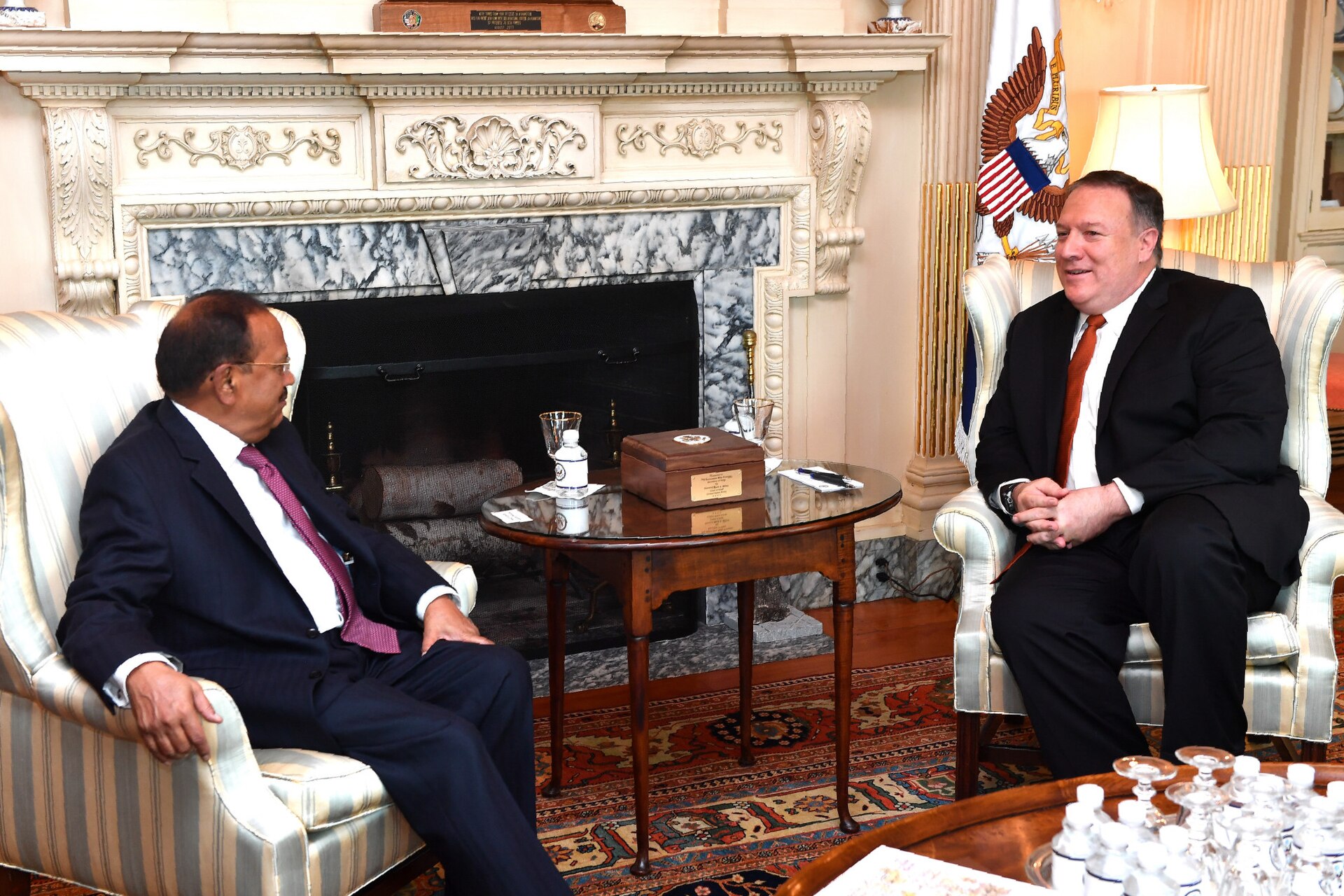
NSA Ajit Doval meets US Secretary of State Pompeo in bilateral diplomatic meeting, State Department, Washington DC
NSA Doval (left) in bilateral meeting format with senior Western officials — the same configuration he brought to Riyadh three times in 2026: no press conference, no joint statement, no ceasefire mandate. Doval’s visits to Riyadh produced the word “helpful” from the MEA and no change in India’s position at any of the three active ceasefire tracks. Photo: US State Department / Public Domain

Three Visits in Seven Months

The timeline tells the story the MEA’s press releases do not. Doval’s first visit came early in 2026, as Hormuz closed and India’s crude basket began its climb toward $113.57 a barrel — a 72 per cent increase since January. His second trip, on April 19, placed him across the table from Energy Minister Prince Abdulaziz bin Salman, Foreign Minister Prince Faisal bin Farhan, and Saudi National Security Adviser Dr Musaed bin Mohammed Al Aiban — a three-minister reception that no other visiting security official from outside the GCC or the Western alliance received during the same period. The MEA called the visit “helpful,” conducted “on the PM’s instructions, part of government outreach to Gulf,” which in Indian diplomatic language means the conversation was substantial enough to report and inconclusive enough to avoid specifics.

The third visit, on July 21, landed in a different environment entirely. Doval arrived the day after both corridors had closed: Hormuz had been shut for nearly five months, and the Houthi blockade declaration of July 20 sealed Bab al-Mandeb, cutting the Red Sea route that Indian shippers had used as a contested but functional fallback since March. Outlook India described the meeting agenda as enhancing “energy security and protecting maritime corridors” and discussing “the latest regional developments” — which is a polite way of saying that India’s two primary oil arteries were simultaneously blocked and Doval needed to discuss what Riyadh, which cannot afford the war or influence the peace, could do about either one.

The frequency itself is the signal that matters. Three NSA-level visits in seven months — with a Modi-to-Pezeshkian phone call on March 12 sandwiched between the first and second — is not the rhythm of a mediator building consensus among parties; it is the rhythm of a government managing a rolling crisis whose terms change faster than its diplomacy can adapt. Each visit followed an escalation that directly threatened Indian interests: the first after Hormuz closed, the second on the day Iran fired on two Indian ships, the third after the Houthi blockade sealed the remaining exit. Doval is not visiting Riyadh on a schedule; he is visiting on a trigger.

Why Does India Need Both Chokepoints Open?
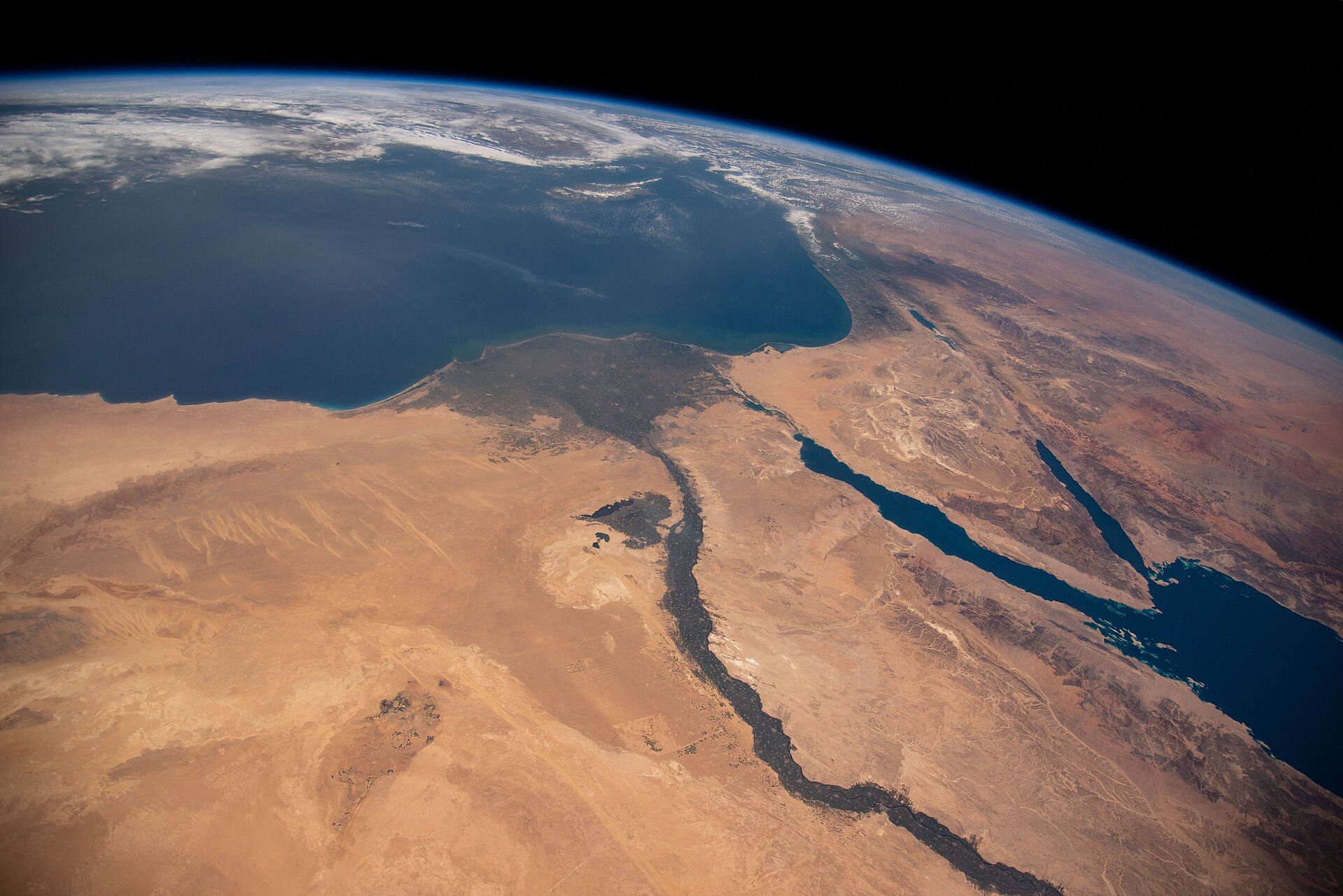
Red Sea, Gulf of Oman, Suez Canal, and Arabian Peninsula from the International Space Station, showing the maritime chokepoints connecting India to Gulf oil
The Red Sea (upper left) and Gulf of Oman (right) photographed from the International Space Station — two bodies of water that function as India’s primary energy corridors. Hormuz, at the Gulf of Oman’s eastern entrance, has been closed since February; Bab al-Mandeb, connecting the Red Sea to the Gulf of Aden, closed July 20. For the first time in modern history, both of India’s Gulf oil lifelines are simultaneously severed. Photo: NASA / Public Domain

The numbers answer the question before the analysis can. The Hormuz closure disrupted between 46 and 50 per cent of India’s crude oil imports, according to the Observer Research Foundation and Insights on India — a dependency ratio that no other major economy outside the GCC itself can match. India sourced nearly 91 per cent of its liquefied petroleum gas from Gulf producers before the crisis, and when that supply line broke in late February, the domestic consequences arrived within days: a Rs60-per-cylinder price hike, queues at LPG distribution centres across Gujarat, Maharashtra, Kerala, and Punjab, and a household-level political problem that no volume of strategic-autonomy rhetoric could absorb for a government that derives much of its domestic legitimacy from economic performance.

The HOS Daily Brief

The Middle East briefing 3,000+ readers start their day with.

One email. Every weekday morning. Free.

The downstream effects cascaded through macroeconomic indicators in ways that GDP headlines only partially capture. The rupee fell to Rs92.39 against the dollar by March 20, its lowest recorded level; Moody’s cut its FY2027 growth estimate to 6.0 per cent from 6.8; Standard Chartered lowered its forecast to 6.4 from 7.0 per cent. These are the numbers that sat in Doval’s briefing folder each time he boarded the flight to Riyadh — the reason the MEA described his trips as conducted “on the PM’s instructions” rather than as routine diplomatic engagement, and the reason each visit focused on energy security and maritime corridors rather than on the ceasefire architecture that three other countries were building without India in the room.

India’s Gulf Exposure — July 2026
Metric Figure Source
Crude imports via Hormuz (disrupted) 46–50% of total ORF / Insights on India, 2026
LPG sourced from Gulf ~91% Asia Times / Insights on India
Crude basket peak (March 2026) $113.57/bbl (+72% since Jan) ORF, 2026
India-Saudi bilateral trade (FY 2024-25) $41.87 billion Embassy of India, Riyadh
India-GCC total trade (FY 2024-25) $178.56 billion (15.4% of India’s global) IMPRI, 2026
Indian nationals in GCC 9 million+ (2.5M in Saudi Arabia) ISAS NUS, March 2026
Annual remittances from Gulf ~$50 billion (38% of India’s total) ISAS NUS / CNBC, 2026
Rupee low (March 20, 2026) Rs92.39/dollar (historic) ORF, 2026
GDP forecast downgrades Moody’s: 6.8→6.0%; StanChart: 7.0→6.4% Moody’s / Standard Chartered

Nine Million Workers, Fifty Billion Dollars

The diaspora is the part of India’s Gulf exposure that no oil contract or naval deployment can hedge. Over nine million Indian nationals reside across GCC countries — 2.5 million in Saudi Arabia alone — and together they send approximately $50 billion home each year, roughly 38 per cent of India’s total remittance inflow, according to Dr Sandeep Bhardwaj at the Institute of South Asian Studies, National University of Singapore. India’s total remittances hit a record $137 to $140 billion in FY2026, and the Gulf corridor remains the single largest regional contributor to that figure — a dependency that converts every missile strike on GCC territory into a direct transmission mechanism for Indian household budgets and a political risk for the government in New Delhi that no ceasefire track can mitigate unless India is inside it.

When the crisis escalated in March, the remittance flow did not contract — it surged, and in a direction that speaks to fear rather than confidence. SBI Research flagged a 30-to-35 per cent spike in West Asia remittances in March 2026, driven not by higher wages but by precautionary transfers: money sent home by workers who believed they might not be in the Gulf next month to send it. India established a special operations room on March 7, and by the end of that first week 52,000 nationals had returned from Gulf countries; the total has since climbed past 220,000 — a number that represents both a logistical achievement and a running measure of how badly the security situation has deteriorated in the countries where India parks its largest overseas workforce.

Bhardwaj identified the strategy that Doval’s visits operationalise with a directness the MEA has not matched: “The most likely strategy India would pursue is to leverage its relationships with the belligerents to carve out exceptions for itself, having already sought to do that by urging Iran to let its ships pass through the Strait of Hormuz and securing a waiver from the US to import Russian oil.” The word “exceptions” does the analytical work that “mediation” does not — it concedes that India’s objective is not to resolve the conflict but to insulate itself from its consequences while the fighting continues, extracting bilateral concessions from each side in exchange for the continued commercial engagement that both Tehran and Riyadh need from the world’s third-largest oil importer and fifth-largest economy.

The Port India Built and Iran Kept

Chabahar was supposed to be India’s insurance policy against exactly the kind of crisis it now faces — a port on Iran’s Makran coast that gave New Delhi a land route to Afghanistan and Central Asia bypassing Pakistan, a commercial foothold inside the Iranian economy, and a card to play in any negotiation where Tehran needed something India could provide. India signed a ten-year operating contract for Chabahar’s Shahid Beheshti Terminal in May 2024, committing $120 million in equipment plus a $250 million credit line, and by March 2026 — per MEA confirmation in Parliament — the $120 million had been fully disbursed. The money was spent, the equipment was delivered, and the financial conditionality that came with the contract had evaporated at precisely the moment it would have been most useful.

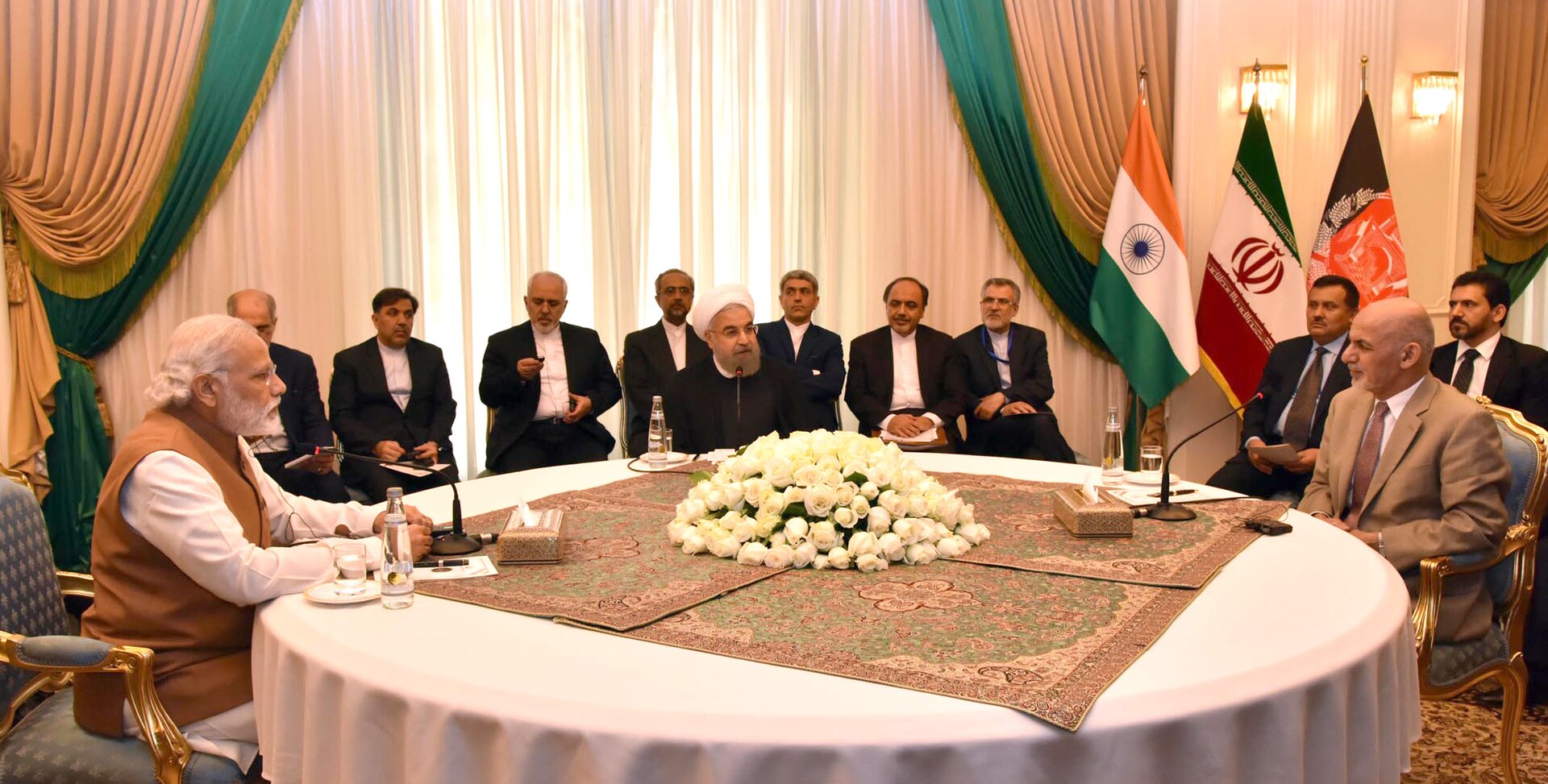
Prime Minister Narendra Modi with Iranian President Rouhani and Afghan President Ghani at the India-Iran-Afghanistan trilateral meeting in Tehran, May 2016, where the Chabahar port agreement was signed
Prime Minister Modi (left), Iranian President Rouhani (centre), and Afghan President Ghani at the May 2016 Tehran trilateral that formalised India’s Chabahar commitment. India has since fully disbursed the $120 million equipment investment, the US sanctions waiver that made operations viable expired April 26, 2026, and the Union Budget 2026 allocated zero further Chabahar funds. The port India built is now held by Iran without the Indian commercial presence the investment was designed to secure. Photo: Government of India / GODL-India

What followed completed the reversal. The US sanctions waiver that had protected Indian entities operating in Chabahar expired on April 26, 2026, and Washington did not renew it — a quiet enforcement decision that followed OFAC actions in October and November 2025 targeting eight to ten Indian nationals and nine to ten Indian companies for facilitating India-Iran oil trade in violation of existing sanctions. India’s Union Budget 2026 allocated zero funds for Chabahar, a decision taken at cabinet level that predated the worst of the crisis. Modern Diplomacy, in a detailed May 29 analysis, called the situation a “crisis”; Al Jazeera, on April 29, asked whether India’s “Chabahar dream in Iran” was dead. The structural answer is that India built the port, discharged its obligations, lost the sanctions cover that made operations viable, and now watches as Iran holds a terminal that Indian taxpayers funded — a reversal that mirrors the pipeline-port asymmetry visible on Saudi Arabia’s western coast.

The Chabahar collapse matters for understanding Doval’s Riyadh trips because it eliminates one of the two structural tools India had for maintaining influence over Iranian behaviour. The first was the port; the second is oil purchases under General License U, the US licence issued March 20, 2026, which authorised Indian state refiners — IOC, BPCL, HPCL, and Reliance Industries — to import between 100,000 and 200,000 barrels per day of Iranian crude, roughly two to four per cent of India’s 4.5 million bpd consumption. With Chabahar gone, GL U is the only remaining channel through which India maintains direct economic weight with Tehran, and that channel exists at Washington’s discretion rather than New Delhi’s — meaning Doval’s conversations in Riyadh are conducted in the shadow of a third capital that is never in the room but determines the terms under which India can operate in both.

What Did Operation Urja Suraksha Protect?

India launched Operation Urja Suraksha — “Energy Protection” — on March 25, 2026, deploying five to seven frontline warships including guided-missile destroyers INS Kochi and INS Chennai to the Gulf of Oman with a mandate to escort Indian-flagged LPG, LNG, and crude tankers through waters that Iran had declared a restricted zone. The deployment was the largest Indian naval presence in the Persian Gulf in over three decades, and it rested on a diplomatic arrangement rather than a military one: Iran agreed to allow “non-hostile vessels” to transit after “proper coordination” with Indian naval authorities. The formula framed India not as a maritime power asserting freedom of navigation but as a party requesting — and receiving — permission to move its own commercial traffic through waters that Iran claimed to control.

The fragility of that arrangement became visible on April 19 — the same day Doval sat across from three Saudi ministers in Riyadh for his second visit. Iran fired on two Indian-flagged commercial vessels in the Strait of Hormuz, and India summoned the Iranian envoy to the MEA in what diplomatic correspondents described as the sharpest India-Iran bilateral exchange since the crisis began. Modi had called President Pezeshkian on March 12 to discuss “safe passage of ships through the Strait,” but the April firing demonstrated what a phone call between heads of state cannot guarantee: the diplomatic corridor was not a treaty obligation or even a formal agreement but a negotiated tolerance, one that Tehran could withdraw or test whenever the operational situation changed.
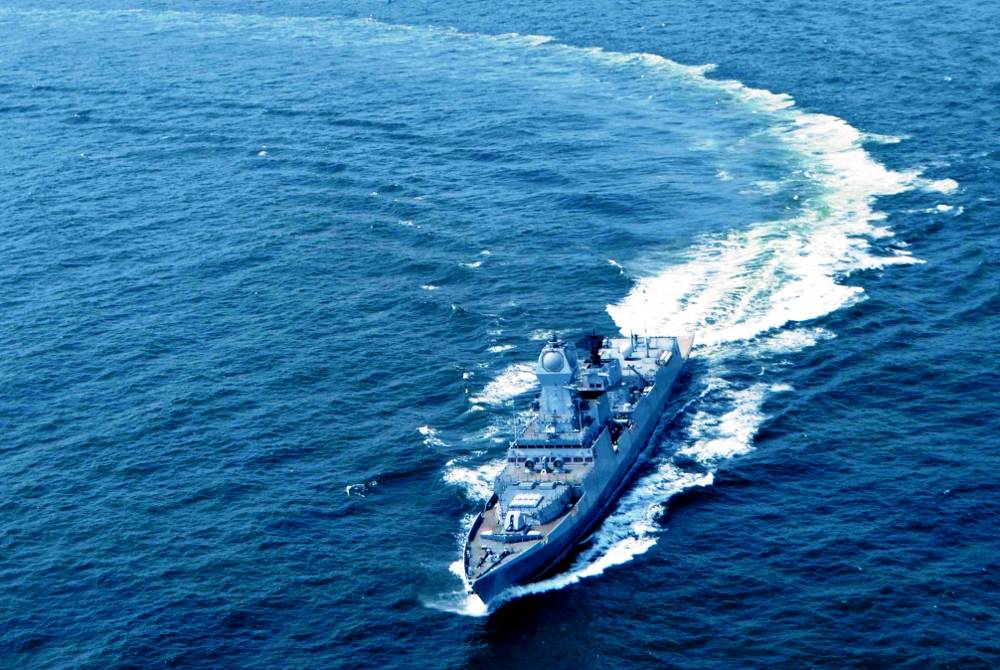
INS Kochi, Project 15A Kolkata-class guided-missile destroyer of the Indian Navy, underway at sea during sea trials — one of the warships deployed in Operation Urja Suraksha
INS Kochi, a Project 15A Kolkata-class guided-missile destroyer, was among the five to seven frontline warships India deployed to the Gulf of Oman under Operation Urja Suraksha from March 25, 2026 — the largest Indian naval presence in the Persian Gulf in over three decades. The escort operation depended not on treaty rights but on Iranian tolerance; on April 19, the same day Doval sat with three Saudi ministers in Riyadh, Iran fired on two Indian-flagged commercial vessels in the Strait. Photo: Indian Navy / GODL-India

The operation exposed a paradox in India’s Gulf posture that Doval’s diplomacy cannot resolve. India deployed naval assets to protect commercial interests in waters that Iran claims to control, while simultaneously purchasing Iranian crude under GL U and coordinating transit with the same Iranian naval forces that had fired on Indian ships weeks earlier. Tehran tolerated the escorts because India remained one of the only major consumers still buying Iranian oil directly; Riyadh tolerated the Iranian oil purchases because India remained one of Saudi Arabia’s top three crude customers. The arrangement functions for as long as the war stays at an intensity level where both sides can afford to grant India its exceptions — and it fails the moment either side decides that Indian commerce has become expendable.

Who Excluded India From the Table?

The International Institute for Strategic Studies, in a May 2026 assessment, identified what it called “a new Middle Eastern quadrilateral” — Turkey, Saudi Arabia, Egypt, and Pakistan — describing a structural shift “from reactive coordination to institutionalised consultation.” Qatar operates alongside the grouping, and Foreign Policy flagged the formation in a July 1 analysis that explicitly noted India’s absence. The exclusion is not a temporary oversight that Doval’s shuttle diplomacy might reverse — it is an architectural fact rooted in the reality that the three ceasefire tracks governing this war’s diplomatic endgame were constructed without Indian participation and operate without Indian input.

Pakistan brokered the April 8 two-week ceasefire that became the war’s first pause; Oman has hosted the indirect US-Iran talks in Muscat that remain the only channel where Washington and Tehran communicate through intermediaries; Qatar took over the lead mediation role in mid-May when the Islamabad process stalled. One analyst, writing for Cyberdelegate, described India’s absence from all three tracks as “nothing short of a political and diplomatic catastrophe” — a phrase that overstates the damage to India but captures with uncomfortable accuracy the gap between New Delhi’s self-image as an indispensable global power and its actual position in the rooms where the war’s endgame is being negotiated.

Doval’s visits do not fill this gap; they operate in an entirely different register. What he discusses with Prince Faisal is not how to end the war but how to protect a bilateral trade relationship exceeding $41 billion, a GCC free trade agreement whose negotiations formally launched on February 24 — four days before Hormuz closed — and the energy and maritime corridor arrangements that keep Indian commerce moving while the fighting continues. India’s total GCC trade, representing more than 15 per cent of its global total, is what buys Doval his three-minister receptions in Riyadh — even as the ceasefire table, where the decisions that would actually end India’s chokepoint crisis are being made, remains a room he has not been invited to enter.

The Jeddah Template

This is not the first time India has sent its National Security Adviser to a Gulf capital during someone else’s war. In August 2023, Doval attended Saudi Arabia-hosted Ukraine peace talks in Jeddah — the same formula of high-profile presence at a conflict negotiation where India held no mandate, controlled no variable, and sought no outcome beyond being seen in the room and mentioned in the readout. Fair Observer described India’s approach with a precision that now reads as prophecy: “India presenting itself as a peacemaker is more beneficial for it compared to actually mediating peace.” The sentence applies, without alteration, to every one of Doval’s 2026 Gulf visits.

The strategic-autonomy doctrine that governs Indian foreign policy — evolved from Cold War non-alignment into what academics call “calibrated multi-alignment” — permits this kind of performative engagement because it presupposes that India can maintain parallel relationships with antagonistic powers without ever being forced to choose. Asia Times, in an April 2026 analysis, framed the result as “a textbook case of strategic autonomy under duress, with New Delhi tied into a dense web of relationships that pull it in different directions at once,” adding that “what looks like hesitation is, in many ways, the price of strategic autonomy.” The Diplomat, writing in March, was less sympathetic: “India’s strategic autonomy works well during peacetime but becomes costly during active conflict, when silence on one side is read as endorsement of the other.”

Tehran has read India’s silence, and it has not read it favourably. Modi’s February 2026 state visit to the Knesset, during which the India-Israel relationship was upgraded to a “Special Strategic Partnership,” placed New Delhi in an alignment that Iran’s state media immediately registered. PressTV, Iran’s English-language outlet, declared in May: “I don’t think the Indian government is doing any balancing act. It has chosen to be with Israel and the UAE.” The accusation is not wholly accurate — India’s GL U oil imports from Iran and its Operation Urja Suraksha naval coordination with Iranian authorities demonstrate active engagement with both camps — but it exposes how Tehran reads India’s positioning, and a mediator whom one party does not regard as neutral is not, in any operational sense, a mediator at all.

What Does Doval Take Home?

The answer depends on whether success means influence over the war’s outcome or insulation from its costs, and everything about India’s seven-month Gulf engagement suggests Doval’s mandate is the latter. India has assembled a protective perimeter that is narrow, contingent, and built from bilateral exceptions rather than institutional architecture: naval escorts through the Gulf of Oman that depend on Iranian tolerance, oil imports under a US licence that can be revoked, a trade relationship with Riyadh that survives because Saudi Arabia needs India’s demand as badly as India needs Saudi crude, and a diaspora corridor that functions because both sides gain more from Indian remittance flows than from disrupting them.

The perimeter has the structural weakness that Bhardwaj’s ISAS analysis identified: it is entirely bilateral, constructed through parallel conversations with each counterparty, and it collapses the moment either side decides that the cost of granting India its exceptions exceeds the benefit of maintaining them. Iran demonstrated this on April 19 when it fired on two Indian ships, and India demonstrated that it could not prevent the violation — only protest after the fact and summon an envoy. The IMF’s downgrade of Saudi growth to 1.7 per cent on the Hormuz disruption applies in diluted but real form to India: both economies need the Strait open, both need this war to end before the fiscal damage becomes structural, and neither controls the mechanism by which it ends.

What Doval takes home from his third Riyadh visit is what he carried from the first two: bilateral assurance, not multilateral resolution. The 34 million barrels still moving through Hormuz on fleets the market cannot track include Indian-contracted cargoes whose continued passage rests on a diplomatic arrangement that has already been violated once and can be revoked whenever Tehran decides the cost exceeds the benefit. The rupee touched its historic low, hundreds of thousands of Indian workers came home from the Gulf, the LPG supply chain broke, the crude basket peaked — and India’s National Security Adviser went to Riyadh three times, each visit producing bilateral concessions designed to keep India’s exposure manageable while Pakistan, Qatar, and Oman do the structural work of ending the war.

The MEA has described each of Doval’s visits with the same word — “helpful” — and has not specified what was helped. The Bab al-Mandeb blockade that closed the day before his third visit has not been lifted, the GL U licence that keeps Indian refineries running remains at Washington’s discretion, and nine million Indian workers in the GCC are still waiting to find out whether the bilateral exceptions Doval negotiated on their behalf will hold.

Frequently Asked Questions

Has India ever faced the simultaneous closure of both Hormuz and Bab al-Mandeb?

No, and the absence of precedent is what makes the 2026 crisis structurally different from every previous Gulf disruption India has weathered. During the 1984–88 Tanker War between Iran and Iraq, both sides targeted oil exports and neutral shipping, but Hormuz was never formally closed — the US Navy’s Operation Earnest Will escorted reflagged Kuwaiti tankers through the Strait from 1987, and Indian oil imports continued with disruption but not interdiction. During the 2023–24 Houthi Red Sea campaign, Bab al-Mandeb transit was severely disrupted and major container lines rerouted around the Cape of Good Hope, but Hormuz remained open, allowing India to absorb the Red Sea losses by increasing direct Gulf-route crude shipments. The 2026 crisis is the first in which both chokepoints closed within the same conflict cycle, eliminating every bypass option India had previously relied on and creating the dual-dependency exposure that defines Doval’s mandate.

What specific OFAC enforcement actions targeted Indian entities?

In October and November 2025, the US Treasury’s Office of Foreign Assets Control designated eight to ten Indian nationals and nine to ten Indian companies — including RN Ship Management, a Mumbai-registered shipping firm, and TR6 Petro India — for facilitating India-Iran oil trade in violation of existing US sanctions on Iranian petroleum exports. The designations targeted entities involved in shipping, brokerage, and financial intermediation for Iranian crude cargoes, and they predated General License U by several months — creating a sequence in which Washington first penalised Indian companies for doing what it subsequently authorised, under tightly controlled conditions, a smaller subset of state refiners to do. The enforcement wave constrained India’s ability to use Iranian crude as an independent foreign-policy instrument, because any Indian entity operating outside the GL U framework continued to face secondary sanctions — a constraint that ensures Washington retains effective veto power over India’s Iran energy channel regardless of what Doval negotiates bilaterally with Tehran or Riyadh.

How does Operation Urja Suraksha compare to India’s previous Gulf naval operations?

Operation Urja Suraksha is India’s largest sustained naval deployment to the Persian Gulf since Operation Shelter during the 1990–91 Gulf War, when the Indian Navy participated in the evacuation of over 170,000 Indian nationals from Kuwait following Iraq’s invasion. The 2026 operation differs fundamentally in mandate: Shelter was a civilian evacuation completed in weeks, while Urja Suraksha conducts ongoing commercial-tanker escort duties through contested waters — a mission that places Indian warships in daily operational proximity to Iranian naval forces and stretches the definition of non-alignment without formally abandoning it. India’s most recent Gulf-area naval operation prior to 2026 was Operation Raahat in 2015, which evacuated 4,640 Indian nationals and 960 foreign citizens from Yemen during the Saudi-led coalition’s air campaign; that operation lasted days rather than months and did not involve sustained escort duties in waters claimed by a belligerent state.

Is India part of any active ceasefire negotiation track?

As of July 21, 2026, India does not participate in any of the three active ceasefire or de-escalation tracks. The reason is structural rather than diplomatic: the IISS-identified quadrilateral of Turkey, Saudi Arabia, Egypt, and Pakistan is bound by NATO membership, defence-industrial agreements, and military-manpower partnerships that India does not share with any GCC state. India’s relationship with the Gulf is commercial and energy-based rather than security-institutional — it does not station forces in the region, holds no mutual defence commitments with GCC members, and has no formal role in any US-led Gulf security architecture. Doval’s bilateral visits to Riyadh operate in a separate channel from the ceasefire architecture entirely, and there is no current diplomatic mechanism by which India could acquire a seat at the negotiating table even if Riyadh wanted to offer one.

NASA MODIS satellite image of the Strait of Hormuz — the 21-mile chokepoint between Iran (north) and Oman and the UAE (south) through which 17% of global oil supply transited before the February 2026 closure
Previous Story

Saudi Arabia Cannot Afford the War or Influence the Peace

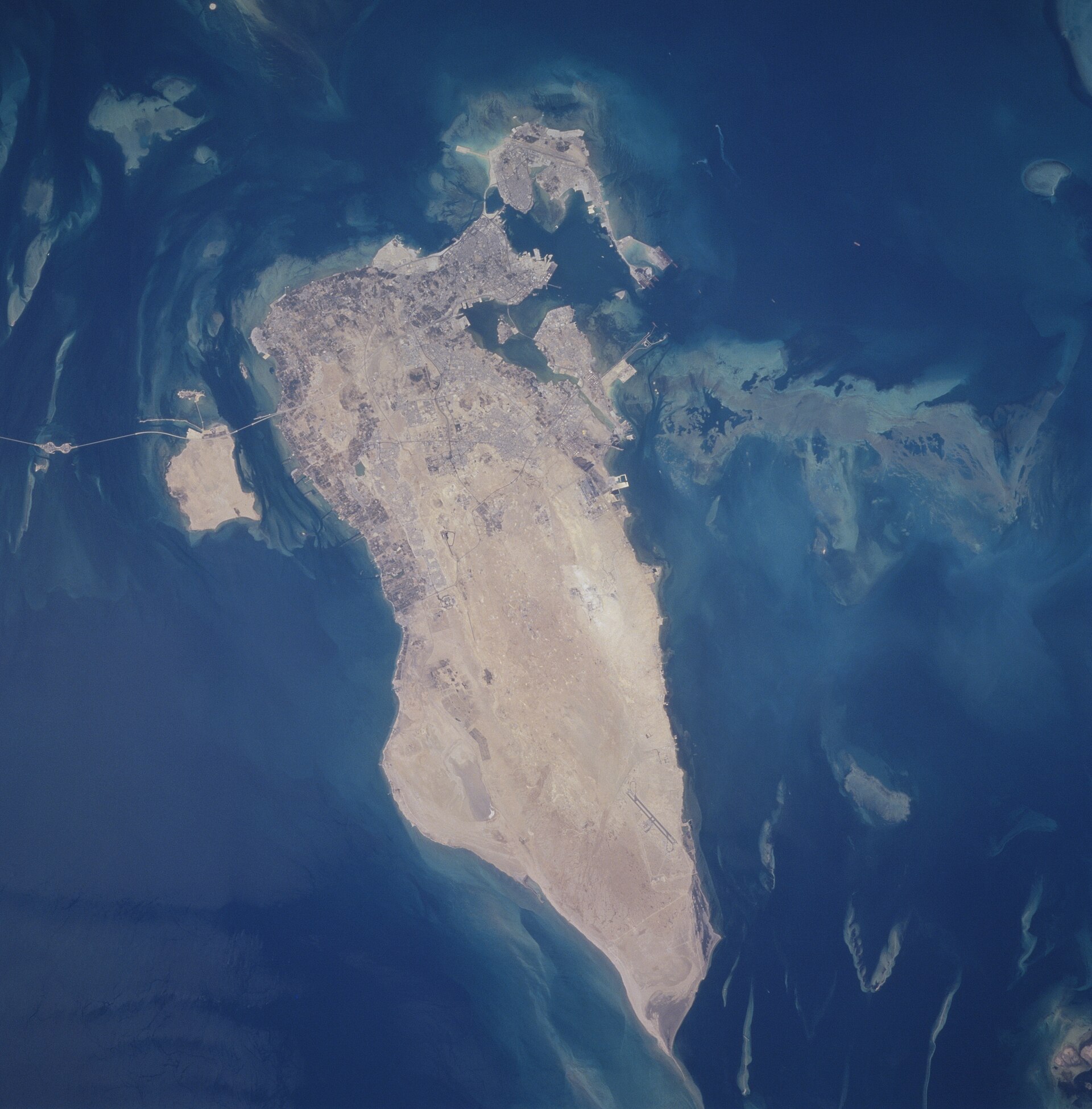
NASA satellite photograph of Bahrain island in the Persian Gulf, showing Manama in the north and the King Fahd Causeway to Saudi Arabia — the island nation where Amazon Web Services ME-South-1 cloud region was struck by IRGC cruise missiles in July 2026
Next Story

Bahrain Held the Data — Riyadh Held the Vision

Latest from Diplomacy & Geopolitics

The HOS Daily Brief

The Middle East briefing 3,000+ readers start their day with.

One email. Every weekday morning. Free.

Something went wrong. Please try again.