LONDON — Only 27 commercial vessels per day transited the Strait of Hormuz with active AIS transponders in late June and early July 2026, according to IMF PortWatch and straits.live tracking data — 32 percent of the pre-crisis baseline of approximately 84 daily commercial transits. On July 4, the count fell to 25: 15 inbound, 10 outbound, with four additional outbound tankers reversing course after receiving VHF radio warnings from the Islamic Revolutionary Guard Corps, Bloomberg reported.
n
Saudi Arabia has nonetheless shipped 34 million barrels of crude through the same waterway since the June 17 ceasefire, according to Kpler cargo-tracking data — more than double the 15 million barrels that moved between March 9 and June 17. The reconciliation lies in who is carrying the oil: state-backed fleets operating under sovereign insurance coverage and dark tankers transiting without AIS broadcast, not the independent commercial operators who transport most of the world’s seaborne crude and who remain priced out by war-risk premiums at eight times pre-crisis levels.
The House of Saud Daily Briefing
Saudi Arabia's news in 3 minutes, every morning. Free. See today's issue
n
n
Table of Contents
n
- n
- Twenty-Seven Ships and Thirty-Four Million Barrels
- Who Is Moving the Oil?
- What Does 2 Percent of Hull Value Cost a VLCC Operator?
- Why Has the Conflict Zone Designation Not Been Lifted?
- Mines, IRGC Corridors, and the $40 Billion Backstop
- Background: The Insurance Weapon From the Tanker War to 2026
- Frequently Asked Questions
- n
n
n
n
n
n
n
n
n
n
n
Twenty-Seven Ships and Thirty-Four Million Barrels
n
At roughly 2 million barrels per Very Large Crude Carrier, 34 million barrels over 18 days — June 17 to July 5 — requires approximately 19 VLCC-equivalent laden transits, or just over one per day. That volume is compatible with 27 daily AIS-broadcasting transits only if a disproportionate share of those ships are supertankers carrying full cargoes, rather than the mix of vessel types that composed pre-crisis Hormuz traffic.
n
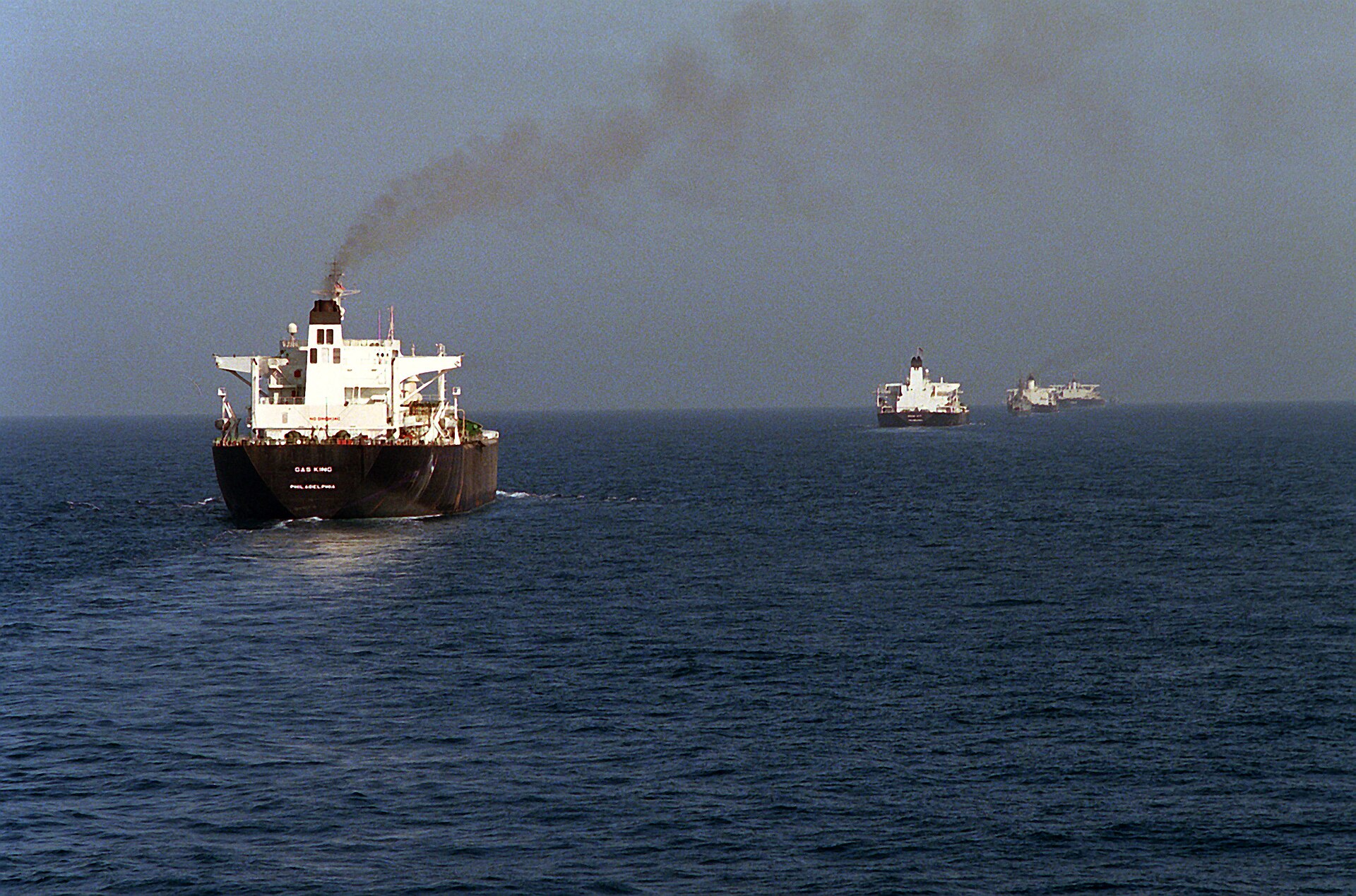
Before March 2026, crude tankers accounted for roughly 40 percent of daily Hormuz transits, with LNG carriers serving Qatar’s North Field exports, container feeders, dry-bulk ships, and roll-on/roll-off vehicle carriers making up the balance. At 27 ships per day — roughly one-third of the strait’s designed commercial capacity, according to IMF PortWatch — every vessel type competes for passage through the two temporary corridors established around the mined central traffic-separation lanes.
nn
On July 7, the IRGC fired a missile at the Al Rekayyat, a Nakilat Q-Flex LNG carrier, striking its port side and starting an engine room fire as it used the Oman-coordinated southern corridor. The strike confirmed that the route dispute — Iran’s claim to designate “authorised” transit corridors — is no longer a legal abstraction. Qatar’s state LNG fleet, which must transit Hormuz on every voyage, is now a confirmed IRGC target. Iran Hit the Host details the strike and its implications for Hormuz traffic.
n
Saudi crude exports reached 6.3 million barrels per day over the six days ending July 1, according to Kpler, approximately 90 percent of pre-war output. Those barrels moved on Bahri supertankers, COSCO charters, and AIS-dark tonnage. On July 1, only five vessels transited the strait in either direction, Insurance Business Magazine reported — a single-day low that nonetheless did not interrupt Saudi export flows as tracked by cargo-arrival data at Asian discharge ports.
Six days later, the calculus shifted. On July 7, Iran struck the Bahri-operated VLCC Wedyan sixteen nautical miles east of Khor Fakkan — the first direct hit on a Saudi state tanker since the conflict began — demonstrating that the dark-fleet and state-charter arrangement that sustained export flows does not immunize individual vessels from Iranian enforcement action.
n
Who Is Moving the Oil?
n
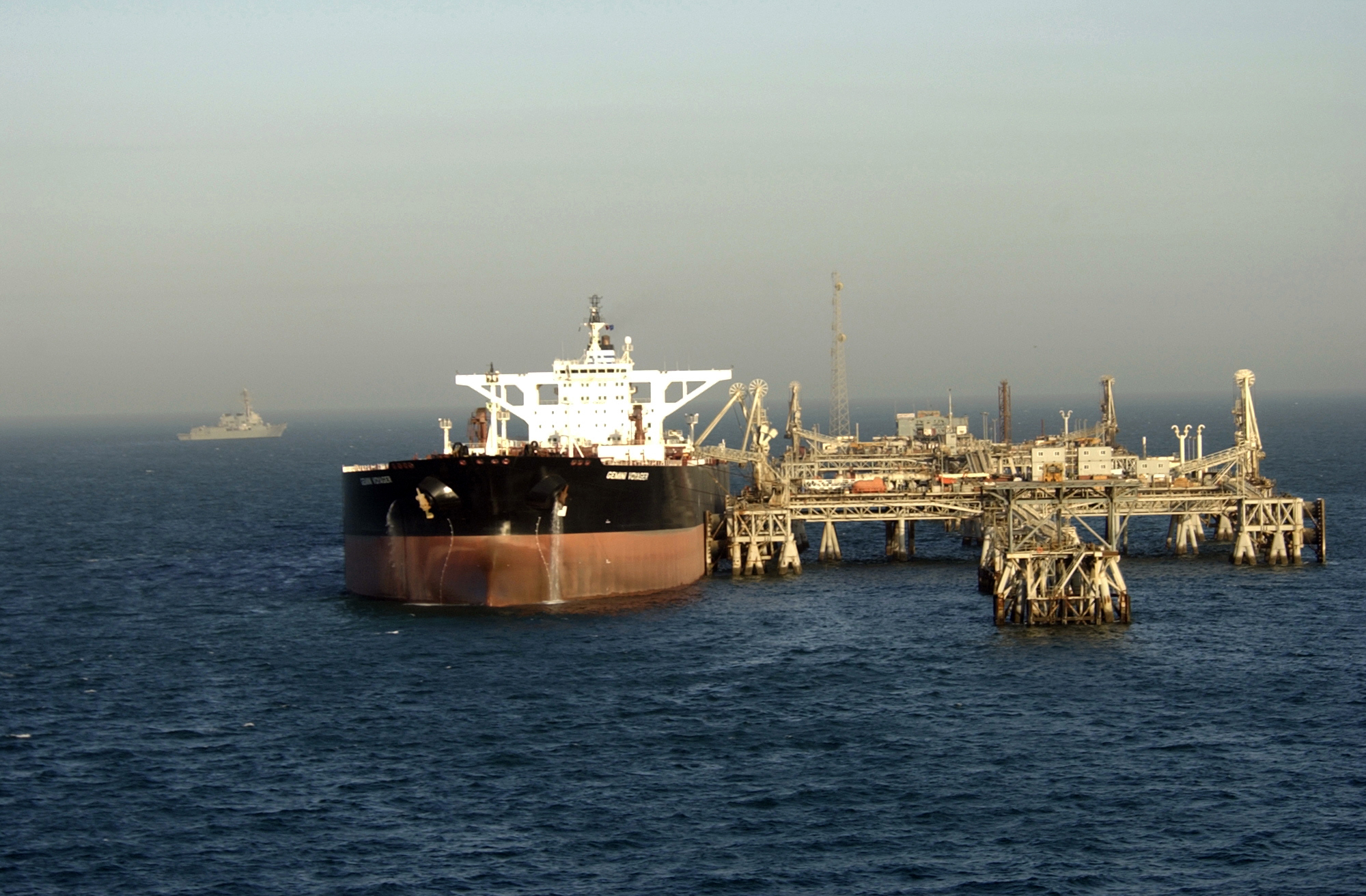
The post-ceasefire Hormuz fleet divides into three categories, each operating under different insurance regimes. State-backed operators — Bahri (Saudi Aramco’s shipping arm), COSCO’s energy transport division, and the National Iranian Tanker Company — transit with sovereign or quasi-sovereign insurance that bypasses the commercial war-risk market entirely. Bahri’s vessels carry Saudi government-backed indemnity; COSCO’s tankers operate under Chinese state reinsurance; NITC has been self-insured since 2012, when European P&I clubs withdrew coverage under the Iran sanctions regime.
n
Bahri has confirmed at least four supertanker transits since the ceasefire. Aramco conducted rare spot sales of at least 6 million barrels to buyers in South Korea, Japan, and China — markets it typically serves through long-term contracts with Aramco-arranged shipping. Those spot cargoes moved on Bahri hulls and, according to Lloyd’s List, on chartered tonnage including at least two vessels flagged to the Marshall Islands with undisclosed beneficial ownership.
n
Dark tankers — vessels operating without AIS transponders — form the second category. On July 4, satellite radar identified at least two vessels transiting Hormuz without corresponding AIS signals, Bloomberg reported. The shadow fleet, estimated at over 1,300 vessels comprising approximately 20 percent of global tanker capacity, has expanded its Hormuz presence as commercial operators withdrew. Of vessels currently transiting the strait, 26 percent are Iranian-owned, 17 percent Greek-flagged, and 9 percent Chinese, according to TankerTrackers.com vessel-identification data.
n
The structural absence is the independent commercial operator — charterers, tramp tankers, and mid-size fleet companies that carry the marginal barrel in normal markets. Their retreat is reflected in Saudi pricing: Aramco’s Arab Light official selling price has fallen from $19.50 per barrel over the Oman/Dubai benchmark in May to $9.50 in July; on July 6, Aramco set the August differential at negative $1.50, its first discount since the 2020 price war. Sinopec, China’s largest refiner, made zero Saudi crude purchases for a second consecutive month.
n
n
What Does 2 Percent of Hull Value Cost a VLCC Operator?
n
A modern VLCC carries a hull-and-machinery insured value of $100 million to $120 million. At the pre-crisis war-risk rate of 0.25 percent, a single Hormuz transit added $250,000 to $300,000 to voyage costs. At the current post-ceasefire rate of 2 percent — after broker discounts, per the Financial Times — the same transit costs $2 million to $2.4 million.
n
| Metric | Pre-Crisis (Feb 2026) | Post-Ceasefire (Jul 2026) | Change |
|---|---|---|---|
| War-risk premium (% of hull value) | 0.25% | ~2% | 8x |
| VLCC single-transit cost ($100–120M hull) | $250,000–$300,000 | $2–2.4 million | 8x |
| VLCC round-trip cost | $500,000–$600,000 | $4–4.8 million | 8x |
| Daily AIS-broadcasting transits | ~84 | ~27 | –68% |
| JWC Listed Area (JWLA-033) | Not listed | Listed (since Mar 3) | — |
| P&I standard war-risk cover | Available | Excluded | — |
n
n
A VLCC loading at Ras Tanura and discharging at Ningbo transits Hormuz twice; war-risk insurance alone adds $4 million to $4.8 million per round trip. If the PGSA’s $1-per-barrel transit fee reactivates when the August 18 suspension lapses, a laden VLCC would face an additional $2 million per passage, bringing total incremental costs above $8 million before hull-and-machinery cover, protection and indemnity, or cargo insurance.
Iran Kept Hormuz Open — at Two Million a Ship examines how the PGSA transit-fee regime functions alongside the 89 percent collapse in commercial traffic — and what the August Arab Light OSP discount signals about Aramco’s commercial response to Iran’s selective interdiction system.
n
At the crisis peak in mid-March 2026, some underwriters quoted war-risk premiums of up to 10 percent of hull value — $10 million to $12 million for a single VLCC transit, Howden Re documented on March 27. A Suezmax carrying 1 million barrels on a typical Gulf-to-East Asia charter earns a freight margin of approximately $1 million to $1.5 million; at 2 percent of hull value, war-risk cover alone on a $60–75 million hull costs $1.2 million to $1.5 million.
n
n
Safety concerns, not insurance availability, driving reduced vessel traffic in the Strait of Hormuz.
n
— Lloyd’s Market Association, June 2026n
n
The LMA’s distinction is precise: coverage can be obtained. Lloyd’s launched a dedicated Hormuz underwriting consortium on June 19, with Chubb as lead underwriter, to provide capacity the standard Lloyd’s syndicates had not been offering for Gulf transits. The consortium writes seven-day policies; for a Suezmax operator, the war-risk premium alone consumes the voyage’s freight margin.
n
Why Has the Conflict Zone Designation Not Been Lifted?
n
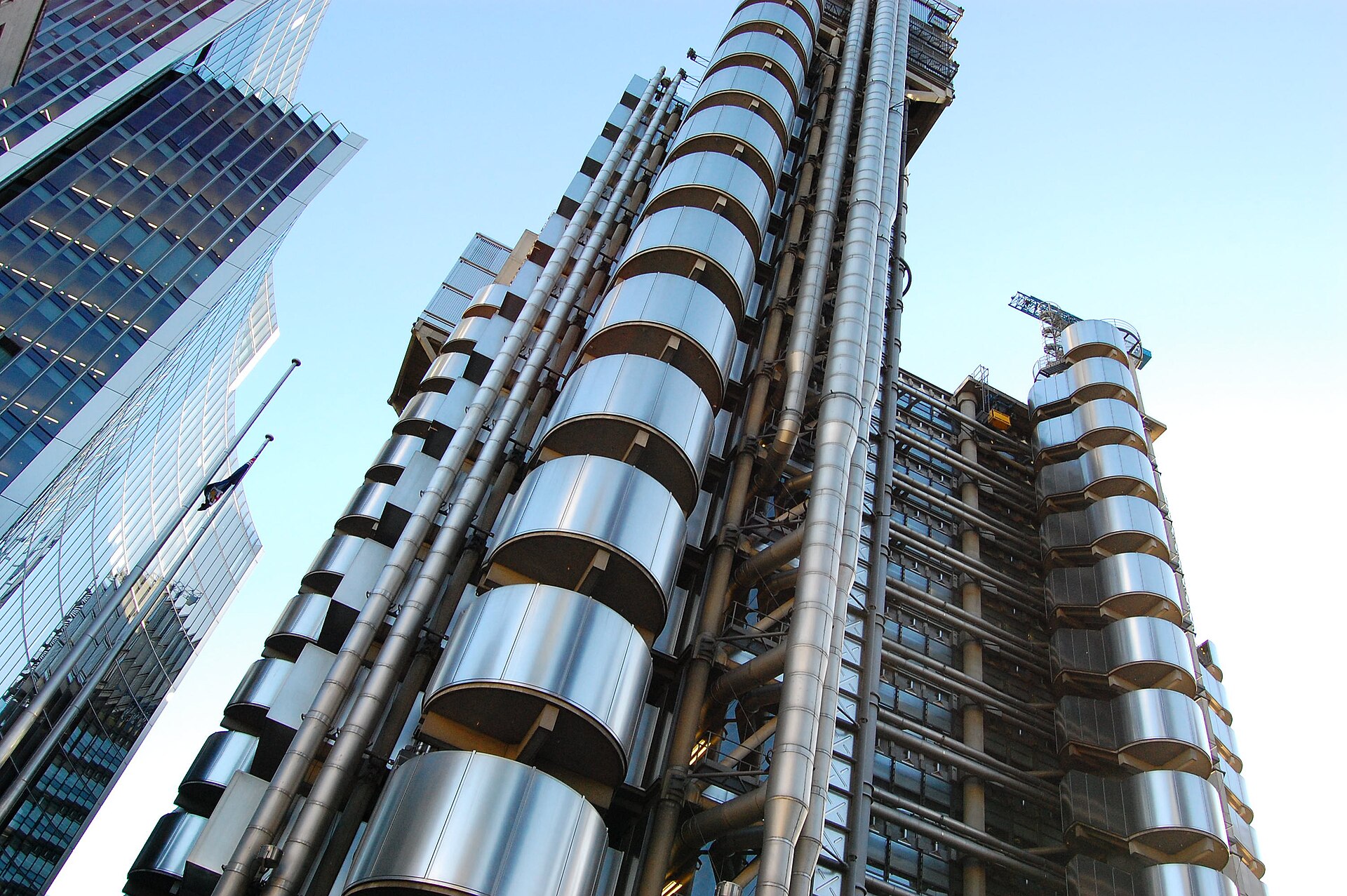
The Joint War Committee, the London-based body whose listed-areas designations determine war-risk insurance requirements for the global marine market, placed the entire Persian Gulf, Strait of Hormuz, and Gulf of Oman into its conflict-zone registry under designation JWLA-033 on March 3, 2026. The listing remains in force. No relaxation has been announced.
n
“It would be unrealistic to expect any swift relaxation in the need for voyage notifications for the Middle East,” China P&I Club stated in its June circular LP-08/2026, citing JWC guidance. The five major P&I clubs in the International Group — Gard, Skuld, NorthStandard, London P&I, and the American Club — issued blanket exclusion notices effective March 5 for Persian Gulf war-risk cover. The International Group insures approximately 90 percent of global commercial tonnage by value.
n
For a shipowner, the JWLA-033 listing triggers mandatory notification to the war-risk underwriter, additional premium payments, and explicit written confirmation of cover before entering the listed area. A vessel transiting Hormuz without valid war-risk insurance exposes the master and beneficial owner to unlimited personal liability under standard P&I club rules. The seven-day policy minimum means that any vessel entering the Gulf pays the full 2 percent premium even for a laden transit of Hormuz lasting less than eight hours.
n
n
Mines, IRGC Corridors, and the $40 Billion Backstop
n
Physical conditions in the strait reinforce the insurance market’s assessment. The US Pentagon estimated in May 2026 that full mine clearance would require six months; as of early July, central shipping lanes remain mined and two temporary corridors — narrower than the standard inbound and outbound traffic-separation scheme — are the only verified safe passages. The UK Maritime Trade Operations office maintains its Hormuz threat level at “substantial,” its second-highest classification.
n
Iran has imposed its own navigational architecture on top of the physical constraints. The PGSA requires a mandatory 40-category vessel declaration — covering ownership structure, charterer identity, crew nationalities by passport, cargo manifest, and P&I club affiliation — submitted 48 hours before transit, according to Lloyd’s List and TechTimes reporting of June 19. Vessels that deviate from Iranian-designated routes face the consequences the IRGC articulated on July 4.
n
n
Any failure to comply, deviation from the designated route, or disregard for the navigation protocols of the Islamic Republic of Iran in the Strait of Hormuz will be met with an immediate and forceful response from the armed forces.
n
— Islamic Republic of Iran Armed Forces, July 4, 2026 (PBS; The Hill)n
n
Eight vessels reversed course in or near the strait between July 4 and July 5, four after direct VHF contact from IRGC naval units on July 4, Lloyd’s List reported. Iran frames the PGSA framework — including its tiered “friendly nation” exemptions for designated states — as a safety and accountability regime under the navigational-services provisions of UNCLOS Article 26. Secretary of State Rubio dismissed the legal framework as a “game of semantics” that would “never be acceptable.”
n
The American response has been financial rather than naval. The Trump administration directed the US International Development Finance Corporation to establish a reinsurance facility of up to $40 billion, covering hull, cargo, and liability for vessels transiting the Gulf — the 2026 analogue of Operation Earnest Will, the 1987 US Navy program that escorted reflagged Kuwaiti tankers during the Iran-Iraq War. As of early July, no publicly available data shows independent commercial operators returning to the strait in measurable numbers.
n
n
Background: The Insurance Weapon From the Tanker War to 2026
n
Insurance-driven commercial exclusion from strategic waterways follows a clear historical pattern. During the 1980–88 Iran-Iraq Tanker War, both sides attacked over 400 commercial vessels, and war-risk premiums surged 300 percent within weeks. The Strait of Hormuz remained operationally open throughout the conflict — the physical route was never blocked — but commercial carriers withdrew until the United States launched Operation Earnest Will in 1987, reflagging 11 Kuwaiti tankers under the American flag and providing US Navy escorts for 127 convoys.
n
The 2024–25 Red Sea disruption demonstrated the same mechanism at Bab el-Mandeb. Houthi attacks on commercial shipping redirected global container flows around the Cape of Good Hope without physically closing the strait; insurance pricing, not naval blockade, was the operative instrument. The Hormuz crisis of 2026 follows the same structural logic at far greater scale: roughly 21 million barrels per day of crude and condensate transit Hormuz, compared with approximately 5 million through Bab el-Mandeb.
n
The 2026 situation differs from both precedents in one respect. The US military posture in the Gulf is contracting: the drawdown from Prince Sultan Air Base, the destruction of the sole E-3G Sentry AWACS aircraft on March 27, and 86-percent depletion of PAC-3 interceptor stocks mean that a 1987-style naval escort operation would lack the air-defense umbrella that protected Operation Earnest Will convoys. The DFC reinsurance facility — up to $40 billion in government-backed cover — fills the gap with capital rather than carrier groups.
n
The World Economic Forum noted in April 2026 that “governments are increasingly willing to directly intervene to preserve economic continuity aligned with geoeconomic priorities,” adding that such intervention “not only provides backstops but distorts risk-pricing and clusters risk along geopolitical lines.” Brent crude closed at $70.82 on July 4, below the $72.48 level at which it traded before the conflict began — a price that assumes unimpeded Gulf supply from a strait where 68 percent of pre-crisis commercial traffic has not returned.
n
On July 19, the bypass itself came under direct attack: Iran struck the SAMREF refinery at Yanbu, the western terminus of the East-West Pipeline carrying 7 million bpd — the first Iranian strike on the Red Sea corridor Saudi Arabia built specifically to outlast a Hormuz closure.
Frequently Asked Questions
n
How does Iran justify its Hormuz transit regime under international law?
n
Iran frames PGSA transit fees as “navigational services” charges permitted under UNCLOS Articles 26(2) and 42, and its state media describes the mandatory insurance and declaration requirements as “safety and accountability measures.” Iran signed UNCLOS in 1982 but has never ratified the convention, and at signature declared that the transit-passage provisions constitute a “package deal” — a standing reservation Tehran invokes to reject any obligation to provide free and unimpeded passage through the strait.
n
How many ships were stranded at the peak of the crisis?
n
Aramco CEO Amin Nasser stated on May 11, 2026, that over 600 ships — mostly tankers — were trapped inside the Persian Gulf, with another 240 waiting outside the strait. The combined figure of approximately 840 vessels at the peak included crude tankers, product tankers, LNG carriers, and dry-bulk ships unable to transit in either direction. As of early July, approximately 340 vessels remain unable or unwilling to transit, with some owners waiting for further insurance-premium declines or a lifting of the JWC JWLA-033 designation before ordering passage.
n
Which nations receive preferential treatment under Iran’s transit framework?
n
Iran has designated China, Russia, India, Iraq, and Pakistan as “friendly nations” whose vessels receive expedited transit approval and reduced scrutiny under the PGSA declaration process. The tiered classification grants unequal access to an international waterway based on bilateral political relationships, a framework incompatible with the non-discriminatory transit-passage regime codified in UNCLOS Part III. Vessels flagged to non-designated states — including most European, Japanese, and South Korean commercial tonnage — face the full 48-hour, 40-category declaration process and IRGC route-compliance monitoring. The legal architecture underpinning that tiered regime is now under simultaneous pressure from a second direction: NATO’s Ankara summit placed Hormuz on the Alliance’s permanent agenda, with a freedom-of-navigation declaration that directly contests Iran’s service-fee framework — and Saudi Arabia, whose tankers carry the largest share of Hormuz transit volume, was not represented in the room.
n
What would a lapse of the PGSA fee suspension cost?
n
The PGSA’s transit fee of $1 per barrel of crude oil was suspended as part of the June 17 ceasefire terms. If the suspension lapses on August 18 without a renewed agreement, the fee reactivates automatically with $253 million in previously accrued charges becoming due and an additional $5.5 million per day accumulating. A laden VLCC carrying 2 million barrels would face a $2 million PGSA fee per transit — on top of $2 million to $2.4 million in war-risk insurance, creating combined incremental costs exceeding $4 million for a single passage. The IMF’s July 2026 WEO update locked in an $89-per-barrel Brent average premised on mid-July Hormuz normalization — an assumption the IMF’s own publication date invalidated, with commercial crossings at 31 per day against a pre-war baseline of 120 to 140.
On July 10, the Lloyd’s List designation of effective closure confirmed zero AIS-visible transits on July 9 — down from 33 the previous day — meaning the dark fleet and pipeline bypass arithmetic that covers only 37.5 percent of normal throughput now carries the entire market premise.
Saudi Arabia’s East-West Pipeline, the primary bypass route for Hormuz-avoiding crude, now faces a simultaneous constraint: a planned 2 million bpd capacity expansion has been announced at the same moment that Yanbu port is operating below its existing pipeline’s throughput ceiling and under active Houthi maritime blockade. India — which sources approximately 45 percent of its crude oil from Gulf states whose exports transit these 34 million barrels — sent National Security Adviser Ajit Doval to Riyadh for a third visit on July 21; the pattern across those visits documents how India’s Gulf oil dependency has driven an intensive diplomatic engagement that has produced no mechanism for reopening either chokepoint.
A 20% US transit toll, announced on July 13 as part of the reimposition of the naval blockade, has since added a second fee layer for every cargo that reaches the strait. CENTCOM’s shift from cargo redirection to vessel disablement — confirmed by the July 15 Hellfire strike on the M/T Belma approaching Kharg Island — tightened that closure further, with Aramco’s $11 OSP cut converting the blockade’s elimination of rival supply into a market-share strategy. Night Ten’s strikes on Bandar Abbas Naval Base struck the submarine facility coordinating that enforcement, destroying six highway bridges and severing rail links across Hormozgan province.
The House of Saud Daily Briefing
Saudi Arabia's news in 3 minutes, every morning. Free. See today's issue