
Correction, October 12, 2026: An earlier version of this article said Iran’s foreign minister presented a written sixty-day ceasefire road map to Steve Witkoff and Jared Kushner in a three-hour session mediated by Qatar, Pakistan and Egypt; Abbas Araghchi met Witkoff on September 22, and Iran’s proposal was a seven-day roadmap conveyed to Washington through Qatar. The earlier version and its headline also said Saudi Arabia had asked to postpone Iran-Gulf talks in Oman on September 13–14, which we could not verify and have removed. It also misdated the East-West pipeline shutdown, reported a Brent price below $100 that is contradicted by market reports, said the Islamabad memorandum committed the GCC to a $300 billion reconstruction fund when its text names no funders, reported casualties from the September 16 drone aimed at Mecca that no source gives, said Saudi Arabia had secretly struck Iran, and included quotations and statements attributed to Donald Trump, Marco Rubio, Steven Cook, Masoud Pezeshkian, Iran’s UN ambassador, Gulf states and several think tanks that we could not verify. These have been corrected or removed, and the headline has been changed.
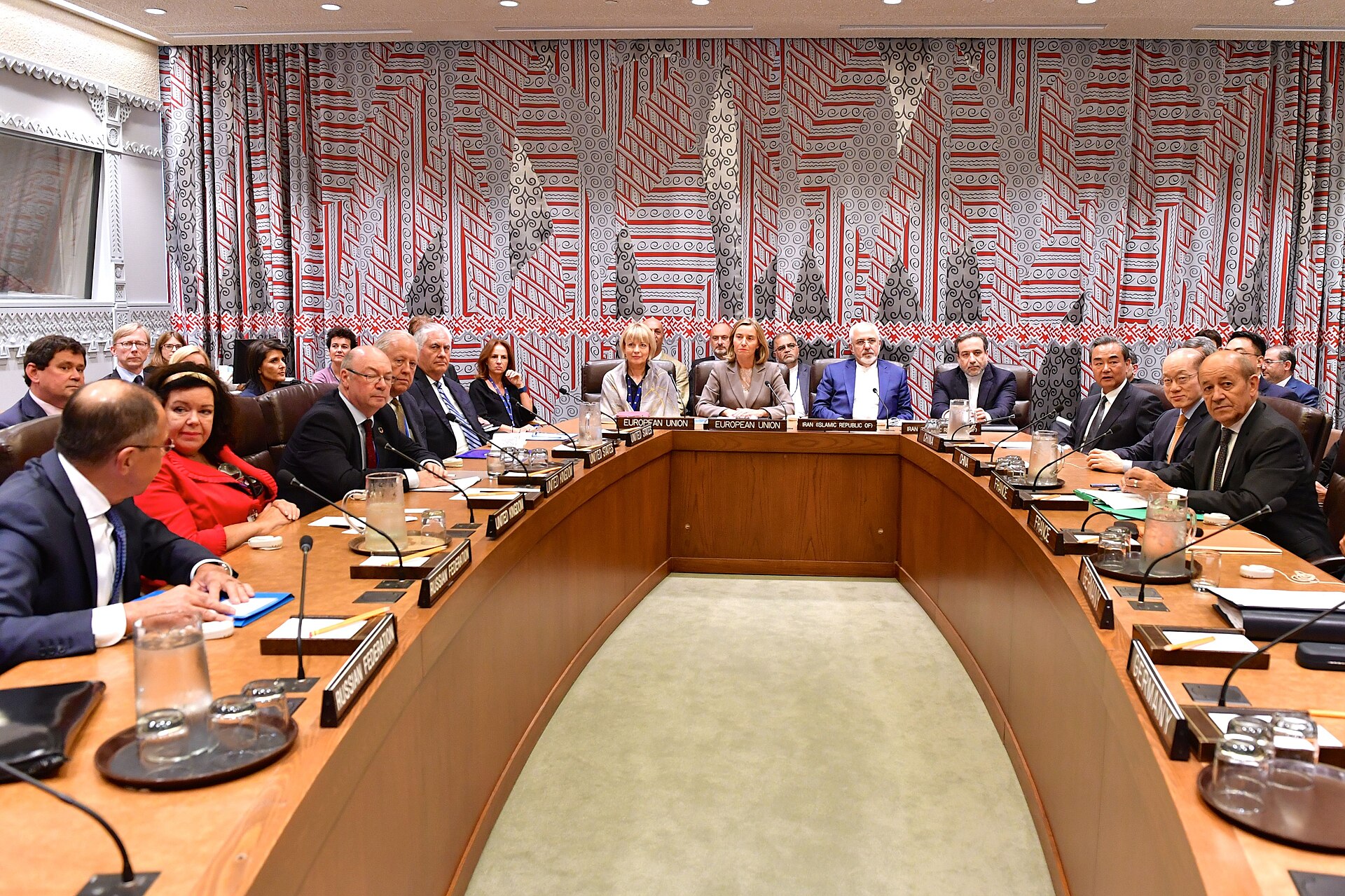
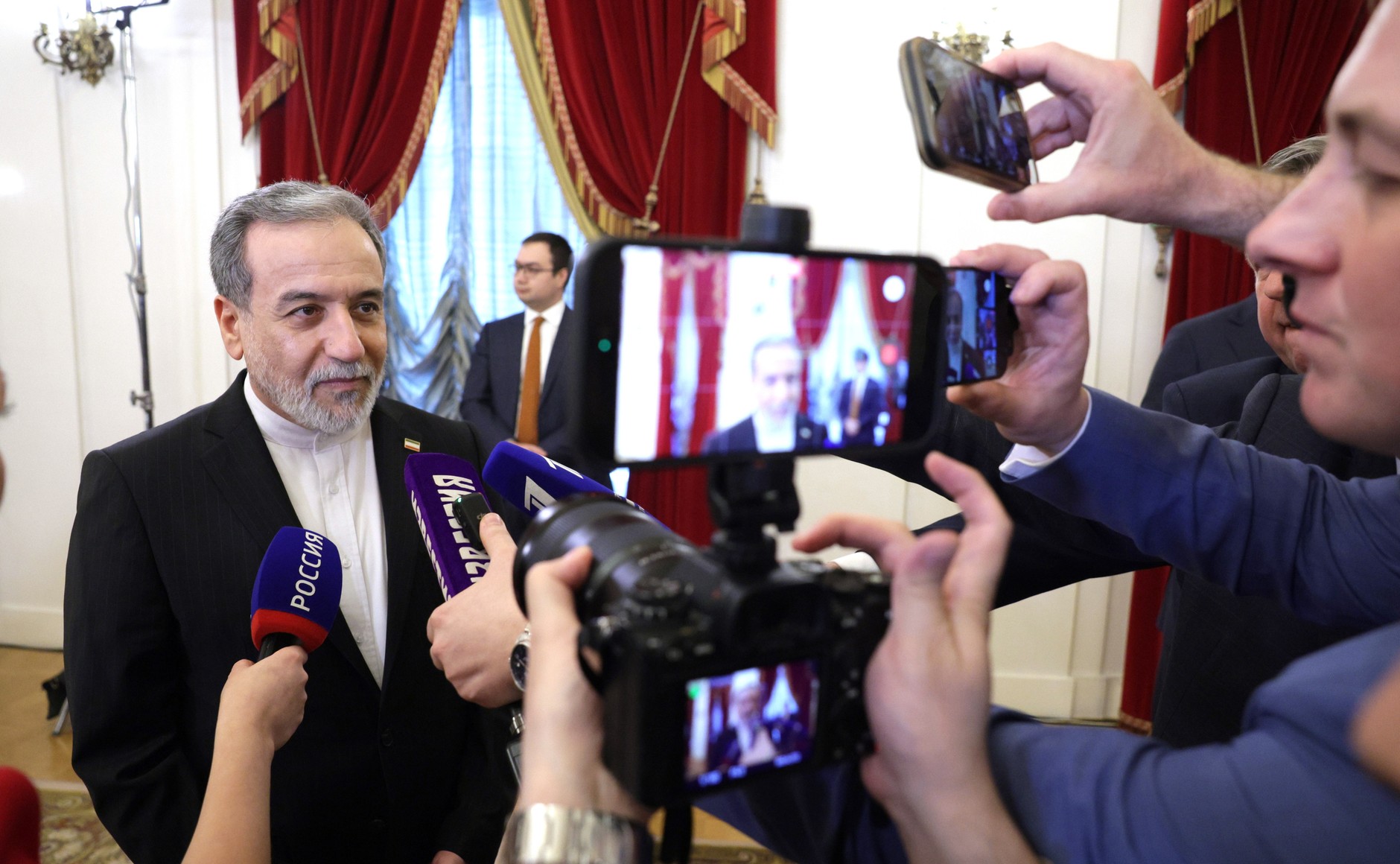
NEW YORK — Iran’s Foreign Minister Abbas Araghchi met US envoy Steve Witkoff on the sidelines of the United Nations General Assembly on September 22, in talks Witkoff described as lengthy. Iran then formally submitted to Washington, through Qatar, a seven-day roadmap to reopen the Strait of Hormuz. Saudi Arabia was not in the room.
The roadmap proposes a regional ceasefire, a reopening of the Strait of Hormuz on day six, and talks on a final deal from day seven, in a conflict now in its two hundred and seventh day. It is the second formal framework of the 2026 war to which Saudi Arabia is not a party. The first was the Islamabad Memorandum of Understanding, read out on June 17, which Pakistan said Saudi Arabia had helped bring about but to which Riyadh was not a party — and in which the United States undertook, with unnamed regional partners, to develop a reconstruction plan of at least $300 billion.
Table of Contents
- What Did Iran Table at the United Nations?
- The Room Saudi Arabia Was Not In
- What Was Riyadh Facing Before New York?
- How Does the Road Map Trap Saudi Arabia?
- What Does a Hormuz Reopening Mean for Riyadh’s Oil Revenue?
- Two Frameworks, One Exclusion
- The Mecca Pact Cannot Answer New York
- Who Negotiates Hormuz If Not the States That Border It?
- Frequently Asked Questions
What Did Iran Table at the United Nations?
Iran’s roadmap, conveyed to Washington through Qatar, runs to seven days: initial steps over four to five days, the reopening of the Strait of Hormuz on day six, and talks on a final deal from day seven.
Araghchi’s conditions for reopening the Strait were specific: lifting of the US naval blockade of Iranian ports, waivers on Iranian oil sanctions, release of about $12 billion in frozen assets, and a regional ceasefire including Lebanon and Yemen. Araghchi said “the seven-day timeline will start as soon as the United States accepts this plan.”
The American response was warm in tone and cold in substance. The Wall Street Journal later reported that Trump rejected Iran’s seven-day Hormuz plan and told aides he expects to resume bombing after the November midterms — giving Saudi Arabia a timeline of sorts even as Riyadh remained outside the room where terms were being set.
The Middle East briefing 3,000+ readers start their day with.
One email. Every weekday morning. Free.
Witkoff called the meeting lengthy and said he hoped the talks would “prove constructive and promising.”
The distinction between a formally submitted proposal and a verbal one is not procedural. The Islamabad MOU demonstrated that formal frameworks generate their own momentum — even after their deadlines expire, they define the terms of the next negotiation. A verbal assurance can be walked back. A formally submitted roadmap becomes part of the record, circulated among mediators and inherited by whatever negotiation comes next. Iran presented its plan not as an opening bid but as a baseline that future talks would need to address or supersede.
The distance between Witkoff’s “constructive and promising” and the absence of any announced breakthrough is the space in which Saudi Arabia’s problem resides. Enough warmth to sustain a diplomatic track Riyadh cannot shape. Not enough progress to deliver the Hormuz reopening Riyadh needs.
The Room Saudi Arabia Was Not In
The channel was not chosen by accident. Qatar has served as an interlocutor between Tehran and Washington during the war, and it was through Doha that Iran conveyed the roadmap. Pakistan announced the Islamabad MOU in June.
What Was Riyadh Facing Before New York?
It was the East-West pipeline shutdown in the days before — a suspension announced on September 12 after attacks on the line that halted crude loadings at Yanbu — that defined the material context. With its only Red Sea export bypass disabled, Riyadh was facing negotiations from a position of acute vulnerability rather than residual strength.
The East-West pipeline was restarted at reduced capacity by September 22 — the same day Araghchi met Witkoff. The Saudi material position had improved in the ten-day interval. The diplomatic record had not.
How Does the Road Map Trap Saudi Arabia?
The proposal is constructed so that every outcome weakens Riyadh’s position. If the ceasefire succeeds, Saudi Arabia receives Hormuz reopening on US-Iran bilateral terms it did not draft. If it fails, Tehran holds a record of a formal proposal tabled without Saudi Arabia.
The trap operates through Tehran’s conditions. Iran linked sanctions relief to Hormuz reopening — not Gulf-state security guarantees. Riyadh gets the Strait back only if Washington gives Tehran what Washington alone can give: the lifting of the naval blockade, oil-sanctions waivers, the release of frozen assets. Gulf capitals are excised from the chain of concessions entirely. The regional ceasefire — which Al Jazeera reports would cover Lebanon and Yemen — is folded into a bilateral Iran-US framework rather than a multilateral arrangement the Gulf states could shape or condition.
The road map generates a paper trail that accumulates regardless of the negotiating outcome. Araghchi arrived at UNGA ready to table a formal proposal. It now sits alongside the Islamabad MOU in a growing archive of formal frameworks — each one refreshing the narrative that Tehran is the party willing to put terms on paper.
Saudi Arabia has been unable to afford the war and influence the peace simultaneously since the conflict’s early months. The UNGA road map formalises that condition. Its bilateral architecture reproduces the Islamabad MOU’s exclusion.
What Does a Hormuz Reopening Mean for Riyadh’s Oil Revenue?
Brent crude remained above $100 in late September, briefly topping $108 on September 24 after Houthi claims of strikes on Yanbu. Prices below the 2026 peak of $126.41 a barrel, reached on April 30, still expose a contradiction at the centre of Riyadh’s war economy.
Higher prices have cushioned the loss of Hormuz volumes: Aramco’s average realised crude price was $108.1 a barrel in the second quarter. That premium was generated not by Saudi pricing power but by the fear attached to Iran’s closure of the Strait and attacks on Gulf infrastructure. A successful Hormuz reopening would erode it.
| Indicator | Value | Source |
|---|---|---|
| Brent crude, September 24 (intraday high) | ~$108/bbl | Al Jazeera |
| 2026 Brent peak | $126.41/bbl | Reuters, April 30, 2026 |
| East-West pipeline design capacity | ~7 million bpd | Saudi Gazette / Al Jazeera |
| Aramco Q2 average realised crude price | $108.1/bbl | Aramco |
| Iran’s stated Hormuz reopening timeline | 7 days | Al Jazeera |
| Islamabad MOU reconstruction plan | at least $300 billion | MOU text, via Iran International |
Saudi Arabia had been rerouting about four million barrels per day through the East-West pipeline — and even that channel was shut from September 12 until a restart on September 22, with full capacity expected to take six weeks or more.
If Hormuz reopens on Iran’s terms — meaning Tehran controls the sequencing and pace — Saudi Arabia loses the war premium that has padded its revenue while gaining back a shipping lane whose availability depends on Iranian compliance with a deal Riyadh did not negotiate. If Hormuz remains closed, Brent likely stays above $100, Riyadh keeps the premium, but forfeits the export capacity that justifies its market share. The IMF cut Saudi Arabia’s 2026 growth forecast to 1.7 per cent in July.
The paradox extends beyond crude. The Islamabad MOU’s reconstruction plan of at least $300 billion names no funders, but any Gulf contribution would only materialise if the war ends on terms that include Iranian compliance. If Brent remains elevated, Riyadh can notionally afford a contribution. If prices fall on a reopened Hormuz, the fiscal margin narrows precisely as any payment would come due.
Two Frameworks, One Exclusion
The structural parallel between the Islamabad MOU and the UNGA roadmap lies in who wrote them.
The Islamabad MOU, read out on June 17 and announced by Pakistani Prime Minister Shahbaz Sharif, committed the US and Iran to a fourteen-point framework covering Hormuz navigation, Iran’s nuclear programme, and sanctions relief. Sharif credited Saudi Arabia, Qatar, Turkiye and Egypt with helping; Saudi Arabia was not a party.
By September 23 — day two hundred and seven of the war — the MOU’s sixty-day negotiating window had expired without a permanent agreement. Iran’s UNGA roadmap is the second formal framework in the same conflict, and it reproduces the same architecture: a bilateral Iran-US framework, a mediator’s channel, a fixed timeline, and Saudi Arabia positioned as a beneficiary rather than a negotiating party.
Tehran has established a pattern: formal frameworks at intervals, each refreshing the diplomatic record, with no Saudi signature on either. Washington has given Riyadh arms and concessions throughout the conflict, but it has not given Riyadh a pen.
The Mecca Pact Cannot Answer New York
The Mecca Joint Defence Agreement — signed on August 7 by Saudi Arabia, Pakistan and Turkey — was designed to provide Riyadh with the institutional security architecture the conflict had exposed as absent. It was Saudi Arabia’s answer to months of strategic exclusion: if Riyadh could not get into the bilateral room, it would build a multilateral structure outside it.
“This is a major change, and it is hard to overstate its significance.”
— Steven A. Cook, Council on Foreign Relations, on the Mecca Joint Defence Agreement, August 13, 2026
Cook also noted that the parties have not released an official text. His assessment describes the political weight of the pact, not its operational readiness — and the distinction matters when the challenge is not a military threat but a formal proposal tabled in New York. By contrast, Britain’s RAF tanker deployment, announced on September 22, and France’s commitment of soldiers, radars and defence systems to Yanbu were unilateral acts the Mecca pact did not trigger and cannot claim.
Six weeks after the Mecca signing, King Salman chaired a cabinet session that condemned the Houthi militia’s attempt to repeat its targeting of Makkah. Coming from the Custodian of the Two Holy Mosques, the condemnation cast a geopolitical conflict as a religious injury. On September 16 the coalition said it shot down a Houthi drone heading for Mecca, a claim the Houthis denied.
The Custodian title was formally adopted by King Fahd in 1986 — a frame designed for a different kind of threat. Days before the cabinet session, Turkey’s foreign minister said Ankara would have “no issues” meeting Saudi Arabia’s military needs.
The Custodian frame and the UNGA road map operate in registers that do not intersect. Iran’s proposal is written in the secular diplomatic language of ceasefires, phased timelines, and conditions-based reopening. Any accusation that Saudi Arabia is obstructing a negotiated peace would be delivered in that same secular language. The Custodian frame cannot answer it. Saudi Arabia invested in institutional architecture in Mecca.
Who Negotiates Hormuz If Not the States That Border It?
The reliance on mediators reflects a specific logic: Qatar has carried messages between Tehran and Washington during the war. But the arrangement means the states most dependent on the Strait are represented by intermediaries in the negotiations determining the Strait’s future.
Qatar’s interests in the Strait are not identical to Saudi Arabia’s. Doha’s gas exports — primarily LNG shipped from Ras Laffan — follow a different route profile than Saudi crude, and Qatar’s role as mediator requires a studied distance from the economic stakes that drive Riyadh’s position.
Iran’s roadmap proposes a regional ceasefire as part of the reopening — placing the protection of Gulf states inside a bilateral framework the Gulf states can name but cannot shape. A multilateral alternative would require Gulf states at the table.
The roadmap makes Hormuz reopening contingent on concessions only Washington can grant, negotiated in a room Riyadh was not in.
Frequently Asked Questions
What does the Islamabad MOU’s fourteen-point framework cover?
According to the text read out by a US official, the fourteen points include a ceasefire on all fronts including Lebanon, a final deal to be negotiated within 60 days, the end of the US naval blockade within 30 days, toll-free passage through Hormuz for 60 days, Iran–Oman talks on the strait’s future administration, a reconstruction plan of at least $300 billion, the termination of sanctions, oil-sanctions waivers, the release of frozen Iranian funds, and Iran’s pledge not to develop nuclear weapons. The scope of the fourteen points helps explain why the sixty-day window expired without resolution.
Three weeks after Araghchi presented that roadmap in New York, he called Riyadh directly. Iran’s subsequent offer to “facilitate dialogue between Saudi Arabia and Yemen” was his next diplomatic move — and the one that most directly exposed the limits of Tehran’s proxy control.