TEHRAN — Mohammad Bagher Ghalibaf, Iran’s Parliament Speaker and former commander of the IRGC Aerospace Force, declared on April 20 that Iran has “prepared to reveal new cards on the battlefield” after two weeks of ceasefire, posting the warning on X less than 48 hours before the April 22 expiry of the fragile Islamabad cessation agreement. The statement — issued not by IRGC operational commanders but by a parliamentary figure whose military credentials date to his 1997–2000 command of Iran’s entire ballistic missile and drone apparatus — landed alongside coordinated claims from the current Aerospace Force commander, Brig. Gen. Majid Mousavi, that missile and launcher replenishment during the ceasefire pause had outpaced anything achieved during active combat.
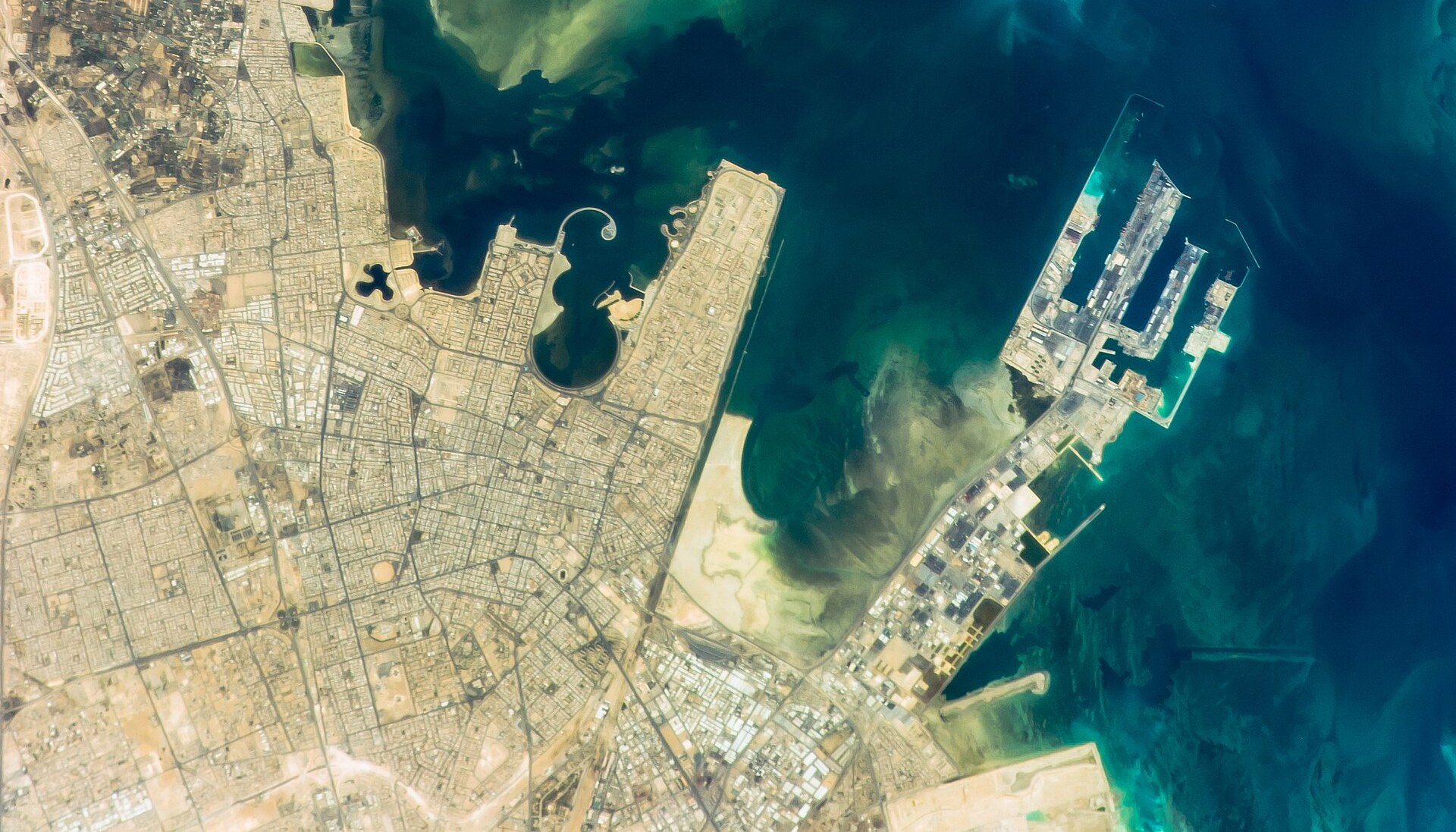
What makes Ghalibaf’s warning operationally serious rather than rhetorical is the arithmetic on the other side: Saudi Arabia enters the post-ceasefire window with approximately 400 PAC-3 MSE interceptors remaining from a pre-war stock of 2,800, an 86% drawdown across 35 days of combat that intercepted roughly 25 threats per day. At that burn rate, terminal air defense over the Eastern Province — where Ras Tanura, Abqaiq, and Dhahran sit — would be functionally exhausted within 16 days of resumed hostilities, well before the Day of Arafah on May 26 when 1.2 to 1.5 million Hajj pilgrims will be concentrated in the Hejaz.

Table of Contents
- Who Is Ghalibaf — and Why Is He Issuing Battlefield Warnings?
- What Does “New Cards” Mean From a Former Aerospace Force Commander?
- The Ceasefire Replenishment Race
- Saudi Arabia’s PAC-3 Problem
- Why Ghalibaf and Not Vahidi?
- The Autonomous Domain: Hormuz Mining Without a Chain of Command
- Background: The Ceasefire That Never Held
- FAQ
Who Is Ghalibaf — and Why Is He Issuing Battlefield Warnings?
Ghalibaf is not a commentator freelancing on military affairs. He commanded the IRGC Aerospace Force from 1997 to 2000, a tenure during which he oversaw the Shahab-3 medium-range ballistic missile program — the weapon that transitioned Iran from Scud derivatives to indigenous missiles capable of reaching any target in Saudi Arabia — as well as the early Mohajer drone lineage and Iran’s nascent space program. Before that, he commanded the 5th Nasr Division during the Iran-Iraq War, and Khamenei personally appointed him to the Aerospace Force post, a selection that marked him as trusted with the most sensitive weapon systems in the Islamic Republic’s arsenal.
His full quote, carried by Iran International, PressTV, and CNBC, accused the United States of subverting the ceasefire through its April 13 blockade of Iranian ports: “Trump, by imposing a siege and violating the ceasefire, seeks to turn this negotiating table — in his own delusion — into a table of surrender or justify renewed warmongering.” That framing — casting escalation as a defensive response to American violations — is the standard IRGC rhetorical architecture for pre-authorizing strikes. But the man delivering it holds no operational command authority under Article 110 of Iran’s constitution, which reserves military command exclusively for the Supreme Leader and his designated IRGC chain — a gap between credential and authority that is the central puzzle of the statement, and the key to reading what comes next.
What Does “New Cards” Mean From a Former Aerospace Force Commander?
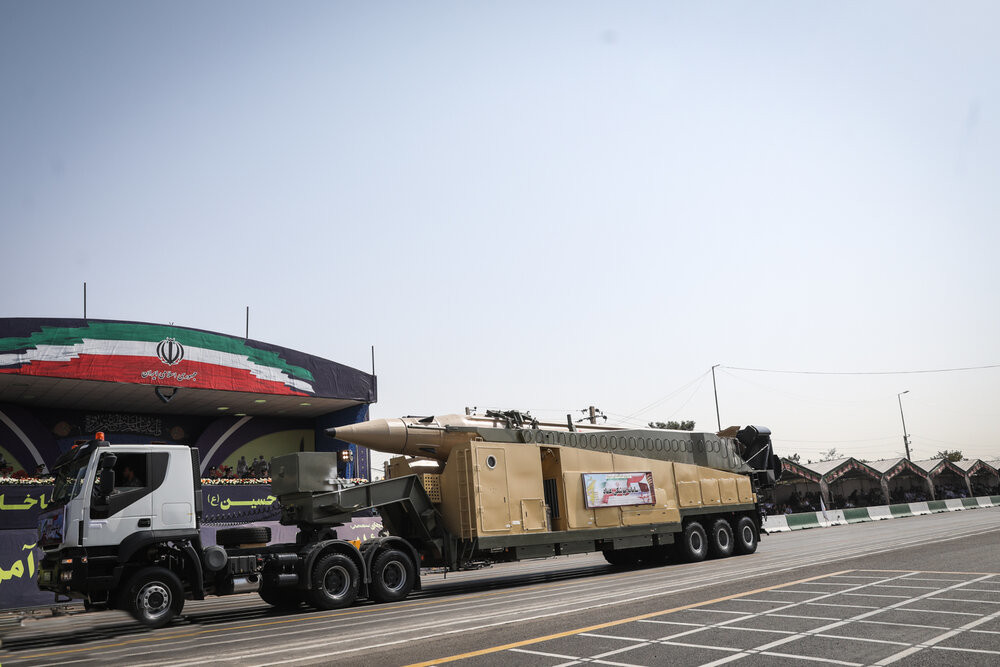
When a politician says “new cards,” it is bluster. When the man who built Iran’s ballistic missile command says it on the eve of a ceasefire expiry, while the current Aerospace Force commander is simultaneously announcing accelerated launcher replenishment, the phrase acquires operational specificity. Mousavi’s April 19 statement to Tasnim was precise: “The pace at which missile and drone launchers were modernized and replenished during the pause in combat was much faster than before the war. The enemy is unable to create such conditions for themselves, and they have to deliver ammunition from the other side of the world.”
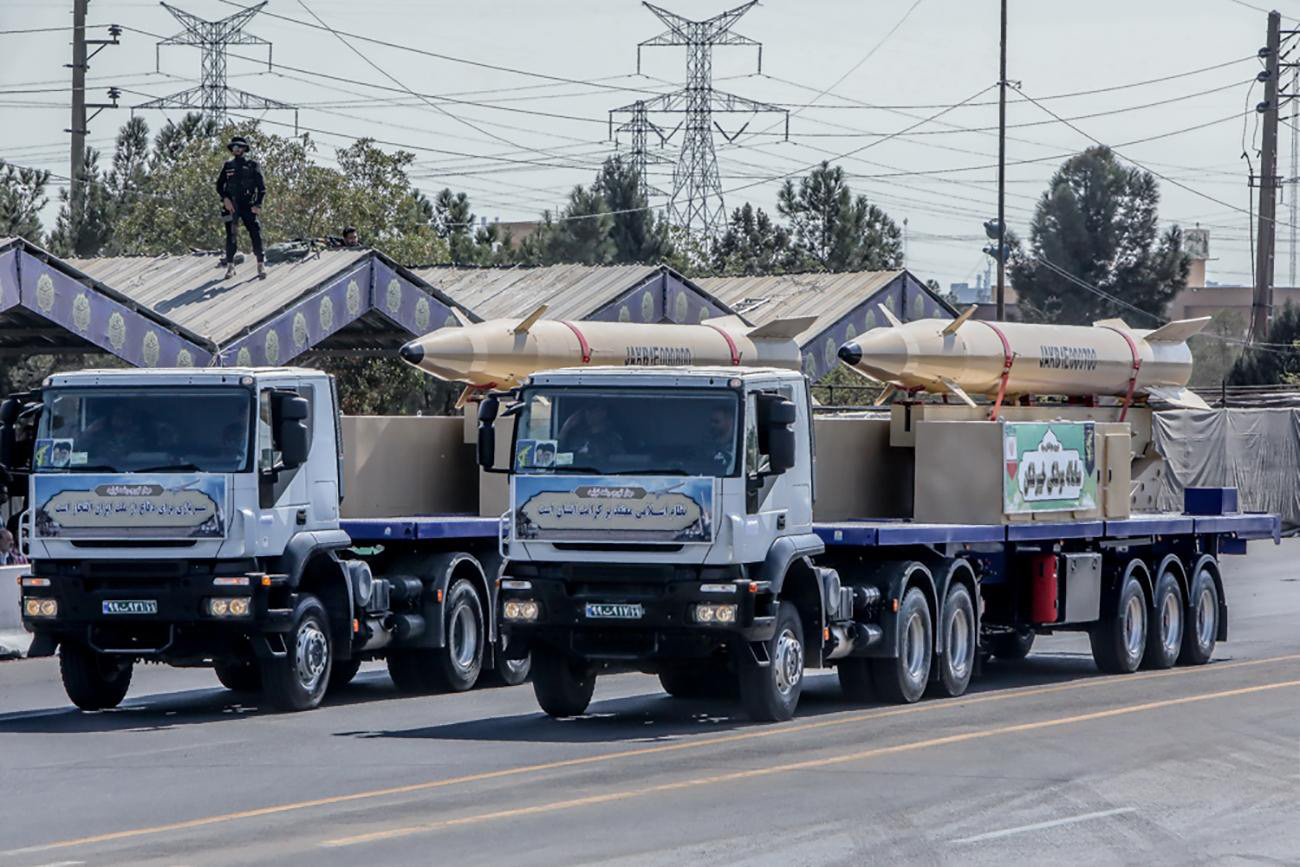
Three escalation domains are plausible referents for “new cards,” and each carries distinct implications for Saudi defense planning. The first and most direct is an expanded ballistic missile salvo capacity. Iran entered the war with an estimated 2,500 ballistic missiles according to IDF assessments, or 2,000 MRBMs plus 6,000 to 8,000 SRBMs per JINSA estimates; post-combat residuals stand at approximately 1,500 ballistic missiles with 200 launchers, bolstered by what GlobalSecurity reports as up to 70% recovery of pre-war stockpiles through cave and bunker retrieval. Mohammad Reza Naqdi, the IRGC senior adviser, told Seoul Economic Daily on April 19 that Iran “can launch the latest missiles and drones manufactured this month” — a claim that, if even partially true, means the ceasefire window was used for production, not just recovery.
The Middle East briefing 3,000+ readers start their day with.
One email. Every weekday morning. Free.
The second domain is drone swarm architecture, where Mousavi’s reference to “modernized” launchers suggests not merely more Shaheds but new launch configurations — possibly salvo-capable ground launchers that can saturate air defenses faster than the individual-launch patterns Saudi Arabia intercepted during the first 35 days. The third and most dangerous domain is Hormuz mining, the one escalation pathway that does not require centralized authorization and where a headless IRGC Navy — Admiral Tangsiri killed March 30, no named successor — would default to pre-positioned autonomous assets rather than wait for orders that have no one to sign them.
The Ceasefire Replenishment Race
The ceasefire that began April 7 was, for Iran’s missile forces, a production sprint. Mousavi’s April 19 statement was not a vague reassurance but a specific operational claim: that replenishment rates during the 15-day pause exceeded wartime production. This is plausible given what is known about Iran’s dispersed manufacturing base, which operates from hardened mountain facilities that survived 35 days of US and allied strikes, and from the IRGC’s long-standing doctrine of maintaining production redundancy precisely for extended conflicts.
The asymmetry Mousavi identified — “they have to deliver ammunition from the other side of the world” — is factually grounded. The sole final assembly line for PAC-3 MSE interceptors operates in Camden, Arkansas, producing 620 units per year for all global customers combined. Saudi Arabia’s $9 billion DSCA-approved purchase of 730 PAC-3 MSE interceptors, approved in February 2026, will not deliver its first tranche until mid-2027 at the earliest, according to DefensePost and Army Recognition. Iran can reload from caves in the Zagros Mountains; Saudi Arabia must wait 14 months for a production line shared with Poland, Germany, Japan, and the United States itself.
Naqdi’s claim about “missiles and drones manufactured this month” adds a time dimension that most coverage has missed. If Iran used the ceasefire not merely to recover hidden stockpiles but to manufacture new weapons, then the post-ceasefire threat envelope is not a degraded version of the pre-ceasefire one — it may be wider, incorporating whatever modifications IRGC engineers made during 15 days of uninterrupted production without the complication of incoming strikes on their facilities.
Saudi Arabia’s PAC-3 Problem
The numbers are blunt. Saudi Arabia entered the conflict on March 3 with approximately 2,800 PAC-3 MSE interceptors distributed across 16 Patriot batteries and 108 M902 launchers. By the time the ceasefire took hold on April 7, Saudi MOD figures show 894 aerial threats intercepted — 799 drones, 86 ballistic missiles, and 9 cruise missiles — across 35 days of combat, a rate of roughly 25 to 26 threats intercepted per day. The residual: approximately 400 rounds, or 14% of the pre-war inventory.
At the pre-ceasefire intercept rate, those 400 rounds provide 15 to 16 days of terminal defense coverage — and that projection assumes no increase in the ballistic missile fraction of incoming threats. The ceasefire expires April 22. The Day of Arafah falls on May 26 — 34 days later. The gap between what Saudi air defense can sustain and what the Hajj calendar demands is not a theoretical vulnerability but a concrete one, compounded by the fact that Patriot doctrine calls for firing two interceptors per ballistic target to ensure kill probability, meaning actual interceptor consumption per engagement runs higher than the raw threat count implies. That the pre-war stock of 2,800 rounds dropped to approximately 400 — a 2,400-round drawdown — while only 86 ballistic missiles were confirmed intercepted points to additional consumption through drone engagements, degraded inventory, and training rounds; the operational residual is what it is regardless of the accounting. Against a concentrated ballistic salvo — precisely the capability Mousavi claims to have expanded — 400 rounds cover fewer engagements than the raw number suggests.
Saudi Arabia’s five-layer defense architecture — THAAD, PAC-3, KM-SAM, directed energy, and Skyguard point defense — means the PAC-3 is not the only shield. But it is the terminal layer, the last line before warheads reach refineries, desalination plants, and the holy sites themselves. The MOD published launcher photographs during the Hajj security buildup but withheld interceptor counts, a silence that tells its own story about what Riyadh considers sensitive information heading into the post-ceasefire window.
| Metric | Value | Source |
|---|---|---|
| Pre-war PAC-3 MSE stock | ~2,800 rounds | DSCA / defense analysts |
| Threats intercepted (March 3–April 7) | 894 | Saudi MOD |
| Remaining PAC-3 MSE | ~400 rounds (14%) | Analyst estimates |
| Daily threat intercept rate (combat tempo) | ~25–26 threats/day | Calculated from MOD data |
| Estimated days of coverage at combat engagement rate | 15–16 days | Calculated (400 rounds / ~25/day) |
| Next resupply (730 rounds approved) | Mid-2027 earliest | DefensePost / DSCA |
| Camden, AR annual production (all customers) | 620/year | Army Recognition |
| Iran post-ceasefire ballistic missile estimate | ~1,500 + 200 launchers | JINSA / GlobalSecurity |
Why Ghalibaf and Not Vahidi?
The Institute for the Study of War’s April 19 assessment placed Ghalibaf and Defense Minister Ahmad Vahidi on opposing sides of Iran’s internal factional divide: Vahidi and SNSC Secretary Brig. Gen. Zolghadr as the hardliner bloc that has assumed “at least temporary dominance” over both military operations and the negotiating stance, sidelining Foreign Minister Araghchi and the pragmatist camp with which Ghalibaf is aligned. Yet it is Ghalibaf, not Vahidi, issuing the public battlefield threat — a pattern that makes no institutional sense until you understand what Gulf News reported in April: that following the wartime death of SNSC head Ali Larijani and the apparent wounding of Mojtaba Khamenei, who has not appeared publicly, Ghalibaf quietly assumed “strategic decision-making” responsibility per three senior Iranian officials, acting only with Mojtaba’s approval.
This means the “new cards” statement is not a parliamentary figure exceeding his brief — it is the closest thing Iran currently has to an authorized strategic communicator performing a specific function. Ghalibaf speaks the language of the Aerospace Force because that credential makes the threat legible to foreign intelligence services and military planners in Riyadh and Washington. He is not ordering strikes; he is pre-authorizing their political legitimacy. The actual trigger authority belongs to Vahidi, to a headless IRGC Navy, and to dispersed launcher crews operating from mountain caves who, in the absence of Tangsiri’s successor, may not report to anyone at all.
“We do not accept negotiations under the shadow of threats, and over the past two weeks we have prepared to reveal new cards on the battlefield.”— Mohammad Bagher Ghalibaf, Parliament Speaker, X post, April 20, 2026
The ISW assessment adds a critical detail: Zolghadr complained that Araghchi “surpassed his mandate” in Islamabad by expressing flexibility on Axis of Resistance support, and Hossein Taeb — part of Mojtaba Khamenei’s inner circle — recalled the delegation to Tehran. Ghalibaf’s public threat thus serves a dual function: outward-facing, it signals escalation readiness to Washington and Riyadh; inward-facing, it demonstrates to the Vahidi-Zolghadr bloc that the pragmatist camp is not soft, that Ghalibaf’s Aerospace Force pedigree makes him as credible a war communicator as any uniformed commander. He is auditioning for continued relevance in a power structure that Pezeshkian publicly accused of cutting the presidency out entirely.
The Autonomous Domain: Hormuz Mining Without a Chain of Command
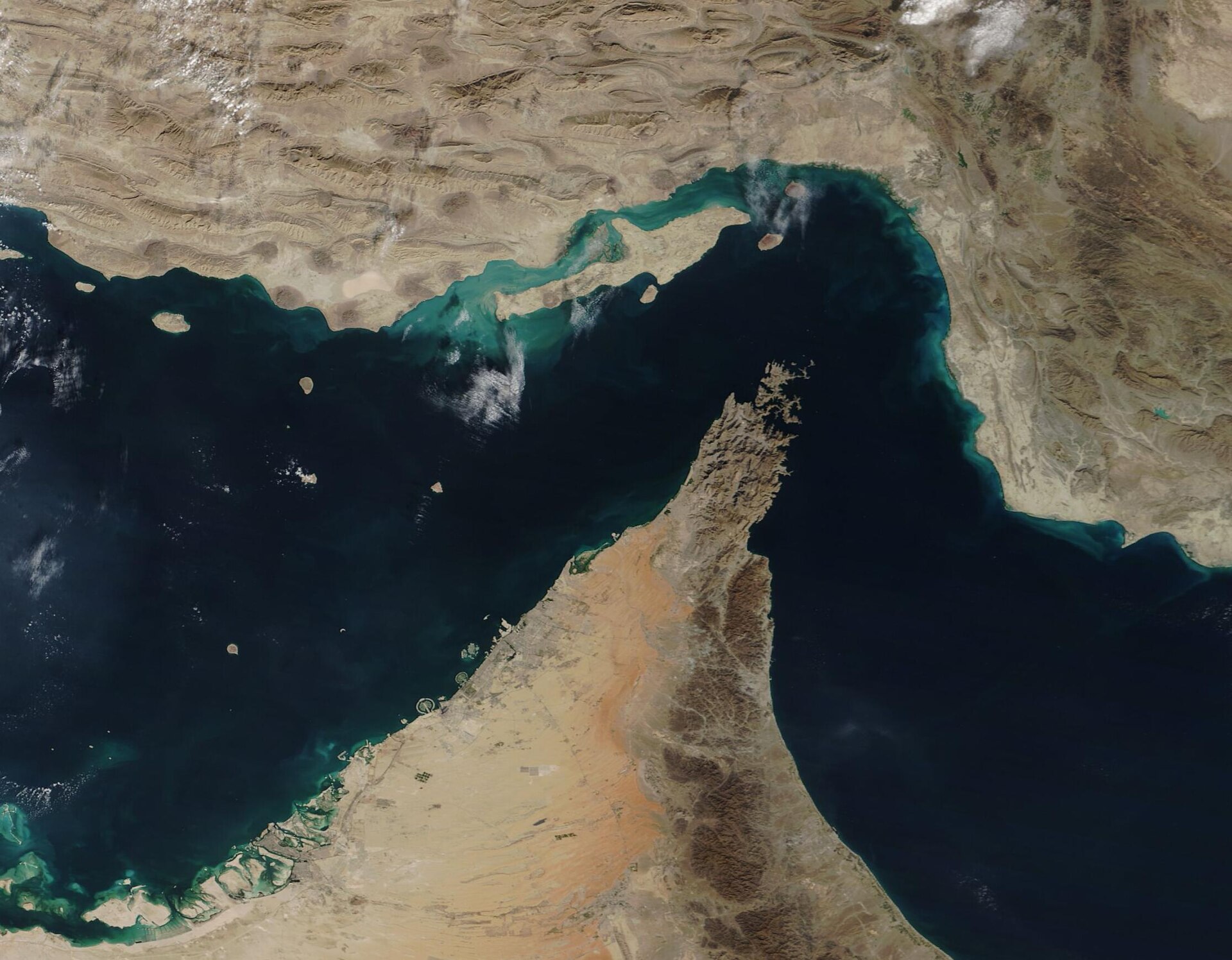
Of the three escalation domains implied by “new cards,” Hormuz mining is the one that requires the least authorization and poses the most asymmetric threat. The IRGC Navy — whose gunboats fired on Indian ships holding valid IRGC transit clearances — has operated without a named commander since Tangsiri’s death on March 30, a 22-day command vacuum during which operational control has devolved to regional naval district commanders and pre-positioned autonomous assets. US officials confirmed to NPR that fewer than 10 Iranian naval mines had been laid in the Strait during the conflict, and US forces destroyed 16 Iranian mine-laying vessels, but the mine countermeasures gap on the coalition side remains acute: four Avenger-class MCM ships were decommissioned from Bahrain in September 2025, leaving only three Littoral Combat Ships in theater with mine-hunting modules.
A mined Hormuz would take approximately 51 days to clear based on the 1991 Kuwait benchmark — a timeline that stretches well past the Day of Arafah and into the second half of 2026. The Touska incident on April 20, in which USS Spruance fired on an Iranian vessel, drove Brent up 5.58% to $95.42, and the commodity opened April 21 at $97.43. Any post-ceasefire mining campaign would push crude past the $108 to $111 per barrel Saudi fiscal break-even threshold that Bloomberg calculates when including PIF expenditure obligations, but it would do so at the cost of shutting down Iran’s own ability to collect on the Hormuz toll scheme that has generated exactly zero dollars in 36 days of operation.
The paradox is that a headless command structure makes mining more likely, not less. Without a named commander to assess strategic consequences or receive stand-down orders, dispersed IRGC Navy units default to pre-war contingency plans — and those plans, written when Iran still had a functioning naval chain of command, assume mining as an automatic response to blockade conditions, which the US April 13 naval cordon has already imposed.
Background: The Ceasefire That Never Held
The ceasefire announced April 7 was dead on operational terms within 24 hours. The IRGC struck a pumping station on the East-West Pipeline on April 8 — after the ceasefire’s nominal start — and Zolfaqari’s statement that “all restraint removed” was issued on April 7, before the ceasefire formally began. The United States imposed a naval blockade on Iranian ports on April 13, which Iran frames as a ceasefire violation and which the US frames as enforcement of existing sanctions. Neither side has offered an extension mechanism; the ceasefire simply expires, with no diplomatic infrastructure to replace it.
The Islamabad talks that produced the ceasefire collapsed when Vance walked out after Vahidi’s delegation exceeded its mandate, and subsequent efforts to restart negotiations have foundered on what HOS has tracked as the authorization ceiling: no Iranian negotiator can bind the IRGC to terms the IRGC has not pre-approved, and the IRGC’s approval runs through Vahidi and through a Supreme Leader’s office that has not produced a public appearance in over 50 days. Ghalibaf’s “new cards” warning thus arrives in a vacuum of both military command and diplomatic continuity — escalation signaling without a counterparty to receive a de-escalation offer.
Brent crude at $97.43 on April 21, with the ceasefire expiring within 24 to 48 hours, prices in a partial probability of resumed hostilities but not the full spectrum of “new cards” that Ghalibaf’s Aerospace Force background makes plausible. The commodity market has been wrong before — it priced Brent at $109 when the May OSP was set, then watched it fall to $91 after the ceasefire — but the structural conditions heading into the post-ceasefire window are worse than those that preceded the original conflict on March 3: fewer interceptors, fewer mine countermeasures ships, a headless Iranian naval command, and a production-replenishment asymmetry that favors the side with the caves over the side with the Arkansas factory.
FAQ
Has Ghalibaf held military command positions, or is he purely a political figure?
Both, sequentially. Ghalibaf commanded the IRGC’s 5th Nasr Division during the Iran-Iraq War, then served as IRGC Aerospace Force commander from 1997 to 2000, overseeing the Shahab-3 ballistic missile program and early drone development. He transitioned to politics as Tehran’s mayor and then Parliament Speaker, but his military credentials — particularly the Aerospace Force command, which controls all Iranian ballistic missile launchers — remain central to his political identity and to the credibility of statements like the “new cards” warning.
Can Saudi Arabia obtain PAC-3 interceptors faster through emergency channels?
Unlikely at meaningful scale. The Camden, Arkansas assembly line produces 620 PAC-3 MSE interceptors per year for all customers globally, including the US military itself, Poland, Germany, and Japan. Emergency diversion of US stockpiles is theoretically possible but would require a Presidential Drawdown Authority that would deplete American air defense coverage at a time when US forces remain deployed in the Gulf theater. Lockheed Martin has discussed capacity expansion, but new production lines take 18 to 24 months to become operational.
What is the legal mechanism by which the ceasefire expires?
There is no formal legal mechanism because the Islamabad cessation agreement was a memorandum of understanding rather than a binding treaty. It specified a 15-to-20-day pause in hostilities with no automatic renewal clause and no enforcement mechanism — a gap that the Soufan Center identified at the time of signing. Pakistan, which hosted and brokered the agreement, has positioned itself as an enforcement intermediary, but FM Dar’s April 13 reference to “new dialogue in coming days” has not produced a successor framework. The ceasefire simply lapses.
Could “new cards” refer to a nuclear dimension?
Iran’s 440.9 kilograms of 60%-enriched HEU, reported by the IAEA as of June 2025 with agency access terminated on February 28, 2026, is approximately 25 days from weapons-grade enrichment via IR-6 centrifuge cascades. While a nuclear test or weapon deployment would be the most dramatic “new card” possible, it would trigger immediate international responses far beyond the current conflict’s scope and is assessed by most analysts as outside the Vahidi-Zolghadr bloc’s risk tolerance. The phrase more plausibly refers to conventional capability expansions — new missile variants, expanded salvo capacity, or Hormuz mining — that remain within the escalation ladder Iran has operated on throughout the conflict.
Why does the IRGC Navy’s lack of a named commander matter operationally?
Admiral Tangsiri’s death on March 30 left the IRGC Navy without a publicly identified successor for 22 days and counting. In a military structure where authority flows from the Supreme Leader through designated commanders, the absence of a named commander means standing orders and pre-positioned contingency plans — including mine-laying protocols — become the default operating framework. Regional naval district commanders retain tactical autonomy but lack the rank to make strategic decisions like standing down from pre-war plans. A stand-down order for Hormuz mining operations would need to come from either a named IRGC Navy commander or from Vahidi directly, and there is no public evidence that either has issued one.