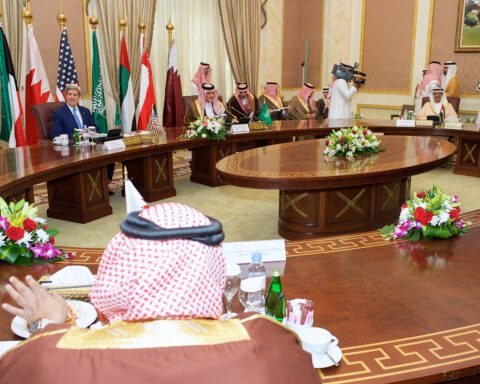
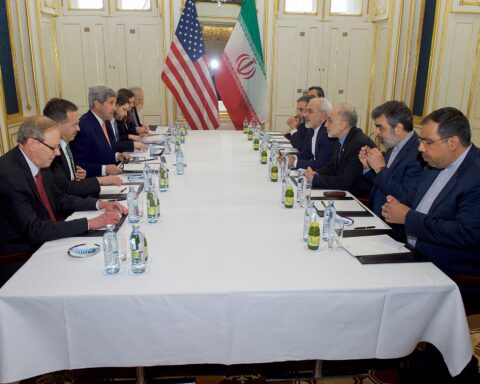
LONDON — On April 17, more than 40 nations will join a videoconference co-chaired by Emmanuel Macron and Keir Starmer to plan a multinational escort framework for the Strait of Hormuz — the waterway through which Saudi Arabia once shipped the majority of its crude, and through which it now ships almost nothing. Saudi Arabia is not organizing the call, is not confirmed as a participant, and was not consulted on the mandate. The same day, in Antalya, Turkish Foreign Minister Hakan Fidan will chair a quadrilateral sidebar — Turkey, Pakistan, Saudi Arabia, Egypt — aimed at extending the ceasefire and stabilizing the region’s diplomatic geometry. Saudi Arabia is a participant in that room too, but the chair belongs to Ankara, the shuttle diplomacy to Islamabad, and the venue to a Turkish president who has spent two decades positioning himself as the indispensable Muslim-world convener.
Two conferences, two days, two tracks for resolving the crisis that has cost Riyadh more than any other capital — and Saudi Arabia leads neither. The kingdom that holds the world’s largest proven oil reserves, that operates the East-West pipeline bypass keeping roughly 7 million barrels per day flowing to Yanbu while Hormuz remains functionally closed, that has intercepted 894 Iranian drones and missiles since March 3 — this kingdom is, in the diplomatic architecture being built around the strait it depends on, a call recipient. The question is whether that absence from both chairs reflects a deliberate strategy, an involuntary sidelining, or something more troubling: a structural reality in which the country most exposed to the outcome has the least influence over its shape.
Table of Contents
- The London-Paris Axis: Building Without Riyadh
- Why Is Saudi Arabia Absent From Both Organizing Chairs?
- The Antalya Quad: Turkey’s Table, Pakistan’s Briefcase
- The Dependent Variable Problem
- What Does the Post-Ceasefire Hormuz Architecture Look Like Without Saudi Leadership?
- How Iran Reads the Absence
- The Bab al-Mandeb Displacement
- The Earnest Will Precedent
- FAQ
The London-Paris Axis: Building Without Riyadh
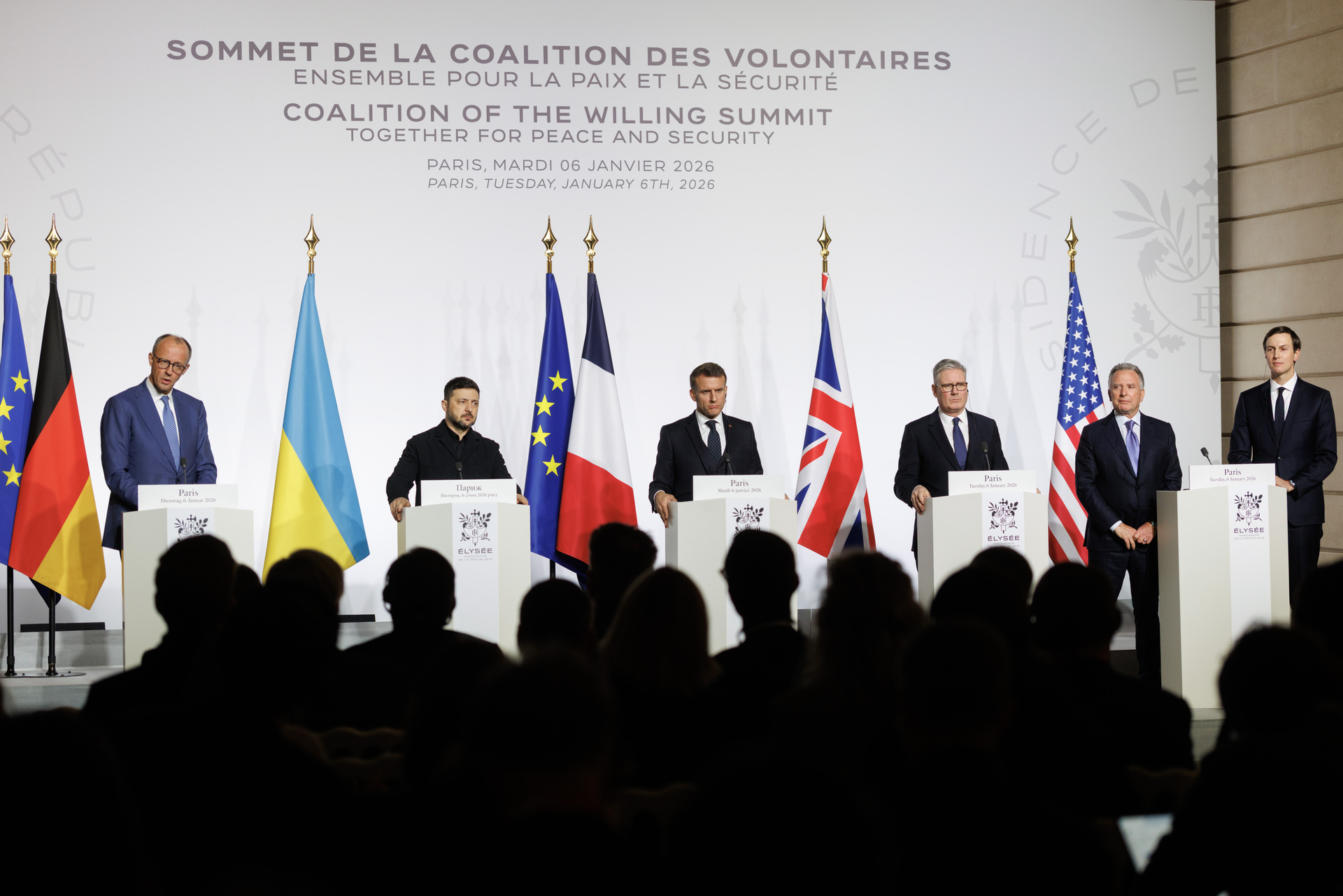
The France-UK Hormuz conference did not materialize overnight. French Foreign Minister Jean-Noël Barrot disclosed on April 14 that “several dozen countries have already taken part in preparatory work led in particular by the chiefs of staff to define the framework for such a mission” — weeks of military planning, force contribution pledges, and rules-of-engagement drafting that preceded the formal April 17 convening. Germany, Canada, the UAE, and India are confirmed participants. The United States, whose naval blockade of Iranian ports is the proximate trigger for Iran’s escalation threats, is explicitly not attending. Saudi Arabia appears in none of the participant lists published by Bloomberg, Al Jazeera, or the co-hosting governments.
The House of Saud Daily Briefing
Saudi Arabia's news in 3 minutes, every morning. Free. See today's issue
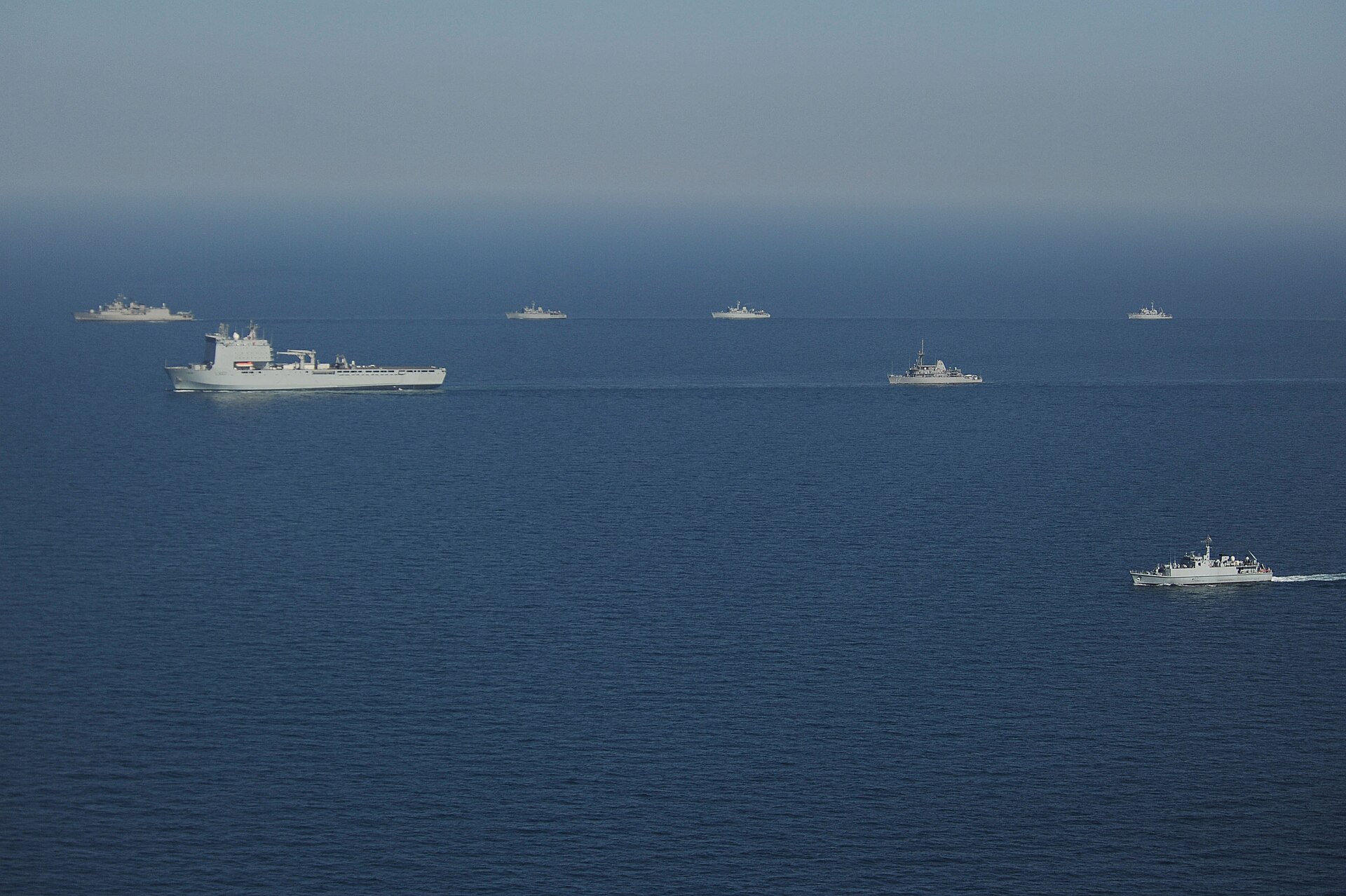
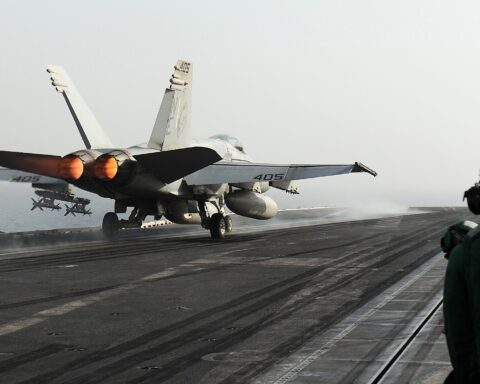
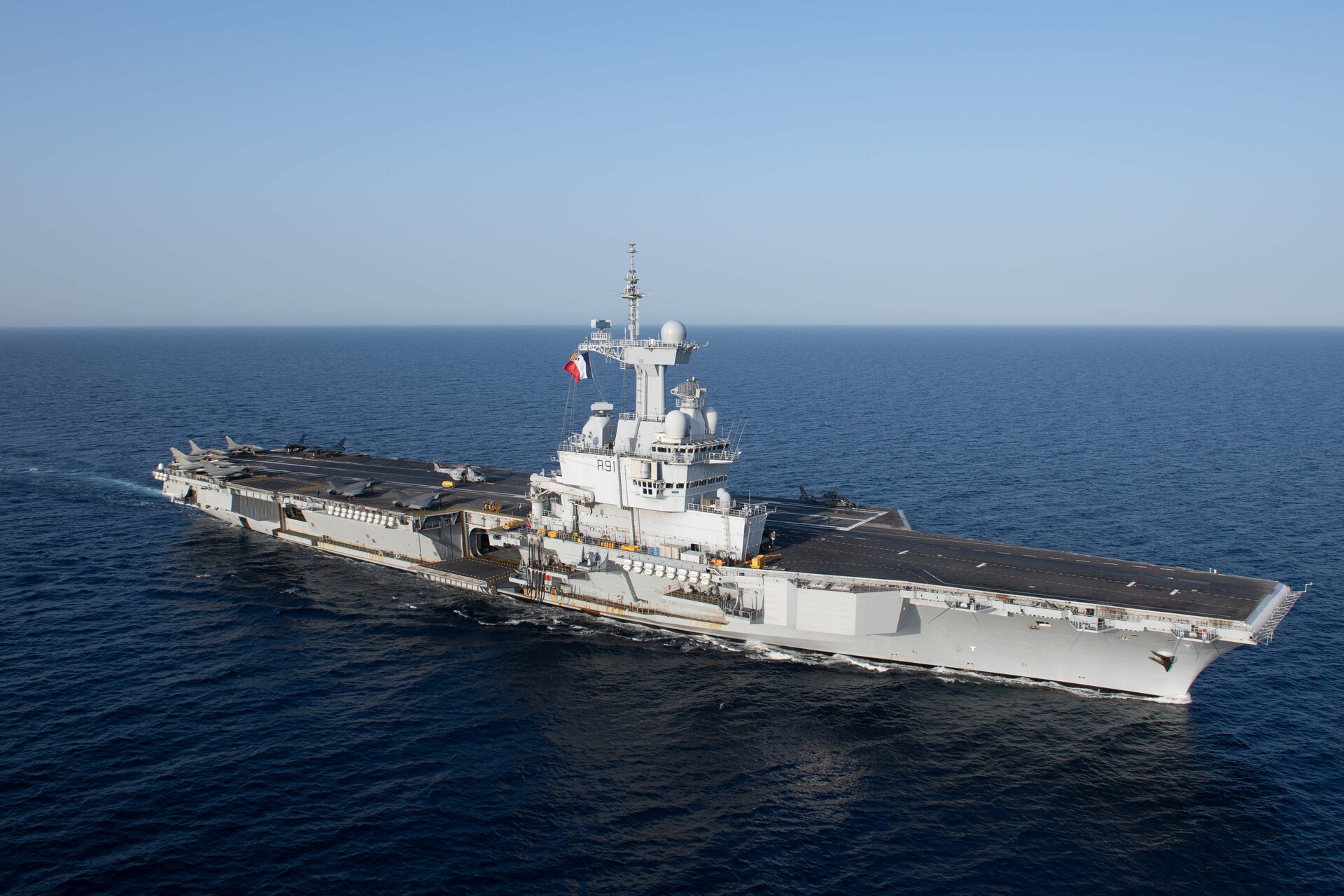
France’s stake in this is material, not abstract. Camp de la Paix, the French military base in Abu Dhabi operational since 2009, was struck by Iranian drones in late February or early March 2026. The Charles de Gaulle carrier strike group — accompanied by eight frigates and two Mistral-class amphibious assault ships, roughly half of France’s major surface combatants — deployed to the Eastern Mediterranean in March. Paris pledged ten additional warships including two frigates for EU NAVFOR Operation Aspides escort duties in the Gulf. This is not a diplomatic gesture dressed in khaki; France has more hulls committed to the Hormuz question than most NATO members have in their entire fleets.
Macron’s framing has been precise and deliberately limiting. The mission will be “purely defensive, purely support,” he told reporters, and will operate “as soon as possible after the most intense phase of the conflict has ended.” He called launching a military operation to force the strait open “unrealistic” — a word aimed less at Tehran than at Washington, where the blockade proceeds on the assumption that coercion resolves what diplomacy has not. Starmer, for his part, announced Britain had “convened more than 40 nations” who share the aim to restore freedom of navigation — the verb is “convened,” not “consulted Riyadh about convening.”
The Starmer-MBS bilateral on April 8 in Jeddah is the most revealing data point. The UK government readout describes Starmer discussing “the UK’s ongoing efforts to convene partners to agree and plan the practical steps required.” The language is informational, not invitational — Starmer was updating MBS on a process already underway, not asking Saudi Arabia to co-lead it. When France’s Barrot met Saudi FM Prince Faisal bin Farhan on March 26, France stated its “readiness to help guarantee freedom of navigation”; Saudi Arabia offered “close coordination.” The gap between offering to help and offering to coordinate is the gap between an organizer and an observer who prefers to stay informed.
Why Is Saudi Arabia Absent From Both Organizing Chairs?
Three explanations compete, and all three contain truth. The first is strategic: Saudi Arabia is deliberately preserving neutrality — or at least the appearance of it — to maintain its position as a party that can talk to everyone. On April 2, the day the first 41-nation Hormuz coalition met without Riyadh, Saudi FM Faisal called both UN Secretary-General Guterres and Russian FM Lavrov. The same day London was chairing a coalition Saudi Arabia had declined to join, Riyadh was working the phones with Moscow and New York. This is a classic multi-vector hedge, the diplomatic equivalent of keeping every door open by walking through none of them. What that posture costs Riyadh when both patrons simultaneously escalate is the subject of a separate analysis of Saudi Arabia’s dual-dependency architecture at breaking point.
The second explanation is structural, and harder to dismiss. Saudi Arabia has no direct diplomatic channel to Tehran that could sustain the weight of chairing a Hormuz settlement. The first Saudi-Iranian FM call since the conflict began happened on April 9 — forty days into a war that had already closed the strait, destroyed Saudi infrastructure, and forced Aramco to reroute its entire export architecture. For the first forty days, Riyadh could not call Tehran. Oman holds that privileged access; Pakistan holds the mediator’s portfolio; Turkey holds the convening power. Saudi Arabia cannot chair a Hormuz conference because doing so would require engaging Iran directly, and Riyadh lacks both the channel and the standing to do so at the speed the crisis demands.
The third explanation is the one no Saudi official will articulate: the kingdom has been sidelined not by choice but by the geometry of the crisis itself. Andrew Leber at Carnegie put it with academic restraint when he observed that Gulf rulers “have demonstrated little capacity to either restrain Trump or deter Iran.” Restraining Trump would require threatening to withdraw basing rights or oil-market cooperation — leverage Riyadh cannot deploy without jeopardizing its own security architecture. Deterring Iran would require either a credible independent military option or a diplomatic relationship deep enough to impose costs — and Saudi Arabia’s PAC-3 stockpile is down to roughly 400 rounds, while its diplomatic relationship with Tehran is six days old.
Hesham Alghannam, a nonresident scholar at the Carnegie Middle East Center, identified the deeper anxiety in an April 9 assessment: “A quiet but palpable concern that President Trump, eager for a quick political victory, could tolerate some Iranian leverage over the strait in exchange for a fragile truce, prioritising optics over Gulf realities.” That concern — that the power ostensibly defending Saudi interests might trade them away for a photo opportunity — explains why Riyadh is not merely absent from the chair but actively hedging against the outcome of every track it participates in.
The Antalya Quad: Turkey’s Table, Pakistan’s Briefcase
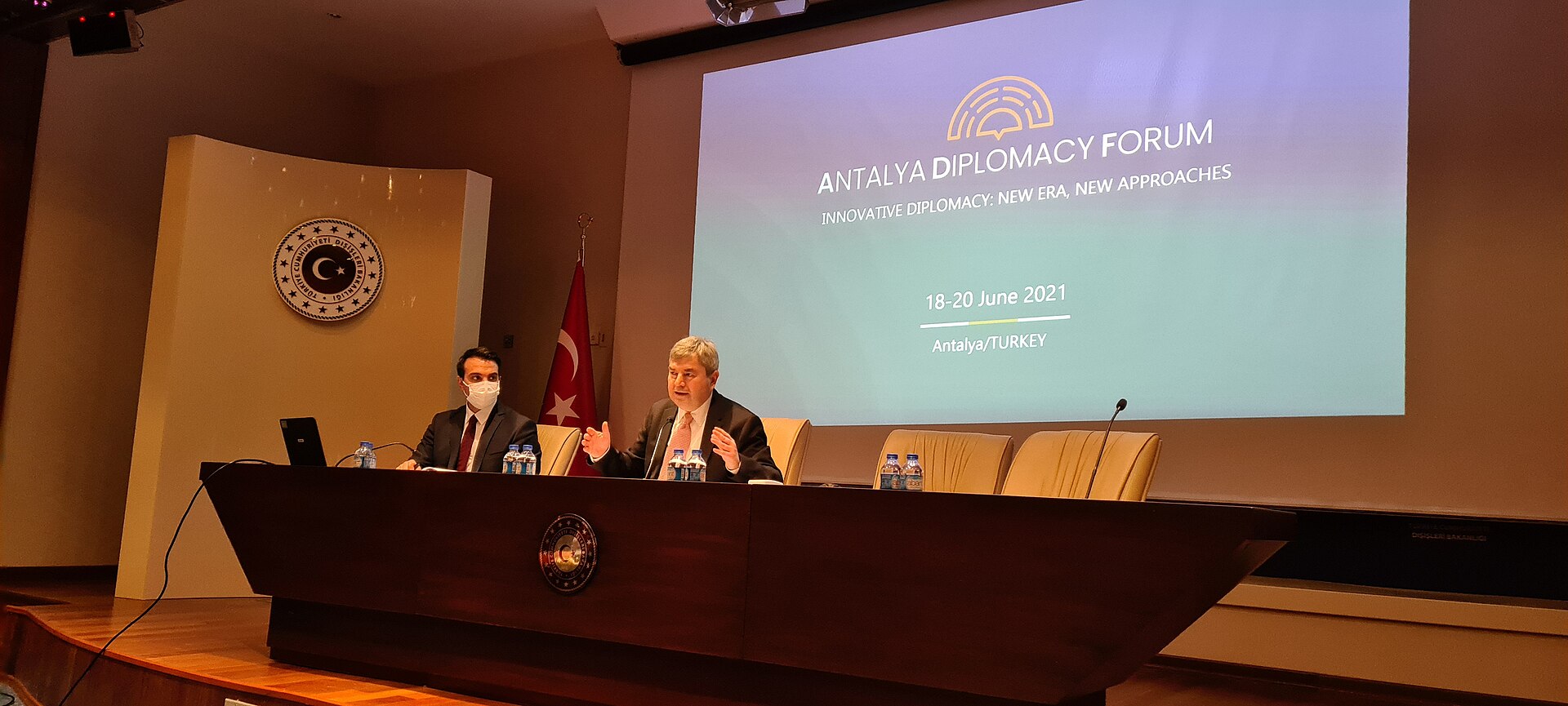
The Antalya Diplomacy Forum, now in its fifth edition, is Erdoğan’s annual showcase — 20 heads of state, more than 40 foreign ministers, 460 high-level participants from over 150 countries. The Turkey-Pakistan-Saudi Arabia-Egypt quadrilateral is a sidebar, not the main event, and it runs under Fidan’s chairmanship on Turkish soil. The format originated at the March 29 Islamabad meeting, where Pakistan hosted the same four nations; Pakistan then brokered the April 8 ceasefire that currently — and tenuously — holds. The Antalya iteration is Turkey giving the same grouping a second round, with the same structural hierarchy: Turkey convenes, Pakistan mediates, Saudi Arabia and Egypt attend.
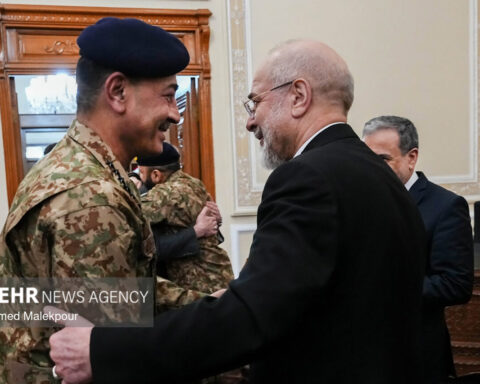
Pakistan’s PM Shehbaz Sharif visited Riyadh on April 15, two days before Antalya, at MBS’s invitation. The framing in Pakistani and Gulf media is consistent: Sharif is briefing Saudi Arabia on the state of shuttle diplomacy aimed at securing a second round of US-Iran talks. He is not receiving instructions from Riyadh; he is delivering a status update. The visit’s timing — sandwiched between the ceasefire’s fragile hold and the Antalya sidebar — positions Pakistan as the active diplomatic agent and Saudi Arabia as the stakeholder being kept informed. This is the same structural dynamic as the Starmer-MBS meeting: someone arrives in Riyadh, tells MBS what is happening, and leaves to go do the thing Saudi Arabia needs done but cannot do itself.
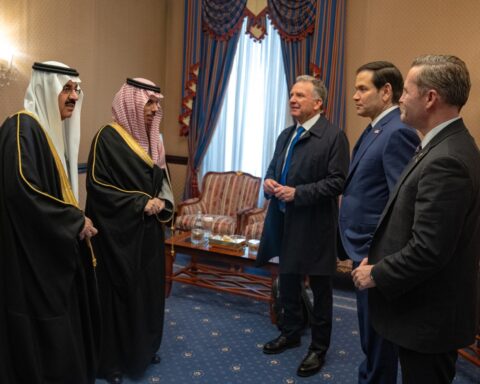
The Antalya quad’s mandate is ceasefire extension and regional stability — a narrower brief than the France-UK conference’s Hormuz governance architecture. But even within that narrower brief, Saudi Arabia is not the driver. Turkey provides the venue and the chair. Pakistan provides the mediator and the enforcement mechanism (such as it is — PM Sharif’s shuttle is the only functioning diplomatic relay between Washington and Tehran’s civilian government). Egypt provides Arab League institutional weight. Saudi Arabia provides the most exposed economy and the most anxious government, which is a form of leverage only if you are willing to make your desperation visible, and MBS is constitutionally unwilling to do that.
Hamad Althunayyan, a Saudi political analyst, captured the expectation gap: “The Gulf expects its interests to be represented, and included, in any deal with Iran.” Expecting representation and securing it are different activities, and the distance between them is measured in chairs, not communiqués.
The Dependent Variable Problem
The phrase “dependent variable” is borrowed from social science, but it describes Saudi Arabia’s current diplomatic position with uncomfortable accuracy. A dependent variable is one whose value is determined by other factors in the system; it does not move independently. Saudi Arabia’s Hormuz exposure — fiscal, commercial, strategic — is entirely a function of decisions made in Tehran, Washington, London, Paris, Islamabad, and Ankara. The kingdom’s agency is real but reactive: it can reroute exports through Yanbu (and has), intercept missiles (and has, 894 times), co-sponsor UN resolutions (and did, before Russia and China vetoed), and make phone calls (FM Faisal called French FM Barrot, Russian FM Lavrov, and UN SG Guterres in the space of a week). What it cannot do is convene, because convening requires either the military capacity to guarantee outcomes or the diplomatic standing to broker them, and Riyadh currently has neither in sufficient measure.
The numbers tell the dependency story. Saudi Arabia’s East-West pipeline to Yanbu operates at roughly 7 million barrels per day — against pre-war Hormuz throughput of over 17 million bpd. The bypass covers approximately 40-41% of what transited the strait before February 28. Brent crude sits at $94.79 as of April 14; Saudi Arabia’s fiscal break-even is $108-111 per barrel on a PIF-inclusive basis (Bloomberg’s calculation, which accounts for the sovereign wealth fund’s capital requirements). Every day Hormuz remains closed, the gap between revenue and expenditure widens, and Riyadh has no mechanism to close it except waiting for someone else to reopen the strait.
| Metric | Value | Source |
|---|---|---|
| Pre-war Hormuz throughput | 17+ million bpd | EIA/Kpler |
| East-West Pipeline (Yanbu) capacity | ~7 million bpd | Aramco/HOS research |
| Bypass coverage of pre-war flow | ~40-41% | HOS calculation |
| Brent crude (April 14) | $94.79/bbl | Bloomberg |
| Saudi fiscal break-even (PIF-inclusive) | $108-111/bbl | Bloomberg |
| Iranian drones/missiles intercepted (March 3–April 7) | 894 | Saudi MoD/HOS aggregate |
| PAC-3 MSE rounds remaining (est.) | ~400 | HOS calculation |
| Days without Saudi-Iran diplomatic channel | 40 (Feb 28–April 9) | Dawn/multiple sources |
The May OSP pricing crisis compounds the pressure. Aramco set its May Official Selling Price at a $19.50 premium to Asia when Brent was at $109; with Brent now near $95, term-contract buyers are paying roughly $19-20 per barrel above current spot for crude they could source cheaper from virtually any non-Gulf producer. That pricing decision, made when Riyadh assumed Hormuz would reopen faster than it has, is now a structural millstone — and the fix requires either a price cut that signals panic or continued overcharging that drives Asian buyers to alternative suppliers. Neither option is available to a country that leads neither of the two diplomatic tracks determining when Hormuz reopens.
What Does the Post-Ceasefire Hormuz Architecture Look Like Without Saudi Leadership?
The France-UK conference is building something specific: a multinational naval escort framework, non-combat in mandate, designed to deploy once hostilities de-escalate below a threshold that permits commercial transit under armed protection. Barrot’s disclosure that chiefs of staff have been defining the framework for weeks means the force structure is already being planned — which nations contribute which vessels, what the command architecture looks like, how rules of engagement handle Iranian “coordination” demands, whether the escorts operate inside or outside Iranian-claimed territorial waters. These are decisions that will shape the Hormuz operating environment for years, and they are being made in London and Paris.
The architecture has a template. During the 1987-88 Tanker War, Operation Earnest Will deployed approximately 30 US warships to escort re-flagged Kuwaiti tankers through the Gulf; Belgium, France, Italy, the Netherlands, and the UK participated in minesweeping. Saudi Arabia was not an organizer then either — it was a beneficiary, the country whose oil flowed because other nations’ navies kept the shipping lanes open. The France-UK initiative follows this structural logic with one critical difference: in 1987, the United States led. In 2026, the United States is not attending, its blockade is the proximate escalation trigger, and the European powers are building an alternative framework that implicitly positions Washington as part of the problem rather than the solution.
For Saudi Arabia, this means the post-ceasefire Hormuz governance will be designed by nations whose primary interest is transit freedom — a universal good that aligns with but is not identical to Saudi Arabia’s specific interests. Riyadh needs more than open shipping lanes; it needs a framework that prevents Iran from reimposing “coordination” requirements, that addresses the IRGC’s “full authority” declaration over the strait, that resolves the UNCLOS vacuum (Iran, the US, and Israel are all non-ratifiers), and that provides credible deterrence against future closure. A purely defensive escort mission satisfies the first requirement and none of the others. Sultan Al Jaber, the UAE’s Minister of Industry, said in April 2026 remarks carried by state media: “Conditional passage is not passage. It is control by another name.” The France-UK framework addresses the control of escorts; it does not address the control of the legal and political architecture that allows Iran to impose conditions in the first place.
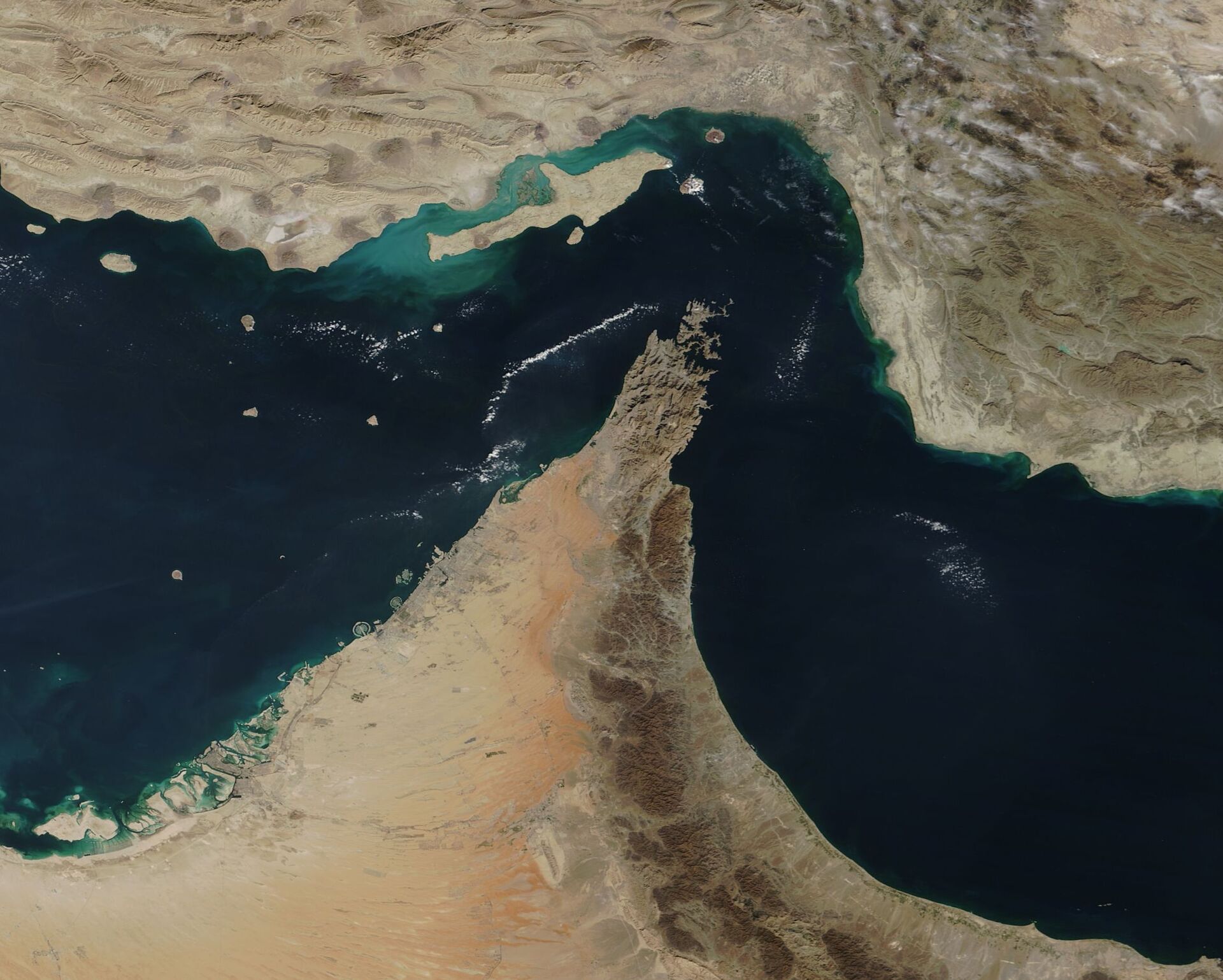
The UNCLOS gap is the structural fault line that neither conference addresses. Iran frames its Hormuz actions as sovereign rights over territorial waters at the strait’s narrowest navigable point (approximately 33 kilometers wide at its narrowest, shared with Oman). The France-UK conference deliberately sidesteps this legal question — Macron’s “purely defensive” framing avoids the jurisdictional argument entirely. The Antalya quad is focused on ceasefire extension, not maritime law. Saudi Arabia, which needs the legal architecture resolved more than any other party, is positioned in neither forum to push for it.
How Iran Reads the Absence
Tehran’s response to the France-UK conference was immediate and structural. The Khatam al-Anbiya Central Headquarters — Iran’s joint military command — declared that any Western multinational mission to Hormuz “endangers maritime security” and that Iran’s “control over its territorial waters” is “a sovereign and legal right.” The IRGC has stated that the approach of military vessels to the strait constitutes a ceasefire violation, warning that “wrong moves” will trap enemies in “deadly whirlpools.” The Iranian Armed Forces spokesperson called the US blockade “piracy” and pledged to “decisively implement a permanent mechanism to control the Strait of Hormuz.”
Iran’s diplomatic behavior on April 13 — the day the US blockade took effect — is the most instructive indicator of how Tehran reads the power map. Araghchi called both French FM Barrot and Saudi FM Faisal, warning of “dangerous consequences of provocative US actions in the Persian Gulf and the Strait of Hormuz for regional and global peace and security.” The calls were parallel in content but asymmetric in function: Barrot is organizing a 40-nation response; Faisal is receiving a warning. Iran treats France as an adversary with agency and Saudi Arabia as a neighbor with exposure. The distinction matters because it reveals how Tehran will negotiate: with the powers that can impose costs (France, UK, the US from behind its blockade), not with the power that merely absorbs them.
China’s position reinforces this asymmetry. Beijing’s Foreign Ministry spokesperson Lin Jian called the US blockade “dangerous and irresponsible,” a framing that implicitly supports normalizing transit without Western military enforcement — which is Iran’s preferred outcome. China and Russia vetoed the Bahrain-drafted UNSC Hormuz resolution on April 7; Chinese Ambassador Fu Cong argued it “failed to capture the root causes and full picture of the conflict.” The veto killed the one multilateral track Saudi Arabia had actively supported (Riyadh co-sponsored the resolution alongside Jordan, Kuwait, Qatar, and the UAE), and the replacement track — the France-UK conference — is one Saudi Arabia did not build, does not chair, and may not even attend.
Abdulaziz Sager, a Saudi analyst, articulated the bind: “Dialogue on its own is not enough if it is not backed by credible deterrence.” A senior Saudi Foreign Ministry official, speaking without attribution, added: “It is our right to defend ourselves…separate from the war.” The gap between these two statements — the analyst saying deterrence is needed and the official insisting on self-defense as a separate category — captures the internal tension. Saudi Arabia wants to deter Iran but cannot do so independently, and the nations building the deterrence architecture are not asking Riyadh to co-design it.
The Bab al-Mandeb Displacement
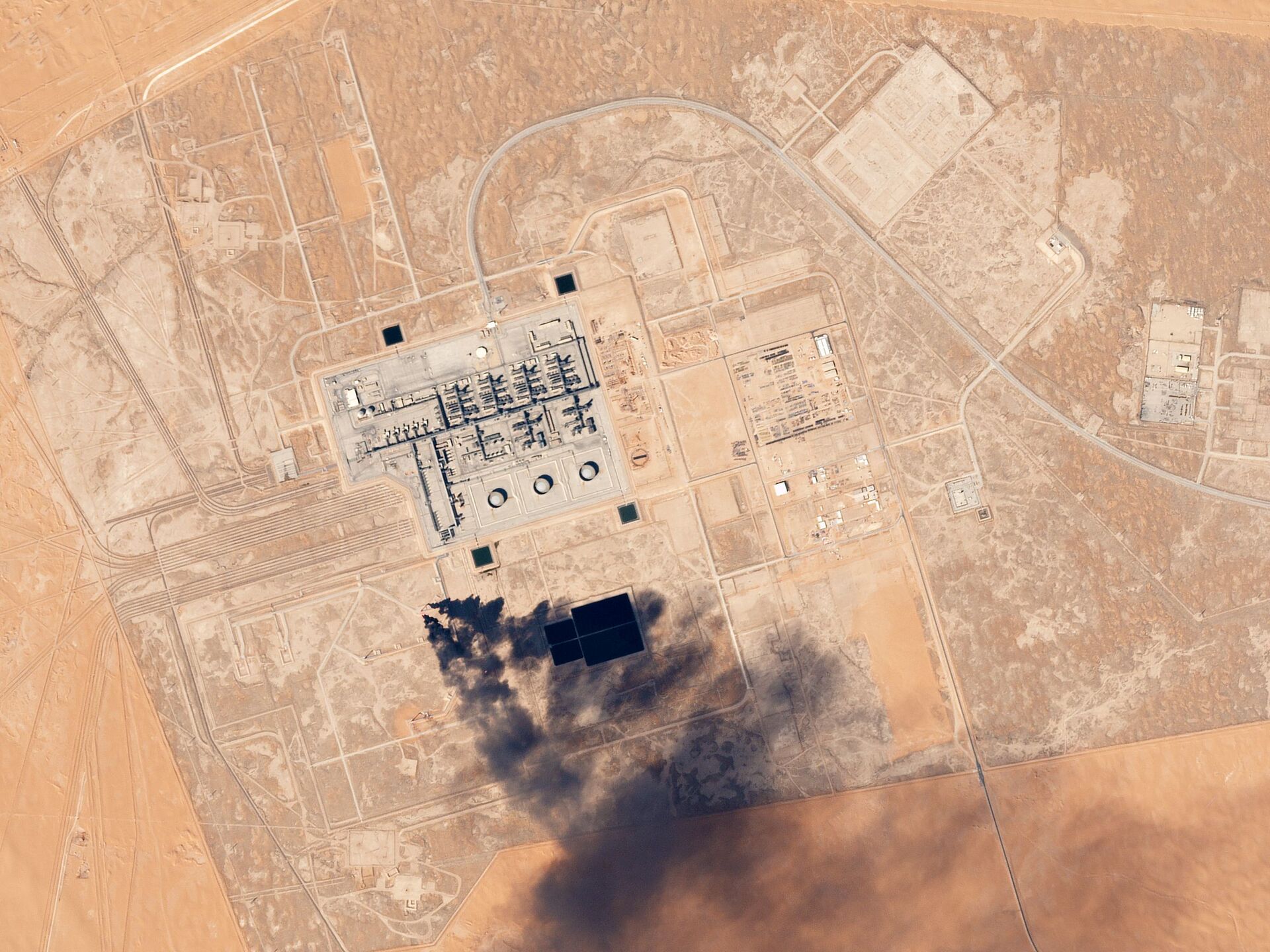
The Wall Street Journal and Express Tribune reported on April 14 that Saudi Arabia’s primary stated fear is not Iranian escalation at Hormuz itself but Houthi retaliation on the Bab al-Mandeb — the southern chokepoint connecting the Red Sea to the Gulf of Aden, through which Saudi Arabia’s Yanbu-routed exports must still pass to reach European and Mediterranean markets. This displacement of anxiety from the northern chokepoint to the southern one reveals that Riyadh’s strategic calculus has already incorporated Hormuz closure as a near-term given. The East-West pipeline to Yanbu works — it moves roughly 7 million barrels per day — but it merely shifts the vulnerability 1,500 kilometers south to a chokepoint controlled by a different Iranian proxy.
The France-UK conference mandate does not extend to the Bab al-Mandeb. Operation Aspides, the EU naval mission, covers both waterways in theory, but the April 17 conference is explicitly about Hormuz. The Antalya quad’s ceasefire focus similarly does not address Houthi maritime interdiction, which operates on a separate command and supply chain from Tehran’s direct Hormuz operations. Saudi Arabia’s most acute vulnerability — the one its own officials identify as the primary concern — falls between both conference mandates, addressed by neither.
This is the dependent-variable problem in its most concentrated form. Riyadh rerouted its exports to survive Hormuz closure, only to discover that the bypass creates a new dependency on a chokepoint it also does not control, protected by a naval architecture it also did not design, and governed by ceasefire terms it also did not negotiate. The pipeline is an engineering achievement and a strategic displacement of the same underlying problem: Saudi Arabia produces oil that the world needs but cannot independently guarantee its delivery to any market.
The Earnest Will Precedent
When the Reagan administration launched Operation Earnest Will in July 1987, the political architecture was simpler. The United States led, European allies contributed minesweepers, Kuwait paid for re-flagging, and Saudi Arabia benefited without organizing. The 2026 iteration inverts the American role — Washington is absent from the France-UK conference and operating its own coercive track via the naval blockade — but preserves Saudi Arabia’s structural position as beneficiary rather than architect. In 1987, this was defensible: Saudi Arabia lacked blue-water naval capacity, had no diplomatic relationship with revolutionary Iran, and was content to let American power guarantee Gulf security. In 2026, the same posture persists despite four decades of arms purchases totaling hundreds of billions of dollars, a Vision 2030 program that explicitly targets strategic autonomy, and a crown prince whose signature diplomatic achievement was the 2023 rapprochement with Tehran — now functionally destroyed.
The Earnest Will comparison illuminates what has changed and what hasn’t. What has changed is the identity of the convener: European powers rather than the United States. What has changed is the threat environment: Iran’s capability in 2026 — ballistic missiles, drone swarms, mine-laying capacity, IRGC naval fast-attack boats — dwarfs the Silkworm missiles and contact mines of 1987-88. What has not changed is Saudi Arabia’s position in the architecture: present in the waterway, absent from the command structure, dependent on others to keep its oil moving. Thirty-nine years separate Earnest Will from the France-UK Hormuz conference, and in that span Saudi Arabia has acquired F-15s, PAC-3 batteries, THAAD systems, a war in Yemen, a crown prince who meets with every world leader, and a sovereign wealth fund approaching a trillion dollars in assets. It has not acquired the ability to guarantee its own maritime access.
UN Secretary-General Guterres, commenting on the France-UK conference, offered the only honest assessment: “It would be unrealistic to expect such a complex problem…could be resolved in the first session.” He is correct, and the implication for Saudi Arabia is that the architecture being designed in April 2026 will iterate — through second sessions, through follow-up ministerial meetings, through force-contribution conferences and rules-of-engagement workshops — and at each iteration, the countries in the chair will shape the framework, and the countries not in the chair will receive the result. The question for Riyadh is not whether it will be consulted. It will be. The question is whether consultation is a substitute for leadership when the outcome determines whether your oil reaches market, your fiscal break-even is achievable, and your 2030 economic transformation survives contact with a strait you do not control.
| Diplomatic Track | Chair/Convener | Saudi Role | Mandate |
|---|---|---|---|
| France-UK Hormuz Conference (April 17) | Macron / Starmer | Not confirmed as participant | Multinational naval escort framework |
| Antalya Quad (April 17-19) | Hakan Fidan (Turkey) | Participant (not chair) | Ceasefire extension, regional stability |
| US Naval Blockade (April 13–ongoing) | CENTCOM | Host nation (King Fahd Air Base) | Coercive pressure on Iran |
| UNSC Hormuz Resolution (vetoed April 7) | Bahrain (drafter) | Co-sponsor | Freedom of navigation (non-binding) |
| Pakistan Shuttle Diplomacy | PM Sharif / FM Dar | Briefing recipient (April 15 Riyadh visit) | Second round US-Iran talks |
FAQ
Is Saudi Arabia boycotting the France-UK Hormuz conference?
No evidence suggests a formal boycott. Saudi Arabia’s absence from confirmed participant lists and organizing structures is consistent with its broader pattern of participating in multilateral frameworks without leading them — it co-sponsored the vetoed UNSC resolution, attended the Islamabad quad meeting, and held bilateral calls with both French and UK officials. The more precise characterization is that Riyadh was not invited to co-organize and did not volunteer, a pattern that extends back to the first 41-nation Hormuz meeting on April 2, which Saudi Arabia also declined to join while simultaneously hosting US forces at King Fahd Air Base in Taif.
Could Saudi Arabia join the multinational escort force even without co-chairing?
Technically, yes — the Royal Saudi Naval Forces operate Al-Riyadh-class frigates (French-built) and Al-Sadiq-class patrol boats suitable for escort roles, and Saudi Arabia participated in Combined Maritime Forces (CMF) Task Force 150 and 152 before the war. The political barrier is higher than the military one: joining a Western-led naval mission in waters Iran claims as sovereign would collapse Riyadh’s multi-vector hedging strategy and foreclose the direct diplomatic channel to Tehran that only opened on April 9. Saudi Arabia’s $3.49 billion in estimated PAC-3 expenditures since March 3 also mean defense resources are allocated to air defense replenishment, not naval force projection.
What happens if neither conference produces a binding framework?
The status quo deepens. Hormuz throughput remains at 15-20 ships per 24 hours versus the pre-war 138 per day (Windward data from April 8). Approximately 800 vessels remain trapped or rerouted. Saudi Arabia continues relying on the Yanbu bypass at 40-41% of pre-war throughput capacity while its fiscal deficit widens at any Brent price below $108-111 per barrel. The GCC fracture lines between states with bypass capacity (Saudi Arabia, UAE via Fujairah) and those without (Kuwait, Bahrain, Qatar) continue to widen. Iran retains de facto control over the strait’s operating terms, and the IRGC’s “full authority” declaration remains the governing reality on the water.
Why is the United States not attending the France-UK conference?
Washington’s absence reflects the structural contradiction between its blockade and the conference’s mandate. The France-UK framework is designed to restore freedom of navigation; the US blockade restricts it — selectively, against Iranian ports and toll-collecting vessels, but restrictively nonetheless. Attending a conference aimed at reopening Hormuz while operating a naval cordon that partially closes it would require the Biden-era diplomatic contortion that Trump’s team has shown no interest in performing. The US position is that its blockade IS the Hormuz policy; the European position is that the blockade is the obstacle the Hormuz policy must work around.
What leverage does Saudi Arabia actually have in Hormuz negotiations?
Saudi Arabia’s leverage is primarily economic and basing-related rather than diplomatic or military. Riyadh hosts CENTCOM forward elements at multiple installations, making it the indispensable platform for US operations — withdrawal of basing rights would collapse the American military posture in the Gulf overnight. Saudi Arabia also controls spare oil production capacity (though accessing it requires Hormuz or the already-maxed Yanbu pipeline) and holds approximately $100-135 billion in US Treasury securities, with total foreign reserves approaching $430 billion. The kingdom has not deployed any of these levers publicly, which is either strategic patience or confirmation that the levers are too structurally embedded to be pulled without self-harm — a distinction that the next six months will resolve. How Saudi Arabia’s silence fits within the broader contest between the US blockade, the UK-led coalition, and Beijing’s counter-architecture is the subject of Three Frameworks, One Strait. That silence is made structurally more damaging by the current ceasefire ambiguity: mediators are asserting a seven-day extension agreed in principle while the US publicly denies any such agreement, leaving Saudi Arabia unable to issue tanker schedules or lock in Hormuz reopening plans. The mechanics of the claimed extension, Washington’s denial, and what the gap means for Saudi Arabia’s June OSP repricing window are analyzed here.
The House of Saud Daily Briefing
Saudi Arabia's news in 3 minutes, every morning. Free. See today's issue