
ANTALYA — The quadrilateral meeting among Turkey, Pakistan, Saudi Arabia, and Egypt at the 5th Antalya Diplomacy Forum on April 17-19 is not a ceasefire negotiation. It is a face-saving architecture designed to distribute the political cost of asking Iran for more time. The Islamabad Accord expires on April 22 with no extension mechanism in its text, and none of the four states can individually request a prolongation from Tehran without paying a steep diplomatic penalty. Turkey cannot ask without jeopardising a $2.5 billion gas pipeline renewal due July 31. Pakistan cannot ask without undermining its protecting-power status. Saudi Arabia cannot ask because it was structurally excluded from the Islamabad table. Egypt cannot ask because it has no bilateral leverage over Iran at all.
What the quad can do — and what the Antalya sideline is designed to accomplish — is create a multilateral framework in which the request is nobody’s and everybody’s simultaneously. The Astana Process for Syria, where Turkey, Russia, and Iran co-created de-escalation zones in 2017, proved that Tehran will accept constraints through multilateral formats that it rejects bilaterally. The Antalya quad is betting on the same logic with seven days left on the clock. That bet was immediately tested: as the forum opened on April 17, Iran’s own deputy foreign minister was present at the same venue declaring the ceasefire extension unacceptable and Khatibzadeh publicly rejecting the framework the quad had gathered to construct.
What Is the Antalya Quad and Why Does It Meet Now?
The four-way sideline meeting among Turkey, Pakistan, Saudi Arabia, and Egypt — chaired by Turkish Foreign Minister Hakan Fidan — is the third quadrilateral gathering in seven weeks. The first convened in Islamabad on March 29. The second met on the sidelines of an Islamic countries summit in Riyadh. Antalya is the third, and the timing is not incidental: the Islamabad Accord ceasefire expires on April 22, five days after the forum opens, with what the Carnegie Endowment describes as “no formal extension procedures or long-term sustainability frameworks” in the agreement text.
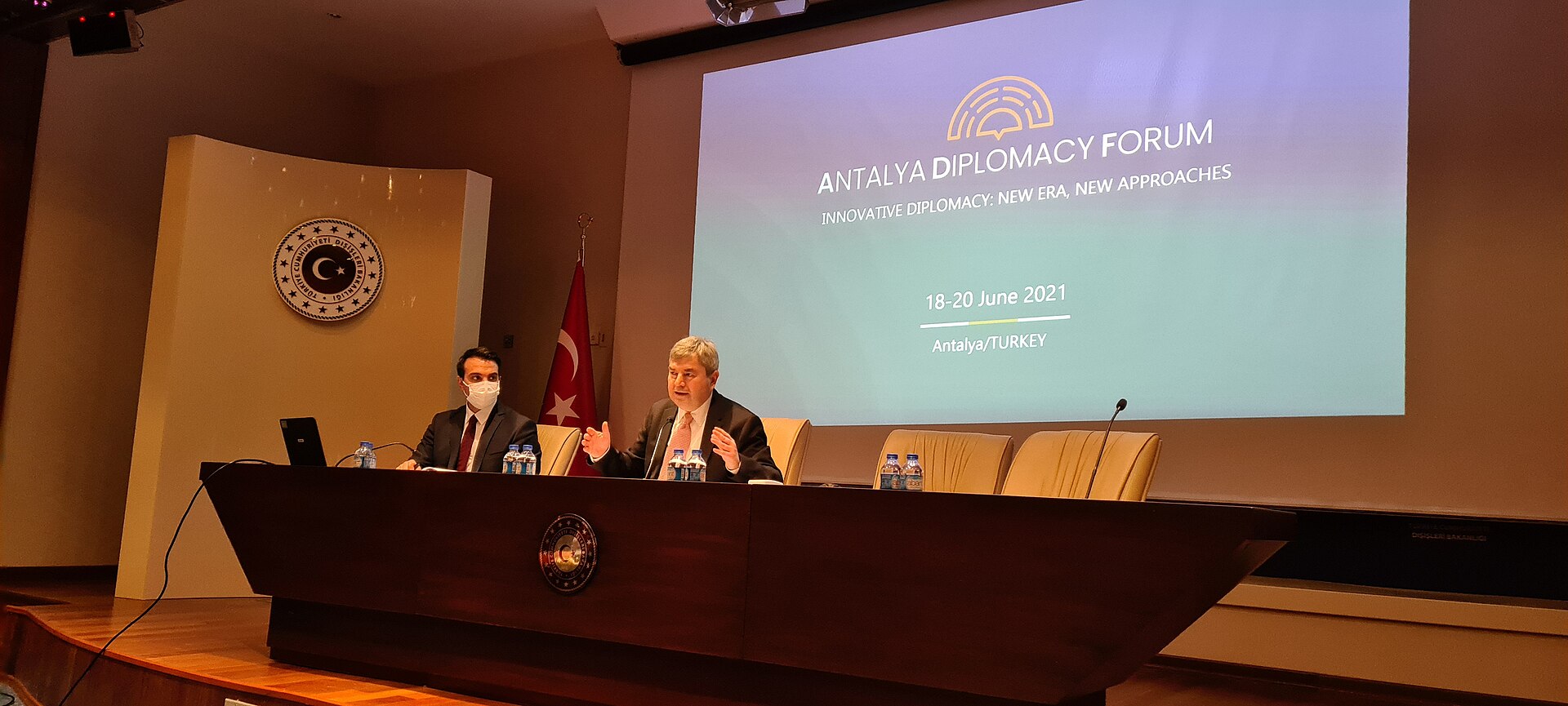
The 5th Antalya Diplomacy Forum runs April 17-19, 2026, under the theme “Mapping Tomorrow, Managing Uncertainties.” The official programme lists 40-plus sessions, representation from over 150 countries, 20-plus heads of state, and more than 50 foreign ministers among 460 high-level participants. The quad meeting sits outside the main schedule — a sideline arrangement, which in diplomatic grammar means deniability. If it produces nothing, it was never formally on the agenda. If it produces a framework, Fidan can present it to the plenary as a forum achievement.
Pakistan has already called publicly for a 45-day ceasefire extension, a proposal Tehran rejected in favour of its own 10-point plan. That plan includes — as Point 7 — a requirement for IRGC “coordination” over the Strait of Hormuz as a treaty condition, a provision that functions as a Phase 2 prerequisite and makes Phase 1 structurally impossible to complete. Eric Lob of the Carnegie Endowment noted in April 2026 that Tehran views the ceasefire as “a pause in hostilities rather than anything permanent.” The quad’s problem is not persuading Iran to extend the ceasefire; it is constructing a vehicle through which Iran can agree without appearing to concede.
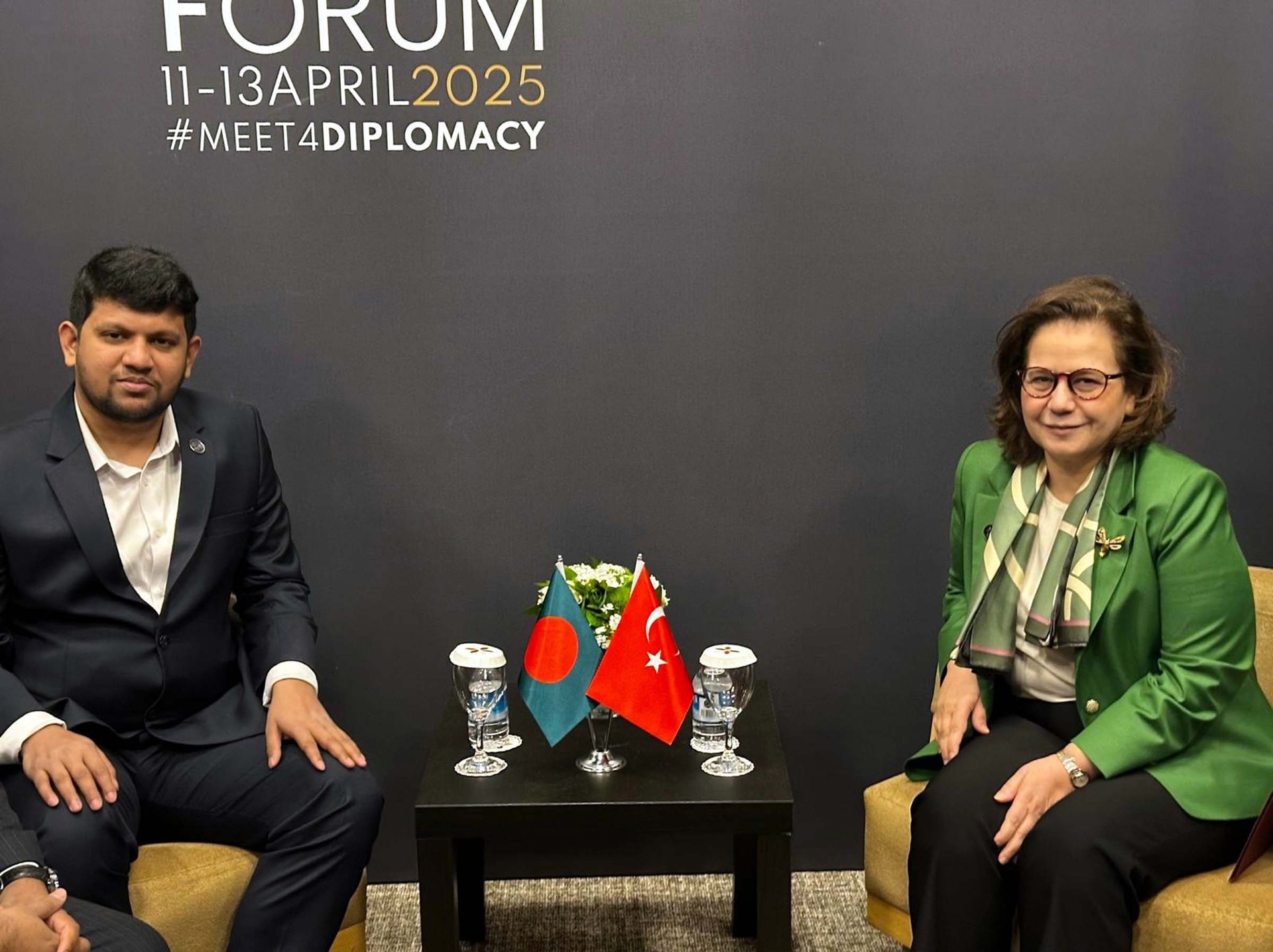
Turkey’s $2.5 Billion Pipeline Problem
Turkey’s interest in a ceasefire extension is often framed as Erdogan’s “peacemaker” brand — a narrative that is true but incomplete. The more immediate pressure is commercial. The Tabriz-Ankara gas pipeline contract, through which Turkey imports 9.6 billion cubic metres of Iranian gas annually, expires on July 31, 2026. Turkey took 8.17 Bcm through this pipeline in 2025, according to Tehran Times reporting. Iranian gas accounted for 14 percent of Turkey’s total gas imports in 2024, behind Russia at 42 percent and Azerbaijan at 22 percent, with domestic production covering only 4 percent of national consumption (Washington Institute).
The Middle East briefing 3,000+ readers start their day with.
One email. Every weekday morning. Free.
A ceasefire collapse on April 22 does not immediately shut the pipeline, but it poisons the renewal negotiations. Turkey cannot credibly negotiate a multi-billion-dollar long-term gas contract with a country it may be asked — as a NATO member — to sanction or isolate. Every dollar increase in oil prices, meanwhile, hits Turkey’s current account directly. Trends Research & Advisory estimated that a $10 per barrel oil price increase adds $2.5 billion to Turkey’s current account deficit and roughly one percentage point to inflation.
The war has already breached Turkish sovereignty in a literal sense: four Iranian ballistic missiles have entered Turkish airspace since hostilities began, all intercepted by NATO air defence systems. Turkey has not invoked Article 4 NATO consultations over these incursions. NATO, for its part, reiterated that it “is not part of this war,” a formulation the Atlantic Council’s Turkey programme described as carefully calibrated to give Ankara room to mediate without triggering alliance obligations.
Fidan’s public statements reflect this balancing act. On April 13, he told Anadolu Agency: “Both sides are sincere about the ceasefire,” and in the same briefing urged that “negotiations with Iran should be conducted, persuasion methods should be used, and the strait should be opened as soon as possible.” He also flagged the nuclear dimension — “If the nuclear issue comes down to an all-or-nothing situation especially regarding enrichment, we might face serious obstacles” — and the Israeli variable: “There is always an Israel factor. Israel’s spoiler role here must always be calculated.” Turkey’s MIT intelligence service made 150 back-channel diplomatic contacts in 10 days in the run-up to the April 8 ceasefire, a role Iran publicly confirmed as distinct from Pakistan’s formal mediation track (Al-Monitor / Al Arabiya).
The Carnegie Endowment identified two core Turkish interests: managing the confrontation without direct security threats to Turkey, and restraining Israeli regional ambitions — including what Carnegie described as a Turkish fear of “regime change strategies in Iran through expanded cooperation with Kurdish actors hostile to Turkey.”
Can Pakistan Be Both Iran’s Mediator and Saudi Arabia’s Treaty Ally?
Pakistan occupies the most structurally contradictory position in the quad. It has served as Iran’s protecting power in the United States since 1992 — handling consular and diplomatic affairs on Tehran’s behalf after the embassy closure. It simultaneously signed the Saudi Military Defence Agreement on September 17, 2025, formalising a security relationship that, on April 11, produced its first operational activation: approximately 13,000 Pakistani ground troops and at least 10 fighter jets deployed to King Abdulaziz Air Base in Saudi Arabia’s Eastern Province (Al Jazeera / Dawn). That deployment arrived the same day the Islamabad talks collapsed.
The financial exposure compounds the contradiction. Pakistan holds a $3 billion Saudi cash deposit that matures in June 2026, a timeline that makes the next two months a period of acute vulnerability. An additional Saudi-Qatar pledge of $5 billion arrived in April 2026 as the UAE simultaneously demanded repayment of $3.5 billion (Flare.pk / Geo.tv). Pakistan cannot afford to alienate either Riyadh or Tehran, and the ceasefire framework — which it brokered — is the instrument keeping both relationships intact.
Prime Minister Sharif’s travel itinerary in the days before Antalya reveals the sequencing: Riyadh on April 15 — accompanied by Army Chief Munir, the operative figure in Pakistan’s ceasefire diplomacy — then Qatar, then Antalya (Al Jazeera, April 14). The three-capital sequence is not a tour; it is a pre-negotiation. Sharif arrives in Antalya having already aligned with Saudi and Qatari positions, which means the quad meeting itself is the point of convergence, not the point of consultation.
Eric Alter, a non-resident senior fellow at the Atlantic Council, wrote in Asia Times in April 2026: “Pakistan, like Qatar and Turkey before it, had access but not leverage.” And more pointedly: “No mediator, however unified and capable, can manufacture a settlement from parties who have not yet decided that peace costs less than continued fighting.” The observation is accurate about coercion — Pakistan cannot force Iran to do anything. But it misidentifies the quad’s purpose. The goal is not coercion. It is the construction of a face-saving framework in which Iran can agree to extend a ceasefire it characterises as a pause without appearing to have been petitioned by any single state.
Why Is Saudi Arabia at the Table It Was Excluded From?
Saudi Arabia was structurally absent from the Islamabad negotiations. Iran refused to sit across from Riyadh, and the ceasefire text — brokered by Pakistan with Turkish intelligence support — does not include Saudi Arabia as a signatory or guarantor. The kingdom’s participation in the Antalya quad is therefore a lateral entry: it arrives not as a ceasefire party but as a regional stakeholder whose interests the ceasefire must serve if it is to hold.
Those interests are existential in the near term. Saudi Arabia’s PAC-3 MSE stockpile has been depleted to approximately 400 rounds — roughly 86 percent drawn down from a pre-war inventory of around 2,800. At current Camden, Arkansas production rates of 620 rounds per year, no meaningful resupply is possible before 2028 (DSCA). A ceasefire collapse on April 22 resumes a conflict in which the kingdom’s primary air defence system is operating on a margin that cannot sustain another sustained barrage.
The Hajj timeline makes the stakes concrete. First pilgrim arrivals begin April 18 — the day after the Antalya forum opens. Indonesia’s 221,000-pilgrim first departure is scheduled for April 22, the day the ceasefire expires. Pakistan and Malaysia’s airlift began on April 18 with no published evacuation protocol and aviation war risk premiums running up to 1,000 percent above pre-war baselines. The kingdom holds the Custodian of the Two Holy Mosques title — assumed by King Fahd in 1986, one year before the 1987 Mecca incident that killed 402 people, led to an 87 percent Iranian quota cut, and triggered a three-year Iranian boycott. A ceasefire lapse during the Hajj intake period would be the most damaging scenario for Saudi Arabia’s institutional legitimacy since that 1987 crisis.
Araghchi’s call to Saudi Foreign Minister Prince Faisal bin Farhan on April 13 — the day the US naval blockade took effect — suggests the back-channel between Riyadh and Tehran remains active even under maximum pressure. Saudi Arabia does not need to be a formal ceasefire party to influence its extension. It needs to be in the room where the extension’s terms are drafted, and Antalya provides that room without requiring Iran to acknowledge Saudi participation.
Egypt: The Legitimacy Provider With No Leverage
Egypt’s inclusion in the quad is the most puzzling on the surface. Cairo has no forces in the Gulf theatre, no bilateral leverage over Iran, no intelligence back-channel comparable to Turkey’s MIT or Pakistan’s ISI, and no direct stake in the Strait of Hormuz. What Egypt brings is something none of the other three can supply: the weight of the largest Arab state and the institutional credibility of an actor whose economic suffering from the crisis is visible and quantifiable.
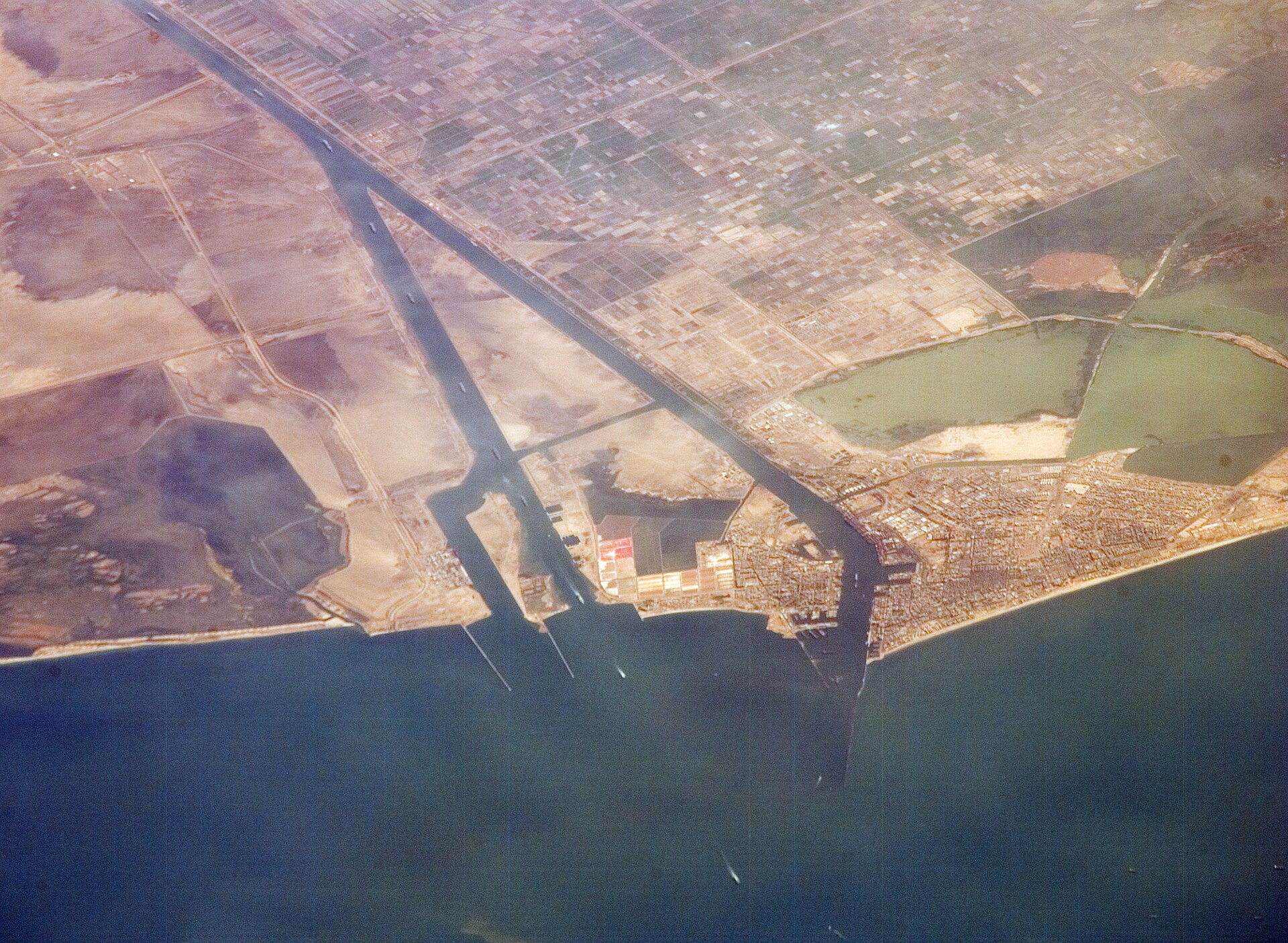
The Suez Canal generated peak revenue of $10.25 billion in fiscal year 2023. That figure fell to approximately $4 billion in 2024 as Houthi attacks disrupted Red Sea shipping, and the IMF projects $3.6 billion for fiscal year 2024/25. President Sisi stated in March 2026 that Egypt had lost $9 billion over two years since the Gaza war began — a figure that predates the Iran crisis but has worsened since. The Egyptian pound fell to 50.2 to the US dollar, an eight-month low, on the outbreak of hostilities (Africanews / Times of Israel).
On April 7, 2026, the Suez Canal Authority scrapped its 15 percent container transit rebate three months ahead of schedule after CMA CGM, Hapag-Lloyd, and Maersk all suspended or paused passages through the canal. The rebate — worth over $70,000 per qualifying transit — had been a desperate measure to retain traffic; its cancellation signals that the Authority concluded the discount was not working (DredgeWire / Ship & Bunker). Sisi described the national economy as being in a “state of near-emergency” (Arab News, March 2026).
Egypt’s Foreign Ministry stated on April 8 that the ceasefire “represents a very important opportunity” and that Egypt “will continue efforts with Pakistan and Turkiye to promote security and stability in the region.” On April 15, Foreign Minister Abdelatty met US Secretary of State Rubio to discuss “the ceasefire and long-term peace” (CNN). Egypt’s function in the quad is not operational; it is legitimising. When the quad presents a ceasefire extension framework, Egypt’s presence transforms it from a Turkish-Pakistani mediation project into a four-state consensus backed by the largest Arab country, a NATO member, and two nuclear-threshold states.
The Distributed-Cost-of-Asking Thesis
The structural problem facing all four quad members is identical: someone has to ask Iran for more time, and whoever asks pays. Turkey asking would compromise its mediator neutrality — and, more practically, would give Tehran leverage in the July 31 gas pipeline renewal talks. Pakistan asking — which it has already done, publicly calling for a 45-day extension — exposed it to Iran’s rejection and Tehran’s substitution of its own 10-point plan. Saudi Arabia cannot ask because it is not a party to the accord. Egypt asking would be meaningless because Tehran would not consider Cairo a relevant interlocutor.
The quad solves this by making the request collective. A four-state communiqué calling for a ceasefire extension is structurally different from a Pakistani proposal or a Turkish request. Iran can engage with a multilateral framework — as it did in the Astana Process for Syria — without the domestic political cost of appearing to have yielded to any single state’s pressure. The Astana parallel is instructive: on May 4, 2017, Turkey, Russia, and Iran signed an agreement creating four de-escalation zones in Syria. Iran accepted constraints through that multilateral format that it had categorically refused in bilateral negotiations with any of the three parties individually.
Fidan articulated the underlying philosophy on April 13: “The fundamental source of problems in the region is the lack of trust between countries. For these to emerge, countries need to commit to each other’s sovereignty within a security pact framework.” The language — “security pact framework” — is the closest any quad official has come to describing the extension mechanism publicly. It is not a ceasefire renewal. It is a sovereignty-affirmation framework that happens to require a ceasefire to function.
The distributed-cost model also explains why the quad chose Antalya as the venue. The Antalya Diplomacy Forum is not a Western-gatekept institution. The 2024 edition welcomed Venezuela, Iran, and Cuba — states routinely excluded from G7 or EU-hosted events. Iran’s participation in the broader forum — even if it does not sit in the quad meeting itself — creates proximity without formality. Fidan can brief Iranian counterparts in corridor meetings that carry no diplomatic weight but transmit the quad’s position in real time.
What Can the Quad Actually Deliver Before April 22?
The honest answer is: probably a statement, possibly a framework, almost certainly not a signed extension. Seven days separates the forum’s opening from the ceasefire’s expiry. The Islamabad Accord took weeks of Pakistani shuttle diplomacy and hundreds of back-channel contacts to produce. A formal extension with verification mechanisms, enforcement clauses, and Iranian ratification — which requires SNSC approval touching IRGC command structures — cannot materialise in a week.
What the quad can deliver is a political environment in which the ceasefire does not formally expire but is also not formally renewed. A joint statement from four states representing over 450 million people, three major Muslim-majority countries, a NATO member, and a nuclear-armed state creates a normative expectation of compliance that is politically costlier to violate than a bilateral agreement. If Turkey, Pakistan, Saudi Arabia, and Egypt all declare that the ceasefire must hold through the Hajj season — with the first pilgrims already arriving on April 18 — Iran faces the choice of defying not one state but a regional consensus.
The operational deliverable is likely a “rolling extension” framework — language declaring that the ceasefire remains in effect pending the completion of ongoing negotiations, without specifying a new expiry date. This avoids the problem that killed Pakistan’s 45-day proposal: Iran objecting to any specific timeline that implies it accepted an externally imposed deadline. A rolling extension has no deadline, which means Tehran can characterise it domestically as an Iranian decision to maintain the pause while its conditions — including Hormuz sovereignty recognition — remain under discussion.
The risk is that a rolling extension with no deadline is, functionally, no extension at all. It relies on each party’s continued willingness to observe the ceasefire without a binding commitment. Iranian foreign policy adviser Mahdi Mohammadi stated: “Without fully restraining America’s rabid dog in Lebanon, there will be no ceasefire or negotiations” — language that treats the ceasefire as conditional on demands the quad has no capacity to meet. The IRGC Navy declared “full authority” over the Strait of Hormuz on both April 5 and April 10, while Araghchi was physically present in Islamabad conducting ceasefire talks — a demonstration that the military and diplomatic tracks operate on separate command authority.
Iran Has No Hajj Stake — and Knows It
The quad’s most significant vulnerability is asymmetric urgency. Saudi Arabia needs the ceasefire to hold through the Hajj peak on May 25-26. Turkey needs it to hold through the July 31 pipeline renewal deadline. Pakistan needs it to hold through the June 2026 maturity of its $3 billion Saudi cash deposit. Egypt needs it to hold indefinitely because every day of regional instability bleeds Suez revenue. Iran needs it to hold for exactly as long as it chooses, and not one day longer.
Iranian pilgrims have been barred from Hajj since 2016. Tehran has zero institutional, economic, or religious stake in the pilgrimage proceeding safely. A ceasefire lapse on April 22 is costless for Iran in Hajj terms and maximally costly for Riyadh. The Supreme Leader — absent from public duties for 44-plus days, with his son Mojtaba reportedly handling communications by audio only — has no domestic constituency demanding Hajj access. The IRGC, which operates with decentralised autonomy from the diplomatic track, has declared its own conditions for Hormuz that function independently of whatever Araghchi negotiates.
This asymmetry means the quad is negotiating from a position of collective need against a counterpart with no equivalent time pressure. The expiry date is a weapon in Tehran’s hands, not a constraint on its behaviour. Every day closer to April 22 increases the quad’s urgency and decreases Iran’s incentive to agree to terms before the deadline passes. The optimal Iranian strategy — if one assumes rational unitary-actor decision-making, which the authorization ceiling problem complicates — is to let the deadline arrive, observe the quad’s reaction, and then offer to extend on its own terms from a position of demonstrated willingness to let the ceasefire lapse.
The data on this is thin. There is no public evidence of Iranian engagement with the Antalya quad specifically, and Araghchi’s April 13 calls to the Saudi and French foreign ministers — while they indicate active back-channels — do not confirm participation in the quad framework. The quad may be planning a framework that Iran has already decided to ignore.
| State | Primary Stake | Critical Deadline | Leverage Over Iran | Vulnerability |
|---|---|---|---|---|
| Turkey | Gas pipeline renewal (9.6 Bcm/yr) | July 31, 2026 | MIT back-channels; NATO air defence umbrella | $2.5B current account hit per $10/bbl; 4 Iranian missiles entered airspace |
| Pakistan | Mediator credibility + SMDA obligations | June 2026 ($3B deposit maturity) | Protecting-power status; 13,000 troops in Saudi Arabia | Cannot enforce terms on IRGC; dual allegiance exposed |
| Saudi Arabia | Hajj security + PAC-3 depletion | April 18-22 (Hajj arrivals / ceasefire expiry) | Economic weight; Araghchi back-channel | Excluded from Islamabad Accord; ~400 PAC-3 rounds remaining |
| Egypt | Suez Canal revenue collapse | Indefinite (revenue falls daily) | Arab League legitimacy; Rubio engagement | No bilateral Iran leverage; pound at 50.2/USD |
The Black Sea Grain Precedent
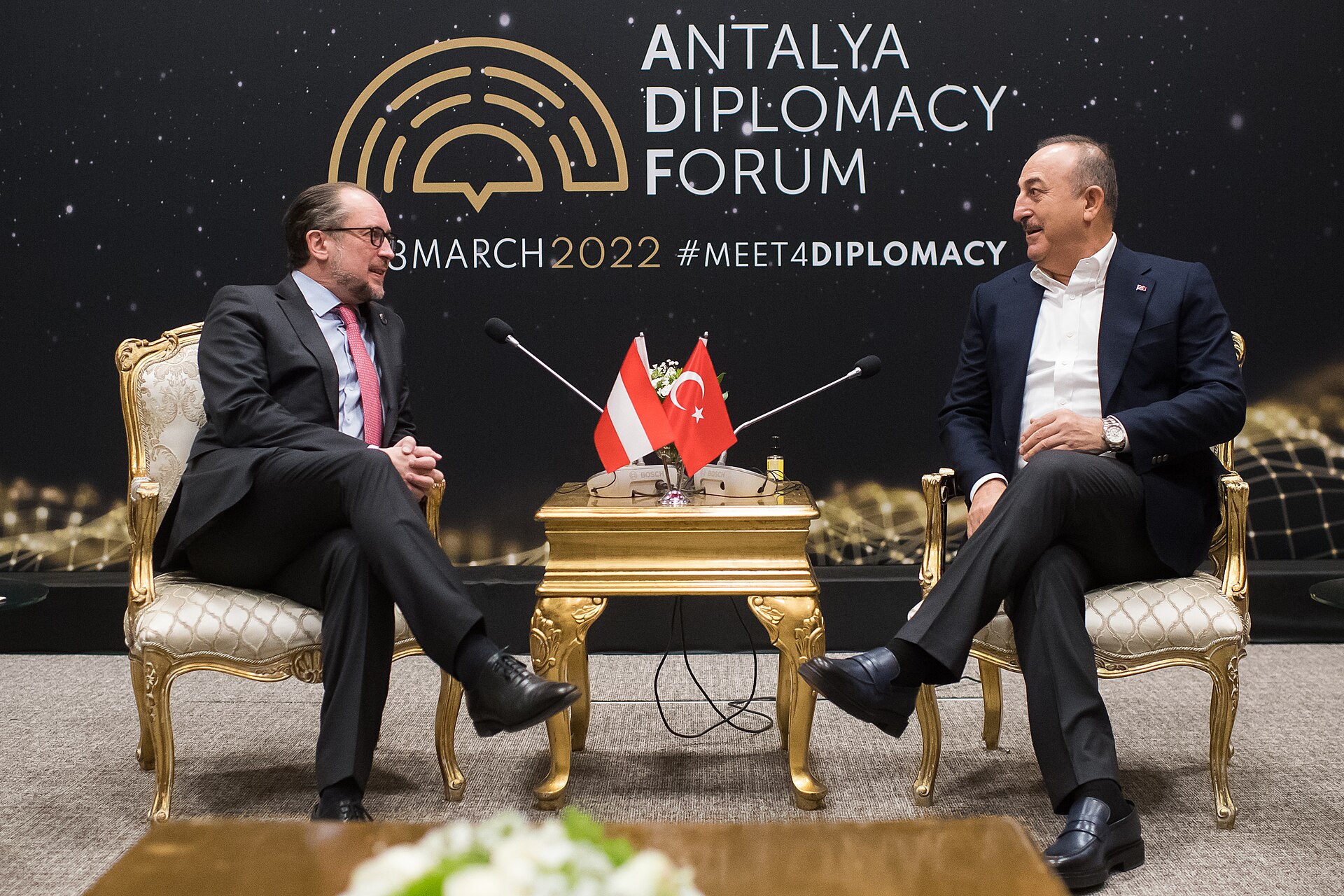
The Antalya Diplomacy Forum has a relevant — if limited — track record as a venue for impossible conversations. In March 2022, the forum hosted the first meeting between Russian Foreign Minister Lavrov and Ukrainian Foreign Minister Kuleba since Russia’s invasion. Kuleba’s assessment was blunt: “no progress.” But the meeting contributed to what became the Black Sea Grain Initiative four months later, brokered by Turkey and the United Nations in July 2022. The forum did not produce a deal. It produced the conditions under which a deal could later emerge.
The parallel has limits. The Black Sea Grain Initiative had a clear beneficiary with global moral authority — the developing world’s food supply — that created overwhelming international pressure for an agreement. The Iran-Gulf ceasefire extension has no equivalent universally sympathetic stakeholder. Hajj pilgrims come closest, but the framing is Islamic rather than global, and Iran’s zero-stake position neutralises the moral pressure.
What Antalya 2022 demonstrated was the forum’s utility as a venue for “first signals, not signings” — a phrase that applies directly to the quad’s probable output. A joint statement or communiqué from the four states, delivered at a forum attended by 50-plus foreign ministers and 150-plus countries, creates international visibility for the ceasefire extension demand without requiring any bilateral confrontation with Tehran. Erdogan welcomed the April 8 ceasefire by urging “full implementation on the ground and warning against any provocations or acts of sabotage,” and called both Trump and Pezeshkian in the days following — positioning Turkey as the connector between the American and Iranian tracks (Turkish Minute).
The Antalya format also permits a degree of diplomatic ambiguity that formal negotiations cannot. A joint communiqué can reference “ongoing consultations” without confirming Iranian assent, giving Tehran room to claim ownership of any extension that follows.
FAQ
Has Iran been invited to the Antalya quad meeting?
No public invitation has been extended to Iran for the quadrilateral sideline specifically, but Iran participates in the broader Antalya Diplomacy Forum — the 2024 edition included Iran alongside Venezuela and Cuba. The forum’s structure allows corridor-level engagement between Fidan and Iranian counterparts outside the formal quad session, which is likely the intended transmission mechanism. Iran’s ambassador to Ankara has been active in bilateral contacts throughout the crisis, providing an additional back-channel that does not require Tehran to formally join the quad.
Could the quad expand to include other states?
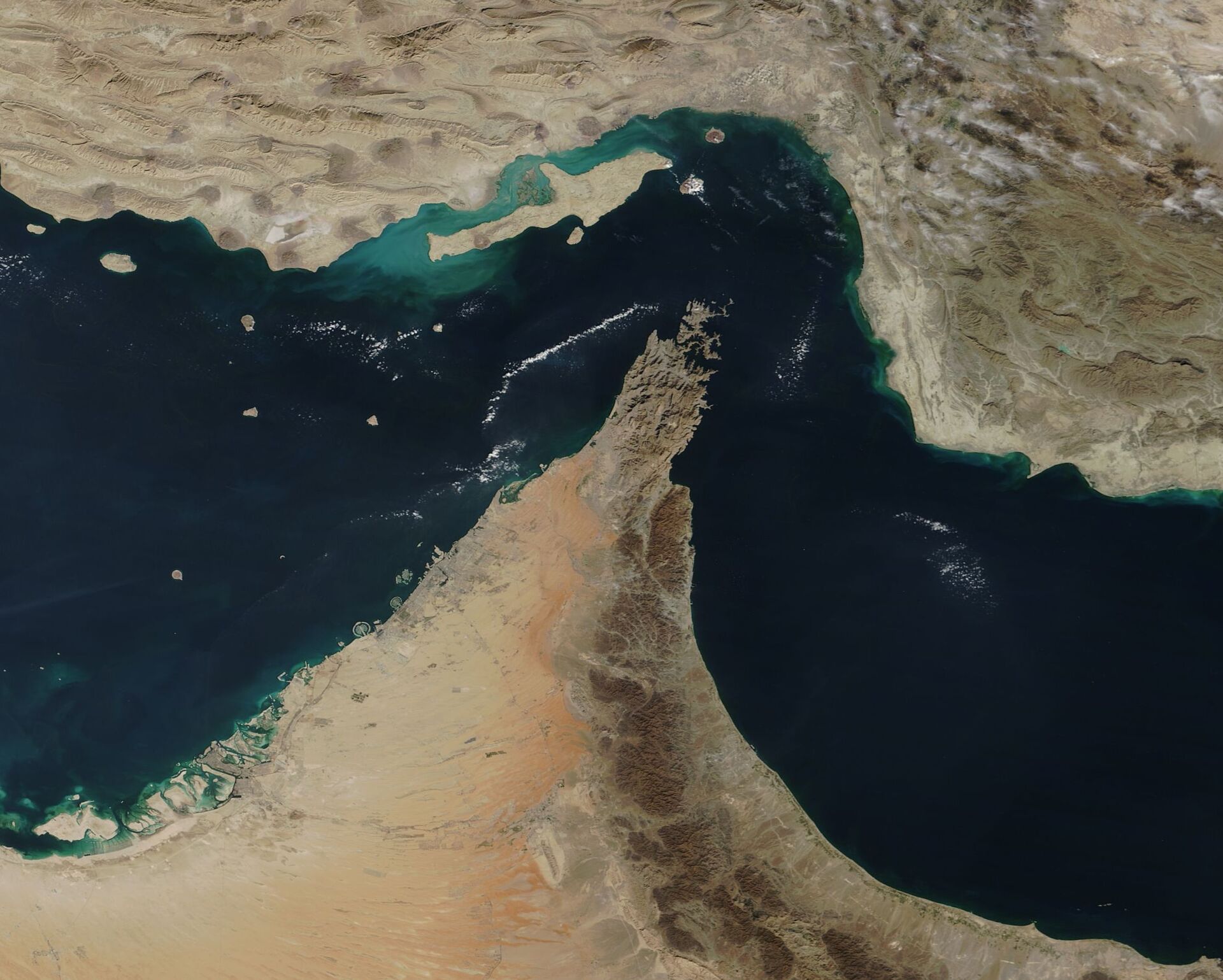
Qatar and Oman are the most likely expansion candidates. Qatar hosted earlier mediation rounds and maintains direct communication with both Iran and the United States through its established intermediary role. Oman — which shares the Strait of Hormuz with Iran and was referenced in the original ceasefire text regarding shipping “coordination” — has a structural interest in any Hormuz-related framework. A separate procedural gap complicates any formal extension: Zolghadr’s SNSC role (he is sanctioned under US and EU designations) may require a fourth signatory such as Oman to validate the accord.
What happens if the April 22 ceasefire expires without extension?
The Islamabad Accord contains no automatic renewal provision. Expiry does not legally compel either side to resume hostilities — it removes the diplomatic framework constraining them. The practical consequence depends on IRGC command decisions, which operate on a separate authorization track from Araghchi’s diplomatic negotiations. The US naval blockade, effective since April 13, would remain in place regardless of ceasefire status, meaning the military status quo does not change on April 23 even if the diplomatic status quo does. The immediate risk is not a resumption of large-scale strikes but an incremental escalation — a struck pipeline here, a detained tanker there — that erodes the ceasefire’s de facto hold without a formal declaration of resumed hostilities.
Why did Pakistan’s 45-day extension proposal fail?
Tehran objected to the specific timeline, which implied acceptance of an externally imposed deadline. Iran’s counter-proposal — its 10-point plan — substituted conditions (including Hormuz sovereignty recognition and IRGC coordination authority) that function as preconditions to Phase 1, making the phased structure Pakistan proposed logically impossible to initiate. Point 7 of that plan requires IRGC “coordination” over the Strait as a treaty requirement — meaning Iran would need Hormuz sovereignty conceded before hostilities formally pause. The quad’s rolling-extension approach attempts to sidestep the timeline objection by avoiding any specific expiry date. Iran reinforced this position on April 17, five days before expiry: Tehran rejected the Lebanon ceasefire as a stand-alone diplomatic success and demanded a simultaneous end to fighting across all fronts, framing the Lebanon truce as proof that its comprehensive demand is now US policy rather than a concession received.
Is the Antalya quad a precursor to a formal regional security pact?
Fidan’s April 13 language — “countries need to commit to each other’s sovereignty within a security pact framework” — is the strongest public signal that the quad may evolve beyond ceasefire management. But the four states have deeply divergent security architectures: Turkey is NATO-aligned, Pakistan maintains its protecting-power role for Iran, Saudi Arabia operates under a bilateral US defence umbrella, and Egypt receives $1.3 billion in annual US military aid. A formal security pact would require reconciling these competing alignments, which no existing regional framework — including the Gulf Cooperation Council — has achieved. The quad is more accurately described as a crisis-management coordination group than a proto-alliance.
The Antalya quadrilateral runs in parallel with a separate France-UK Hormuz conference on April 17, where 40 nations gather to plan a multinational escort framework for the Strait — with Saudi Arabia holding a seat at neither organizing table despite being the state most exposed to the outcome. The April 17 Hormuz multilateral summit and what Saudi Arabia’s absence from both Western tables means for Riyadh’s strategic position before the April 22 ceasefire expires is examined in detail here.</a The deeper problem is that even the Antalya quad cannot resolve the fundamental ambiguity now shaping Saudi planning: whether the ceasefire runs through April 22 or has already been extended. Regional mediators claim a US-Iran ceasefire extension was agreed in principle while Washington publicly denies it — the diplomatic gap that is paralyzing Saudi Hormuz and June OSP scheduling is examined here. The deeper Saudi bind — the Custodian of the Two Holy Mosques title that converts the Hajj window into a strategic trap no ceasefire extension can dissolve — is examined in The Custodian’s Trap: Wartime Hajj 2026.
The Antalya framework’s central blind spot is the same authorization ceiling that has constrained every ceasefire proposal since February 28. On April 4, Iran’s President Pezeshkian made that ceiling explicit, publicly accusing Vahidi and Abdollahi of acting unilaterally to wreck ceasefire prospects — an admission that no external mediation forum, including the Antalya quad, can resolve what is structurally an intra-Iranian command authority problem.