
DHAHRAN — Dow Inc. recorded a $292 million pretax charge in its first-quarter 2026 results for the deteriorating value of its guarantee on Sadara Chemical Company’s debt — a disclosure embedded in Dow’s 10-Q filing with the U.S. Securities and Exchange Commission on April 23, fifty-three days before the June 15 grace period on Sadara’s $3.7 billion in restructured senior debt expired. Aramco, which holds 65 percent of Sadara and guarantees $2.405 billion of the same debt, published its own Q1 interim report on May 11 with no reference to the approaching deadline, no updated contingent liability note, and no fair-value remeasurement of its guarantee exposure.
Three days after that grace period expired — with all 26 of Sadara’s manufacturing units in Jubail Industrial City offline since March 31, revenue at zero for 78 consecutive days, and the 28-bank lending syndicate declining to trigger a formal default — the two guarantors occupy different disclosure universes. One has priced the deterioration on paper. The other has not.
The gap is structural, not conspiratorial. Dow operates under SEC periodic-reporting obligations and U.S. GAAP fair-value measurement rules that required it to remeasure its guarantee liability — which jumped from $212 million at year-end 2025 to $510 million at March 31, 2026 — whether or not a lender demanded payment. Aramco operates under Saudi Arabia’s Capital Market Authority and Tadawul listing rules, which treat the grace period expiry as a scheduled milestone of an existing obligation rather than a fresh material event. The result is $2.405 billion in state-linked guarantee exposure sitting without a current public fair-value mark while the plant it underwrites generates nothing.
What Dow’s Q1 filing reveals is not just the financial mechanics of a 35-percent minority partner marking down a troubled joint venture. It reveals, by contrast, the absence of any equivalent accounting on the majority side — a $2.405 billion silence that is permissible under Saudi listing rules but legible to every international creditor holding Sadara paper.
Table of Contents
What Dow Filed
Dow’s Q1 2026 10-Q, filed with the SEC on April 23, contains a non-operating line item for a $292 million pretax charge described as “change in fair value” of the company’s Sadara guarantee liability. The charge was allocated across two Dow segments: $81 million in Packaging & Specialty Plastics and $211 million in Industrial Intermediates & Infrastructure, according to the 10-Q’s segment disclosures.
The underlying guarantee liability on Dow’s balance sheet moved from $212 million at December 31, 2025, to $510 million at March 31, 2026. Dow classified the measurement at Level 3 in GAAP’s fair-value hierarchy — the tier that relies on unobservable inputs and carries the highest degree of management discretion. Level 3 means the $510 million figure is derived from internal models, not from market prices or broker quotes.
The Middle East briefing 3,000+ readers start their day with.
One email. Every weekday morning. Free.
Dow simultaneously disclosed that it had suspended recognition of its share of equity-method losses from Sadara, stating in the 10-Q that “the carrying value of Sadara related liabilities recorded in Dow’s consolidated balance sheets reached the total of Dow’s existing relevant obligations and commitments.” Cumulative equity-method losses from Sadara had reached approximately $1.4 billion, according to the filing and the accompanying earnings call.
On that call, Dow CEO Jim Fitterling told investors he would “continue to finish up negotiations with Saudi Arabia regarding Sadara” before handing the CEO role to Karen Carter on July 1. He directed analysts to expect a “midyear update” in late July. The phrasing converted the June 15 deadline — then 53 days away — into a known variable within an announced corporate timeline. Annual cash obligations related to Sadara remain approximately $100 million per year through 2038, Fitterling confirmed, regardless of the equity loss suspension.
No standalone 8-K material-event notice was filed. Under SEC Item 2.04, a triggering event requires either a formal lender demand or a declared default — neither of which had occurred. The 28-bank syndicate’s collective decision not to accelerate the debt or demand payment is the mechanical reason no 8-K was necessary. Dow satisfied its disclosure obligations by remeasuring the guarantee at fair value within the periodic 10-Q.
Post-deadline market commentary characterized the June 15 expiry as easing a key overhang on Dow’s stock, according to investor analysis published by ad-hoc-news.de. Dow had, in accounting terms, pre-absorbed the blow.
| Metric | December 31, 2025 | March 31, 2026 | Change |
|---|---|---|---|
| Guarantee liability (fair value) | $212M | $510M | +$298M |
| Fair-value hierarchy | Level 3 | Level 3 | — |
| Pretax charge (Q1) | — | $292M | — |
| Cumulative equity-method losses | — | ~$1.4B | Suspended |
| Annual cash obligations | ~$100M/yr | ~$100M/yr | No change |
| Guarantee share (35%) | $1.295B | $1.295B | No change |
What Aramco Published — and What It Left Out
Aramco’s Q1 2026 interim report, published on May 11 on aramco.com, contained no forward-looking commentary on the June 15 Sadara deadline. No updated contingent liability note addressed the approaching guarantee trigger. No fair-value remeasurement of Aramco’s $2.405 billion guarantee exposure — the 65-percent share of Sadara’s $3.7 billion restructured senior debt — appeared in the report.
No named Aramco spokesperson has commented on the June 15 deadline or the $2.405 billion guarantee status as of June 18, confirmed by a review of Reuters, Bloomberg, Arab News, Zawya, and Argus Media coverage.
Under CMA and Tadawul disclosure rules, the grace period expiry is categorized as a scheduled milestone of an existing obligation — not a new material event requiring immediate or continuous disclosure. Aramco’s Tadawul obligations for contingent liabilities require fresh disclosure only when a contingency crystallizes into a formal lender demand. The syndicate’s forbearance prevents that crystallization. The regulatory framework produces a structural gap: the obligation can deteriorate without triggering a disclosure requirement, so long as no creditor formally demands payment.
Sadara itself filed a regulatory disclosure on Tadawul in April 2026, stating that it “cannot provide, at the present time, an estimate for the return to production, as this is contingent on domestic and international factors.” That language acknowledged operational uncertainty without quantifying financial exposure.
SABIC, by comparison, filed a separate war-damage disclosure on Tadawul in April warning of “material impact to 2026 financial results” without providing figures — the first Tadawul-listed Saudi company to place war-damage uncertainty on the public record, according to a review of exchange filings. Aramco made no equivalent filing.
The asymmetry is arithmetic. Dow’s 35-percent share of the guarantee is $1.295 billion; Dow marked a $292 million fair-value deterioration against it within 10 weeks of the operational shutdown. Aramco’s 65-percent share is $2.405 billion. If the same proportional deterioration applied — and both guarantors face the same underlying obligor — the equivalent Aramco mark would be approximately $542 million. That figure does not exist in any Aramco public document.
| Metric | Dow (35%) | Aramco (65%) |
|---|---|---|
| Guarantee exposure | $1.295B | $2.405B |
| Q1 fair-value charge disclosed | $292M | None |
| Updated guarantee liability on balance sheet | $510M | Not disclosed |
| Regulatory filing regime | SEC (10-Q / 8-K) | CMA / Tadawul |
| Fair-value measurement standard | US GAAP (ASC 820) | IFRS 13 |
| June 15 deadline referenced in Q1 report | Implicit (guarantee remeasurement) | No |
Why Has No Bank Called a Default?
The 28-bank syndicate — led by HSBC and JPMorgan as arrangers of the original Sadara project finance — has collectively agreed to forbearance, declining to demand payment or accelerate the debt upon the June 15 grace period expiry. No bank in the syndicate has made a public disclosure of this forbearance arrangement.
The forbearance is the fulcrum of the entire disclosure architecture. Absent a formal lender demand, no SEC Item 2.04 triggering event exists for Dow. Absent a formal default declaration, no CMA continuous-disclosure obligation crystallizes for Aramco. Absent either, the $3.7 billion in guaranteed debt exists in a state that is neither performing nor defaulted — the deadline arrived, but no one sent the letter.
The banks’ incentives are legible. A formal default on Sadara’s guaranteed senior debt would trigger cross-default provisions across the company’s $12.5 billion total debt structure. It would constitute the first default by an Aramco-guaranteed entity — a precedent that would reprice Aramco’s sovereign-linked guarantee across every credit instrument in which it serves as backstop. For banks holding Aramco relationship exposure far exceeding their Sadara allocation, the cost of calling a default dwarfs the cost of waiting.
The silence required more coordination than a default would have. Twenty-eight institutions across multiple jurisdictions agreed, without public statement, to neither demand nor disclose — a forbearance architecture that required legal review at every node of the syndicate while producing zero public documentation. The forbearance is invisible by design; the debt it suspends is not.
What Does Jubail Look Like After 78 Days?
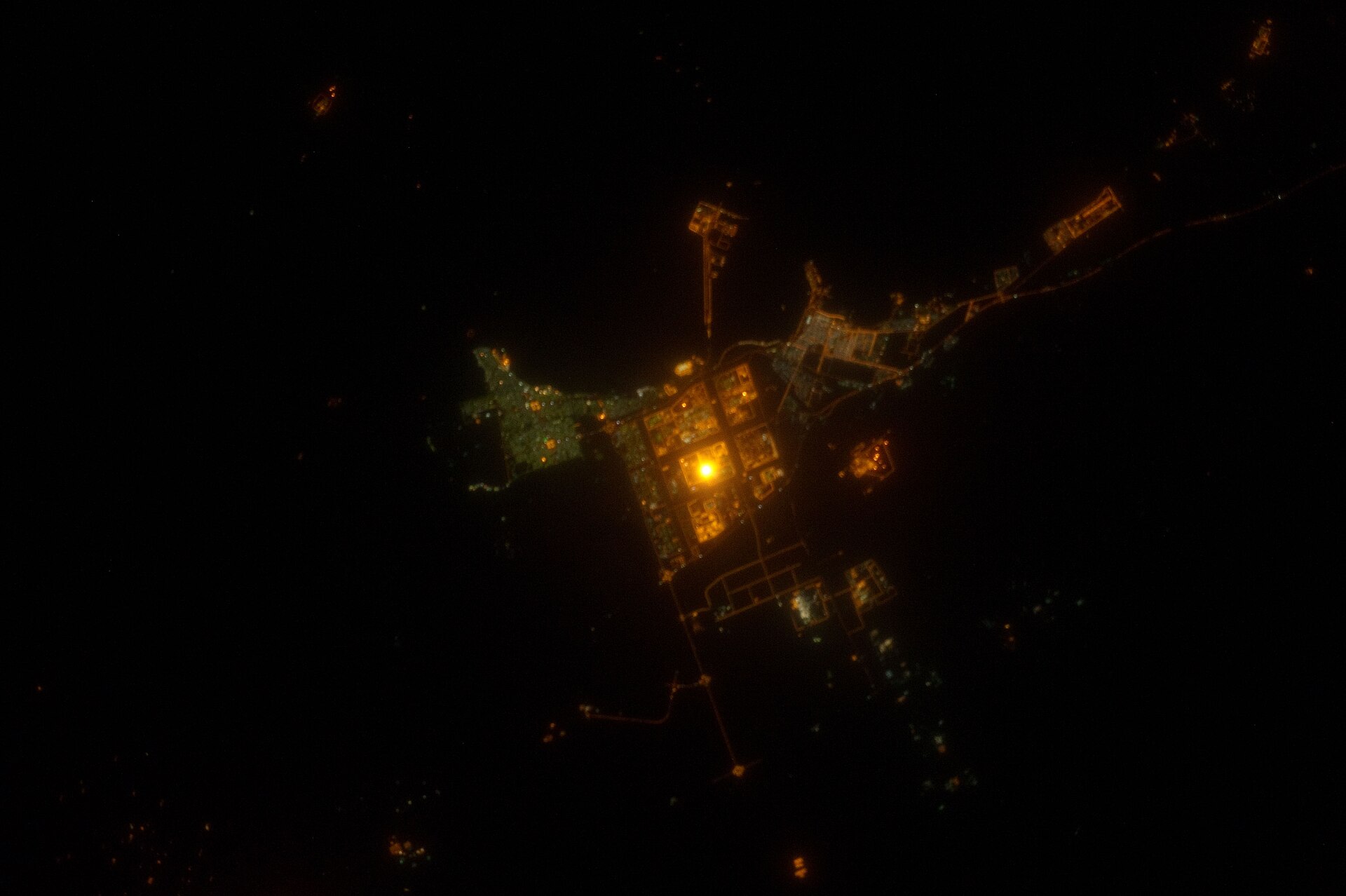
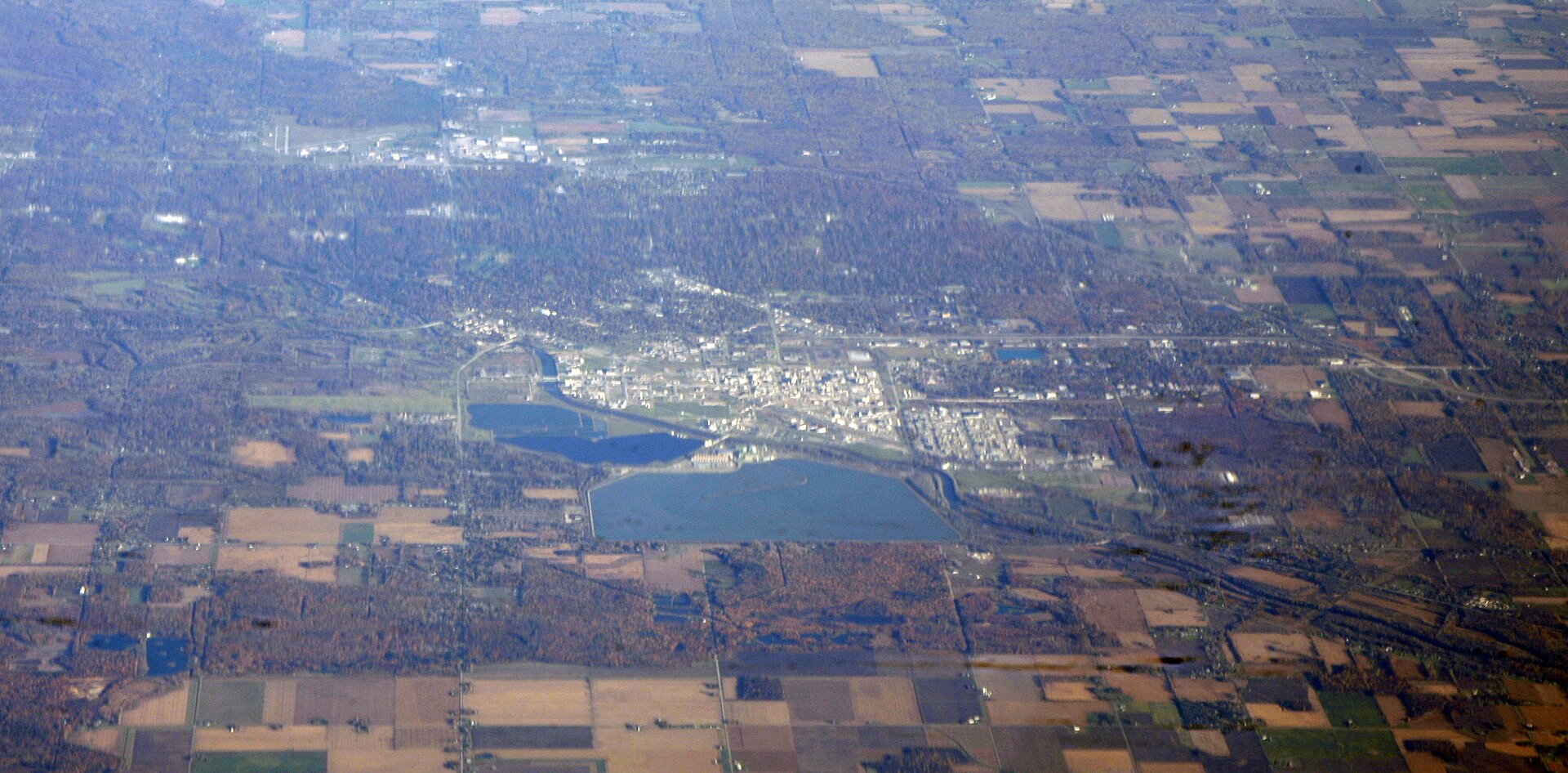
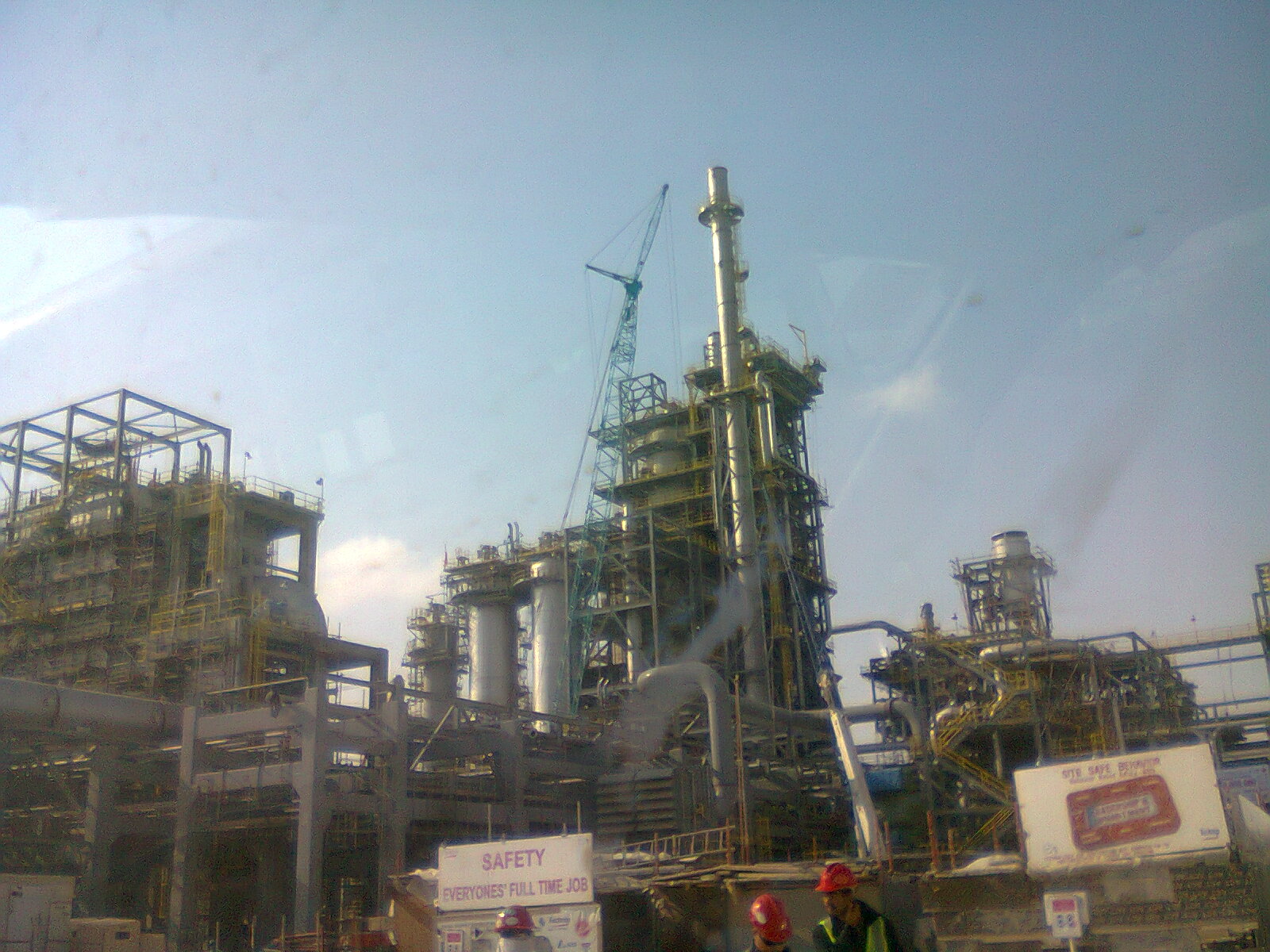
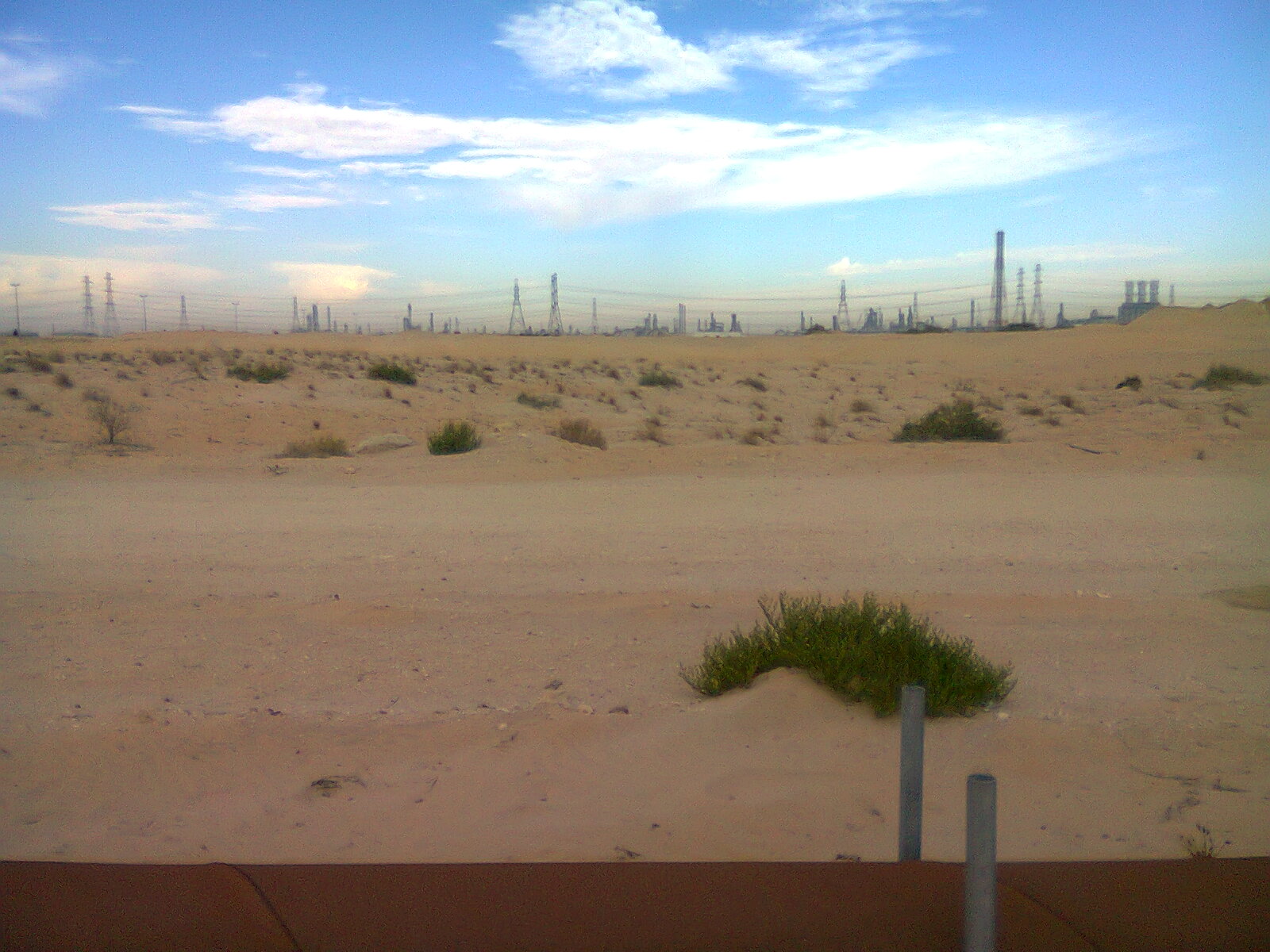
All 26 of Sadara’s manufacturing units in Jubail Industrial City have been offline since March 31, 2026, when feedstock supply chains were severed by the closure of the Strait of Hormuz, according to Argus Media and Bloomberg reporting from that date. As of June 18, the complex — the largest integrated chemical facility ever built in a single phase, at a total project cost of approximately $20 billion — has generated zero revenue for 78 consecutive days.
Sadara’s own Tadawul filing in April acknowledged the paralysis without quantifying it: production return “is contingent on domestic and international factors,” the company stated, offering no timeline. The last day of grace arrived with every reactor cold.
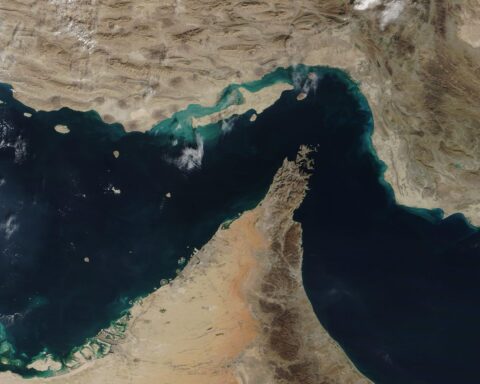
The operational shutdown is not a consequence of Sadara-specific failure. It is downstream of Hormuz. Iran’s closure of the strait cut the maritime route through which Jubail’s petrochemical exports reach Asian and European buyers, and disrupted the feedstock imports that some Sadara units require. The plant’s physical infrastructure is intact. Its commercial function is not.
For Jubail’s workforce and the Eastern Province supply chain that feeds the complex, 78 days of zero output translates into deferred maintenance contracts, suspended logistics arrangements, and workforce retention questions that compound with each week of inactivity. No Sadara or Aramco filing has addressed these secondary effects.
Can the Ceasefire Restart Sadara?
The memorandum of understanding signed June 17 between the United States and Iran does not mechanically reopen Jubail. Restarting Sadara depends on three conditions, none of which the MOU satisfies as of June 18.
First, feedstock availability. Sadara’s ethane-based crackers require gas feed from Aramco’s Master Gas System, which remained operational through the conflict, but several units depend on imported naphtha and other inputs that transit Hormuz. The strait remains mine-affected. Pentagon estimates place full mine clearance at six months; the UK and France are leading swept-lane operations that may restore partial transit confidence in 40 to 50 days, but no maritime safety authority has cleared commercial petrochemical cargo movement through the corridor.
Second, export viability. Even if Sadara restarts production, its output must reach buyers. Jubail’s petrochemical exports ship through the Persian Gulf — the same waterway where war-risk premiums surged 340 percent, BIMCO CONWARTIME clauses remain triggered, and Aramco itself cut its July Arab Light OSP by $6 per barrel for cargoes that cannot currently load. P&I clubs have not issued clearances for commercial vessels transiting Hormuz under normal insurance terms.
Meanwhile, the oil price into which Sadara’s eventual output would sell has deteriorated further. Brent fell to $75.49 by June 18 — a 40% collapse from the 2026 conflict peak — as markets priced Iranian supply before a single Saudi barrel moved. The price environment that any Sadara restart plan must assume has weakened in tandem with the physical barriers.
Third, commercial viability judgment. After 78 days offline, restarting a complex of Sadara’s scale requires a management decision that the output will find buyers at prices that justify the restart cost. With Brent at approximately $78.57 — well below Saudi Arabia’s fiscal breakeven of $108 to $111, according to IMF estimates — and Asian petrochemical buyers having redirected supply chains during the shutdown, the demand-side case for immediate restart is not self-evident.
The MOU is a political instrument. Sadara’s debt is a commercial obligation. The two operate on different clocks.
Background: The 2021 Restructuring
Sadara achieved project completion in November 2020. In March 2021, the original $10 billion shareholder completion guarantees — which had backstopped the construction-phase debt — were released and replaced with $3.7 billion in proportional senior-debt guarantees, according to Zawya and Arab News reporting from March 2021.
The 2021 restructuring extended the final maturity of Sadara’s senior debt from 2029 to 2038 and granted a principal payment grace period through June 15, 2026. The grace period — the five-year window that expired three days ago — was designed to give Sadara time to ramp up operations and generate sufficient cash flow to begin servicing the restructured debt. The Hormuz closure, beginning in early 2026, consumed the final months of that window.
The 28-bank syndicate that holds the restructured debt, led by HSBC and JPMorgan as original arrangers, agreed to the 2021 terms on the basis of projected Sadara revenues that assumed uninterrupted access to Gulf maritime export routes — an assumption that held until it did not.
Frequently Asked Questions
What is Level 3 in the GAAP fair-value hierarchy, and why does it matter for Dow’s Sadara disclosure?
GAAP’s fair-value framework under ASC 820 classifies measurements into three tiers. Level 1 uses quoted prices in active markets — stock prices, commodity futures. Level 2 uses observable inputs other than quoted prices — interest rate curves, credit spreads from comparable instruments. Level 3 uses unobservable inputs — management assumptions, internal models, projected cash flows under hypothetical scenarios. Level 3 measurements carry the widest range of defensible outcomes, meaning two companies applying Level 3 to the same guarantee could reach materially different valuations. Dow’s decision to classify its Sadara guarantee at Level 3 reflects the absence of any active market for Sadara debt or comparable guarantee instruments, leaving the $510 million figure dependent on Dow’s internal assessment of default probability, recovery rates, and operational restart timing — none of which are externally verifiable.
Does Aramco report under IFRS or US GAAP, and does that explain the disclosure difference?
Aramco reports under International Financial Reporting Standards as adopted in Saudi Arabia, not US GAAP. Under IFRS, guarantee liabilities are initially recognized at fair value under IFRS 13 and subsequently measured under IFRS 9’s expected credit loss model or IAS 37’s provisions framework. IFRS requires remeasurement when conditions change materially — and 26 units going offline for 78 days with zero revenue would ordinarily constitute a material change in the underlying obligor’s ability to service debt. However, IFRS allows greater latitude in the timing and granularity of interim disclosures than US GAAP’s quarterly 10-Q regime. Aramco’s Q1 interim report is a condensed document under IAS 34, which requires disclosure of material changes but leaves “material” to management judgment. The difference is partly standards-driven, but the magnitude of the gap — $292 million disclosed on one side, zero on the other — exceeds what accounting-framework differences alone would explain.
What would happen to Aramco’s credit rating if Sadara formally defaulted?
Aramco carries ratings of A1 from Moody’s, A+ from S&P, and A+ from Fitch — ratings that are capped by Saudi Arabia’s sovereign ceiling. A formal Sadara default would force rating agencies to reassess Aramco’s contingent liability exposure and the credibility of its guarantee across other instruments. In practice, rating agencies tend to distinguish between parent defaults and guaranteed-subsidiary defaults, but the precedent effect matters: Aramco has never had a guaranteed entity default. The $2.405 billion is small relative to Aramco’s approximately $130 billion total debt, but the reputational signal of a first-ever guarantee failure could affect the pricing of Aramco’s own bonds and sukuk issuances, particularly in international markets where the disclosure asymmetry is visible.
Does the June 17 ceasefire MOU mention Sadara, Jubail, or petrochemical operations?
No. The MOU text, as publicly described by U.S. and Iranian officials, addresses Iran’s nuclear program, the Strait of Hormuz, sanctions sequencing, and military de-escalation. It contains no reference to Jubail Industrial City, Sadara Chemical Company, petrochemical operations, feedstock restoration, or industrial-zone commercial recovery. The MOU is a framework for diplomatic and military de-escalation. The commercial and financial consequences of the conflict — including Sadara’s debt status, Jubail’s operational shutdown, and the guarantor obligations attached to both — sit outside its scope. Any operational restart at Sadara requires physical mine clearance, maritime insurance normalization, feedstock reconnection, and a commercial viability decision by the joint venture’s board — a sequence that operates independently of diplomatic timelines.
Has any Sadara creditor publicly disclosed exposure to the June 15 deadline?
No member of the 28-bank syndicate has made a public disclosure specifically referencing the June 15 grace period expiry, the forbearance arrangement, or updated loss provisions on Sadara exposure, based on a review of available regulatory filings and public statements through June 18. European banks in the syndicate face their own disclosure obligations under the European Banking Authority’s IFRS 9 expected-credit-loss framework, which requires stage migration — from Stage 1 (performing) to Stage 2 (significant increase in credit risk) or Stage 3 (credit-impaired) — when contractual terms are breached or forbearance is granted. Whether any syndicate bank has internally reclassified its Sadara exposure is not publicly known. The forbearance arrangement that shields Dow from an 8-K obligation also shields every syndicate bank from a public loan-loss disclosure — a shared interest in invisibility that aligns all parties except the ones reading the financial statements from outside. The market Aramco will re-enter once Hormuz clears carries a parallel structural trap: Saudi Arabia’s post-Hormuz oil market trap documents the IEA’s 5 mb/d 2027 surplus projection against a $108–111 fiscal breakeven. How markets reinterpreted the Sadara debt silence in the four days after June 15 — Dow up 39% year-to-date, analysts calling it “tail risk removed” — is documented in ‘Tail Risk Removed’ for $3.7 Billion That Still Exists.