
MOKHA, Yemen — Two Houthi anti-ship ballistic missiles struck the Panama-flagged crude tanker MV Andromeda Star approximately 15 nautical miles southwest of Mokha on April 26, 2026, hitting a vessel carrying Russian Urals crude from the Baltic port of Primorsk to Vadinar, India. A third missile landed near the Antigua-flagged MV Maisha without causing damage.
The Andromeda Star is on the European Union’s sanctions list for Russian oil sanctions evasion. Iran’s Foreign Minister Abbas Araghchi departed Islamabad the same day, routing through Muscat en route to Moscow for an April 27 meeting with Vladimir Putin — arriving with the unresolved fact that Tehran’s most reliable proxy had just put two missiles into cargo linked to Tehran’s most important diplomatic patron.
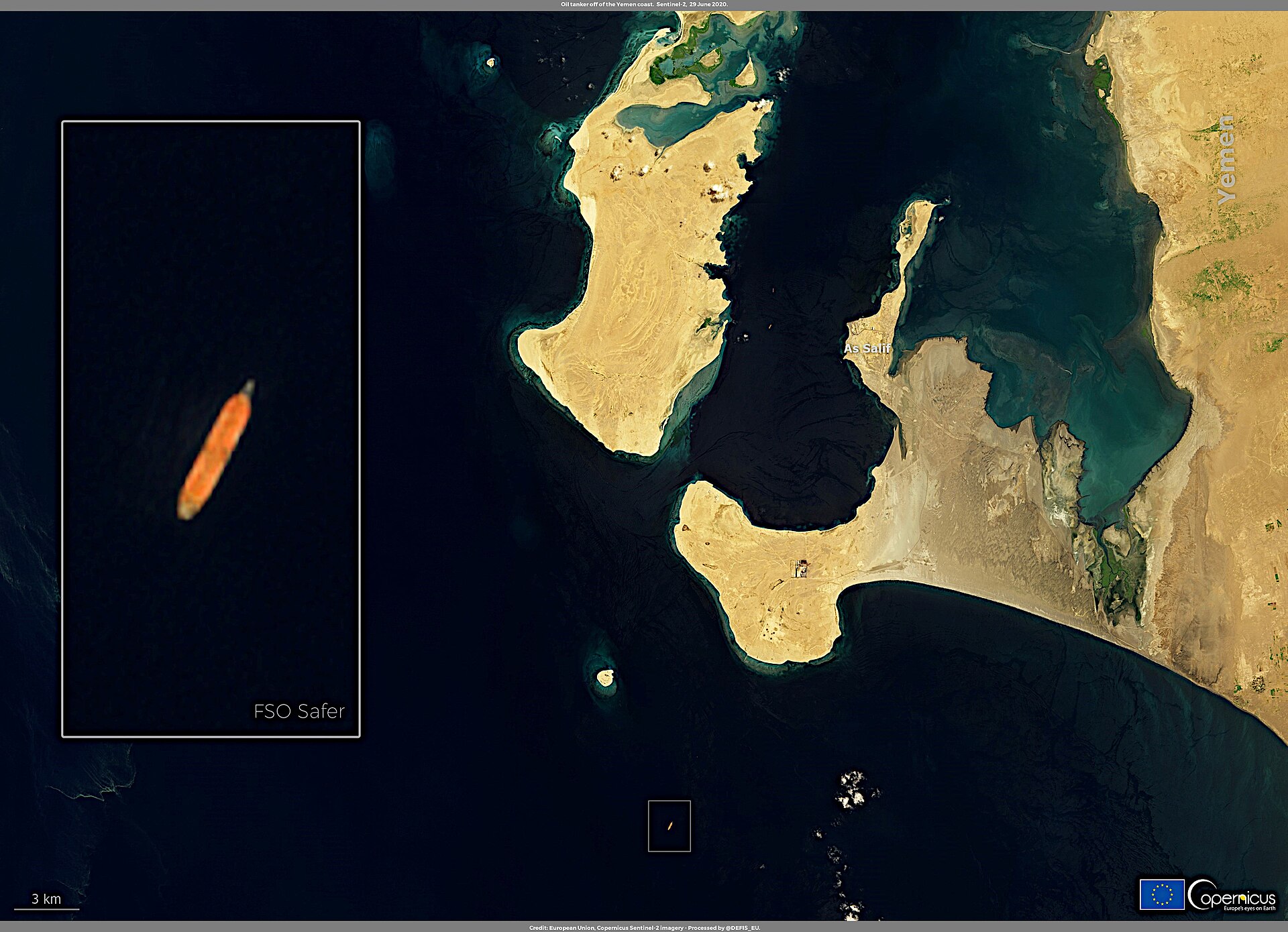
Table of Contents
The Strike
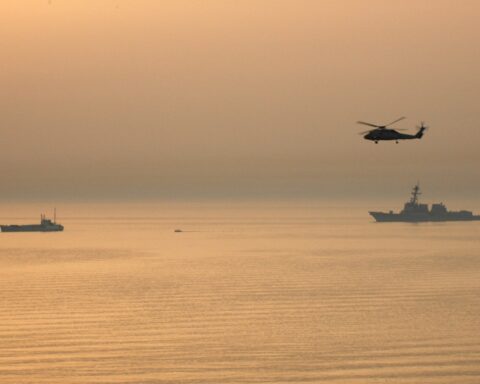
INS Kochi, an Indian Navy destroyer, deployed a helicopter and explosive ordnance disposal team to the Andromeda Star after the strike. All 30 crew members were reported safe, including 22 Indian nationals, according to the Indian Navy. The vessel sustained what CENTCOM and Indian shipping authorities described as minor damage and continued under its own power toward Vadinar, a major hub for Russian crude imports on India’s Gujarat coast.
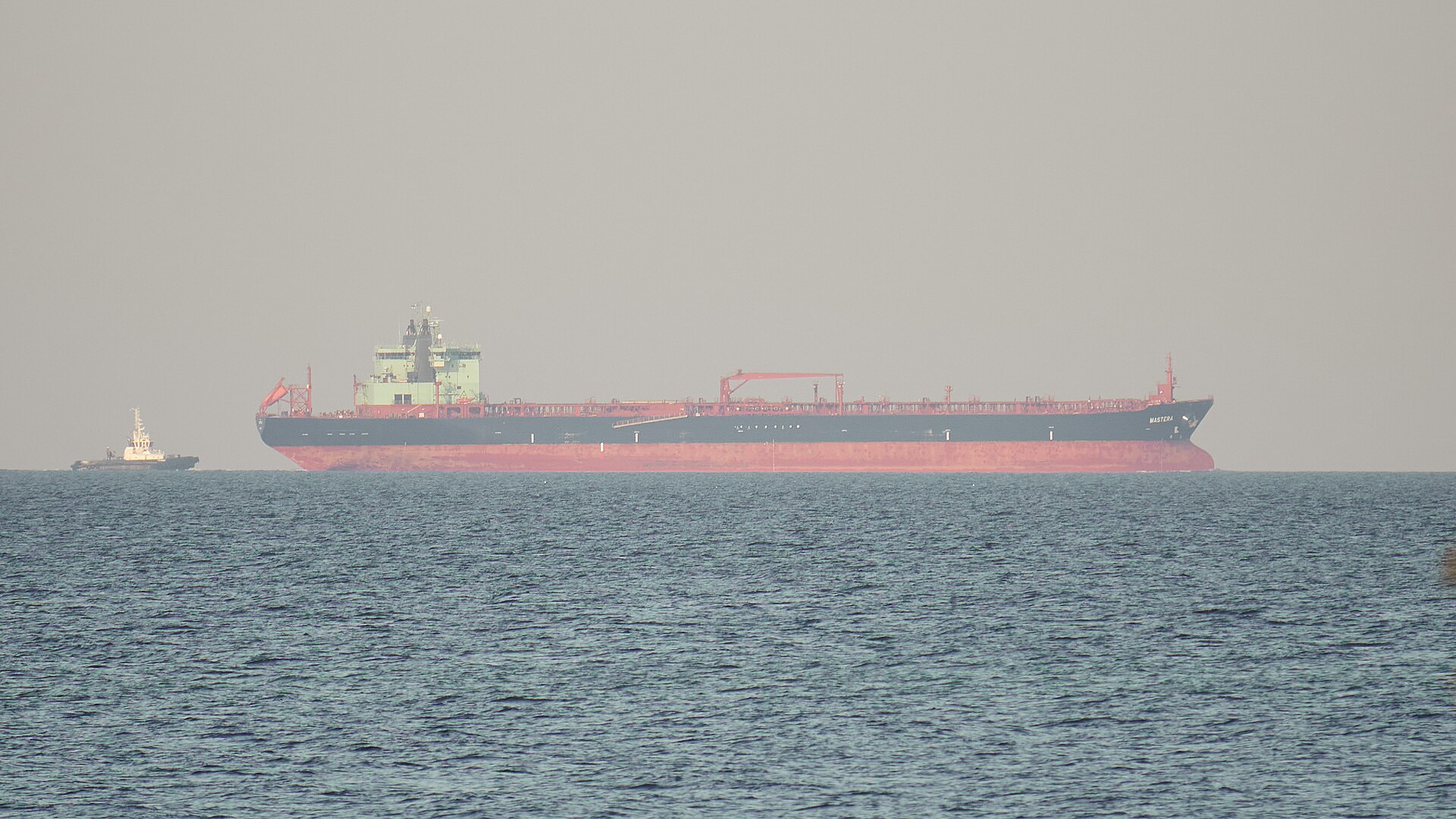
The Andromeda Star is a 115,600 deadweight-ton Aframax crude tanker, approximately 15 years old. The Maritime Executive identified its route as Primorsk to Vadinar — a standard Urals crude export run that has become one of the busiest corridors in Russia’s post-sanctions oil trade. This was not the vessel’s first encounter with Houthi missiles. In April 2024, an anti-ship ballistic missile struck the same tanker, also causing minor damage.
Houthi military spokesman Yahya Sarea claimed the attack in a public statement: “Our naval forces targeted a British oil ship, Andromeda Star, in the Red Sea with a number of appropriate naval missiles and hit it directly.” The vessel is not British.
Why Did the Houthis Call It British?
Sarea’s misidentification — or deliberate mislabeling — of the Andromeda Star as British serves a specific function. The Houthis have maintained since late 2023 that their Red Sea campaign targets vessels linked to Israel, the United States, and the United Kingdom. Calling the tanker British preserves that framing. Calling it what it is — an EU-sanctioned shadow fleet vessel carrying Russian crude to India — would not.
The Middle East briefing 3,000+ readers start their day with.
One email. Every weekday morning. Free.
The Washington Institute’s Noam Raydan and Farzin Nadimi have documented the pattern in detail. Houthis have struck vessels carrying Russian cargo before: the Chios Lion in July 2024, loaded with Russian Tuapse crude; the Huang Pu in March 2024; the Wind in May 2024, carrying Russian cargo bound for China. The Washington Institute’s finding is that the Houthi exemption system is owner-based, not cargo-based. Russian-flagged or Russian-owned vessels receive safe passage. Shadow fleet tankers owned through Seychelles shell companies and carrying Russian crude do not.
Iranian state media, covering Araghchi’s departure from Islamabad extensively, made no mention of the Andromeda Star’s Russian-cargo link. PressTV framed the Moscow trip as a visit to “a trusted partner.” Al-Masirah TV, the Houthi broadcast outlet, repeated the “British oil ship” designation without correction.
The Shadow Fleet Grey Zone
The Andromeda Star sits in the structural gap between Russia’s sanctioned oil trade and the Western enforcement regime designed to constrain it. The vessel changed ownership in November 2023 to Algae Marine Inc., a single-ship company registered in the Seychelles. Its listed manager is Margao Marine Solutions, a one-person company based in Goa, India. This is a textbook shadow fleet sanctions-evasion structure, according to the Maritime Executive — and precisely the configuration that earned the vessel a place on the EU sanctions register.
The route tells the same story from the other end. Primorsk, on the Baltic Sea, is Russia’s primary Urals crude export terminal. Vadinar is operated by Nayara Energy, in which Rosneft holds a 49.13% stake. The cargo moves from a Russian state-controlled port to a refinery substantially owned by a Russian state-controlled company, through a chain of shell entities designed to obscure that fact from sanctions authorities.
For the Houthis, this creates a targeting problem they have not publicly resolved. The vessel carries Russian oil. It is not Russian-owned. It services a route that benefits Russian state revenue. It also transits the Red Sea without any flag, registration, or ownership marker that would trigger the Houthi exemption system as documented by the Washington Institute. The Andromeda Star falls into the grey zone — and has been hit there twice.
| Vessel | Date | Russian Cargo | Flag/Owner | Damage |
|---|---|---|---|---|
| Andromeda Star | April 2024 | Urals crude (Primorsk) | Panama / Seychelles shell | Minor (ASBM) |
| Wind | May 2024 | Russian cargo, China-bound | Non-Russian flag | Reported |
| Chios Lion | July 2024 | Tuapse crude | Non-Russian flag | USV strike |
| Andromeda Star | April 26, 2026 | Urals crude (Primorsk) | Panama / Seychelles shell | Minor (2 ASBMs) |
Moscow’s Structural Silence
Russia has never publicly protested a Houthi attack on a vessel carrying Russian oil. Not after the Andromeda Star’s first strike in April 2024. Not after the Chios Lion. Not after the Wind. The Washington Institute has identified this as a structural silence — objecting would force Moscow to acknowledge that its ally Iran’s proxy is damaging Russian commercial interests, which would rupture the trilateral alignment narrative that all three parties maintain.
The asymmetry is visible in Kremlin language choices. When Western navies have intercepted or boarded shadow fleet tankers, Kremlin spokesman Dmitry Peskov has called it “piracy.” That word has not appeared in any Russian government statement regarding Houthi attacks on the same category of vessels. TASS and RT, as of April 26, had not reported on the Andromeda Star strike at all.
Each such incident carries a quiet cost. Moscow is being asked to provide UNSC vetoes, nuclear deal architecture, and diplomatic cover for Iran while Iran’s most operationally active proxy puts missiles into Russian-linked commercial cargo. The cost is not zero. But it has never, in the documented record, been high enough to elicit a public Russian response.
“A protracted Iran conflict [would] be bad for everyone, in every way.”Sergei Lavrov, Russian Foreign Minister, April 24, 2026 — Pravda
What Does Araghchi Bring to Moscow?
Araghchi’s April 27 meeting with Putin comes at a specific moment in the dual blockade structure now operating across both chokepoints. The US naval blockade of Iranian ports has been in effect since April 13. The IRGC’s control of the Gulf of Oman exit has been in place since March 4. Araghchi told Al Jazeera on April 26: “I have yet to see if the US is truly serious about diplomacy.” He confirmed transmitting “written messages” to Washington via Pakistan on nuclear red lines and Hormuz.
Iran’s ambassador to Moscow, Kazem Jalali, provided the diplomatic ledger in a PressTV interview the same day: three presidential calls between Putin and Pezeshkian since February 28, eleven foreign minister-level calls between Lavrov and Araghchi, and a Russian veto at the UN Security Council against an anti-Iran resolution. “Iran and Russia share a common approach to regional and international issues,” Jalali said.
Russia’s nuclear position over Iran is specific and technical. Rosatom built Bushehr-1 and remains the only foreign partner with operational nuclear cooperation history in Iran. On April 20, the Moscow Times reported that Russia had offered to take custody of Iran’s approximately 440 kilograms of 60%-enriched highly enriched uranium as an element of a peace deal. The United States rejected the proposal. Peskov confirmed on April 20 that the offer was “not currently on the negotiating table.” Rosatom chief Alexei Likhachev reinforced the framing: Russia is the “only country with positive experience cooperating with Iran” on nuclear matters. The three Rosatom custody variants and their structural consequences for every party — from the Saudi 123 Agreement to the UAE gold-standard clause — are examined in detail in Russia as Iran’s Nuclear Custodian.
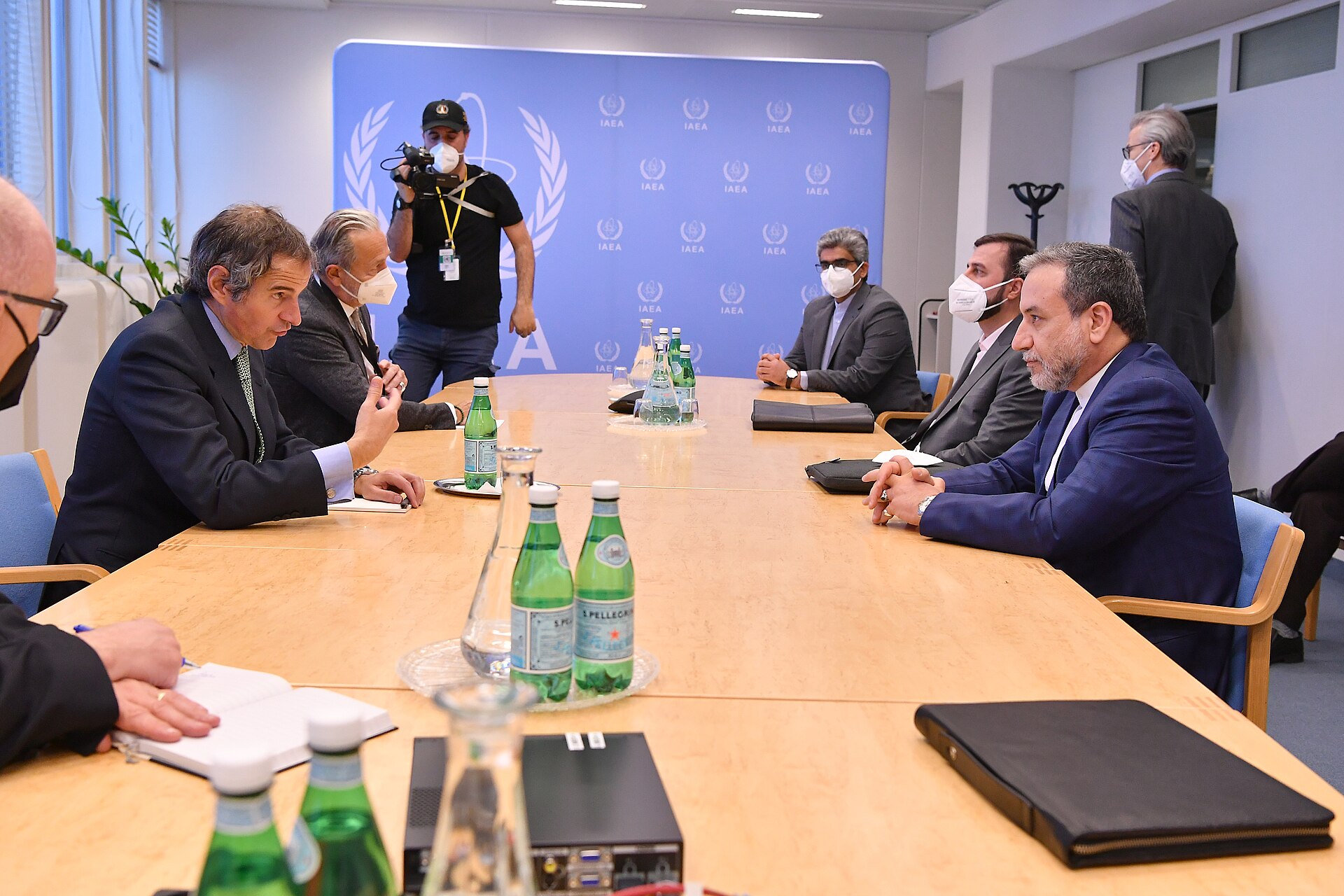
Araghchi has been explicit about the relationship’s military dimension. In a March 2026 interview with The Hill, he said: “They are helping us in many different directions. A military cooperation between Iran and Russia is not something new. It has been in the past, and it’s still there, and will continue in the future.”
Lavrov, speaking to Araghchi on April 20 according to the Russian Foreign Ministry, called the US blockade “unlawful” and urged that the ceasefire be maintained “within the parameters initially agreed upon.” He described US tactics as “illegal sanctions, robbery, theft of public funds, blackmail, threats, and the use of military force — in flagrant violation of international law.” Four days later, speaking to Pravda, his tone shifted fractionally — placing emphasis on “everyone” that had not appeared in his earlier statements.
What Araghchi brings to Moscow, then, is a request for continued backing at a moment when the costs of that backing — commercial, diplomatic, and nuclear — are accumulating on Russia’s side of the ledger. What Putin extracts in return is the question the April 27 meeting will partially answer. Russia’s position as senior partner in the relationship has been reinforced by every week of the war.
The Dual-Chokepoint Toll Framework
The Andromeda Star strike landed two days after the Foundation for Defense of Democracies reported on April 24 that Houthis are “reportedly considering” a Red Sea toll of up to $2 million per ship — mirroring Iran’s Hormuz toll architecture. Abdulmalik al-Houthi, in an April 21 address, stated: “Our direction is toward escalation if the enemy escalates and returns to escalation anew.”
The convergence is structural. Iran’s IRGC controls passage through the Strait of Hormuz, where a toll mechanism has been operational since early April. If Houthis impose a parallel toll on the Bab el-Mandeb, the two chokepoints that bracket the Arabian Peninsula would each extract payment — one by an Iranian military organ, the other by an Iranian proxy. Combined closure of both straits would threaten approximately $10 billion per day in global trade, according to the Observer Research Foundation.
Saudi Arabia’s exposure is direct. Approximately 4 million barrels per day moved through Yanbu in April, routed via the East-West Pipeline to bypass Hormuz. Every one of those barrels must transit the Bab el-Mandeb to reach European and Mediterranean buyers. The double blockade documented by Bloomberg on April 26 — US controlling the Arabian Sea entry, IRGC controlling the Gulf of Oman exit — already reduced Hormuz transits to 45 since the April 8 ceasefire, or 3.6% of pre-war baseline. A Houthi toll on the Red Sea would close the bypass that Saudi Arabia built specifically to survive Hormuz disruptions.
Brent crude stood at $105.33 per barrel on April 25, up 16% week-on-week. Iran’s own wellhead overflow crisis and storage capacity wall mean Tehran is not benefiting from the price spike in proportion to its role in causing it.
Background
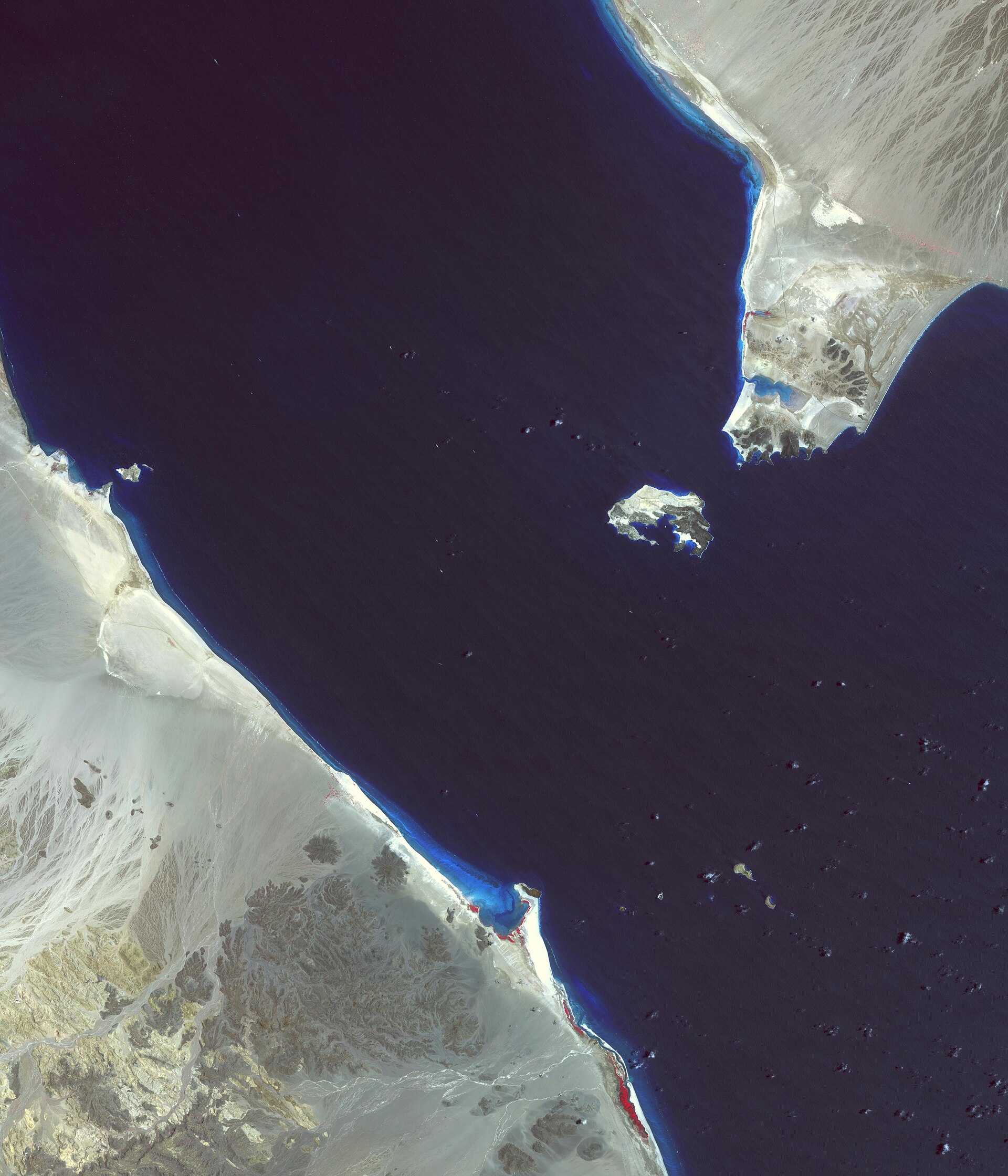
The Houthi Red Sea campaign began in November 2023, initially framed as solidarity with Gaza. It expanded into a broader anti-Western shipping interdiction operation through 2024 and into the Iran-US war that began February 28, 2026. The April 26 dual-vessel attack — Andromeda Star and Maisha — fits a pattern of multi-target salvos that have increased in frequency since March 2026.
The ceasefire negotiated at Islamabad expires April 22 — already four days past at the time of the Andromeda Star strike. No extension mechanism exists, according to the Soufan Center. Araghchi’s routing through Islamabad before Moscow suggests continued engagement with the Pakistan-mediated track, but his public skepticism about US seriousness and the IRGC’s operational independence from diplomatic commitments leave the ceasefire’s successor framework undefined.
Frequently Asked Questions
Has Russia ever publicly condemned a Houthi attack on a vessel carrying Russian oil?
No. The Washington Institute has documented multiple Houthi strikes on Russian-cargo vessels — including the Chios Lion (Tuapse crude, July 2024), the Wind (Russian cargo bound for China, May 2024), and both Andromeda Star attacks (April 2024 and April 2026). Russia has not issued a public protest, condemnation, or diplomatic complaint regarding any of these incidents. The Kremlin has used the word “piracy” to describe Western interceptions of shadow fleet tankers but has not applied comparable language to Houthi attacks on the same vessel category. This silence is consistent across all documented cases and appears to be a deliberate policy choice to avoid acknowledging the contradiction between Russia’s alliance with Iran and the commercial damage inflicted by Iran’s proxy.
What is the Houthi targeting exemption system and why did Andromeda Star not qualify?
According to Washington Institute analysts Noam Raydan and Farzin Nadimi, the Houthi exemption system is owner-based, not cargo-based. Vessels that are Russian-flagged or Russian-owned receive advance notification and safe passage through Houthi-controlled waters. Bloomberg reported in March 2024 that Houthis explicitly told China and Russia their ships could transit unharmed. However, shadow fleet tankers — even those carrying Russian crude — do not qualify if their registered owner is a non-Russian shell company. The Andromeda Star is owned by Algae Marine Inc., a Seychelles single-ship entity, and managed by Margao Marine Solutions, a one-person firm in Goa. Despite carrying Urals crude from Primorsk to a refinery partly owned by Rosneft, the vessel’s ownership chain places it outside the exemption. It has now been struck twice.
What nuclear influence does Russia hold over Iran heading into the April 27 meeting?
Russia holds three forms of nuclear influence over the outcome of the April 27 meeting. First, Rosatom is the builder and primary technical partner for Bushehr-1, Iran’s only operational nuclear power plant, giving Moscow ongoing access and influence over Iran’s civilian nuclear infrastructure. Second, Russia offered in April 2026 to take custody of Iran’s approximately 440 kilograms of 60%-enriched HEU — material that is approximately 25 days from weapons-grade conversion using IR-6 centrifuge cascades, according to IAEA estimates. The US rejected the offer, but Russia remains the only state with both the technical capacity and the political relationship to broker such a transfer. Third, Likhachev’s public framing of Russia as the “only country with positive experience cooperating with Iran” on nuclear matters positions Moscow as indispensable to any negotiated nuclear outcome — a status that gives Putin real weight in extracting concessions on non-nuclear issues, including energy cooperation, military sales, and diplomatic alignment.
How does a potential Houthi Red Sea toll interact with the existing Hormuz toll?
A dual-toll scenario would create compounding costs at both ends of the Arabian Peninsula transit. Under the framework that FDD reported on April 24, any vessel using the Bab el-Mandeb would pay Houthis up to $2 million; any vessel using Hormuz already faces IRGC toll demands since early April. Vessels that cannot use Hormuz and reroute through the Red Sea would pay the Houthi toll instead. There is no sanctioned toll-free route between the Indian Ocean and the Persian Gulf under this architecture. Saudi Arabia’s East-West Pipeline, designed as a Hormuz bypass routing exports through Yanbu to the Red Sea, would no longer function as an escape from toll architecture. The approximately 4 million barrels per day currently moving through Yanbu would face Houthi-imposed costs on the Red Sea leg. This effectively closes the strategic bypass that Riyadh built specifically to survive Hormuz disruptions — and which currently routes the majority of Saudi export volume that has not been lost to production damage.
Why did India deploy INS Kochi to assist a vessel on the EU sanctions list?
India’s response reflects a consistent pattern of prioritizing crew safety and commercial continuity over sanctions alignment. Twenty-two of the Andromeda Star’s 30 crew members are Indian nationals. INS Kochi, a Kolkata-class guided-missile destroyer, deployed a helicopter and EOD team to assess damage and ensure crew safety. India has not joined EU or US sanctions on Russian oil trade and remains Russia’s largest seaborne crude customer. Vadinar, the Andromeda Star’s destination, processes large volumes of Russian crude through Nayara Energy, in which Rosneft holds a 49.13% stake. India’s naval intervention to protect an EU-sanctioned vessel carrying Russian crude to an Indian port with Russian ownership is consistent with New Delhi’s position that its energy purchases are a sovereign commercial decision independent of Western sanctions frameworks.