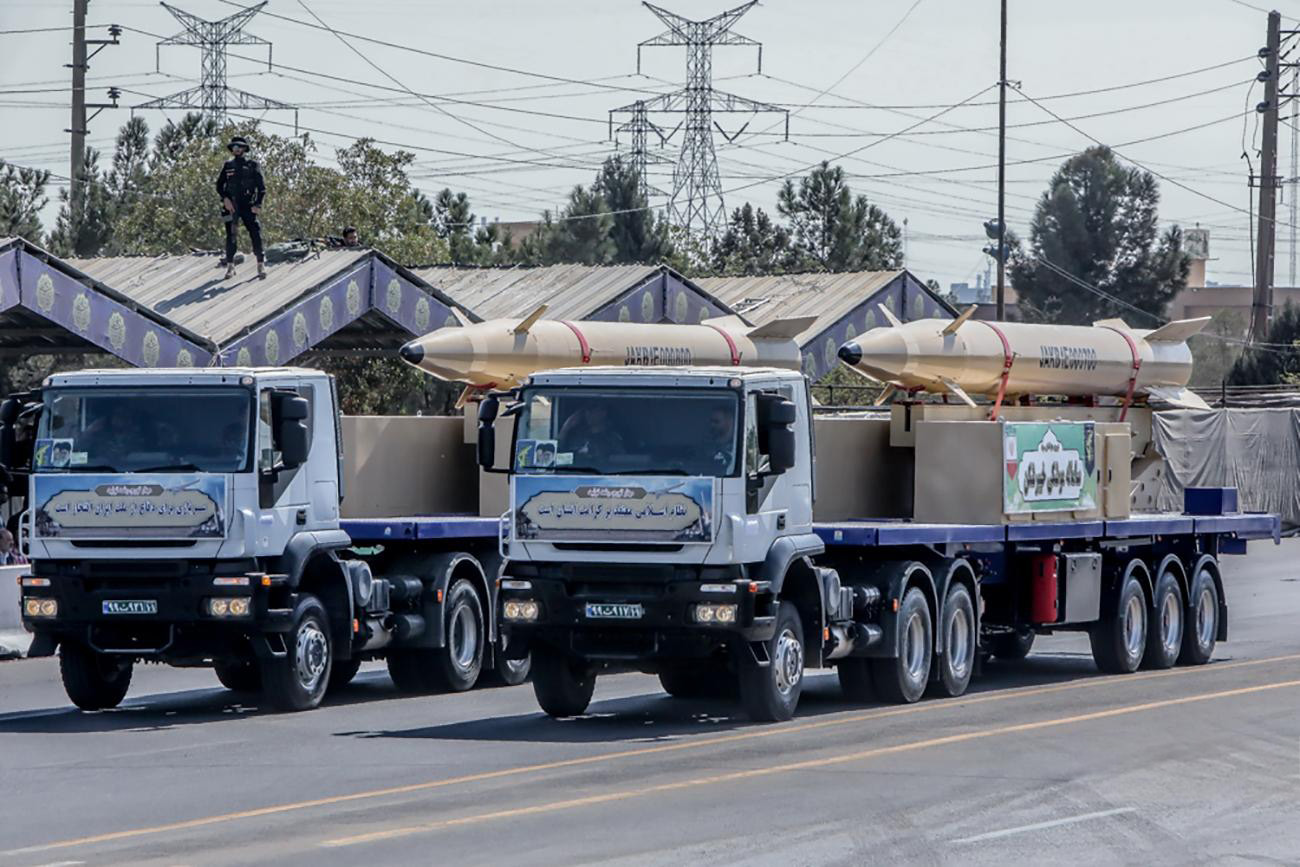
RIYADH — Iran has formally declared a shift to an “offensive and asymmetrical” military doctrine, moving from a posture built on proxy forces and strategic deniability to one that claims direct offensive intent against any state that attacks it. IRGC spokesman Hossein Mohebi made the announcement on October 21, 2026, stating that Iran’s missile stockpile has grown 1.5 times since the 12-day Iran-Israel war in June 2025, according to Al Jazeera.
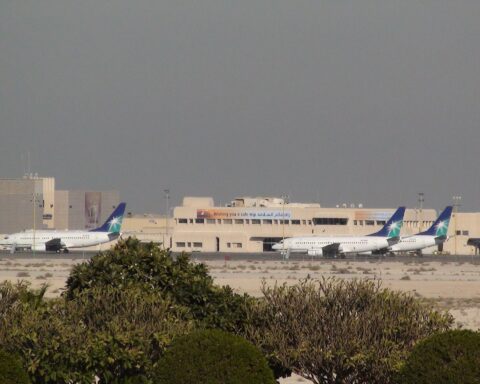
The declaration arrives at the most concentrated point of Saudi Arabia’s exposure in the current conflict. Houthi strikes on Saudi airports have killed 21 people in October alone, according to Wikipedia’s record of the attacks. Brent crude rose above $110 a barrel on October 22, according to Al Jazeera. The Future Investment Initiative conference, scheduled for October 26–29 in Riyadh, has been postponed to 2027 after Wall Street executives expressed safety concerns.
The doctrine declaration, the coalition’s legal and military position, and the diplomatic vacuum between now and the US midterm elections on 3 November — the date before which President Trump has ruled out striking Iran — define the question Saudi Arabia faces before that date.
The House of Saud Daily Briefing
Saudi Arabia's news in 3 minutes, every morning. Free. See today's issue
Table of Contents
- What Did the IRGC Announce on October 21?
- From Forward Defense to Declared Offense
- How Large Is Iran’s Missile Arsenal Now?
- What Does the Doctrine Shift Mean for Saudi Arabia?
- The Coalition and the Question of Direct War
- Riyadh’s Events Calendar and the Cost of Exposure
- Does Iran’s Declaration Change the Legal Threshold for Retaliation?
- Tehran’s Logic: Why Signal Offense Now?
- What Happens After 3 November?
- Frequently Asked Questions
What Did the IRGC Announce on October 21?
IRGC spokesman Hossein Mohebi declared Iran’s shift to an “offensive and asymmetrical” military doctrine on October 21, 2026. The stated objective is “permanent and absolute deterrence” — a formulation that reframes Iran’s military posture from one that absorbed attacks and retaliated later to one that claims the right to strike first and strike wider, according to Al Jazeera.
Our defense doctrine was previously defensive; we used to say that if a country attacks us, we will respond. Now we say that if a country attacks us, we will both respond and launch an offensive.
Hossein Mohebi, IRGC spokesman, October 21, 2026 (Al Jazeera)
Mohebi offered no absolute figures for the missile stockpile increase he cited, and no independent source has confirmed the 1.5x ratio. He also announced that Iran is preparing to unveil a weapon he called the “father of all bombs,” without technical specifications or a testing timeline.
The terminology was deliberate. “Offensive” means Iran claims the right to initiate strikes, not merely retaliate. “Asymmetrical” acknowledges the conventional power imbalance — Iran cannot match the combined firepower of the United States and its Gulf partners in a symmetric fight, so it will use the tools it has cultivated: proxy networks, mine warfare in the Strait of Hormuz, drone swarms, and strikes on economic infrastructure.
The announcement built on signals laid in August. IRGC political deputy Yadollah Javani said Iran’s operations “could assume an offensive character,” according to Iran International on August 22. The same day, Iranian Army spokesman Brigadier General Mohammad Akraminia went further: the doctrine shift includes possible preemptive strikes, and any future attack on Iran could receive a response wider than the original strike. Akraminia cited a strike on a US base in Jordan as an example of the preemptive action the new doctrine permits, per Iran International.
Sadeq Amoli Larijani, chairman of Iran’s Expediency Discernment Council, set the scope wider still: “Should an attack occur against any pillar of the axis of resistance, the response will extend beyond geographic borders and reshape regional equations,” according to Al Jazeera.
Parallel to the rhetorical shift, Iran restructured its command apparatus. The Khatam al-Anbiya Central Headquarters merged with the Armed Forces General Staff, a move designed to unify command and speed wartime decisions, per Iran International.
From Forward Defense to Declared Offense
Iran’s prior military posture operated under a doctrine its architects called “forward defense.” The logic was geographic and political: use proxy forces — Hezbollah in Lebanon, militias in Iraq, the Houthis in Yemen — to project power and absorb conflict at a distance from Iranian territory. The function was dual. Attacks attributed to autonomous actors gave Tehran strategic depth and plausible deniability — space to negotiate, escalate, or withdraw without the formal consequences of acknowledged state action.
That architecture suffered cascading damage between 2023 and 2026. The October 2023 Hamas attack led Israel to hold Iran officially accountable for its proxy network, undercutting the deniability Tehran had relied on, according to a study published on tandfonline.com. Hezbollah and Hamas sustained what Muhammad Shoaib, Muhammad Ali Baig, and Scott N. Romaniuk described in the Eurasia Review on October 17, 2026, as “major losses.” The fall of Assad’s government disrupted Iran’s overland corridor to Lebanon — the logistics route that sustained Hezbollah’s arsenal for two decades.
When Israel struck Beirut’s Dahiyeh district in June 2026, Iran’s response departed from what Al Jazeera described as a “long-standing policy of absorbing hits first and retaliating at a later time and place of their choosing.” That behavioral departure — Iran responding immediately rather than deferring — was the operational precursor to the formal declaration that followed four months later.
| Date | Development | Source |
|---|---|---|
| Jun 2026 | Iran departs from “absorb first, retaliate later” policy after Dahiyeh strike | Al Jazeera, 2026-06-08 |
| Aug 22, 2026 | IRGC deputy Javani says operations “could assume an offensive character” | Iran International |
| Aug 22, 2026 | Army spokesman Akraminia says preemptive strikes are now possible; response may exceed original attack | Iran International |
| Aug 22, 2026 | Khatam al-Anbiya HQ merged with Armed Forces General Staff | Iran International |
| Oct 21, 2026 | IRGC spokesman Mohebi declares doctrine “offensive and asymmetrical” | Al Jazeera, 2026-10-22 |
| Oct 21, 2026 | Mohebi claims missile stockpile 1.5x since June 2025 war; “father of all bombs” forthcoming | Al Jazeera, 2026-10-22 |
The October 21 announcement converts pattern into policy. Where Iran’s proxies once absorbed the risk and the attribution, the IRGC is now publicly claiming the capacity and the intent for direct offensive action. The Eurasia Review authors described Iran as pairing “ballistic missiles, drones, and naval capabilities with proxy partners” in a hybrid model that “may make future confrontations more conventional.” The doctrine declaration confirms that trajectory.
How Large Is Iran’s Missile Arsenal Now?
Iran’s IRGC claims its missile stockpile has grown 1.5 times since the June 2025 Iran-Israel war, a ratio Mohebi announced on October 21 without providing absolute numbers, according to Al Jazeera. No independent source has verified the claim, and Iran does not publish its inventory.
What the ratio establishes, if accurate, is production pace. During the 12-day war in June 2025, Iran expended a large portion of its missile inventory against Israeli targets. A 1.5x growth rate since then implies that Tehran used the ceasefire periods to replenish beyond its pre-war baseline — a pattern Brigadier General Akraminia acknowledged in August. He told Iran International that Iran had used intervals between hostilities to “repair and upgrade damaged systems and introduce new equipment.”
The production claim intersects with Iran’s command restructuring. That command restructuring, per Iran International, creates a unified decision chain from production authorization to launch order. Speed was the stated rationale: faster decisions with fewer institutional bottlenecks between the supreme leader’s office and the launch units.
The “father of all bombs” announcement sits in a different category. No technical specifications, no test date, no yield data, and no independent corroboration exist for the weapon. The term functions as signaling — a claim of developmental capability meant to complicate an adversary’s risk calculations without submitting to the verification that would confirm or disprove it.
What Does the Doctrine Shift Mean for Saudi Arabia?
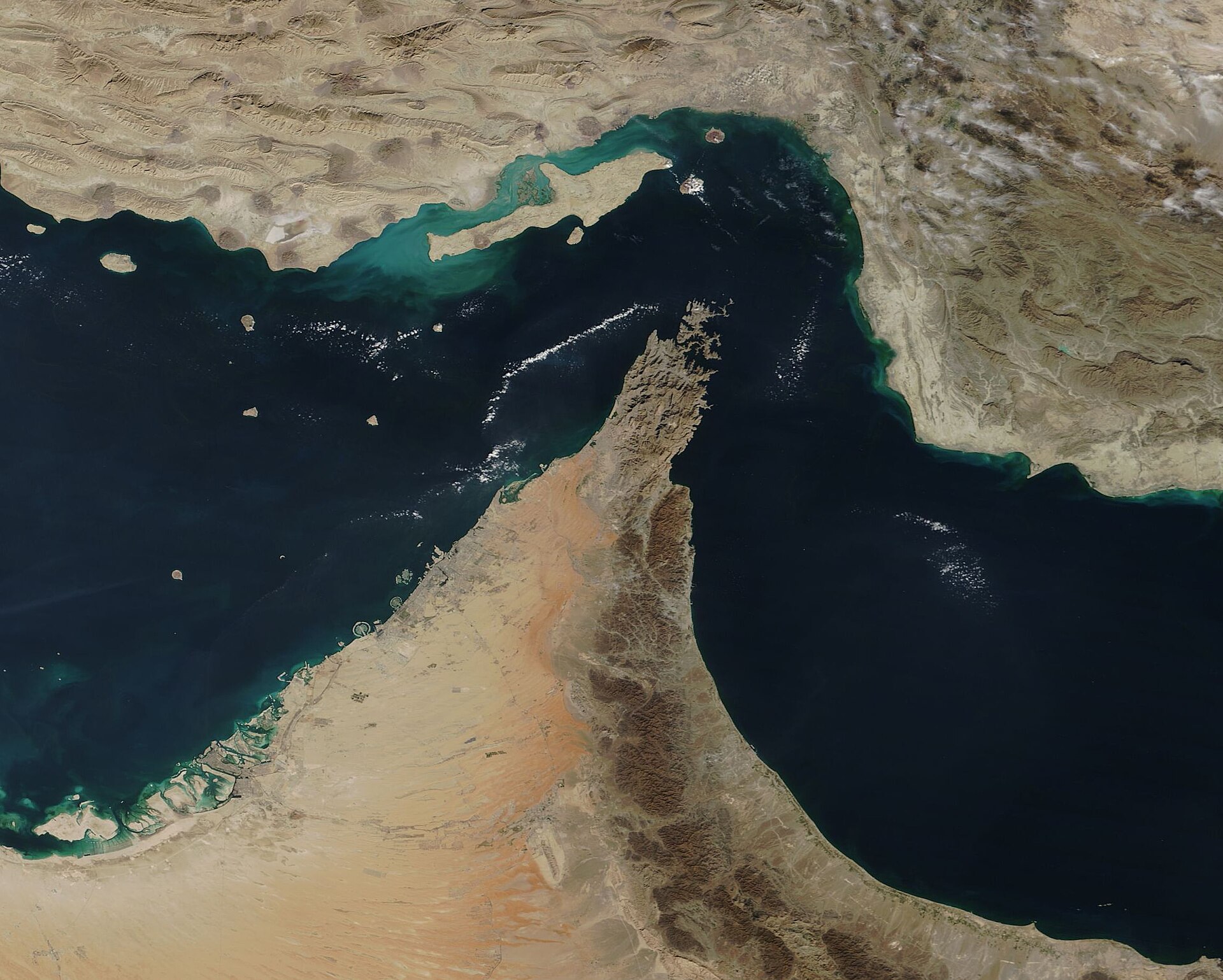
Iran’s declared offensive doctrine removes the proxy layer that separated Tehran from direct responsibility for attacks on Saudi territory. Saudi Arabia’s coalition, its air defenses, and its events calendar must now account for a state adversary that has publicly claimed both offensive and preemptive intent — a fundamentally different threat model from the Houthi operations the kingdom was already struggling to contain.
The October timeline illustrates the Saudi position before the doctrine declaration arrived. The airport casualty toll detailed above — 21 dead in October — is the backdrop against which Riyadh received the news. A drone knocked out a transformer at a Medina power station serving the Prophet’s Mosque on October 1, per GDN. The United States ordered non-emergency diplomats out of Saudi Arabia on October 22. Crown Prince Mohammed bin Salman made two separate appeals to President Trump in September for US strikes on the Houthis; both were declined, according to CNN.
Saudi Arabia expelled several Iranian defense officials on March 21, 2026, giving them 24 hours to leave the country, according to Wikipedia. It has shifted some oil exports from Hormuz-dependent eastern terminals to the Red Sea via Yanbu. Prince Khalid bin Salman, the defense minister, announced on October 5 that the Mecca pact committee had agreed to “activate collective deterrence measures… in response to the attacks and all those responsible for them,” as reported by Al Jazeera.
The fiscal strain compounds the military pressure. Saudi Arabia’s revised 2026 budget deficit reached 245 billion riyals, up from a budgeted 165 billion, according to Reuters via Zawya. Real GDP was forecast to contract 3.6 percent in 2026 on a 21.8 percent drop in oil activities, with a projected 12.8 percent rebound in 2027, according to the same Reuters via Zawya projections. The US approved a possible $24.3 billion sale of 48 F-35A fighters to the kingdom in September, per The Aviationist — but the aircraft will not arrive for years, and the threats are arriving now.
The Coalition and the Question of Direct War
The coalition Saudi Arabia has assembled is multinational but configured for a proxy war, not a direct confrontation with the state that arms and directs the proxies. Pakistan has deployed roughly 8,000 troops, according to Reuters. Turkey has committed forces under the Mecca pact framework, though Turkey’s parliament has not ratified the pact, per Al Jazeera. France confirmed troops, radars, and air defenses deployed to Yanbu, according to Al Jazeera. The United Kingdom deployed military aircraft to support Saudi air defense, according to The National. The United States deployed more than 100 military advisers under a new joint command for intelligence support, per CNN.
Whether that coalition is structured to absorb a direct Iranian offensive — as opposed to the Houthi operations it was assembled to counter — is the question the doctrine shift forces into the open. The partners signed up to help Saudi Arabia manage a Yemeni rebel group with Iranian backing. Egypt has aligned itself with Saudi Arabia — Egypt’s presidency stated that Saudi and Gulf security is “inseparable” from Egypt’s, according to Asharq Al-Awsat — and the four-nation joint condemnation issued by Saudi Arabia, Egypt, Pakistan, and Turkey on October 11, per CBS News, signaled a coalition that extends beyond the original Houthi-focused framework.
The sources conflict on Saudi Arabia’s own ground commitment. Pakistan’s defense minister told Al Jazeera on October 6 that combat “is practically being conducted by Saudi Arabia’s own forces.” CNN reported on October 11 that Riyadh had stopped “short of any major deployment of its own troops.” The gap between those two characterizations describes a coalition whose burden-sharing arrangements remain opaque even to its members.
Larijani’s June statement drew the perimeter: a response beyond geographic borders for any attack on any axis-of-resistance pillar. That framing now applies to every coalition partner individually. The original Mecca pact did not anticipate this contingency. Pakistan’s parliament has not voted on a scenario involving direct Iranian strikes. The British parliament has not debated the Typhoon deployment in terms that account for an Iranian offensive doctrine. The coalition exists. Its mandate against this contingency does not.
Riyadh’s Events Calendar and the Cost of Exposure
The week of October 21–29 was intended to demonstrate that Saudi Arabia’s transformation agenda could proceed alongside its security crisis. The FII postponement to 2027, reported by CNBC and Semafor on October 19, was the first major calendar casualty.
The executives I’ve spoken with are extremely hesitant about traveling to Riyadh.
Unnamed consultant, quoted by AFP (Semafor, October 19, 2026)
The EU-GCC summit was set for October 24 in Riyadh, co-chaired by the crown prince, as confirmed by The National on October 8. Riyadh Season, the entertainment programme that functions as both domestic morale project and international brand exercise, was due to open on October 21, according to Gulf News. Neither has been confirmed cancelled, but both are proceeding — if they proceed — against a backdrop the FII organizers decided was too dangerous for their attendees.
The economic frame around these events has deteriorated. The fiscal deterioration detailed above — a deficit nearly 50 percent above budget — forms the economic floor of the crisis. Oil above $110 a barrel benefits producers only when crude reaches market. Gulf-to-China VLCC charter rates reached $1.2 million per day, against roughly $80,000 a year earlier, according to LSEG data reported by bdnews24. The doctrine shift does not create the economic pressure; it extends the timeline over which that pressure will apply.

Does Iran’s Declaration Change the Legal Threshold for Retaliation?
A declared offensive military doctrine by a state alters the framework under which coalition partners, the UN Security Council, and individual governments assess the legality of preemptive or responsive action. Under Article 51 of the UN Charter, the right of individual and collective self-defense becomes legally cleaner when the adversary has publicly declared offensive and preemptive intent — compared to the murky attribution that proxy operations entailed.
When Iran operated through the Houthis, the attribution gap made collective security responses legally and politically complicated. A state declaration of offensive intent narrows that gap. Iran is now on record claiming the right to preemptive strikes — a position Akraminia articulated in August, telling Iran International that any future response to an attack on Iran “could be broader than the original strike.” If Iran executes operations under this declared doctrine, the legal basis for coalition response is stronger than it was when the Houthis were the attributed actor.
Saudi Arabia asked the UN Security Council to act after the October airport strikes, according to Al Jazeera. Secretary of State Rubio described a peace deal as “extremely difficult” and demanded Iran stop targeting commercial shipping in the Strait of Hormuz, per Al Jazeera. President Trump stated the US is not negotiating with Iran, said “something would happen fairly soon,” and pledged not to attack Iran before the 3 November elections, also per Al Jazeera.
The doctrine declaration does not by itself constitute an act of war under international law. It constitutes a statement of intent that changes how every other actor calculates its response to the next Iranian-linked operation against a coalition member or Gulf shipping lane.
Tehran’s Logic: Why Signal Offense Now?
Iran’s official framing presents the doctrine shift as deterrence, not aggression. The deterrence framing positions the declaration as defensive in purpose even as it is offensive in posture. Mohsen Rezaei, a senior Iranian official, told Al Jazeera that Iran prefers diplomacy but can sustain a response, and that any action against Iran “comes at a cost.”
Negar Mortazavi of the Centre for International Policy offered a structural explanation to Al Jazeera: Iran is drawing lessons from the 2025–2026 wars. The previous retaliation-only strategy failed to prevent repeated attacks on Iranian interests and allies. “Another round of war seems to be approaching,” she said. Tehran is “trying to make future attacks costly, possibly to influence US midterms.”
The timing supports that reading. US–Iran diplomacy is effectively paused until after the 3 November midterm elections, as The National reported on October 8. Iran’s seven-day ceasefire-for-shipping proposal — reopen the Strait of Hormuz in exchange for the US ending its blockade of Iranian ports, easing sanctions, and releasing approximately $12 billion in frozen assets — remains formally on the table, per Al Jazeera. The Wall Street Journal reported that Trump rejected the plan and expects renewed bombing after the midterms.
By declaring offensive capability between the collapse of diplomacy and the anticipated resumption of military action, Tehran is attempting to set the terms of the next phase. The doctrine announcement is a price signal: the cost of the next strike on Iran, it says, will be higher than the last one.
Rami Khouri of the Arab Center told Al Jazeera that conflict was likely, with potential strikes targeting “electricity, transport, bridges.” Iran, he said, was “unlikely to surrender” but it remained “uncertain how much it could withstand.” The question the doctrine shift poses to Iran’s own strategic planners is whether the declaration deters the attack they fear or accelerates it by convincing adversaries that the window to act is closing.
What Happens After 3 November?
The US midterm election date functions as a structural pause in the conflict. Trump said on October 8 that the United States “will not be attacking Iran at any time prior to the midterm elections on 3 November,” as reported by The National. The Wall Street Journal reported he expects renewed bombing afterward. Iran’s doctrine declaration lands inside that pause — a period when the threat is escalating but the largest military actor in the region has placed a temporary hold on its own offensive options.
Iran has said the Strait of Hormuz stays shut until the US accepts its terms. CENTCOM reported that 135 ships had been turned around since the US blockade of Iranian ports began on July 14, according to CBS News. The IRGC mine blockade has reduced Hormuz tanker transits to a fraction of normal traffic. Iran’s enrichment programme continues under what Tehran describes as its guaranteed right under the Non-Proliferation Treaty, per Al Jazeera.
For Saudi Arabia, the period before November 3 represents a period of maximum ambiguity. The coalition is assembled but has not been tested against the scenario Iran just declared. The United States has committed intelligence support and a major arms deal, but not combat authority against Iran before the elections. The diplomacy that might prevent escalation is suspended by an American electoral calendar that no actor in the Gulf controls.
Prince Khalid’s October 5 pledge to “activate collective deterrence” has not yet been tested against a state that has declared offensive doctrine. When it is, the answer will define whether Saudi Arabia’s coalition partners signed up for what is now being asked of them.
Frequently Asked Questions
What is the “father of all bombs” Iran announced?
IRGC spokesman Mohebi used the term on October 21 without providing technical specifications, yield data, or a timeline for testing or deployment. The name echoes the US-made GBU-43/B Massive Ordnance Air Blast — informally the “Mother of All Bombs” — first used in combat in Afghanistan in April 2017. Without independent verification, test footage, or engineering details, the announcement functions as psychological signaling rather than a confirmed capability disclosure. Iran has previously announced weapons systems that took years to reach operational status or remained in development indefinitely.
Could the doctrine shift trigger automatic military obligations from coalition partners?
The Saudi-led coalition operates through the Mecca pact framework, not a mutual defense treaty with binding trigger clauses comparable to NATO’s Article 5. Pakistan, Turkey, France, and the United Kingdom deployed forces under bilateral arrangements coordinated through the pact committee chaired by Prince Khalid bin Salman. Each government retains sovereign authority over whether to expand its commitment from countering Houthi operations to directly confronting Iran. No automatic escalation mechanism exists in the current structure, and no partner has publicly committed to an anti-Iran contingency.
Has Iran changed its nuclear posture alongside the doctrine shift?
Mohebi’s October 21 announcement addressed conventional military doctrine and did not reference nuclear weapons or enrichment levels. Iran’s stated position, articulated by Foreign Minister Araghchi and reported by Al Jazeera, is that its enrichment programme is guaranteed under the Non-Proliferation Treaty. The doctrine shift as declared is conventional in scope. Separately, Iran refused to transfer enriched uranium as part of ceasefire negotiations — a position it maintains alongside the Strait of Hormuz closure. The enrichment question and the doctrine question are formally separate, but they compound the same risk calculation for every actor in the region.
How does Saudi Arabia’s oil export diversification reduce its exposure to the Hormuz closure?
Saudi Arabia has redirected some crude exports from Hormuz-dependent eastern terminals to the Red Sea port of Yanbu, served by the East-West pipeline with a design capacity of roughly 7 million barrels per day, according to the Saudi Gazette via Zawya. The pipeline was suspended as a precaution on September 12 and restarted on September 22, but full capacity restoration could take six weeks or more, per Reuters via Baird Maritime. Aramco CEO Amin Nasser said disruptions typically last “days, not weeks or months.” The diversification reduces but does not eliminate exposure: Houthi forces near the Bab el-Mandeb strait mean the Red Sea route carries its own transit risks, limiting the degree to which Yanbu can replace eastern terminals for long-haul Asian buyers.
The House of Saud Daily Briefing
Saudi Arabia's news in 3 minutes, every morning. Free. See today's issue