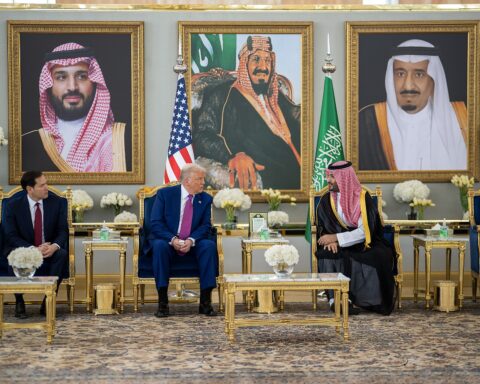
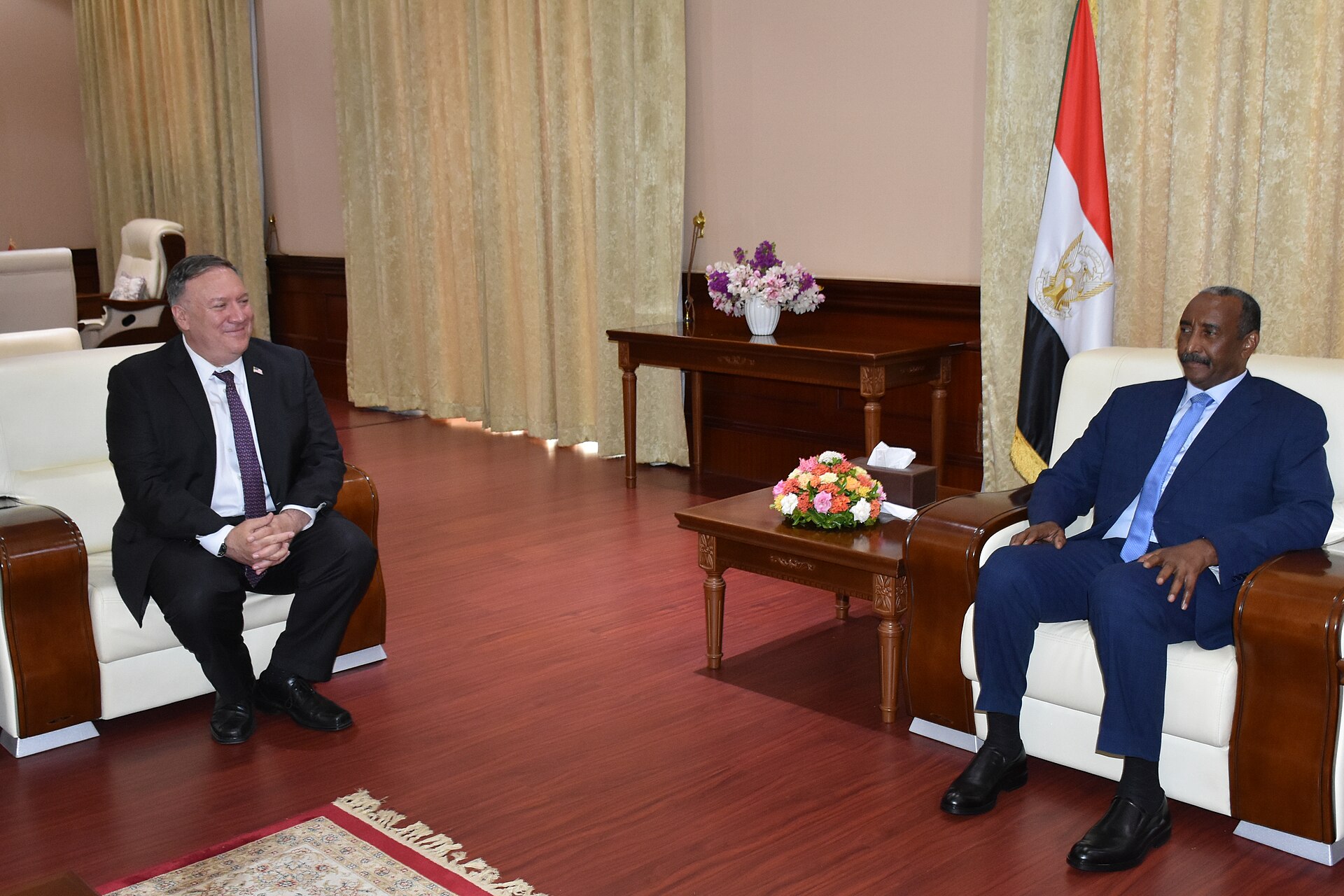
JEDDAH — Saudi Crown Prince Mohammed bin Salman hosted Sudan’s General Abdel Fattah al-Burhan in Jeddah on April 21, three weeks after Riyadh froze a $1.5 billion Pakistani arms pipeline that was Khartoum’s only viable path to modern air power — a sequence that turned a bilateral meeting into something closer to a structured extraction of strategic concessions, with Port Sudan’s Red Sea access as the implicit prize.
The meeting’s significance extends far beyond Sudan’s civil war. With Bab al-Mandab under active Houthi interdiction and both sides of Hormuz now blocked, Saudi Arabia is assembling fallback logistics architecture along the Red Sea’s western littoral — and Port Sudan sits at the geographic centre of that corridor. What looked like punitive diplomacy over Sudanese Muslim Brotherhood ties to Iran was, in operational terms, the purchase price for a wartime shipping hedge.
Table of Contents
The $1.5 Billion Lever
Pakistan’s proposed arms package to Sudan — 10 K-8 light attack aircraft, more than 200 reconnaissance and kamikaze drones, advanced air-defense systems, Super Mushshak trainers, and potentially JF-17 Thunder fighters — was first reported by Reuters on January 9, 2026 as “effectively finalized,” making it Pakistan’s largest proposed defence export in history. The deal’s architecture was straightforward: Saudi Arabia would finance the purchase, Pakistan would manufacture and deliver, Sudan would receive a functional air force capable of holding territory against the Rapid Support Forces in Darfur.
In March 2026, during a meeting in Riyadh, Saudi Arabia withdrew its financing commitment and signalled Pakistan to terminate the arrangement entirely. Two Pakistani security sources told Al-Monitor on April 20 that “Saudi Arabia has signaled that Pakistan should terminate the deal after it dropped the idea of financing it.” Pakistan suspended without public comment — no statement from the Army, the Air Force, or the Foreign Ministry. The silence was itself a concession, absorbing a $1.5 billion export loss to protect a broader relationship that includes a $5 billion Saudi loan maturing in June 2026.
The freeze was not an endpoint but a mechanism. Within weeks, Burhan received his invitation to Jeddah. The Saudi delegation that greeted him included Defence Minister Prince Khalid bin Salman and Foreign Minister Prince Faisal bin Farhan — the full weight of the Kingdom’s security and diplomatic apparatus deployed for a general whose army controls barely half of Sudan’s territory. Defence Security Asia reported the meeting on April 21; Asharq Al-Awsat confirmed the delegation composition the same day.
What Triggered the Freeze
Saudi intelligence identified what Al-Monitor described as a “dangerous rapprochement” between senior figures in Sudan’s Muslim Brotherhood and Tehran — a relationship that, for Riyadh, crossed a line that economic investment and arms financing could tolerate but strategic alignment with an active adversary could not. The trigger was specific and public: Brigadier General Tariq al-Hadi Kajab praised Iran and called for Iranian attacks on Gulf desalination and power plants, according to Voice of Emirates reporting on March 25, 2026. For a kingdom whose Eastern Province infrastructure has already absorbed Iranian missile strikes, the statement converted an intelligence concern into an operational threat.
The Middle East briefing 3,000+ readers start their day with.
One email. Every weekday morning. Free.
The Iranian military relationship with Sudan predates the current crisis by years. Iran has supplied the Sudanese Armed Forces with Mohajer-6 and Ababil-3 drone systems since April 2023, with technical training ongoing according to Horn Review reporting in March 2026. The U.S. Treasury sanctioned the pipeline in September 2025, confirming what regional intelligence services had tracked for months. The deeper history runs back to 1989-2016, when Iran-Sudan partnership included Iranian Red Sea logistical access — Tehran’s key node for supplying weapons to Hamas via the maritime route.
Washington provided political cover for Saudi Arabia’s pivot. On March 9, 2026 — days before the Riyadh financing withdrawal — the State Department designated Sudan’s Muslim Brotherhood as a Specially Designated Global Terrorist entity and Foreign Terrorist Organization, effective March 16. The timing aligned Saudi concerns with American legal architecture, giving Riyadh a framework that made its conditions to Khartoum appear multilateral rather than unilateral.
What Did Burhan Concede in Jeddah?
The official readout, carried by the Saudi Press Agency, deployed the diplomatic standard: both sides “emphasized Sudan’s security, stability, sovereignty, unity and territorial integrity.” The Saudi-Sudanese Coordination Council — authorized on October 21, 2025 but dormant until now — was activated as the institutional vehicle for whatever comes next. A Sudanese-Saudi investment forum was scheduled for Riyadh in June 2026, with Sudan preparing approximately 100 projects that Khartoum values at an estimated $50 billion, according to the Sudan Tribune — a figure that reflects Sudanese aspirational framing rather than committed Saudi capital.
Beneath the communiqué language, the substantive concessions were structural. Sudan Tribune reported that Burhan confirmed to Saudi authorities the freezing of all Red Sea military base plans, including a proposed Russian naval facility — a demand Riyadh had made directly in late 2025. The Russian base concession removes a potential great-power competitor from the same Red Sea corridor Saudi Arabia is now building its own logistics architecture around. For a kingdom that already leads Arab nations in Sudan investment at $35.7 billion across 250 agricultural projects, according to the Arab Progress Center, the additional ask was access, not capital.
What Burhan sought in return was equally clear. Al Bawaba and MadaMasr reported on April 23 that Khartoum wanted the arms deal revived and Saudi backing for state control of humanitarian aid — the latter a mechanism that would allow the SAF to weaponize relief distribution against RSF-held territories in Darfur. Saudi Arabia’s conditions for reviving military support shifted from unconditional empowerment to demands for civilian government formation and purging of Islamist elements from the security apparatus, according to Al-Monitor and Darfur24 reporting.
Why Does Saudi Arabia Need Port Sudan Now?
The answer lies in arithmetic that the Iran war has made unavoidable. Saudi Arabia’s Yanbu terminal — the western endpoint of the East-West Pipeline that bypasses Hormuz — has a loading ceiling of 5.9 million barrels per day against pre-war Hormuz throughput of 7-7.5 million bpd, leaving a structural gap of 1.1-1.6 million bpd that no amount of pipeline optimization can close. With Houthi forces now interdicting the last open export route through Bab al-Mandab and Iran building the Houthis a Red Sea toll mechanism, the Kingdom’s entire export architecture is under simultaneous pressure from the Strait of Hormuz to the southern Red Sea.
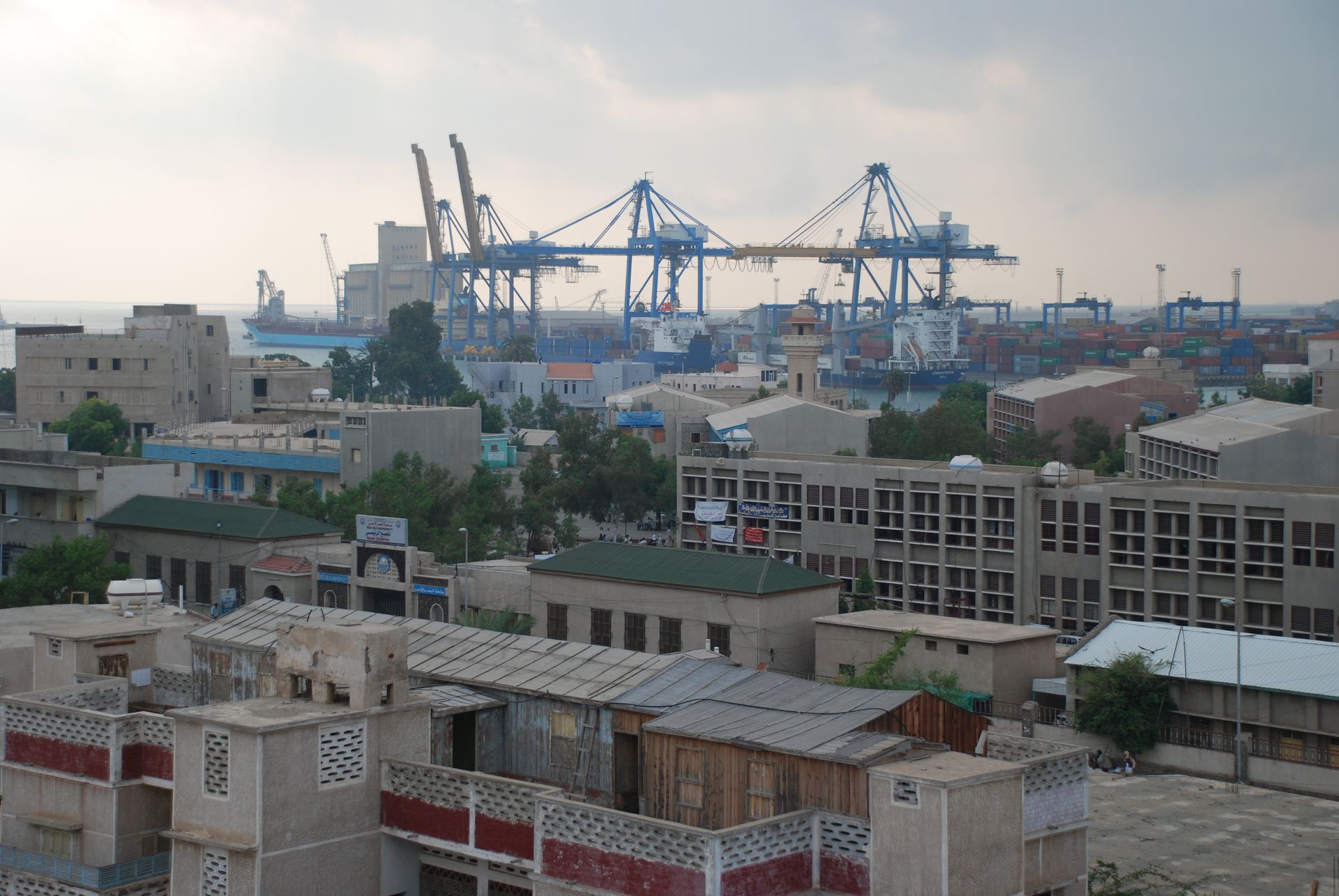
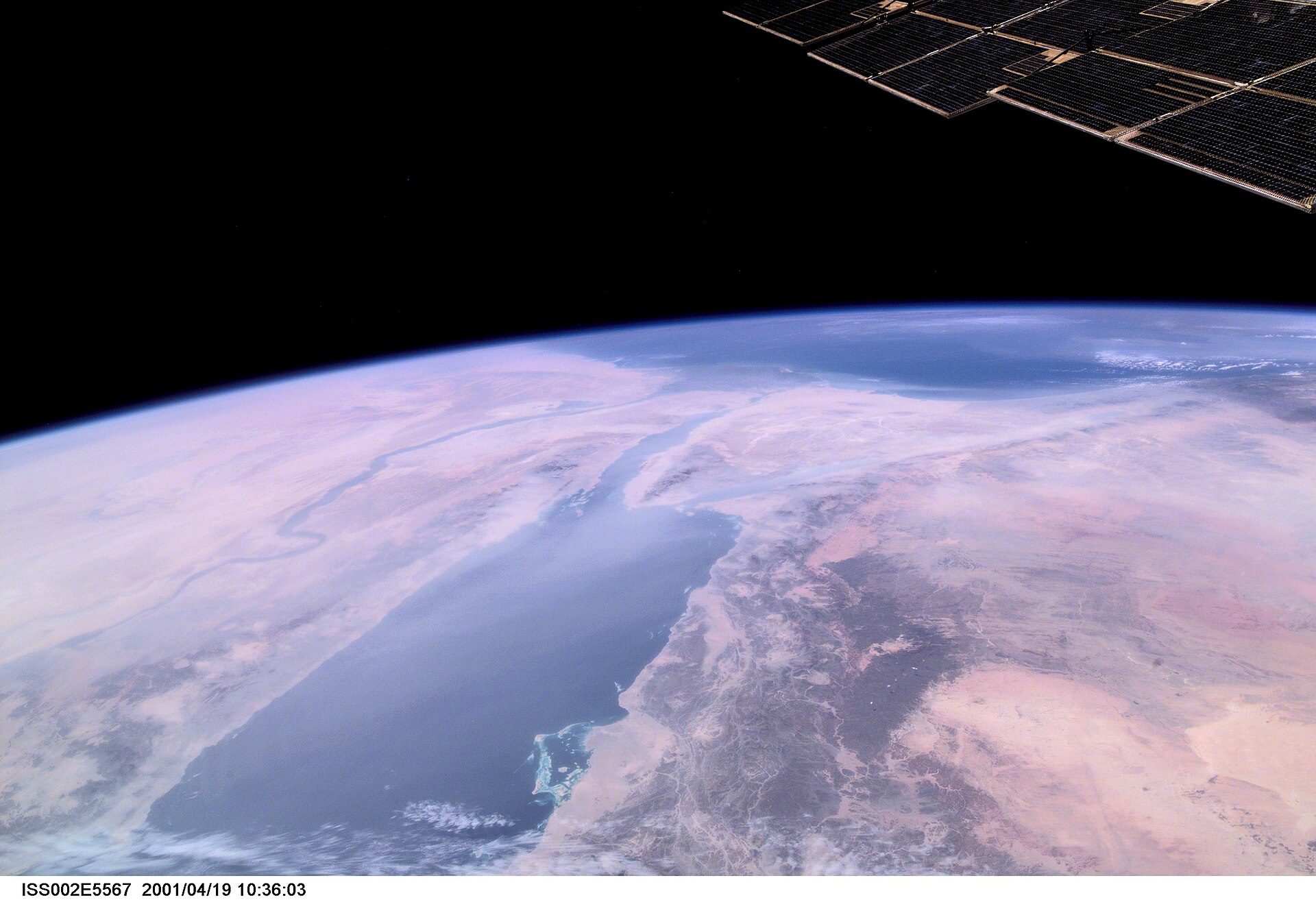
Port Sudan sits at the Red Sea’s midpoint, equidistant from the Suez Canal and Bab al-Mandab. Its geographic position means that even if Bab al-Mandab becomes fully contested, cargo routed through Port Sudan can still reach the Mediterranean via Suez without transiting the southern chokepoint. The Saudi Ports Authority — Mawani — launched a direct Jeddah-Port Sudan shipping service as the 30th new line added in 2025, a logistical commitment that preceded and anticipated the current military context. Container capacity at approximately 800,000 TEUs annually makes it a functional commercial waypoint rather than a token presence.
Bethelhem Fikru, a researcher at the Horn Review, wrote in March 2026 that Saudi engagement with Sudan “is driven primarily by its own regional and maritime interests, particularly stability along the Red Sea corridor.” The framing is deliberately understated. What Saudi Arabia is constructing is not stability in the abstract but redundancy — multiple nodes along the western Red Sea littoral that function independently of whichever chokepoint Iran or its proxies close next. The $13 billion Syria infrastructure bet follows identical logic: when one bypass is insufficient, build another.
Saudi Arabia has signaled that Pakistan should terminate the deal after it dropped the idea of financing it.
— Pakistani security source, Al-Monitor, April 20, 2026
The Red Sea Coalition Taking Shape
Rebecca Mulugeta, a researcher at the Horn Review, described Saudi Arabia in January 2026 as the “architect” of a Red Sea “Coalition of the Status Quo” — orchestrating what she called a “tapestry of partnerships” prioritizing “traditional sovereignty” against a rival alignment of the UAE, Ethiopia, Israel, and the RSF. The coalition’s operational structure has three pillars: Saudi Arabia provides the financial architecture, Turkey maintains a logistics and repair base at Port Sudan, and Egypt provides political and operational backing. The Washington Institute’s April 2026 analysis, authored by Areig Elhag, noted that “all parties seem to be abandoning the diplomatic track” — making the military-logistics relationships the load-bearing structures.
The coalition’s adversary is not merely the RSF but the network behind it. The Soufan Center reported on April 21, 2026 that RSF gold is smuggled through South Sudan to the UAE for weapons procurement — a supply chain that connects Darfur’s mines to Emirati logistics in a circuit that Saudi Arabia cannot interdict through diplomacy alone. Cameron Hudson, a senior fellow at CSIS’s Africa Program and former CIA Africa analyst, told Middle East Eye on April 11 that Egypt and Saudi Arabia are growing “frustrated with SAF leadership” — a frustration that the Jeddah meeting was designed to convert from complaint into pressure.
The Muslim Brotherhood dimension adds ideological clarity to what might otherwise appear purely transactional. Burhan himself told Middle East Eye in April 2026: “We won’t allow any group to speak out instead of the SAF.” Ammar Abdul Wahab, spokesperson for the al-Bara ibn Malik Brigade aligned with Sudan’s Muslim Brotherhood, dismissed the U.S. terrorist designation as “only ink on paper… aimed at supporting the RSF.” The gap between Burhan’s assertion of institutional control and the Brotherhood’s operational autonomy is precisely what Saudi Arabia’s conditions target — not because Riyadh objects to Islamism in principle, but because Islamist networks connected to Tehran represent an Iranian access point inside a Red Sea state.
Pakistan’s Silent $1.5 Billion Loss
Pakistan’s absorption of the freeze without public comment reveals the hierarchy of its dependencies. The $1.5 billion arms export disappeared from Islamabad’s diplomatic calendar without a single official statement from any branch of government or military. The timing compounds the signal: the freeze surfaced within 48 hours of Pakistan Army Chief General Munir concluding a three-day visit to IRGC headquarters in Tehran, and three days before Oman technical talks opened the US-Iran ceasefire channel, according to Al Jazeera’s April 14 reporting.
The broader damage extends beyond Sudan. Al-Monitor reported, citing a Pakistani security source, that a $4 billion Pakistan-Libya National Army deal is also now jeopardized — Saudi Arabia “reconsidering strategy” across both theatres simultaneously. Pakistan’s calculus is constrained by the $5 billion Saudi loan maturing in June 2026; defaulting on Saudi strategic preferences when the loan rollover remains unconfirmed would constitute an existential financial risk that no arms export revenue could offset. The Kingdom has effectively demonstrated that its financing role in Pakistan’s defence exports gives it veto power over Islamabad’s client relationships across the entire region.
The Iran war context makes Pakistan’s position particularly acute. Islamabad has positioned itself as the sole enforcement mechanism for whatever ceasefire framework emerges from the Islamabad Accord process, requiring simultaneous credibility with Tehran, Washington, and Riyadh. Absorbing Saudi vetoes on arms exports without protest is the cost of maintaining that triangulation — a cost measured not just in lost revenue but in the permanent demonstration that Pakistan’s defence-industrial independence is conditional on Saudi approval.
FAQ
What happens to Sudan’s air capability without the Pakistani arms deal?
The SAF retook Khartoum state in May 2025 and the government returned on January 11, 2026, but the air force remains dependent on Iranian drone supply — Mohajer-6 and Ababil-3 systems — for tactical strike capability. Without the Pakistani package’s K-8 attack aircraft and advanced air-defence systems, Sudan cannot establish air superiority over RSF-held Darfur. The Iranian drones provide harassment capability but not the sustained air campaign required to retake territory at scale, leaving the SAF ground-dependent in a theatre where the RSF’s Toyota-mounted mobility gives it structural advantage.
Could Sudan revive the arms deal by meeting Saudi conditions on the Muslim Brotherhood?
Saudi Arabia’s demands — civilian government formation and purging of Islamist elements from the security apparatus — would require Burhan to dismantle networks that supply large portions of his officer corps and intelligence infrastructure. The al-Bara ibn Malik Brigade and affiliated Muslim Brotherhood military formations are embedded in SAF command structures, not external auxiliaries. Purging them while fighting a civil war against the RSF would create immediate operational vulnerabilities that Iran could exploit by offering replacement personnel and institutional support, potentially deepening the very Tehran relationship Riyadh seeks to sever.
How does the Russian naval base freeze affect Moscow’s Red Sea strategy?
Russia’s proposed Port Sudan naval facility — originally agreed under Omar al-Bashir and renegotiated with Burhan — would have given Moscow its first permanent Red Sea naval presence since the Soviet-era Berbera base in Somalia closed in 1977. The freeze removes Russia from the Red Sea’s western littoral at precisely the moment when great-power naval competition in the waterway is intensifying due to the Iran war. Moscow retains its Tartus facility in Syria but lacks any servicing capability between the eastern Mediterranean and its Indian Ocean deployments, a gap the Port Sudan base was designed to fill.
What is the status of Sudan’s civil war as of April 2026?
The International Rescue Committee estimates approximately 150,000 deaths since April 2023; 29 million people are food insecure; 4.5 million have fled the country. The SAF controls Khartoum state and most of eastern Sudan including Port Sudan. The RSF holds most of Darfur following the fall of El Fasher in October 2025. Neither side has the military capability to achieve decisive victory, creating a frozen-conflict dynamic where external patrons — Saudi Arabia, UAE, Iran, Egypt, Turkey — compete for influence through arms supply and economic inducements rather than direct intervention.
What is the Saudi-Sudanese investment relationship beyond arms?
Saudi Arabia’s $35.7 billion in Sudan investment (Arab Progress Center) is concentrated in agriculture rather than infrastructure or energy — a deliberate choice. Sudan holds roughly 45% of Arab arable land, and Saudi Arabia imports the majority of its food. The agricultural concentration is food-security strategy: Riyadh is buying production capacity inside a Red Sea littoral state at the same moment its import supply chains face simultaneous interdiction at Hormuz and Bab al-Mandab. The June 2026 investment forum is the next phase of that relationship, not a reward for political compliance.
The arms deal dimension of that relationship sharpened further on April 20: Saudi Arabia withdrew financing for Pakistan’s $1.5 billion Sudan arms contract on the same day MBS received Burhan in Jeddah, a simultaneous signal to both parties — details in Saudi Arabia Blocked Pakistan’s $1.5 Billion Sudan Arms Deal.