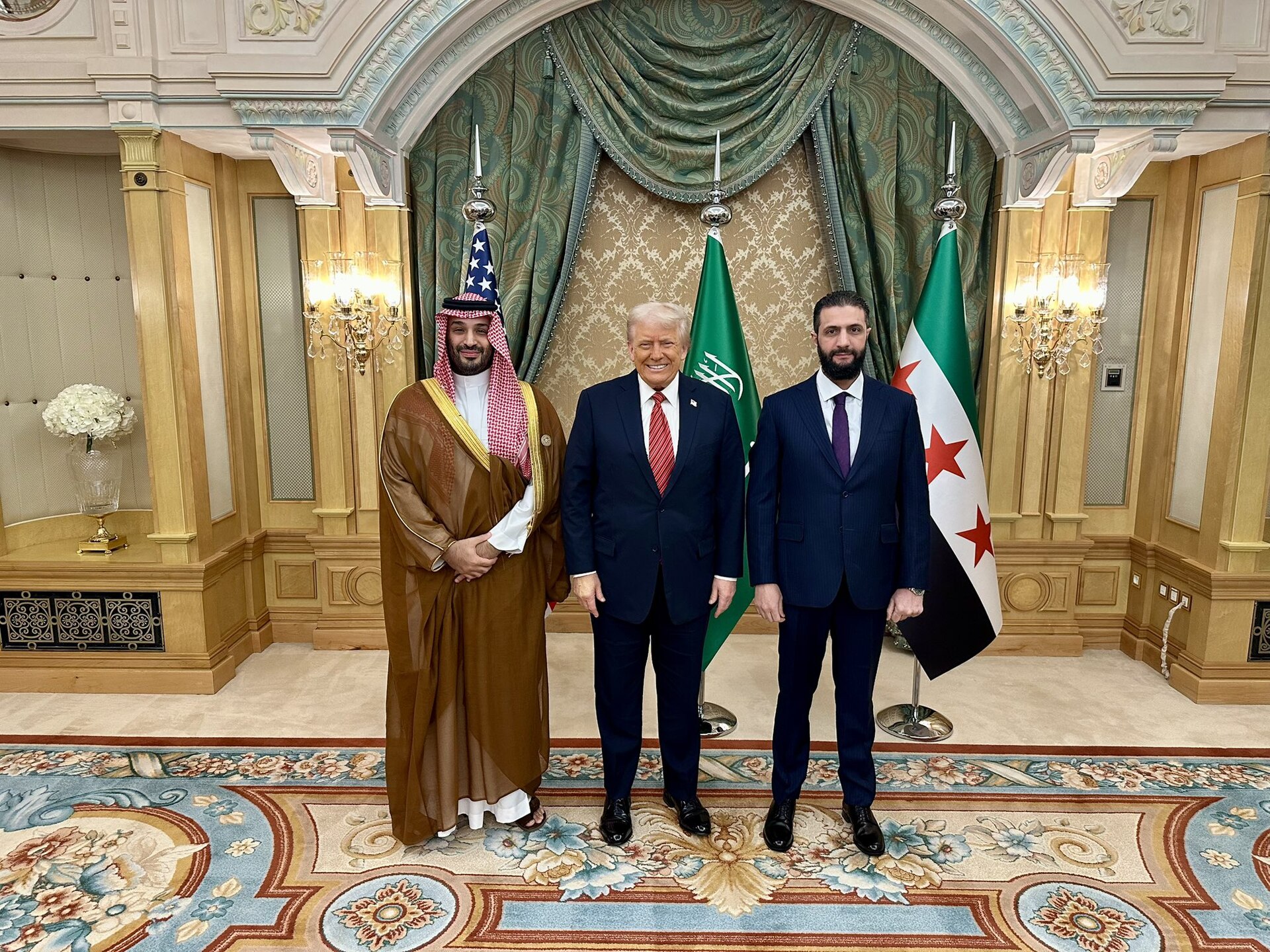

JEDDAH — Saudi Arabia’s $13.1 billion reconstruction commitment to Syria is not charity — it is infrastructure positioning for a world in which the Strait of Hormuz can no longer be trusted. US Special Envoy Thomas Barrack accompanied Ahmad al-Sharaa to Jeddah on April 21 and pitched Syria explicitly as a Gulf-to-Mediterranean pipeline corridor, the first senior American official to frame post-Assad reconstruction as a Hormuz hedge in public.
The pitch lands differently in April 2026 than it would have a year ago. Saudi Arabia’s Yanbu Red Sea terminal is operating near its 5.9 million barrel-per-day ceiling while the kingdom’s pre-war Hormuz throughput ran at 7–7.5 million bpd — a structural gap of 1.1–1.6 million bpd that no amount of pumping can close without new export routes. Syria, suddenly friendly and desperately broke, offers geography that pipeline planners have drawn lines through since the 1940s. The question is whether the money flowing into Damascus is buying reconstruction or right-of-way.
Table of Contents
- The Barrack Pitch and What It Reveals
- Why Does Syria’s Geography Matter for Gulf Oil?
- Where Is the $13.1 Billion Actually Going?
- Iran’s $30–50 Billion Sunk Cost and the Corridor That Died
- Is Turkey Building a Competing Corridor?
- What Blocks the Pipeline? The SST Designation Problem
- The Mutual Legitimation Trade
- Can a Syria Pipeline Actually Replace Hormuz?
- Frequently Asked Questions
The Barrack Pitch and What It Reveals
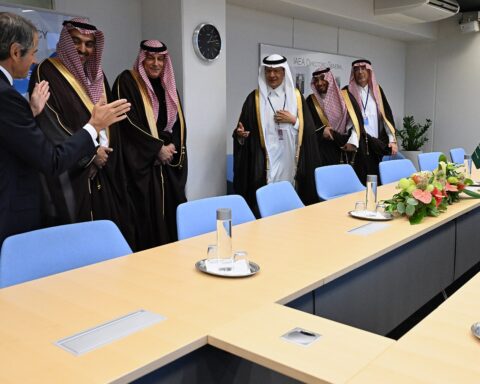
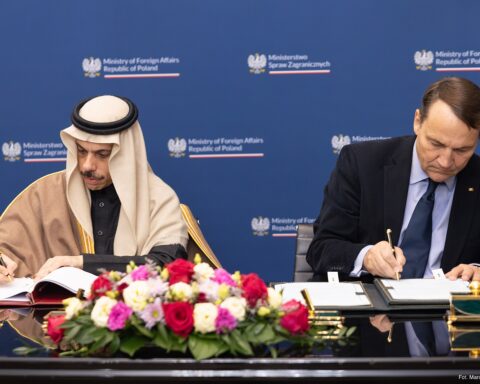
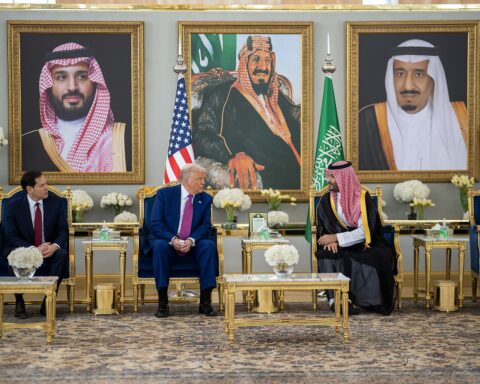
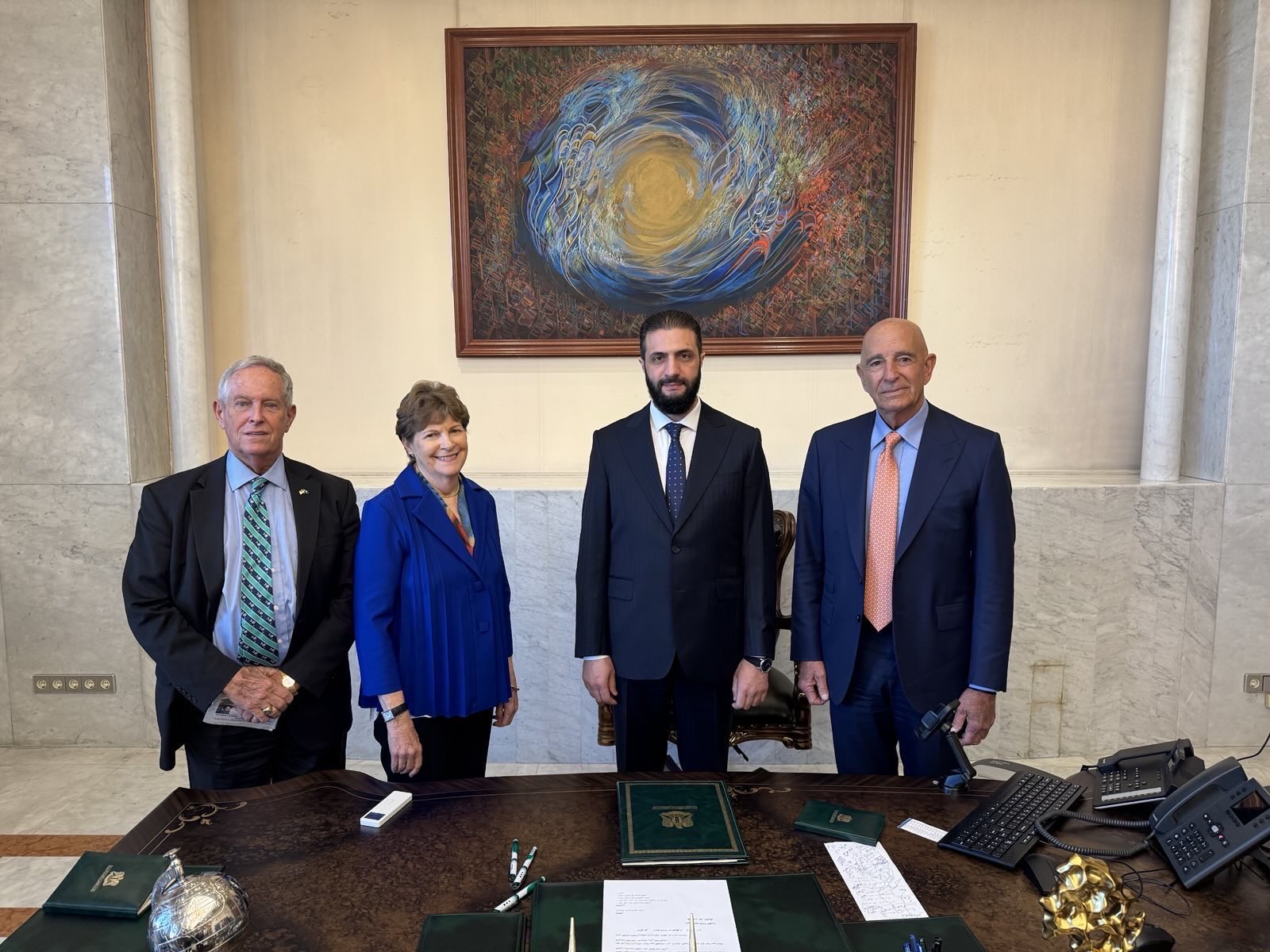
Thomas Barrack, the US Special Envoy to Syria, did not merely attend the Jeddah meetings — he marketed them. In public remarks and on social media, Barrack framed al-Sharaa’s visit as “a decisive turning point in the modern history of the Middle East” and advocated using Syria’s geography to channel Gulf oil to the Mediterranean via overland pipelines. The language was not diplomatic boilerplate. It was a commercial prospectus delivered in the middle of a war.
The timing matters. Barrack made this pitch while the US Navy was enforcing a blockade against Iranian vessels in the Strait of Hormuz and while Saudi production had crashed from 10.4 million bpd in February to 7.25 million bpd in March — what the International Energy Agency called “the largest disruption on record.” An American envoy selling a Hormuz alternative to the country most damaged by Hormuz disruption is not diplomacy operating at one remove from crisis management. It is crisis management.
What Barrack’s advocacy reveals is that Washington now treats Syria’s post-war alignment as an energy security asset, not merely a counterterrorism outcome. The series of US and UN designation removals since mid-2025 cleared legal underbrush for exactly the kind of infrastructure investment that Barrack was pitching in Jeddah. The deradicalization narrative and the pipeline narrative are running on the same track.
Barrack’s presence alongside al-Sharaa also carried a message for Riyadh. The United States was signaling that it views Saudi reconstruction capital in Syria as aligned with American strategic interests — a shift from Washington’s posture during the Obama and early Trump years, when US policy treated Gulf investment in post-conflict Arab states with suspicion about Islamist entanglement. The envoy who once called al-Sharaa’s White House visit “a decisive turning point” was now physically embedded in the Saudi-Syrian bilateral framework, blurring the line between American diplomacy and Saudi commercial positioning in ways that benefit both.
The Middle East briefing 3,000+ readers start their day with.
One email. Every weekday morning. Free.
Why Does Syria’s Geography Matter for Gulf Oil?
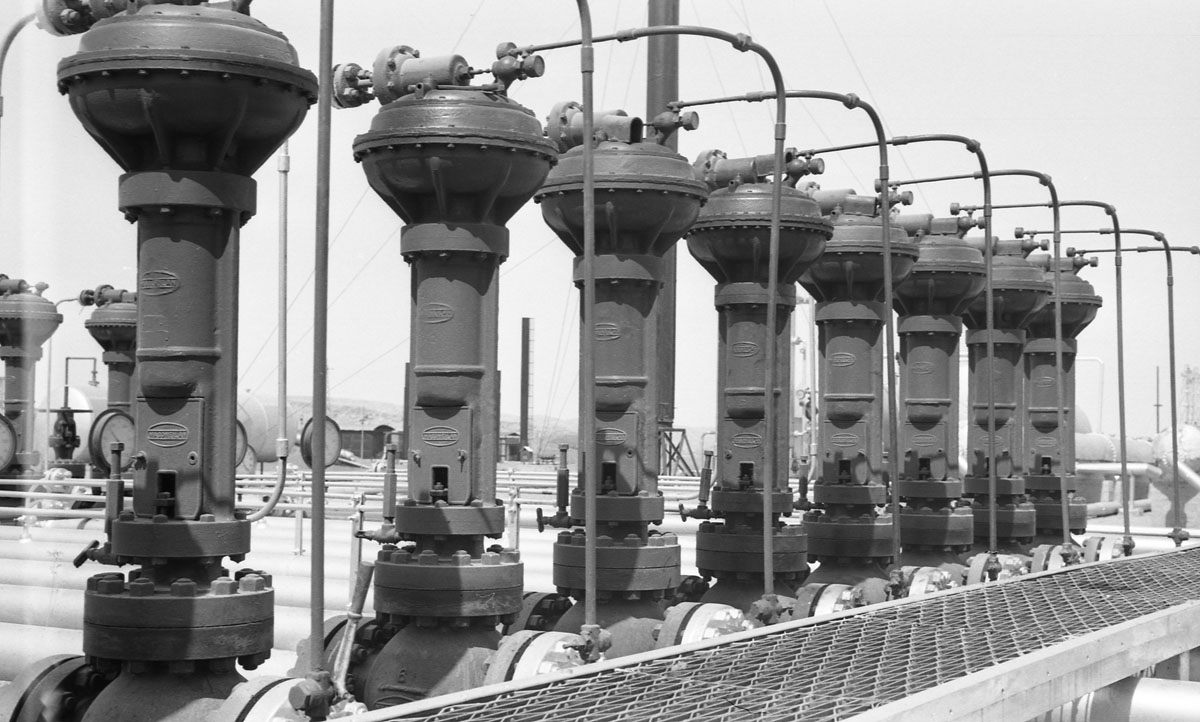
Syria sits on what petroleum engineers have called the shortest overland route from the Persian Gulf to the Mediterranean. A pipeline running from Saudi Arabia’s Eastern Province through Jordan and southern Syria to the port of Tartus or Baniyas on the Syrian coast would bypass Hormuz entirely, putting crude onto tankers in waters where Iran has no interdiction capability. This is not a new idea. The Trans-Arabian Pipeline (Tapline), completed in 1950, ran Saudi crude to Sidon, Lebanon, until political instability shut it down in 1983.
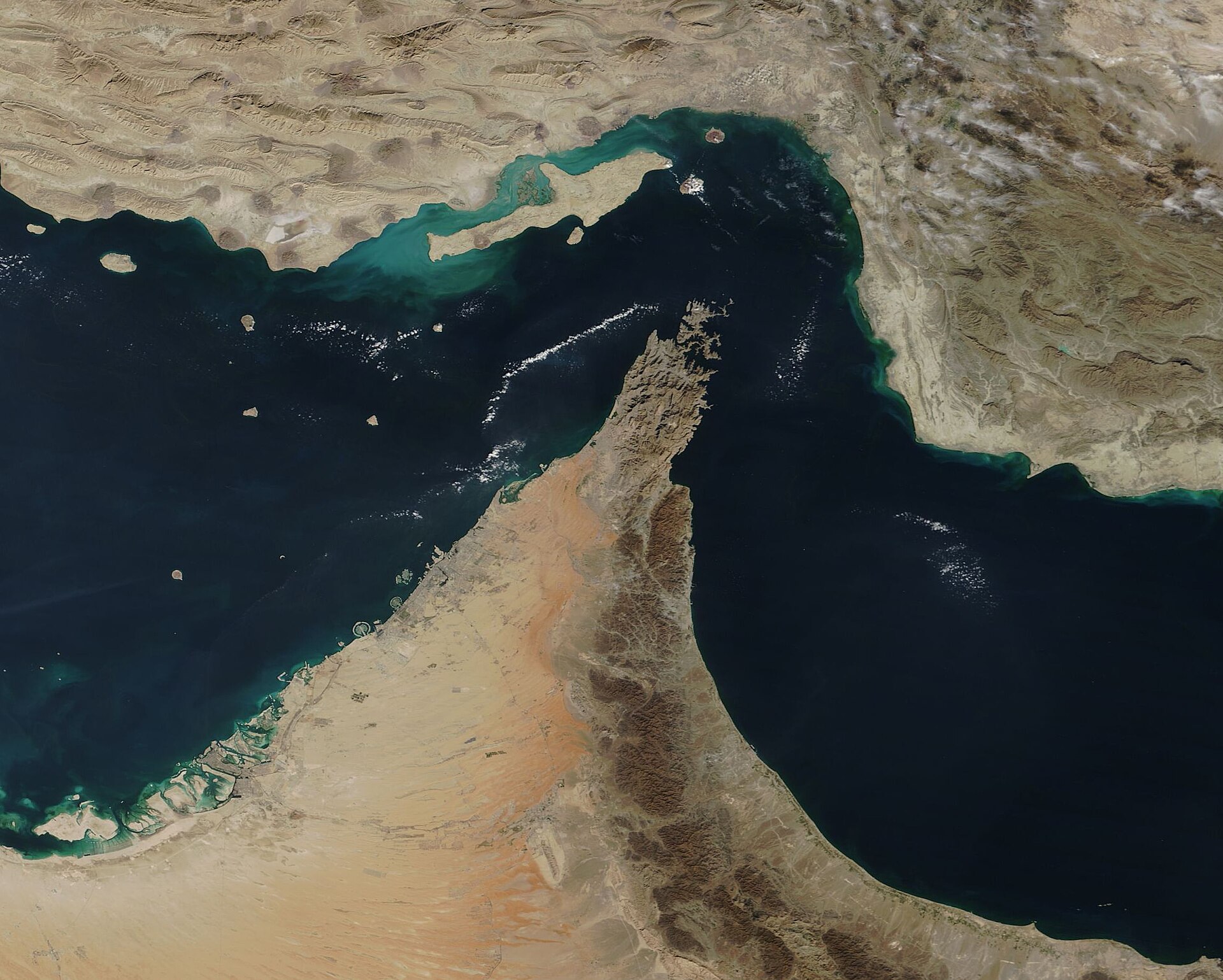
What is new is the strategic context. Before February 28, 2026, the Hormuz bypass was a planning exercise. After the IRGC declared the strait a “danger zone” and redirected vessels through a five-nautical-mile corridor under Iranian territorial waters near Qeshm and Larak islands, it became an operational necessity. Saudi Arabia’s East-West Pipeline to Yanbu was designed for 5 million bpd but has been running near its 5.9 million bpd wartime ceiling — and the pumping station struck by the IRGC on April 8 demonstrated that even the existing bypass is vulnerable.
A Mediterranean-facing pipeline through Syria would add a third export vector. CNBC and Euronews both reported in late April 2026 that such routes would cost $15–20 billion to build — a figure that makes the current $13.1 billion Saudi reconstruction commitment to Syria look less like development aid and more like a down payment on infrastructure access.
Where Is the $13.1 Billion Actually Going?
The aggregate number — $13.1 billion in Saudi commitments since December 2024, more than any other single country according to the Syrian Observer — obscures what the money is actually building. The February 2026 investment tranche alone produced 47 deals with more than 100 Saudi companies, but the two largest tell the story.
The first is the Aleppo International Airport redevelopment: SAR 7.5 billion ($2 billion) awarded to the Bin Dawood Investment Group. Aleppo’s airport was a military airbase for Russian and Iranian forces under Assad. Rebuilding it as a civilian hub with Saudi capital is not primarily an aviation project — it is a statement about who controls northern Syria’s connectivity to the Gulf.
The second is STC’s “Silk Link” project: SAR 3 billion ($800 million–$1 billion) to lay a 4,500-kilometer national fibre-optic backbone across Syria. Telecommunications infrastructure is the kind of investment that creates dependency. A country whose internet runs on Saudi-built fibre does not easily pivot toward competing patrons.
| Project | Investor | Value | Strategic Function |
|---|---|---|---|
| Aleppo Airport redevelopment | Bin Dawood Investment Group | $2 billion | Northern connectivity hub, replaces Russian/Iranian military use |
| Silk Link fibre-optic backbone | STC | $800M–$1B | National telecoms dependency, 4,500 km network |
| February 2026 investment tranche | 100+ Saudi companies | $6.4 billion (total) | Real estate, infrastructure, telecoms across 47 deals |
| Total Saudi commitments | Various | $13.1 billion | Largest single-country reconstruction contributor |
The World Bank estimates Syria’s total reconstruction cost at a minimum of $216 billion. Saudi Arabia’s $13.1 billion represents roughly 6 percent of that figure. But reconstruction capital is not fungible — the first money in secures the strategic concessions. Airport contracts, telecoms infrastructure, and transportation corridors are the assets that determine which power shapes the rebuilt state’s external orientation. The Foundation for Defense of Democracies noted in an April 24 analysis that many of these pledges remain “largely notional” because of the State Sponsors of Terrorism designation, but the political signaling precedes the disbursement.
Iran’s $30–50 Billion Sunk Cost and the Corridor That Died
Iran spent an estimated $30–50 billion in Syria over thirteen years — military deployments, Hezbollah logistics, IRGC commercial enterprises, and direct regime support, according to Radio Free Europe and Responsible Statecraft. Every dollar is now a sunk cost with zero recoverable value. When HTS-led forces overthrew Assad on December 8, 2024, Iranian diplomats fled Damascus, the Iranian embassy was ransacked, and the land corridor through which Tehran had supplied Hezbollah and projected force into the Levant for four decades was severed overnight.
Al-Sharaa has not been subtle about this. He told RFERL that Assad’s collapse “set the Iranian project in the region back by 40 years.” Syria’s Ministry of Foreign Affairs issued a statement “strongly condemning” Iranian attacks on Saudi Arabia, the UAE, Bahrain, Qatar, Kuwait, and Jordan during the 2026 war — placing al-Sharaa’s Damascus explicitly in the anti-Iran coalition. This is not hedging. This is a former al-Qaeda affiliate’s leader choosing the Saudi camp with the finality of a state that knows exactly which side its reconstruction funding comes from.
Khamenei’s response — publicly backing “Syrian youth” to rise against al-Sharaa — confirmed that Tehran has no institutional partner left in Damascus and no lever to create one. Iran is now reliant on Sunni powers (Turkey, Qatar, Saudi Arabia) as intermediaries simply to maintain any dialogue with the new Syrian government, a structural inversion from the Assad era when Damascus was Iran’s most reliable Arab ally. Chatham House described the situation as exposing “the extent of the damage to Iran’s axis of resistance.”
The loss has a specific geographic dimension that connects directly to the Hormuz crisis. Iran’s land corridor to the Levant — the route through Iraq and Syria that supplied Hezbollah with rockets, facilitated IRGC commercial enterprises, and gave Tehran strategic depth west of the Zagros Mountains — was the complement to its maritime control of Hormuz. Iran could project force in two directions simultaneously: westward through the Levant corridor and southward through the strait. Assad’s fall severed the western arm. The fractures within the GCC itself have not restored it. Saudi Arabia’s reconstruction investment is, among other things, a bet that the corridor stays dead — that the money flowing into Syrian airports, fibre-optic networks, and eventually pipelines makes the physical and institutional restoration of Iranian influence prohibitively expensive.
Is Turkey Building a Competing Corridor?
Turkey is not watching from the sidelines. In April 2026, Turkey, Syria, and Jordan signed an MOU for a joint Gulf-Europe rail corridor — a competing connectivity architecture that runs through Turkish territory and terminates at Turkish ports. Ankara has also secured $11 billion in infrastructure contracts in Syria, matching Saudi and Qatari pledge levels almost dollar for dollar, according to FDD’s analysis.
The competition is not abstract. Turkey is pushing its own energy corridor vision: an Iraq-Turkey pipeline via Ceyhan and a proposed Qatar-Turkey gas pipeline through Syria and Jordan. Both routes require Turkish transit fees and Turkish port access. Both make Ankara, not Riyadh, the gatekeeper for Gulf energy reaching European markets. The rail corridor MOU adds a logistics dimension — freight that moves on Turkish-built railways generates Turkish influence over Syrian trade policy.
The Arab Gulf States Institute’s analysis of Saudi strategy identified this tension precisely: “By exploiting Turkey’s dependence on Saudi and broader Gulf capital, Riyadh can work with Ankara when interests align while still constraining its bid for dominance.” The mechanism is straightforward. Turkey needs Gulf investment for its own economic stabilization. Saudi Arabia can condition that investment on Ankara accepting a subordinate role in Syrian reconstruction rather than a dominant one. The $13.1 billion is not only buying Syrian alignment — it is buying a constraint on Turkey’s Syrian ambitions.
Qatar adds a third variable. Sheikh Tamim met al-Sharaa within 24 hours of the Jeddah meeting. Qatar’s $11 billion pledge includes a $7 billion power-sector MOU — control over Syria’s electricity grid is control over its economic viability. Qatar’s hold on Syria is real, independent of Saudi coordination, and oriented toward Doha’s own connectivity ambitions (particularly LNG transit and the North Field’s downstream markets). Al-Sharaa’s three-capital Gulf tour in two days was not a Saudi victory lap. It was a bidding environment.
What Blocks the Pipeline? The SST Designation Problem
Syria remains on the US State Sponsors of Terrorism list as of April 2026 — what the National described as the “last milestone” blocking American investment and full financial reconnection. Without removal, no major international bank will clear transactions for Syrian infrastructure projects, no Western insurer will underwrite construction risk, and no pipeline consortium will commit the capital a Gulf-to-Mediterranean route would require.
The designation creates a paradox. Washington — through Barrack — is marketing Syria as a pipeline corridor while Washington’s own sanctions architecture prevents anyone from building that pipeline. Syria’s Finance Minister held meetings with US officials at the IMF/World Bank spring meetings during the week of April 21, explicitly focused on SST removal. The Trump administration has already demonstrated willingness to move quickly on Syria-related designations: HTS lost its FTO label in July 2025, the UN Security Council delisted HTS in February 2026, and the UK removed HTS from its proscribed organizations list in October 2025.
The trajectory suggests SST removal is a matter of sequencing, not principle. But the gap between removal and operational pipeline capacity is measured in years. Pipeline construction through contested post-conflict territory — even pacified territory — requires sovereign guarantees, eminent domain frameworks, and security arrangements that Syria’s transitional government has not yet built. The FDD assessment that investment commitments remain “largely notional” applies with particular force to infrastructure projects with decade-long construction timelines.
The Mutual Legitimation Trade
The Jeddah meeting was a transaction in which both parties received something they could not obtain alone. Al-Sharaa arrived as a former US-designated terrorist who had dissolved HTS as a formal organization only in January 2025 and who governs Syria under a transitional mandate with no elected legitimacy. He left with Saudi political cover, a $13.1 billion reconstruction relationship, and the implicit endorsement of the Arab world’s wealthiest state — the kind of institutional validation that no amount of military victory can provide.
MBS received something equally specific. The AGSI analysis identified three Saudi imperatives in Syria: “security containment, geopolitical balancing, and economic opportunity.” Security containment meant Captagon first: under Assad, Syria became the world’s primary production hub for the amphetamine, flooding Gulf markets. Saudi Arabia seized 1.4 million pills in a single bust as recently as January 2025, according to Al-Monitor. Al-Sharaa has publicly committed to dismantling production networks, embedding anti-narcotics cooperation directly in the reconstruction relationship. The geopolitical prize is larger — the broader architecture of a Saudi-aligned Levant that demonstrates MBS’s model of Arab order survived the Iran war intact while Iran’s model collapsed.
At the core of Riyadh’s post-Assad strategy lie three imperatives: security containment, geopolitical balancing, and economic opportunity.
— Arab Gulf States Institute, “Recasting Syria After Assad,” 2026
Carnegie Endowment’s assessment reinforced this reading: al-Sharaa “appears to have concluded that the surest route to Western goodwill runs through deepening alignment with Saudi Arabia.” The logic is circular in a way that benefits both parties. The West trusts Saudi Arabia’s judgment on regional partners. Saudi Arabia validates al-Sharaa. The West then treats al-Sharaa as validated. Each step in the sequence raises the cost of reversing the alignment.
INSS, the Israeli National Security Studies institute, added a dimension neither Riyadh nor Damascus has acknowledged publicly: al-Sharaa “wants an agreement with Israel,” and Barrack has reinforced this framing. A Saudi-brokered Syria-Israel normalization would be the single most consequential diplomatic outcome of the post-Assad period — and the one that most directly serves MBS’s ambition to position the kingdom as the Arab world’s primary diplomatic broker, a role he has been exercising through the Lebanon ceasefire and the Nicosia parallel diplomatic track.
Can a Syria Pipeline Actually Replace Hormuz?
The honest answer is: not soon, and not fully. The Strait of Hormuz handled approximately 21 million barrels per day before the war — roughly 20 percent of global oil consumption. A new overland pipeline through Syria, even at ambitious capacity, might carry 1–2 million bpd. The 1950 Tapline carried 500,000 bpd at peak. Modern pipeline technology could triple that, but the route faces physical constraints: mountainous terrain in western Syria, a post-conflict security environment, and a transit distance of approximately 1,200 kilometers from the Jordanian border to the Mediterranean coast.
The $15–20 billion construction cost estimated by CNBC assumes a benign operating environment. Syria’s transitional government does not yet control all of its territory. Turkish-backed factions hold portions of the north. Kurdish forces control the northeast. Remnant ISIS cells operate in the eastern desert. Building pipeline infrastructure through this terrain requires either a security guarantee that no actor can currently provide or a level of sovereign consolidation that al-Sharaa has not yet achieved.
But the replacement-for-Hormuz framing misreads the strategic logic. Saudi Arabia does not need a Syrian pipeline to replace Hormuz. It needs a Syrian pipeline to reduce dependence on the single-chokepoint vulnerability that the Iran war has exposed. Even 1–1.5 million bpd of Mediterranean-facing export capacity would close the structural gap between Yanbu’s ceiling and pre-war Hormuz throughput. It would also give Saudi crude access to European refineries without transiting either Hormuz or the Bab el-Mandeb — a genuine diversification in a region where both chokepoints have been contested within the same conflict. That diversification calculus is now more urgent: Iran is reportedly helping the Houthis build a toll architecture for Bab el-Mandeb that mirrors the Hormuz fee system, meaning a Syria corridor would not just bypass Hormuz — it would bypass both Iranian-controlled chokepoints simultaneously.
The data here is thin on construction timelines. No feasibility study has been published. No route has been formally surveyed. Barrack’s pitch in Jeddah was aspirational, not contractual. The gap between a US envoy floating an idea and crude oil flowing through Syrian territory is measured in years and billions of dollars, with a sanctions removal prerequisite that has no announced timeline.
A food security dimension receives less attention than the oil corridor but may prove more immediately actionable. The Syrian Observer reported in April 2026 that Saudi Arabia and Syria are actively planning an overland food security corridor as a Hormuz-war supply chain hedge. Saudi Arabia imports approximately 80 percent of its food, and the war has disrupted maritime shipping routes through both Hormuz and the Bab el-Mandeb. An overland corridor through Jordan and Syria to Mediterranean ports — or through Syria to Turkish transit — would provide supply chain redundancy for grain, processed food, and agricultural inputs that the kingdom currently receives by sea. This is the kind of infrastructure project that can begin construction before the SST designation is removed, because food logistics do not carry the same sanctions risk as petroleum pipeline finance.
The reconstruction money, the pipeline concept, the food corridor, and the telecoms backbone all point in the same direction: Saudi Arabia is building the physical infrastructure of dependency before the political architecture is complete. Al-Sharaa’s transitional government needs the capital too urgently to negotiate hard on terms. By the time Syria holds elections — if it holds elections — the airports, the fibre-optic network, and the institutional relationships will already be Saudi-built. The initial Jeddah meeting on April 21 set the political framework. The money is now setting the physical one.
Frequently Asked Questions
How does Syria’s SST designation affect existing Saudi investments?
Saudi companies operating under bilateral government-to-government agreements have some insulation from US secondary sanctions, but international banks remain unwilling to clear transactions involving Syrian counterparties while the designation holds. The practical effect is that Saudi commitments are structured as sovereign pledges and MOUs rather than bankable project finance — a distinction that delays construction starts on major infrastructure. Syria’s Finance Minister was in Washington during the week of April 21 specifically to discuss removal mechanics with Treasury officials.
What happened to the 2023 Saudi-Assad normalization?
Saudi Arabia, along with Bahrain and the UAE, normalized relations with Assad’s government and backed Syria’s reinstatement to the Arab League in May 2023. The strategy attempted to use economic incentives to pry Damascus from Iran’s orbit incrementally. Assad’s overthrow on December 8, 2024, made the approach irrelevant overnight — but it also meant Saudi Arabia had institutional relationships with Syrian state ministries that survived the regime change, giving Riyadh a head start in engaging al-Sharaa’s transitional government that Qatar and Turkey did not have.
Could Iran rebuild influence in Syria under al-Sharaa?
The structural barriers are formidable. Iran has no institutional partner in Damascus, no military presence on Syrian soil, and no economic hold over a government funded by Gulf capital. Al-Sharaa’s MFA has publicly condemned Iranian attacks on Gulf states. Khamenei’s call for “Syrian youth” to rise against al-Sharaa suggests Tehran has concluded that covert subversion, not diplomatic engagement, is its remaining option — but Syria’s intelligence services under HTS veterans are specifically constituted to detect and disrupt exactly that kind of Iranian network-building, having spent years fighting IRGC-backed forces on the battlefield.
What role does the Turkey-Syria-Jordan rail MOU play?
The April 2026 rail corridor MOU creates a competing connectivity architecture that does not require Saudi transit access. If built, Gulf freight could reach European markets via Turkish ports rather than Syrian Mediterranean terminals — giving Ankara gatekeeping power over trade flows that Saudi Arabia’s pipeline vision is designed to control. The rail MOU and the pipeline concept are not complementary projects; they are competing bids for the same geographic corridor, and al-Sharaa’s willingness to sign both reflects a hedging strategy that neither Riyadh nor Ankara fully controls.
Has any Gulf-to-Mediterranean pipeline route been formally proposed?
No formal proposal with published route surveys, environmental assessments, or financing commitments exists as of April 2026. Barrack’s advocacy was directional, not contractual. The more proximate question is right-of-way: a pipeline from Saudi Arabia’s Eastern Province through Jordan and Syria requires three sovereign agreements across four countries. Jordan is a US treaty ally with no current pipeline infrastructure to offer. The Syrian government has signaled openness but holds no operating pipeline law. Lebanon — the Tapline’s original Mediterranean terminus — remains outside the current architecture entirely. The Syria play has since expanded to $6.4B in FII deals, with the Barrack-Riyadh shuttle personally coordinating Damascus and Riyadh in the same 48-hour window that Saudi Arabia grounded US jets at Prince Sultan.