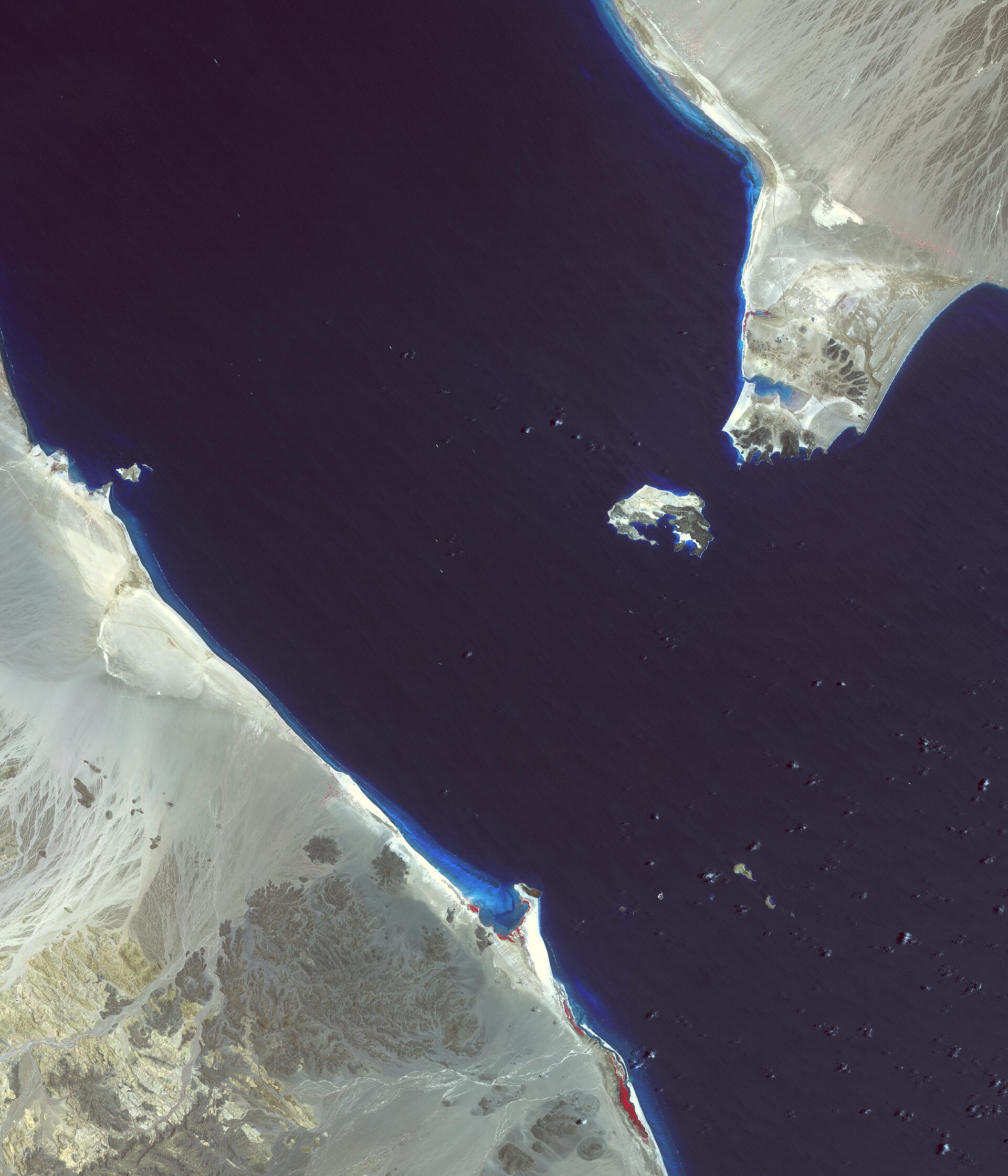
JEDDAH — Iran is reportedly designing the toll mechanism the Houthis intend to impose on Bab el-Mandeb, transferring the same fee architecture Tehran built for the Strait of Hormuz to a second chokepoint controlled by a non-state proxy that no UNCLOS instrument can reach. For Saudi Arabia, which spent the better part of a decade engineering the East-West Pipeline as a Hormuz hedge, the implication is structural rather than tactical — both of the kingdom’s primary export corridors are now subject to Iranian-architected revenue extraction, with the Red Sea leg sitting entirely outside the April 8 ceasefire’s scope and outside any treaty enforcement framework.
The British maritime security firm Ambrey, citing Lloyd’s List Intelligence reporting on 23 April, says toll mechanisms have been discussed at “senior leadership levels” within the Houthi movement and that those discussions have “received Iranian support and involvement, as Tehran seeks to transfer its experience in the Strait of Hormuz to the Red Sea.” That single sentence, buried in a maritime advisory most oil traders skim past, redefines what a Hormuz deal actually buys Riyadh — because if Bab el-Mandeb operates on the same selective-screening logic the IRGC built into the Hormuz toll law, the kingdom’s bypass infrastructure terminates at a port whose seaward approaches are governed by the same adversary network it just paid a war to escape.
Table of Contents
- What does Iran’s architecture transfer to the Houthis actually mean?
- The Hormuz template and why its revenue numbers do not matter
- Why is UNCLOS structurally weaker against a non-state actor?
- Saudi Arabia’s bypass infrastructure now terminates at a second Iranian chokepoint
- Can SUMED rescue Asia-bound Saudi crude if both chokepoints close?
- How does the April 8 ceasefire create a Red Sea carve-out?
- The Andromeda Star strike and what it proves about screening accuracy
- Three converging logics behind the architecture transfer
- Dual-chokepoint export ceiling: the Saudi capacity arithmetic
- Frequently asked questions
What does Iran’s architecture transfer to the Houthis actually mean?
Iran is not giving the Houthis weapons or money to run a toll. It is transferring the legal scaffolding, the fee-tier structure keyed to flag and cargo, the AIS screening logic, and the yuan-and-stablecoin payment rails it spent eighteen months building for Hormuz — converting a protection racket at Bab el-Mandeb into something close to a parallel customs regime operated under Iranian architectural design.
The Ambrey assessment is careful with its verbs. It does not say Iran is funding the Houthi toll programme, or commanding it, or enforcing it; it says Tehran is “seeking to transfer its experience” — meaning the legal scaffolding, the fee-tier structure keyed to flag and cargo, the selective AIS screening, and the payment rails that route revenue outside the SWIFT system. That architecture, rather than the missiles or the patrol boats, is the asset Iran has spent the past eighteen months perfecting against vessels in the Persian Gulf, and it is the asset most plausibly portable to a force that already collected an estimated $180 million a month in informal protection fees during the 2024 Red Sea campaign documented by the UN Panel of Experts.
What changes in the transition from informal Houthi taxation to Iranian-architected toll regime is not the rate, which under the Hormuz law tops out at $2 million per vessel, but the formality. Houthi protection money in 2024 was opportunistic, paid through intermediaries, justified through occasional rhetoric about Gaza and inconsistently applied. The Iranian architecture replaces that with a fee schedule, a flag-state classification matrix, and a settlement channel — the Hormuz model uses Chinese yuan via Kunlun Bank and stablecoins — that converts a protection racket into something close to a parallel customs regime. Arsenio Longo, founder of the maritime analytics firm Huax, told The National earlier this month that “the method started first in Hormuz, then switched to the Houthi region” and that the Houthis “appear to be applying a Bab Al Mandeb version of the Iranian maritime pressure formula, with local variations.”
Iran has not publicly acknowledged the architecture transfer, and the deniability is not incidental. Tehran’s position throughout the Islamabad talks has been that Hormuz is a sovereign-waters question and Bab el-Mandeb is a Yemeni question, and the negotiating fiction depends on those two files remaining notionally separate. Ali Akbar Velayati, the former foreign minister who now serves as a senior advisor to the Supreme Leader, broke that fiction on 8 April when he told The National that “the unified command of the resistance front views Bab Al Mandeb as it does Hormuz” — a sentence Iranian state media did not amplify but did not retract either, leaving the strategic doctrine on the record while preserving the diplomatic deniability the toll architecture requires.
The Middle East briefing 3,000+ readers start their day with.
One email. Every weekday morning. Free.
The Hormuz template and why its revenue numbers do not matter
The first instinct among oil-market analysts has been to dismiss the Houthi toll plan by pointing to the Hormuz toll’s collapse as a revenue exercise. Iran International calculated on 14 April that “the $100 billion annual toll revenue is a myth” — pre-war traffic of roughly 130 vessels a day has fallen to around eight, and even at the maximum $2 million tariff that yields a theoretical ceiling of $16 million a day against a baseline of $300 million a day in lost Iranian export revenue and a war-cost figure that runs above $400 million a day when bunker fuel, insurance premia and frozen oil sales are aggregated. Deputy Parliament Speaker Hamidreza Hajibabaei announced on 23 April that the first toll receipts had been “transferred to the account of the Central Bank of Iran” without disclosing an amount, a piece of staged opacity that traders read correctly as an admission that the figure was too small to advertise.
That arithmetic is sound for Hormuz in its current configuration, but it imports the wrong lesson into the Bab el-Mandeb case. The Hormuz toll’s revenue weakness is a function of US naval blockade enforcement, the structural overrepresentation of Gulf-state-flagged vessels (which Iran cannot tax without provoking the GCC), and the fact that Iran is simultaneously the operator of the toll and the principal exporter through the strait — every transit it deters is one less Iranian barrel sold. None of those constraints applies to Bab el-Mandeb under Houthi control. The waterway is dominated by traffic from Saudi Arabia, the UAE, Egypt, Iraq, Russia and a long tail of European-bound Asian goods; the Houthis do not export through the strait themselves; and US naval enforcement against vessels operating from Yemeni territorial waters is bounded by the political ceiling on a wider Yemen campaign that no administration has been willing to authorise since the Saudi coalition’s 2015–2022 effort.
Mona Yacoubian, who runs the Middle East programme at the Center for Strategic and International Studies, told Military Times on 14 April that “the Houthis are the ones who pioneered, in a way, this idea of using asymmetric capabilities to disrupt maritime traffic,” and that any serious move to close Bab el-Mandeb “would likely prompt a further spike in oil prices and, in time, inflation.” Elisabeth Kendall, the Yemen specialist now serving as president of Girton College, Cambridge, framed the operational asymmetry more starkly in the same piece — “the reality is that asymmetric warfare suits the Houthis. They don’t need to be accurate or sophisticated” — and warned that the prospect of dual closure “keeps trade analysts awake at night.” The point that follows from both assessments is that the Houthis can run a low-yield, high-disruption toll regime profitably at price points well below what Iran would need to make Hormuz toll revenue meaningful, because their cost base, their target mix and their political constituency are all different.
Why is UNCLOS structurally weaker against a non-state actor?
Against Iran, the Article 38 prohibition on coastal-state tolls provides a legal hook — however slow — because Iran remains a state subject to customary international law. Against the Houthis, there is no usable hook: they are not a coastal state, not party to UNCLOS, and not subject to ICJ jurisdiction. The treaty architecture designed for state actors cannot compel actors who were never inside it.
The legal asymmetry between the two cases is the part of this story that maritime lawyers will argue about for years, because it inverts the usual hierarchy of state versus non-state actor in international law. Iran is a coastal state, has not ratified the United Nations Convention on the Law of the Sea, and has therefore placed itself outside the treaty’s Part XV dispute settlement mechanism, but it remains a state subject to customary international law on innocent passage and to ICJ jurisdiction in cases where consent can be manufactured through other instruments. The Article 38 prohibition on coastal-state tolls in straits used for international navigation is the legal hook the United States and the European Union have used to denounce the Hormuz toll, and the architecture for treaty-based response, however slow, exists.
For the Houthis, none of that applies in any usable form. They are not a recognised state, they are not party to UNCLOS, they are not subject to ICJ jurisdiction, and the state-responsibility regime that ordinarily allows aggrieved governments to bring claims against the territorial sovereign of an offending actor runs into the threshold problem that no government in Sanaa has effective control of Yemeni territorial waters in the relevant maritime zone. The Article 38 prohibition does not bind the Houthis because the Houthis are not a coastal state in any treaty sense, but the corollary is that no treaty mechanism can compel them either — the gap that ordinarily favours the international community when dealing with a non-state actor here cuts the other way, because the Houthis do not need legal cover for what they are doing, only operational continuity.
The Danegeld problem is what maritime insurers privately call the precedent-setting risk: that the Houthis already established in 2024, through the $180 million-a-month protection regime documented by the UN Panel of Experts, that Bab el-Mandeb tolls function in practice without a legal basis. Once a fee mechanism produces revenue at scale, the absence of a treaty hook becomes irrelevant to the commercial calculation; shipowners pay or they reroute, and reroute means the Cape of Good Hope, which adds two weeks to a Yanbu–Singapore voyage and prices most Asia-bound Saudi crude out of competitive parity with West African and Brazilian alternatives. The Iranian architecture transfer does not need to survive a legal challenge, because there is no forum in which a legal challenge could be brought.
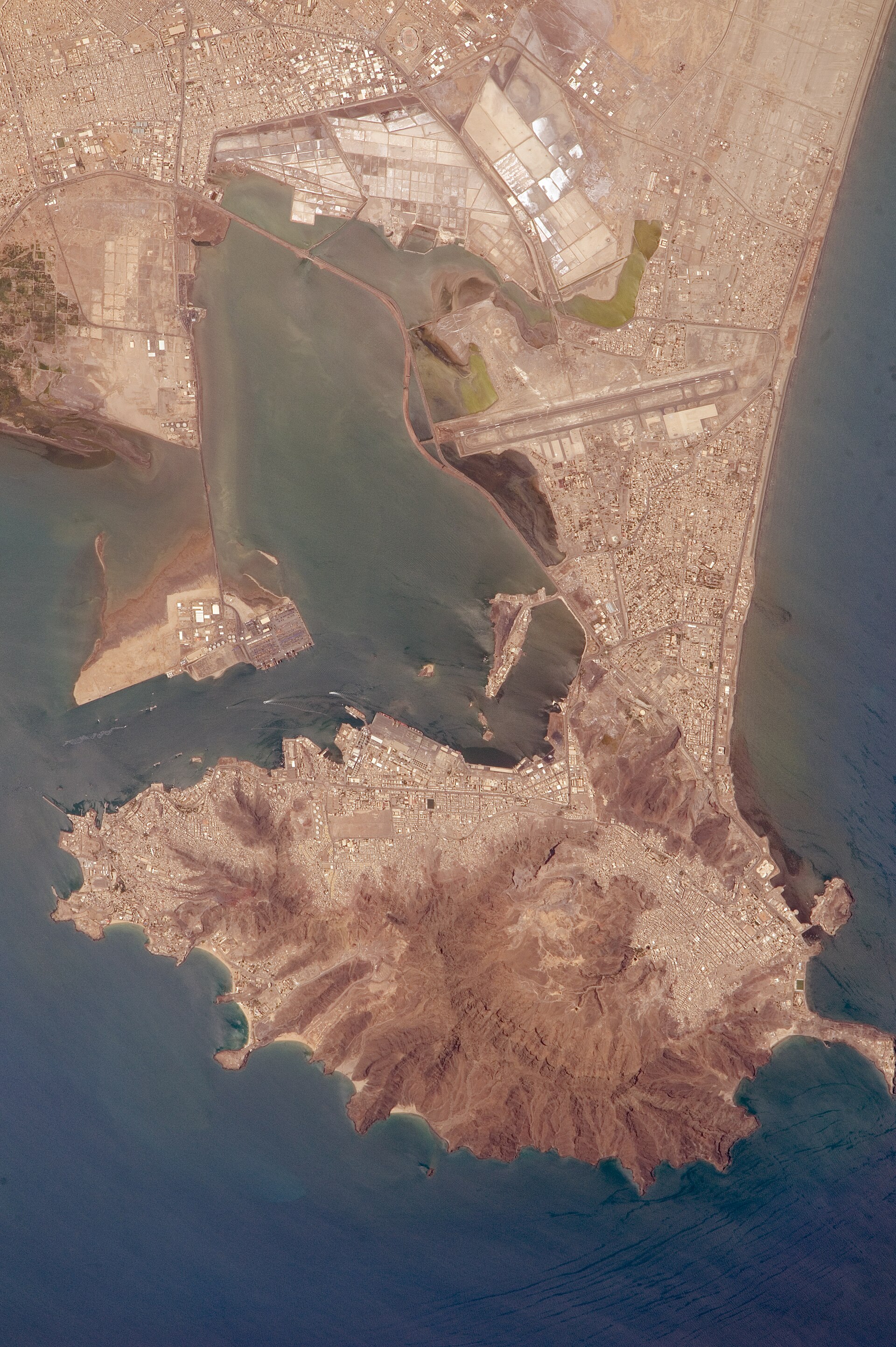
Saudi Arabia’s bypass infrastructure now terminates at a second Iranian chokepoint
The kingdom spent tens of billions of dollars expanding the East-West Pipeline to its current 7 million barrel-a-day capacity precisely so that an Iranian threat to Hormuz could not be allowed to translate into a threat to Saudi solvency, and the wartime activation of that infrastructure since the IRGC strike on the East-West pumping stations on 8 April delivered exactly the bypass function it was designed for. The architecture worked. What the Iranian-Houthi convergence now does is move the failure point one step downstream, from the pipeline to the port, because Yanbu’s effective wartime loading ceiling sits at roughly 3 to 4 million barrels a day under Vortexa’s calculations against a 7 million-barrel pipeline throughput, and 70 to 75 per cent of the crude leaving Yanbu sails south to clear Bab el-Mandeb on the way to Asia.
Samriddhi Vij, an associate fellow in geopolitics at ORF Middle East, set the structural argument out in a recent assessment: Saudi Arabia’s bypass solution “inadvertently creates exposure at another critical chokepoint, linking two geographically distinct maritime vulnerabilities into an interconnected strategic risk,” with 70 to 75 per cent of Yanbu’s exports “directly exposed to Houthi disruption.” The point Vij is making is one Saudi planners have understood since the 2019 Abqaiq attack, but the Iranian architecture transfer crystallises it — the bypass was always a route around Hormuz, not a route around Iran, and the kingdom has spent a decade securing itself against a chokepoint risk that was always going to migrate with the adversary rather than dissolve with the geography. The same logic underwrites Riyadh’s $13 billion Syria reconstruction commitment, which industry analysts increasingly read as a Mediterranean-corridor hedge rather than a regional-stabilisation gesture.
The political calendar makes the exposure worse. Saudi Arabia’s pre-war Asia-bound exports through Hormuz ran at 6 to 7 million barrels a day, the kingdom’s first Arab Light OSP cut for Asia in three months earlier this month signalled the demand-side weakness that wartime supply curtailment has produced, and Aramco’s fiscal break-even sits at $108 to $111 a barrel against a Brent print that has spent April between $89 and $99. Adding Bab el-Mandeb risk on top of Hormuz risk does not change the price; it changes the reliability of any forward hedge, because a buyer cannot lock in delivery economics when both maritime legs are subject to selective screening by adjacent arms of the same network. The double-blockade configuration that Bloomberg documented on 26 April, with US enforcement on the Arabian Sea side and IRGC enforcement on the Gulf of Oman side, finds its mirror image at Bab el-Mandeb in a regime where the gatekeeper is a non-state actor and the screening criteria are not published in advance.
Can SUMED rescue Asia-bound Saudi crude if both chokepoints close?
No. SUMED does not bypass Bab el-Mandeb — a tanker lifting at Yanbu must sail north through the Red Sea to reach Ain Sokhna, crossing the same waters subject to Houthi screening. And SUMED is a Mediterranean play: roughly 90 per cent of Saudi crude sold to Asia moves on VLCCs too large for the Suez Canal when laden, leaving a Cape diversion that erases the price differential entirely.
The standard analyst response to a dual-chokepoint scenario is to gesture at the SUMED pipeline, which moves crude from Ain Sokhna on the Gulf of Suez to Sidi Kerir on the Egyptian Mediterranean coast at a capacity of 2.5 to 2.8 million barrels a day, and which does in principle allow a Mediterranean-bound cargo to bypass the Suez Canal’s draft restrictions on laden VLCCs. The reflex is wrong on two counts. The first is that SUMED does not bypass Bab el-Mandeb — a tanker lifting Saudi crude at Yanbu has to sail north through the Red Sea to reach Ain Sokhna, which means transiting the same waters a Suez-bound vessel would, and which means the Houthi screening regime applies to SUMED cargoes exactly as it applies to canal cargoes.
The second is that SUMED is structurally a Mediterranean play, and roughly 90 per cent of Saudi crude sold to Asia moves on VLCCs that cannot transit the Suez Canal when laden — the Suezmax classification exists for a reason. A SUMED-routed cargo emerging at Sidi Kerir is in Suezmax tonnage, sized for European refineries, and the discharge economics for redirecting a Mediterranean Suezmax to Singapore or Ningbo via the Cape do not work at any plausible Brent price. The dual-chokepoint ceiling for Saudi exports therefore lands at roughly 2.5 to 2.8 million barrels a day to Europe in Suezmax tonnage routed through SUMED, and effectively zero to Asia, against pre-war Asian volumes of 6 to 7 million barrels a day moving through Hormuz.
The unified command of the resistance front views Bab Al Mandeb as it does Hormuz.
Ali Akbar Velayati, former Iranian Foreign Minister, The National, 8 April 2026
That ceiling is what makes the Iranian architecture transfer a strategic event rather than a market event. A 4 million barrel-a-day shortfall in Saudi Asian deliveries cannot be replaced from West Texas, the North Sea or the Brazilian pre-salt at any timeframe under three years, and it cannot be intermediated through Russian supply because Russian crude under the OFAC General License 134A regime Bessent quietly extended on 18 April is already running at full deliverable capacity to Indian and Chinese refiners. The Asian buyer pool, in other words, does not have an off-ramp from Saudi dependence that Iran’s architecture transfer would not also constrain.
How does the April 8 ceasefire create a Red Sea carve-out?
The April 8 framework binds Iran to Hormuz-specific undertakings — no tolls, no AIS screening, IRGC stand-down — and contains no language on Bab el-Mandeb, the Houthis, or Yemeni waters. The carve-out is not a drafting oversight. It reflects Iran’s position that the two maritime files are legally separate, and a US team that chose to treat the absence as a negotiating victory — which is the reading Riyadh has been quietly contesting ever since.
The text of the April 8 ceasefire framework, as reported through the Axios and Oman Observer leaks, requires Hormuz to reopen “without limitation, including tolls” and binds Iran to specific behavioural undertakings on IRGC interdiction, AIS-screening practices and the May Aramco OSP-linked premium structure. The text contains no language on the Red Sea. It contains no language on Houthi activities. It does not name the Houthis as a party, an affiliate, an aligned force, or a constituency to which Iran’s commitments extend by implication. The carve-out is so clean that several US officials briefing the framework after its initial leak treated the absence as a drafting victory rather than a structural problem, which is the read Riyadh has been quietly contesting ever since.
The Iranian negotiating position on the carve-out is internally consistent in a way Western observers have undercredited. Tehran has argued throughout the Islamabad and Doha rounds that Hormuz is sovereign Iranian water and Bab el-Mandeb is sovereign Yemeni water, and that Yemeni questions belong to a separate file under the auspices of the UN Special Envoy. The position is legally indefensible but diplomatically functional, because it permits Iran to claim Hormuz compliance — reduced toll enforcement, IRGC stand-down on selective screening, restoration of the pre-war 130-vessel daily transit baseline — while the architecture it transferred to Sanaa goes on running independently. Ahmed Nagi, the senior Yemen analyst at the International Crisis Group, has put the coordination on the record without overstating it, telling reporters that the Houthi movement’s “delayed entry reflected a calculated decision taken in coordination with Tehran.”
The Saudi calculation under that gap is not a question of whether Riyadh signs the Hormuz framework — the kingdom is not a signatory, and its lever in the negotiation has always been its capacity to walk into US Treasury and request escalation rather than its presence at the Pakistani-mediated table where, as Araghchi himself signalled before the Vance walkout, the IRGC’s own authorisation ceiling controls the deliverable scope. The calculation is whether Riyadh is willing to accept a deal in which Iran formally exits Hormuz while a parallel Iranian-architected toll regime continues to operate against the kingdom’s only remaining export corridor through a force the deal does not name.
The Andromeda Star strike and what it proves about screening accuracy
On the morning of 26 April, two Houthi missiles struck the Panama-flagged tanker Andromeda Star approximately 15 nautical miles south-west of Mokha, causing minor damage and allowing the vessel to continue its voyage. The Houthi political wing claimed the strike on grounds the vessel was British-affiliated. The vessel was carrying Russian crude from Primorsk to Vadinar in India under a charter that was, by every commercially available indicator, the kind of cargo a selective-screening regime keyed to Russia-China-friendly traffic should have waved through.
The misidentification matters for what it reveals about the operational fidelity of the AIS-political-screening model the Iranian architecture relies on. Hormuz transit screening in the Persian Gulf works because the IRGC has access to a relatively dense intelligence picture, a shorter list of active vessels, and the capacity to interrogate flag-state classification through commercial databases the Iranian banking sector maintains. The Houthi version of the same screening function operates with a thinner intelligence pipe, a wider geographic envelope across the southern Red Sea and Gulf of Aden, and an asset base — anti-ship cruise missiles, ballistic missiles, drones — whose targeting cycles are not well matched to the kind of last-minute political reclassification a tanker midway through a voyage might require.
The commercial implication is that even if the Iranian architecture transfer succeeds at the policy level, with a fee schedule and a payment rail and a publicly stated screening matrix, the operational delivery against the matrix will produce errors of the Andromeda Star type at a rate insurers have to price in. Lloyd’s market war-risk premia for Bab el-Mandeb transits already sit at 0.7 to 1.0 per cent of hull value per voyage — 10 to 14 times the pre-2024 baseline — and a regularised Iranian-architected toll regime that misclassifies one vessel a fortnight does more damage to insurance economics than a less formal regime that strikes opportunistically. The toll, in other words, does not need to be paid for the toll architecture to impose its costs.
The April 26 strike on MV Andromeda Star is covered in full here, including the INS Kochi rescue, the cargo chain from Primorsk to the Rosneft-owned Nayara Energy refinery at Vadinar, and the twenty-four-hour gap between the Hengli Petrochemical designation and India’s navy escorting a Rosneft supply-chain vessel through the same corridor the Houthi toll mechanism is designed to govern.
Three converging logics behind the architecture transfer
The strategic case for Iran transferring its toll architecture to the Houthis rests on three logics that converge rather than reinforce. That convergence is what makes the transfer durable rather than tactical. The first is hedging. A proxy-controlled chokepoint at Bab el-Mandeb sits outside the geographic envelope of the US Fifth Fleet’s Arabian Sea blockade, outside the legal envelope of the Hormuz ceasefire, and outside the operational envelope of any unilateral US naval action against vessels in Yemeni territorial waters — the political ceiling on a wider Yemen campaign means CENTCOM cannot interdict Houthi-screened cargoes without authorising an operation no administration has been willing to commit to since 2022.
The second is revenue continuity. If Iran accepts a Hormuz deal that returns Persian Gulf transits to baseline and forgoes the Hormuz toll, the architecture transferred to Sanaa preserves the fee-collection function under a different roof, paid in the same yuan and stablecoin rails, with the proceeds available to the broader resistance-front financing system through the same Quds Force mechanisms that already move funds to Hezbollah, Kataib Hezbollah and the Iraqi Popular Mobilisation Forces. The proxy-toll function does not need to match Hormuz’s theoretical revenue ceiling; it needs to provide a continuous income stream that survives the deal Iran is being asked to sign, and at the documented 2024 baseline of $180 million a month it does exactly that.
The third logic is the coercive signal to Riyadh, and it is the one Saudi planners have been slowest to articulate publicly. Saudi Arabia’s entire war-contingency infrastructure — the East-West Pipeline expansion, the Yanbu loading-terminal investment, the Red Sea downstream complex at Yanbu Industrial City, the Jizan refinery’s southward orientation — rests on a chokepoint Iran’s proxy controls. The architecture transfer says, in effect, that the Hormuz hedge Riyadh built was always conditional on Iran’s tolerance of the bypass, and that the tolerance can be withdrawn through a Houthi mechanism Tehran will not own publicly but will not disown operationally either. The signal is consistent with what Velayati put on the record on 8 April. It is consistent with Abdulmalik al-Houthi’s warning to his constituency on 21 April — “our direction is toward escalation if the enemy escalates” — and with the unnamed Houthi official quoted in Lloyd’s List describing the movement’s capabilities to “protect” Bab el-Mandeb in language one analyst characterised privately as “a price list, not a ceasefire statement.”
Dual-chokepoint export ceiling: the Saudi capacity arithmetic
| Route | Pre-war capacity | Hormuz-only disruption | Dual-chokepoint disruption |
|---|---|---|---|
| Hormuz (Ras Tanura, Ju’aymah) | 6.5–7.0 | 0.0 | 0.0 |
| Yanbu via East-West Pipeline (Asia) | 2.5–3.0 | 2.5–3.0 | 0.0 |
| Yanbu via East-West Pipeline (Europe, Suezmax) | 0.7–1.0 | 0.7–1.0 | 0.0 |
| SUMED via Sidi Kerir (Mediterranean only) | 2.5–2.8 | 2.5–2.8 | 2.5–2.8 |
| Total deliverable | 12.2–13.8 | 5.7–6.8 | 2.5–2.8 |
The arithmetic in the table reflects three constraints that get smoothed over in most published analyses. Yanbu’s 7-million-barrel pipeline throughput collapses to a 3- to 4-million-barrel loading ceiling because port infrastructure was sized for a hedge rather than a sole export route, and that ceiling assumes uninterrupted vessel turnaround, which Bab el-Mandeb war-risk premia and screening delays already compromise. SUMED’s 2.5- to 2.8-million-barrel capacity is technically deliverable to Mediterranean buyers in Suezmax tonnage but is not redirectable to Asia at any plausible Brent print, because the Cape voyage erases the price differential. And the dual-chokepoint case assumes that Houthi screening operates on the same flag-state political logic the Iranian architecture has built into Hormuz, which means Saudi-flagged tonnage is the highest-risk classification in the matrix.
Vortexa’s wartime estimate of 3 million barrels a day for Yanbu’s effective Asia-deliverable volume is the figure Saudi planners cite privately, and it is the figure that frames the negotiating ceiling Riyadh can accept on a Hormuz deal that leaves Bab el-Mandeb uncovered. A 3-million-barrel deliverable against a 6- to 7-million-barrel pre-war Asian baseline is a 50 per cent loss of revenue at any given Brent price, and at the current $89 to $99 print it is a fiscal hole Aramco’s downstream and PIF distributions cannot close without recourse to either reserve drawdown — already running at the rate Goldman Sachs documented earlier this month — or a debt issuance market that sovereign wealth desks in the GCC are increasingly reluctant to absorb at current spreads. The gap has pushed Riyadh toward an alternative route: the MBS-Burhan Jeddah meeting on April 21 was in part a structured effort to secure Port Sudan as a western Red Sea logistics node to compensate for the Yanbu ceiling.
Frequently asked questions
Has Iran officially admitted involvement in the Houthi toll mechanism?
No. The architecture transfer is sourced through the Ambrey/Lloyd’s List Intelligence reporting on 23 April and corroborated through analyst commentary from Huax and ICG, but the Iranian foreign ministry has not acknowledged it and Tehran’s negotiating position in Islamabad keeps Hormuz and Bab el-Mandeb as separate files. The deniability is structurally important to the architecture: a public Iranian admission would create a legal handle for treaty action against Tehran on Bab el-Mandeb behaviour, which is precisely the handle the proxy structure is designed to deny.
How much does it cost a VLCC to use Cape of Good Hope routing instead of Bab el-Mandeb?
A Yanbu-to-Singapore voyage via Bab el-Mandeb and the Strait of Malacca runs roughly 6,400 nautical miles and 21 to 23 days at standard 14-knot economical speed. The same delivery via the Cape adds 3,500 to 3,800 nautical miles and 11 to 13 days, increases bunker fuel consumption by roughly 60 per cent, and at current VLSFO bunker prices adds $1.5 to $1.9 million per voyage — before the additional capital cost of the longer voyage on time-charter rates that have been running at $80,000 to $95,000 per day for VLCCs through April.
What is the difference between the 2024 Houthi protection fees and the proposed Iranian-architected toll?
The 2024 regime documented by the UN Panel of Experts was opportunistic, paid through intermediaries to Houthi-aligned shipping agencies, and applied inconsistently. The Iranian-architected version replaces those features with a published fee schedule keyed to flag and cargo, a centralised collection mechanism likely routed through Sanaa-based political offices coordinating with Iranian banking infrastructure, and a settlement rail in yuan and stablecoins that mirrors the Hormuz toll’s payment architecture. The shift is from protection racket to parallel customs regime.
Could a future Saudi-US security framework formally close the Bab el-Mandeb gap?
Closing it would require either a new Yemen operation under US Title 10 authority, which has been politically unavailable since 2022, or a multilateral maritime task force operating under UN Chapter VII authority, which Russia and China have signalled they would block in the Security Council on the same logic that drove their 2024 abstentions on Operation Prosperity Guardian. The realistic alternative under discussion in Riyadh is bilateral US air-defence augmentation around Yanbu and Jizan rather than offensive coverage of the strait itself.
What toll rate have the Houthis signalled for Bab el-Mandeb, and how does it compare to Hormuz?
No formal rate has been published. The Huax assessment and the Lloyd’s List-sourced Ambrey advisory both describe the Bab el-Mandeb model as mirroring Hormuz’s flag-and-cargo tiered structure, where friendly-flag vessels pay a reduced or zero rate and Western-linked tonnage pays the full fee. At Hormuz, the published ceiling is $2 million per vessel. The Houthi version is expected to index lower — reflecting the movement’s weaker enforcement position and a larger target pool of European-bound traffic that would rather pay than reroute twelve thousand miles.
Abdulmalik al-Houthi closed his 21 April speech with the line that has been quoted most often in the Iranian press in the days since: “We are confronting the Israeli-Zionist enemy and its American partner. Our direction is toward escalation if the enemy escalates.” The line reads as conventional resistance-axis rhetoric, but the architecture Tehran is building under it is something else — a fee schedule, a settlement rail, a screening matrix, and a chokepoint that the kingdom’s bypass infrastructure was never designed to navigate. The Andromeda Star, hit by two Houthi missiles on the morning of 26 April while Araghchi flew to Moscow, was carrying Russian oil to an Indian refinery on a route the screening matrix should have cleared. The architecture is not yet working as designed; it is only working as installed.