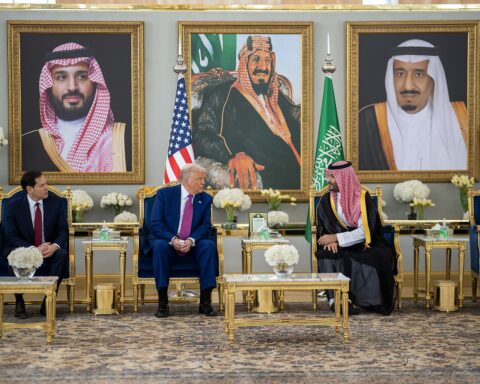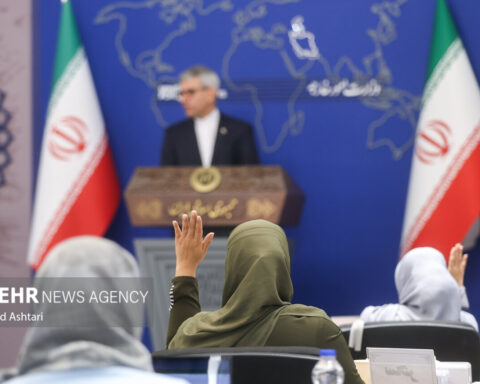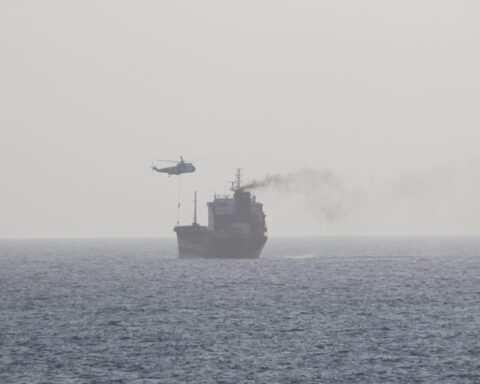

RIYADH — Saudi Arabia is absorbing 83% of Iran’s missile and drone strikes, bleeding 3.15 million barrels per day in lost oil production, burning through PAC-3 interceptor stocks faster than the sole American factory can manufacture them, and running a war-adjusted fiscal deficit that Goldman Sachs puts at twice the official forecast — and it has no seat at the table where the terms of its own future are being written. The GCC’s exclusion from US-Iran negotiations is not an oversight or a diplomatic scheduling problem; it is a structural inheritance from the 2015 JCPOA framework, a format designed when Gulf states were peripheral to Iran’s nuclear calculus and now applied, without modification, to a conflict in which Saudi Arabia is the primary battlefield economy.
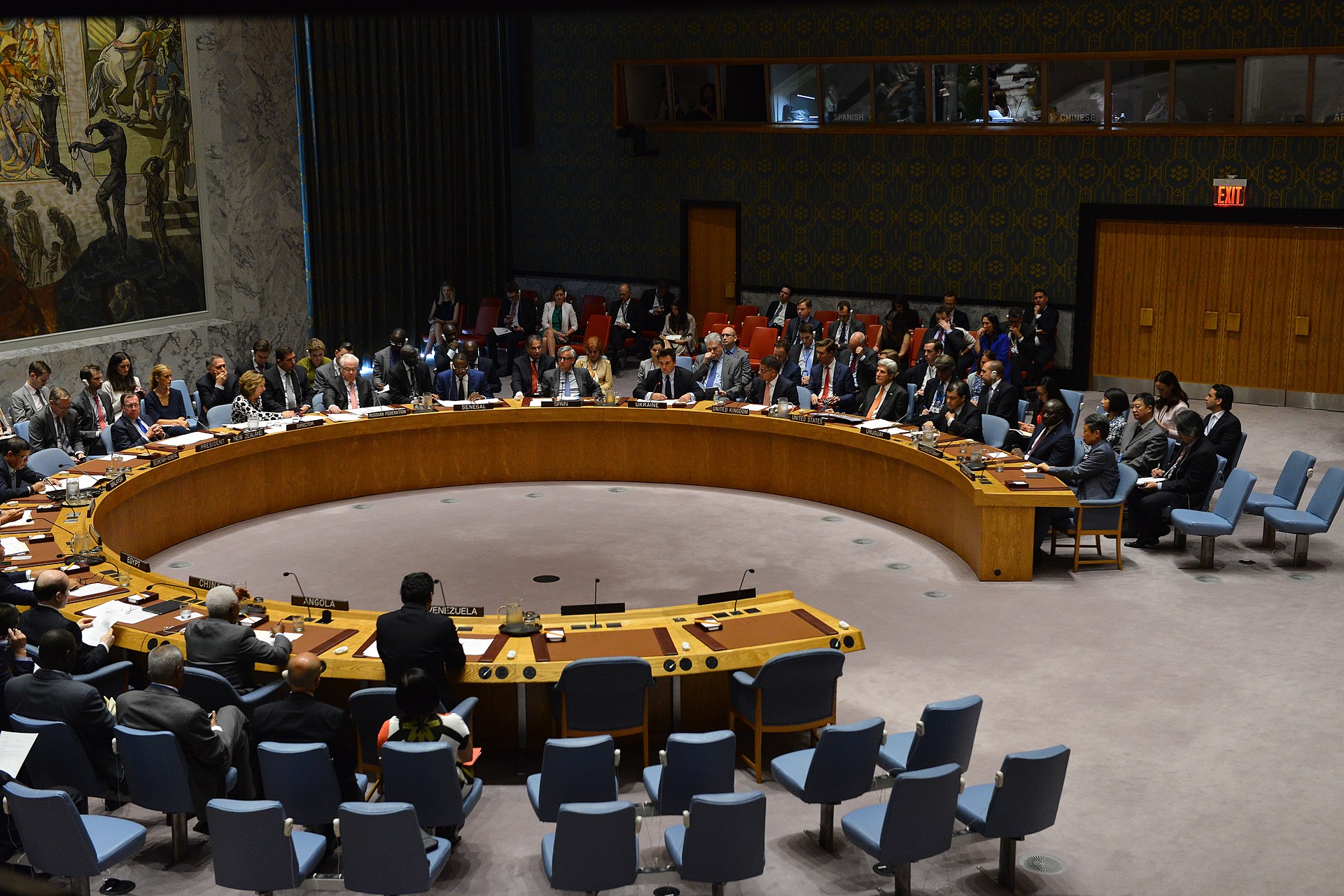
When GCC Secretary-General Jasem Al-Budaiwi stood before the UN Security Council on April 2 and called the bloc’s inclusion “vital to enhancing regional security and stability and ensuring that such attacks are never repeated,” he was making a demand that every party in the room understood would produce no change in the negotiating format. Iran chose the format. Washington inherited it. And Riyadh is left conducting diplomacy from the phone line — briefed after decisions are shaped, informed while blockades it had no role designing go into effect, and treated by Tehran as one of six interchangeable Gulf recipients rather than the state bearing the war’s heaviest cost.
The GCC Secretary-General’s response to this exclusion has been to anchor conditions in European institutional language: at the EU-GCC summit in Cyprus on April 24, Al-Budaiwi extracted on-camera endorsements from von der Leyen and Costa for missile and proxy conditions that the Trump administration had explicitly deferred and Iran has declared non-negotiable — using Brussels as a witness when Washington would not listen.
Table of Contents
- The JCPOA Inheritance — How a Nuclear Format Became a War Format
- How Does Iran Keep Saudi Arabia Out of the Room?
- The Party Paying the Most Has the Least Say
- Why Is Saudi Arabia Reduced to Phone Briefings?
- Beijing Has More Formal Standing on Hormuz Than Riyadh
- The STEP Quartet — Saudi Arabia’s Workaround
- What Happens When the Battlefield Economy Negotiates Alone?
- Camp David 2015 — The Last Time Washington Tried Compensation
- Frequently Asked Questions
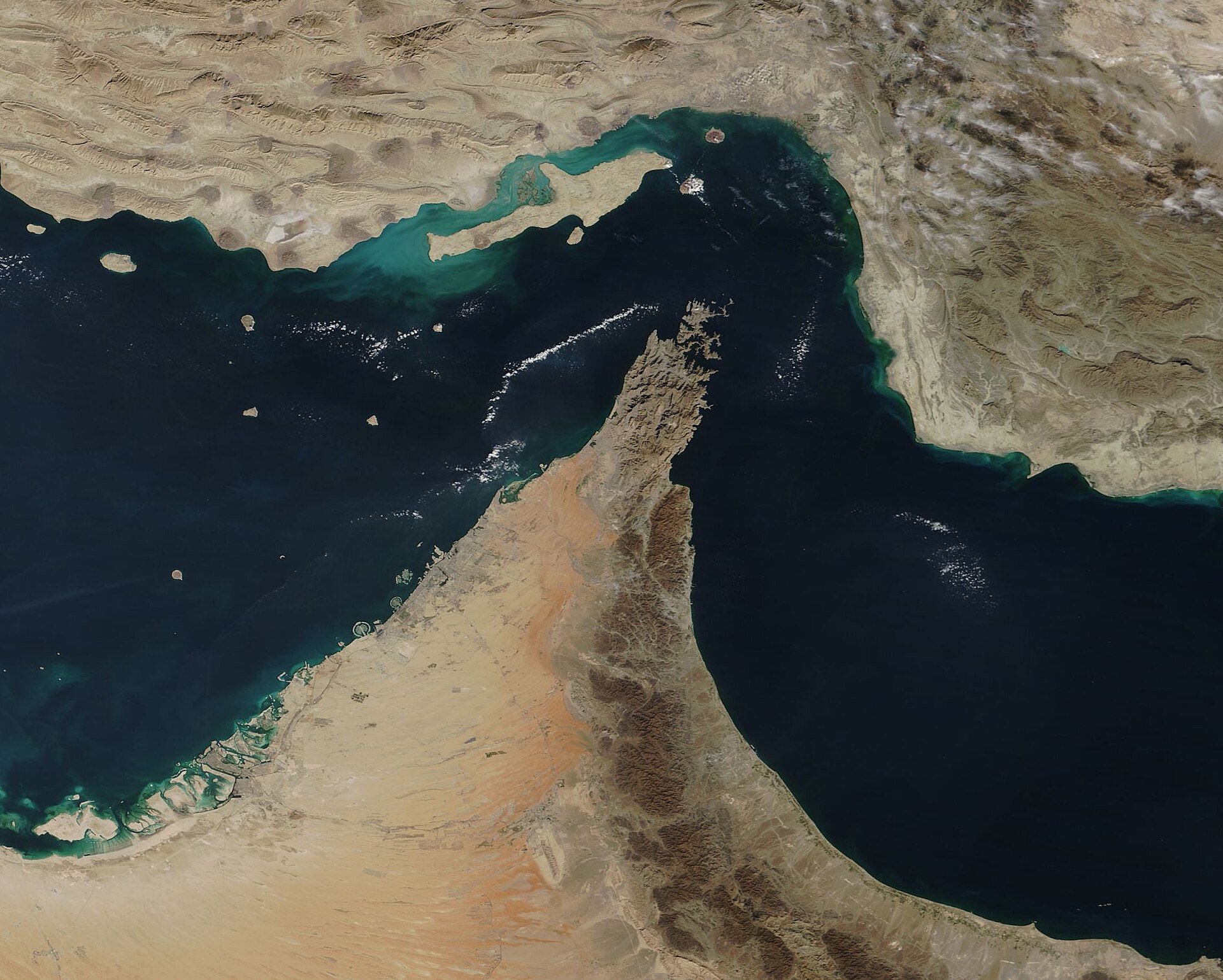
The JCPOA Inheritance — How a Nuclear Format Became a War Format
The P5+1 negotiating framework — the United States, United Kingdom, France, Russia, China, and Germany — emerged from a 2006 UN Security Council process that was, by design, about nuclear non-proliferation and nothing else. The five permanent Security Council members held jurisdiction over sanctions instruments and treaty enforcement; Germany had advanced centrifuge expertise relevant to the technical negotiations. Regional states with no permanent UNSC seat were structurally ineligible for inclusion, and no one in 2006 considered this a problem because the format was built to constrain Iran’s enrichment program, not to manage a regional war.
The 2015 Joint Comprehensive Plan of Action that emerged from that framework deferred everything the Gulf states cared about — Iran’s ballistic missile program, its proxy networks across Yemen, Iraq, Lebanon, and Syria, and its naval posture in the Persian Gulf — to a “regional dialogue” that was never convened. As Tobias Borck of the Royal United Services Institute has observed, the Gulf demands excluded from the JCPOA text constitute “a catalogue of everything that subsequently went wrong.” The missiles now hitting Saudi oil infrastructure, the IRGC naval operations now choking Hormuz from both sides, the proxy architecture that allowed Iran to open multiple fronts simultaneously — all of it was supposed to be addressed in Phase Two. Phase Two never arrived.
What arrived instead was a war in which those deferred threats became the primary instruments of Iranian coercion against the very states that had been promised their concerns would be addressed later. And the format being used to negotiate the exit from that war is the same P5+1-descended bilateral structure that excluded Gulf states from the entrance. Iran has ensured this continuity deliberately, choosing Oman over Turkey as the negotiation venue in early February 2026 specifically — as Iran International reported — to prevent the agenda from expanding to ballistic missiles, regional proxies, and conventional military posture. These are precisely the items Gulf states have demanded inclusion on since 2015, and precisely the items killing Saudi citizens and destroying Saudi infrastructure in 2026.
The Middle East briefing 3,000+ readers start their day with.
One email. Every weekday morning. Free.
How Does Iran Keep Saudi Arabia Out of the Room?
Tehran’s exclusion strategy operates through venue selection, agenda control, and the deliberate fragmentation of Gulf diplomatic coherence. The venue decision came first: when Turkey offered to host negotiations in early February 2026, the expectation — shared by Saudi Arabia, Qatar, and Egypt — was that a Turkish-hosted format would accommodate regional observers. Iran rejected Turkey and chose Oman, a state whose back-channel role dates to the secret Obama-era talks of 2012. The choice was not about Omani hospitality. It was about ensuring the talks remained a continuation of the nuclear track, where Gulf states have never held standing, rather than a new regional security format where they would have a structural claim to participate.
The agenda control followed logically. By keeping the negotiating framework anchored to nuclear issues and Hormuz — the two items where the P5+1 format has precedent — Iran prevents the introduction of the broader security concerns that would justify Gulf inclusion. This is the precise inversion of what Gulf states need: they are being hit by conventional missiles, losing oil production to infrastructure strikes, and watching their air defense stocks deplete, but the format treats these as externalities rather than agenda items. When Sultan Haitham received Araghchi in Muscat on April 26, the meeting reinforced Oman’s position as the venue state — not Saudi Arabia’s position as the affected state. Araghchi’s April 26–27 Gulf tour takes this further: by proposing an endogenous regional security framework, Iran is now forcing Riyadh to choose between endorsing Iranian co-authorship or appearing as the obstacle to regional peace.
Then there is the fragmentation tactic. On April 9, 2026, Araghchi placed phone calls to all six GCC foreign ministers on the same day, delivering what analysts characterized as an identical deterrence briefing to each. The symmetry was the point. By generating six separate responses from six capitals, Iran made Gulf divergence a matter of public record — some states leaning toward dialogue, others toward confrontation, all of them responding individually rather than through a unified GCC position. ACLED analyst Luca Nevola has mapped the resulting spectrum: Oman and Qatar positioned as pro-dialogue, the UAE, Kuwait, and Bahrain as harder-line, and Saudi Arabia holding what he calls “a middle position, issuing warnings to Tehran while trying to avoid getting publicly dragged into the conflict.” Iran did not create these divergences, but the six-call tactic ensured they became visible.
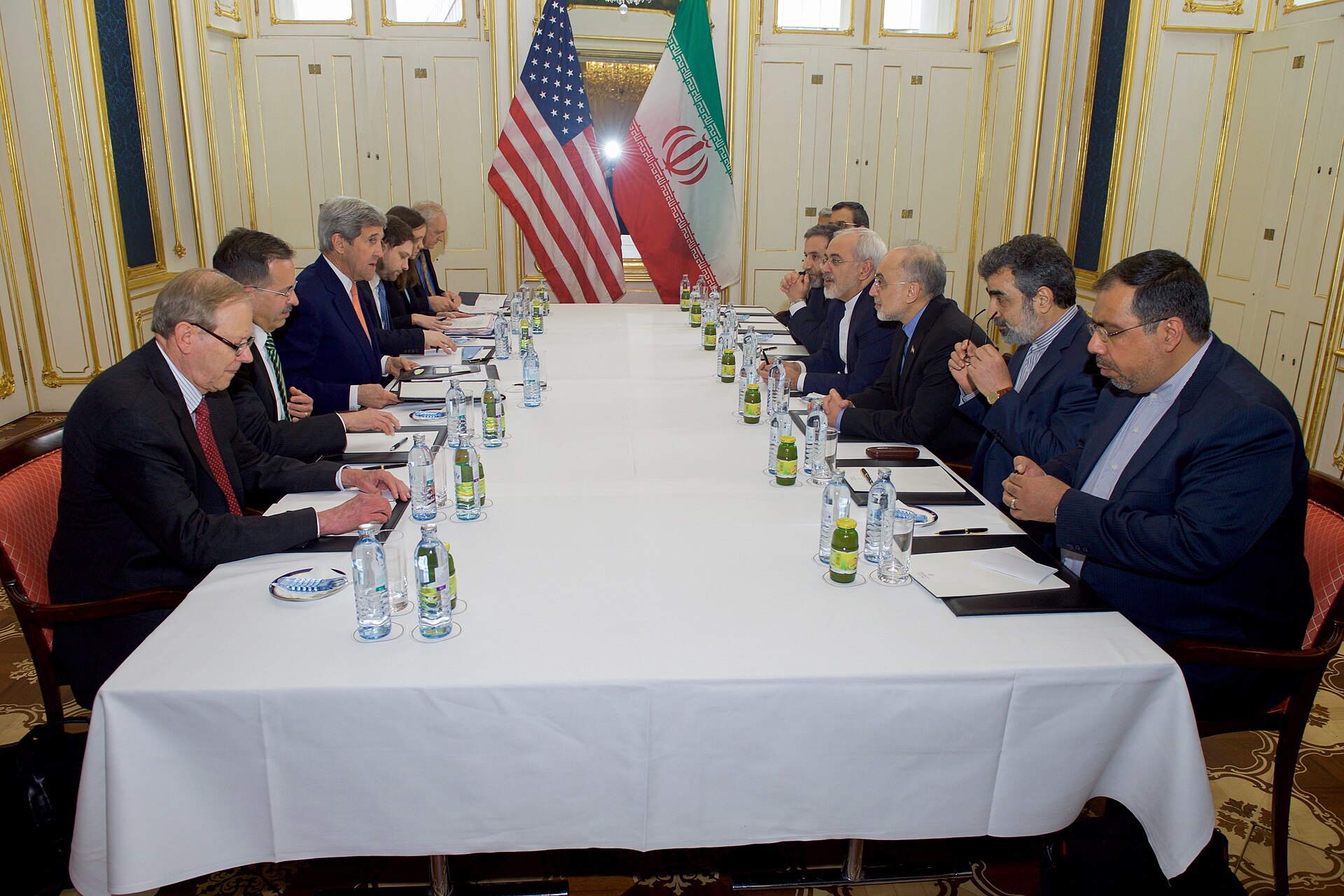
The Party Paying the Most Has the Least Say
The asymmetry between Saudi Arabia’s war exposure and its diplomatic standing is not a matter of perception — it is measurable in barrels, dollars, and interceptor rounds. Saudi oil production fell from 10.4 million barrels per day in February to 7.25 million in March, a 30% decline that the International Energy Agency called the “largest disruption on record.” Frederic Wehrey and Charles H. Johnson of the Carnegie Endowment described the broader impact as “the largest oil supply shock in global energy history,” disrupting over 70% of regional food imports through Strait of Hormuz threats.
The fiscal arithmetic is worse than the production numbers suggest. Saudi Arabia’s PIF-inclusive fiscal break-even — the oil price needed to balance the budget once sovereign wealth fund spending is included — sits at $108-111 per barrel according to Bloomberg Economics. Brent crude closed at $105.33 on April 25, below that threshold, meaning Saudi Arabia is running a deficit on every barrel it manages to export while production remains 30% below its pre-war level. Goldman Sachs has revised the war-adjusted fiscal deficit to 6.6% of GDP, double the Kingdom’s official 3.3% forecast. Jadwa Investment, the Riyadh-based research house, estimated SAR 80-120 billion ($21-32 billion) in unbudgeted defence and emergency expenditure for the remainder of 2026.
The air defense depletion may be the most consequential number of all. Saudi Arabia entered the war with approximately 2,800 PAC-3 MSE interceptor rounds. After five weeks, an estimated 400 remain — a drawdown rate that consumed nearly four times Camden, Arkansas’s entire annual production output of 620 rounds. Full replenishment, even at wartime production surge, extends into 2028 at minimum. The Atlantic Council’s Stefanie Hausheer Ali quantified the targeting pattern: Iran directed 83% of its total missile and drone strikes during the war at GCC countries, with Saudi Arabia’s largest oil refinery — Ras Tanura — put out of commission. “The perception of the Gulf Arab states as safe havens in a tough region is shattered,” Hausheer Ali wrote, “and will be challenging to reverse for some time.”
| Metric | Pre-War | Current | Source |
|---|---|---|---|
| Saudi oil production | 10.4M bpd (Feb) | 7.25M bpd (Mar) | IEA |
| PAC-3 MSE interceptor stock | ~2,800 rounds | ~400 rounds | Estimated |
| Fiscal break-even (PIF-inclusive) | $108-111/bbl | Brent at $105.33 | Bloomberg Economics |
| War-adjusted fiscal deficit | 3.3% GDP (official) | 6.6% GDP | Goldman Sachs |
| Unbudgeted defence spending (2026) | — | $21-32B | Jadwa Investment |
| Iran strikes targeting GCC states | — | 83% of total | Atlantic Council |
Carnegie’s Andrew Leber and Sam Worby framed it in a single sentence that the diplomatic community has been circulating since publication: “The GCC has no seat at the table, despite its entreaties, for negotiations that will shape the bloc’s economic and security environment for years to come.” The emphasis should fall on the final clause — not years to come in the abstract, but years of operating a national economy with depleted air defenses, damaged energy infrastructure, and a fiscal trajectory that no sovereign wealth fund can indefinitely absorb.
Why Is Saudi Arabia Reduced to Phone Briefings?
Araghchi’s late April diplomatic circuit tells the structural story in itinerary form. The Iranian foreign minister traveled from Islamabad to Muscat to Islamabad to Moscow — four stops across three countries, all of them parties to the negotiation in some capacity. Saudi Arabia received a phone call. PressTV’s April 26 account of Araghchi’s call with Prince Faisal bin Farhan characterized Saudi Arabia as receiving a briefing on “Tehran’s diplomatic moves to end the war.” Not consulting. Not coordinating. Receiving.
Prince Faisal’s response to this structural positioning — building simultaneous bilateral channels to Iran, Bahrain, and Qatar on April 27 — is documented in Riyadh’s parallel diplomatic architecture around the Islamabad talks.
This is not new. On April 13, 2026 — the day the US naval blockade of Iranian ports went into effect — Araghchi called Prince Faisal. Saudi Arabia was being informed of a CENTCOM operation it had no role in designing, applied to a strait whose closure was destroying its export revenues, by the foreign minister of the country whose military had shut it. Prince Faisal’s public response on March 7 had been calibrated precisely for a state with no leverage over the format: “Saudi Arabia is open to any form of mediation aimed at de-escalation and a negotiated settlement. But if Iranian attacks persist against Saudi territory or energy infrastructure, the Kingdom will be forced to respond.” The conditional threat — “forced to respond” — carried the weight of a party that cannot shape the diplomatic outcome and knows it.
The deeper problem is that Saudi Arabia’s primary diplomatic channel to Tehran — the direct FM-to-FM line established through the March 2023 China-brokered normalization — has become the mechanism through which Riyadh learns about decisions made elsewhere. The channel that was supposed to give Saudi Arabia direct access to Iranian decision-making has instead become an information delivery system running in one direction. As Khaled Bin Hamad Al-Malek, editor-in-chief of Saudi Arabia’s Al-Jazirah newspaper, argued, Saudi Arabia and the Gulf countries “have been targeted in Iranian missile and drone strikes much more than Israel has been” and therefore deserve a voice in negotiations — a “necessity due to the scope of the damage and costs.” The necessity has been articulated. The format has not changed.
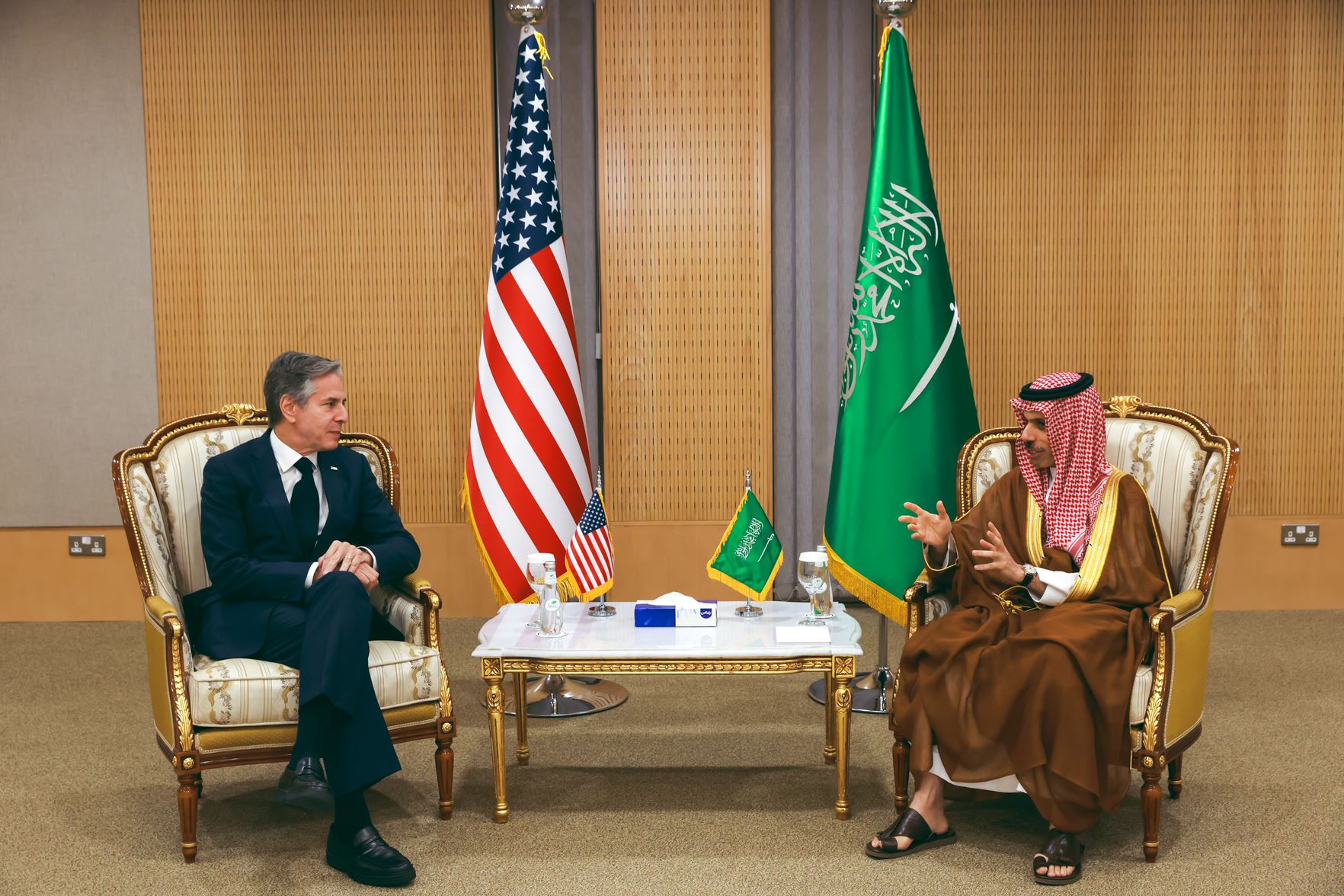
Beijing Has More Formal Standing on Hormuz Than Riyadh
On April 20, Xi Jinping called Mohammed bin Salman and publicly stated that the Strait of Hormuz should “maintain normal passage” — language reported by Bloomberg and published through the PRC Ministry of Foreign Affairs. That single public statement gave Beijing more formal diplomatic articulation on the Hormuz question than anything Riyadh has been able to issue through the negotiating process, despite Saudi Arabia bearing direct production losses and fiscal exposure to every day of closure. China’s diplomatic standing on the issue Saudi Arabia cares about most is, as of late April, more clearly defined than Saudi Arabia’s own.
This did not happen by accident. Wang Yi, China’s top diplomat, made 26 phone calls between February 28 and early April, according to Al Jazeera’s April 22 reporting. Special envoy Zhai Jun held nearly two dozen meetings with actors across the conflict. China vetoed a UN Security Council resolution on coordinated Hormuz reopening — a move that simultaneously blocked a multilateral pathway and preserved Beijing’s bilateral leverage as the only external power capable of brokering passage through both sides of the double blockade. The Qatar LNG tanker Al Daayen that transited the strait in early April did so through Chinese intermediation, not Qatari-Iranian direct negotiation — establishing Beijing as the operating system for Hormuz transit in a way that makes every Gulf state a client rather than a principal.
Marwan Muasher, the Carnegie Endowment’s vice president for studies, captured the broader implication: “Neither the Abraham Accords nor the presence of large U.S. bases are enough to protect Arab Gulf states.” The protection gap Muasher identifies is not just military — it is diplomatic. The Gulf states’ security architecture was built on the assumption that American military presence would translate into American diplomatic representation of Gulf interests. The 2026 war has demonstrated that the United States will deploy carrier strike groups, impose naval blockades, and conduct strike operations from Gulf-hosted bases without giving the host states a seat in the negotiations those operations are meant to support. The Abram Paley analysis for the Atlantic Council’s Scowcroft Initiative identifies this gap as one of five critical uncertainties driving Gulf states toward “strengthening ties with China and Russia” — not out of ideological alignment but out of the rational calculation that diplomatic standing follows whoever is willing to negotiate on your behalf.
The STEP Quartet — Saudi Arabia’s Workaround
Excluded from the US-Iran bilateral track, Saudi Arabia has built its own multilateral instrument. The STEP Quartet — Saudi Arabia, Turkey, Egypt, and Pakistan — held its first formal ministerial on March 19 in Riyadh, a second on March 29-30 in Islamabad, and has maintained a pace of approximately three ministerials in a single month. Turkish Foreign Minister Hakan Fidan announced at the Islamabad session that the four nations would “seek to establish a mechanism aimed at de-escalation” and “chart out actionable steps.” The language of mechanism-building is deliberate — it positions the STEP format as a structural alternative to the bilateral track, not merely a commentary on it.
But the STEP Quartet’s structural limitation is built into its membership. Pakistan is simultaneously Iran’s interlocutor and Saudi Arabia’s treaty ally through the September 2025 Saudi-Pakistani Mutual Defence Agreement. Turkey hosted the alternative venue Iran rejected. Egypt provides Arab League diplomatic weight but no direct leverage over Tehran. Saudi Arabia itself is the convening power and the financing state — the $5 billion Saudi loan to Pakistan that matures in June 2026 is not unrelated to Islamabad’s willingness to host the talks — but it cannot convert STEP’s diplomatic activity into a seat at the table where the actual ceasefire terms are being negotiated.
The result is that Saudi Arabia’s most active multilateral format operates as a pressure channel rather than a negotiating body. It can shape the diplomatic environment, signal coalition depth, and create political costs for exclusion, but it cannot draft ceasefire text, set Hormuz reopening conditions, or bind Iran to commitments on missile restraint. Saudi Arabia is not sitting out the war — it is fighting a parallel diplomatic campaign — but the parallel track and the main track remain separated by the same structural barrier that has kept Gulf states out of the room since 2006.
What Happens When the Battlefield Economy Negotiates Alone?
MBS’s diplomatic posture in April 2026 — the simultaneous pursuit of STEP multilateralism, direct FM-to-FM contact with Tehran, back-channel engagement through Oman, and accelerated military procurement outside US channels — is not freelancing. It is the rational behavior of a state that has calculated, correctly, that the negotiating format will not change and that waiting for inclusion will not produce it. The CSIS analysis published in 2026 identified the core dilemma: Saudi Arabia must “live in the region and with its neighbors long after” the conflict ends, creating an incentive for restraint that directly conflicts with its interest in shaping a durable settlement.
The separate peace diplomacy carries its own risks, and they are not small. Any bilateral Saudi-Iranian understanding that operates outside the US-Iran framework creates the possibility of contradictory commitments — Riyadh agreeing to one set of terms for Hormuz reopening while Washington negotiates different terms through Oman. It also gives Iran the ability to play tracks against each other, offering Saudi Arabia concessions on infrastructure targeting in exchange for reduced Saudi pressure on the nuclear file, or vice versa. The six simultaneous FM calls on April 9 were a preview of this tactic: by engaging each Gulf state individually, Tehran ensures that no unified Gulf position hardens before the bilateral track produces its outcome.
Prince Faisal’s March 7 statement — the conditional threat of Saudi response if Iranian attacks persist — reads differently when understood as the position of a state negotiating without structural leverage. It is not a declaration of intent to escalate; it is a declaration that Saudi Arabia reserves options outside the diplomatic format precisely because the diplomatic format offers it none. The Kingdom was not informed in advance of the February 28 US-Israeli strikes that started the war. It had no input on the CENTCOM blockade that went live on April 13. It has no seat in the Islamabad or Muscat talks. The only domain in which Saudi Arabia retains full agency is its own bilateral relationship with Tehran and its own defence posture — and both are being exercised with an urgency that reflects the absence of any other avenue.
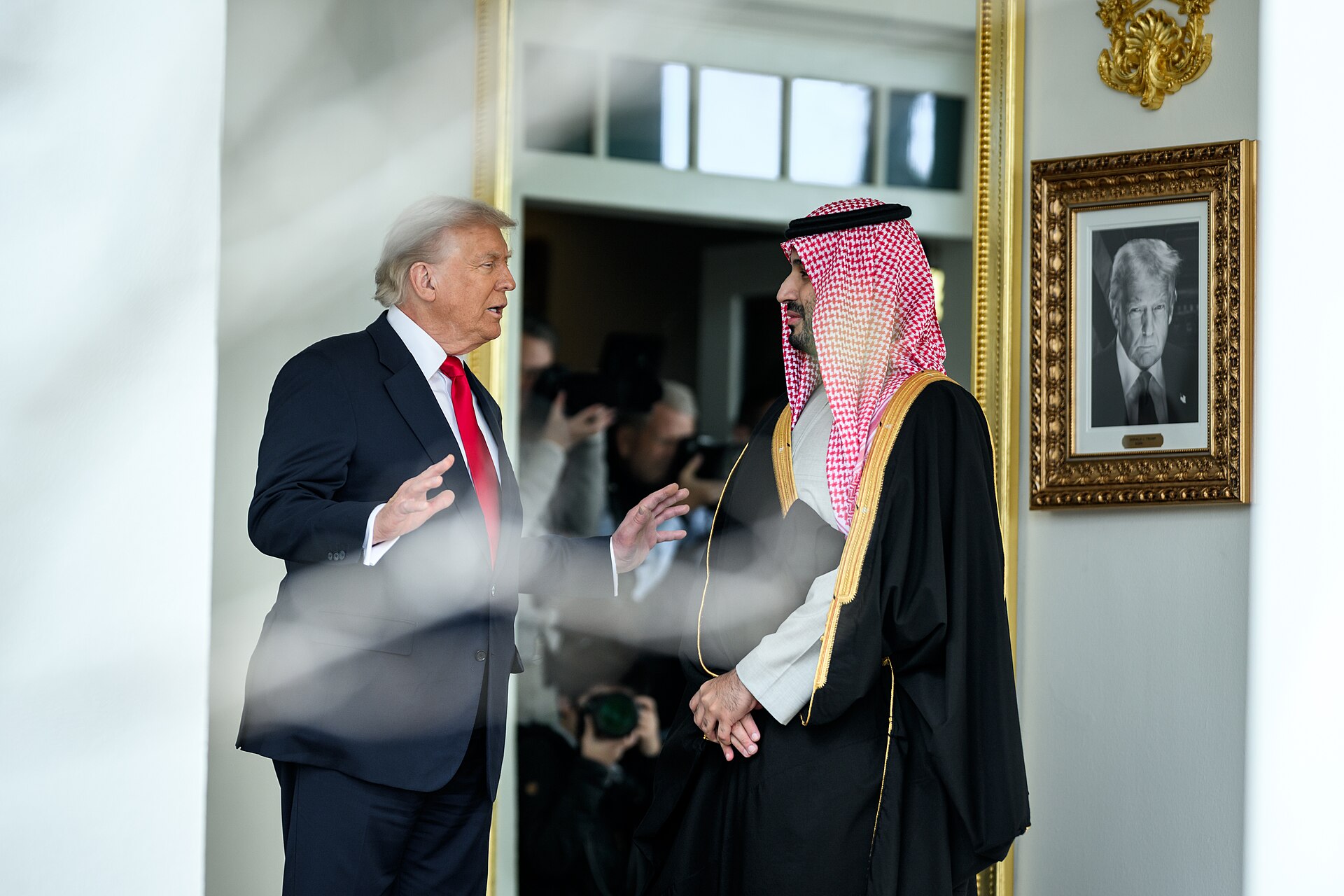
Camp David 2015 — The Last Time Washington Tried Compensation
The Obama administration understood, in May 2015, that the JCPOA’s exclusion of Gulf security concerns created a political problem that required management. The Camp David summit of May 14, 2015 was the management strategy — a gathering of Gulf leaders designed to reassure them that their interests would be addressed through separate bilateral commitments, security cooperation enhancements, and the promise of a future regional dialogue on Iran’s non-nuclear behavior. The summit produced a joint statement. It produced no treaty commitments, no binding security guarantees, and no mechanism for Gulf input into the JCPOA’s implementation or its successor arrangements.
King Salman’s decision to send Crown Prince Mohammed bin Nayef rather than attend personally was read across the diplomatic community as a deliberate rebuke — a signal that Saudi Arabia understood the summit for what it was: a gesture of compensation, not a transfer of standing. Kuwait and Qatar sent their heads of state; Saudi Arabia, Bahrain, the UAE, and Oman dispatched deputies. The hierarchy of attendance mapped precisely onto the hierarchy of exposure to the threats the JCPOA was deferring, with the most exposed state sending the most junior representative.
Eleven years later, the items that Camp David was supposed to address separately — Iran’s ballistic missile program, IRGC operations across the Gulf, naval posture in the strait — are the items destroying Saudi infrastructure and depleting Saudi air defenses. That promised “regional dialogue” was never convened. The compensation strategy failed not because it was insincere but because it was structurally incapable of delivering what it promised — you cannot compensate for exclusion from a decision-making format with a one-day summit that produces no binding commitments. The 2026 war is, in a precise and measurable sense, the consequence of that structural failure, and the format being used to end it is the same format that created the failure in the first place. For an account of how Saudi Arabia responded to this structural exclusion in the week of April 27 — through Cabinet language shifts, Iranian pilgrim dispatch, and FM calls to four capitals — see Saudi Arabia’s Week of Structured Ambiguity.
Frequently Asked Questions
Why wasn’t Saudi Arabia included in the original JCPOA negotiations?
The P5+1 format was defined by UN Security Council permanent members plus Germany — states with jurisdiction over nuclear sanctions and treaty instruments. The framework emerged from a 2006 UNSC process focused exclusively on non-proliferation, a domain where regional states held no formal standing under international law. The Obama administration attempted to compensate through the May 2015 Camp David summit, but that gathering produced only a joint statement, and three of the six invited Gulf states — including Saudi Arabia — sent deputies rather than heads of state, signaling they understood the gesture’s limitations.
What is Iran’s 12-article Hormuz sovereignty law?
Iranian parliamentarians Ahmadi and Rezayi Kouchi are advancing legislation that would codify IRGC authority over the Strait of Hormuz in domestic law, establishing Iranian sovereign control as a constitutional matter rather than a negotiable policy position. If passed, the law would make any future Hormuz settlement — including transit fees, passage conditions, and military deployment — subject to parliamentary approval, creating a legislative lock that would survive any change in Iran’s executive government and make diplomatic concessions on the strait functionally irreversible without a constitutional amendment process.
How does the STEP Quartet differ from the GCC as a diplomatic instrument?
The GCC is a six-member regional bloc whose internal divergences — Oman and Qatar’s pro-dialogue stance versus the UAE and Bahrain’s harder line — Iran has actively exploited through tactics like the April 9 simultaneous FM calls. The STEP Quartet (Saudi Arabia, Turkey, Egypt, Pakistan) is a purpose-built coalition that spans three continents, includes a NATO member in Turkey and Iran’s primary interlocutor in Pakistan, and operates at ministerial pace — three formal meetings in its first month. Its limitation is that none of its members hold a seat in the US-Iran bilateral track, making it a pressure instrument rather than a negotiating body with access to ceasefire drafting.
Could Saudi Arabia join the US-Iran talks unilaterally?
Both parties to the bilateral track — the United States and Iran — would need to agree to format expansion, and Iran has structured every venue and agenda choice to prevent exactly this. Tehran moved talks from Turkey to Oman in February 2026 specifically to block agenda expansion to regional security issues that would justify Gulf inclusion. The United States, which did not inform Saudi Arabia in advance of the February 28 strikes that started the war, has shown no indication of pressuring Iran to accept a broader format. Saudi Arabia’s realistic options are confined to parallel tracks: the STEP Quartet, direct FM-to-FM contact with Tehran, and back-channel engagement through Oman — none of which grant access to the room where ceasefire terms are being drafted.
What is the risk of Saudi Arabia’s separate peace diplomacy?
The primary risk is contradictory commitments — Riyadh agreeing to one set of Hormuz reopening conditions through its bilateral channel with Tehran while Washington negotiates different terms through Oman, creating implementation conflicts that Iran could exploit. A secondary risk is track arbitrage: Iran offering Saudi Arabia concessions on infrastructure targeting in exchange for reduced Saudi pressure on the nuclear file, effectively using the parallel track to weaken the Gulf position on the issues the JCPOA deferred in 2015. The Atlantic Council’s Abram Paley has identified GCC unity fracturing as one of five critical post-war uncertainties, and separate bilateral tracks accelerate precisely that fracturing. The structural dimension of Saudi Arabia’s exclusion deepened on April 27, when Araghchi flew directly to Putin in St. Petersburg — converting a bilateral US-Iran negotiation into a multilateral framework requiring Russian co-guarantorship, in what analysts have compared to the Astana Process playbook that displaced Geneva and left Arab Gulf states without a seat at the table.
The cost of exclusion compounds beyond the diplomatic track: Saudi Arabia’s 30% production crash transferred the swing-producer role that underpinned Vision 2030’s entire funding model to US shale operators who now set the marginal barrel price from the Permian Basin. The permanent loss of Saudi Arabia’s swing-producer role — and why the structural conditions cannot be reversed even after hostilities end — is documented in Saudi Arabia Lost Its Swing-Producer Crown to a War It Wanted. The arrival of three US carrier strike groups operating from Saudi bases — documented in Three Carriers, Zero Consultation — sharpens that asymmetry: Riyadh absorbs the strikes that hosting them invites while Washington controls the deployment calendar.