RIYADH — Asim Munir landed in Tehran on Friday evening to negotiate with the state his own defence treaty obliges him to fight; the next day, while Pakistan’s field marshal was still in the Iranian capital, US envoy Steve Witkoff concluded a separate round of nuclear talks with Iran’s foreign minister at an Omani embassy in Rome — and Saudi Arabia, housing Munir’s eight thousand troops, financing his government, fighting the war both channels are trying to end, had nobody in either room. Two negotiating tracks running on the same weekend, two mediators alternating cities, and one absent party: the kingdom’s exclusion from the resolution of its own war has hardened past the point where anyone involved can pretend it is temporary.
The Saudi Foreign Ministry endorsed Pakistan’s mediation role on May 5 because the alternative was worse: objecting would destroy the only channel theoretically capable of carrying Saudi interests to Tehran, while silence allowed that channel to be captured by US-Iran logic in which Riyadh’s red lines — Hormuz, proxy forces, ceasefire sequencing — rank as subordinate items on someone else’s brief. The Strategic Mutual Defence Agreement that Munir carries, signed at Al-Yamamah Palace last September and binding Pakistan to defend Saudi Arabia against Iran, was designed to buy a nuclear-armed guarantor; what it delivered is a mediator whose credibility depends on never invoking the pact.
Table of Contents
- The Treaty Pakistan Took to Tehran
- Who Is Munir Actually Talking To?
- How Does Saudi Arabia Object to Its Own Mediator?
- The $3.45 Billion Warning From Abu Dhabi
- What Did Two Cities Produce on May 23?
- Pakistan’s Hormuz Exemption and What It Buys
- Can Islamabad Host a Deal Riyadh Cannot Attend?
- Frequently Asked Questions
The Treaty Pakistan Took to Tehran
The SMDA was signed on September 17, 2025, at Al-Yamamah Palace in Riyadh — eight days after Israeli airstrikes on Doha shook Gulf confidence in the American security umbrella and three months before Iran’s first missile volleys made that confidence a survival question. The treaty’s collective defence clause — any aggression against one party constitutes aggression against both — was confirmed in public statements by officials from both governments, though the full text has never been officially released. Saudi Arabia had been trying to formalise the Pakistani nuclear commitment for decades; what changed in September 2025 was that Doha made the American guarantee look hollow enough to make the Pakistani one necessary.
The SMDA formalised expectations that had circulated between Islamabad and Riyadh since at least the 1980s, when Saudi Arabia is widely reported to have helped finance Pakistan’s nuclear weapons programme, and the reciprocal deterrence commitment that Riyadh understood to be part of that arrangement was always too sensitive to commit to paper. Doha changed the calculus on the Saudi side: if the American umbrella could not prevent an Israeli strike on a GCC capital, the argument for a Pakistani nuclear guarantee stopped being theoretical, and Pakistan’s Defence Minister Khawaja Asif went on GeoTV the day after the signing and offered what the Arms Control Association would later call the first extended deterrence commitment by a nuclear-armed state outside the Non-Proliferation Treaty to another state.
“What we have in our capabilities will absolutely be available under this pact.”
— Khawaja Asif, Pakistan Defence Minister, GeoTV, September 18, 2025 (MEMRI transcript; Asif later partially retracted the nuclear dimension)
The HOS Daily BriefThe Middle East briefing 3,000+ readers start their day with.
One email. Every weekday morning. Free.
The retraction came, but the transcript stayed, and neither the Arms Control Association’s coverage — titled “Pakistan Extends Nuclear Deterrence to Saudi Arabia” — nor the Bulletin of the Atomic Scientists’ October 2025 analysis treated it as a genuine withdrawal. They treated it as managed ambiguity, where the public statement established the ceiling, the retraction provided deniability, and the treaty’s collective defence language remained broad enough to sustain both readings. What is not ambiguous is the military deployment that followed.
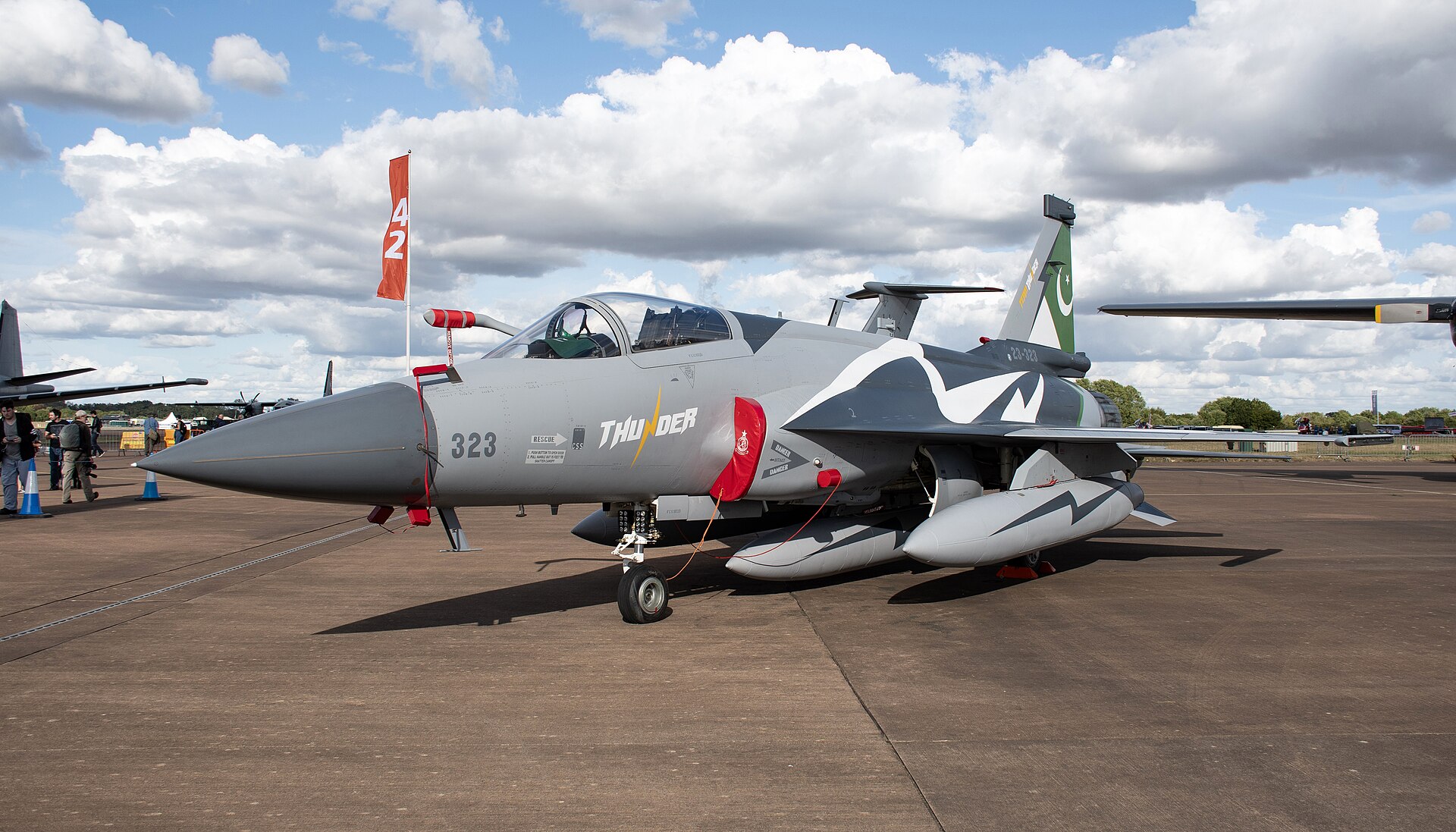
In early April 2026, Pakistan sent eight thousand troops, sixteen JF-17 fighter jets, and an HQ-9 air defence battery to Saudi Arabia — the first large-scale deployment under the SMDA, with treaty provisions allowing for up to eighty thousand. The HQ-9 is a Chinese-manufactured system, which means Pakistan deployed Chinese air defence hardware on Saudi soil to defend against Iranian missiles under a bilateral pact that excludes both Beijing and Washington from its command structure. The jets landed on April 11, the same calendar day that Pakistan hosted the opening of the first round of US-Iran talks in Islamabad — mediation and military deployment on the same date, to the same conflict, on opposite sides of it.
Michael Kugelman of the Wilson Center, writing in Foreign Policy on May 20, framed the deployment as deliberate signalling. “This is Pakistan signalling to Iran that if Iran is not willing to make the types of concessions that lead to a deal and the conflict resumes and escalates, there is a chance that Pakistan could move itself closer to Saudi Arabia and conceivably invoke the mutual defence pact,” he wrote. That signal requires Iran to believe Pakistan would actually follow through — a belief that becomes harder to sustain the deeper Munir wades into Tehran’s receiving rooms, and the longer Pakistan’s ships transit the Strait of Hormuz toll-free under a bilateral deal that exists precisely because Iran has decided Islamabad is more useful as a channel than as a target. The HQ-9 battery adds to Saudi-deployed air defence capacity, but it cannot compensate for the wider shortage: Saudi Arabia’s PAC-3 stockpile has been depleted 86 percent since April 8, leaving the Hejaz corridor covering Mecca and Medina with 80 to 150 interceptors as pilgrims gather for the Day of Arafah.
Who Is Munir Actually Talking To?
Munir’s Tehran reception on Friday was handled by Interior Minister Eskandar Momeni — not Foreign Minister Abbas Araghchi, who was at that moment preparing for the next day’s session with Steve Witkoff at an Omani embassy in Rome. The protocol is not trivial. In Iran’s institutional architecture, an Interior Ministry reception frames the visit as a security-channel engagement rather than a diplomatic one, and the distinction matters because the body that actually controls the Hormuz toll regime and the military deployments that any ceasefire would need to address is not the foreign ministry but the Islamic Revolutionary Guard Corps, which answers to the Supreme Leader and operates its own strategic logic that frequently diverges from what Araghchi says at negotiating tables.
The IRGC has not engaged Pakistani interlocutors directly. Quwa, a specialist defence outlet that published the most rigorous English-language analysis of Pakistan’s channel limitations, reported on April 23 that Pakistani decision-makers have engaged President Masoud Pezeshkian and Foreign Minister Araghchi — the civilian and diplomatic tier — but have “struggled to develop a direct channel of communication with the IRGC,” which Quwa described as “the main entity at the helm of Iranian decision-making.” Munir is negotiating with the people who can agree in principle but not with the people who can implement what gets agreed, and that is a structural gap no number of Tehran trips can bridge.
This is Munir’s second trip to Tehran since the war began, and Pakistan’s Interior Minister Mohsin Naqvi accompanied him — mirroring the Iranian side’s choice to receive through the Interior Ministry rather than Foreign Affairs, a symmetry that reinforces the security-channel framing of a visit whose diplomatic dimensions were being handled, simultaneously, in Rome. Axios reported that Munir’s specific mission was “aimed at narrowing these gaps and reaching the moment for the official announcement of the memorandum of understanding,” a formulation that assumes the gaps are narrowable and the MOU is imminent, neither of which is supported by what Iran’s own spokesmen said on the same day.
Foreign ministry spokesman Esmaeil Baghaei offered three statements in a single briefing: Iran has “reached a turning point or a decisive situation,” the gaps between Tehran and Washington are “deep and significant,” and “we cannot necessarily say that we have reached a point where an agreement is close.” A turning point, deep gaps, and no deal in sight — spoken on the day Munir arrived to close exactly those gaps — suggest that Tehran views the Pakistan channel less as a pathway to resolution and more as a holding mechanism that keeps the mediator engaged, keeps Pakistani ships transiting Hormuz, and keeps the calendar running through Hajj into whatever comes after.
How Does Saudi Arabia Object to Its Own Mediator?
On May 5, the Saudi Foreign Ministry posted a statement on X endorsing Pakistan’s mediation and urging restraint — a statement issued while eight thousand Pakistani troops sat on Saudi soil under the SMDA, while Pakistani jets patrolled Saudi airspace, and while Pakistan’s field marshal was preparing for a second trip to the capital of the country those jets are theoretically deployed to deter. The endorsement was not a strategic choice but the sound of a government that has exhausted its alternatives and found none of them usable.
The structural trap runs in both directions: if Saudi Arabia objects to Pakistan’s mediation, it destroys the one channel theoretically available to carry its concerns to Tehran, because Oman’s channel — the one that has produced five rounds of talks from Muscat to Rome — was never configured to transmit Saudi preferences and Oman is simultaneously co-drafting a permanent Hormuz governance mechanism with Iran that excludes Riyadh from the design process. If Saudi Arabia endorses the mediation — which it did — it accepts that its treaty partner’s usefulness depends on maintaining distance from the treaty’s operative clauses, meaning Pakistan cannot advocate for Saudi positions without compromising the neutrality Riyadh just publicly validated. Endorse and lose the agenda, or object and lose the channel: neither move improves the position.
The pattern is becoming recognisable. Foreign Minister Faisal bin Farhan endorsed Trump’s HEU demand five days after Trump quietly dropped it, praising firmness that had already softened below the surface. The May 5 endorsement of Pakistan’s mediation follows the same arc — Riyadh ratifying a process whose direction it cannot influence, whose participants it cannot instruct, and whose outcome it will be asked to live with regardless. The kingdom’s diplomatic posture in this war has settled into a rhythm where its public statements arrive after the structural facts are already set.
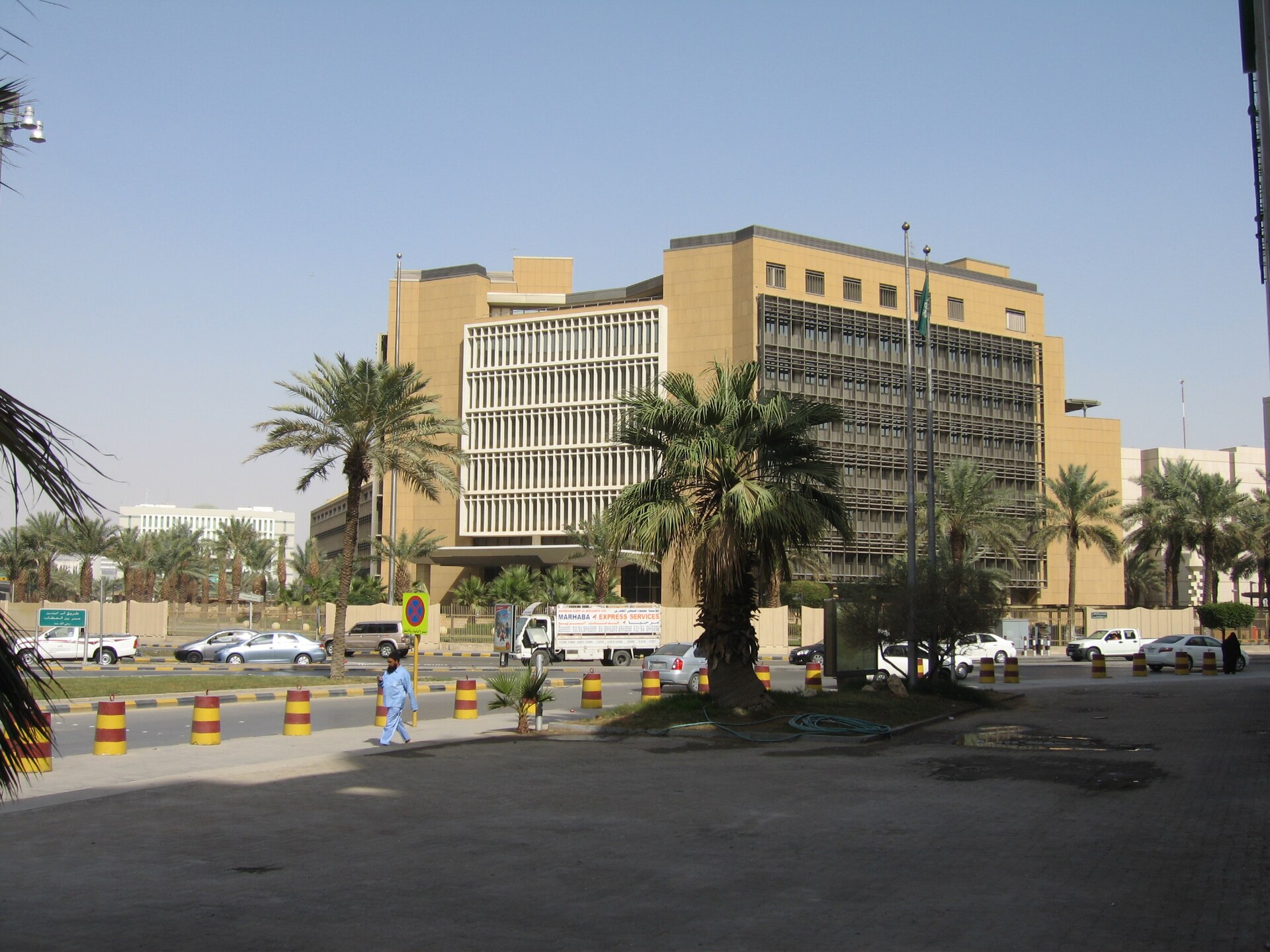
The financial architecture reinforces the trap without resolving it. Saudi Arabia holds eight billion dollars in deposits at Pakistan’s central bank — the original five billion extended, plus three billion added on April 15, 2026, to help Islamabad meet its IMF-mandated reserve target of eighteen billion dollars — making Riyadh Pakistan’s largest single-country depositor. But financial power exercised stops being persuasion and becomes coercion, and the only recent example of a Gulf state calling in its loans from Pakistan ended with the UAE losing its financial relationship with Islamabad without gaining any influence over the mediation it was trying to constrain.
The analytical consensus on Pakistan’s structural position is grim. Chatham House assessed in April that the SMDA and related commitments “cast a shadow over its credibility as a peacemaker and neutral host.” The Stimson Center identified “structural constraints in presenting itself as a credible peacemaker, as its close security ties with Saudi Arabia, its dependence on Gulf economies, and its own internal sectarian sensitivities limit its ability to function as a neutral mediator.” Carnegie’s Leber and Worby did not limit their diagnosis to Pakistan — their conclusion was broader: “GCC has no seat at the table.”
The $3.45 Billion Warning From Abu Dhabi
In early April, the UAE demanded immediate repayment of a three-and-a-half-billion-dollar loan to Pakistan. Pakistan repaid $3.45 billion on April 23, and the Financial Times reported the reason: Abu Dhabi was punishing Pakistan for its “deepening ties with Saudi Arabia, its meek response to Iranian strikes on the UAE, and its ambition to play peacemaker.” The UAE — the Gulf state that absorbed between 2,800 and 3,000 Iranian missiles, more than any country in the coalition except possibly Israel — watched Pakistan build its mediation credentials on the back of a Saudi defence pact and decided the financial relationship should reflect the geopolitical alignment it was subsidising.
The timeline tells the story without embellishment. Saudi Arabia added three billion dollars to its State Bank deposits on April 15. Pakistan repaid the UAE eight days later on April 23. Within a single month, Pakistan’s sovereign balance sheet absorbed a Gulf creditor swap — punished by the confrontational Gulf power for the same positioning that the accommodationist Gulf power was actively underwriting. One creditor recalled its loan because Pakistan was too close to Saudi Arabia; the other deepened its deposits for exactly the same reason.
Pakistan’s seven-billion-dollar IMF programme adds a third creditor dimension that tightens the geometry further. The United States controls the Fund’s voting weight, which means Washington has influence over the mediator independently of anything Riyadh or Abu Dhabi can deposit or withdraw. Munir’s shuttle diplomacy operates inside a financial architecture where every consequential creditor — the Saudis who want the mediation to carry their interests, the Emiratis who wanted it punished, the IMF whose largest shareholder wants it to produce an American-designed deal — has a stake in the outcome and the means to extract a cost for getting it wrong.
Kugelman’s assessment from Foreign Policy in April captures the underlying friction: “It’s a rare country that has warm ties with both the United States and Iran and is engaged with the highest levels of both governments.” The rarity is real, and so is the balance sheet pressure from two Gulf states pulling in opposite directions while an American-dominated lending institution watches from above — the kind of triangulated financial exposure that makes neutrality less a diplomatic posture and more an accounting exercise.
What Did Two Cities Produce on May 23?
Rome Round 5 lasted roughly two and a half hours at the Omani embassy, the same venue and format that has carried the Witkoff-Araghchi track since January. Witkoff and his deputy Brett Anton sat across from Araghchi, with Omani Foreign Minister Badr al-Busaidi mediating — the fifth meeting in a sequence that has run for 106 days without a deal. Busaidi characterised the outcome as “some but not conclusive progress,” a phrase that, when issued by a mediator who has watched every round end the same way, carries more resignation than optimism.
Araghchi was more direct. “Enrichment is not negotiable,” he said from Rome, and Tehran was where Iran told Munir what it might accept — in language calibrated to keep the shuttle running without conceding the substance that would make the shuttle unnecessary. The two channels serve different audiences toward the same Iranian end: Rome is where Tehran draws the lines the Americans cannot cross, and Munir’s reception room is where Iran performs the flexibility that keeps Pakistan invested in a process Tehran controls.
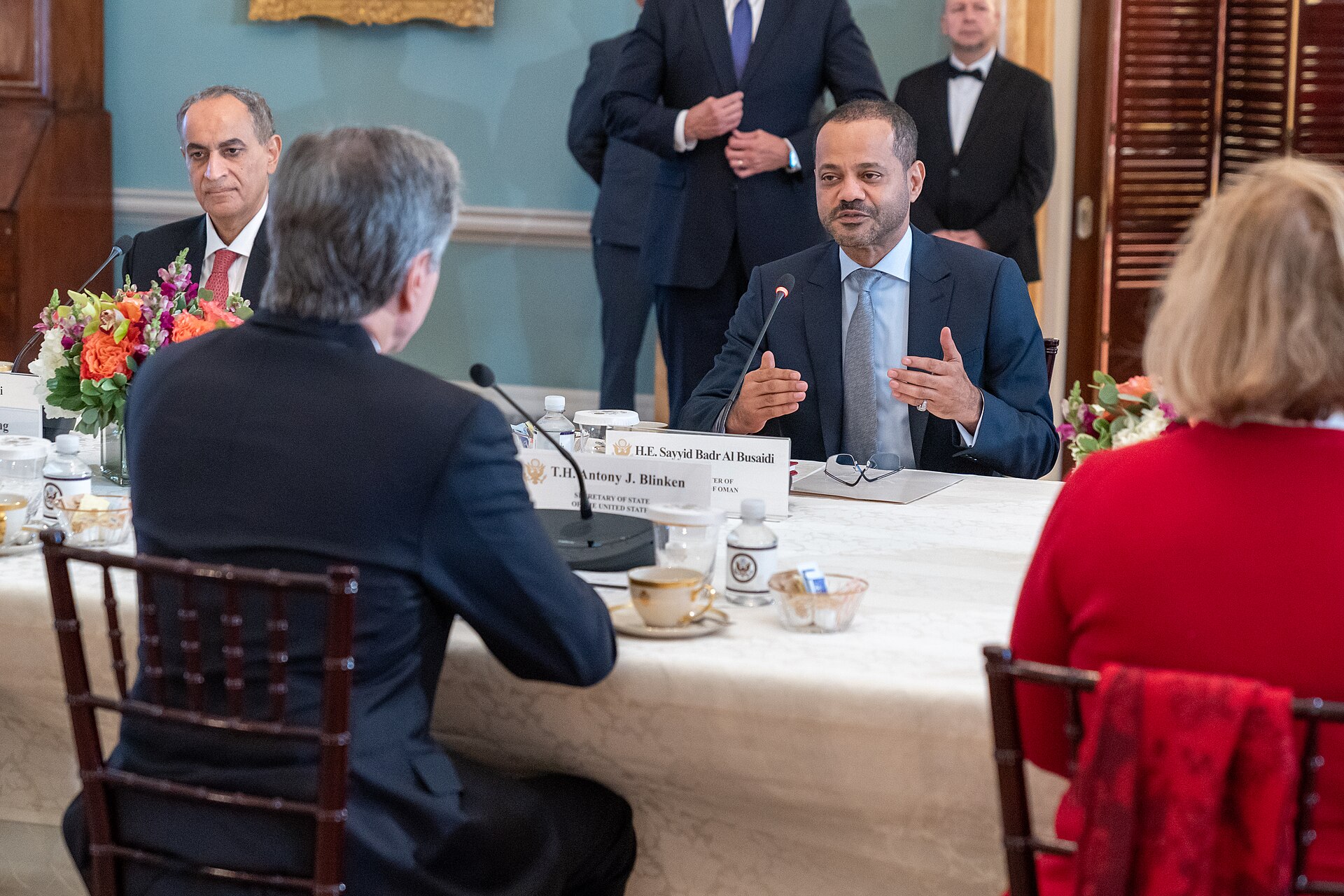
The Pakistan channel’s own record provides the context for how much weight Munir’s second Tehran visit should carry. Islamabad Talks Round 1 opened on April 10, lasted twenty-one hours, and ended with five US red lines refused. Trump cancelled the planned second round on April 25, citing “divisions within Iranian leadership.” The channel Munir is now trying to revive had already failed at its highest-intensity moment, and the question neither Islamabad nor Tehran has answered publicly is what changed between April’s twenty-one-hour failure and May’s “turning point” declaration — and whether the answer is anything beyond Iran’s need to keep the mediator useful through the Hajj no-escalation window and into the post-Hajj calendar.
Three distinct memoranda of understanding are now in circulation, and none converges with the others. The Axios 14-point framework proposes a twelve-to-fifteen-year enrichment moratorium at 3.67 percent with removal of Iran’s highly enriched uranium stockpile. The Al-Arabiya eight-point draft — published, retracted, then reissued as a “final draft” within twenty-four hours — contains no nuclear specifics at all. The Munir letter of intent has not been published. Supreme Leader Khamenei’s directive that Iran’s sixty-percent-enriched HEU must stay in the country rules out the core demand of at least two of these frameworks, and the moratorium gap — Iran’s five-year offer against the Axios framework’s twelve to fifteen years against Washington’s demand for twenty — has not narrowed since April.
Pakistan’s Hormuz Exemption and What It Buys
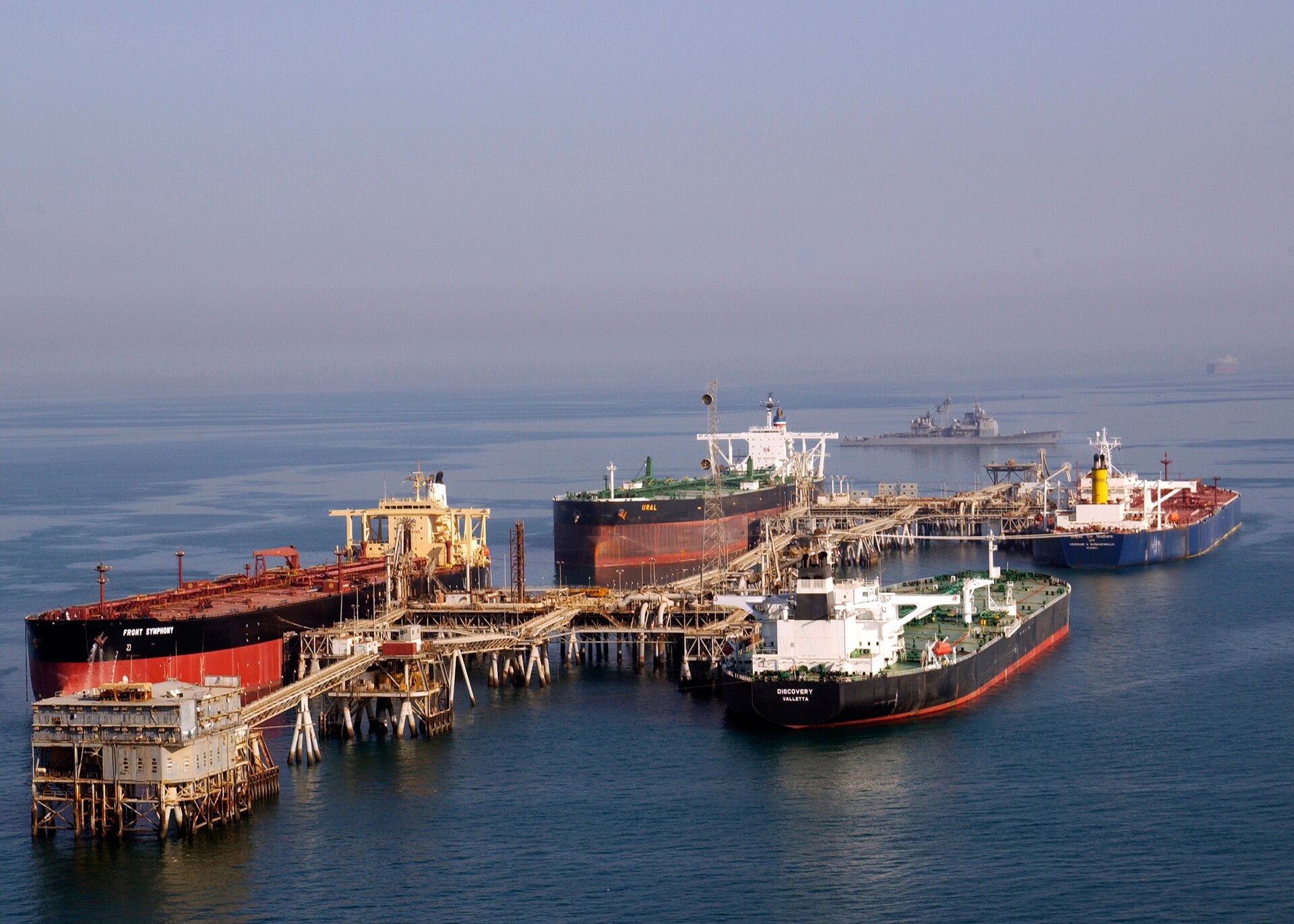
Pakistani-flagged vessels do not pay the two-million-dollar-per-supertanker Hormuz toll that Iran’s Persian Gulf Shipping Authority levies on commercial traffic through the strait. Foreign Minister Ishaq Dar announced the bilateral arrangement on X on March 28: twenty Pakistani ships, two per day, a deal cut directly with Tehran that places Pakistan outside the enforcement architecture Iran is building over the waterway. Russia, China, India, Iraq, and Pakistan form the exemption list — a roster of countries whose trade Iran cannot afford to lose, whose UN Security Council weight Iran needs, and, in Pakistan’s case, whose field marshal Iran needs physically in Tehran to carry messages Washington will not send directly.
The exemption makes Iran’s incentive structure legible. Pakistan mediates, Pakistan’s ships pass through the strait that Iran and Oman are redesigning into a permanent governance zone, and Pakistan’s energy imports — critical for a country running chronic power deficits and a China-Pakistan Economic Corridor that depends on Gulf hydrocarbons — arrive uninterrupted. The arrangement is the material expression of a relationship in which continued neutrality has a market price, and Tehran has calculated Pakistan’s and met it.
The PGSA went operational on May 18, five days before Munir’s Tehran visit and Rome Round 5. On that same day, Iran conveyed its response to the latest American proposal to Washington “through mediator Pakistan,” per Iran’s Tasnim news agency — meaning the toll regime the US calls “unfeasible” and the mediation channel the US relies on were operating through the same intermediary on the same calendar day. Iran does not appear to see a contradiction between the enforcement architecture and the mediation architecture; it appears to view them as two components of a single design, with Pakistan’s Hormuz exemption as the hinge connecting them.
Kugelman flagged the longer-term risk in Foreign Policy in April: “The longer Pakistan continues to be the chief messenger and interlocutor for the United States in the talks, the more likely it is that Iran grows suspicious, especially with Trump’s frequent praise of Pakistan’s leaders.” Trump has called Pakistan’s cooperation “tremendous,” and the Hormuz exemption has been equally visible. Munir walks between two endorsements — from a US president and an Iranian government — without either side having yet decided that a country so comprehensively praised by its adversary cannot be trusted by both, a judgment that only needs to be made once for the entire architecture to collapse.
Can Islamabad Host a Deal Riyadh Cannot Attend?
Dunya News reported a new round of US-Iran talks expected in Islamabad after Hajj. The Day of Arafah falls on May 26, and the no-escalation buffer around the pilgrimage’s peak means nothing substantive will move before late May at the earliest. The venue choice confirms where the architecture is heading: Rome is Oman-mediated, Islamabad is Pakistan-mediated, and the two channels have settled into an alternating sequence — not unlike Qatar’s dual-track performance earlier this week, except that Pakistan’s version comes with a mutual defence treaty, eight thousand troops on Saudi soil, and a Hormuz toll exemption that Doha does not enjoy.
Saudi Arabia is not a formal party in either channel. The kingdom’s public position, as of the May 5 endorsement, is support for Pakistan-led mediation and a general call for restraint — a position that has not been updated in eighteen days despite Munir’s second Tehran trip, despite Rome’s fifth round producing nothing on enrichment, despite the PGSA becoming operational, and despite Araghchi publicly declaring enrichment non-negotiable from Rome on the same day Munir was in Tehran. Riyadh’s silence since May 5 reads as either confidence that Pakistan will faithfully carry its interests or an acknowledgment that no mechanism exists to ensure that outcome, and the gap between those two readings is wide enough to drive the entire post-Hajj calendar through it.
The alternating sequence means Saudi Arabia’s core interests in any outcome — protection of its eastern oil infrastructure from renewed attack, restoration of Hormuz transit for its tanker fleet, constraints on Iran’s proxy and missile capabilities, a nuclear framework that does not leave Iran as a threshold state on Saudi Arabia’s northeastern border — must be transmitted through a mediator who is treaty-bound to defend the kingdom, financially dependent on it, and simultaneously offering the adversary toll-free passage through the strait Riyadh most needs reopened. The channel was designed for shuttle diplomacy; what it has become is a conduit through which Saudi positions are filtered through Pakistani dependencies before reaching an Iranian government that has every incentive to accept the shuttle and no obligation to accept what the shuttle carries.
A China-Pakistan joint statement issued on March 31 proposed a five-point plan that publicly acknowledged the limits of Pakistan’s mediation, calling for a “major global actor” to underpin the effort — an admission from Islamabad’s own diplomatic communiqué, co-signed by Beijing, that the channel Saudi Arabia endorsed is insufficient by its own sponsors’ assessment. The major global actor Islamabad had in mind was almost certainly the United States, which already sits at the table in Rome through a channel that also does not include Saudi Arabia and has shown no interest in adding Riyadh to either room.
Dunya News reports the next round is expected in Islamabad, after Hajj. Two million pilgrims will stand at Arafat on May 26 under the tightest wartime security Saudi Arabia has managed since the Iran-Iraq war; when they disperse, the post-Hajj diplomatic calendar will already be set, the rooms already reserved, the mediators already chosen — and the kingdom whose holy cities those pilgrims prayed in will find its name on neither agenda.
Frequently Asked Questions
What are the specific terms of the Pakistan-Saudi SMDA?
The treaty text has not been officially published, a deliberate ambiguity that serves both parties. Pakistan-Saudi military cooperation predates the SMDA by decades — Pakistani officers served in the Royal Saudi Air Force during the North Yemen civil war in the 1960s, and Saudi Arabia is widely reported by Brookings and other institutions to have helped finance Pakistan’s nuclear weapons programme in the 1970s and 1980s, creating informal reciprocal deterrence expectations that took sixty years to formalise. The collective defence clause is modelled, according to the Arms Control Association, on NATO’s Article 5, though without NATO’s institutional verification mechanisms, shared command structures, or obligation to consult before invoking. The Bulletin of the Atomic Scientists assessed in October 2025 that Khawaja Asif’s public remarks, even partially retracted, created a de facto extended deterrence commitment unprecedented among non-NPT nuclear states.
Has Pakistan deployed combat forces to Saudi Arabia before the current war?
Pakistani military personnel have served in advisory and training roles in Saudi Arabia since the 1960s, and a brigade-strength deployment was stationed in the kingdom during the 1980s. The current deployment — eight thousand troops with JF-17 combat aircraft and HQ-9 air defence — is the largest Pakistani military commitment to Saudi Arabia in operational scope and the first to include offensive-capable fighter jets. In 2015, Pakistan’s parliament voted against joining the Saudi-led coalition in Yemen, a decision that strained the bilateral relationship for years and is widely understood as the political backdrop against which the SMDA was negotiated a decade later to prevent a repeat refusal at a moment when refusal could no longer be absorbed.
Could Saudi Arabia recall its deposits to pressure Pakistan’s mediation?
The eight billion dollars in Saudi deposits at Pakistan’s State Bank can theoretically be recalled, as the UAE demonstrated by demanding and receiving $3.45 billion in April. In practice, recalling them would trigger a balance-of-payments crisis that could collapse Pakistan’s seven-billion-dollar IMF programme, destabilise a nuclear-armed state of 240 million people with a shared border with both Iran and China, and destroy the only mediation channel Saudi Arabia has publicly endorsed. The deposits function less as influence and more as hostage capital: Riyadh cannot withdraw without detonating the relationship it is paying to maintain, and Islamabad cannot mediate effectively without the financial stability those deposits underwrite.
Why is Oman absent from the GCC’s Hormuz protest at the IMO?
Oman was the only GCC member absent from the five-nation letter filed at the International Maritime Organization protesting Iran’s Hormuz jurisdiction claims in May 2026. The absence reflects Oman’s simultaneous role as co-drafter of a bilateral Hormuz governance framework with Iran, drawing on the 1974 Iran-Oman maritime boundary treaty that gives Oman jurisdiction over the inbound shipping lane of the strait. This dual positioning mirrors Pakistan’s mediator-ally tension but with a critical structural difference: Oman has no mutual defence treaty with Saudi Arabia and no troops deployed on Saudi soil, which gives it an impartiality that Pakistan’s SMDA and April military deployment have formally foreclosed.
On May 23, hours after Munir departed Tehran, US Secretary of State Marco Rubio declared from New Delhi that a deal was possible “as soon as today” — while Araghchi simultaneously told reporters the talks had reached an enrichment deadlock that could preclude any agreement.
Two days after Munir’s Tehran visit, Trump issued his Abraham Accords demand on the eight-leader call — and Pakistan’s Defence Minister became the first official on the call to reject it by name, on live television, providing Saudi Arabia the public cover it could not create for itself. See: Khawaja Asif Said What Saudi Arabia Cannot.