TEHRAN — Masoud Pezeshkian flew to Qom on June 28 to meet the grand ayatollahs whose authority predates the republic. By June 30, standing before the Society of Seminary Teachers, he told them the Islamabad MOU had been carried out “in full and continuous coordination with the supreme leader.” Within hours, 62 of the 88 members of the body that chose that supreme leader published a joint statement calling the same agreement “a strategic mistake” — and classified the American and Israeli leaders as men whose blood may legally be shed.
Inside velayat-e faqih, this is not a policy disagreement. It is a constitutional collision. By claiming the MOU as Khamenei’s own work, Pezeshkian converted the Assembly of Experts’ rebuke into an implicit indictment of the Supreme Leader’s judgment — the one thing Iran’s system is designed never to produce. The AoE secretariat’s response, rebuking the procedure of the statement rather than its substance, revealed just how narrow the institutional ground beneath the MOU has become. Forty-six days remain on the agreement’s 60-day clock. The question is no longer whether Iran’s negotiating position holds abroad, but whether it survives at home.
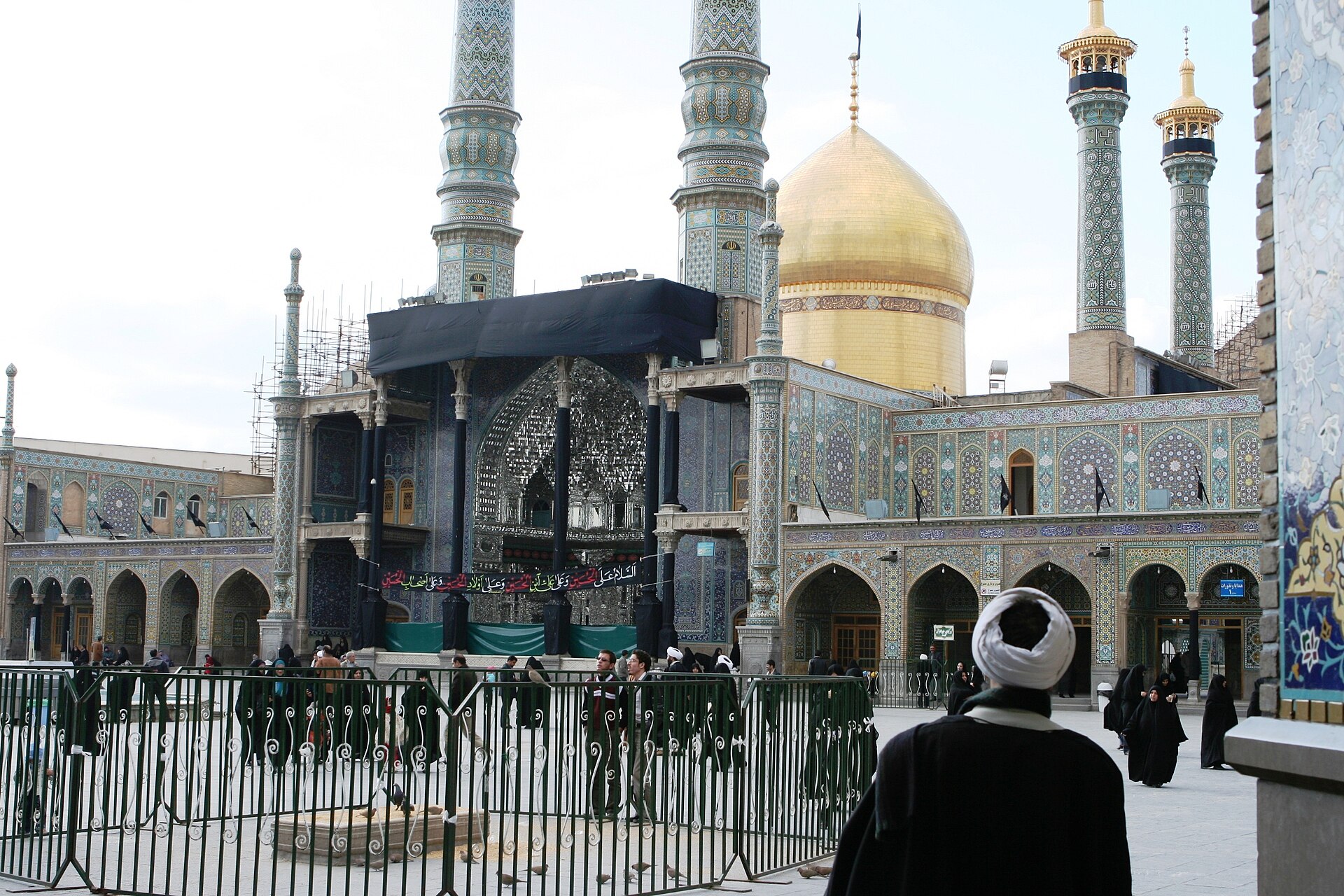
Table of Contents
- The Qom Gambit
- What Did Pezeshkian Tell the Clerics?
- The Assembly’s Answer
- Why Did the AoE Secretariat Rebuke Its Own Members?
- Raja News and the IRGC Counter-Claim
- Who Speaks for Mojtaba Khamenei?
- Has the Assembly of Experts Ever Challenged a Supreme Leader?
- Saudi Arabia’s Forty-Six-Day Problem
- What Happens if the MOU Collapses From Inside Iran?
- FAQ
The Qom Gambit
Pezeshkian’s June 28 trip to Qom was not ceremonial. He met four grand ayatollahs — Nasser Makarem Shirazi, Hossein Noori Hamedani, Ali Karimi Jahromi, and Jafar Sobhani — whose combined jurisprudential authority dwarfs that of any elected official in the Islamic Republic. The meetings took place while the Doha credibility collapse was unfolding: Iran’s foreign ministry was denying any negotiations with the US at “any level,” Trump was claiming a meeting had been “requested,” and Qatar was denying any high-level delegation was expected.
Pezeshkian needed the grand ayatollahs for something specific. The MOU’s domestic critics — concentrated in the Assembly of Experts, amplified by IRGC-aligned media, and anchored in the Jalili ultra-hardline camp — had already characterized the Pezeshkian-Ghalibaf diplomatic track as a “coup” against the revolution. Kayhan, the hardline state daily, had called it “diplomatic capitulation under Western pressure.” The president needed religious authority to override political opposition, and he needed it before the clerics’ formal statement could crystallize into something irreversible.
He got half of what he wanted. Ayatollah Hashem Hosseini Bushehri, chairman of the Society of Seminary Teachers, publicly backed the negotiating team and acknowledged that “running the country under current conditions is difficult.” That is not an endorsement of the MOU’s terms. It is a recognition that the man holding them has no better options — a concession of weakness dressed as solidarity. The four grand ayatollahs received Pezeshkian individually, and none issued a public statement contradicting the MOU. But neither did any issue a public statement supporting it, a silence that left the president with institutional photographs and no institutional commitment.
What Did Pezeshkian Tell the Clerics?
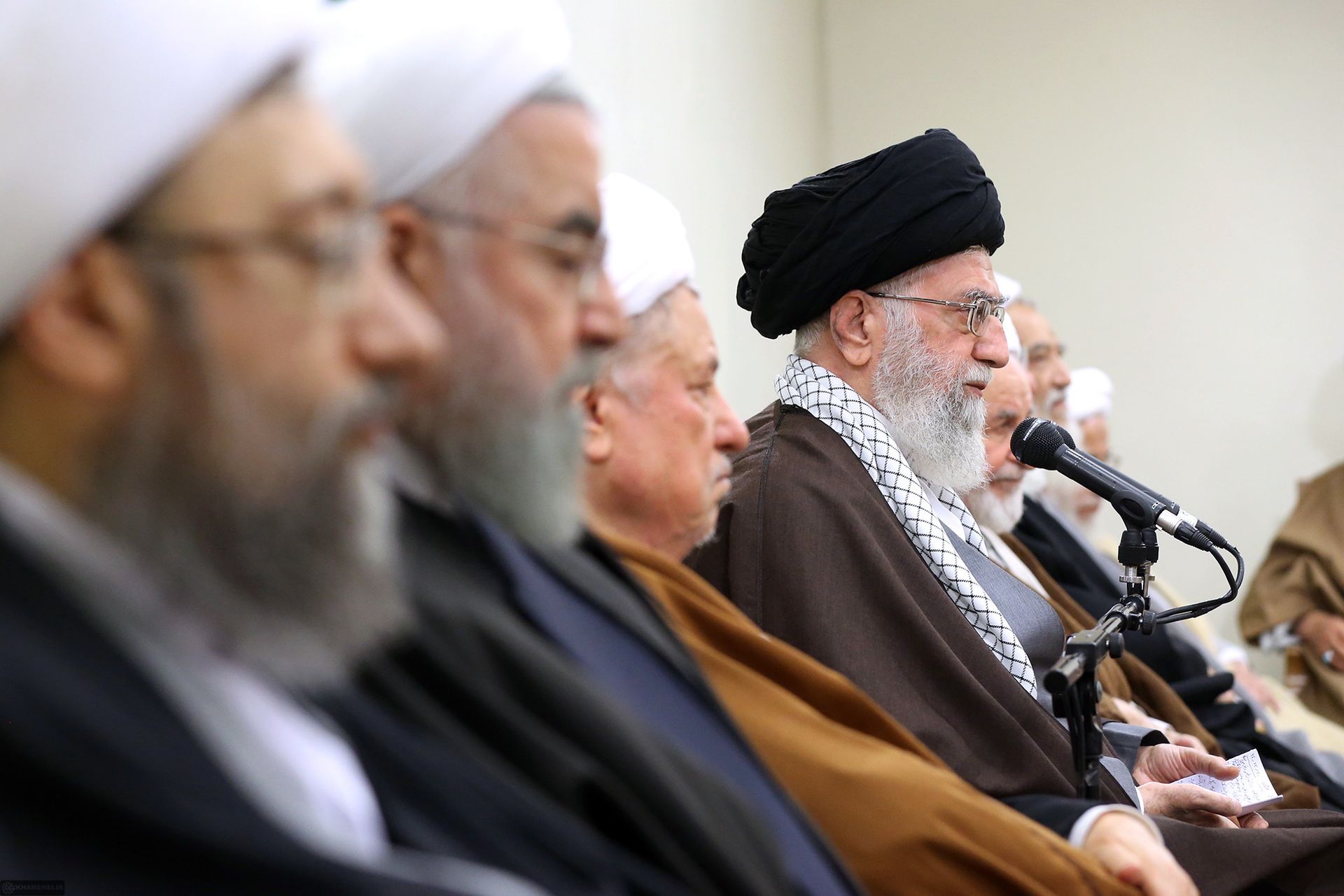
Pezeshkian told the Society of Seminary Teachers on June 30 that the MOU was pursued “in full and continuous coordination with the supreme leader” and that its final text received “the decisive support of the SNSC members.” Both claims — reported by Xinhua and IranWire — converted any criticism of the agreement into an implicit challenge to Khamenei himself. They are not defensive statements. They are attribution bombs.
The Middle East briefing 3,000+ readers start their day with.
One email. Every weekday morning. Free.
The first: “All stages of negotiations were pursued within the framework of the establishment’s macro policies, in full and continuous coordination with the supreme leader, and within the context of the country’s legal mechanisms.” The second extended the chain of authorization further: “Despite the existing security restrictions and considerations, the agreement’s final text was evaluated by relevant Iranian authorities and received the decisive support of the SNSC members.”
By placing the Supreme Leader — meaning Mojtaba Khamenei — as the coordinating authority and the Supreme National Security Council as the approving body, Pezeshkian eliminated the political space in which the MOU could be attacked as a rogue presidential initiative. Every criticism of the agreement now passes through the Supreme Leader’s office on its way to the target.
Pezeshkian went further, accusing domestic opponents of “aligning themselves with the psychological operations of hostile media” — a charge that, in Iran’s political grammar, places the accuser one rhetorical step from a security referral. He was not asking for the clerics’ blessing. He was daring them to attack the Supreme Leader’s judgment in public, knowing that the system’s own logic prohibits exactly that.
“All stages of negotiations were pursued within the framework of the establishment’s macro policies, in full and continuous coordination with the supreme leader, and within the context of the country’s legal mechanisms.”
— Masoud Pezeshkian, President of Iran, addressing the Society of Seminary Teachers of Qom, June 30, 2026 (Xinhua/IranWire)
The Assembly’s Answer
The clerics did not flinch. On July 1, 62 of 88 Assembly of Experts members — a 70.5% supermajority — published a joint statement calling the Hormuz reopening “contrary to officials’ commitments and a strategic mistake.” A parallel statement, signed by 63 of 88, classified Donald Trump and Benjamin Netanyahu as “Mahdur al-Dam” — a Shia jurisprudential designation meaning their blood may be shed with legal immunity — and stated that “their execution must not be neglected under any circumstances.”
The first statement is a policy objection. The second is a religious ruling with lethal implications. Together they represent the most significant internal challenge to an Iranian negotiating position since the JCPOA debates of 2015, with one critical difference: in 2015, the Supreme Leader publicly backed the deal. In 2026, two factions each claim the Supreme Leader is on their side.
The 62-signatory count matters because of what it represents structurally. The Assembly of Experts comprises 59 Principlists, 26 Independents, and 1 Reformist. For 62 members to sign, the statement required near-total Principlist unity plus a substantial crossover from Independents — the same Independents whose votes installed Mojtaba Khamenei as Supreme Leader in March under documented IRGC pressure. Eight members boycotted Mojtaba’s election session. Fewer than eight, it appears, declined to sign the anti-MOU statement.
| Bloc | Seats | Anti-MOU signatories (est.) | Implication |
|---|---|---|---|
| Principlists | 59 | ~55-59 | Near-total alignment with IRGC position |
| Independents | 26 | ~3-7 crossover | Some who installed Mojtaba now oppose his MOU |
| Reformists | 1 | 0 (assumed) | Irrelevant numerically |
| Total | 88 | 62 confirmed | 70.5% supermajority |
The AoE statement’s careful wording blamed “officials’ commitments” — a formulation that nominally protects Khamenei by targeting the negotiators rather than the authorizer. Pezeshkian’s Qom speech collapsed exactly that rhetorical buffer. If the MOU was carried out in “full and continuous coordination with the supreme leader,” then there are no mere officials to blame. There is only the Leader.
Why Did the AoE Secretariat Rebuke Its Own Members?
The AoE secretariat responded within hours, calling it “unprecedented” for Assembly members to issue statements under the Assembly’s name outside established procedures. Official positions, the secretariat insisted, must come from the full Assembly, its chairman, the presidium, or the secretariat itself.
This was a procedural objection, not a substantive one. The secretariat did not defend the MOU. It did not dispute the characterization of Trump and Netanyahu as Mahdur al-Dam. It did not challenge the claim that the Hormuz reopening was a strategic mistake. It protected institutional prerogatives — the Assembly’s monopoly on speaking as the Assembly — without engaging the content of what 70.5% of its members had just said.
The distinction matters because it reveals the secretariat’s impossible position. Under Iran’s constitution, the Assembly of Experts exists to supervise the Supreme Leader (Article 111). In practice, under absolute velayat-e faqih (Articles 5 and 57), no institution exercises supervisory authority over the Leader. Iran’s former chief justice argued explicitly that it is illegal for any institution to supervise the Supreme Leader. The AoE secretariat cannot adjudicate between a president who says the MOU is the Leader’s policy and 62 members who say it betrays his red lines. Adjudicating would require the secretariat to evaluate the Leader’s judgment — the one act the system structurally forbids.
So it attacked the envelope, not the letter. And in doing so, it confirmed that the letter’s contents were unanswerable through normal institutional channels.
Raja News and the IRGC Counter-Claim
Raja News, the IRGC-aligned outlet, immediately sided with the 62 signatories against the secretariat. Its argument was pointed: why should senior clerics seek “permission” before explaining “the supreme leader’s red lines to the public”? The question contains its own answer — the clerics were not freelancing but channeling Khamenei’s true position, which the MOU betrays.
This is the second attribution bomb of the sequence, and it detonates in the opposite direction from Pezeshkian’s. The president says the MOU is Khamenei’s policy. Raja News says the anti-MOU statement is Khamenei’s policy. Two factions, each claiming to speak for the same Supreme Leader, producing mutually exclusive interpretations of what that Leader authorized.
The IRGC’s structural interest is transparent. Pezeshkian’s priority is the $6 billion in frozen Qatar-held funds — the same pool contested since the oral stand-down — and a path to sanctions relief. The IRGC’s priority is retaining Hormuz control and the Persian Gulf Security Administration’s toll system, which generates $5.5 million per day and creates a permanent Iranian chokepoint over Gulf commerce regardless of what any MOU promises. The Qom gambit forced this divergence into public view: the president wants the money, the Guards want the strait, and each claims the Supreme Leader agrees with them.
Who Speaks for Mojtaba Khamenei?
The question would not arise if Mojtaba Khamenei governed like his father. Ali Khamenei accumulated authority over 35 years, built a network of personal representatives across every institution, and settled intra-regime disputes through private directives whose authenticity was never in doubt. Mojtaba assumed power on March 9, 2026, nine days after his father’s assassination, elected by an Assembly under IRGC pressure that prompted eight members to boycott the second session in protest.
Mojtaba’s structural weakness is threefold. He lacks Grand Ayatollah status — a deficiency that unnamed AoE members flagged immediately, warning his selection could be considered “invalid” because he “does not have an established, public clerical and jurisprudential standing.” Time magazine described him in April as “not quite supreme,” operating “as one voice within a broader consensus-building process among security elites.” And the IRGC, which engineered his election through “repeated contacts and psychological and political pressure” on Assembly members, has since blocked Pezeshkian’s presidential appointments and erected a security cordon around the new Leader, “effectively assuming control over key state functions.”
This is the environment in which Pezeshkian’s Qom claim must be evaluated. When the president says the MOU was coordinated with “the supreme leader,” he may be describing a genuine policy process — or he may be exploiting the opacity of a leader who cannot publicly adjudicate because his authority depends on not being seen to take sides in a fight he might lose. Mojtaba’s silence is not strategic ambiguity. It is the sound of a leader whose power rests on the same IRGC that is now using Raja News to argue that his red lines contradict his own government’s agreement.
| Factor | Ali Khamenei (1989-2026) | Mojtaba Khamenei (March 2026-present) |
|---|---|---|
| Religious rank | Grand Ayatollah (contested but accepted) | Hojatoleslam — lacks Grand Ayatollah status |
| Time in office at first crisis | ~1 year (1990 Kuwait invasion) | ~16 weeks (MOU, Day 14/60) |
| Basis of AoE election | Khomeini’s personal endorsement | IRGC “psychological and political pressure,” 8 boycotts |
| Institutional control | Personal representative network across all institutions | IRGC controls appointments, security cordon |
| Dispute resolution method | Private directive (undisputed authorship) | Unknown — two factions claim to speak for him |
Has the Assembly of Experts Ever Challenged a Supreme Leader?
No — and the historical record explains why that precedent makes the current situation more volatile, not less. The Assembly’s Article 111 power to dismiss a Supreme Leader who becomes “incapable of fulfilling his constitutional duties” has existed for 43 years without ever being exercised or even formally invoked.
The closest approach came in 2009, when Akbar Hashemi Rafsanjani — then AoE chairman — attempted to assemble an emergency session during the Green Movement protests that could theoretically have deposed Ali Khamenei. The effort failed completely. The Assembly issued a statement of “strong support” for Khamenei instead. Khamenei subsequently engineered Rafsanjani’s removal as chairman, demonstrating that the only modern attempt to use the AoE against a sitting Leader ended with the Leader removing his challenger rather than the institution constraining the Leader.
The earlier precedent is starker. In 1989, Ayatollah Montazeri — Khomeini’s designated successor — was dismissed after publicly criticizing the 1988 mass executions that killed between 4,500 and 5,000 political prisoners. The dismissal was executed by Khomeini personally, not by the Assembly of Experts. The AoE did not resist, did not debate, did not convene.
What makes July 2026 different is the target’s weakness. Rafsanjani challenged a leader who had consolidated power over 20 years. The 62 AoE signatories are challenging an agreement associated with a leader who has held office for 16 weeks, whose religious credentials are openly questioned, and whose election required IRGC coercion of the very body now issuing the challenge. The IAEA inspection blackout — 121 days and counting, with 440.9 kilograms of 60%-enriched uranium unverified — adds a nuclear dimension that neither the 1989 nor 2009 precedent carried.
Saudi Arabia’s Forty-Six-Day Problem
Riyadh has no seat at any of the tables where the MOU’s fate is being decided — not at Doha, not at Geneva, not at the IRGC-CENTCOM deconfliction cell in Qatar, and certainly not at the Society of Seminary Teachers of Qom. Yet the outcome of this intra-Iranian fight determines whether Saudi Arabia continues paying $5.5 million per day to the PGSA for the remaining 46 days of the MOU’s Phase 2 clock, or whether the agreement collapses before Day 60 and the Persian Gulf Security Administration’s fee structure reverts to its pre-MOU baseline of $1 per barrel — an automatic mechanism requiring no Iranian action.
The Qom gambit introduces a failure mode that Saudi strategic planning has not priced in: MOU collapse driven not by US-Iran disagreement but by an internal Iranian constitutional crisis in which neither the president nor the IRGC can demonstrate they speak for the Supreme Leader. If the 62-signatory statement consolidates into a formal AoE position — which the secretariat’s procedural rebuke was designed to prevent — Mojtaba Khamenei faces a choice his father never confronted: publicly back the MOU and contradict 70.5% of the body that elected him, or disavow it and collapse a negotiating position that has already extracted concessions from Washington.
Iran skipped the Sunday technical talks in Qatar. Hormuz transit stood at zero tanker crossings on July 1, with the strait operating at 5% of pre-war volume. The MOU’s Article 5 sovereignty clause gives Iran treaty-basis authority to reject third-party demining, third-party escort, and third-party navigation regimes for the remaining 46 days — regardless of what happens in Qom. Saudi Arabia’s exposure is structural: the PGSA charges accumulate whether the MOU’s Iranian authors are winning or losing their domestic argument.
The fiscal arithmetic is remorseless. At $5.5 million per day, 46 days of MOU Phase 2 cost Saudi Arabia approximately $253 million in PGSA surcharges alone — on top of a Q1 deficit already running at $33.5 billion against a $44 billion full-year target, a Brent price of $71.99 against a $108-111 composite breakeven, and a $160-175 million daily revenue gap that the Hormuz closure has locked in since March. Riyadh is paying for an agreement whose own authors cannot agree on whether it reflects the Supreme Leader’s policy or betrays his red lines. What Riyadh has not disclosed — and what Reuters reported in July 2026 — is that Saudi Arabia spent those same months conducting covert airstrikes on Iranian territory, making it an undisclosed belligerent in the very war the MOU was meant to end.
IISS senior fellow Hasan Alhasan described the arrangement as “a bad peace,” observing that “a bad deal is still preferable to war” for Gulf states. That formulation assumes the deal’s Iranian sponsors can deliver it. The Qom sequence suggests the sponsors are fighting for their political survival, not managing an implementation timeline.
What Happens if the MOU Collapses From Inside Iran?
The collapse scenario runs through a specific institutional sequence. Raja News’s IRGC-backed counterattack on the secretariat suggests containment is already failing. If the secretariat’s procedural rebuke cannot hold, the 62-signatory statement becomes the Assembly’s de facto position regardless of formal process. Mojtaba Khamenei would then need to either endorse it (killing the MOU), ignore it (eroding his already fragile authority), or issue a directive clarifying his position on the agreement (exposing him to direct accountability for whatever comes next).
None of these options existed before Pezeshkian’s Qom speech. By attributing the MOU to the Supreme Leader, the president eliminated the political buffer that allowed Mojtaba to remain above the debate. The IRGC-aligned camp, by claiming the anti-MOU statement represents the Leader’s “red lines,” has simultaneously eliminated the buffer from the other direction. Mojtaba Khamenei is being squeezed toward a public position by two factions that both claim to be channeling his private one.
For Saudi Arabia, the operational question is narrower: does the PGSA continue collecting $5.5 million per day through the constitutional crisis, or does the crisis interrupt the toll system? The answer, based on every precedent in this conflict, is that Iranian domestic instability has never interrupted PGSA operations. The toll system ran through the oral stand-down, through the IRGC strikes on four US bases, through the Doha credibility collapse, and through the IAEA inspection blackout. It is the one mechanism in this conflict that functions precisely as designed, regardless of what happens above it.
The MOU was signed in Islamabad on June 17-18 as a framework for ending the Hormuz crisis. Fourteen days later, the framework’s survival depends less on what Washington or Tehran negotiate in Doha than on whether a 16-week-old Supreme Leader can resolve a contradiction his own system created — two factions claiming his authority to pursue opposite objectives, with neither willing to ask him directly and neither confident of the answer.
Forty-six days remain. The clerics have spoken. The president has answered. And the Supreme Leader — the one figure whose word could resolve the contradiction — has said nothing at all.
Frequently Asked Questions
What is the Society of Seminary Teachers of Qom?
The Jame’eh-ye Modarresin-e Howzeh-ye Elmiyyeh-ye Qom is Iran’s most influential clerical association, founded in 1961 and historically aligned with the revolutionary establishment. It is distinct from the Assembly of Experts: the Society is a voluntary association of seminary faculty, while the AoE is a constitutionally mandated elected body. The Society’s chairman, Ayatollah Bushehri, publicly backed Pezeshkian — putting the seminary teachers at odds with the AoE majority on the MOU.
What does “Mahdur al-Dam” mean in Shia jurisprudence?
Mahdur al-Dam designates a person whose blood may be shed without judicial process and without incurring blood-money (diyya) liability. Unlike a conventional death sentence, it does not require a court ruling — the designation itself functions as both verdict and authorization. The classification of sitting heads of state as Mahdur al-Dam by 63 of 88 AoE members is without precedent in the Assembly’s 43-year history, though Khomeini issued a comparable fatwa against Salman Rushdie in 1989 in his capacity as Supreme Leader, not through the AoE.
Can the Assembly of Experts actually dismiss a Supreme Leader?
Article 111 of Iran’s constitution grants the AoE power to determine whether the Supreme Leader is “incapable of fulfilling his constitutional duties” and to dismiss him if so found. The mechanism requires a majority vote of the full Assembly. However, the Assembly has no independent enforcement capacity — no armed forces, no security apparatus, no budget authority. In practice, dismissal would require at minimum IRGC acquiescence, which is structurally unlikely given that the IRGC engineered Mojtaba Khamenei’s election and currently controls access to him.
Why did Pezeshkian visit Qom before the AoE statement was published?
The Qom meetings on June 28 preceded the AoE statement of July 1 by three days, but the clerical opposition had been building for weeks. Kayhan and the Jalili camp had already framed the MOU as “capitulation” and a “coup against the revolution.” Pezeshkian’s visit to four grand ayatollahs was pre-emptive — an attempt to secure religious legitimation before the political opposition crystallized into a formal institutional position. The Society of Seminary Teachers’ backing, while symbolically valuable, carries no constitutional weight against an AoE supermajority.
What happens to the PGSA on Day 61 if no final agreement is reached?
The MOU’s Phase 2 expires approximately August 16-17, 2026. The PGSA surcharge structure reverts automatically to its pre-MOU baseline of $1 per barrel on Day 61, requiring no affirmative Iranian action. However, the PGSA’s administrative apparatus — the 40-category Vessel Identification Database, the 48-hour pre-clearance requirement, the Larak corridor routing — remains intact regardless of MOU status. The PGSA was founded May 5, 2026, 43 days before the MOU was signed, and its institutional survival does not depend on the agreement.