
TEHRAN — Sixty-two of Iran’s eighty-eight Assembly of Experts members — the constitutional body that installed Mojtaba Khamenei as Supreme Leader in March under what Iran International and Fortune documented as “repeated contacts and psychological and political pressure” from IRGC commanders — have signed a ten-point statement declaring the reopening of the Strait of Hormuz a “strategic mistake,” demanding war compensation and frozen-asset repatriation as preconditions for any settlement, and classifying Donald Trump and Benjamin Netanyahu as “Mahdur al-Dam,” a Shia jurisprudential designation meaning their blood may be shed by any obligated Muslim who gains access to them, with no judicial process required.
The statement, published approximately June 29–30 and reported by Iran Focus and Iran International, represents the first known instance of Assembly of Experts members publicly intervening in active foreign negotiations — a body whose meetings are constitutionally confidential, whose forty-seven-year track record includes zero public challenges to any Supreme Leader, and whose sudden visibility arrives on Day 14 of the sixty-day MOU window with forty-six days remaining. Hours before the statement surfaced, Iran’s Foreign Ministry told Al Jazeera that “we will not have any negotiation meetings at any level with the American side in the coming days.”
Table of Contents
What the Sixty-Two Demanded
The signatories, who according to Iran Focus insisted their positions “reaffirm” Mojtaba Khamenei’s stated red lines and must be treated as “the final word,” set out demands that collectively contradict the Doha negotiating track’s current agenda. The first and most immediately consequential: no nuclear negotiations, at a time when Iran’s technical delegation in Doha told Al Jazeera on June 30 it was there exclusively for the approximately $6 billion in frozen assets held in Qatar since the Biden-era prisoner swap, and when 440.9 kilograms of highly enriched uranium at 60 percent enrichment — enough, if enriched further, for roughly two weapons — remain unverified after 121 days without IAEA inspector access.
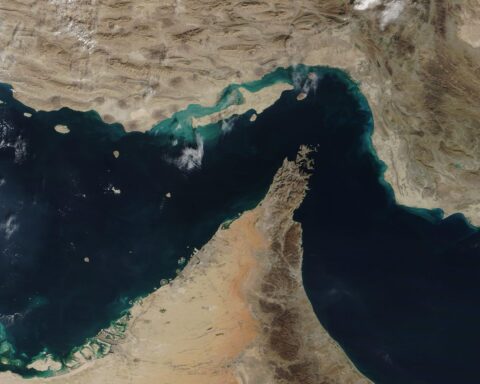
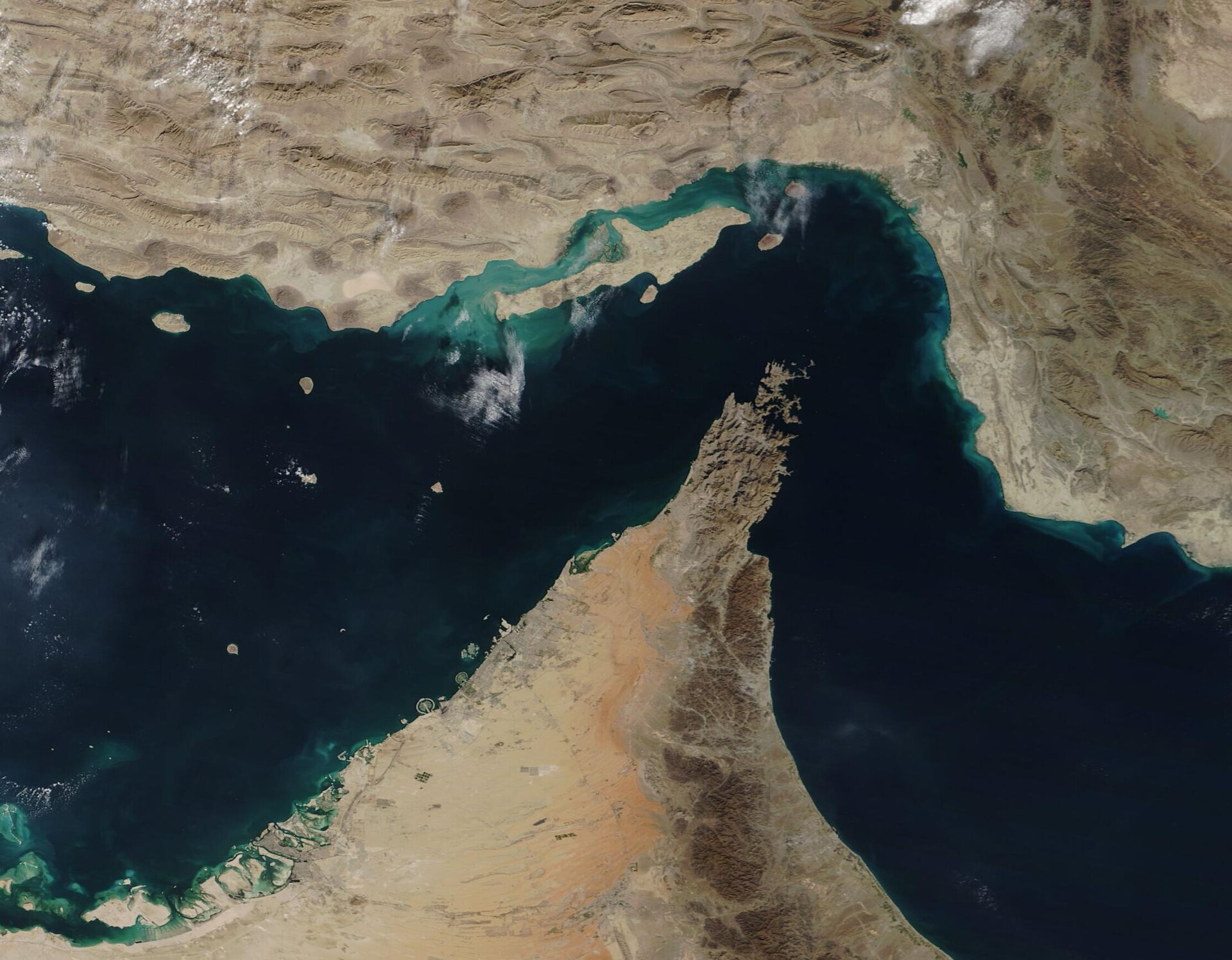
The statement explicitly calls the Hormuz reopening “contrary to officials’ commitments and a strategic mistake” — language that directly implicates Foreign Minister Abbas Araghchi, who told Al Jazeera on June 28 that the strait “remains under Iranian control for 30 days” and framed reopening as a technical process Iran manages rather than a political concession it makes. The sixty-two signatories have declared the process itself illegitimate, and warned Iranian officials to refrain from “any remarks or actions that could be interpreted as showing the country’s weakness or inability,” per Iran Focus — a gag order dressed in clerical authority that applies not to Araghchi alone but to every official who might use diplomatic ambiguity to navigate between the MOU’s requirements and the hardline position now endorsed by seventy percent of the Supreme Leader’s constitutional supervisors.
The remaining demands — war compensation before any settlement, repatriation of all frozen assets, withdrawal of US troops from the region, and revenge for assassinated Iranian leaders — map to Mojtaba Khamenei’s March 12 inaugural address so precisely that their origin is less a question of alignment than of authorship. “We will seek compensation for the war through any possible means,” Khamenei said that day, per Al Jazeera and the Soufan Center, placing responsibility for ending hostilities entirely on the US-Israeli side — the same framing the sixty-two signatories have now stamped with the constitutional weight of the body that chose him.
A Body That Has Never Said No
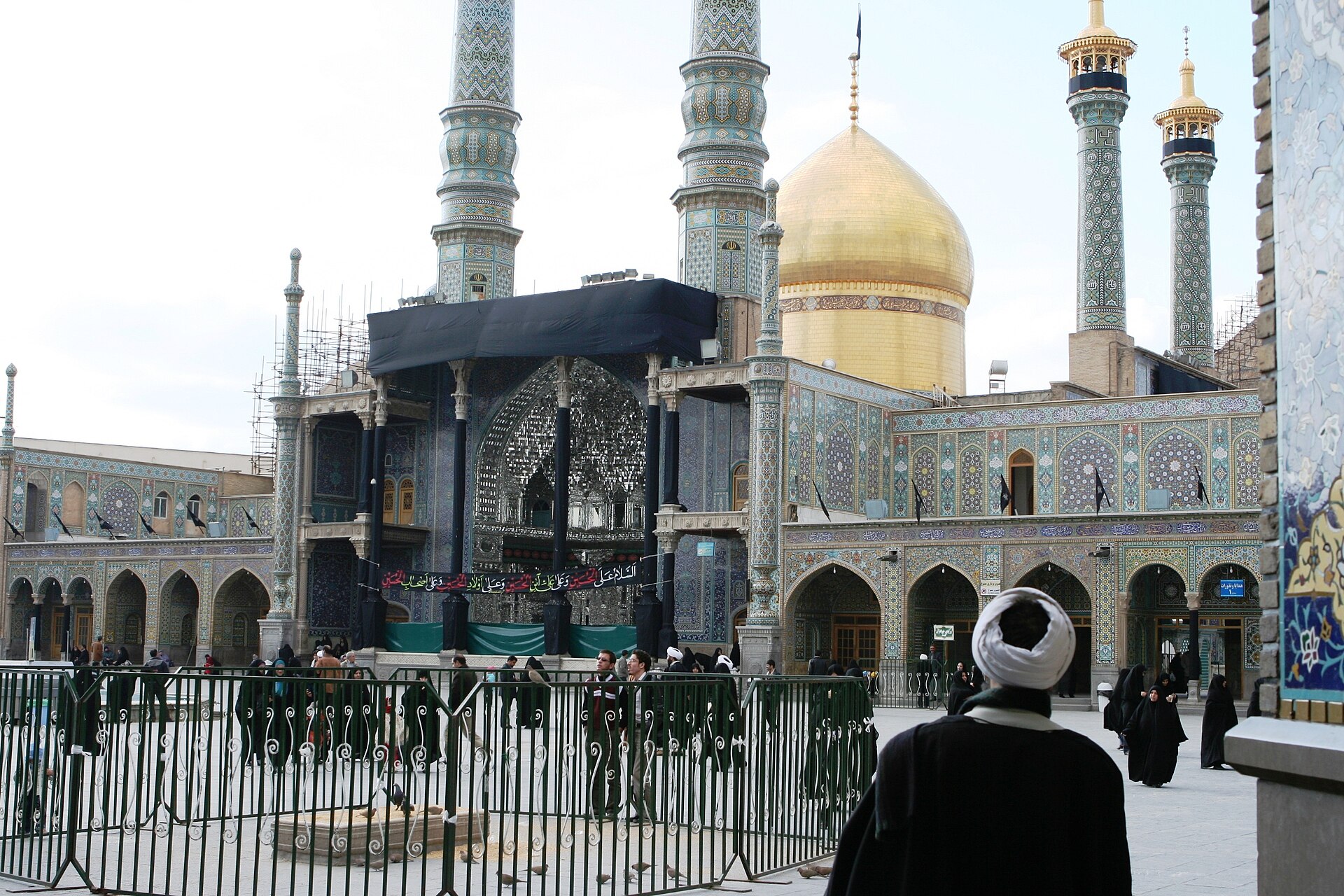
The Assembly of Experts exists, under Articles 107 and 111 of Iran’s constitution, to appoint and supervise the Supreme Leader — the only body in the Islamic Republic with the constitutional authority to dismiss one. In practice, per Britannica, it has functioned as a rubber stamp, normalizing deals brokered among the Supreme Leader and factional power brokers, with meetings held in total confidentiality and public silence maintained as institutional doctrine. No Supreme Leader has been questioned, let alone dismissed; Assembly members who have broken ranks — Ahmad Azari Qomi, most conspicuously — have been arrested, and a 2015 Chief Justice ruling declared that oversight of the Supreme Leader was itself “illegal.”
The Middle East briefing 3,000+ readers start their day with.
One email. Every weekday morning. Free.
The sixty-two signatories’ statement is, by any measure, a departure from that institutional silence — though what exactly it departs toward is the question that divides analysts. Within hours of publication, the Assembly’s own presidium and secretariat issued a rare public clarification, stating that “it was unprecedented for a group of members to issue a statement under the Assembly’s name outside its established procedures,” according to Iran International.
“It was unprecedented for a group of members to issue a statement under the Assembly’s name outside its established procedures.” Official positions should come “through formal channels — the full Assembly, chairman, presidium, or secretariat — to preserve institutional unity.”
Assembly of Experts Secretariat, public clarification, June 29, 2026
That rebuke was itself extraordinary — Iran International noted the Assembly “almost never comments on day-to-day policy” — but the ultrahardline outlet Raja News immediately countered it, asking why senior clerics needed “permission” to publicly explain what the Supreme Leader had already said, per Iran International. The counter-framing recast the sixty-two not as rogue actors breaking institutional norms but as loyal instruments amplifying the Supreme Leader’s own position, a reading that makes the secretariat’s rebuke look less like institutional censure and more like diplomatic theater designed for audiences in Doha and Washington rather than in Qom.
The Assembly’s current composition — fifty-nine Principlists, twenty-six Independents, one Reformist, and two vacant seats in the Sixth Session — means the sixty-two signatories almost certainly include the entire Principlist bloc plus at minimum three Independents, a coalition that reaches past ideological convenience into something approaching institutional consensus. Chairman Mohammad-Ali Movahedi Kermani, who has held the post since May 2024, has not publicly commented on the statement.
Is This Mojtaba Khamenei’s Voice — or His Leash?
The coordination thesis writes itself, almost suspiciously so. The statement’s content maps to Mojtaba Khamenei’s March 12 inaugural address point by point; the IRGC commanders whose documented pressure on Assembly members produced his selection are the direct beneficiaries of a statement that validates their Hormuz-closure doctrine; Raja News deployed it immediately as amplification rather than origination; and the timing — Day 14 of the MOU, Doha talks resuming, the Lebanon precondition stalling — is precise enough to suggest choreography rather than coincidence.
Under this reading, the secretariat’s procedural rebuke is less institutional embarrassment than architectural feature, a layer of deniability that allows Araghchi’s delegation in Doha to tell interlocutors that the statement was irregular and non-binding while the signal it carries — the Assembly’s constitutional supervisors declaring Hormuz reopening a strategic mistake — lands where it was always intended to land. The rebuke becomes, in this framing, the diplomatic exhaust produced by a message whose real audience was never the Assembly secretariat but Washington and Doha.
The genuine-pressure thesis starts from the speed and specificity of the rebuke itself. If the sixty-two were performing a task Mojtaba Khamenei had assigned with full institutional coordination, the secretariat’s response would have been silence or endorsement — not a public statement using the word “unprecedented,” which concedes irregularity rather than manages it. President Pezeshkian’s reported trip to Qom to seek clerical support, simultaneously with the statement’s publication, per Iran International, suggests a political center that feels besieged rather than one executing a coordinated pressure campaign.
“The hardliners are loud, but they have a weak case to make.”
Alex Vatanka, Middle East Institute, via Iran International, June 2026
Vatanka’s assessment captures the rhetorical weakness of the sixty-two’s position without accounting for the structural hold they maintain over a Supreme Leader who, as a midlevel cleric lacking the traditional jurisprudential credentials for the velayat-e faqih role, per Foreign Affairs and Iran International, depends on precisely these institutional actors for the legitimacy he cannot generate from his own scholarly record. Jason Brodsky of United Against Nuclear Iran told Iran International that the “Supreme Leader’s decision will prevail” but that the “real struggle may emerge during sanctions relief implementation” — a formulation that concedes the statement may not block a deal but could sabotage whatever follows one.
Arash Azizi, the Iran analyst, argued that the regime has shifted “from ideological hardliners toward pragmatic collective leadership prioritizing survival over revolutionary principles” — a reading that positions the sixty-two signatories as a rearguard action by a faction losing ground rather than a vanguard imposing terms. Both interpretations converge, though, on an operational reality that matters more than their divergence: the red lines are now publicly lodged in Iranian institutional discourse, and any negotiator in Doha who accepts terms contradicting them faces domestic opposition citing a seventy-percent supermajority of the body constitutionally charged with supervising the Supreme Leader.
What Does ‘Mahdur al-Dam’ Mean in Practice?
In traditional Shia jurisprudence, “Mahdur al-Dam” — literally “one whose blood is wasted” — designates a person as outside the qisas (retribution) framework’s legal protection, placed in the same category as apostates and blasphemers. The classification carries its own permission: no judicial authorization is required before acting against someone so designated, according to analyses published in the Journal of Comparative Criminal Justice and the Islamic Law Blog. The Assembly of Experts’ statement goes further, asserting per Iran Focus that killing Trump and Netanyahu is “obligatory for every obligated Muslim who gains access to them” — language that escalates from passive withdrawal of protection into active religious duty.
The application of this classification to sitting heads of state of a nuclear-armed power has no precedent in modern Iranian institutional practice. The 1989 fatwa against Salman Rushdie used comparable jurisprudential language, but Rushdie was a private citizen and the fatwa came from a single Supreme Leader exercising personal jurisprudential authority. This declaration carries the endorsement of sixty-two members of the body constitutionally positioned above the Supreme Leader — a broader institutional base that, within Iran’s own jurisprudential hierarchy, makes individual clerical dissent from the classification harder to sustain.
Whether the designation constitutes a credible operational threat or a performative escalation calibrated for domestic audiences is a question Washington and Tel Aviv will answer with different assumptions than scholars of Islamic law. What the designation does unambiguously — and what matters most for the MOU clock — is close the rhetorical space in which any Iranian official could frame the negotiating process as leading toward normalization with either the Trump administration or the Netanyahu government, because you cannot simultaneously send negotiators to Doha and declare it a religious obligation to kill the person sitting across the table.
Forty-Six Days and Closing
The MOU clock — which has no pause mechanism, a structural absence that Senator Tim Kaine has argued existing US statute cannot support — now shows forty-six days remaining. Iran’s technical delegation in Doha is focused exclusively on the frozen-asset question, per Al Jazeera and RFERL, while Deputy Foreign Minister Gharibabadi’s June 30 declaration that IAEA access will come only “within the framework of a final agreement and as a result of practical action by the other side to end all sanctions” leaves the 440.9 kilograms of unverified HEU as the negotiation’s most dangerous unresolved variable — a position the sixty-two signatories have now endorsed with the weight of constitutional authority.
The Doha track was already narrow before the Assembly of Experts spoke. Iran’s own negotiators confirmed they came for frozen funds and rejected the characterization of their presence as nuclear talks. The sixty-two signatories have narrowed it further, declaring the MOU’s central deliverable — Hormuz reopening — a strategic mistake, and establishing preconditions that the current MOU text does not contemplate and that the US has shown no willingness to accept.
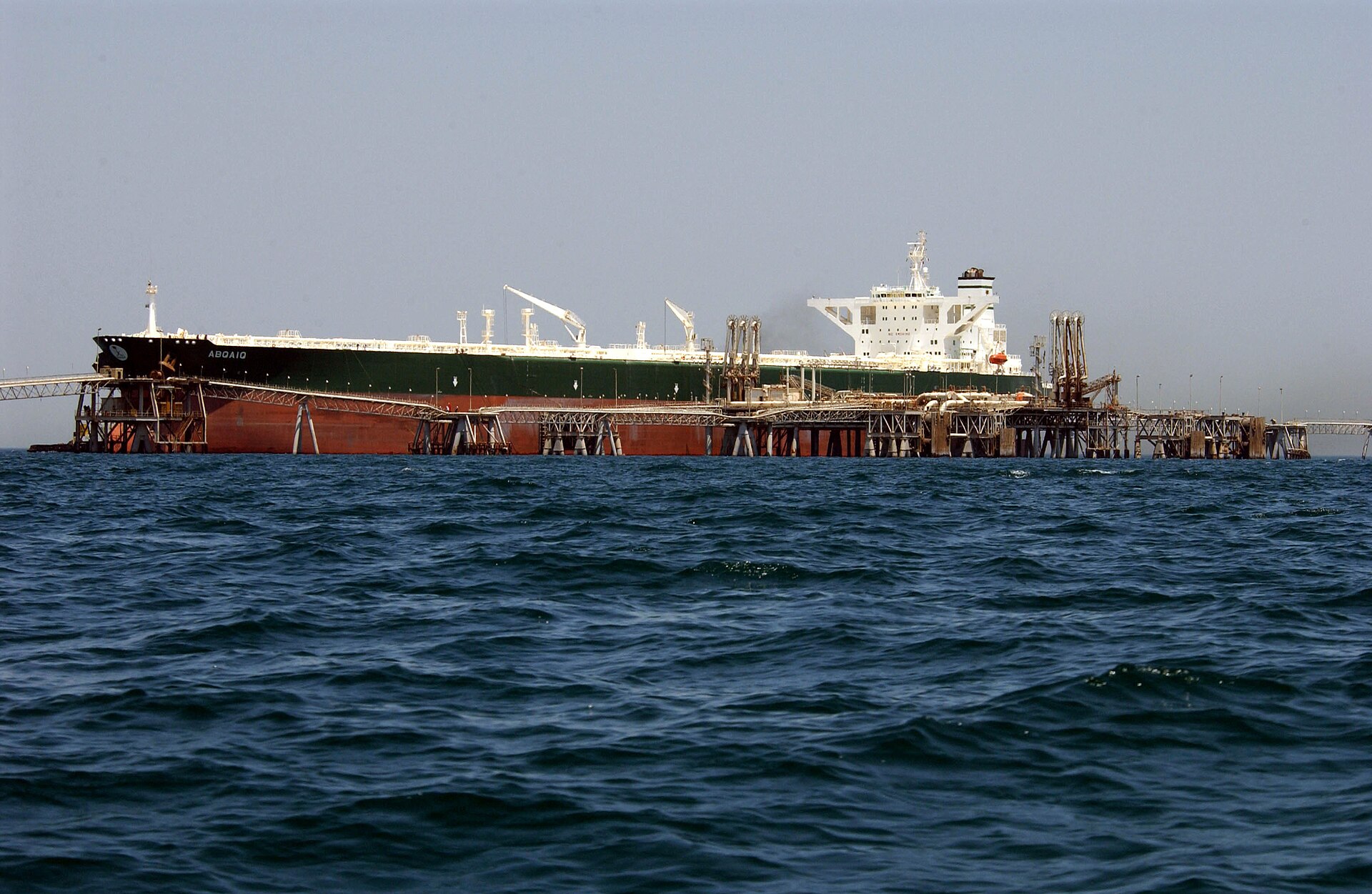
The ultrahardline Paydari Front parliamentary faction, which has demanded the resignations of both Araghchi and parliamentary speaker Ghalibaf over the MOU since June, per Iran International, now operates with the backing of Iran’s most constitutionally elevated clerical body — an institution that, before this week, had never publicly said anything about any active policy. Brent crude at approximately $73.51 on July 1, against Saudi Aramco’s breakeven of $80–91 per barrel, means every day of prolonged Hormuz uncertainty sustains a Saudi fiscal gap and elevated war-risk premiums of 1–2 percent of hull value, against the 0.1 percent pre-war baseline, that the Assembly of Experts’ statement shows no interest in closing.
President Pezeshkian reportedly traveled to Qom — the seminary city, the clerical capital — to seek support amid these pressures, per Iran International. The man who won the presidency promising pragmatism went to the clerics to ask for room to negotiate, while sixty-two of their colleagues had already declared that what he wants to negotiate away should never have been offered. Pezeshkian’s response was to invoke Khamenei’s direct authority — framing the MOU before the Society of Seminary Teachers as the Supreme Leader’s own policy, a claim the AoE statement’s signatories had already implicitly contradicted.
When the funeral cycle began four days later, the funeral ceremony amplified that pressure in ways the AoE statement alone could not — providing tens of hours of on-camera oath-taking that hardened the same red lines the sixty-two signatories had set, with no counter-programming available during the mourning period.
Frequently Asked Questions
What is the Assembly of Experts, and how are its members selected?
The Assembly of Experts (Majles-e Khobregan-e Rahbari) is an eighty-eight-seat body of senior Shia clerics elected by popular vote to eight-year terms, most recently in March 2024. All candidates must pass a vetting process administered by the Guardian Council — a twelve-member body, half of whose members are appointed directly by the Supreme Leader — creating a structural filter that has historically excluded reformists and candidates who might challenge the office the Assembly nominally supervises. The body meets twice annually in confidential sessions, its proceedings are never published, and its sole constitutional mandates are selecting a new Supreme Leader upon death or incapacitation and, in theory, supervising the incumbent — a function it has never exercised in any publicly documented instance.
How was Mojtaba Khamenei selected as Supreme Leader, and what role did the IRGC play?
Mojtaba Khamenei was selected Supreme Leader on March 9, 2026, eleven days after the assassination of his father, Ali Khamenei, on February 28. Iran International and Fortune reported that the selection involved “repeated contacts and psychological and political pressure” from IRGC commanders on Assembly members — documentation that the succession was driven by Iran’s military establishment rather than by the Assembly’s independent judgment. Mojtaba Khamenei’s clerical credentials are those of a midlevel cleric, below the traditional marja (source of emulation) standard historically expected for the holder of the velayat-e faqih role, per Foreign Affairs and Iran International, a gap that makes him structurally dependent on institutional actors — including the Assembly and the IRGC — for a legitimacy he cannot derive from scholarly standing alone.
What is the Paydari Front, and why does it matter for the MOU?
The Stability of Islamic Revolution Front (Jabhe-ye Paydari-ye Enqelab-e Eslami), known as the Paydari Front, is an ultrahardline parliamentary faction founded in 2011 that has opposed every major Iranian diplomatic initiative, including the 2015 JCPOA. Since June 2026, Paydari has publicly demanded the resignations of Foreign Minister Araghchi and parliamentary speaker Ghalibaf for their involvement in MOU negotiations, per Iran International. The faction’s political weight lies less in its parliamentary seat count than in its alignment with IRGC elements and the senior clerical networks that produced the sixty-two-member Assembly of Experts statement — the same networks that, through IRGC-aligned outlets like Kayhan and Raja News, have denounced the MOU as “surrender” since its signing.
How does the Assembly of Experts’ statement affect Saudi Arabia’s position?
Saudi Arabia holds zero seats in the Doha negotiating channel, zero seats in the Phase 2 nuclear track, and has been diplomatically sidelined throughout the MOU process. The Assembly statement compounds Riyadh’s predicament by prolonging the Hormuz uncertainty that keeps war-risk premiums elevated and Brent crude below Aramco’s breakeven — a gap representing roughly $160–175 million per day in forgone revenue at current production levels. The kingdom is already running a deficit of $33.5 billion in Q1 2026 against a $44 billion full-year budget target, and every additional day of strait closure that the statement’s maximalist preconditions would require makes further sovereign wealth fund drawdowns arithmetically unavoidable. Foreign Minister Faisal bin Farhan’s only public contribution to the nuclear track — a statement at the ECFR in Vienna that “verification is key” — remains Saudi Arabia’s sole documented input into a process that sixty-two Iranian clerics have now declared should never produce a deal.