
RIYADH — Donald Trump removed the April 22 ceasefire deadline on Monday and replaced it with a condition the Iranian state, as currently constituted, cannot satisfy. That is not de-escalation. That is the transfer of an open-ended war risk onto the country with the most exposed fixed assets in the region, and Saudi Arabia’s negotiators were not in the room when it happened.
The Truth Social post that did it ran to a single paragraph. Trump cited “the fact that the Government of Iran is seriously fractured” and said he would hold off further American action “until such time as their leaders and representatives can come up with a unified proposal.” He also ordered the US military to “continue the Blockade and, in all other respects, remain ready and able.” Vice President JD Vance’s planned Islamabad trip was postponed the same afternoon, after Tehran informed Pakistan it would not attend.
Read closely, the post concedes something Washington has spent two weeks denying. The Islamabad framework did not stall because the mediators failed. It stalled because there is no Iranian counterpart with the authority to close the deal. That diagnosis is correct. The response — hand Iran an unlimited clock while keeping Saudi infrastructure ringed by IRGC counter-target lists — is where Riyadh’s problem begins.
Table of Contents
What “Unified Proposal” Actually Requires
Start with the Iranian constitution and work outward. Any proposal binding enough to end hostilities requires Supreme National Security Council endorsement under Article 176, which in turn requires sign-off from the Supreme Leader or his designated deputy. That chain is broken. Mojtaba Khamenei, the nominal successor, has been audio-only for 44 days after sustaining a fractured foot, a bruised left eye and facial lacerations when his father was killed on February 28. The regime has resorted to AI-generated videos for official communications. Reuters reported this week that he participates in meetings only by voice.
Ali Vaez of the International Crisis Group put the implication in plain English. Mojtaba “is not in a state where he can actually make critical decisions or micromanage the talks,” he told CNN on Monday. His absence, Vaez added, provides “a protective shield” for negotiators against domestic criticism — useful for buying time, useless for closing a deal.
Beneath the absent Supreme Leader sits the SNSC itself, where IRGC deputy Ahmad Vahidi and Mohammad Zolghadr hold the veto. Vahidi carries an Interpol red notice for the 1994 AMIA bombing in Buenos Aires. Zolghadr authored the April 14 report that triggered the Islamabad walkout. Neither man regards the American terms — surrender of 440.9 kg of 60% enriched uranium, full reopening of Hormuz to Gulf traffic, termination of the nuclear program — as anything other than regime-ending.
The Middle East briefing 3,000+ readers start their day with.
One email. Every weekday morning. Free.
Civilian leadership has no recourse. Article 110 of the Iranian constitution places the armed forces — including the IRGC and its Khatam al-Anbiya construction headquarters — under the Supreme Leader, not the president. Masoud Pezeshkian accused Vahidi and Abdollahi by name on April 4 of sabotaging the ceasefire. He could not remove them. He cannot remove them now. Foreign Minister Abbas Araghchi declared Hormuz “completely open” on April 17 and an unnamed IRGC naval officer told the Christian Science Monitor on April 20 the correction that everyone in Tehran already understood: “We will open it by the order of our leader, Imam Khamenei, not by the tweets of some idiot.”
A “unified proposal,” then, asks for coordination between a dead man’s son who cannot make decisions, a council majority that considers the terms suicidal, and a civilian cabinet with no formal authority over the actors doing the fighting. The Islamabad framework did not fail because Iran negotiated in bad faith. It failed because there is no single Iranian authority capable of saying yes.
Trump’s post framed this as a reason to pause. It is equally a reason the pause cannot end.
Who Benefits From Waiting?
Time-preference is not an academic concept in this war. It is a fiscal, military and physical ledger, and on every line Iran can afford to wait longer than Saudi Arabia can afford to let it.
Look at what Riyadh loses each day the ceasefire holds without resolution. Saudi March production came in at 7.25 million barrels per day according to the International Energy Agency’s April 14 Oil Market Report, down from 10.4 million bpd pre-war. The Khurais field, 300,000 bpd of capacity, remains offline with no announced restoration timeline. The East-West Pipeline bypass to Yanbu can load between 4 and 5.9 million bpd depending on terminal conditions — against a pre-war Hormuz throughput above 7 million. The structural gap is 1.1 to 1.6 million bpd of crude that cannot find a ship. Kpler recorded Asian shipments down 38.6%.
The fiscal arithmetic is worse than the official statements. Saudi break-even, PIF-inclusive, sits between $108 and $111 per barrel. Brent closed Monday near $95. Goldman Sachs modelled the war-adjusted deficit at 6.6% of GDP, twice the official 3.3% forecast. Every week without a resolution draws down reserves, postpones Vision 2030 tranches, and defers sovereign commitments priced against oil that is not moving. The structural exposure compounds further if Iran moves on its second lever: as analysis of the Bab el-Mandeb threat sets out, restricting the Red Sea’s southern exit would close Saudi Arabia’s last functioning export corridor entirely, draining SAMA reserves at $17 billion a month with no remaining bypass.
Defense consumables do not replenish under ceasefire either. PAC-3 inventories are at roughly 400 interceptor rounds. Pre-war stock was approximately 2,800. Riyadh is fighting with 14% of the missiles it started with, and Lockheed’s production cadence is not calibrated to a wartime demand curve it has never seen. Hajj arrivals began on April 21. Indonesia’s first cohort of 221,000 pilgrims starts flying on April 22 — the same date that was, until Monday, the ceasefire expiry. The Day of Arafah falls on May 26. For five weeks, Saudi Arabia must hold air defense overhead for a pilgrim population of 1.2 to 1.5 million while its interceptor stock is deep in the red. The airlift launched as forecast: Indonesia’s 548-flight operation departed Soekarno-Hatta on April 22 as Iran’s parliamentary adviser declared the US blockade an act of war, compressing the security calculus the indefinite extension was designed to relieve.
| Metric | Pre-war | Current | Gap |
|---|---|---|---|
| Crude production (mb/d) | 10.4 | 7.25 | -3.15 |
| Yanbu export ceiling / bypass (mb/d) | 7.0+ (Hormuz) | 4.0-5.9 | -1.1 to -1.6 |
| PAC-3 interceptor rounds | ~2,800 | ~400 | -2,400 (-86%) |
| Khurais field (kbpd) | 300 | 0 | -300 |
| Fiscal deficit (% GDP, Goldman war-adj.) | 3.3 | 6.6 | +3.3pp |
| Brent vs. break-even ($108-111) | Above | ~$95 | -$13 to -$16 |
Now look at what Iran loses by waiting. The obvious answer is oil revenue, but OFAC’s General License U expired on April 19 with no renewal, cutting the formal trade to zero. Iran lost that line two days before the deadline removal. What remains — yuan-settled Chinese purchases through ICICI Bank Shanghai, Indian Oil Corporation’s 2 million-barrel VLCC lifted with 95% pre-payment, Kunlun Bank rails outside SWIFT — runs under sanctions and blockade regardless of whether Trump keeps April 22 or erases it. The coercive clock on Iran was already the tightest it was going to be.
What Iran gains by waiting is more consequential. Time to rebuild missile and drone stockpiles. Time to move HEU and spin cascades in locations no longer under IAEA observation since February 28. Time for 440.9 kg of 60% enriched uranium to be run up via an IR-6 cascade — 25 days per device, by the open-source estimates. Time for the IRGC Aerospace Force to field the “new cards” Parliament Speaker Mohammad Bagher Ghalibaf boasted about at the weekend. Time for younger commanders who, in Narges Bajoghli’s phrase, “do not share the caution of the older generation” to harden their hand over IRGC council politics.
The indefinite extension is not neutral ground. It is a handshake on asymmetric clocks. Riyadh’s clock runs down measured in barrels, missiles and fiscal months. Tehran’s runs up measured in separative work units.
The Two Weeks Iran Used the Ceasefire For
Ghalibaf has not been coy about what Iran did with the fourteen days after April 8. On Sunday he told state television that Iran had “prepared to reveal new cards on the battlefield” developed inside the ceasefire window, and accused Trump of trying to turn diplomacy into “an instrument of surrender.” For a sitting Speaker of Parliament — former IRGC Aerospace Force commander between 1997 and 2000, the man who fronted the Islamabad delegation — to speak that plainly is not rhetoric. It is disclosure.
Mehdi Mohammadi, Ghalibaf’s national security adviser, went further on X on Monday. “The losing side cannot dictate terms,” he wrote. “Continuing the blockade is no different from bombing and must be met with a military response.” He described the extension as an American tactic to set up “a surprise attack.” Whether he believes that or not, the function of the claim is permission: internal cover for the IRGC to act first if the reopening of hostilities looks inevitable.
“The losing side cannot dictate terms. Continuing the blockade is no different from bombing and must be met with a military response.”
— Mehdi Mohammadi, national security adviser to Speaker Ghalibaf, X post, April 21, 2026
Behind the rhetoric, the behavioral record from April 8 onward tells the same story. Israel launched Operation Eternal Darkness — 100 airstrikes in Lebanon inside the first ten minutes of the ceasefire. The IRGC publicly declared “all restraint removed” on April 7, a day before the ceasefire was nominally in force. The East-West Pipeline’s pumping station was struck on April 8. Kuwait logged 28 Iranian attacks in the fortnight. The UAE logged 35. Iraqi Kurdistan took 16 missile and drone strikes.
The USS Spruance fired its 5-inch gun into the engine room of the Iranian-flagged Touska on April 19 after a six-hour standoff. Marines from the 31st MEU boarded and captured the vessel. Iran called it piracy. On April 21, US forces boarded the M/T Tifani in the Bay of Bengal, extending the blockade’s scope beyond the Gulf of Oman to the Indian Ocean shipping lanes. Twenty-five commercial vessels have been turned around since April 13.
The ceasefire, in other words, was never quiet. It was active force development on one side and active coercion on the other. What Trump extended on Monday was not a pause in the fighting. It was a pause in formal escalation. The two weeks Iran spent preparing “new cards” did not stop because Monday’s post used softer language.
Saudi Arabia’s Absent Chair
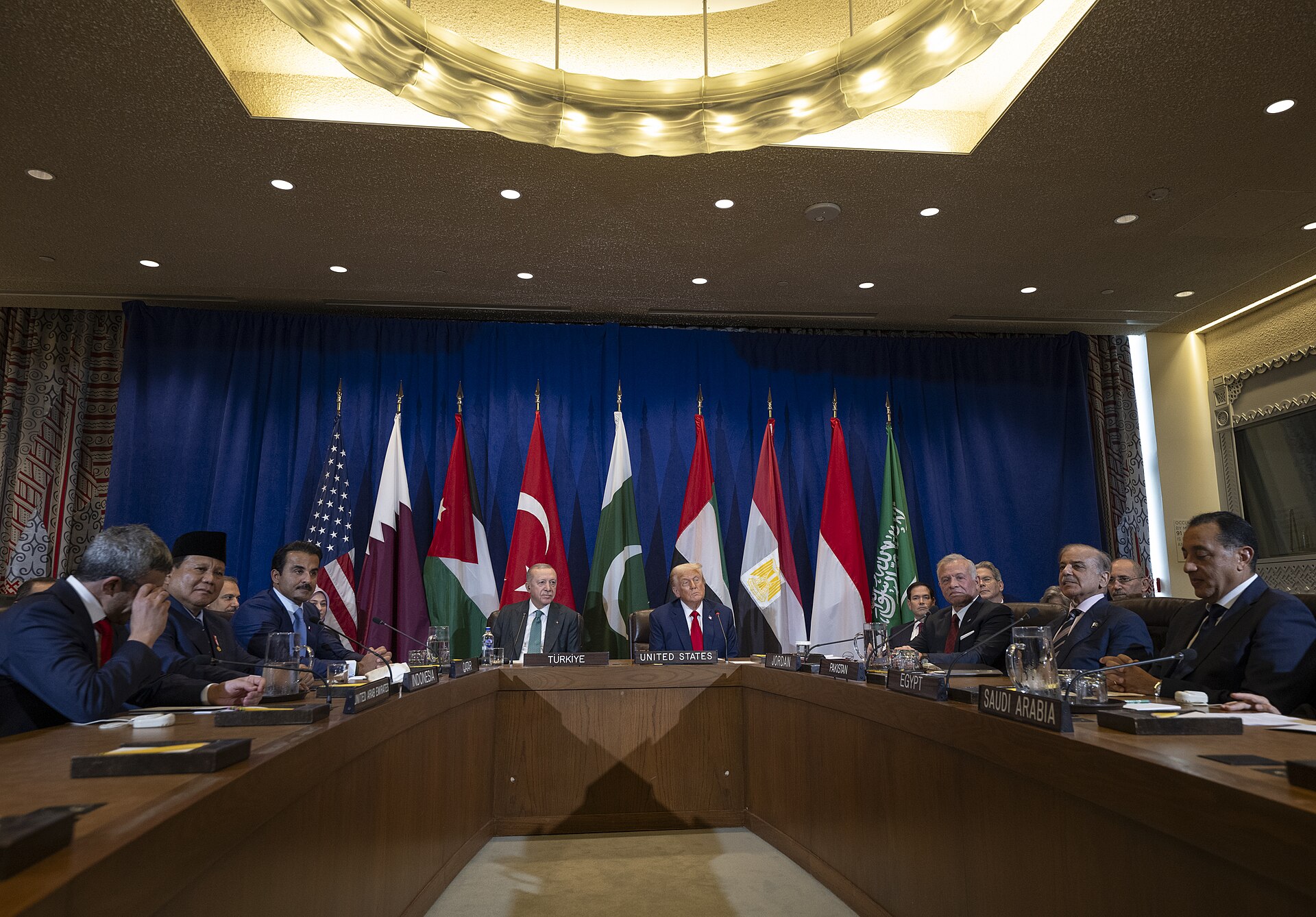
There is a photograph from the Islamabad round that captures the Saudi problem precisely. Vance and Ghalibaf sit on one side. Pakistani mediators sit between them. No Saudi seat. No Saudi flag. The country whose infrastructure is the subject of negotiation is not in the room where the infrastructure is being negotiated over.
The Islamabad framework is a US-Iran bilateral mediated by Pakistan under Field Marshal Asim Munir’s Strategic Mutual Defence Agreement-era operational authority. The 27th Constitutional Amendment placed ceasefire diplomacy inside the army command rather than the elected government, which is why Shehbaz Sharif appears as co-sponsor of Trump’s post rather than author of any independent position. Pakistan is simultaneously Iran’s interlocutor and Saudi Arabia’s treaty ally under the SMDA. The $5 billion Saudi loan to Pakistan matures in June. Riyadh has leverage — but it is not the same thing as a seat.
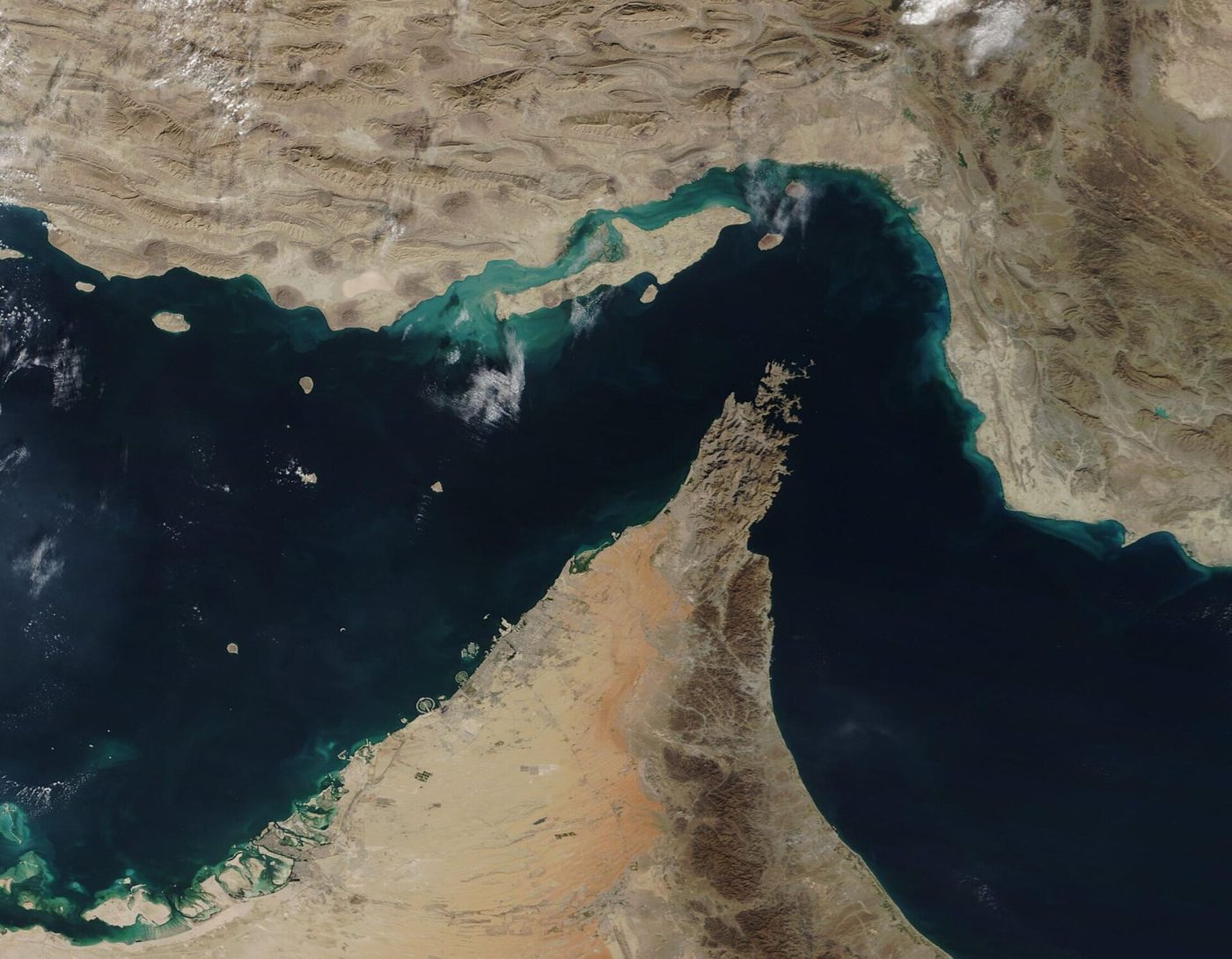
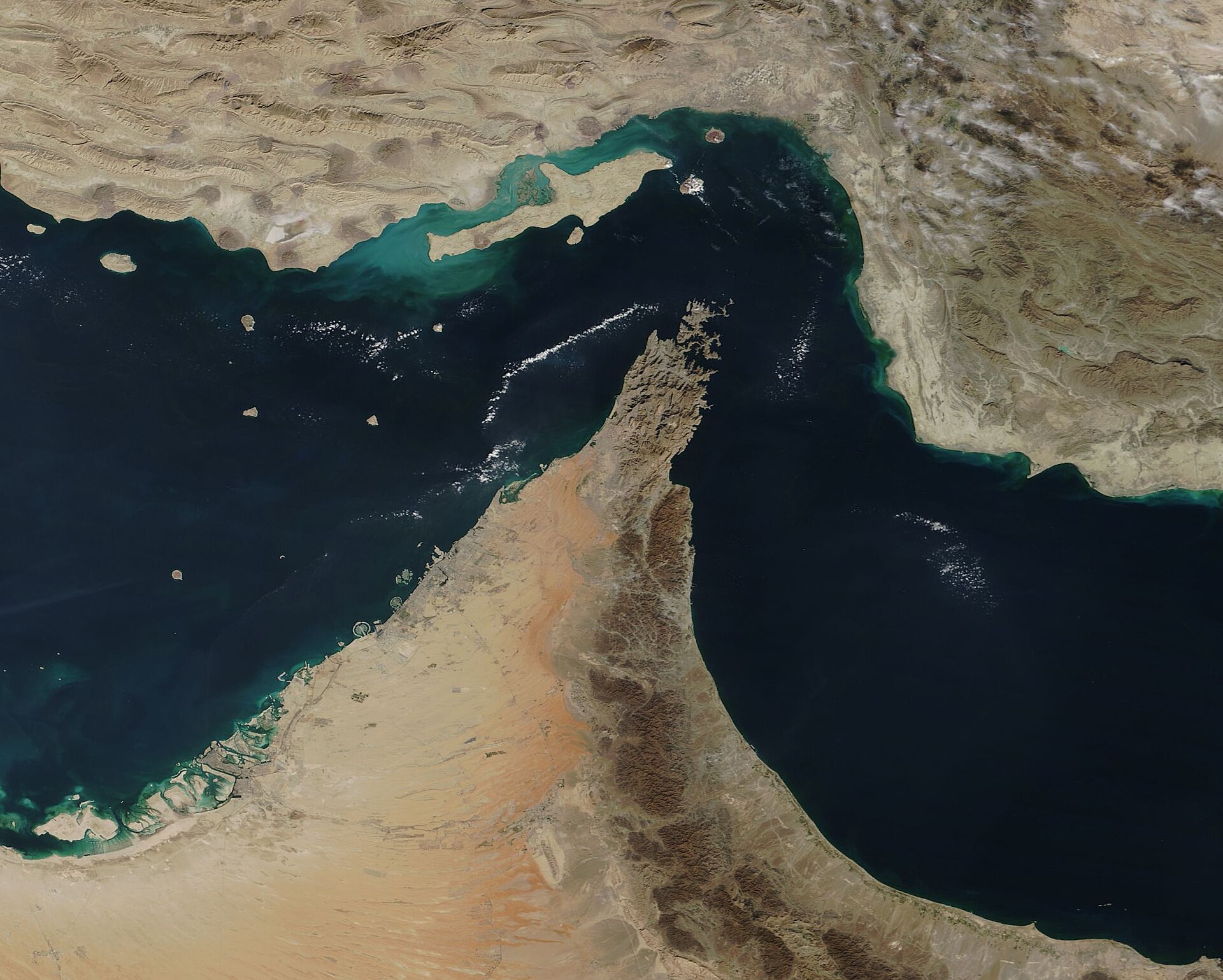
The gap shows up in the substantive positions. Saudi Arabia’s red lines are not subtle. Full Hormuz reopening, not the 5-nautical-mile Qeshm-Larak corridor inside Iranian territorial waters the IRGC gazetted on April 9. No transit tolls, including the $1-per-barrel Trump “joint venture” he floated to ABC on April 8. Infrastructure non-targeting guarantees covering Abqaiq, Khurais, Ras Tanura, Yanbu, Jeddah, Jubail. Written commitments on causeway and desalination corridors.
None of those red lines features in the Axios or National reporting on the 45-day phased framework Steve Witkoff and Araghchi worked through before the walkout. Phase one deferred Hormuz and HEU to phase two. Phase two was never drafted. Riyadh was not asked to validate the sequencing, because Riyadh was not in the sequencing meeting.
Barbara Slavin of the Stimson Center captured the diplomatic texture when she spoke to Al Jazeera on Monday. Trump’s extension, she said, is “a way to cover the embarrassment” of floundering negotiations. “This war hasn’t gone the way he expected from the very beginning, and Iran has discovered new leverage in its control of the Strait of Hormuz.” Iran’s leverage is operational control of a chokepoint. Saudi Arabia’s exposure is the assets that depend on that chokepoint functioning. Only one of those parties is at the table.
“This war hasn’t gone the way he expected from the very beginning, and Iran has discovered new leverage in its control of the Strait of Hormuz.”
— Barbara Slavin, Distinguished Fellow, Stimson Center, Al Jazeera, April 21, 2026
What History Says About Indefinite Ceasefires
The literature on indefinite ceasefires is not reassuring. Two precedents matter for Riyadh, and both point in the same direction.
UN Security Council Resolution 1701, passed in August 2006, ended the Israel-Hezbollah war with an indefinite ceasefire conditioned on Hezbollah withdrawing north of the Litani River and disarming south of it. Neither condition was met. Eighteen years later, 1701 is still the formally operative ceasefire. The Litani was crossed routinely. Disarmament never started. The result was not peace but frozen war — a legal instrument that served as cover for capability-building by the weaker-state-actor party, and as political restraint on the state party. Hezbollah used the 1701 period to grow its arsenal from roughly 15,000 rockets to over 150,000 rockets before the 2023-24 exchanges.
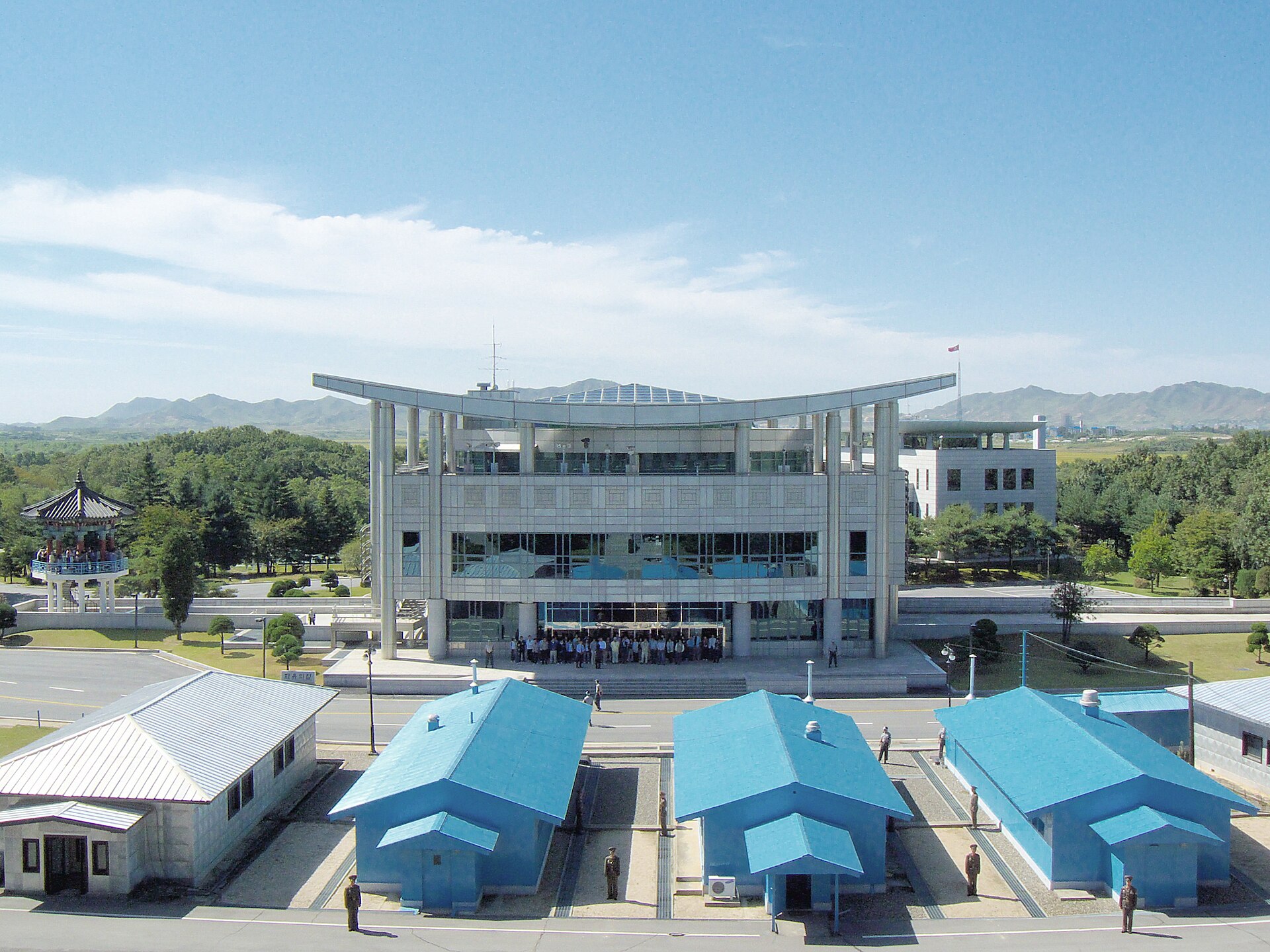
The Korean Armistice of 1953 is the other. Signed with no peace treaty, it also conditioned formal termination on follow-on negotiations that never happened. North Korea built its nuclear weapons program under the armistice framework, across seven decades, while the South and its American ally were politically constrained from taking preemptive action by the existence of the ceasefire itself. The weapons program was the counterfactual. The armistice was the shield.
Iran’s situation maps onto the Korean precedent with uncomfortable precision. HEU stockpile outside of IAEA observation. A weaponization pathway estimated by open sources at roughly 25 days per device from 60% enrichment via an IR-6 cascade. A legal framework — the indefinite ceasefire — that constrains kinetic response by the coalition more than it constrains the technical program of the sanctioned state.
Sanam Vakil of Chatham House framed the same point at a higher altitude this month. The ceasefire, she wrote, should be understood “not as the end of the crisis but as the start of a new and uncertain phase.” Aniseh Bassiri Tabrizi, her colleague, told Al Jazeera on Monday that the Islamabad architecture needs “compromises on both sides because at the moment there is too much of a gap.” The compromises Tabrizi has in mind are the ones Saudi Arabia did not get to negotiate.
Axios reported on Monday that Trump’s own advisers had warned him privately an extension without an end date “removes pressure on Iran” and could let Tehran “drag out talks.” The warning came from inside his own cabinet. The post went out anyway.
The Worst-Case Outcome for Riyadh
Imagine the deal Washington might settle for if the Iranian state produces a “unified proposal” in six weeks, six months, or six years. A memorandum of understanding that extends the ceasefire. A downblending schedule for HEU, monitored in some reduced way by an international team. A Hormuz modus vivendi that reopens commercial transit subject to “coordination” with IRGC-designated routes. Relief from some part of the blockade in exchange for Iranian restraint on specific categories of attack.
That deal is the worst outcome for Riyadh, not the best. Every element of it would codify the status quo on infrastructure targeting without reversing it.
The IRGC’s counter-target doctrine — 8 bridges across 4 countries on the April 3 list, Ras Tanura already struck, Habshan hit on April 4, the East-West Pipeline pumping station struck April 8, the April 7 Eastern Province barrage that shut the King Fahd Causeway — would not be repudiated in any formal text Tehran could politically survive signing. The doctrine would persist as capability. A ceasefire extension accepts that capability as the baseline and calls it peace.
A ceasefire that reopens Hormuz partially — with “coordination” language that preserves the Qeshm-Larak 5-nm corridor — institutionalises IRGC administrative control over a strait that, legally, is subject to UNCLOS transit passage. The toll architecture Trump proposed on April 8 as a “joint venture” with Iran would graft onto the ceasefire settlement. Iran’s actual revenue from tolls has been zero in 36 days, but a ceasefire-sanctioned regime gives the toll a legal foothold that $0 does not.
A relief package on the blockade that preserves sanctions but lifts naval interdiction restores Iranian export revenue without removing the threat to Saudi shipping. Iran retains oil cash flow. Saudi Arabia retains exposure. The vessels that get turned around cease to be Iranian-flagged dark tonnage and become commercial traffic the IRGC can menace instead.
And the HEU schedule is the cleanest asymmetry. Downblending on a multi-year timetable leaves a near-breakout capability in Iranian hands for the entire intervening period. Saudi Arabia, meanwhile, has a 123 Agreement draft with the United States that does not forbid indigenous enrichment — but indigenous Saudi enrichment would face political resistance from the same Western powers actively negotiating away the Iranian demand for the same right. The double standard would be the settlement.
Bassiri Tabrizi is correct that there has to be compromise. The question she did not answer, because it was not her question to answer, is whose red lines get compromised. On the current architecture, the answer is Riyadh’s.
Pezeshkian’s finance ministry leaked a Central Bank memo this month projecting 180% inflation and a twelve-year recovery horizon. Iran is in economic failure mode. A ceasefire that gives Tehran back even partial export capacity is oxygen to a regime that, on its own numbers, cannot otherwise survive the decade. Riyadh should not be the country paying for that oxygen in its own break-even deficit.
Ghalibaf promised “new cards” developed in two weeks of ceasefire. Six months gives Iran’s IR-6 cascades time for seven or more device-equivalent runs at 60% — at 25 days per run, that math completes before any “unified proposal” clears the SNSC. Every indefinite extension is, in the physics of centrifuges, a decision by the coalition to let the Iranian weapons clock run.
Frequently Asked Questions
Does Trump’s extension give Saudi Arabia legal authority to negotiate directly with Iran?
No. The Islamabad framework is a US-Iran bilateral mediated by Pakistan, and the extension does not alter that architecture. Saudi Arabia retains sovereign authority over its own bilateral channels with Tehran — the March 2023 Beijing agreement, reactivated via Omani backchannel on April 13 when Foreign Minister Faisal bin Farhan called Araghchi the same day the blockade began — but a parallel Saudi-Iran track would lack the enforcement mechanism Pakistan supplies through the Strategic Mutual Defence Agreement. Any Saudi deal absent US cover would carry the risk of being overrun by whatever the Islamabad process eventually produces.
What happens if Mojtaba Khamenei’s condition worsens?
The constitutional succession path runs to the Assembly of Experts, which would convene under Article 111 if the Supreme Leader is declared incapacitated. No such declaration has been made, and the AI-generated video program suggests Tehran expects the incapacity to be prolonged enough to require permanent substitution for public appearances — without triggering the formal succession mechanism. Ali Vaez warned that a contested succession inside a broken ceasefire would produce a “very ugly very quickly” collapse scenario with no obvious off-ramp. The critical exposure for Riyadh is that a succession crisis and a ceasefire breakdown are not sequential events in that scenario: they happen simultaneously.
Can Iran sustain the blockade pressure indefinitely?
Operationally, yes, at declining export volumes. Financially, the Central Bank memo projecting 180% inflation is not compatible with a multi-year horizon. OFAC GL U expiry on April 19 cut formal Indian purchases at an unfortunate moment for Tehran. The yuan-settled channel through ICICI Shanghai and Kunlun Bank rails continues to function outside SWIFT, but at discounted prices — Iranian crude was trading $6 to $8 below Brent in April even before the GL U expired. China’s Strategic Petroleum Reserve of 1.2 billion barrels provides 109 days of import cover, meaning Beijing can absorb a disruption to Iranian supply without a supply emergency of its own. The pressure therefore runs harder against Tehran’s fiscal sustainability than against its ability to keep pumping into the grey fleet.
Why did Trump cite Shehbaz Sharif as co-requester rather than Asim Munir alone?
The 27th Constitutional Amendment in Pakistan concentrated defense and foreign policy authority in the army command under Munir, but the civilian government retains the procedural role of formally transmitting diplomatic requests to Washington. Citing Sharif preserves the fiction of civilian mediation. Citing Munir alone would expose the operational reality — that Pakistan’s ceasefire diplomacy is a military operation — in a way that would complicate the framework’s public legitimacy. Trump’s post keeps the civilian name visible for the same reason Munir kept Sharif on the call list during the initial April 8 mediation.
Does the extension affect the April 22 Hajj convergence?
Formally, no. The April 22 date was a diplomatic deadline, not a religious one, and pilgrim arrivals proceed on their own calendar. Operationally, the removal of the deadline does not reduce the Saudi air defense burden over the Two Holy Mosques — the PAC-3 inventory at approximately 400 rounds has to cover the same 34-day Hajj window regardless of whether Washington frames the period as ceasefire or suspension. The relevant interaction is escalatory: if Iran acts on Mohammadi’s “military response” language, it will do so against the same air defense envelope and the same pilgrim population. Neither the religious calendar nor the interceptor inventory shifts with Trump’s timeline.
What would a genuine Saudi win look like from the Islamabad process?
Three structural elements, none of which are currently on the table. Written IRGC repudiation of the Fars News counter-target list, specifically naming Ras Tanura, Abqaiq, Khurais, Yanbu and the King Fahd Causeway as protected infrastructure. A Hormuz transit regime under IMO administration — not IRGC coordination — aligned with UNCLOS Article 26 prohibitions on transit fees. A HEU schedule that completes downblending to below 20% within twelve months, under resumed IAEA safeguards. None of those elements survive IRGC internal politics, which is why none of them appear in the Witkoff-Araghchi draft. Their absence defines the Saudi distance from any achievable Islamabad outcome.
What Monday Actually Decided
Strip the post to its operational content and it reads like this: the United States will not strike Iran until Tehran produces a document Tehran cannot produce. The blockade continues. The military is to “remain ready and able.” Vance does not fly. Ghalibaf stays home. The ceasefire that is not a ceasefire extends into a deadline that is not a deadline.
For the country whose oil fields are on fire, whose interceptor stocks are at 14%, whose fiscal break-even is $16 above the market price of its only export, and whose seat at the table was never offered — Monday was not a reprieve. It was a structural worsening dressed in softer language.
The pilgrims arrive on Wednesday. The centrifuges keep spinning. Nothing else got decided. The Saudi diplomatic channel that quietly co-engineered Lebanon’s 3-week ceasefire extension as Hajj insurance — and why a 12-day gap between Hajj closure and ceasefire expiry collapsed that cover — is documented in Saudi Arabia’s Lebanon Ceasefire Is Hajj Insurance — Bought Through Durbar Diplomacy. The specific mechanism by which Trump’s premature Truth Social posts turned a bridgeable negotiating gap into a structural denial trap — and the 9–22 per barrel Saudi fiscal cost of that sequence — is examined in Trump’s Truth Social Posts Killed an Iran Nuclear Deal That Was Closer Than Anyone Reported — and Saudi Arabia Is Paying the Price.
The regional recalibration MBS was executing in parallel — staking Saudi Arabia’s claim over post-Assad Syria before the ceasefire’s fate was settled — is covered in Al Shara in Jeddah: MBS Stakes Saudi Claim Over Post-Assad Syria.