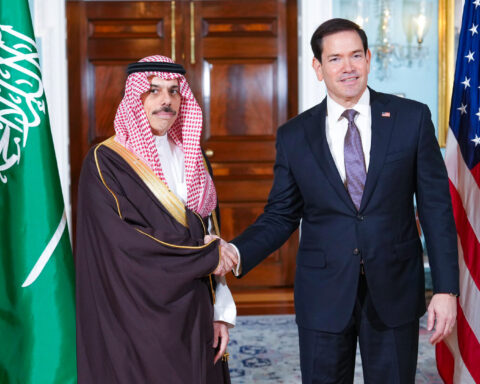
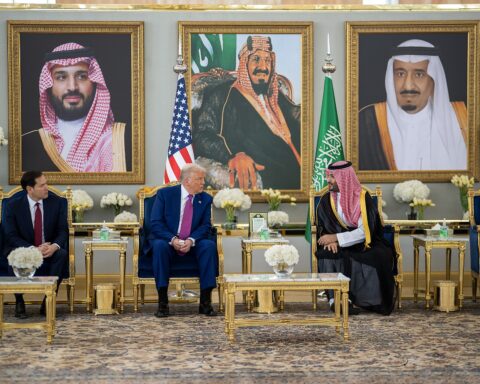
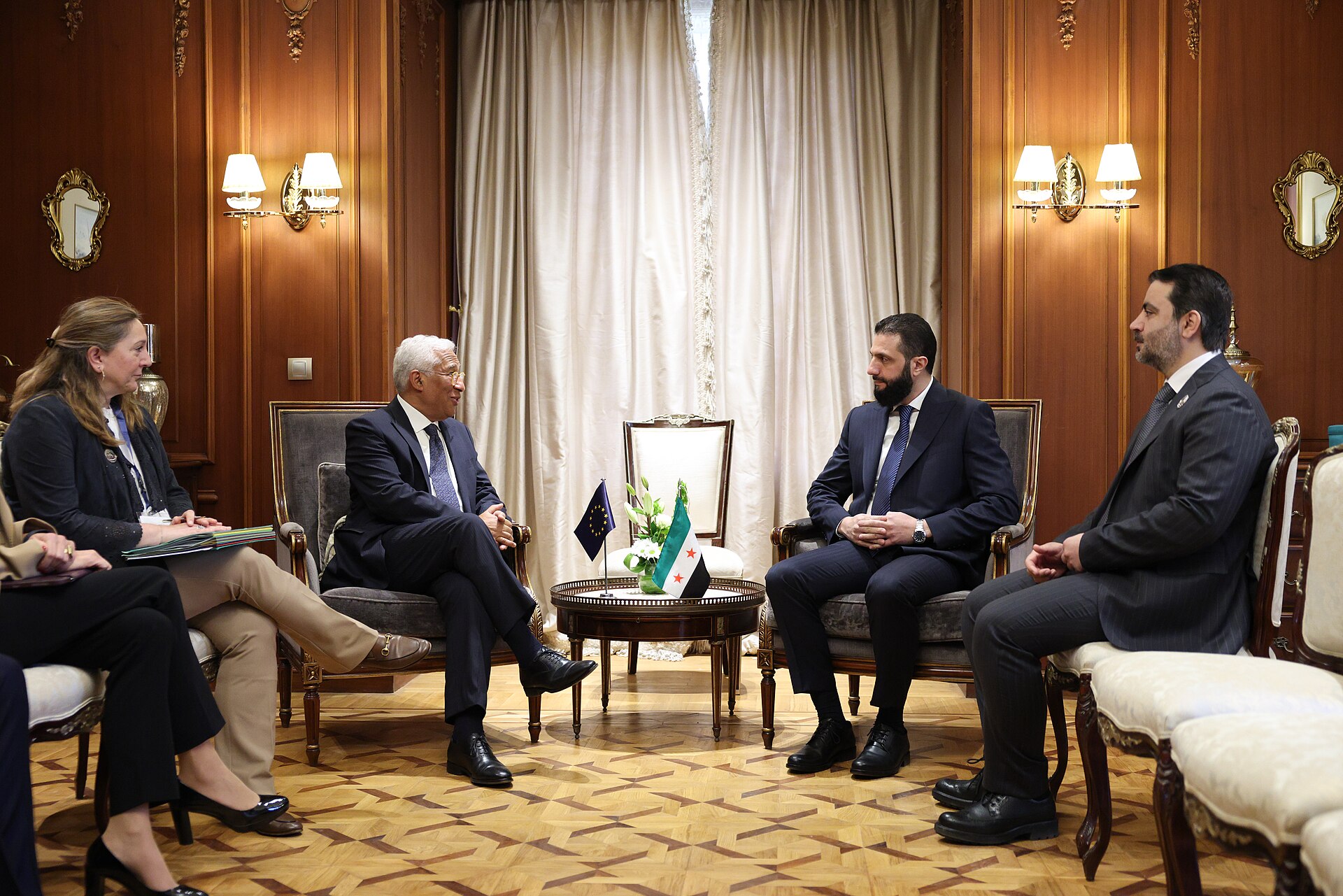
JEDDAH — Ahmad Al Shara landed at King Abdulaziz International Airport on April 21, one day after Donald Trump extended the Iran-Saudi ceasefire — and one day before it was due to expire. The timing was not coincidental. Saudi Arabia is building a post-Assad Syria while the war that made it possible is still being managed hour by hour, and MBS wanted the man who overthrew Bashar al-Assad standing beside him in Jeddah before the ceasefire’s fate was settled.
The meeting between Crown Prince Mohammed bin Salman and Syria’s de facto leader covered what SANA, the Syrian state news agency, described as “economic and investment ties” and “regional connectivity projects.” The language was deliberately anodyne. What happened in Jeddah was a claim — Riyadh staking its position as primary external patron of whatever Syria becomes next, in a region where Iran’s physical ability to contest that role has been severed and Turkey’s willingness to do so remains the open question.
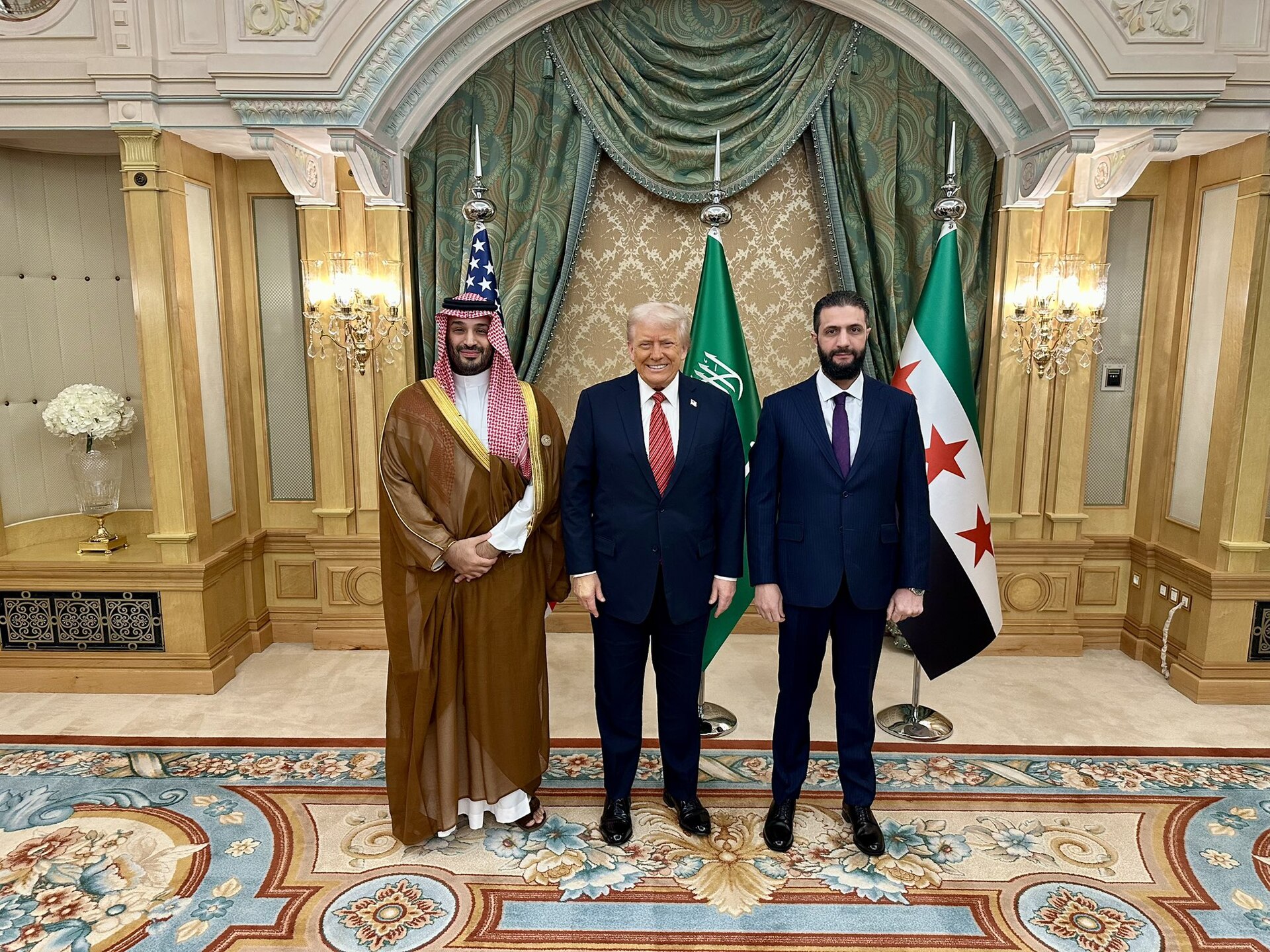
Table of Contents
- The Corridor That No Longer Exists
- What Has Saudi Arabia Committed to Syria?
- Captagon and the Narco Motive
- Will Turkey Contest Saudi Influence in Syria?
- From Terrorist Designation to State Dinner
- Iran’s $30–50 Billion Write-Off
- Why the Ceasefire Calendar Matters
- Can Gulf Money Rebuild Syria?
- What Does Saudi Arabia Actually Want from Syria?
- FAQ
The Corridor That No Longer Exists
For thirteen years, Iran maintained a land corridor running from Tehran through Baghdad and Damascus into southern Lebanon. The route carried missiles, cash, advisors, and fighters to Hezbollah — the most capable non-state military force in the Middle East. Syria under Assad was not merely an ally of Iran’s “axis of resistance.” It was the physical infrastructure. Without Assad, the corridor does not function.
Bashar al-Assad was overthrown on December 8, 2024, by HTS-led forces, ending over fifty years of Assad family rule. The Foundation for Defense of Democracies assessed within a week that “key Iranian supply lines to Hezbollah” had been broken. Al Jazeera’s March 2026 analysis was more comprehensive: “The network Iran built was predicated on three pillars — ideological authority of the Supreme Leader, IRGC logistical coordination, and geographic connection through Syria. All three are broken.”
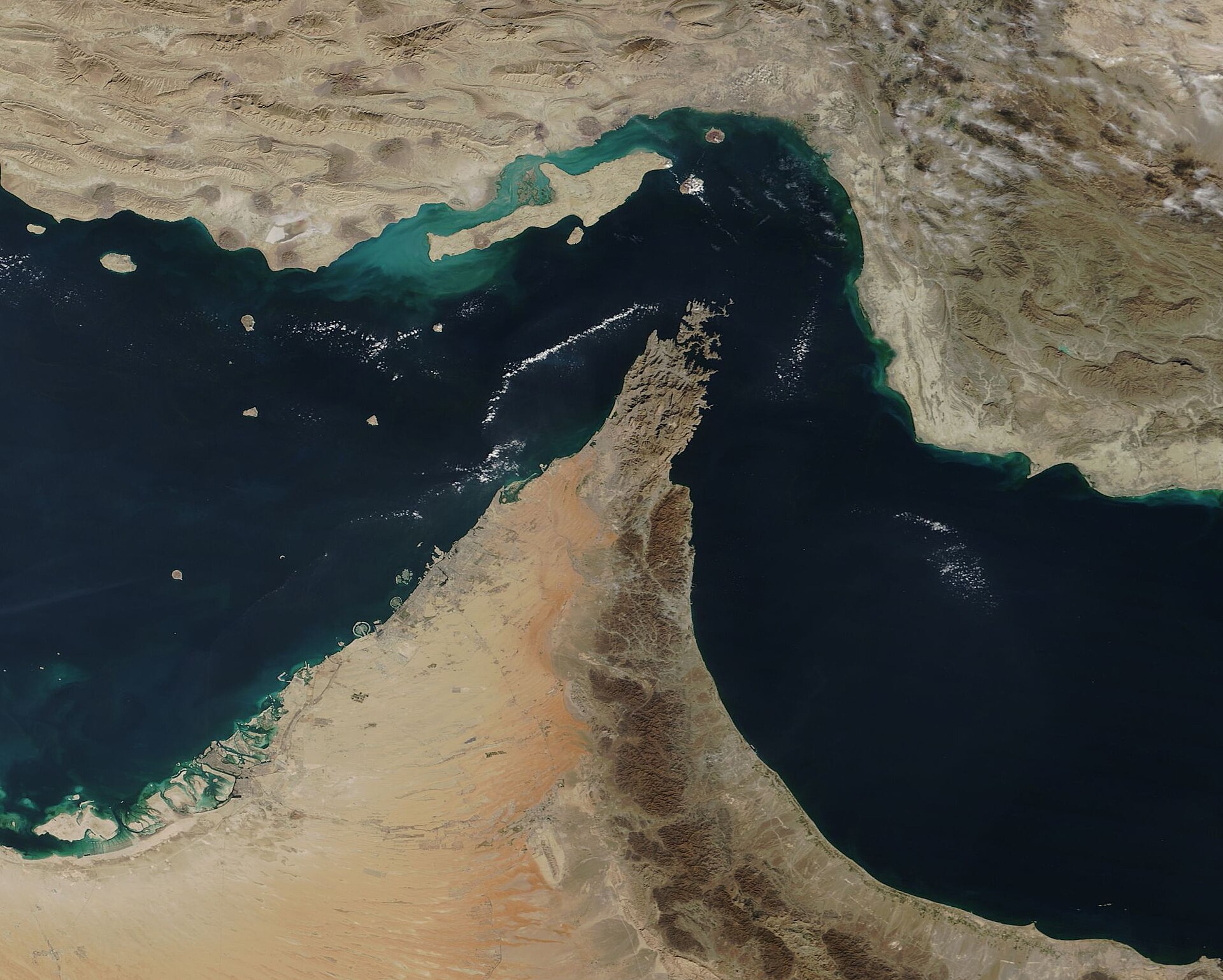
The word “broken” understates the structural change. Iran did not lose a diplomatic ally. It lost a throughput capacity — the ability to move materiel overland from its western border to the Mediterranean without touching a single maritime chokepoint that the United States Navy or Saudi-aligned states could interdict. Every alternative — air through Iraqi airspace, sea through the Strait of Hormuz and then the Suez Canal or Bab el-Mandeb — is now either contested, blockaded, or both.
Syria’s Ministry of Foreign Affairs has publicly condemned Iran’s attacks on Saudi Arabia and other Gulf states since the war began on February 28, aligning Damascus with the anti-Iran coalition. Ahmad Al Shara’s government has also intercepted what Al Jazeera reported as “dozens of instances” of Iranian smuggling attempts over the past year. The corridor is not merely closed. The new government is actively policing against its reopening.
The Middle East briefing 3,000+ readers start their day with.
One email. Every weekday morning. Free.
What Has Saudi Arabia Committed to Syria?
Saudi Arabia has announced approximately $11.7 billion in financial commitments to Syria since Assad’s fall. In February 2026, Riyadh signed a $5.3 billion package of strategic agreements covering aviation, telecommunications, energy, water, industry, real estate, and development finance. An additional $6.4 billion in pledges followed for tourism, medical infrastructure, telecommunications, and entertainment.
| Category | Amount | Details |
|---|---|---|
| Strategic agreements (Feb 2026) | $5.3B | Aviation, telecom, energy, water, industry, real estate, development finance |
| Additional pledges | $6.4B | Tourism, medical, telecom, entertainment |
| Total announced | $11.7B | — |
| Syria reconstruction needs (World Bank est.) | $216B | Described as “conservative” |
| Saudi share of estimated need | ~5.4% | — |
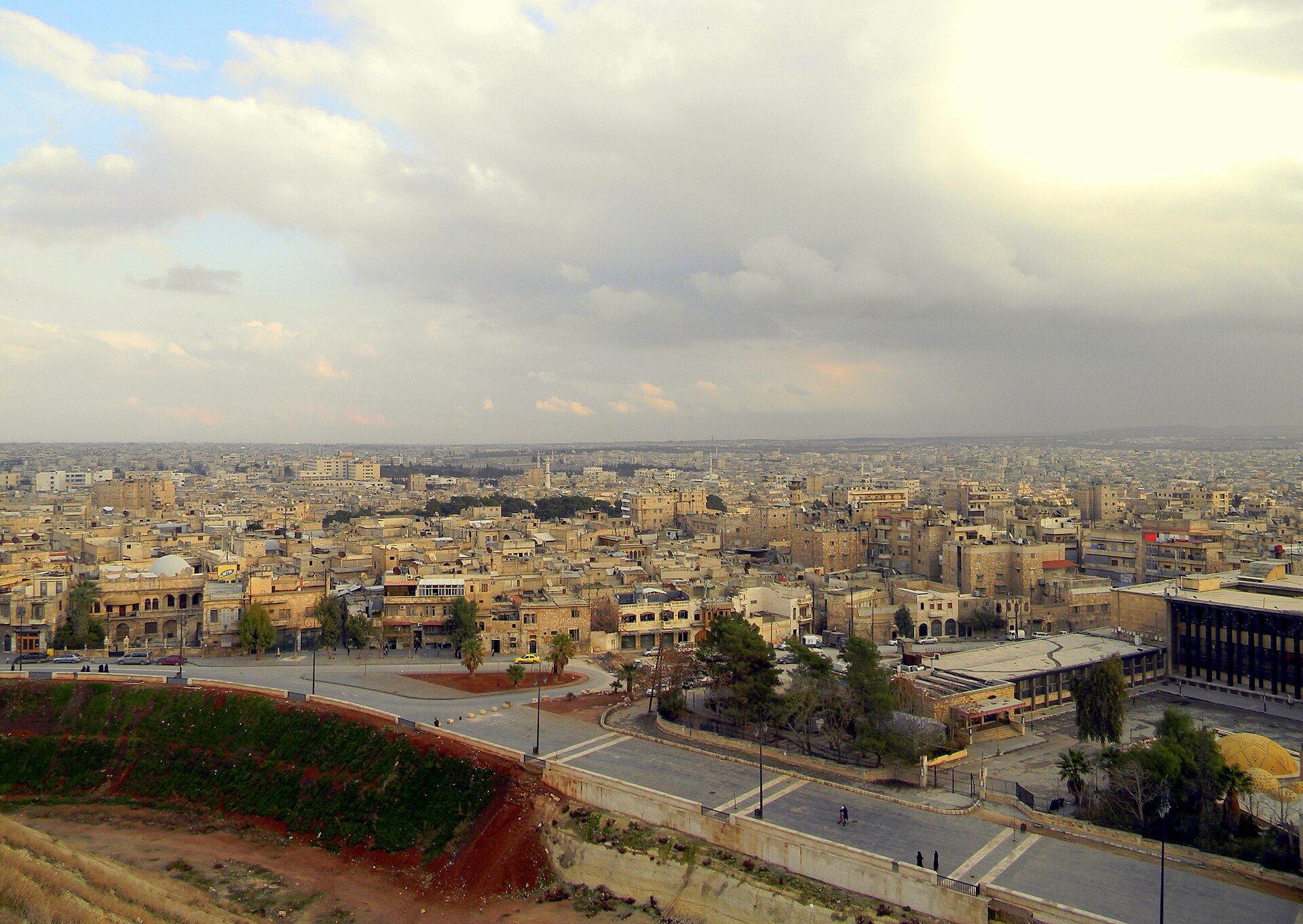
The flagship project is Flynas Syria, a joint-venture airline with 51 percent Syrian ownership, scheduled to begin operations in Q4 2026. Agreements also include building a new airport in northern Syria and expanding Aleppo’s existing airport to handle 12 million passengers annually. ACWA Power, the Saudi utility developer, has entered power generation and desalinated water production projects — the same company that operates energy infrastructure across the Gulf and is a cornerstone of Vision 2030’s export strategy.
The numbers are large in absolute terms and small relative to the task. The World Bank’s $216 billion reconstruction estimate — itself described as conservative — means Saudi Arabia’s total announced package covers roughly 5 percent of what Syria needs. The gap will require years of multilateral funding. But first-mover advantage in post-conflict reconstruction is about establishing dependency, not covering the full cost.
Captagon and the Narco Motive
One of the least discussed Saudi motivations is narcotics interdiction. Under Assad, Syria became the world’s largest producer of captagon — an amphetamine derivative that flooded Gulf markets, with Saudi Arabia as the primary destination. MEED’s February 2026 analysis identified stopping the narco pipeline as a core Saudi interest in Syria’s stabilization.
The captagon trade under Assad was not a side business. It was a state enterprise generating billions in revenue, run through networks linked to Maher al-Assad’s Fourth Division and Lebanese Hezbollah distribution channels. The same land corridor that carried missiles to Hezbollah carried captagon to Amman, and from there to the Gulf. Assad’s fall disrupted both supply chains simultaneously.
For Riyadh, investing in Syrian airports and telecommunications is also investing in the institutional capacity of a government that has demonstrated willingness to intercept Iranian smuggling. A Syria with functioning customs infrastructure, air traffic control, and border surveillance is a Syria that can choke the remnants of both the weapons corridor and the narcotics pipeline. The economic agreements announced in February are dual-use — civilian in form, security in function.
Will Turkey Contest Saudi Influence in Syria?
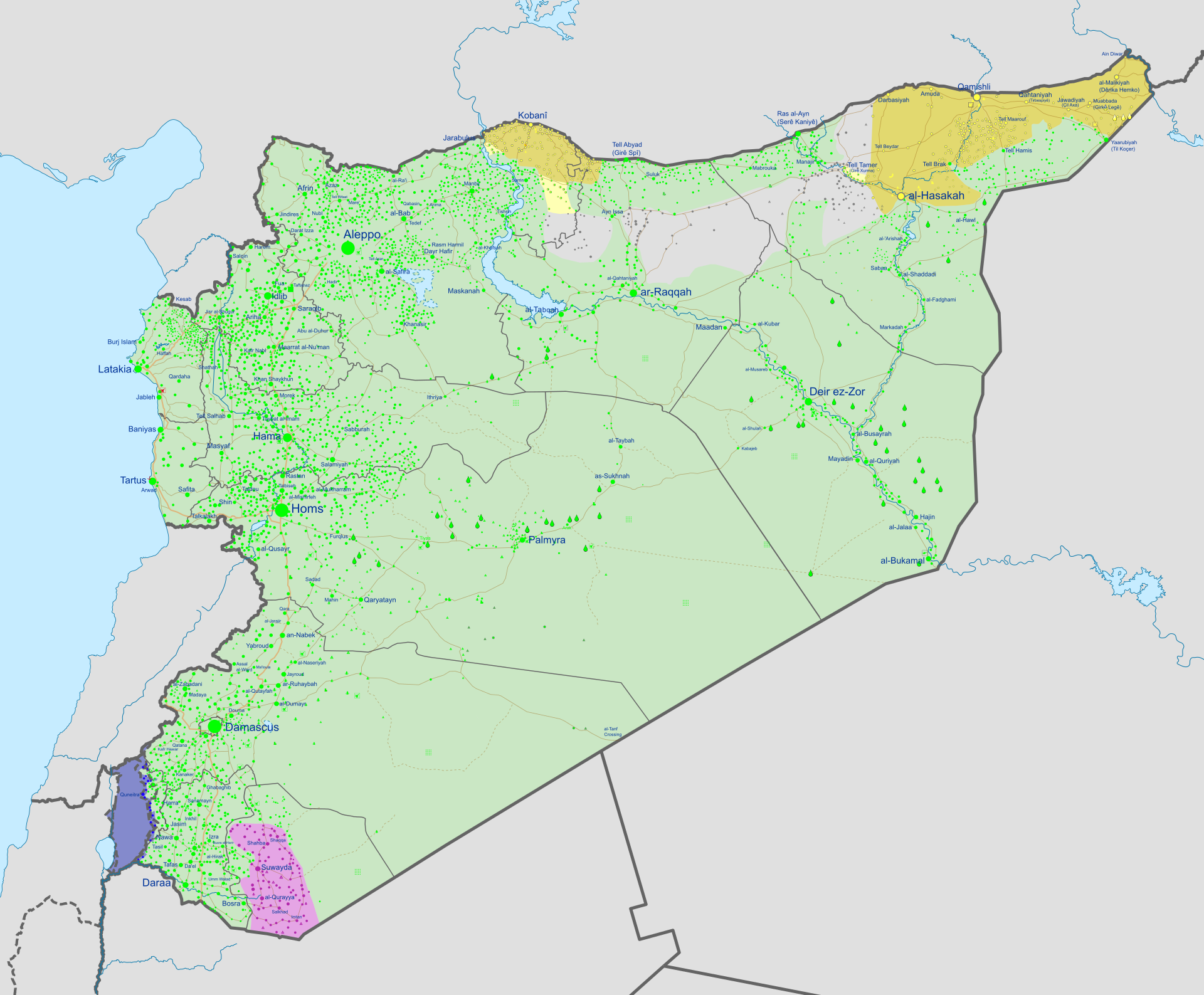
Turkey has maintained military forces in northern Syria since August 2016 — nearly a decade. Ankara’s presence predates Assad’s fall, outlasted it, and shows no sign of diminishing. Turkish and Syrian officials are now discussing agreements that would formalize what has been a unilateral occupation into something closer to a basing arrangement. The FDD assessed in March 2025 that Turkey considers its presence “permanent for the foreseeable future.”
Erdogan traveled to Saudi Arabia in February 2026 and pledged to work with MBS on stabilizing and rebuilding post-Assad Syria. At the Antalya Diplomacy Forum on April 11, Erdogan gave Al Shara a warm reception and pledged to work toward “a future in which Syria experiences years of stability, prosperity, and peace.” The language has been cooperative. The structural incentives are not.
Turkey’s leverage in Syria is military. Saudi Arabia’s is financial. These are different currencies, and the question is which one Al Shara needs more. In the short term, he needs both — Turkish forces provide a security umbrella in the north, and Saudi capital provides the reconstruction funding that gives his government domestic legitimacy. In the medium term, the interests diverge. Ankara wants a Syria that serves as a buffer against Kurdish autonomy and a corridor for Turkish economic projection into the Arab world. Riyadh wants a Syria that is oriented toward the Gulf — geographically as an alternative overland route connecting the Gulf to the Mediterranean, and politically as part of a post-Iranian regional order.
TRENDS Research & Advisory has characterized the Turkey-Saudi dynamic on Syria as operating “between cooperation and competition.” Some Atlantic Council analysts view the convergence as healthy regional stabilization. Others warn that Turkey’s military presence will eventually outweigh Saudi economic influence — that whoever has troops on the ground determines the terms, regardless of who signs the checks.
A joint regional rail corridor linking Europe through Turkey, across Syrian territory, and south into Jordan is under discussion — a project that would serve both Ankara’s and Riyadh’s connectivity ambitions. CSIS has framed Syria under Al Shara as a potential “alternative overland corridor connecting the Gulf to the Mediterranean.” But corridors need security guarantees, and the party providing those guarantees extracts the largest concession.
From Terrorist Designation to State Dinner
Ahmad Al Shara — formerly Abu Mohammad al-Jolani — led Hayat Tahrir al-Sham, a group with historical ties to al-Qaeda. His transformation from designated terrorist to head of state receiving formal diplomatic welcomes in Jeddah is among the more striking rehabilitations in recent Middle Eastern history.
The delisting sequence was methodical. The United States removed Al Shara from its Specially Designated Global Terrorists list on November 7, 2025. In July 2025, the US had already removed HTS as a Foreign Terrorist Organization, citing the group’s announced dissolution. The UN Security Council followed in February 2026, voting to remove HTS from its sanctions list — lifting asset freezes, travel bans, and arms embargoes.
Saudi Arabia’s own diplomatic rehabilitation of Syria preceded Assad’s fall. Riyadh reopened its embassy in Damascus on September 10, 2024 — the first time since February 2012, when King Abdullah became the first Arab leader to condemn Assad and recalled his ambassador. By November 2024, weeks before the HTS offensive, Assad participated in an Arab and Islamic Summit alongside MBS in Riyadh. Saudi Arabia had appointed its first ambassador to Syria since 2012 in May 2024.
The irony is layered. Saudi Arabia broke with Assad over his war against Sunni populations. It then re-engaged with Assad as part of a broader normalization push in 2023-2024 — the same period that produced the China-brokered Saudi-Iran rapprochement. Assad’s fall made the re-engagement moot and offered something better: a new Syrian leader with no Iranian obligations, actively seeking Gulf patronage, and willing to condemn Iranian aggression publicly.
Al Shara’s first foreign trip as Syria’s de facto leader — in February 2025, immediately after taking power — was to Riyadh. His April 21 visit to Jeddah, sixteen months later, is the return engagement of a relationship that both sides have moved to formalize rapidly. From Jeddah, Al Shara proceeded to Qatar on April 22, making the Gulf tour his priority over European capitals.
Iran’s $30–50 Billion Write-Off
Al Jazeera estimated in March 2026 that Iran had invested between $30 billion and $50 billion in Syria over thirteen years. The investment encompassed military deployments, Hezbollah funding channeled through Damascus, infrastructure for the land corridor, economic support for the Assad regime, and IRGC-linked commercial enterprises. The entirety of it is now a sunk cost with zero recoverable value.
The loss is not merely financial. Iran’s strategic position in the Levant was built on physical geography — the ability to project power westward without depending on maritime routes that adversaries could close. The ongoing war with the United States and Saudi Arabia, now in its 54th day, has demonstrated exactly how vulnerable Iran’s maritime options are. The IRGC declared the Strait of Hormuz a “danger zone,” redirecting vessels into a narrow corridor under Iranian territorial control. The US imposed a naval blockade of Iranian ports on April 13. Iran’s toll scheme on Hormuz transits has collected zero revenue in 36 days of operation.
Syria was Iran’s insurance against precisely this scenario — a land-based power projection capability that could not be blockaded by carrier strike groups. Assad’s fall removed it, and the war has since exposed every consequence: Hezbollah cannot be resupplied, force projection into Lebanon is severed, and the credibility Iran maintained on Israel’s northern border for two decades has no physical basis. The “axis of resistance,” as Al Jazeera’s analysis concluded, “is no longer a coordinated army.”
MBS sitting with Al Shara in Jeddah is what filling that vacuum looks like in practice. Saudi Arabia is not replacing Iran’s military network. It is replacing Iran’s political relationship — converting Syria from a node in Iran’s resistance architecture into a node in the Gulf’s economic architecture. The strategic logic driving the investment runs independent of the terror finance risks that Gulf capital in a post-conflict state inevitably carries.
Why the Ceasefire Calendar Matters
Trump extended the Iran-Saudi ceasefire on April 21 — the same day Al Shara arrived in Jeddah. The ceasefire had been set to expire on April 22. The extension bought time, but its terms remain ambiguous, and the structural obstacles to a permanent deal have not changed. Iran’s authorization ceiling problem — the gap between what President Pezeshkian can negotiate and what the IRGC and Supreme National Security Council will accept — remains unresolved.
Al Shara’s visit occurring on this exact calendar date sends a specific message to multiple audiences. To Tehran: Syria’s new government is deepening ties with your primary adversary while you cannot respond. To Washington: Saudi Arabia is building the post-war regional order that American policy ostensibly supports. To Ankara: the Gulf is moving on Syria with or without Turkish coordination.
The ceasefire’s fragility also contextualizes Saudi Arabia’s urgency. If the war resumes and escalates, reconstruction investment in Syria becomes harder to execute — CSIS has warned that the ongoing Iran-Saudi conflict “threatens Syria’s recovery.” Riyadh is locking in agreements and establishing institutional presence while the window exists. The February $11.7 billion in commitments, the Flynas Syria joint venture, the ACWA Power projects — all were signed during the war, not after it. MBS is not waiting for peace to build the post-war order.
Can Gulf Money Rebuild Syria?
The arithmetic is sobering. Syria’s World Bank-estimated reconstruction cost of $216 billion exceeds the GDP of most Arab states. Saudi Arabia’s $11.7 billion in announced commitments represents first-mover positioning, not a comprehensive reconstruction plan. Even combined with Qatari, Emirati, and Kuwaiti pledges — none of which have matched Saudi scale — Gulf capital alone cannot rebuild Syria.
| Metric | Figure | Source |
|---|---|---|
| Total reconstruction estimate | $216B | World Bank (conservative) |
| Saudi commitments (announced) | $11.7B | Al Jazeera / MEED, Feb 2026 |
| Flynas Syria launch | Q4 2026 | Al Jazeera, Feb 2026 |
| Aleppo airport target capacity | 12M pax/year | Al Jazeera, Feb 2026 |
| Saudi embassy closure duration | 12 years | Feb 2012 – Sept 2024 |
What Gulf money can do is determine Syria’s economic orientation. The pattern is familiar from Saudi Arabia’s approach to Vision 2030 — targeted investments in aviation, logistics, telecommunications, and energy that create structural dependencies. A Syria whose primary airline is a Flynas joint venture, whose airports are Saudi-designed, whose power plants are ACWA-operated, and whose development finance comes from Riyadh is a Syria that orients toward the Gulf regardless of what happens in Ankara or Tehran.
The FDD’s concern about terror finance risk in reconstruction spending is not trivial. Syria’s institutional capacity for financial oversight is minimal after thirteen years of civil war and state collapse. The mechanisms for ensuring that Saudi investment flows to legitimate enterprises rather than former militia networks or Islamist factions are nascent at best. But Riyadh’s calculation appears to be that the risk of investing with imperfect oversight is lower than the risk of ceding Syria’s reconstruction to other actors — particularly Turkey, which has its own economic agenda, or China, which has shown interest in Belt and Road extensions through the Levant.
What Does Saudi Arabia Actually Want from Syria?
Three things, in order of priority. First, a Syria that is structurally incapable of serving as Iran’s land corridor — not just a Syria that chooses not to, but one whose institutional, economic, and security architecture makes corridor restoration impossible. The smuggling interdictions that Al Shara’s government has conducted satisfy the first condition. The economic integration satisfies the second.
Second, a Syria that disrupts the captagon pipeline. This is a domestic security issue for Saudi Arabia that predates the Iran war and will outlast it. The narcotics trade under Assad was a direct threat to Saudi public health and internal stability. A functioning Syrian state with border control capacity is the cheapest interdiction mechanism available.
Third, a Syria that serves as an alternative corridor to the Mediterranean — an overland route for Gulf goods, energy, and data that bypasses both the Suez Canal (vulnerable to Houthi disruption) and Turkish transit monopolies. The “regional connectivity projects” that SANA reported MBS and Al Shara discussing are the diplomatic language for this ambition. The Turkey-Syria-Jordan rail corridor plan, if realized, would create the physical infrastructure.
What Saudi Arabia does not appear to want is a security commitment. Unlike Turkey, which has troops in Syria and is negotiating basing rights, Riyadh has shown no interest in military deployment. The model is economic patronage — the same approach MBS has applied across the region, from NEOM and the Line to the PIF’s global investment portfolio. Financial weight, not military presence. This is both a strength and a vulnerability. It keeps Saudi exposure low. It also means that if Al Shara faces a security crisis that money cannot solve, he will turn to Ankara, not Riyadh.
At the April 16 Arab foreign ministers meeting in Jeddah, several ministers appeared wary of what they described as Syria’s insistence on unconditional normalization. The concern was not about Al Shara’s intentions but about his capacity — whether a government that has been in power for sixteen months can build the institutional infrastructure that $11.7 billion in investment requires. Al Shara’s answer was to arrive in Jeddah five days later, stand beside MBS for the cameras, and leave for Qatar the following morning.
Frequently Asked Questions
What was discussed at the MBS–Al Shara meeting on April 21, 2026?
SANA’s official readout cited “economic and investment ties” and “regional connectivity projects.” Arab News reported the discussions extended beyond economics to cover security coordination against Iran’s ongoing attempts to maintain smuggling networks through Syrian territory — a dimension that SANA’s language did not capture. Al Shara proceeded to Qatar on April 22; the Gulf sequencing placed Riyadh before Doha, reflecting the scale differential between Saudi Arabia’s $11.7 billion commitment and what Qatar has announced to date.
Has Saudi Arabia reopened its embassy in Damascus?
Yes. Saudi Arabia officially reopened its embassy in Damascus on September 10, 2024, ending a twelve-year closure that began in February 2012. The reopening preceded Assad’s fall by nearly three months. Riyadh had already appointed its first ambassador to Syria since 2012 in May 2024, and on May 9, 2023, both countries agreed to resume diplomatic missions — a decision that came within weeks of the China-brokered Saudi-Iran deal, suggesting Riyadh’s Syria re-engagement was initially part of a broader regional de-escalation strategy rather than a bet on Assad’s removal.
How does Turkey’s military presence in Syria compare to Saudi Arabia’s economic approach?
Turkey has maintained forces in northern Syria since August 2016 and is currently negotiating formal basing agreements with Al Shara’s government. Saudi Arabia has committed $11.7 billion in economic investment but has deployed no military forces and has not sought basing rights. The asymmetry creates a potential divergence: Turkey’s security umbrella gives Ankara direct influence over northern Syria’s governance, while Saudi financial influence operates through institutional dependency — airlines, airports, power plants, and development finance. If Al Shara faces a military crisis along the Turkish border or from ISIS remnants, Ankara’s troops are immediately relevant in a way that Saudi investment is not.
What happened to Iran’s influence in Syria after Assad’s fall?
Iran lost an estimated $30–50 billion in accumulated investment and the land corridor from Tehran through Baghdad and Damascus to Beirut — which ceased functioning on December 8, 2024. Syria’s new government has actively interdicted smuggling attempts and the Ministry of Foreign Affairs publicly condemned Iran’s attacks on Gulf states in March 2026. Iran retains shadow networks and continues attempting fund transfers to Hezbollah through Lebanese and pan-Arab intermediaries, but these are clandestine operations working against active interdiction — not the institutional state-to-state relationship that Assad provided for thirteen years.
What are the risks of Saudi investment in Syria’s reconstruction?
The FDD warned in February 2026 that foreign investment in Syria’s reconstruction “carries terror finance risk” — the danger that without rigorous financial oversight, Gulf capital could inadvertently fund former militia networks or extremist factions. Syria’s institutional capacity for managing large-scale foreign investment is minimal after thirteen years of civil war. The HTS sanctions removal by both the US (July 2025) and UN Security Council (February 2026) cleared legal obstacles but did not address the operational question of whether Al Shara’s government can track where reconstruction money flows at the local level. Saudi Arabia’s ACWA Power and Flynas joint ventures provide some structural safeguard — operating through established corporate entities with external audit requirements — but smaller investments in real estate, telecommunications, and development finance carry higher diversion risk.
The infrastructure rationale behind Saudi Arabia’s investment in Syrian reconstruction — why MBS is turning Al-Sharaa’s visit into a wartime logistics commitment — is set out in The Hejaz Railway Reversed: Saudi Arabia’s Northern Rail Corridor as Wartime Chokepoint Bypass. The deeper Hormuz bypass thesis — why the $13.1 billion is really about pipeline right-of-way — is in Saudi Arabia’s $13 Billion Syria Bet Is Really a Hormuz Bypass.
Al-Sharaa’s Gulf tour continued beyond Jeddah to Qatar and the UAE on April 22 — and what that sequencing reveals about Saudi Arabia’s ambitions for Syria’s post-war order is analysed in Al-Sharaa’s Gulf Tour Locks Saudi Arabia Into Syria’s Post-War Architecture.