
{“content”: “
TEHRAN u2014 Iran’s Persian Gulf Strait Authority opened its official X account on May 18 u2014 the same day three Gulf leaders convinced Donald Trump to call off his scheduled strike on Tehran u2014 and its first posts were retweeted simultaneously by the IRGC Navy and Iran’s Supreme National Security Council, the two institutions whose buy-in any ceasefire would require. Not a single party at the negotiating table in Islamabad, Doha, or Washington is currently drafting the language that would dissolve it.
n
The PGSA, formally launched May 5 as the executive arm of a 12-article sovereignty statute approved by Iran’s parliamentary National Security and Foreign Policy Committee on April 21, is not a wartime toll booth or a bargaining chip to be folded into sanctions relief. It is a customs bureaucracy u2014 complete with 40-question vessel declaration forms, a fee schedule reaching $2 million per transit, payment rails running through Chinese yuan and Bitcoin, and a revenue platform whose Bitcoin-settled insurance arm targets $10 billion annually u2014 designed, in every structural detail, to survive whatever peace its creators are nominally helping to negotiate. The question hanging over the ceasefire framework is not whether the PGSA is legal, because 112 nations have already declared it isn’t, but who is supposed to negotiate its dissolution when the current Phase 1 draft does not mention it at all.
n
The May 21 US letter-of-intent peace draft u2014 transmitted via Pakistan u2014 defers PGSA dismantlement to a 30-day negotiation window that neither side has agreed to enter on consistent terms. How the PGSA toll authority intersects with Islamabad’s mediator role is examined in Pakistan Carries the Peace Letter and the Missiles.
The Middle East briefing 3,000+ readers start their day with.
One email. Every weekday morning. Free.
n
n
Table of Contents
n
- n
- What Is the PGSA, and Why Does It Have Customs Forms?
- How Did Iran Rewrite the Legal Geography of Hormuz?
- The Material Support Trap
- Why Does No Draft Deal Mention PGSA Dissolution?
- What Would It Actually Cost to Abolish the Hormuz Toll?
- Dark Fleets, Bilateral Deals, and the Collapse of the Boycott
- Can Washington Sanction Every Ship That Pays?
- Frequently Asked Questions
- n
n
n
n
n
n
n
n
n
n
n
n
What Is the PGSA, and Why Does It Have Customs Forms?
n
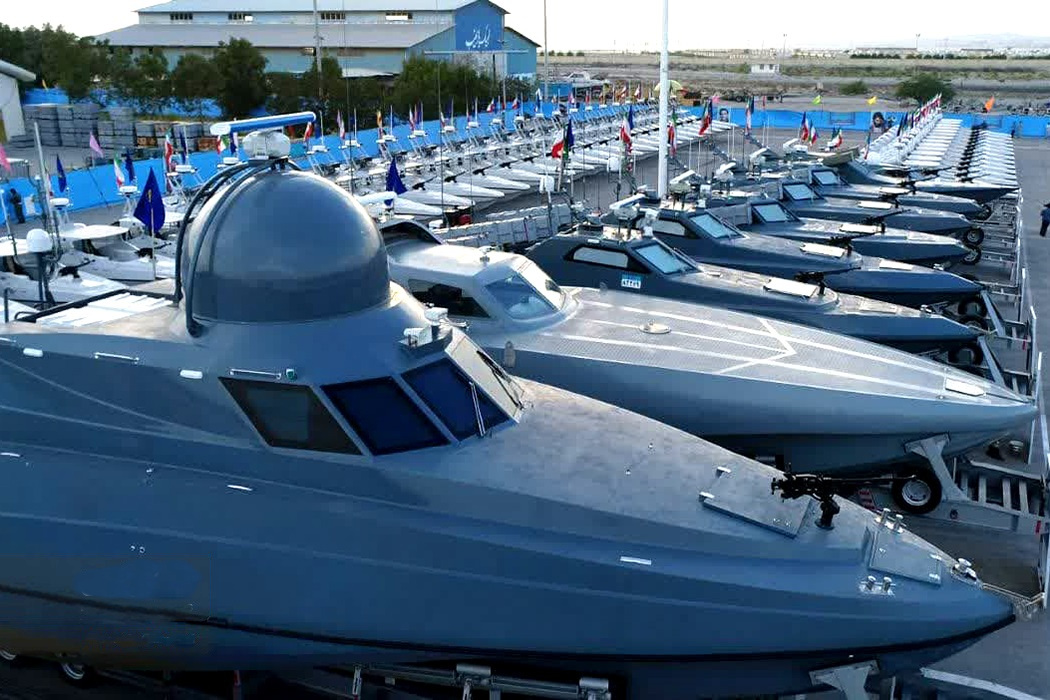
The Persian Gulf Strait Authority is, structurally, the kind of institution that processes paperwork rather than fires missiles. Vessels transiting Hormuz under PGSA administration now receive an email from info@pgsa.ir containing a “Vessel Information Declaration” u2014 a 40-question form requiring IMO number, previous vessel names, country of origin and destination, nationalities of registered owners, operators, and every crew member, plus full cargo manifests. The liability warning at the bottom reads like a customs disclaimer rather than a naval ultimatum: “any incorrect or incomplete information provided will be the sole responsibility of the applicant, and any resulting consequences will be borne accordingly.” Approved vessels receive a VHF-broadcast one-time passcode and IRGC Navy escort through the Larak Island corridor, while rejected or non-submitting vessels face interdiction.
n
That administrative language is the entire point of the exercise. IRGC warships have been enforcing passage restrictions since early March, boarding vessels and collecting tolls at least six weeks before the PGSA formally existed, with Bloomberg reporting IRGC-linked intermediaries charging fees via yuan and stablecoins as early as April 1. But Tehran’s decision to wrap a military interdiction operation in a registered domain, a parliamentary statute, and 40 questions about crew nationalities is not bureaucratic redundancy u2014 it is the difference between a blockade, which ends when the warships leave, and a customs authority, which outlasts the government that created it.
n
The 12-article “Law on Establishing Iran’s Sovereignty over the Strait of Hormuz,” approved by the committee and awaiting a full chamber vote, would ban passage by countries deemed hostile to Iran, ban nations that fail to use “Persian Gulf” in shipping documents, authorise IRGC seizure of non-compliant vessels with confiscation of approximately 20 per cent of cargo value, and route all authorisation through the Supreme Leader to the Armed Forces. Ebrahim Azizi, who chairs the National Security and Foreign Policy Committee, confirmed on May 16 that Tehran would “unveil soon” the full fee mechanism u2014 administered, he specified, by the PGSA.
n
An unnamed Iranian official told Al Jazeera on May 9 that control of Hormuz is “on the level of an atomic bomb” in terms of strategic importance, and the revenue architecture being built around the PGSA suggests this comparison is not rhetorical excess. Hormuz Safe, announced May 16 via Fars News with a target of $10 billion in annual revenue from Bitcoin-settled maritime insurance policies, treats the strait not as a contested waterway in a temporary crisis but as a permanent revenue-generating asset whose income streams need diversification, insurance, and institutional scale. Nobody builds a $10 billion insurance product for a toll they expect to surrender in Phase 2 of a ceasefire.
The PGSA’s permanence has direct consequences for trade agreements premised on Hormuz reopening: the UK-GCC free trade agreement concluded on May 20 projects £3.7 billion in annual benefits, but £580 million of its annual tariff savings depend on shipping routes the PGSA currently controls at rates no tariff cut can offset.
n
How Did Iran Rewrite the Legal Geography of Hormuz?
n
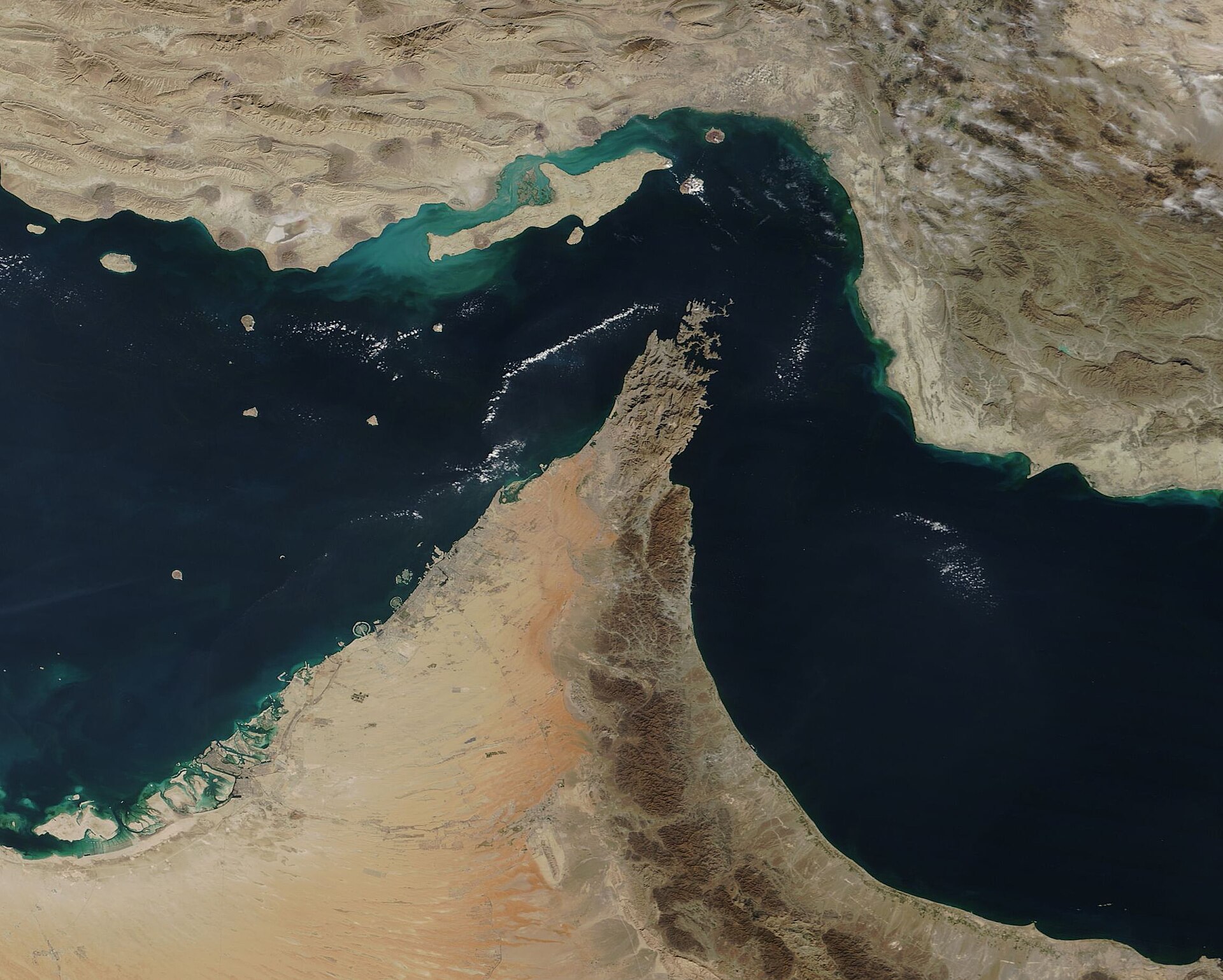
The conventional reading of Hormuz under international law is straightforward and, until three months ago, uncontested: it is an international strait governed by UNCLOS Part III, meaning vessels enjoy transit passage u2014 a right that under Article 38 “shall not be impeded” and under Article 44 cannot be suspended by the coastal state for any reason. Iran has spent the duration of this war making that conventional reading operationally irrelevant, not by challenging UNCLOS head-on but by changing the physical geography through which vessels must pass.
n
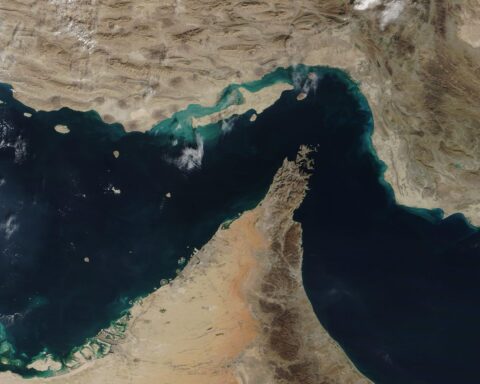
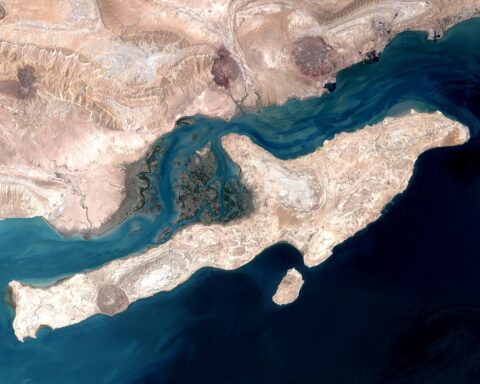
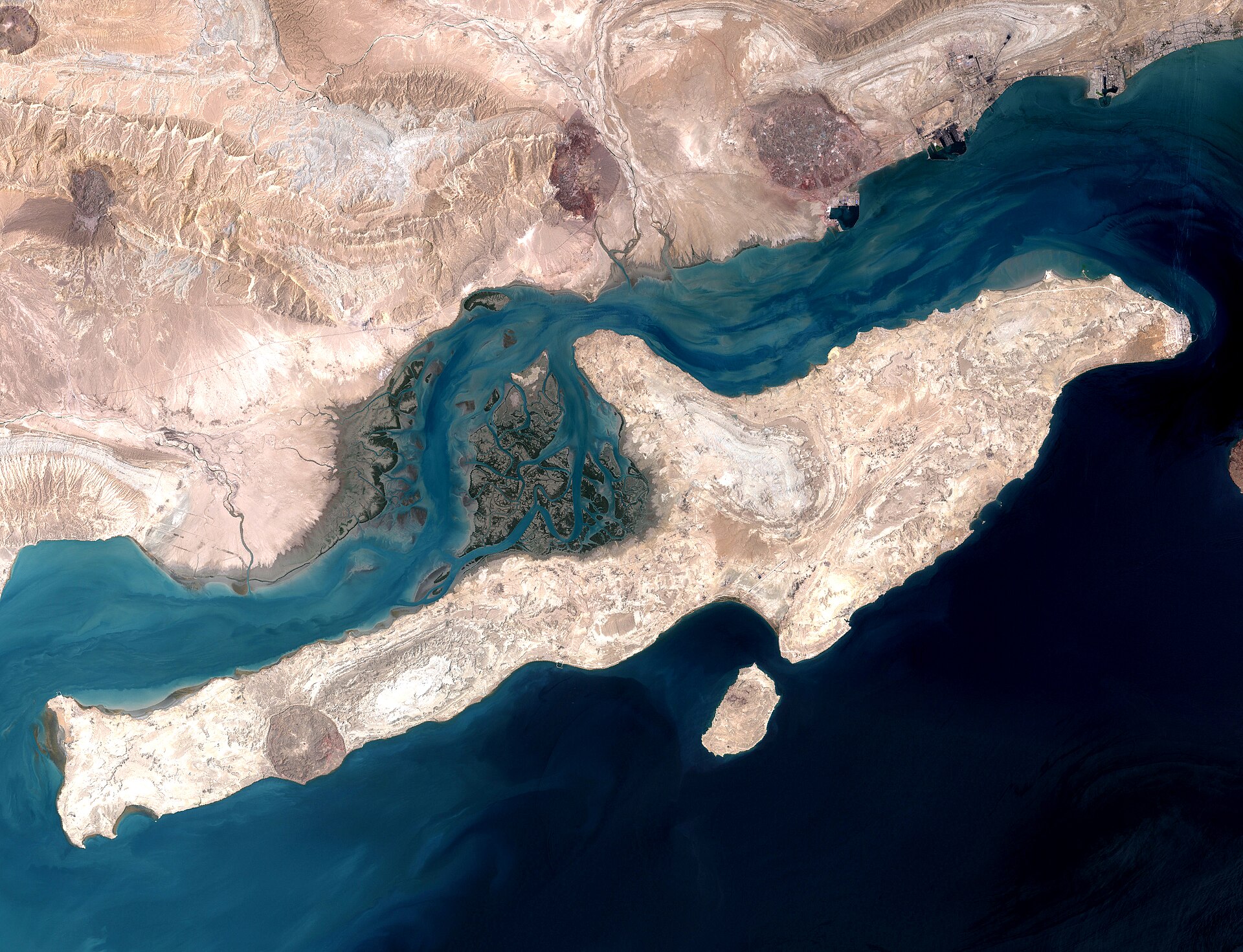
Before the PGSA existed, the IRGC redirected all commercial traffic away from the standard Traffic Separation Scheme running through the centre of the strait and into a 5-nautical-mile corridor between Qeshm and Larak Island, entirely inside Iran’s 12-nautical-mile territorial sea. The manoeuvre is geographic, but its legal consequences are precise and deliberately engineered. Under UNCLOS, transit passage applies in straits used for international navigation between one area of the high seas and another; once all traffic is physically routed through Iranian territorial waters, Tehran argues, the applicable regime shifts to innocent passage u2014 and under Article 26(2), a coastal state may levy fees for “specific services rendered” to vessels transiting its territorial sea.
n
Marc Weller, professor of international law at Cambridge, put the opposing legal position plainly u2014 ships have “an absolutely unsuspendable right of passage” through an international strait u2014 and IMO Secretary General Arsenio Dominguez declared on April 9 that “there is no international agreement where tolls can be introduced for transiting international straits,” warning that any such toll sets a “dangerous precedent.” The UN resolution rejecting the PGSA was emphatic, backed by 112 nations and unambiguous in its legal reasoning. But it has no enforcement mechanism, the Larak corridor has been operational for months, and Iran is converting each transit into another data point for a customary-law argument that runs parallel to the treaty law prohibiting it u2014 accumulating the kind of slow-motion precedent that eventually acquires its own institutional gravity regardless of what anyone writes in a resolution.
n
n
Mohammad Reza Rezayi Kouchi, co-sponsor of the 12-article bill, stated the position without equivocation: ships must “coordinate their passage with Iranian authorities and pay charges in Iranian rial for the services they receive.” He said services u2014 the same word printed on the PGSA’s VID form, the same word that Article 26(2) permits a coastal state to charge for, the word on which the entire Hormuz legal architecture is built and which, deployed inside a geographic corridor specifically engineered to make it applicable, is performing exactly as its designers intended.
n
The Material Support Trap
n
Paying the PGSA toll is not, in the strictest legal sense, merely a sanctions violation u2014 it is potentially a federal crime carrying prison time and asset forfeiture, because the institution collecting the revenue is a designated Foreign Terrorist Organisation. The IRGC has carried that FTO designation under Executive Order 13224 since 2017, and the PGSA’s revenue flows through networks where, according to Chainalysis, “IRGC-associated addresses accounted for over 50% of all value received by Iranian crypto services by Q4 2025, with IRGC facilitation network volumes spiking to over $3 billion that year alone.” Under the FTO framework, payment constitutes potential “material support,” and as Bracewell LLP noted in the National Law Review, “duress and necessity are not cognisable defences for material support” u2014 meaning a shipowner whose vessel is physically prevented from transiting Hormuz without paying cannot invoke the existence of the blockade as a legal defence for having paid the toll.
n
OFAC made the perimeter of liability explicit on May 1, warning “U.S. and non-U.S. persons about the sanctions risks of making these payments to, or soliciting guarantees from, the Iranian regime for safe passage,” specifying that these risks “exist regardless of payment method” u2014 including digital assets, yuan, “nominally charitable donations,” and informal swaps. General Licence U, the last formal safety valve permitting limited Hormuz-related transactions for US persons, expired on April 19 with no extension announced, closing the one regulatory opening that had given shipowners any legal basis for engaging with the toll system.
n
Iran, for its part, has been adapting its payment infrastructure faster than Washington can freeze it. The original toll system ran on yuan through Kunlun Bank, routed via China’s CIPS network entirely outside SWIFT, and USDT stablecoins on the Tron blockchain. On April 23, Treasury Secretary Scott Bessent’s “Operation Economic Fury” froze $344 million in USDT across two Tron addresses linked to Iran’s Central Bank u2014 the largest single stablecoin seizure in history u2014 and Iran pivoted to Bitcoin within weeks. Hormuz Safe, launched May 16u201318, is explicitly Bitcoin-settled, and TRM Labs noted that while “Iranian-linked wallet clusters saw increased inflows since the toll system went live,” the IRGC “uses layered wallet structures, mixers, and cross-chain bridges to obscure the origin and destination of funds,” making per-transaction enforcement practically difficult even when aggregate flows are identifiable.
n
The result, as Bracewell LLP’s maritime sanctions analysis in the National Law Review described it, is a legal impossibility that every applicable framework produces with perfect internal consistency: the toll is unlawful, and paying it exposes parties to liability under applicable sanctions regimes u2014 two propositions that international law, domestic criminal law, and commercial contract law each produce consistently within their own frameworks, yet which collectively leave the shipowner, charterer, and cargo interest without a clear path forward. The strait is simultaneously closed by one state’s navy and declared criminal to access by another state’s treasury, and the shipowner stands at the intersection of both commands u2014 answerable to whichever she chooses and liable under the one she doesn’t.
n
Why Does No Draft Deal Mention PGSA Dissolution?
n
The ceasefire framework currently under negotiation u2014 a Phase 1 MOU ending hostilities within 30 days, followed by a Phase 2 comprehensive deal addressing Hormuz governance and the nuclear file u2014 contains a gap in its architecture large enough to sail a laden VLCC through, because the PGSA exists entirely inside that gap and no mediator has proposed language to close it.
n
Saudi Arabia is the one actor with the standing to press both Washington and Tehran to address that gap. The FM-level back channel Riyadh has been running u2014 six direct calls in six weeks u2014 is the diplomatic architecture through which any PGSA dissolution language would have to be negotiated, and MBS now has 48 hours to turn that back-channel access into a binding deliverable before the window closes. What none of these bilateral calls have addressed is the parallel Muscat governance track, where Iranian and Omani legal teams are drafting a bilateral Hormuz framework that would embed Iranu2019s transit authority in treaty law u2014 a process Saudi Arabia has no seat in and no channel to influence.
n
Iran’s 14-point counter-proposal explicitly defers Hormuz sovereignty recognition to Phase 2, and Al Jazeera confirmed on May 6 that Washington has implicitly accepted a “Hormuz first, nuclear later” sequencing in which the strait’s governance is addressed before the nuclear dossier. But within that sequencing, Iran is not offering to dissolve the PGSA u2014 Iran is seeking recognition of the sovereignty claims that the PGSA embodies, which is the opposite of dissolution. The Phase 1 ceasefire MOU, as currently structured, contains no PGSA dissolution language whatsoever, meaning the PGSA operates unrestricted through Phase 1 u2014 processing vessel declarations, collecting fees, directing IRGC escorts through the Larak corridor u2014 even if every other provision of a deal is signed, sealed, and verified by international observers.
n
What would dissolution language actually need to say? At minimum: explicit recognition that the Larak corridor does not convert Hormuz from a Part III strait to a territorial-sea passage; a specific prohibition on fees, permits, or vessel information requirements for transiting vessels; a mechanism to reverse the 12-article sovereignty law if parliament passes it before a deal closes; and verification provisions confirming IRGC naval forces have withdrawn from corridor enforcement positions. None of these provisions appear in any draft circulated by mediators in Islamabad, Doha, or through the Saudi-Iranian bilateral channel, and none have been publicly demanded by Washington u2014 an omission that becomes more consequential with every week the PGSA continues to operate.
n
The double blockade architecture u2014 where the US controls Arabian Sea entry and the IRGC controls Gulf of Oman exit u2014 makes this gap structurally dangerous, because a Phase 1 ceasefire that lifts US blockade operations without dissolving the PGSA would hand Iran uncontested administrative control of every vessel entering or leaving the Persian Gulf. The American counter-blockade would be gone; the Iranian customs authority would remain, stamping forms and collecting fees and accumulating the customary-law precedent it was specifically built to generate.
n
n
“Tehran has stood up the legal-administrative scaffolding it intends to point to after any deal. PGSA is not a pressure tactic to be bargained away. It is the institution Iran wants negotiators to inherit.” u2014 Windward AI, May 18, 2026
n
n
n
What Would It Actually Cost to Abolish the Hormuz Toll?
n
History offers exactly one precedent for abolishing a toll on an international strait, and it required 428 years and a collective buyout to achieve. Denmark levied tolls on ships transiting the u00d8resund strait from 1429 until the Copenhagen Convention of March 14, 1857, during which the Sound Dues generated, at their peak, up to two-thirds of Danish state revenue u2014 a proportion of national income that makes Iran’s current $10 billion Hormuz Safe target look modest by comparison. Abolition did not happen because the international community declared the tolls illegal, which it had done repeatedly and with increasing exasperation across four centuries of diplomatic complaints. It happened because the maritime powers agreed to pay Denmark 33.5 million Danish rigsdaler u2014 roughly 12 years of prior toll revenue u2014 in exchange for an affirmative treaty commitment to toll-free passage.
n
Neither condition for a Copenhagen-style resolution currently exists at Hormuz. The UN resolution rejecting the PGSA has no compensation mechanism, no treaty framework, and no enforcement provision beyond the moral weight of 112 votes. Washington’s position u2014 articulated through OFAC’s advisory and Bracewell’s FTO analysis u2014 is that the toll is illegal and paying it constitutes material support for terrorism, which is a prosecutorial posture, not a negotiating one. The United States is not offering to buy out Iran’s toll revenue or compensate Tehran for relinquishing sovereignty claims; it is threatening to imprison anyone who contributes to them. That prosecutorial approach did not end the Sound Dues either u2014 the Danes kept collecting until someone wrote a cheque.
n
The parliamentary ratchet compounds the problem on an accelerating timeline. The 12-article sovereignty law has cleared committee and awaits a full chamber vote, and the political incentives inside Iran overwhelmingly favour passage u2014 no Iranian parliamentarian wants to be recorded voting against sovereignty over the country’s most valuable geographic asset during a war in which that sovereignty is the central issue. If the law passes, the PGSA converts from an executive action reversible by presidential decree into statutory law with seizure and confiscation powers routed through the Supreme Leader to the Armed Forces. Once that conversion occurs, dissolution requires not a ceasefire concession but a legislative repeal by the same parliament that passed the law, overseen by a Supreme Leader whose military institutions operate the toll system and receive its revenue.
n
The American position is further compromised by its own internal contradictions. Trump himself proposed Hormuz as a “joint venture” on April 8 and appeared to endorse the principle that “Iran and Oman will be able to charge ships” u2014 a statement that, whatever its intended diplomatic purpose, was received in Tehran as American acknowledgement that Hormuz tolls are a negotiable proposition rather than a unilateral violation of international law. If Washington’s position on strait tolls has been internally contradictory since early April, the political authority required to demand PGSA dissolution u2014 language that does not yet appear in any draft u2014 is difficult to assemble from the available diplomatic material.
n
Dark Fleets, Bilateral Deals, and the Collapse of the Boycott
n
The aggregate boycott of PGSA-administered transit is, measured in raw throughput, holding u2014 pre-war Hormuz handled approximately 140 vessel transits per day, and on May 11 that number was nine, with only 45 total transits recorded since the April 8 ceasefire, representing 3.6 per cent of the pre-war baseline. Some 1,550 vessels remain stranded and 22,500 mariners are trapped in what amounts to the largest maritime disruption since the Second World War, while global oil inventories are draining at rates the IEA calls unprecedented.
n
But aggregate numbers conceal the bilateral fractures that are, transit by transit, converting a multilateral boycott into a series of bilateral arrangements with the toll-collecting authority. On May 18, Windward AI tracked six India-flagged vessels transiting inbound as a coordinated cluster following bilateral engagement between New Delhi and Tehran u2014 bypassing the multilateral legal rejection entirely. Iraq and Pakistan have negotiated similar carve-outs. The IRGC assigns each nation a “friendliness ranking” from 1 to 5, and vessels from higher-ranked states receive the VHF passcode and escort while vessels from lower-ranked states face interdiction off Fujairah u2014 a tiered-access model that structurally rewards nations for breaking with the boycott rather than holding the line.
n
| Date | Development | Category |
|---|---|---|
| March 30u201331 | Parliament committee approves “Strait Management Plan” | Legislative |
| April 1 | Bloomberg reports IRGC toll collection operational (yuan/USDT) | Operational |
| April 19 | OFAC General Licence U expires u2014 no extension announced | Regulatory |
| April 21 | 12-article sovereignty law approved by committee (full vote pending) | Legislative |
| April 23 | $344M USDT frozen in Operation Economic Fury; Iran pivots to Bitcoin | Financial |
| May 1 | OFAC advisory: toll payment risks criminal prosecution | Regulatory |
| May 5 | PGSA formally launched; PGSA.ir domain and VID form operational | Institutional |
| May 11 | Hormuz transits collapse to 9 per day (pre-war baseline: ~140) | Operational |
| May 16 | Hormuz Safe Bitcoin-settled insurance announced ($10B annual target) | Financial |
| May 18 | @PGSA_IRAN X account launched; 6 India-flagged vessels transit as cluster | Diplomatic |
n
n
Sources: Bloomberg, Windward AI, UANI, OFAC, CoinDesk, Fars News, Al Jazeera
n
The dark fleet represents the other vector of erosion, and it is growing far faster than the bilateral track. Windward AI reported a nearly 600 per cent increase in dark vessel activity between April 19 and May 3, and Windward AI analysis of SAR imagery from May 13 showed 100 vessels over the Hormuz area with 56 operating without AIS transponders u2014 ageing tankers already outside Western insurance and flag-state oversight, with no OFAC exposure to lose, paying the toll and delivering cargo to buyers willing to accept a sanctioned-origin discount in exactly the pattern that sustained Iranian oil exports under maximum-pressure sanctions from 2018 to 2023, except at a scale and geographic concentration that makes the pre-war dark fleet look like a rehearsal for what is now the main performance.
n
Windward AI described the emerging operating reality with precision: “The chokepoint is now being governed administratively, with bilateral carve-outs for selected partners and coercive interdiction held in reserve for everyone else.” That is not a blockade being resisted by a determined coalition u2014 it is a customs regime with enforcement discretion, the kind of system that rewards compliance and punishes holdouts, and that becomes structurally harder to dismantle as each additional nation negotiates its own bilateral terms rather than insisting on the multilateral principle that is supposed to make bilateral deals unnecessary.
n
n
Can Washington Sanction Every Ship That Pays?
n
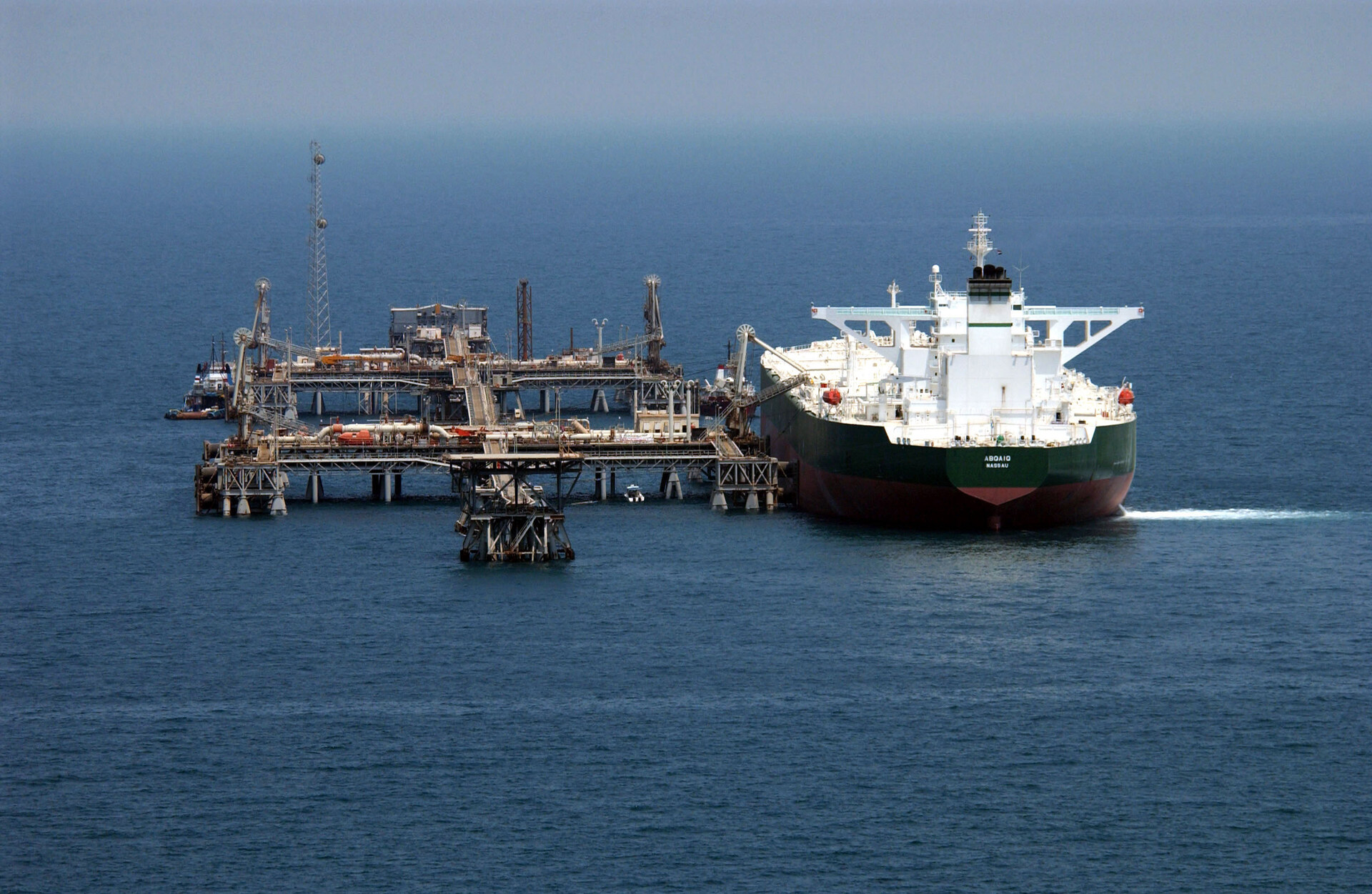
Washington’s enforcement theory u2014 sanction every entity that pays the PGSA toll, in any currency, under any circumstances, with no duress defence available u2014 assumes the global shipping industry will absorb the cost of non-transit rather than accept the criminal risk of payment. For the major Western-insured fleet, that assumption is holding: the transit collapse is real and measurable, and every major P&I club and classification society has issued guidance treating PGSA payments as sanctions-triggering events. The theory works as long as the vessels that matter most u2014 the ones carrying insured cargoes for publicly traded commodity houses u2014 stay out of the Larak corridor.
n
But the dark fleet does not answer to any Western regulator, the bilateral carve-outs are multiplying week by week, and every vessel that transits the corridor under PGSA administration u2014 whether flagged in Cameroon or the Comoros, whether paying in Bitcoin through a mixer or in yuan through Kunlun Bank u2014 adds another brick to the customary-law foundation that Iran is assembling one transit at a time. Washington can prosecute the payments it can trace, freeze the wallets it can identify, and sanction the intermediaries it can name, but the IRGC’s layered wallet structures and cross-chain bridges exist precisely to ensure that the traceable payments represent a fraction of actual toll revenue u2014 enough to claim enforcement is working, not enough to shut the system down.
n
The structural problem runs deeper than enforcement gaps. The United States and Iran are simultaneously cementing incompatible legal architectures over the same body of water during a period when both claim to be negotiating a resolution u2014 Washington says paying the toll is criminal, Tehran says the toll is sovereign, and both are treating the ceasefire period not as a pause for compromise but as a window for institutional entrenchment. The OFAC advisory and the VID form are each internally consistent within their own legal frameworks, produced by institutions acting rationally within their own mandates, and they cannot coexist in the same strait.
n
A Phase 1 ceasefire that does not resolve the contradiction will not eliminate it; it will freeze it, with the PGSA collecting fees on one side of the legal boundary and the sanctions regime threatening prosecution on the other, and the shipowner who actually has cargo to move caught between two systems of law that each hold her liable for complying with the other.
n
Operation Economic Fury demonstrated Washington’s capacity for speed u2014 the stablecoin freeze was a genuine capability achievement, executed within hours of identification. But Iran matched that speed in the other direction, pivoting from USDT to Bitcoin, launching Hormuz Safe, converting a military interdiction into a bureaucracy with customs forms and a parliamentary statute, all within weeks. The PGSA’s VID form is three months old. Its sovereignty law is one chamber vote from becoming permanent legislation. Its X account is 48 hours old. Every day the ceasefire talks fail to produce dissolution language is a day the institution becomes more difficult to reverse u2014 and as of May 20, 2026, the number of draft clauses addressing PGSA dissolution in any ceasefire framework, from any mediator, in any format, remains exactly zero.
n
Frequently Asked Questions
n
How much revenue could the PGSA generate at pre-war traffic levels?
n
At pre-war volumes of approximately 140 vessel transits per day u2014 a mix of laden VLCCs, product tankers, container ships, and smaller dry-bulk carriers u2014 Maritime Executive estimates the toll system could generate approximately $20 million per day, between $600 million and $800 million per month, based on the PGSA’s published fee schedule with a $2 million cap per transit for the largest vessels. Hormuz Safe’s separate $10 billion annual target from Bitcoin-settled maritime insurance represents an additional revenue stream beyond direct transit fees, suggesting Tehran is building a diversified fiscal platform rather than a single toll-collection mechanism.
n
What was the PGSA’s first public communication?
n
The @PGSA_IRAN X account’s inaugural post on May 18 opened with “In the name of God” u2014 anchoring the institution’s public legitimacy in religious-national identity rather than international legal frameworks. PressTV described the authority as “a system to exercise sovereignty over the Strait of Hormuz,” deploying sovereignty language instead of the crisis-management or security framing typically used for wartime measures. The simultaneous retweets by both the IRGC Navy and SNSC official accounts confirmed that the PGSA has unified institutional backing spanning Iran’s military, intelligence, and national security establishments u2014 making it structurally resistant to being traded away by a reformist president acting without military consensus.
n
What happens to vessels that refuse to submit the VID form?
n
The IRGC has already demonstrated enforcement against non-compliant vessels u2014 HUI CHUAN and EDRIS were boarded off Fujairah on May 14 for transiting without PGSA authorisation, according to Windward AI vessel-tracking data. Under the pending 12-article law, which adds statutory weight to the existing executive framework, non-compliant vessels would face IRGC seizure and confiscation of approximately 20 per cent of cargo value u2014 a penalty that, for a laden VLCC carrying 2 million barrels, would run to tens of millions of dollars, making non-compliance an order of magnitude more expensive than the maximum $2 million toll and creating a financial incentive structure in which submission is always cheaper than resistance.
n
Could a future military operation reverse the PGSA without a negotiated deal?
n
Military clearance of the Larak corridor would address the physical enforcement layer but not the legal-institutional one. The PGSA’s VID form, registered domain, parliamentary statute, and payment infrastructure exist independently of whether IRGC warships are physically present u2014 removing the escorts does not delete the institution. Mine clearance alone would require an estimated 51 days based on the 1991 Kuwait benchmark, and only two Avenger-class MCM vessels currently operate in theatre after the other four were decommissioned from Bahrain in September 2025. Even a fully successful operation would leave the 12-article sovereignty law on the Iranian statute books and the PGSA’s administrative apparatus intact, ready to resume operations the moment naval pressure was withdrawn u2014 which is precisely why Tehran invested in building a bureaucracy rather than simply deploying more warships.
n”}