
A Saudi Princess at the Helm of Fashion’s Boldest Gamble
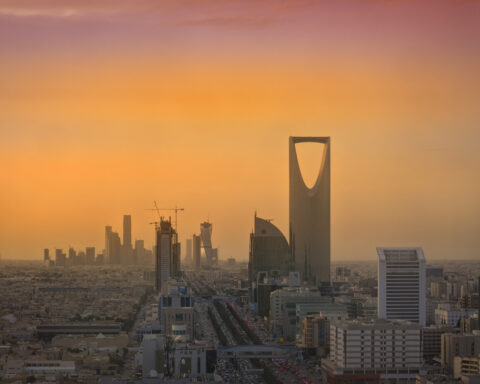
In the corridors of Riyadh’s rapidly multiplying luxury developments, a quiet appointment has sent ripples through both the global fashion industry and the innermost circles of the Al Saud dynasty. Princess Noura bint Faisal Al Saud — granddaughter of one of Saudi Arabia’s most consequential monarchs — has been named Chief Executive Officer of Jay3lle, a new fashion label that sits at the intersection of athletic performance wear and high luxury. The brand’s founder is Johan Lindeberg, the Swedish creative director whose previous venture, J.Lindeberg, redefined the relationship between sport and style across three continents. Lindeberg has not simply licensed his name to a Gulf-backed venture. He has permanently relocated to Riyadh, burning the bridges that connected him to Stockholm and New York in a bet that the future of global fashion will be written in the Saudi capital.
This is not a vanity project. It is not a soft-power branding exercise dressed up in couture. Jay3lle is backed by Golf Saudi, the entity responsible for transforming the Kingdom’s golf infrastructure and its controversial but undeniably effective push into professional golf worldwide. The business plan extends far beyond retail: a pop-up at Riyadh Park is planned for later this year, a flagship store will open in early 2027, and by 2028, Jay3lle intends to break ground on branded real estate — a resort developed in partnership with Golf Saudi that would make it one of the first fashion-led hospitality concepts in the Middle East. The woman tasked with turning this vision into commercial reality carries a surname that opens every door in the Kingdom, and a professional track record that suggests she knows exactly what to do once she walks through them.
For those tracking the evolving power dynamics within the House of Saud, this appointment is significant on multiple levels. It signals the emergence of a new archetype within the royal family: the princess as operator, not figurehead. It confirms that the Faisal branch of the dynasty — long associated with intellectual gravitas and modernising instincts — remains a potent force in the Kingdom’s transformation. And it reveals that Saudi Arabia’s Vision 2030 cultural economy strategy has moved well beyond government-led initiatives into genuine commercial ventures where royals are staking their reputations on profit-and-loss outcomes.
Who Is Princess Noura bint Faisal Al Saud
To understand why Princess Noura’s appointment matters, one must first understand the branch of the Al Saud family tree from which she descends. She is a granddaughter of King Faisal bin Abdulaziz Al Saud, the third king of modern Saudi Arabia and arguably the most intellectually formidable ruler the Kingdom has produced. King Faisal’s reign, from 1964 until his assassination in 1975, was defined by a paradox that his descendants have inherited: he was simultaneously a deeply devout Muslim and a relentless moderniser. He introduced television to the Kingdom over the objections of the religious establishment. He sent the first Saudi women abroad for university education. He wielded oil as a geopolitical weapon during the 1973 embargo while privately investing in institutions that would diversify the Kingdom’s intellectual capital.
The Faisal branch has always carried this duality — tradition and transformation held in deliberate tension. Princess Noura embodies this inheritance. Educated across multiple disciplines, she entered the professional world not through the charitable foundations and ceremonial roles that had traditionally defined royal women’s public engagement, but through the creative industries. She founded Culture House, a consultancy focused on building the infrastructure for Saudi Arabia’s nascent creative economy. This was not a philanthropic gesture. Culture House operated as a commercial advisory practice, working with government entities and private clients to develop strategies for cultural ventures, creative business development, and the professionalisation of industries that barely existed in the Kingdom a decade ago.
Perhaps most critically, Princess Noura played a direct role in establishing Saudi Arabia’s national fashion strategy — the policy framework that has guided the Kingdom’s emergence as a serious player in global fashion. This work positioned her at the nexus of government policy, royal influence, and commercial fashion operations. She understood the regulatory environment because she helped shape it. She understood the market because she had studied it from the inside. And she understood the Al Saud family’s strategic intentions for the cultural economy because those intentions run through her bloodline.
The Middle East briefing 3,000+ readers start their day with.
One email. Every weekday morning. Free.
Her career trajectory reveals a pattern that distinguishes the most effective members of the younger Al Saud generation: she built credibility through competence before leveraging her family name for scale. Culture House was not a household name, but within Riyadh’s creative industry circles, it was regarded as a serious operation. The Jay3lle CEO role represents the moment when that quiet credibility meets global ambition.
The Jay3lle Appointment and What It Signals
The mechanics of Princess Noura’s appointment to Jay3lle tell a story about how business is increasingly conducted at the intersection of Saudi royal influence and international capital. Jay3lle is not a Saudi brand in the way that term has traditionally been understood in fashion — it is not a local label seeking international validation. It is a globally conceived brand that has chosen Saudi Arabia as its headquarters, its primary market, and its launchpad. The decision to install a member of the royal family as CEO rather than in an advisory or ambassadorial role is a deliberate statement about operational seriousness.
In many Gulf-based fashion ventures, royal involvement has historically taken the form of patronage or investment. A princess might serve as brand ambassador, lend her name to an advisory board, or provide the social capital necessary to secure retail space in the right malls. Princess Noura’s role at Jay3lle is categorically different. As CEO, she holds direct responsibility for the company’s commercial performance, its operational execution, and its strategic direction. This is a line-management position, not a ceremonial one. She will be accountable for revenue targets, supply chain decisions, hiring, and the thousand daily operational choices that determine whether a fashion brand succeeds or fails.
This distinction matters enormously for what it communicates about the Al Saud family’s evolving relationship with commerce. The era in which royal involvement in business meant passive investment and discreet profit-sharing is giving way to a model of active, visible, accountable leadership. Crown Prince Mohammed bin Salman has repeatedly signalled that the royal family must lead by example in the Kingdom’s economic transformation, and Princess Noura’s willingness to accept a role where failure would be public and personal suggests that message has been internalised by the broader family.
Johan Lindeberg and the Riyadh Bet
Johan Lindeberg is not a designer who needed Saudi Arabia. His track record in global fashion is formidable. In the 1990s, he founded J.Lindeberg, a Swedish brand that fundamentally reimagined golf apparel and, more broadly, pioneered the concept of luxury sportswear for a generation of consumers who rejected the traditional boundaries between athletic clothing and fashion. J.Lindeberg became a global brand with presence across Europe, North America, and Asia. Lindeberg himself became one of Scandinavia’s most recognised creative directors, known for a design philosophy that treated performance and aesthetics as inseparable concerns.
His decision to permanently relocate to Riyadh is therefore not an act of professional desperation or financial opportunism. It is a calculated assessment that the centre of gravity in global fashion is shifting — and that Saudi Arabia, with its combination of sovereign wealth, young demographics, ambitious infrastructure programmes, and political will, represents the most compelling opportunity for a new fashion venture anywhere in the world. Lindeberg has spoken publicly about seeing in Riyadh the same energy that characterised New York in the 1990s or Shanghai in the 2000s: a city that is being built in real time, where the rules have not yet been written, and where creative ambition is matched by the financial resources to realise it.
The permanence of his relocation deserves emphasis. This is not a consultancy arrangement conducted via video conference from a Stockholm apartment. Lindeberg has moved his life, his creative studio, and his professional operations to the Saudi capital. For the international fashion industry, this is a signal event. When a designer of Lindeberg’s stature makes an irreversible geographic commitment to a market, it validates that market in ways that no government marketing campaign or tourism initiative can replicate. Other European and American designers have visited Riyadh, consulted for Saudi clients, and participated in Riyadh fashion events. Lindeberg has moved there. The distinction is everything.
His partnership with Princess Noura creates a complementary dynamic that addresses the two most significant challenges any international brand faces in Saudi Arabia: cultural fluency and operational access. Lindeberg brings global design credibility, an established network in international fashion media, and a proven ability to build brands from concept to scale. Princess Noura brings an understanding of Saudi consumer psychology that no foreign consultant could replicate, relationships with government entities and regulatory bodies that would take an outsider years to develop, and the implicit endorsement of one of the Kingdom’s most respected royal lineages.
Inside the Jay3lle Brand
Jay3lle’s product concept occupies a space that barely existed five years ago but has become one of the fastest-growing segments in global fashion: the convergence of athletic performance wear and luxury design. This is not athleisure in the pejorative sense — the dressed-down, comfort-first aesthetic that dominated Western fashion during and after the pandemic. Jay3lle’s proposition is more ambitious: garments that perform at the level required by serious athletes (the Golf Saudi backing is not coincidental) while meeting the design standards expected by luxury consumers in a market where conspicuous quality is a cultural imperative.
The backing from Golf Saudi is strategically significant beyond the obvious financial dimension. Golf Saudi has established itself as one of the most aggressive and effective sports development entities in the world, channelling sovereign resources into golf infrastructure, tournament hosting, and — most controversially — the LIV Golf series that disrupted professional golf’s established order. Golf Saudi’s involvement in Jay3lle suggests that the entity’s strategic ambitions extend beyond sport into the lifestyle economy that surrounds it. Golf has always been as much about fashion, socialising, and status signalling as it has been about athletic performance, and Jay3lle appears designed to capture the commercial value embedded in that lifestyle dimension.
The brand’s rollout strategy reveals a sophistication that belies its newcomer status. The planned pop-up at Riyadh Park — one of the Kingdom’s premier retail destinations — functions as a market test and brand awareness exercise simultaneously. Pop-up retail allows Jay3lle to generate consumer data, test price points, refine its product mix, and build a waiting list for the flagship store without committing to a permanent lease before the brand has established its market position. The flagship store planned for early 2027 represents the next phase: a permanent retail presence designed to anchor the brand’s identity and serve as a physical manifestation of its design philosophy.
But it is the branded real estate play, scheduled to begin in 2028, that reveals Jay3lle’s most ambitious strategic dimension. A resort developed in partnership with Golf Saudi would position Jay3lle not merely as a fashion label but as a lifestyle brand with a physical footprint in the hospitality sector. This model — fashion brand as real estate developer — has been explored by houses like Armani and Bulgari in other markets, but Jay3lle would be among the first to attempt it from inception rather than as an extension of an already-established brand. The risk is substantial, but so is the potential reward: branded hospitality generates recurring revenue, deepens consumer loyalty, and creates physical spaces where the brand’s aesthetic vision can be experienced rather than merely purchased.
Saudi Arabia’s Fashion Revolution in Context
Princess Noura’s appointment and Jay3lle’s launch do not exist in isolation. They are the latest and perhaps most commercially ambitious manifestation of a fashion revolution that has been underway in Saudi Arabia for nearly a decade. The Kingdom’s Fashion Commission, established as part of the broader cultural economy infrastructure built under Vision 2030, has systematically created the conditions for a domestic fashion industry to emerge. Riyadh fashion weeks have attracted international designers and media attention. Saudi designers are showing collections in Paris and Milan. The Kingdom’s luxury retail market — already one of the largest in the Middle East — is growing at rates that outpace every major European market.
The social dimension of this transformation cannot be overstated. Within living memory, Saudi women’s public dress was governed by strictures that made fashion, in the Western sense of personal expression through clothing, effectively invisible. The relaxation of dress codes, the end of mandatory abaya requirements for Saudi women in many public contexts, and the broader social liberalisation championed by the Crown Prince have unleashed consumer demand for fashion that is both culturally resonant and globally connected. Saudi women are not simply adopting Western fashion norms. They are developing a distinctive aesthetic vocabulary that draws on local traditions, regional influences, and global trends in combinations that are genuinely novel.
Jay3lle enters this market at a moment when Saudi consumers are actively searching for brands that understand their specific needs and aspirations. International luxury houses have rushed to open boutiques in Riyadh and Jeddah, but many struggle with cultural tone — either overcorrecting into orientalist pastiche or failing to differentiate their Saudi retail presence from their Dubai or London operations. A brand conceived for the Saudi market from inception, led by a Saudi CEO who understands the cultural nuances intuitively, and designed by an international creative director with a proven ability to blend athletic function with luxury aesthetics, is positioned to exploit a gap that existing brands have been unable to fill.
The Faisal Branch and Its Enduring Influence
Within the intricate architecture of the Al Saud family tree, the branch descending from King Faisal has always occupied a distinctive position. While other branches of the dynasty have been associated primarily with military command, provincial governance, or business investment, the Faisal line has consistently gravitated toward intellectual and cultural leadership. King Faisal himself was a polyglot who travelled extensively before ascending to the throne, absorbing ideas from Turkey, Europe, and the broader Islamic world that informed his modernisation programme. His sons included Prince Saud al-Faisal, who served as the Kingdom’s Foreign Minister for forty years and was regarded as one of the most sophisticated diplomats of his generation, and Prince Turki al-Faisal, the former intelligence chief whose influence on Saudi foreign policy extended well beyond his official tenure.
The granddaughters of King Faisal — Princess Noura’s generation — are now translating this intellectual heritage into commercial and cultural ventures that would have been inconceivable in their grandfather’s time but are entirely consistent with his modernising impulse. King Faisal believed that Saudi Arabia’s survival depended on its ability to engage with the modern world without surrendering its identity. His granddaughters are proving that thesis in real time, building businesses and cultural institutions that are simultaneously Saudi in character and global in ambition. Princess Noura’s role at Jay3lle is perhaps the purest expression of this inheritance: a commercial venture that could only succeed in Saudi Arabia, led by a woman whose family name is synonymous with the Kingdom’s most forward-looking traditions.
The significance of the Faisal branch’s continued prominence extends beyond genealogy. It demonstrates that the Al Saud family’s capacity for self-renewal is not limited to a single line of succession. While the Salman branch, through Crown Prince Mohammed bin Salman, holds political power, other branches of the family are contributing to the Kingdom’s transformation through commercial, cultural, and diplomatic channels. This distribution of influence across the family tree is both a strength and a strategic necessity. The Kingdom’s ambitions under Vision 2030 are too vast for any single branch to execute alone, and the engagement of figures like Princess Noura from the Faisal line suggests that the broader Al Saud family is aligning behind the transformation agenda in ways that extend well beyond political obedience.
Saudi Princesses in Business: A New Generation
Princess Noura’s appointment places her within a small but increasingly visible cohort of Al Saud women who are assuming operational leadership roles in Saudi Arabia’s expanding economy. The most internationally prominent member of this group is Princess Reema bint Bandar Al Saud, who served as the first female Saudi ambassador to the United States and previously led the mass-participation sports division of Saudi Arabia’s General Sports Authority. Princess Reema’s career demonstrated that royal women could hold positions of genuine executive authority, not merely decorative titles, and her success in Washington opened space for others to follow.
Princess Ameera al-Taweel, once one of the most internationally visible Saudi women through her philanthropic work and media presence, represented an earlier model of royal female engagement — high-profile advocacy rather than operational leadership. The shift from Princess Ameera’s generation to Princess Noura’s is instructive. Where Princess Ameera operated primarily in the space of international public relations and charitable giving, Princess Noura and her contemporaries are running businesses, managing teams, and being held accountable for commercial outcomes. This is not a criticism of the earlier model; it is an observation about how rapidly the landscape has changed.
Sara bint Mashoor Al Saud, wife of Crown Prince Mohammed bin Salman, has also emerged in recent years with her own institutional initiatives — the ilmi science centre and the Asaan heritage museum in Diriyah. The pattern across these women is consistent: serious education, often international; a period of professional development outside the traditional royal support structures; and then a strategic entry into sectors that align with the Kingdom’s economic diversification priorities. They are not dilettantes dabbling in business because they can afford to fail. They are professionals who happen to carry the most powerful surname in the Arabian Peninsula, and who are deploying that advantage in service of ventures that must succeed on commercial terms to justify their existence.
The collective impact of these women on Saudi Arabia’s economic transformation is difficult to overstate. In a society where gender roles have shifted more dramatically in the past decade than in the previous century, the visibility of royal women in executive positions serves a function that extends beyond the individual companies they lead. Every Saudi woman who sees Princess Noura occupying a CEO title — not a patronage role, not an honorary position, but the operational leadership of a commercial enterprise — receives a data point about what is possible. The wealth and influence of the royal family amplifies this signal in ways that private-sector success stories alone cannot.
What Jay3lle Means for Vision 2030’s Cultural Economy
Vision 2030 is often discussed in terms of its headline infrastructure projects — NEOM, The Red Sea, Qiddiya — but the cultural economy pillar of the strategy is where much of the transformation’s lasting impact will be felt. The logic is straightforward: an economy that depends on oil exports for the majority of its revenue is an economy that is vulnerable to commodity price fluctuations, geopolitical disruption, and the long-term decline in fossil fuel demand. Diversification into entertainment, tourism, sport, and fashion creates revenue streams that are driven by consumer spending rather than resource extraction, and that scale with population growth and rising living standards rather than geological constraints.
Fashion, within this framework, is not a frivolous addition to the economic diversification portfolio. It is a high-value industry that generates employment across multiple skill levels, drives retail real estate development, stimulates ancillary industries from textiles to logistics to digital marketing, and — perhaps most importantly — contributes to the nation-branding objectives that are central to Saudi Arabia’s strategy for attracting international investment and talent. A country that is home to globally recognised fashion brands is a country that international professionals want to live in, that tourists want to visit, and that investors associate with creativity and commercial dynamism rather than solely with petrochemical extraction.
Jay3lle’s business model aligns with Vision 2030’s cultural economy objectives with unusual precision. The brand creates high-value employment for Saudi nationals in design, marketing, retail management, and corporate leadership — precisely the kind of private-sector jobs that the Saudisation programme is designed to generate. Its Golf Saudi backing connects it to the sports economy pillar. Its branded real estate ambitions feed into the tourism and hospitality infrastructure that the Kingdom is building at unprecedented scale. And its positioning as a globally ambitious brand conceived and headquartered in Saudi Arabia contributes to the narrative that Riyadh is becoming a global capital of commerce and culture, not merely a regional hub.
The fact that Jay3lle is led by a member of the royal family adds a dimension that purely private-sector ventures cannot replicate. When Princess Noura represents Jay3lle in international fashion contexts — at trade shows, in media interviews, in negotiations with international retail partners — she simultaneously represents the Al Saud family’s commitment to the cultural economy strategy. This creates a form of implicit sovereign endorsement that reduces perceived risk for international partners and signals to domestic stakeholders that fashion is a sector the ruling family considers strategically important. It is soft power operationalised as commercial strategy.
The Road Ahead for Jay3lle and a Kingdom in Transformation
The near-term milestones for Jay3lle — the Riyadh Park pop-up this year, the flagship store in early 2027, the branded resort from 2028 — form a roadmap that is ambitious but not reckless. Each phase builds on the preceding one, generating data, refining the brand’s market positioning, and expanding its physical and conceptual footprint in calibrated increments. This phased approach suggests that Princess Noura and Lindeberg are thinking about Jay3lle as a decade-long brand-building exercise rather than a sprint to revenue. In an industry littered with the wreckage of brands that scaled too quickly or expanded beyond their competence, this patience is itself a competitive advantage.
The pop-up at Riyadh Park will be the brand’s first public test. Saudi luxury consumers are among the most discerning and well-travelled in the world. They have seen — and purchased — the best that Paris, Milan, London, and New York have to offer. Jay3lle will need to demonstrate, in its very first consumer-facing moment, that its product quality, design language, and retail experience meet the standards set by the global luxury houses that already operate in the Saudi market. The advantage of a pop-up format is that it allows for experimentation and adjustment before the higher-stakes commitment of a permanent flagship. The disadvantage is that first impressions in luxury are difficult to revise. If the pop-up disappoints, rebuilding consumer interest for the flagship launch will be significantly more challenging.
The flagship store, planned for early 2027, will need to be more than a retail space. In the current luxury landscape, flagship stores function as brand temples — immersive environments that communicate a brand’s identity, values, and aesthetic philosophy through architecture, interior design, staff training, and experiential programming as much as through the products on display. Jay3lle’s flagship will need to articulate what the brand stands for in physical space: the synthesis of athletic performance and luxury, the convergence of Swedish design sensibility and Saudi cultural context, the proposition that a brand born in Riyadh can compete with brands born in the fashion capitals of Europe. This is a design and experiential challenge of considerable complexity, and getting it right will be essential to establishing Jay3lle’s credibility with both domestic consumers and international media.
The branded real estate initiative represents the longest-term and highest-risk element of Jay3lle’s strategy. Resort development requires capabilities — site selection, architectural planning, construction management, hospitality operations — that are fundamentally different from those required to design and sell clothing. The Golf Saudi partnership mitigates this risk substantially, providing access to land, infrastructure expertise, and an existing network of golf-related hospitality facilities. But the execution challenge remains formidable. A Jay3lle-branded resort will need to deliver an experience that justifies the brand premium while maintaining the operational standards expected by luxury travellers. The potential reward, however, is a revenue stream and brand-building platform that no competitor in the athletic-luxury fashion space currently possesses.
What Jay3lle ultimately represents — beyond its specific commercial prospects — is the maturation of Saudi Arabia’s ambition in the cultural economy. A decade ago, the idea that a globally ambitious fashion brand would choose Riyadh as its headquarters, install a Saudi princess as its CEO, and plan a branded resort in the Kingdom would have seemed implausible. Today, it seems almost inevitable — a natural consequence of the forces that Vision 2030 has set in motion and the Al Saud family has committed to sustaining. Princess Noura bint Faisal Al Saud, carrying the name of a king who believed Saudi Arabia could modernise without losing itself, is now testing that belief in the most visible and commercially unforgiving arena imaginable. The fashion industry does not grade on a curve, and royal lineage will not compensate for mediocre product or poor execution. If Jay3lle succeeds, it will do so because a granddaughter of King Faisal and a Swedish designer who left everything behind for Riyadh built something that the market wanted to buy. That is, in the end, the most radical thing about this venture: in the Kingdom of Saudi Arabia, a princess is being judged not by her title, but by her results.